Opinions
Holding youth responsible for violating smoking laws
Don’t let young residents off the hook so easily
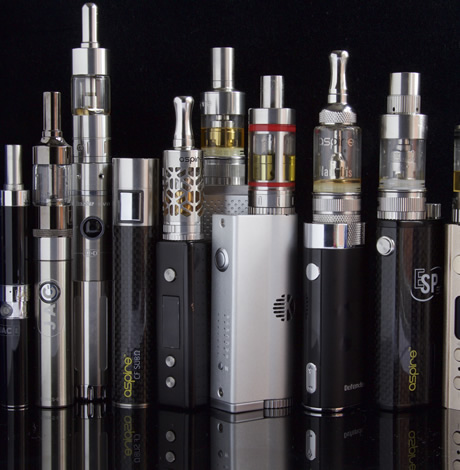

E cigarettes (Photo by Ecig Click; courtesy Wikimedia Commons)
One question that parents, educators and society face is when to hold youth responsible for their actions. Should there be punishment or should they be excused for not following rules or laws? This question was apparently debated on the D.C. Council during its discussion over raising the age to buy tobacco products to 21.
The Washington Post reports, “D.C. Mayor Muriel E. Bowser plans to sign some of the nation’s toughest anti-tobacco laws increasing the smoking age to 21 and regulate electronic cigarettes like traditional ones, adding the District to the scores of jurisdictions trying to protect a new generation from nicotine addiction.” Last week, the mayor signed a bill “making it illegal to ‘vape’ electronic cigarettes inside public establishments where lighting up tobacco is already banned, including bars, restaurants and workplaces.”
The Post went on to report, “Research showing more than 90 percent of tobacco users started when they were minors. Anti-tobacco advocates and lawmakers, including in the District, are in turn trying to limit youth exposure to tobacco products by restricting where they may be used and who can buy them. “
Society has agreed and research proven smoking is dangerous to your health and causes cancer. Banning smoking in most areas in an effort to get people to stop is a public health issue and saves billions of dollars in healthcare costs. So there was little debate about the legislation itself although the Post reported Council Chair Mendelson “opposed increasing the age to buy tobacco on philosophical grounds but did not use his powers to block legislation.” He says “he thinks it makes little sense that older teenagers can vote, fight in wars and even run for office — but not buy a legal product.”
The big debate was over the penalties and who should pay them. The majority on the Council agreed both the retailer selling the products to minors and the minor should be penalized. The Post reported, “Council member David Grosso led the fight against penalizing the minor with a civil fine of $50 arguing penalties should fall only on the retailers who illegally sell cigarettes.” In the end the Council decided the fine for youth would be $25 and Grosso, Bonds and Mendelson voted against the bill.
My question to Grosso and Bonds is when do we punish youth for disobeying a law? Is the potential of unfair enforcement a reason to not punish them or do we instead work to ensure fair and equal enforcement of the law?
Though the Council didn’t agree with Mendelson’s reason to oppose the bill, and he let the bill proceed, do we acknowledge his opinion youth between the ages of 18 and 21 should be treated as adults? Do we then hold them responsible for their actions? It is clearly a conundrum.
As a former teacher and someone who has been involved in our education system, K-12 to university, for many years my belief is the only way to ensure our children become full responsible participants in society is to teach them there are consequences for their actions. Not following the rules and laws laid down for them will have repercussions. At the same time we must also teach them how to protest those rules and laws they think are wrong within the system and how to work to change them.
I admire the students who organized the protests against President-elect Trump and walked out of school, but agree with those educators who then held them responsible for their actions and didn’t automatically excuse them from the repercussions of being absent from school without a reason. Hopefully these student demonstrations were followed up and considered a teachable moment with discussions of what it means to vote and participate actively in civil society.
Whether it’s withholding a toy from a young child who acts up, telling a student no TV until they finish their homework, penalizing them for skipping school, or having penalties for lying and cheating, we need to teach our children their actions have consequences. If the law prohibits their buying tobacco products they should face a penalty if they disobey the law.
Grosso and Bonds are wrong and their focus should shift to guaranteeing equal enforcement of all laws, not letting youth off the hook for disobeying a law.
Peter Rosenstein is a longtime LGBT rights and Democratic Party activist. He writes regularly for the Blade.


Opinions
The outrage economy is not the LGBTQ community
We can respect every person’s humanity without feeding algorithms

There is a simple truth I want to start with, because it matters and because it is too often lost in the noise.
I believe every human being deserves dignity.
I believe in individual freedom. I believe in treating people with respect. I believe adults should be able to live their lives openly, safely, and without harassment or fear.
That includes LGBTQ people. Always. But there is something else we need to say with the same moral clarity.
The outrage economy is not the LGBTQ community.
In recent months, as debates about schools, speech, and identity continue to dominate headlines, it has become increasingly clear how easily genuine conversations about dignity and freedom are drowned out by a profitable outrage cycle.
Right now, too much of what passes for “LGBTQ news” is not about people’s lives, safety, or equality. It is about engagement. It is about clicks. It is about fundraising. It is about manufacturing the next emotional flashpoint. And people are exhausted.
Most Americans are not waking up in the morning looking for a fight about language or labels. They are worried about rent. They are worried about insurance. They are worried about traffic. They are worried about whether their kids are safe and learning. They are worried about whether their paychecks still stretch to the end of the month.
The culture war is not most people’s daily life. It has become an industry.
And like any industry, it needs fuel. It needs conflict. It needs constant escalation. It needs the next headline that triggers the strongest reaction.
Social media algorithms reward exactly that. The loudest and most extreme reactions are amplified, pushing the most sensational interpretation of any story to the top of everyone’s screen. That is why we keep seeing the same pattern: ordinary human experiences are repackaged as identity controversy.
A celebrity reflects on not feeling traditionally feminine, and within hours it becomes a viral referendum on gender identity. A personal observation becomes a cultural battleground. The internet is told it must choose a side. This is not liberation. It is marketing. And it is not harmless.
Because while adults argue about language and labels online, real kids are struggling offline.
Children today are growing up in a world that is louder, faster, and more psychologically intense than any generation before them. Anxiety is rising. Depression is rising. Social isolation is rising. Bullying has migrated from the hallway to the phone, and it never stops.
Kids are being exposed to adult conversations at younger and younger ages, often without the maturity or support systems to process them. Here is the part that should concern everyone, regardless of politics. Our schools are not resourced for this reality.
We do not have enough counselors. We do not have enough psychologists. We do not have enough early childhood behavioral specialists. We do not have enough social workers. We do not have enough trained staff able to identify distress early and intervene appropriately.
Florida, like the rest of the country, faces a serious shortage of youth mental health professionals. When children struggle, too often there is simply no one available to help early.
In many communities the need is obvious and urgent. Yet the conversation we keep getting is not about expanding mental health support, strengthening early intervention, or helping families navigate difficult moments.
Instead we get a never-ending cycle of political conflict that makes everyone more anxious and less able to hear one another. Let me be clear about something. Individuality is not the problem. People are complex. People do not fit neatly into stereotypes. Many never have.
A woman who does not feel like a “girly girl” is not a threat. A man who does not relate to traditional masculinity is not a threat. People exploring their identity is not a threat.
The real problem is the commercialization of identity.
When media outlets treat every celebrity quote as a cultural emergency, they are not helping LGBTQ people. They are feeding a machine that thrives on division. And that machine does not care who gets hurt.
It hurts trans people, because it turns their lives into content and controversy instead of treating them as human beings navigating deeply personal realities.
It hurts gay people, because it reduces an entire community to a political symbol rather than recognizing the diversity of real lives and experiences.
It hurts women, because it suggests that not fitting stereotypes requires a new label, when the entire history of women’s equality has been about expanding freedom beyond those stereotypes.
It hurts families, because it creates confusion without support and noise without guidance. And it hurts the arts as well.
Drag, theater, and performance have long been places where society explores humor, character, and freedom. But when everything becomes political warfare, the public begins to associate even artistic expression with endless conflict.
People withdraw. Not because they hate anyone, but because they are exhausted by the noise. This is the great irony of our moment. A culture that claims to be expanding freedom is, in practice, shrinking it. Not through laws alone, but through fear.
Fear of saying the wrong thing. Fear of being attacked online. Fear of asking a sincere question. Fear of being dragged into a fight that never ends. We cannot build a healthy society that way. And we cannot build a healthy LGBTQ movement that way either.
The LGBTQ community did not fight for decades to replace one set of rigid boxes with another. The goal was always freedom. The goal was dignity. The goal was the right to live honestly without harassment and without the state policing private life.
If we want to protect that legacy, we need to be honest about what is happening now.
There are advocacy organizations doing important work. There are journalists covering real issues responsibly. There are educators and mental health professionals trying to help kids navigate a complicated world.
But there is also a profitable ecosystem of consultants, influencers, and outrage merchants who benefit from keeping the temperature high. They do not want resolution. They want engagement. And engagement requires conflict.
So what do we do? We return to what actually helps. We invest in mental health resources in schools. We expand early childhood support. We make sure kids who are struggling can access qualified professionals. We strengthen families and communities instead of turning them into ideological battlegrounds.
We treat adults like adults. We respect personal freedom. We stop demanding that every workplace become a permanent cultural battlefield. Professionalism is not oppression. Respect is not hate. Equal treatment is not cruelty. We also stop confusing stereotypes with identity.
Not feeling “massively feminine” is not a crisis. It is a normal human experience. It does not need to become a viral controversy. We can respect every person’s humanity without feeding the outrage economy. We can support individuality without turning every personality trait into a cultural emergency. We can defend LGBTQ dignity without empowering a machine that profits from division.
Most of all, we can choose leadership that lowers the temperature instead of exploiting the fire. Because the truth is this: the public is not as hateful as the internet suggests.
The public is tired. The public is overwhelmed. The public is struggling.
And what most people want now is a culture that feels calmer, fairer, and grounded in reality again.
That is not a threat to LGBTQ equality. It may be the only way it survives.
Fabián Basabe is a Florida State Representative.
Botswana
Lorato ke Lorato: marriage equality, democracy, and the unfinished work of justice in Botswana
High Court considering marriage equality case
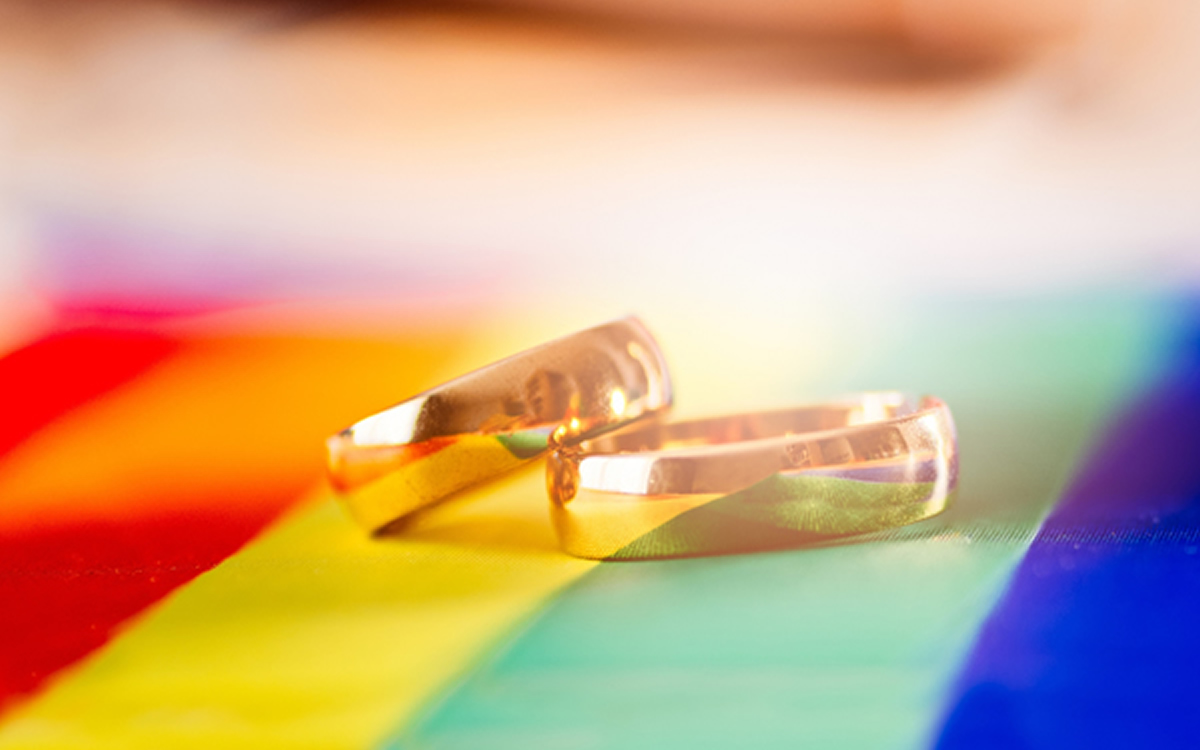
As Botswana prepares for the resumption of a landmark marriage equality case before the High Court on July 14–15, the country finds itself at a critical constitutional crossroads.
At first glance, the matter may appear to be about whether two women, Bonolo Selelelo and Tsholofelo Kumile, can have their love legally recognized. At its core however, this case is about something far more profound: the dismantling of patriarchy, the decolonization of law, and the integrity of Botswana’s constitutional democracy.
Beyond marriage: a question of power
Marriage, as a legal institution, has never been neutral. It has historically functioned as a mechanism for regulating women’s bodies, sexuality, and social roles within a patriarchal order. To deny LBQ (lesbian, bisexual, and queer) women access to marriage is not merely to exclude them from a legal benefit, it is to reinforce a hierarchy of relationships, where heterosexual unions are deemed legitimate and all others invisible. This case therefore challenges the very foundations of who gets to love, who gets to belong, and who gets to be protected under the law.
As feminist scholars have long argued, patriarchy is sustained through institutions that appear ordinary but are deeply political. The law is one such institution. And it is precisely here that this case intervenes: by asking whether Botswana’s legal system will continue to uphold exclusion, or evolve to reflect the constitutional promise of equality.
A constitutional journey: Botswana’s courts and human dignity
This is not the first time Botswana’s courts have been called upon to affirm the dignity of LGBTQI+ persons. Over the past decade, the judiciary has built a progressive body of jurisprudence grounded in equality, nondiscrimination, and human dignity.
In Attorney General v. Rammoge and Others (Court of Appeal Civil Appeal No. CACGB 128-14, 2016), the Court of Appeal upheld the right of LEGABIBO to register as an organization. The court affirmed that:
“The refusal to register the appellant society was not only unlawful, but a violation of the respondents’ fundamental rights to freedom of association.”
This was followed by the ND v. Attorney General of Botswana (MAHGB-000449-15, 2017) case, where the High Court recognized the right of a transgender man to change his gender marker. The court held:
“Gender identity is an integral part of a person’s identity … and any interference with that identity is a violation of dignity.”
In Letsweletse Motshidiemang v. Attorney General (MAHGB-000591-16, 2019), the High Court decriminalized same-sex activity, declaring sections of the Penal Code unconstitutional. Justice Leburu powerfully stated:
“Human dignity is harmed when minority groups are marginalized.”
This decision was affirmed by the Court of Appeal in Attorney General v. Motshidiemang (CACGB-157-19, 2021), where the court emphasized:
“The Constitution is a dynamic instrument … it must be interpreted in a manner that gives effect to the values of dignity, liberty, and equality.”
These cases collectively establish a clear principle: the Constitution of Botswana protects all persons, not just the majority.
The marriage equality case now asks a logical next question: If LGBTQI+ persons are entitled to dignity, identity, and freedom from criminalization, why are their relationships still denied recognition?
Decolonizing the law: What is truly ‘UnAfrican’?
Opponents of marriage equality often argue that homosexuality is “unAfrican.” This claim, while politically powerful, is historically inaccurate. Same-sex relationships and diverse gender identities have existed across African societies long before colonial rule. What is foreign, however, are the laws that criminalize these identities.
Botswana’s anti-sodomy laws were inherited from British colonial legal systems, not from indigenous Tswana culture. As scholars of African history have demonstrated, colonial administrations imposed rigid Victorian moral codes that erased and suppressed existing sexual diversity. To claim that homosexuality is unAfrican, while defending colonial-era laws, is therefore a contradiction.
A truly decolonial approach to the law requires us to ask: Whose morality are we upholding? And whose history are we erasing?
Marriage equality, in this sense, is not a Western imposition: it is part of a broader project of reclaiming African dignity, plurality, and humanity.
Democracy on trial: the question of separation of powers
This case also raises important questions about the health of Botswana’s democracy.
Following the 2021 Court of Appeal decision affirming the decriminalization of same-sex relations, Botswana witnessed public demonstrations, including marches led by groups such as the Evangelical Fellowship of Botswana (EFB), opposing the judgment and calling for the retention of discriminatory laws.
While public participation is a cornerstone of democracy, these events raise deeper concerns about the separation of powers. Courts are constitutionally mandated to interpret the law and protect fundamental rights, even when such decisions are unpopular. When judicial decisions grounded in constitutional principles are publicly resisted on moral or religious grounds, it risks undermining the authority of the courts and the rule of law itself.
Democracy is not simply about majority opinion: it is about the protection of minority rights within a constitutional framework.
Botswana is not a theocracy
It is also important to clarify a recurring misconception: Botswana is not a Christian nation.
Botswana is a secular constitutional democracy and more accurately, a pluralistic society that recognizes and respects diversity of belief, culture, and identity. The Constitution does not elevate one religion above others, nor does it permit religious doctrine to dictate legal rights. The law must serve all citizens equally, regardless of faith.
To frame marriage equality as a threat to Christianity is therefore misplaced. The question before the courts is not theological, but constitutional: Does the exclusion of same-sex couples from marriage violate the rights to equality and nondiscrimination?
Love, equality, and the future of justice
At its heart, this case is about love, but it is also about power, history, and justice. It asks whether Botswana is prepared to move beyond colonial legal frameworks and patriarchal norms, and to embrace a future grounded in equality, dignity, and inclusion.
It asks whether the Constitution will continue to be interpreted as a living document, one that evolves with society, or remain constrained by outdated moral assumptions. Ultimately, it asks whether Botswana’s democracy can hold true to its founding promise: that all persons are equal before the law.
As the High Court prepares to hear this case in July 2026, the nation has an opportunity to affirm not only the rights of two individuals, but the broader principle that love, in all its diversity, deserves recognition, and protection.
Lorato ke lorato.
Love is love.
Justice, if it is to mean anything at all, must make space for it.
Nozizwe is the CEO of LEGABIBO (Lesbians, Gays and Bisexuals of Botswana)
Opinions
Border to border: modern slavery and human trafficking in refugee movements across East Africa
LGBTQ people disproportionately targeted for sexual exploitation

I did not choose to become a refugee. I did not choose to become a victim of trafficking. I only chose to live as myself. Yet in the world I come from, choosing to live as myself was enough to make me a target. As a transgender woman from Uganda, my identity alone placed me in danger. What followed was not just displacement, it was a journey through systems of exploitation that closely resemble modern slavery, hidden in plain sight along the borders and pathways that refugees are forced to travel.
People often imagine modern slavery as something that happens in secret: in locked rooms, in distant brothels, in hidden factories. Human trafficking is portrayed as a dark underworld run by organized criminals. But for many refugees in East Africa, exploitation does not hide in the shadows. It exists in the open, woven into the very routes of survival. It is present at border checkpoints, in refugee camps, in the hands of smugglers, and even in the institutions meant to protect us. It is not always marked by chains or cages. Sometimes it looks like a bus ticket, a border crossing, a promise of safety, or a demand for money that you cannot refuse.
My journey across borders is only one example of how these systems operate. But it is a story shared by many LGBTQI+ refugees whose lives are shaped by violence, silence, and the constant negotiation of safety.
In Uganda, being transgender is not simply misunderstood, it is dangerous. My family, deeply rooted in conservative religious beliefs, saw my identity as a disgrace. I was threatened, rejected, and made to feel that my life had no value. Outside the home, communities policed identity through violence. The legal environment offered no protection. Instead, it reinforced fear. Laws targeting LGBTQI+ people made it impossible to seek help from authorities. Reporting abuse often meant risking arrest. Every day became a calculation of risk: where to walk, who to trust, how to hide. Eventually, the threats became too real to ignore. Leaving was not a choice, it was survival.
My journey out of Uganda began through unofficial routes. Like many refugees fleeing persecution, I could not rely on safe or legal pathways. Instead, I was forced into networks of smugglers and traffickers operating along border regions. From Uganda through border points like Maraba, and later through movements connected to Kakuma Refugee Camp and into South Sudan, each step came with a cost financial, emotional, and physical. At border crossings, money speaks louder than rights. Payments were demanded at checkpoints. There was no transparency, no accountability. You either paid, or you risked being turned back or worse.
For LGBTQI+ refugees, these journeys are even more dangerous. Visibility can mean exposure. Exposure can mean violence. There is constant fear of being outed, harassed, or assaulted not only by traffickers but sometimes by those meant to enforce the law. This is how modern trafficking operates not always through chains, but through systems of dependency, coercion, and fear.
Human trafficking is often imagined as a distant or extreme phenomenon. But for many refugees, especially LGBTQI+ individuals, it exists in subtle and systemic ways. It is in the forced payments demanded at every step of the journey. It is in the exploitation of vulnerability by those offering “help.” It is in the silence of systems that fail to protect. Many LGBTQI+ refugees face extortion by smugglers and intermediaries, threats of violence or exposure, sexual exploitation and abuse, and discrimination by officials and communities. These experiences are rarely documented. Fear prevents reporting. Lack of access prevents justice. What remains is a hidden crisis, one that continues across borders.
Reaching South Sudan did not bring safety. I now live in Gorom Refugee Settlement Camp, where the reality for LGBTQI+ refugees remains harsh and dangerous. Discrimination is part of daily life. Access to food, water, and healthcare is often affected by stigma. Moving freely within the camp can be risky. Violence and threats are constant. As a transgender woman, I am highly visible. This visibility increases my vulnerability. I have faced harassment, intimidation, and threats from both host communities and other refugees. Some blame LGBTQI+ refugees for misfortunes accusing us of bringing curses or problems. These beliefs, rooted in stigma and misinformation, fuel violence and exclusion. Safety, even in a refugee camp, is not guaranteed.
Despite these challenges, I have chosen not to remain silent. In Gorom, I serve as a leader and representative of an LGBTQI+ Refugees and Asylum Seekers Network. Our community includes individuals who are traumatized, isolated, and often unable to advocate for themselves. Many cannot read or write. Some are dealing with serious medical conditions. Others are too afraid to speak. I support them by helping fill out applications and forms, writing emails to organizations, connecting them with protection pathways, and providing peer support and coordination. Through this work, several members of our community have managed to access opportunities for relocation and protection. Some have received case numbers and are progressing through international processes. While I am proud of this work, it comes with a cost. My visibility as a leader makes me a target. The more I help others, the more I am exposed.
The systems I have experienced reflect a form of modern slavery that is not always recognized. It is not defined by ownership, but by control. It is not enforced by chains, but by fear and dependency. When refugees are forced to rely on informal and unsafe systems to survive, exploitation becomes inevitable. International frameworks like the Palermo Protocol recognize trafficking as involving coercion, exploitation, and abuse of vulnerability. By these definitions, what many refugees experience during displacement falls within this reality. Yet, these experiences are rarely acknowledged in policy or response.
My story is one thread in a much larger tapestry of exploitation. Across East Africa, displacement has created informal systems where movement is controlled not by law, but by power, money, and vulnerability. Within these systems, trafficking and modern slavery are not isolated crimes; they are embedded in the everyday experiences of refugees. The blurred line between smuggling and trafficking becomes clear when a voluntary agreement turns into coercion. Payments increase unexpectedly. Conditions worsen. Threats emerge. At this point, smuggling begins to resemble trafficking. People are forced to pay additional fees under threat, detained or abandoned if they cannot pay, and subjected to coercion, intimidation, or violence. The journey becomes one of survival under control, rather than movement by choice.
Checkpoints are one of the most visible forms of exploitation. Across multiple borders, movement is regulated not only by official policies but by informal practices. Travelers are often required to make payments to pass through, regardless of their legal status. These payments are rarely documented. They are negotiated at the moment, often under pressure. Failure to comply can result in detention, forced return, physical intimidation, or exposure to further risks. For those already vulnerable, checkpoints become sites of control and exploitation. This system benefits from a lack of accountability. It thrives in environments where oversight is weak and corruption is normalized.
Modern slavery is not always about physical confinement. It can also take the form of economic exploitation. During transit, individuals may be required to pay escalating fees at each stage of the journey, surrender money or belongings, or depend entirely on intermediaries for movement. In some cases, individuals are left stranded if they cannot meet financial demands. This creates a cycle of dependency: you rely on the network to move, the network controls the cost, and the cost determines your safety. Such systems exploit vulnerability in a way that aligns closely with definitions of modern slavery particularly the abuse of power and the extraction of value through coercion.
Reaching a destination, such as a refugee settlement, does not necessarily end exposure to exploitation. In many camp settings, individuals continue to face restricted access to resources, dependency on aid systems, and informal economies that can be exploitative. Where formal support systems are overstretched or under-resourced, informal structures emerge again. These structures may involve gatekeeping access to services, manipulation of aid distribution, or continued financial or social exploitation. The conditions that enable trafficking do not disappear; they evolve.
Beyond East Africa, modern slavery takes other forms that mirror the same patterns of vulnerability and exploitation. Labor trafficking to the Gulf has become a major issue for migrants from Uganda, Kenya, and Tanzania.
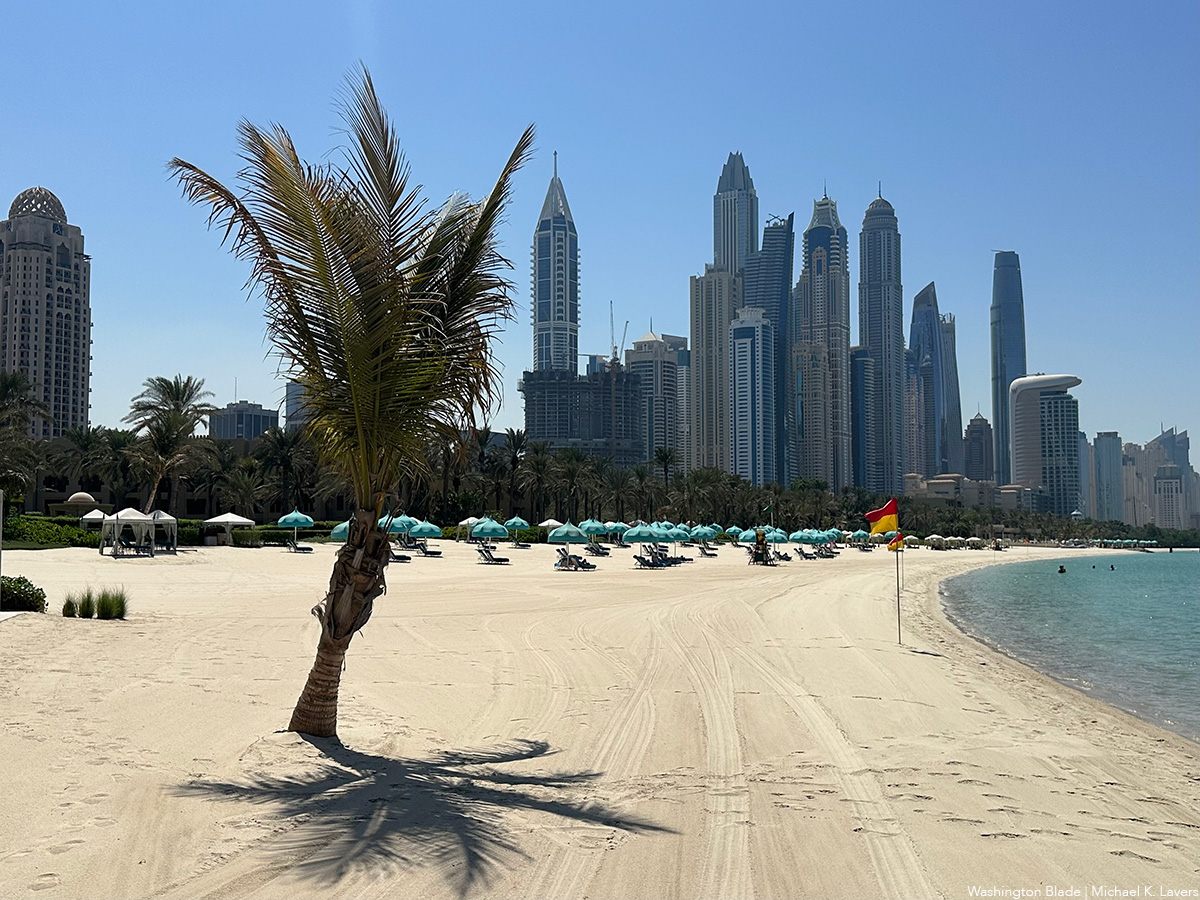
Recruitment agencies promise good jobs, but many migrants end up in forced domestic labour, with confiscated passports, unpaid wages, and conditions amounting to slavery. Some never return home. Organ trafficking has also been documented, with victims from Africa ending up in countries such as Thailand, Malaysia, Russia, and China. Kidneys are the most commonly trafficked organs. Some victims are coerced; others are deceived; some are killed. Women, girls, and LGBTQI+ individuals are disproportionately targeted for sexual exploitation. For refugees, “survival sex” becomes a coping mechanism in the absence of protection and resources. Modern slavery thrives because the global economy rewards cheap labour. Migrants from East Africa are used in construction, domestic work, agriculture, and manufacturing. Their exploitation is hidden behind the products the world consumes.
From a humanist perspective, the existence of such systems raises urgent ethical questions. If all human beings have equal dignity, why are some forced to risk exploitation to survive? If rights are universal, why are they not accessible in practice? Human trafficking and modern slavery in refugee movements are not only criminal issues, they are moral failures. They reflect a gap between principles and reality. They expose the distance between what we claim to value and what we allow to happen.
Addressing these issues requires more than isolated interventions. Safe and legal migration pathways must be expanded. Border accountability must be strengthened. Anti-trafficking measures must be integrated into refugee protection. Refugee-led initiatives must be supported. Those with lived experience are best positioned to identify risks and solutions.
Modern slavery and human trafficking are not always visible in chains or confinement. In many cases, they exist within systems that appear as ordinary border crossings, transit routes, and refugee settlements. Recognizing these systems is the first step toward change. The movement of people across borders should not come at the cost of their dignity, safety, or freedom. Yet, for many, it does. Until safe alternatives exist, and accountability is enforced, these hidden systems of exploitation will continue.
The question is not whether they exist.
The question is whether we are willing to confront them.
Aby lives in the Gorom Refugee Settlement Camp in South Sudan.

Thousands attend ‘No Kings’ protests in D.C.

Blade contributor, husband exchange vows in D.C.

Ghanaian president welcomed to Philadelphia amid backlash over anti-LGBTQ bill

PHOTOS: ‘No Kings’ rally and march

‘Out for McDuffie’ event held at D.C. gay bar

Pa. House passes bill to codify marriage equality in state law

Introducing the Torchbearers Awards honoring queer, trans women and nonbinary people

New IOC policy bans trans women from Olympics

A surtax would end this war quickly

‘No Kings’ protests set for D.C.
-

 Pennsylvania5 days ago
Pa. House passes bill to codify marriage equality in state law
-
a&e features5 days ago
Introducing the Torchbearers Awards honoring queer, trans women and nonbinary people
-
Sports5 days ago
New IOC policy bans trans women from Olympics
-
Opinions5 days ago
A surtax would end this war quickly