Bars & Parties
Stoli Cocktail Classic inspires clever libation mixology
Freddie’s bartender advances to Key West
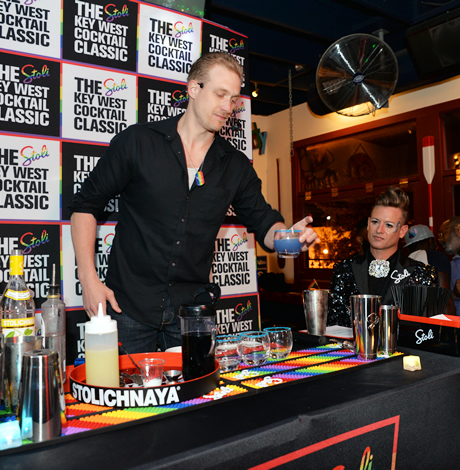

Josh Pocock of Freddie’s Beach Bar advances to Key West after winning the bartender competition at Nellie’s Sports Bar on Monday. (Washington Blade photo by Michael Key)
Nellie’s Sports Bar played host this week to the fourth annual Stoli Key West Cocktail Classic, an annual LGBT bartending competition that takes place in 17 cities across the country, culminating in a final contest during Pride Week in Key West, Fla., featuring the winners from each city.
The scene was as glitter-filled and vodka-soaked as you’d hope it would be, led by Stoli’s LGBT ambassador Patrik Gallineaux, who said of the event, “There was a time when gay bars were our only community centers, our safe spaces. I remember when I was 21 and first went to a gay bar and how I felt instantly accepted for who I was. Everyone there said, ‘You belong,’ and that changed my world.”
Just three bartenders competed in the D.C. competition this year — a maximum of six are allowed — so the odds of winning a six-day trip to Key West in June were pretty good. This year’s cocktail entries had to embrace the theme of Key West while utilizing Stoli brand vodkas; contestants also had to demonstrate their cocktail before an audience of 100 eager imbibers, who would be able to sample each drink, along with four judges, to help declare a winner.
One of the judges, Troy Petenbrink, a D.C.-based food and travel writer known as the Gay Traveler, said he was looking for cocktails that embraced “the excitement, the fun and the dirtiness of Key West.”
Josh Pocock, a bartender at Freddie’s Beach Bar in Arlington, Va., started off the competition with true flair by combining three different Stoli flavors — Razberi, Bluberi and Citro — into a concoction he titled “Purple Haze.” By adding an extract made from red cabbage and a touch of acidity from lemon juice, Pocock’s cocktail magically changed colors, from a deep blue Caribbean color to that of a deep pink sunset. Dropping in a chunk of dry ice to create a smoking effect made for plenty of oohs and ahhs from an appreciative crowd. While the result was overly sweet for some tasters, the wow factor was in full evidence.
If you’ve never heard of a color-changing cocktail, you would certainly have learned about it at this event, because not just one, but two cocktails were given the red cabbage treatment. For the science-challenged, red cabbage juice has a naturally-occurring pigment molecule, anthocyanin, that can change the color of liquids when combined with an acid (to create red tones) or baking soda (for blue tones) — give it a try at your next party.
It was Colt Runion, a bartender at Jack Rose Dining Saloon, who used a red cabbage syrup to effect a color change for his cocktail entry, called “Changing and Showing One’s New Colors,” which he mixed up with enthusiastic vocal support from his fiancé in the audience. Eschewing the flavored vodkas, Runion stuck with classic Stoli Premium to create a high-end cocktail that incorporated a Czech herbal liqueur, Becherovka and sherry, garnished with pickled golden beets. It was a sophisticated sipper for discerning drinkers, but the judges disagreed as to its suitability for the Key West theme.
Event judge and D.C. drag favorite Sacha Adams called Runion’s slightly savory cocktail “an acquired taste”; Matthew Harden, winner of the 2016 D.C. competition, simply said, “It’s not for me,” while Petenbrink said, “This is a fabulous cocktail but I would not drink it in Key West.” JP Sabatier, GM of Rappahannock River Oysters, contradicted his fellow judges, saying, “I might order this in Key West; it’s a great cocktail with a delicious taste. When you add that pickled garnish, it’s like music in your mouth.” Stoli ambassador Gallineaux called it “one of the most interesting and well-done cocktails we’ve ever had.”

Colt Runion of Jack Rose (Washington Blade photo by Michael Key)
The third cocktail, presented by bartender Sean Brevard of Nellie’s, offered up the freshest flavor of the three entries and was accurately deemed a “patio pounder” by the crowd — a variation of a strawberry daiquiri, chock full of fresh strawberries, blueberries, and raspberries, and with an addition of watermelon liqueur — the epitome of summer in a glass.

Sean Brevard of Nellie’s Sports Bar competes in the Stoli Cocktail Classic competition at Nellie’s Sports Bar on April 24, 2017. (Washington Blade photo by Michael Key)
Ultimately, flair may have won out over flavor, with Pocock taking the prize for his visually creative entry — and even Pocock may have been surprised by his ability to create such a crowd-pleaser. “I’m honestly a whiskey drinker,” he said, “but I do really love a Lemon Drop martini, so I used that as a starting point.” In preparation for the final competition in Key West in June, he’s planning on taking some pointers from the judges. Look for Pop Rocks on the rim of the glass instead of rock sugar and a touch more acidity. He’ll also plan to bring his game face: “I love interacting with customers, but this was definitely a different environment, presenting in front of an audience like that. I’ll be sure to be more upbeat and bring more personality to my presentation. Now I know what to expect.”
Fancy an opportunity to go to Key West next year? You don’t have to actually be a working bartender to enter the Stoli Key West Cocktail Classic, so start practicing your mixology skills now.
Kristen Hartke is a D.C.-based food and beverage writer. Follow her kitchen adventures on Instagram, @kristenhartke.




Bars & Parties
Lesbian Bar Project co-founder: purity politics could destroy our remaining spaces
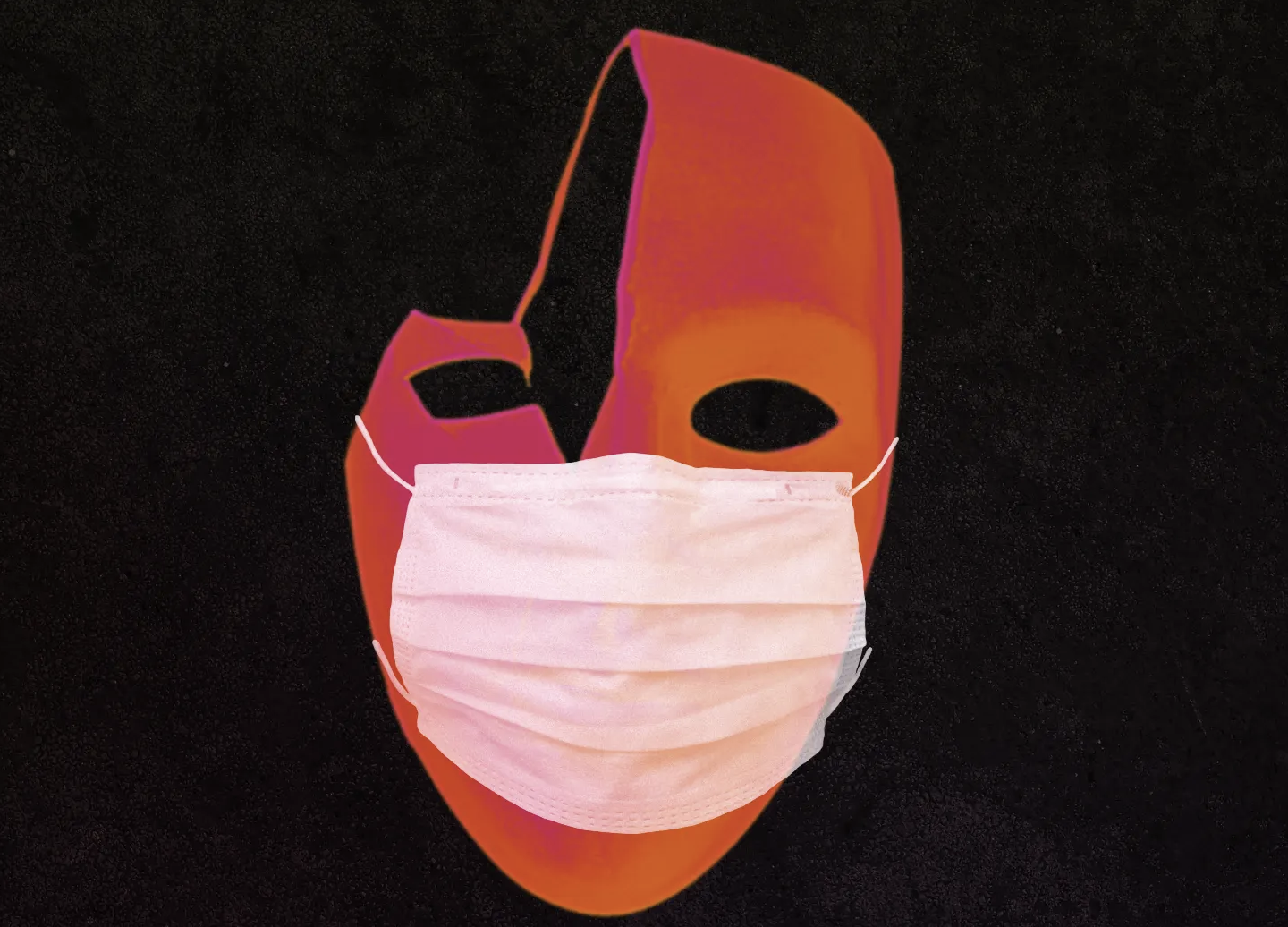
Last Ditch’s decision to lift its mask requirement for one night a week has sparked intra-queer controversy
Uncloseted Media published this story on Sept. 29
By ERICA ROSE and THE LESBIAN BAR PROJECT | As a professional lesbian and Massachusetts native, I’ve recently been asked by a lot of folks what I think about the saga unfolding at Last Ditch. The now-viral story, first reported by the Boston Globe, centers on a Western Massachusetts lesbian bar that lifted its mask requirement for one night a week to help drum up business.
The decision ignited an intra-queer controversy that has been feasted on by media outlets across the political spectrum — from the New York Post to LGBTQ Nation — and is even reportedly being eyed for a Hollywood adaptation. Apparently nothing is more entertaining than a bunch of lesbians and queers fighting with each other over KN-95s.
What has been lost in all of the chatter and media coverage is the very real possibility that Last Ditch, which just opened in April 2025, will have to close its doors. The venue’s one remaining founder, Jackie Matellian, revealed in a community Zoom meeting that she’s working four jobs, is now solely responsible for the bar’s $50,000 business loan and is struggling to keep up with the bills. So as we laugh about the controversy’s similarity to a “Portlandia” skit and how one of the bar’s founders left to enroll in clown school, we forget that yet another lesbian bar is facing an existential crisis — and this time the call is coming from inside the house.
In 2020, my friend Elina Street and I created The Lesbian Bar Project, an Emmy-, Webby- and GLAAD Media Award-winning docuseries and initiative that tells the stories of lesbian queer bars around the world. We were moved to act because at the time there were only an estimated 16 lesbian bars in the United States, and the pandemic threatened to bring that number down even further.
There are now more sapphic bars than there were just before the pandemic — about 36 of them in total — but this is down from approximately 200 in 1980. Maybe that doesn’t mean much to you, but for the millions of sapphics living in the U.S., this number is calamitous.
As the world laughs at lesbians and sapphics, I want to take a second and tell you what I feel when I walk into one of these bars, which are all unique and irreplaceable in their own way: I feel seen.
Sometimes I think Cubbyhole in New York City’s West Village neighborhood knew I was gay before I did. When I walked in there for the first time, before I was even out, I was transfixed by the colorful array of tchotchkes hanging from the ceiling and how the women standing next to me were completely unafraid to express their desire for one another. I knew the minute I was ready to come out, I had a home. I also felt the joy of a new couple falling in love at Seattle’s Wildrose, the quiet confidence of a short king lining up her shot at the pool table at Ginger’s in Brooklyn and the kick of cayenne pepper in Julie Mabry’s crawfish at Houston’s Pearl Bar.
Lesbian bars don’t just serve lesbians; they serve queer folks across the spectrum, including bisexual, pansexual and trans people. As Elina and I traveled across the U.S. and Europe and to parts of Latin America to document the bar owners, staff and patrons that make up the ecosystems of these spaces, we also became uniquely acquainted with the factors that threaten their existence: gentrification, wage gaps, sexism, environmental disasters, gun violence, rising insurance premiums and political administrations working to annihilate queer people and their families.
Lesbian bar owners, like all leaders and entrepreneurs, are imperfect. There have been significant issues over the years at lesbian bars: employee harassment, racism, lack of accessibility, sexual assault and transphobia. All bar owners should be held accountable and should listen to their communities to evolve into safer and more equitable spaces. I also acknowledge my privilege: I am able-bodied, white, cis and from a family system that loves me for who I am. Not everyone has that.
Queer people, especially trans and bisexual people, are suffering from disproportionately high levels of depression, and our mental health system isn’t equipped to support them. Immunocompromised people and long COVID are real, and many of my friends are suffering to this day. The people with the least safety net are often the ones for whom a bar closing costs the most. And yet, as we’re seeing with Last Ditch, the queer community often lashes out at each other. It’s also the mainstream media taking the internal conflict and making a mockery out of it, distracting from the real possibility that this bar could close due to financial pressures. A bar that many people loved and needed is facing extinction. Perhaps it’s safer to dissent with one another than with the larger forces trying to eradicate us, but in doing so, we risk destroying the few spaces we have left.
Due to the constraints of purity politics — some in good faith, some not so much — lesbian bar owners, almost all of whom are queer women themselves, are forced to be everything for everyone, similarly to how women are forced to be everything for everyone. By asking these bars to uphold impossible standards — standards very few other third spaces are asked to consider — we all end up losing.
I want to move as a community toward dialogue, compassionate dissent and collaboration to make our spaces better with the goal of keeping them OPEN and thriving, rather than destroying them from the inside with expectations that are arguably unattainable.
While I have your attention — for this fleeting second of the news cycle — may I urge us to spearhead a way to keep these small businesses afloat without attacking our own community along the way? Bar owners are left with an impasse: They want to be community-centered, but they also have to make money to keep their doors open. Sometimes they might make business decisions that don’t work for everyone — and that’s partly because different patrons have different priorities and want different things — but these owners deserve the opportunity for productive dialogue. We have to work with them and with each other to keep our spaces open, to keep them growing.
Lesbian bars raised me into the queer woman I am today. One thing I think about as I reflect on the six years of work we’ve done to document these spaces is that shared, unspoken language I have with a stranger the moment we both walk into one of these bars: the nod, the ease, the not having to explain ourselves. I don’t want to lose that, and neither should you.
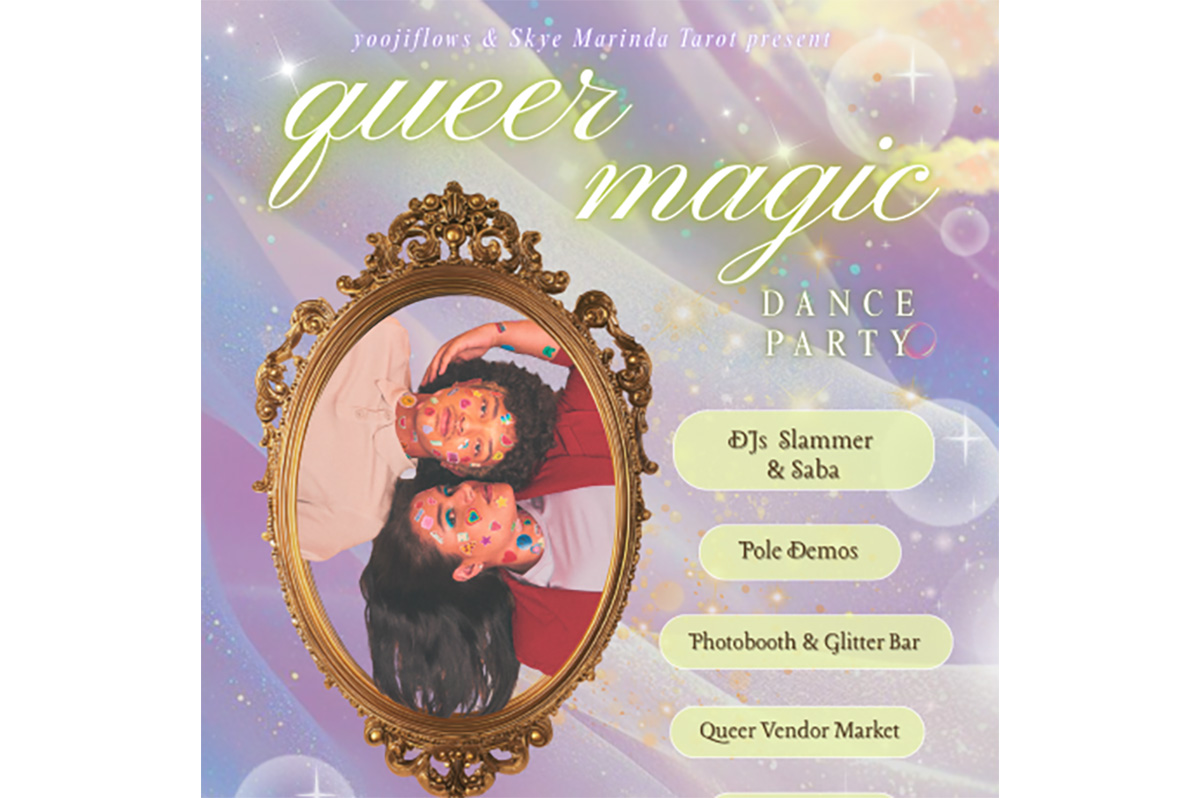
Celebrate the start of Pride month at the Queer Magic Dance Party at the Black Cat on Saturday, June 6. Doors open at 9 p.m.
There will be pole performances and demonstrations, a free photo booth with glitter bar, a queer vendor market, tarot readings by Skye Marinda Tarot, a drag performance by Sapphica, and dancing to a blend of smooth R&B, Afrobeats, hip-hop and pop by Slammer & Saba. Tickets are $20 at the door or $15 (plus fees) in advance, purchased here.
Bars & Parties
Here’s where to watch ‘RuPaul’s Drag Race’ with fellow fans
Entertainers TrevHER and Grey host event with live performance

Spark Social Events will host “Ru Paul’s Drag Race S18 Watch Party Hosted by Local Drag Queens” on Friday, Jan. 23 at 8 p.m.
Drag entertainers TrevHER and Grey will provide commentary and make live predictions on who’s staying and who’s going home. Stick around after the show for a live drag performance. The watch party will take place on a heated outdoor patio and cozy indoor space.
This event is free and more details are available on Eventbrite.

Kim Kardashian gets the bio treatment in new book

Honoring LGBTQ+ veterans and advancing housing equality

Epic ‘La bola negra’ delivers powerful romance for the ages

Out actor on his 25-year love affair with ‘Mamma Mia’

Comings & Goings

Record number of LGBTQ lawmakers elected to Congress in midterms

Republican Andy Harris wins in Maryland’s 1st district

Democrats take control of Congress in historic rebuke of Donald Trump

Gay, lesbian Md. state lawmakers win re-election

Janeese Lewis George wins race for D.C. mayor by wide margin
-

 2026 Midterm Elections4 days ago
Record number of LGBTQ lawmakers elected to Congress in midterms
-
2026 Midterm Elections5 days ago
Republican Andy Harris wins in Maryland’s 1st district
-
2026 Midterm Elections5 days ago
Democrats take control of Congress in historic rebuke of Donald Trump
-
2026 Midterm Elections5 days ago
Gay, lesbian Md. state lawmakers win re-election