Sports
Travel bans complicate sporting events in states with anti-LGBT laws
Public schools scrambling to comply with directives
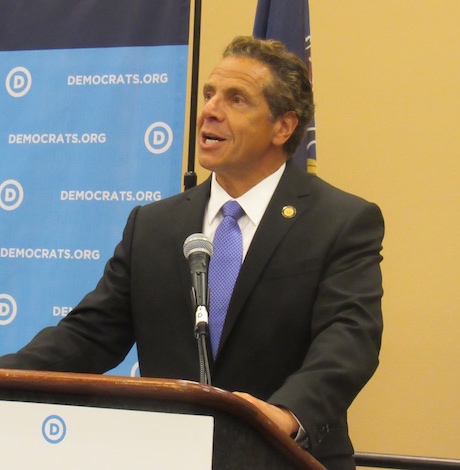
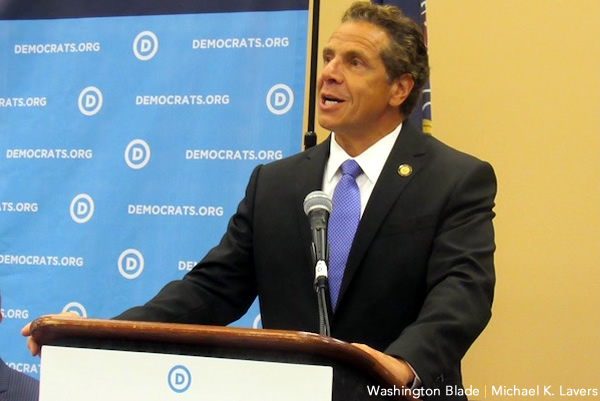
New York Gov. Andrew Cuomo enacted a ban on official state travel to North Carolina after its legislature passed a notorious anti-LGBT law. (Washington Blade file photo by Michael K. Lavers)
In the aftermath of states enacting anti-LGBT laws, other jurisdictions have responded with bans on state-sponsored travel to those places — and the impact is already being felt in the sports world.
A number of states and D.C. enacted travel bans to North Carolina after passage of House Bill 2 — and renewed those bans after North Carolina Gov. Roy Cooper replaced it with another law critics say is still discriminatory.
As a result of the travel ban enacted by New York Gov. Andrew Cuomo, the State University of New York at Albany last year had to back out of a non-conference men’s basketball game set to take place at Duke University. Additionally, the NCAA altered the seeding for Stony Brook University’s women’s lacrosse team in the postseason tournament so the team wouldn’t have to travel to University of North Carolina, Chapel Hill.
The New York ban is also influencing upcoming games in the Colonial Athletic Association, the only Division 1 conference whose membership includes public schools in New York and at least one in North Carolina. It makes things complicated for Stony Brook University’s football team, which is set to compete against Elon University in the fall.
Because the competition was scheduled before House Bill 2 became law, New York granted Stony Brook an exemption to the travel ban, but that won’t be an option in the future. The conference is now identifying a different scheduling matrix for games between 2018 and 2021.
Hudson Taylor, executive director of Athlete Ally, said the rescheduling of the conference demonstrates the travel bans are having an impact.
“They’re having to completely overhaul their scheduling processes to change how games are scheduled and where there can be held because they’re seeing teams who are saying we’re not going to travel and we’re not going to compete,” Taylor said. “We’re definitely seeing an impact — at least at the conference level about the approach to scheduling games and where these types of competition will be held.”
Even though the bans are only for state-sponsored travel, and thus would affect only public schools, not private schools, Taylor said even private schools are acting with anti-LGBT laws in mind in terms of sporting events.
The Marist Red Foxes, for example, made the decision to travel last year to North Carolina to compete at Duke University, but also met with a local LGBT center and wore special warm up gear to show solidarity with LGBT people. According to ESPN, many teammates sported red, tie-dyed shirts that read “Love is Love” on the front and “I stand on the right side of history.”
“They felt and I think a lot of schools are going to feel that if we can actually travel and make a difference … that is a more meaningful experience, than, just say, boycotting,” Taylor said.
Whether these interferences with sporting events are having an impact on anti-LGBT laws is another question. After all, HB2 may be gone, but North Carolina’s new law bars city pro-LGBT ordinances for three years and state institutions from making bathroom policies for transgender people.
Hudson said the cancellation of sporting events is “another arrow in the quiver for the movement,” but the impact is still playing out and may be more clear at a later time.
If Texas goes through during its special session called by Gov. Greg Abbott with an anti-LGBT law of its own, Hudson said there could be additional fallout with sporting events, citing recent opposition from the Dallas Stars to the pending proposal.
“I think it’s very possible we see the anti-LGBT laws that were introduced be defeated and not pass during the special session,” Taylor said.” And I think you can attribute some of the pressure that these bans and statements from the athletic community that they’re making, I think you can attribute some of that to the failure of the bills, should it happen in Texas.”





Sports
New IOC policy bans trans women from Olympics
New regulation to be in effect at 2028 summer games in Los Angeles
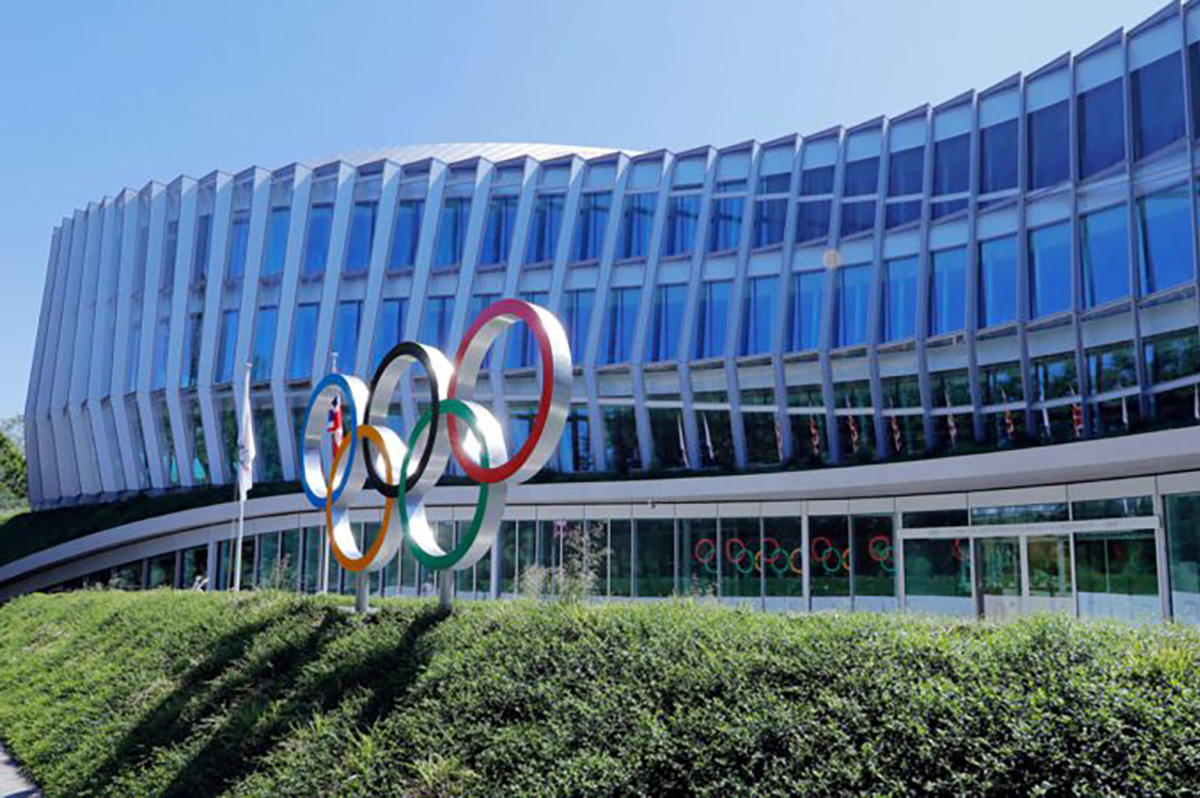
The International Olympic Committee on Thursday announced it will not allow transgender women from competing in female events at the Olympics.
“For all disciplines on the Sports Program of an IOC event, including individual and team sports, eligibility for any Female Category is limited to biological females,” reads the new policy.
The policy states “eligibility for the Female Category is to be determined in the first instance by SRY Gene screening to detect the absence or presence of the SRY Gene.”
“On the basis of the scientific evidence, the IOC considers that the SRY (sex-determining Region Y) Gene is fixed throughout life and represents highly accurate evidence that an athlete has experienced or will experience male sex development,” it reads. “Furthermore, the IOC considers that SRY Gene screening via saliva, cheek swab or blood sample is unintrusive compared to other possible methods. Athletes who screen negative for the SRY gene permanently satisfy this policy’s eligibility criteria for competition in the Female Category.”
The policy states the test “will be a once-in-a-lifetime test” unless “there is reason to believe a negative reading is in error.”
The new regulation will be in place for the 2028 Summer Olympics in Los Angeles.
“I understand that this a very sensitive topic,” said IOC President Kirsty Coventry on Thursday in a video. “As a former athlete, I passionately believe in the rights of all Olympians to take part in fair competition.”
“The policy that we have announced is based on science and it has been led by medical experts with the best interests of athletes at its heart. The scientific evidence is very clear: male chromosomes give performance advances in sport that rely on strength, power, or endurance,” she added. “At the Olympic Games, even the smallest margins can be the difference between victory and defeat. So, it is absolutely clear that it would not be fair for biological males to compete in the female category. In addition, in some sports it would simply not be safe.”
(Video courtesy of the IOC)
Laurel Hubbard, a weightlifter from New Zealand, in 2021 became the first trans woman to compete at the Olympics.
Imane Khelif, an Algerian boxer, won a gold medal at the 2024 Summer Olympics in Paris. Khelif later sued JK Rowling and Elon Musk for cyberstalking after they questioned her gender identity.
Ellis Lundholm, a mogul skier from Sweden, this year became the first openly trans athlete to compete in any Winter Olympics when he participated in Milan Cortina Winter Olympics in Italy.
President Donald Trump in February 2025 issued an executive order that bans trans women and girls from female sports teams in the U.S.
The U.S. Olympic and Paralympic Committee last July banned trans women from competing in female sporting events. Republican lawmakers have demanded the IOC ban trans athletes from women’s athletic competitions.
“I’m grateful the Olympics finally embraced the common sense policy that women’s sports are for women, not for men,” said U.S. Sen. Tom Cotton (R-Ark.) on X.
An IOC spokesperson on Thursday referred the Washington Blade to the press release that announced the new policy.

More than a dozen LGBTQ athletes won medals at the Milan Cortina Winter Olympics that ended on Sunday.
Cayla Barnes, Hilary Knight, and Alex Carpenter are LGBTQ members of the U.S. women’s hockey team that won a gold medal after they defeated Canada in overtime. Knight the day before the Feb. 19 match proposed to her girlfriend, Brittany Bowe, an Olympic speed skater.
French ice dancer Guillaume Cizeron, who is gay, and his partner Laurence Fournier Beaudry won gold. American alpine skier Breezy Johnson, who is bisexual, won gold in the women’s downhill. Amber Glenn, who identifies as bisexual and pansexual, was part of the American figure skating team that won gold in the team event.
Swiss freestyle skier Mathilde Gremaud, who is in a relationship with Vali Höll, an Austrian mountain biker, won gold in women’s freeski slopestyle.
Bruce Mouat, who is the captain of the British curling team that won a silver medal, is gay. Six members of the Canadian women’s hockey team — Emily Clark, Erin Ambrose, Emerance Maschmeyer, Brianne Jenner, Laura Stacey, and Marie-Philip Poulin — that won silver are LGBTQ.
Swedish freestyle skier Sandra Naeslund, who is a lesbian, won a bronze medal in ski cross.
Belgian speed skater Tineke den Dulk, who is bisexual, was part of her country’s mixed 2000-meter relay that won bronze. Canadian ice dancer Paul Poirier, who is gay, and his partner, Piper Gilles, won bronze.
Laura Zimmermann, who is queer, is a member of the Swiss women’s hockey team that won bronze when they defeated Sweden.
Outsports.com notes all of the LGBTQ Olympians who competed at the games and who medaled.
Sports
US wins Olympic gold medal in women’s hockey
Team captain Hilary Knight proposed to girlfriend on Wednesday
The U.S. women’s hockey team on Thursday won a gold medal at the Milan Cortina Winter Olympics.
Team USA defeated Canada 2-1 in overtime. The game took place a day after Team USA captain Hilary Knight proposed to her girlfriend, Brittany Bowe, an Olympic speed skater.
Cayla Barnes and Alex Carpenter — Knight’s teammates — are also LGBTQ. They are among the more than 40 openly LGBTQ athletes who are competing in the games.
The Olympics will end on Sunday.

VIDEO: Gay journalist detained for booing Trumps at ‘Chicago’ opening night

Idaho Gov. signs harshest anti-trans bathroom bill in the country

Award-winning D.C. chef reaching new culinary heights

Trans-driven ‘Serpent’s Skin’ delivers campy sapphic horror

Now more than ever: the importance of LGBTQ activism

‘Jonah’ an undeniably compelling but unusual memory play

‘Out for McDuffie’ event held at D.C. gay bar

The Oscar-losing performance that’s too good to miss

Thousands attend ‘No Kings’ protests in D.C.