Sports
Soccer lover calls D.C. United career ‘very rewarding’
Rory Molleda grew up watching soccer, now he works as a team coordinator for D.C.’s largest team
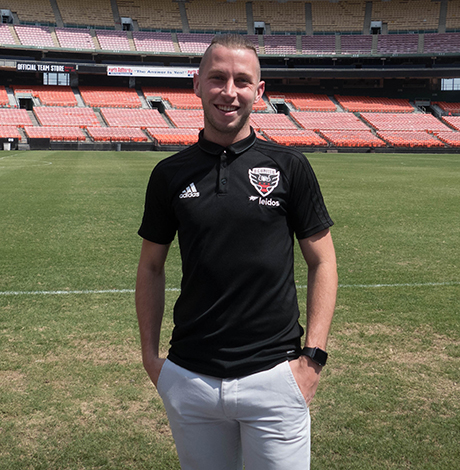
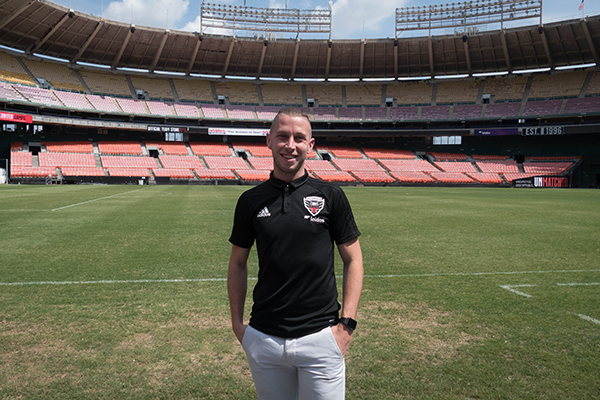
Soccer has been a life-long passion for Rory Molleda. (Photo courtesy D.C. United)
Rory Molleda knew growing up that he wanted to work in professional sports. He spent his youth attending D.C. United games and right out of college, he landed an internship with the organization. Six months later, he was offered the position of team coordinator and his lifelong dream came true.
Molleda was born in Venezuela and grew up in a soccer family. His father was a professional soccer player in Spain and Venezuela and his mother played soccer at Virginia Tech. When he was 5, the family moved to Alexandria, Va.
Except for a short stint in ice hockey, his main sport was soccer and he was part of a travel team playing year-round by age 10. When it came time for college, he ended up picking Guilford College, a small liberal arts school in North Carolina.
“It was big switch for me after attending high school at Robinson which has 4,500 students. Guilford has an enrollment of 1,200 and 30 percent of the students are athletes,” Molleda says. “The campus has a hippie feel and it was like living in a bubble. It’s different from the rest of North Carolina.”
Molleda, who plays left midfielder and left wing, didn’t get a lot of game time during his first two years at Guilford. His time spent on the bench didn’t detract from what it meant to him to be part of a team.
“It was great to contribute as a player my last two years,” Molleda says. “But it was those first two years, traveling with the team; it meant just as much to not play.”
He says he had great support from his family who came to games, with his mom often coaching him from the sidelines. During his senior year, his sister began her four-year stint playing soccer for Hofstra University.
After graduating with a sports management and Spanish double major in 2013, he moved back to the area and began his internship with D.C. United in operations, assisting with youth soccer tournaments. He sent his resume out to 60 organizations before the offer came from United. He coordinates the logistics of team travel.
“My office is in the locker room and I get to hang out with professional athletes every day,” Molleda says. “I am also traveling with the team once a month and am the person responsible for setting the players up to succeed in their away games. It’s very rewarding.”
As for his own soccer career, he began playing soccer with Metro Sports shortly after arriving back in the D.C. area. In 2016, he spotted the LGBT-based Federal Triangles Soccer Club at Capital Pride and signed up for a couple of their teams in the District Sports leagues. This past summer he played in their Summer of Freedom league for the first time.
“I didn’t come out until after college and I had no idea that gay soccer was a thing,” Molleda says. “It is special to have so much in common with a group of people. Joining the Federal Triangles has had a positive impact on me and has changed my life.”
Along with playing several nights a week with the Triangles, Molleda also gets to play soccer at work once a week with office workers, trainers and coaches. He initially struggled with what it meant to be gay in the world of professional sports but has taken some inspiration from openly gay LA Galaxy player Robbie Rogers.
“A co-worker asked about the HRC sticker on my car and I lied,” Molleda says. “Since that moment I don’t live in fear anymore. I am just living my life and doing the things I want to do.”
Molleda says that making an announcement at work would be a distraction from the team and he prefers to let it happen naturally. Recently three United players walked by while he was in line at Nellie’s Sports Bar and they just waved and said, “Hey.”
“There have been support moments, especially from Ben Olsen (United head coach), and I consider that a good affirmation of acceptance,” Molleda says. “We all want normalcy in our sports environment and I am incredibly happy to be a part of this team.”





Sports
New IOC policy bans trans women from Olympics
New regulation to be in effect at 2028 summer games in Los Angeles
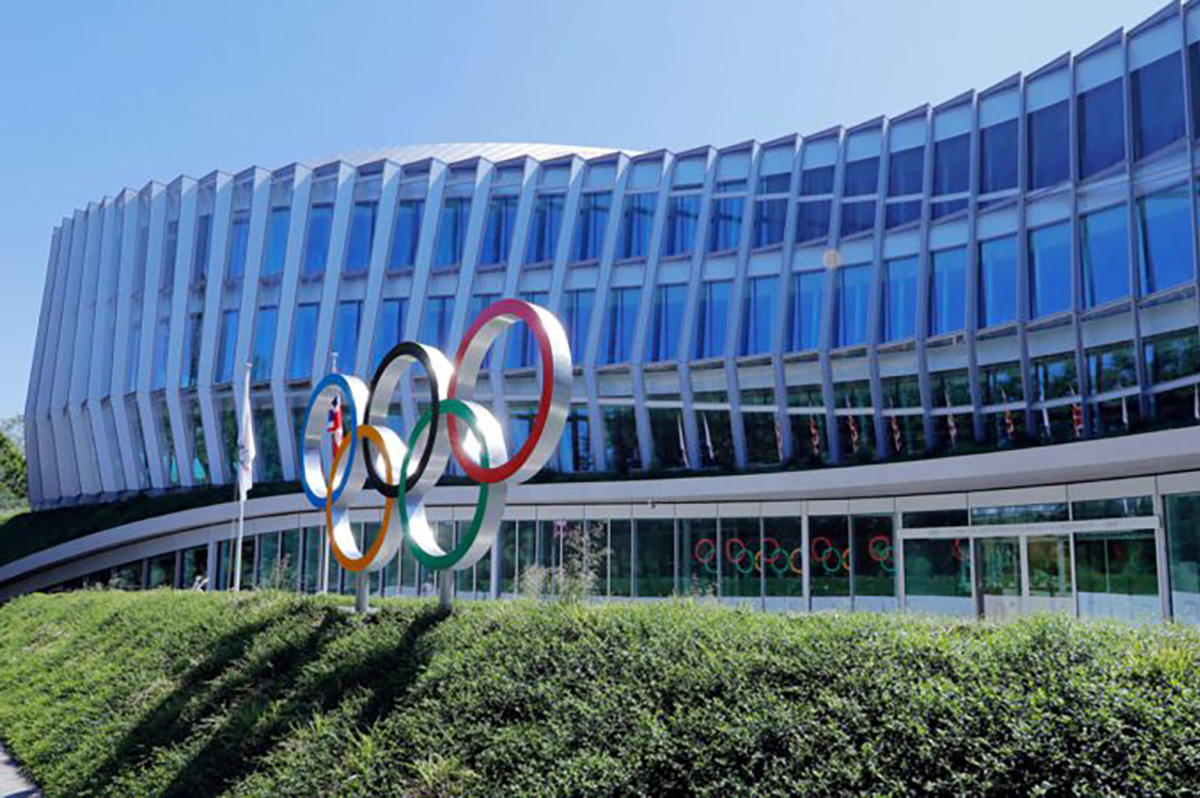
The International Olympic Committee on Thursday announced it will not allow transgender women from competing in female events at the Olympics.
“For all disciplines on the Sports Program of an IOC event, including individual and team sports, eligibility for any Female Category is limited to biological females,” reads the new policy.
The policy states “eligibility for the Female Category is to be determined in the first instance by SRY Gene screening to detect the absence or presence of the SRY Gene.”
“On the basis of the scientific evidence, the IOC considers that the SRY (sex-determining Region Y) Gene is fixed throughout life and represents highly accurate evidence that an athlete has experienced or will experience male sex development,” it reads. “Furthermore, the IOC considers that SRY Gene screening via saliva, cheek swab or blood sample is unintrusive compared to other possible methods. Athletes who screen negative for the SRY gene permanently satisfy this policy’s eligibility criteria for competition in the Female Category.”
The policy states the test “will be a once-in-a-lifetime test” unless “there is reason to believe a negative reading is in error.”
The new regulation will be in place for the 2028 Summer Olympics in Los Angeles.
“I understand that this a very sensitive topic,” said IOC President Kirsty Coventry on Thursday in a video. “As a former athlete, I passionately believe in the rights of all Olympians to take part in fair competition.”
“The policy that we have announced is based on science and it has been led by medical experts with the best interests of athletes at its heart. The scientific evidence is very clear: male chromosomes give performance advances in sport that rely on strength, power, or endurance,” she added. “At the Olympic Games, even the smallest margins can be the difference between victory and defeat. So, it is absolutely clear that it would not be fair for biological males to compete in the female category. In addition, in some sports it would simply not be safe.”
(Video courtesy of the IOC)
Laurel Hubbard, a weightlifter from New Zealand, in 2021 became the first trans woman to compete at the Olympics.
Imane Khelif, an Algerian boxer, won a gold medal at the 2024 Summer Olympics in Paris. Khelif later sued JK Rowling and Elon Musk for cyberstalking after they questioned her gender identity.
Ellis Lundholm, a mogul skier from Sweden, this year became the first openly trans athlete to compete in any Winter Olympics when he participated in Milan Cortina Winter Olympics in Italy.
President Donald Trump in February 2025 issued an executive order that bans trans women and girls from female sports teams in the U.S.
The U.S. Olympic and Paralympic Committee last July banned trans women from competing in female sporting events. Republican lawmakers have demanded the IOC ban trans athletes from women’s athletic competitions.
“I’m grateful the Olympics finally embraced the common sense policy that women’s sports are for women, not for men,” said U.S. Sen. Tom Cotton (R-Ark.) on X.
An IOC spokesperson on Thursday referred the Washington Blade to the press release that announced the new policy.
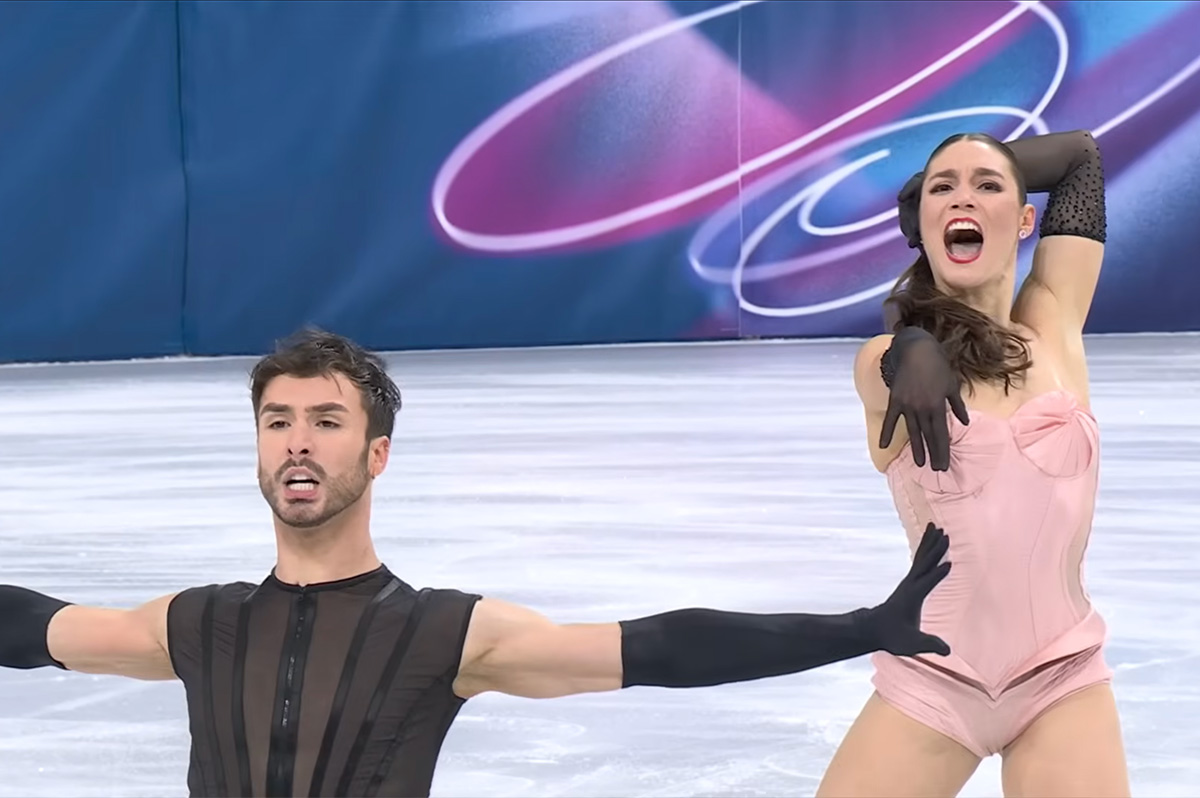
More than a dozen LGBTQ athletes won medals at the Milan Cortina Winter Olympics that ended on Sunday.
Cayla Barnes, Hilary Knight, and Alex Carpenter are LGBTQ members of the U.S. women’s hockey team that won a gold medal after they defeated Canada in overtime. Knight the day before the Feb. 19 match proposed to her girlfriend, Brittany Bowe, an Olympic speed skater.
French ice dancer Guillaume Cizeron, who is gay, and his partner Laurence Fournier Beaudry won gold. American alpine skier Breezy Johnson, who is bisexual, won gold in the women’s downhill. Amber Glenn, who identifies as bisexual and pansexual, was part of the American figure skating team that won gold in the team event.
Swiss freestyle skier Mathilde Gremaud, who is in a relationship with Vali Höll, an Austrian mountain biker, won gold in women’s freeski slopestyle.
Bruce Mouat, who is the captain of the British curling team that won a silver medal, is gay. Six members of the Canadian women’s hockey team — Emily Clark, Erin Ambrose, Emerance Maschmeyer, Brianne Jenner, Laura Stacey, and Marie-Philip Poulin — that won silver are LGBTQ.
Swedish freestyle skier Sandra Naeslund, who is a lesbian, won a bronze medal in ski cross.
Belgian speed skater Tineke den Dulk, who is bisexual, was part of her country’s mixed 2000-meter relay that won bronze. Canadian ice dancer Paul Poirier, who is gay, and his partner, Piper Gilles, won bronze.
Laura Zimmermann, who is queer, is a member of the Swiss women’s hockey team that won bronze when they defeated Sweden.
Outsports.com notes all of the LGBTQ Olympians who competed at the games and who medaled.
Sports
US wins Olympic gold medal in women’s hockey
Team captain Hilary Knight proposed to girlfriend on Wednesday
The U.S. women’s hockey team on Thursday won a gold medal at the Milan Cortina Winter Olympics.
Team USA defeated Canada 2-1 in overtime. The game took place a day after Team USA captain Hilary Knight proposed to her girlfriend, Brittany Bowe, an Olympic speed skater.
Cayla Barnes and Alex Carpenter — Knight’s teammates — are also LGBTQ. They are among the more than 40 openly LGBTQ athletes who are competing in the games.
The Olympics will end on Sunday.

Kristi Noem ‘devastated’ as husband’s alleged fetish spending surfaces

Colo. activists condemn SCOTUS conversion therapy ruling

Is Ghana’s selective justice a human rights contradiction?

Supreme Court ruling against conversion therapy bans could affect Md. law

Glisten report details hostile climate for LGBTQ students

‘Out for McDuffie’ event held at D.C. gay bar

The Oscar-losing performance that’s too good to miss

‘Jonah’ an undeniably compelling but unusual memory play

PHOTOS: ‘No Kings’ rally and march