Arts & Entertainment
Tig Notaro ‘felt trapped’ by her business relationship with Louis C.K.
the comedian has been accused of multiple sexual misconduct allegations
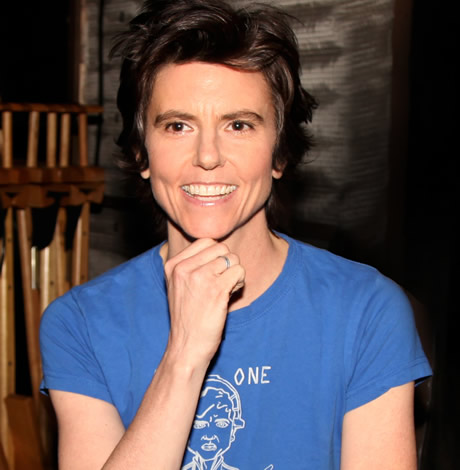
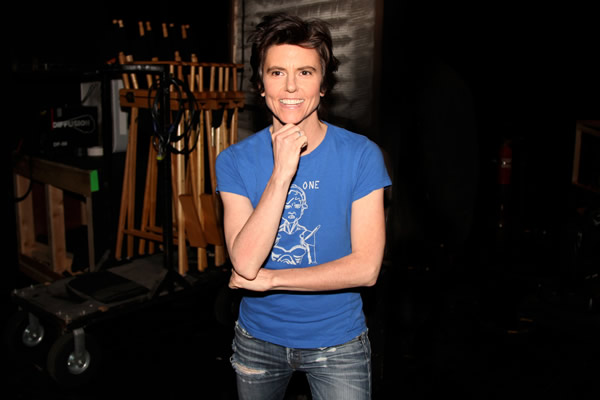
Tig Notaro (Photo by Ruthie Wyatt; courtesy Brightest Young Things)
Tig Notaro says that she “felt trapped” by her association with Louis C.K. as sexual misconduct allegations surrounding him grew.
The New York Times published the accounts of five women who allege C.K. sexually harassed them. Notaro told the New York Times that two of the women, Dana Min Goodman and Julia Wolov, are her friends. Goodman and Wolov, among the other three women, allege that C.K. masturbated in front of them.
C.K. released Notaro’s comedy album in 2012 but she told the Times she began to feel “trapped” by their relationship as sexual misconduct allegations began to grow.
Notaro says she learned of the allegations when she sold her series “One Mississippi” to Amazon. C.K. is listed an executive producer on the show.
“Sadly, I’ve come to learn that Louis C.K.’s victims are not only real, but many are actual friends of mine within the comedy community,” Notaro told the Times.
However, she clarified to the Daily Beast in an August interview that despite the title C.K. has “nothing to do with the show.”
Notaro may have used “One Mississippi” to call out C.K.’s alleged behavior. In one scene a male executive masturbates in front of his female employee, a striking similarity to the accounts being told about C.K.
She urged C.K. to “handle” the sexual misconduct rumors against him.
“I think it’s important to take care of that, to handle that, because it’s serious to be assaulted,” Notaro says. “It’s serious to be harassed. It’s serious, it’s serious, it’s serious.”
C.K. addressed the allegations on Friday saying “these stories are true.” He apologizes for the negative impact his actions have caused to those he works with including the cast and crew of “One Mississippi.”
“I’d be remiss to exclude the hurt that I’ve brought on people who I work with and have worked with who’s professional and personal lives have been impacted by all of this, including projects currently in production: the cast and crew of ‘Better Things,’ ‘Baskets,’ ‘The Cops,’ ‘One Mississippi,’ and ‘I Love You, Daddy’,” C.K. writes in a statement.







The Capital Pride Alliance presented the 2026 Capital Pride Honors at “The Audacity Brunch: In Full Fuchsia” at the Four Seasons Hotel Washington, D.C. on Sunday, June 7.
(Washington Blade photos by Landon Shackelford)


Out & About
Congressional Cemetery hosts Gays & Graves
Daylong Pride celebration blends history, remembrance, art and community

Historic Congressional Cemetery will host the second annual “Gays & Graves: A Big Gay Festival” on Sunday, June 14 at 11 a.m.
The event will feature pioneering activist Randy Wicker, the Gay Men’s Chorus of Washington, and new public art installations and programs celebrating LGBTQ+ history. Gays & Graves is an official partner event of Capital Pride 2026.
This event is a daylong Pride celebration blending history, remembrance, art and community. Visitors can shop from LGBTQ+ and allied artists and makers, experience performances and interactive installations, and engage with programs exploring LGBTQ+ history and lived experience.
For more details, visit the cemetery’s website.
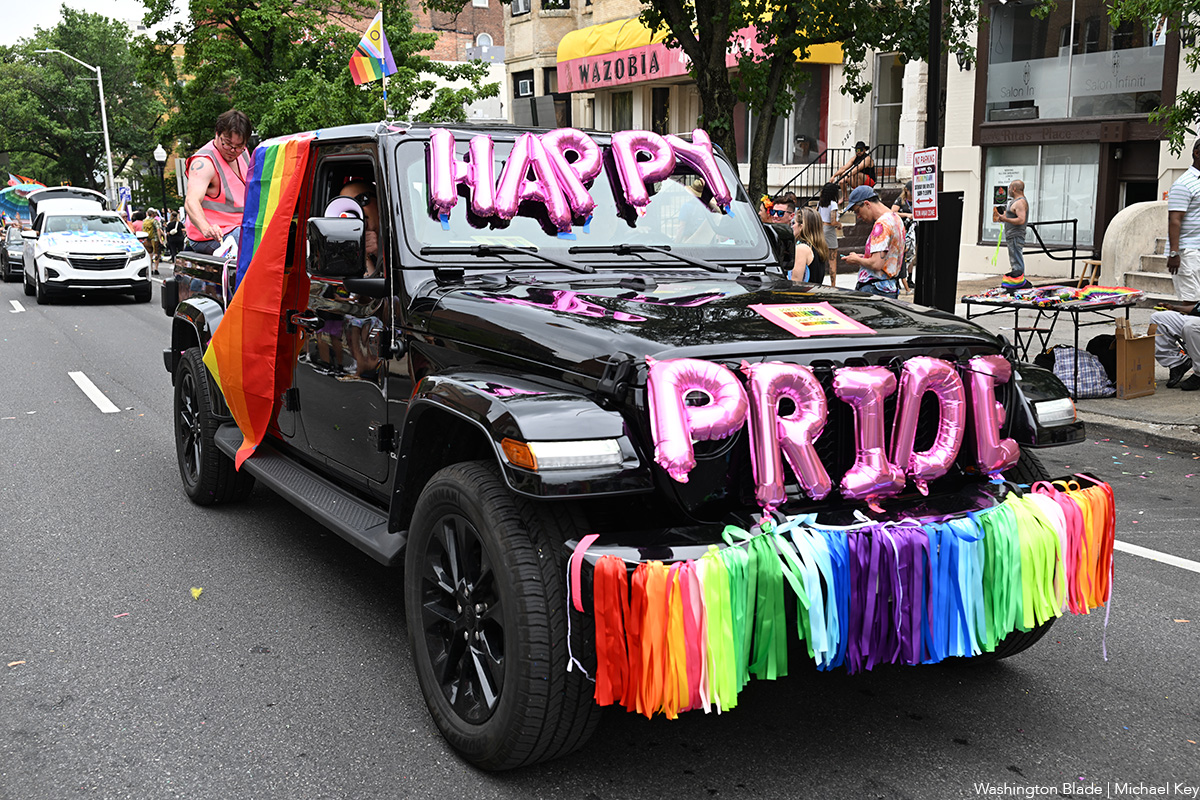
Baltimore Pride is underway, taking place from June 8-14.
The Pride Parade will be on Saturday, June 13 at 12 p.m. at Charles Street & North Avenue, followed by the Pride Block Party at 1 p.m. at Druid Hill Park. And then the Pride Festival will be held on Sunday, June 14 at 12 p.m. at Druid Hill Park.
There will be an array of additional events including: a fashion show, a “Suits and Sneakers” reception and a 5k race, among many other events.
For more details, visit Baltimore Pride’s website.

PHOTOS: The Audacity Brunch

D.C. Council approves expanded grant funding for Mayor’s Office of LGBTQ Affairs

Congressional Cemetery hosts Gays & Graves

Baltimore Pride is here

Calendar: June 12-18

Hundreds of thousands expected to attend D.C. Pride events

PHOTOS: Pride Run

Queen Jean is Tony’s first transgender winner

EXCLUSIVE: Pelosi reflects on four decades of LGBTQ advocacy