Arts & Entertainment
GLAAD Media Awards 2018 releases nominees
Netflix raked in the highest number of nominations for TV shows
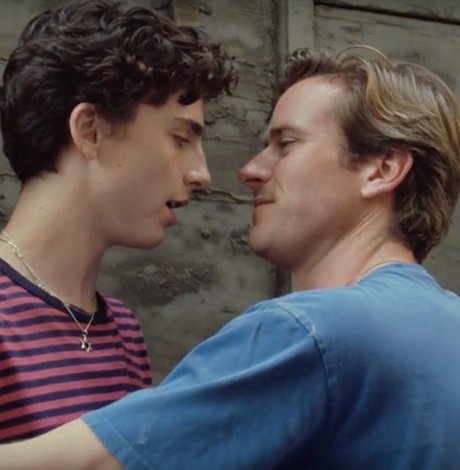
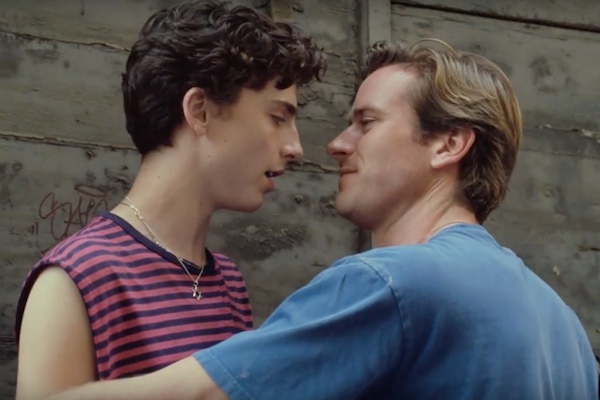
(‘Call Me By Your Name.’ Screenshot via YouTube.)
The 29th annual GLAAD Media Awards announced its 2018 nominees at the Sundance Film Festival on Friday via Trace Lysette (“Transparent”) and Wilson Cruz (“Star Trek: Discovery”).
Netflix raked in the most nominations for television with seven nominations. ABC, CBS and NBC came in at a close second with six nominations. This was also the first time the category Outstanding Kids & Family Programming was introduced which recognizes “Andi Mack,” and “Doc McStuffins,” among others, for their LGBT inclusion.
Critically-acclaimed films “Call Me By Your Name,” “Lady Bird” and “The Shape of Water” also scored nominations.
For music, Miley Cyrus, Sam Smith, Halsey and Kesha all earned nominations for Outstanding Music Artist.
Special recognition was also given to the animated short film “In a Heartbeat,” written and directed by Esteban Bravo and Beth David, as well as Jay-Z’s track “Smile,” about his mother’s coming out, from his album “4:44.”
Check out the full list of nominees below.
OUTSTANDING FILM – WIDE RELEASE
“Battle of the Sexes” (Fox Searchlight)
“Call Me by Your Name” (Sony Pictures Classics)
“Lady Bird” (A24)
“Professor Marston and the Wonder Women” (Annapurna Pictures)
“The Shape of Water” (Fox Searchlight)
OUTSTANDING FILM – LIMITED RELEASE
“BPM” (The Orchard)
“A Fantastic Woman” (Sony Pictures Classics)
“God’s Own Country” (Samuel Goldwyn Films/Orion Pictures)
“Thelma” (The Orchard)
“The Wound” (Kino Lorber)
OUTSTANDING COMEDY SERIES
“The Bold Type” (Freeform)
“Brooklyn Nine-Nine” (FOX)
“Crazy Ex-Girlfriend” (The CW)
“Modern Family” (ABC)
“One Day at a Time” (Netflix)
“One Mississippi” (Amazon)
“Superstore” (NBC)
“Survivor’s Remorse” (Starz)
“Transparent” (Amazon)
“Will & Grace” (NBC)
OUTSTANDING DRAMA SERIES
“Billions” (Showtime)
“Doubt” (CBS)
“The Handmaid’s Tale” (Hulu)
“Nashville” (CMT)
“Sense8” (Netflix)
“Shadowhunters” (Freeform)
“Star” (FOX)
“Star Trek: Discovery” (CBS All Access)
“This Is Us” (NBC)
“Wynonna Earp” (Syfy)
OUTSTANDING INDIVIDUAL EPISODE (in a series without a regular LGBTQ character)
“Chapter 8”, “Legion” (FX)
“Grace”, “Pure Genius” (CBS)
“Lady Cha Cha”, “Easy” (Netflix)
“The Missionaries”, “Room 104” (HBO)
“Thanksgiving”, “Master of None” (Netflix)
OUTSTANDING TV MOVIE OR LIMITED SERIES
“American Horror Story: Cult” (FX)
“Feud: Bette and Joan” (FX)
“Godless” (Netflix)
“Queers” (BBC America)
“When We Rise” (ABC)
OUTSTANDING KIDS & FAMILY PROGRAMMING
“Andi Mack” (Disney Channel)
“Chosen Family”, “Danger & Eggs” (Amazon)
“The Emergency Plan”, “Doc McStuffins” (Disney Channel)
“The Loud House” (Nickelodeon)
“Steven Universe” (Cartoon Network)
OUTSTANDING DOCUMENTARY
“Chavela” (Music Box Films)
“Gender Revolution: A Journey with Katie Couric” (National Geographic)
“Kiki” (Sundance Selects)
“Real Boy”- “Independent Lens” (PBS)
“This is Everything: Gigi Gorgeous” (YouTube Red)
OUTSTANDING REALITY PROGRAM
“Gaycation with Ellen Page” (Viceland)
“I Am Jazz” (TLC)
“RuPaul’s Drag Race” (VH1)
“Survivor: Game Changers” (CBS)
“The Voice” (NBC)
OUTSTANDING MUSIC ARTIST
Miley Cyrus, “Younger Now” (RCA Records)
Halsey, “Hopeless Fountain Kingdom” (Astralwerks Records)
Honey Dijon, “The Best of Both Worlds” (Classic Music Company)
Kehlani, “SweetSexySavage” (TSNMI/Atlantic Records)
Kelela, “Take Me Apart” (Warp Records)
Kesha, “Rainbow” (Kemosabe/RCA Records)
Perfume Genius, “No Shape” (Matador Records)
Sam Smith, “The Thrill of It All” (Capitol Records)
St. Vincent, “MASSEDUCTION” (Loma Vista Recordings)
Wrabel, “We Could Be Beautiful” (Epic/Sony Records)
OUTSTANDING COMIC BOOK
“America,” written by Gabby Rivera (Marvel Comics)
“The Backstagers,” written by James Tynion IV (BOOM! Studios)
“Batwoman,” written by Marguerite Bennett, James Tynion IV (DC Comics)
“Black Panther: World of Wakanda,” written by Roxane Gay, Ta-Nehisi Coates, Yona Harvey, Rembert “Browne” (Marvel Comics)
“Deadman: Dark Mansion of Forbidden Love,” written by Sarah Vaughn (DC Comics)
“Goldie Vance,” written by Hope Larson, Jackie Ball (BOOM! Studios)
“Iceman,” written by Sina Grace (Marvel Comics)
“Lumberjanes,” written by Kat Leyh, Shannon Watters (BOOM! Studios)
“Quantum Teens are Go,” written by Magdalene Visaggio (Black Mask Comics)
“The Woods,” written by James Tynion IV (BOOM! Studios)
OUTSTANDING DAILY DRAMA
“The Bold and The Beautiful” (CBS)
“Days of Our Lives” (NBC)
“The Young & the Restless” (CBS)
OUTSTANDING TALK SHOW EPISODE
“Australia Marriage Equality”, “Last Week Tonight with John Oliver” (HBO)
“Danica Roem”, “The Opposition with Jordan Klepper” (Comedy Central)
“Laila and Logan Ireland, Transgender Military Couple”, “The Ellen DeGeneres Show” (syndicated)
“Laverne Cox and Gavin Grimm”, “The View” (ABC)
“Trans Veterans React to Ban”, “The Daily Show with Trevor Noah” (Comedy Central)
OUTSTANDING TV JOURNALISM – NEWSMAGAZINE
“A Boy Named Lucas”, “20/20” (ABC)
“China Queer”, “The Naked Truth” (Fusion)
“Gay Purge?”, “Nightline” (ABC)
“The Pulse of Orlando: Terror at the Nightclub”, “Anderson Cooper 360” (CNN)
“Trans Youth”, “VICE on HBO” (HBO)
OUTSTANDING TV JOURNALISM SEGMENT
“The Abolitionists Face the Love Army” KAPP-KVEW Local News (KAPP-35/KVEW-42 [Tri Cities/Yakima, Wash.])
“DJ Zeke Thomas Goes Public”, “Good Morning America” (ABC)
“Murders Raise Alarm for Transgender Community”, “NBC Nightly News with Lester Holt” (NBC)
“Transgender Murders in Louisiana Part of Disturbing Trend”, “CBS Evening News” (CBS)
“Transgender Rights under Fire in Trump Era”, “AM Joy” (MSNBC)
OUTSTANDING NEWSPAPER ARTICLE
“Fearfully and Wonderfully Made: The Journey of a Transgender Man” by Lauren McGaughy (The Dallas Morning News)
“Lesbian College Coaches Still Face Difficult Atmosphere to Come Out” by Shannon Ryan (Chicago Tribune)
“Pulse Victims’ Families in Puerto Rico: ‘We Have to Cry Alone'” by Jennifer A. Marcial Ocasio (Orlando Sentinel)
“Revised Guidance on HIV Proves Life-Transforming” by Lenny Bernstein (The Washington Post)
“The Silent Epidemic: Black Gay Men and HIV” [series] (The Atlanta Journal-Constitution)
OUTSTANDING MAGAZINE ARTICLE
“America’s Hidden H.I.V. Epidemic” by Linda Villarosa (The New York Times Magazine)
“Beyond ‘He’ or ‘She’: The Changing Meaning of Gender and Sexuality” by Katy Steinmetz (Time)
“Forbidden Lives: The Gay Men Who Fled Chechnya’s Purge” by Masha Gessen (The New Yorker)
“Free Radical” by Nathan Heller (Vogue)
“Trans, Teen, and Homeless” by Laura Rena Murray (Rolling Stone)
OUTSTANDING MAGAZINE OVERALL COVERAGE
The Advocate
Billboard
People
Teen Vogue
Time
OUTSTANDING DIGITAL JOURNALISM ARTICLE
“The Ballad of Bobby Brooks, the First Gay Student-Body President of Texas A&M” by Lauren Larson (GQ.com)
“For Those We Lost and Those Who Survived: The Pulse Massacre One Year Later” by James Michael Nichols (HuffPost Queer Voices)
“‘I Am a Girl Now,’ Sage Smith Wrote. Then She Went Missing.” by Emma Eisenberg (Splinter)
“Meet the Transgender Student Who Fought Discrimination at His Maryland High School (and Won)” by Nico Lang (INTO)
“Why Bisexual Men Are Still Fighting to Convince Us They Exist” by Samantha Allen (Splinter)
OUTSTANDING DIGITAL JOURNALISM – MULTIMEDIA
“Former Patriots and Chiefs Tackle Ryan O’Callaghan Comes Out as Gay” by Cyd Zeigler (Outsports/SB Nation)
“Made to Model: Trans Beauty in Fashion” (LogoTV.com)
“‘This Is How We Win’: Inside Danica Roem’s Historic Victory” by Diana Tourjée (Broadly.Vice.com)
“Transgender Day of Remembrance” by Saeed Jones (AM to DM, BuzzFeed News)
“US Travel Ban Leaves LGBT Refugees in Limbo” by Nina dos Santos (CNN.com)
OUTSTANDING BLOG
Autostraddle
Gays With Kids
My Fabulous Disease
Pittsburgh Lesbian Correspondents
Transgriot
OUTSTANDING SCRIPTED TELEVISION SERIES
“Las chicas del cable” (Netflix)
“La doble vida de Estela Carrillo” (Univision)
“Ingobernable” (Netflix)
OUTSTANDING TV JOURNALISM – NEWSMAGAZINE (Spanish Language)
“Así viven los estudiantes transgénero después de que Trump anulara la ley de baños de Obama para escuela públicas” , “Primer Impacto” (Univision)
“Pulse, huellas de la masacre”, “Docufilms” (CNN en Español)
“Ser transgénero en Latinoamérica: sus experiencias y crecimiento”, “Vive la Salud” (CNN en Español)
OUTSTANDING TV JOURNALISM SEGMENT (Spanish Language)
“Comunidad LGBTQ vulnerable bajo nuevo gobierno”, “Perspectiva Nacional” (Entravision)
“Entrevista con Daniela Vega”, “Showbiz” (CNN en Español)
“Joven transgénero tiene un mensaje para las familias: ‘Acepten a sus hijos'”, “Al Punto” (Univision)
“El triunfo de una diseñadora mexicana transgénero en Nueva York”, “Noticias Telemundo” (Telemundo)
“Unidos contra la discriminación y el acoso contra la comunidad LGBT”, “Despierta América” (Univision)
OUTSTANDING DIGITAL JOURNALISM (Spanish Language)
“La compleja realidad de ser gay en América Latina” (cnnespanol.cnn.com)
“‘No aprobar el Dream Act significaría una sentencia de muerte’, jóvenes LGBT y DACA” (laopinion.com)
“Padres de familia de Dallas luchan por los derechos de su hija transgénero” (aldiadallas.com)
“Primera senadora trans aspira a impulsar medidas para sectores discriminados” (efe.com)
“Tres hermanitos para dos papás” (laopinion.com)



Out & About
Annapolis Pride arrives this weekend
Sixth annual LGBTQ celebration held in Maryland capital
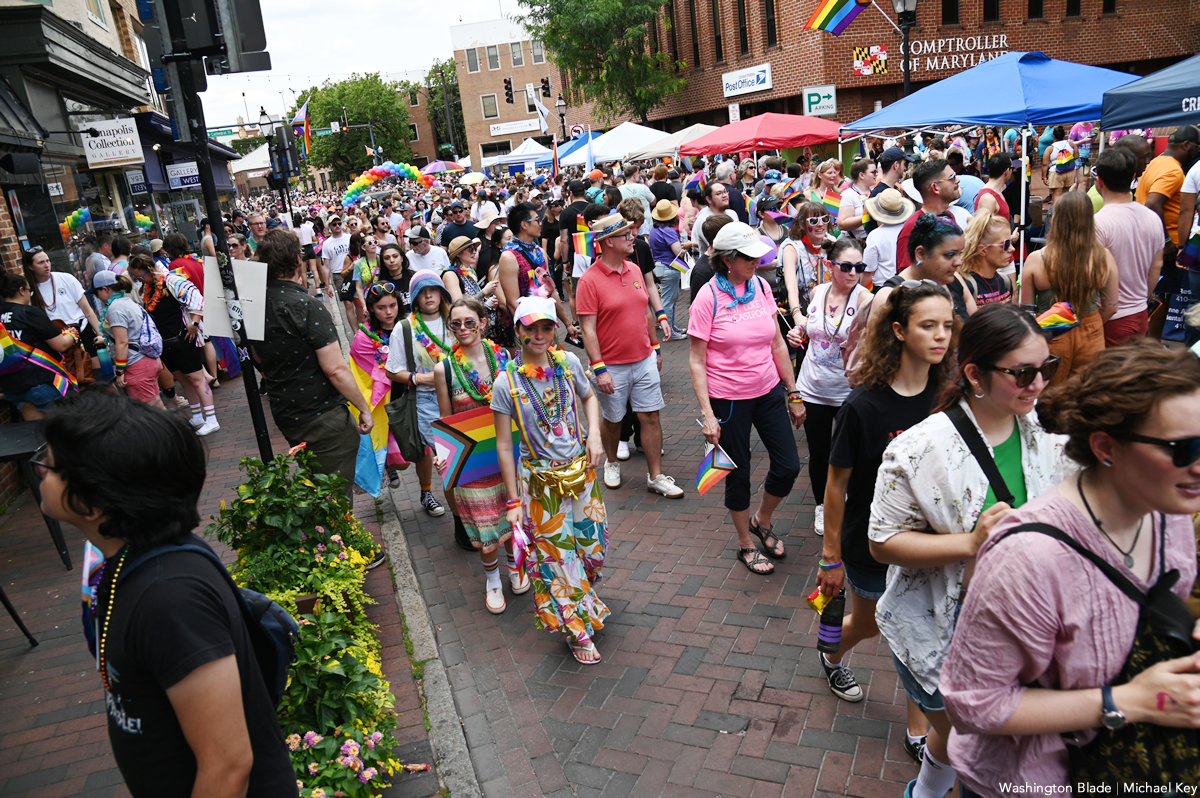
The Sixth Annual Annapolis Pride Parade and Festival will be held on Saturday, Oct. 3 at 11 a.m. on the streets adjacent to St. John’s College.
The theme of this year’s Annapolis Pride Parade and Festival celebration is “United in Pride, Together We Thrive!” Saturday’s parade will begin on St. John’s Street adjacent to St. John’s College, continue along Calvert Street to Northwest Street, to Church Circle, and onto West Street. The parade route then turns onto Amos Garrett Boulevard and eventually ends on Constitution Avenue near Maryland Hall.
Those with disabilities will be able to watch the parade from a special viewing porch at the Graduate Hotel at 126 West St. An Annapolis Pride volunteer will be there and available to assist.
For more details, visit the festival’s website.
Friday, October 2
Go Gay DC will host “First Friday LGBTQ+ Community Happy Hour” at 7 p.m. at Freddie’s Beach Bar and Restaurant. This is a chance to relax, make new friends, and enjoy happy hour specials at this classic retro venue. Attendance is free and more details are available on Eventbrite.
Saturday, October 3
Go Gay DC will host “LGBTQ+ Community Brunch” at 11 a.m. at Freddie’s Beach Bar & Restaurant. This fun weekly event brings the DMV area LGBTQ+ community, including allies, together for delicious food and conversation. Attendance is free and more details are available on Eventbrite.
“Nellie’s DC Drag Brunch” will be at 12 p.m. at Nellie’s Sports Bar. Come get served like a queen by a queen. Join Sapphire Blue, Deja Diamond and their team of amazing drag performers for the most fun you’ll have all weekend. Tickets cost $58.51 and are available on Eventbrite.
Sunday, October 4
Spark Coffee Club will be at 12 p.m. at Spark Social. This is a laid-back daytime hangout built entirely around making new connections. Whether you’re new to the city, new to the community, or just looking to expand your social circle, this is an easy, low-pressure way to spark up a conversation with the person next to you. Come solo or with a friend — you never know who you might meet. For more details, visit Eventbrite.
Monday, October 5
“Center Aging: Monday Coffee Klatch” will be at 10 a.m. on Zoom. This is a social hour for older LGBTQ+ adults. Guests are encouraged to bring a beverage of choice. For more information, contact Adam ([email protected]).
Tuesday, October 6
DC SAFE and the Mayor’s Office of LGBTQ+ Affairs will host “The Relationship Lab” at 6 p.m. This is a four-week series for LGBTQ+ communities exploring love, boundaries, communication, and connection. Through real conversations and engaging discussions, participants will explore what makes relationships healthy and how to recognize the signs when they’re not. For more details, visit Eventbrite.
Wednesday, October 7
Job Club will be at 6 p.m. on Zoom upon request. This is a weekly job support program to help job entrants and seekers, including the long-term unemployed, improve self-confidence, motivation, resilience and productivity for effective job searches and networking — allowing participants to move away from being merely “applicants” toward being “candidates.” For more information, email [email protected] or visit www.thedccenter.org/careers.
Center Aging Women’s Social & Discussion Group will be at 6 p.m. on Zoom. This group is a place where older LGBTQ+ women can meet and socialize with one another. To register, visit the DC Center’s website.
Thursday, October 8
The DC Center’s Fresh Produce Program will be held all day at the DC LGBTQ+ Community Center. People will be informed on Wednesday at 5 p.m. if they are picked to receive a produce box. No proof of residency or income is required. For more information, email [email protected] or call 202-682-2245.
South Asian LGBTQ+ Support Group will be at 7 p.m. on Zoom. KHUSHDC provides a safe, confidential space for South Asian LGBTQ community members to come together and share experiences. The peer support group is an outlet for South Asian-identified LGBTQ individuals to come and talk about anything affecting them. It’s a secure, judgement-free environment to discuss relationships, sexuality, health, well-being, identity, culture, religion, or anything that is on your mind. Please feel free to join, and share stories, learn about available resources, and join our community. For more details, email [email protected].
a&e features
Ryan Murphy’s ‘Monster’ vilifies the lesbian
Netflix show promotes stereotype that queer women are dangerous
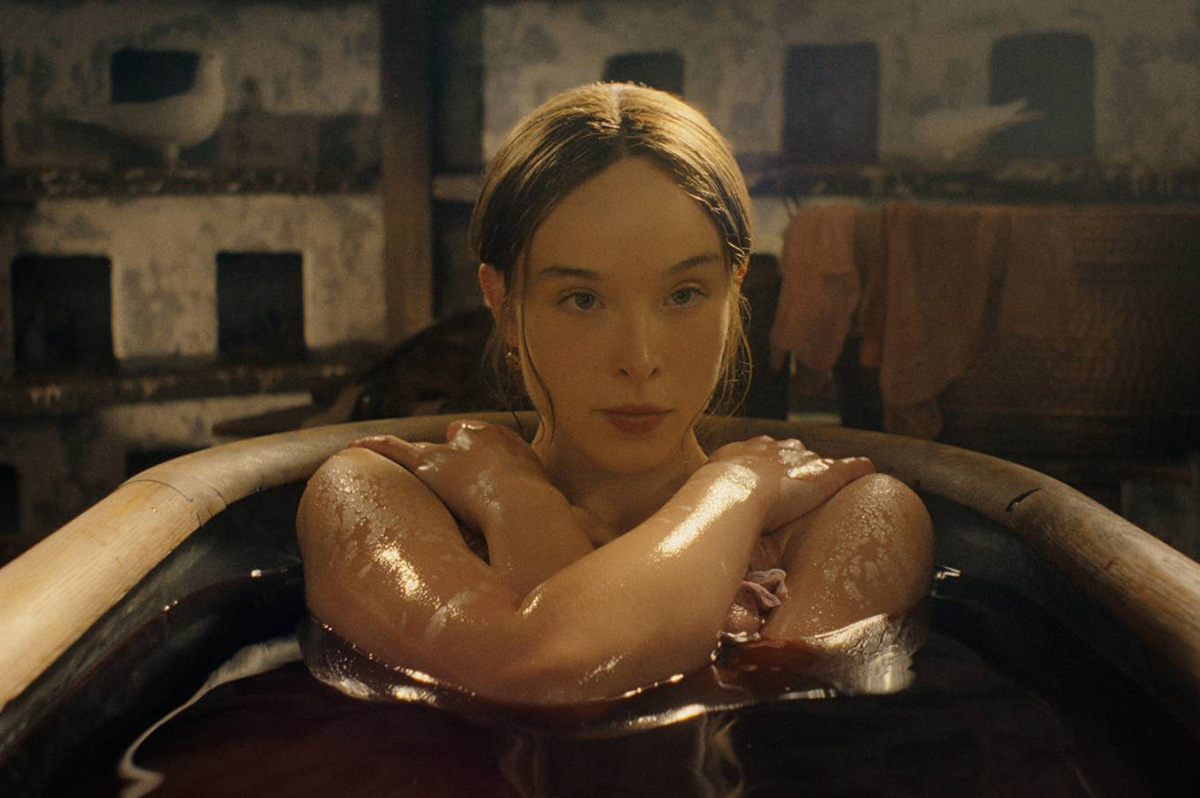
Ryan Murphy’s “Monster: The Lizzie Borden Story” just premiered on Netflix and became the most watched show on the platform. Murphy and his series are deeply controversial. The past three seasons have focused on convicted killers Jeffrey Dahmer, Lyle and Erik Menendez, and Ed Gein, and have garnered considerable criticism for sensationalizing real-life trauma, exploiting victims for entertainment, and glorifying the perpetrators.
But his newest season centers on Lizzie Borden, the white, affluent Massachusetts woman still referenced today in nursery rhymes who was never convicted of killing her parents Andrew and Abby Borden. As with Murphy’s other seasons, the show plays fast-and-loose with real-life history, instead turning a real-life crime into a psychosexual spectacle.
In real life, Lizzie was found not guilty by an all-male jury in the highly publicized 1892 trial, largely due to a lack of evidence including blood on her clothing and a murder weapon. Her initial statement contradicted her later testimony but her defense team argued that the morphine a doctor repeatedly gave her likely caused her confusion. But despite the fact that Lizzie was acquitted in court, she was ostracized by her community during her life and has been branded a murderer ever since.
Murphy’s highly fictionalized retelling of Lizzie’s story leans into this accusation not only that Lizzie murdered her father and stepmother with an axe but that she was successful in covering it up with the help of the maid Bridget Sullivan. Murphy not only concocts a sapphic relationship between Lizzie and Bridget, pinning the idea of killing Lizzie’s parents on the widely traveled woman who dyes her hair and is repeatedly called a lesbophobic slur by Lizzie’s stepmother, but also portrays Lizzie as an inspiration to Aileen Carol Wuornos, a woman who killed seven men who solicited sex and was also in a relationship with a woman.
Further, Murphy’s retelling creates a false ending to Lizzie’s story. While in real life, Lizzie and her sister Emma buy a house called “Maplecroft” and live there for the rest of their lives, Murphy instead imagines Bridget returning sporadically for romantic rendezvous with Lizzie and eventually moving back in with her and marching together for women’s right to vote. In real life, Bridget left town immediately after providing testimony and lived in Montana until she died.
Lesbophobia is at the heart of this retelling of Borden’s story. Despite the fact that Murphy depicts Lizzie and Bridget having sex and possibly getting married or at least promising themselves to one another wearing flower crowns, there is no evidence that Lizzie and Bridget had any romantic or sexual relationship. If they did have a relationship, it would likely have been hidden and any evidence destroyed, but records show that Lizzie herself refused to call Bridget by her real name, instead referring to her as “Maggie,” the name of their previous maid. It was only Lizzie’s stepmother Abby who called Bridget her real name. In Murphy’s retelling, it’s Lizzie’s stepmother Abby who refuses to learn or use Bridget’s actual name and treats her with disdain along with her stepdaughter.
Some people online argue that we are witnessing Lizzie’s story retold through Wuornos’s perspective, so adding in elements of child abuse and sapphic relationships would make sense, but there is no record that Wuornos ever visited Lizzie Borden’s home, or that she was inspired by Borden throughout her life. Instead, Murphy and his co-creator Ian Brennan use (or I would say exploit) Wuornos as a thematic device to make broad stereotypes about female rage across generations. In doing so, they conflate two real-life examples of violence to sapphic individuals.
Depicting a lesbian relationship in this way is not progress, nor is it fruitful representation today. As sapphic shows are increasingly cut and cancelled, Murphy’s inclusion just reinforces the lesbophobic and sexist stereotype that lesbians and queer women are “dangerous” to straight women and abet or incite violence against men and a family unit. At a time when anti-LGBTQ+ legislation and real-world violence and murder of LGBTQ+ people, especially queer and trans people of color, is exploding, stories that frame murder of a family unit as germinating from a sapphic relationship feed into far right narratives.
They further the myth popularized by far right leaders (including those in the highest echelons of government) that LGBTQ+ people are dangerous, a threat to heterosexual norms and family life, despite the data showing that children of same-sex parents have above average health and well-being according to research by the University of Melbourne.
Today, many LGBTQ+ people feel they have to be (or are forced to be) idealized versions of themselves in order to stave off anti-LGBTQ+ stigma, policing and violence. These “acceptable” behaviors and appearances are rooted not only in cisgender, heterosexual norms but also white supremacy, colonialism, xenophobia, and ableism. It is respectability politics that tell us how we can and should behave (including those perpetuating in the wider LGBTQ+ community) and push LGBTQ+ people to assimilate into a society governed by queerphobic normativity.
I hope it’s clear that I’m not trying to argue that we cannot and should not have shows that depict queer women who kill, or at the very least queer women who are unethical or morally complex. We need these depictions because they ask difficult questions and they reference how some LGBTQ+ people can be and are unethical. In fact, several public LGBTQ+ figures are associated with employee abuse and exploitation, ableism, and fat phobia.
But when Lizzie’s sapphic identity is invented to drive the story along, arguably to generate interest (especially straight men’s interest) in this spectacle of historical slop, it’s not a story that invites discourse and dimensionality, it’s one that collapses Lizzie, Wuornos, and queer women’s identities and relationships to plot devices. It objectifies and fetishizes queer women, arguably committing violence against not only Lizzie but also Wuornos.
And when there is so little representation of sapphic relationships on mainstream television or streaming platforms, it makes this the vast majority of representation that queer girls and women will see of themselves first, and that the straight public will see. Historians will know that Murphy’s depiction of Lizzie’s life is wrong, but many viewers will not and may not go digging for the truth.
Why not focus on the stories of bisexual, lesbian, and queer women who really existed, shared their identities (sometimes covertly, sometimes not), and had long-term partners? In fact, “Boston marriages” were common in this time period and referred to women living together when sexual and romantic relationships between women were illegal, partially because penal systems didn’t know how women could have sex with one another and didn’t want to put the idea in “impressionable” women’s minds. Why not focus on these stories instead of creating a fictionalized account? We have always existed; we do not need to invent relationships.
Murphy’s depiction of Lizzie Borden is deeply problematic. Lesbophobia is not the only issue at the heart of Murphy’s drama, but it merits a broader discussion about how mainstream media routinely hurt queer women and is part of perpetuating queerphobic violence, and what we all lose in the process.

Annapolis Pride arrives this weekend

Calendar: October 2-8

Renee Good’s family files two federal lawsuits

House Democrats urge White House to confront Turkish government over anti-LGBTQ crackdown

988 restores crisis services for LGBTQ youth

HRC National Dinner 2026: A night of music, activism, LGBTQ history

Lesbian Bar Project co-founder: purity politics could destroy our remaining spaces

HRC report: LGBTQ students face ‘far greater challenges’ in non-supportive states

529 openly LGBTQ candidates running in Brazilian election

Meet the LGBTQ candidates running for U.S. House, Senate
-

 LGBTQ Non-Profit Organizations5 days ago
HRC National Dinner 2026: A night of music, activism, LGBTQ history
-
Bars & Parties4 days ago
Lesbian Bar Project co-founder: purity politics could destroy our remaining spaces
-
National5 days ago
HRC report: LGBTQ students face ‘far greater challenges’ in non-supportive states
-
Brazil4 days ago
529 openly LGBTQ candidates running in Brazilian election