Sports
D.C. Pride Volleyball all stars find competition, varying skill levels
Local members George Atiyeh and Bill Klitz are regulars in gay league
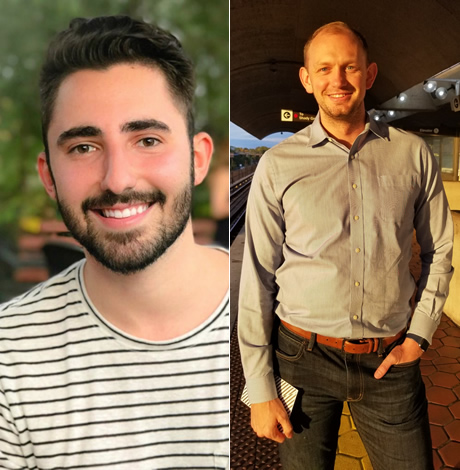
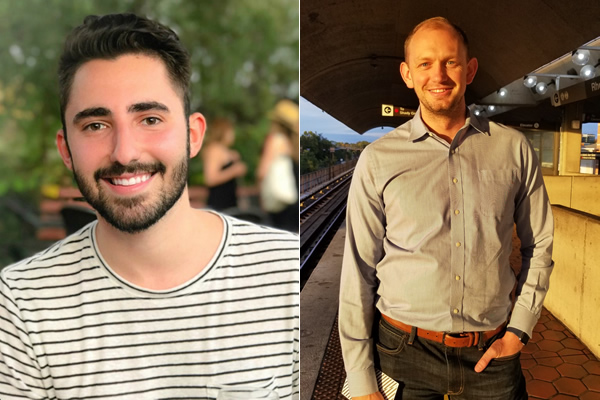
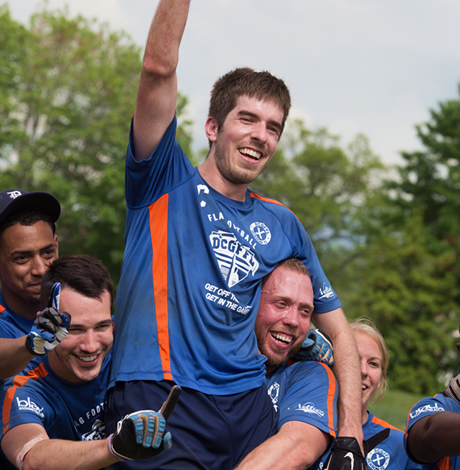
George Atiyeh, left, and Bill Klitz say the team dynamic in volleyball is especially satisfying. (Photos courtesy the subjects)
Registration is open for the next season of the D.C. Pride Volleyball League through March 23. The league is expanding this year to include a novice division to go along with their advanced and intermediate divisions.
The League offers both league play and open play in addition to traveling to tournaments around the country as part of the North American Gay Volleyball Association. Members also host three tournaments of their own — Spring Fling, President’s Pride Cup and the Rehoboth Beach Open.
The week in the continuing All Star series in the Washington Blade, we meet two gay players who have immersed themselves in the sport.
After getting hurt playing football in junior high school in Bethlehem, Pa., George Atiyeh switched over to volleyball and immediately fell in love. He began playing year-round on both high school and club teams. While attending college at Lehigh University, he played club volleyball for four years.
He came to Washington in 2016 to work for Deloitte as a tech consultant and after settling in, he began looking for volleyball options. Atiyeh started with the League’s open play and found a wide variety of skill levels. The organizers noticed his talent and asked if he was interested in their structured league play.
“My experience with (the League) has been amazing and I couldn’t have asked for more,” Atiyeh says. “I didn’t expect to play at this level post-college.”
Atiyeh, who plays as an outside hitter, was named the most valuable player of the league’s advanced division and has been attending tournaments including stops in Columbus, Atlanta, Minneapolis, New Orleans and Chicago.
“My favorite thing about volleyball is the six players on the court forming a team dynamic,” Atiyeh says. “You need all six players to be in sync for a good functioning dynamic. It’s very momentum driven.”
The opportunity to play in the League has been so enjoyable for Atiyeh that he ran for the board and is now the representative for the advanced division.
“If I am going to give my time back, why not give back to something I love,” Atiyeh says. “(The League) offers so many great things — playing at a competitive level, making great friends, inclusive space and giving back to nonprofits.”
Bill Klitz grew up in an athletic family in Markesan, Wis., where he was a three-sport athlete in football, basketball and track. His father was a former college athlete, his mother was a coach and his sister was also a three-sport athlete. When he wasn’t playing structured sports, he was playing pick-up sports.
While attending University of Wisconsin-Oshkosh, he was a varsity high jumper competing in both the winter and spring seasons. Even though it wasn’t allowed by his coach, he managed to sneak in some intramural volleyball.
After college, he moved to Florida, came out and met someone. They moved to D.C. together in 2011 and Klitz works as a personal trainer, manages Corporate Fitness Works and is a program manager at Inter-American Development Bank.
“When I first came to D.C., I was too busy with work to be in sports leagues,” Klitz says. “Once I got started it was nice to be competitive again. I missed it after college.”
Klitz went into the LGBT sports community headfirst playing in the DC Gay Flag Football League, Stonewall Dodgeball, Stonewall Bocce and Chesapeake and Potomac Softball League. He was recruited to the volleyball league by League co-founder, Michael D’Zgoda, because of his 6’5” height.
“My first volleyball season was an eye-opener because of all the technical aspects of the sport,” Klitz says. “It was fun learning together and growing together with my teammates.”
His position is middle blocker and Klitz has played in every season of the League. He upgraded to the advanced division this past season. He has also traveled to tournaments in cities such as New York, Boston, Houston, Baltimore and Minneapolis.
In his spare time, he volunteers each spring as an assistant track coach at St. Albans School. It’s all part of the sports mindset that has been with him since his youth in Wisconsin.
“I have found a home in the LGBT sports community with these like-minded, supportive athletes,” Klitz says. “Once an athlete, always an athlete. You have to live by that motto. It’s a state of mind.”

Sports
New IOC policy bans trans women from Olympics
New regulation to be in effect at 2028 summer games in Los Angeles
The International Olympic Committee on Thursday announced it will not allow transgender women from competing in female events at the Olympics.
“For all disciplines on the Sports Program of an IOC event, including individual and team sports, eligibility for any Female Category is limited to biological females,” reads the new policy.
The policy states “eligibility for the Female Category is to be determined in the first instance by SRY Gene screening to detect the absence or presence of the SRY Gene.”
“On the basis of the scientific evidence, the IOC considers that the SRY (sex-determining Region Y) Gene is fixed throughout life and represents highly accurate evidence that an athlete has experienced or will experience male sex development,” it reads. “Furthermore, the IOC considers that SRY Gene screening via saliva, cheek swab or blood sample is unintrusive compared to other possible methods. Athletes who screen negative for the SRY gene permanently satisfy this policy’s eligibility criteria for competition in the Female Category.”
The policy states the test “will be a once-in-a-lifetime test” unless “there is reason to believe a negative reading is in error.”
The new regulation will be in place for the 2028 Summer Olympics in Los Angeles.
“I understand that this a very sensitive topic,” said IOC President Kirsty Coventry on Thursday in a video. “As a former athlete, I passionately believe in the rights of all Olympians to take part in fair competition.”
“The policy that we have announced is based on science and it has been led by medical experts with the best interests of athletes at its heart. The scientific evidence is very clear: male chromosomes give performance advances in sport that rely on strength, power, or endurance,” she added. “At the Olympic Games, even the smallest margins can be the difference between victory and defeat. So, it is absolutely clear that it would not be fair for biological males to compete in the female category. In addition, in some sports it would simply not be safe.”
(Video courtesy of the IOC)
Laurel Hubbard, a weightlifter from New Zealand, in 2021 became the first trans woman to compete at the Olympics.
Imane Khelif, an Algerian boxer, won a gold medal at the 2024 Summer Olympics in Paris. Khelif later sued JK Rowling and Elon Musk for cyberstalking after they questioned her gender identity.
Ellis Lundholm, a mogul skier from Sweden, this year became the first openly trans athlete to compete in any Winter Olympics when he participated in Milan Cortina Winter Olympics in Italy.
President Donald Trump in February 2025 issued an executive order that bans trans women and girls from female sports teams in the U.S.
The U.S. Olympic and Paralympic Committee last July banned trans women from competing in female sporting events. Republican lawmakers have demanded the IOC ban trans athletes from women’s athletic competitions.
“I’m grateful the Olympics finally embraced the common sense policy that women’s sports are for women, not for men,” said U.S. Sen. Tom Cotton (R-Ark.) on X.
An IOC spokesperson on Thursday referred the Washington Blade to the press release that announced the new policy.
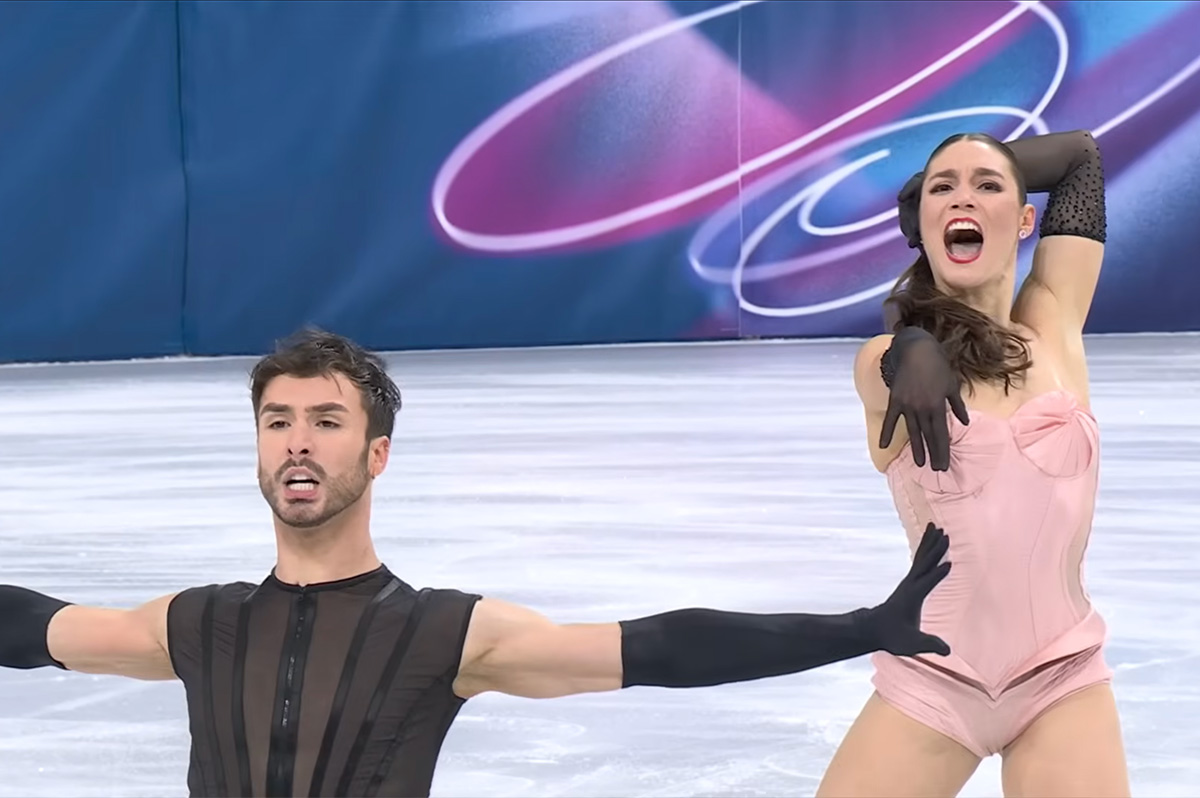
More than a dozen LGBTQ athletes won medals at the Milan Cortina Winter Olympics that ended on Sunday.
Cayla Barnes, Hilary Knight, and Alex Carpenter are LGBTQ members of the U.S. women’s hockey team that won a gold medal after they defeated Canada in overtime. Knight the day before the Feb. 19 match proposed to her girlfriend, Brittany Bowe, an Olympic speed skater.
French ice dancer Guillaume Cizeron, who is gay, and his partner Laurence Fournier Beaudry won gold. American alpine skier Breezy Johnson, who is bisexual, won gold in the women’s downhill. Amber Glenn, who identifies as bisexual and pansexual, was part of the American figure skating team that won gold in the team event.
Swiss freestyle skier Mathilde Gremaud, who is in a relationship with Vali Höll, an Austrian mountain biker, won gold in women’s freeski slopestyle.
Bruce Mouat, who is the captain of the British curling team that won a silver medal, is gay. Six members of the Canadian women’s hockey team — Emily Clark, Erin Ambrose, Emerance Maschmeyer, Brianne Jenner, Laura Stacey, and Marie-Philip Poulin — that won silver are LGBTQ.
Swedish freestyle skier Sandra Naeslund, who is a lesbian, won a bronze medal in ski cross.
Belgian speed skater Tineke den Dulk, who is bisexual, was part of her country’s mixed 2000-meter relay that won bronze. Canadian ice dancer Paul Poirier, who is gay, and his partner, Piper Gilles, won bronze.
Laura Zimmermann, who is queer, is a member of the Swiss women’s hockey team that won bronze when they defeated Sweden.
Outsports.com notes all of the LGBTQ Olympians who competed at the games and who medaled.
Sports
US wins Olympic gold medal in women’s hockey
Team captain Hilary Knight proposed to girlfriend on Wednesday
The U.S. women’s hockey team on Thursday won a gold medal at the Milan Cortina Winter Olympics.
Team USA defeated Canada 2-1 in overtime. The game took place a day after Team USA captain Hilary Knight proposed to her girlfriend, Brittany Bowe, an Olympic speed skater.
Cayla Barnes and Alex Carpenter — Knight’s teammates — are also LGBTQ. They are among the more than 40 openly LGBTQ athletes who are competing in the games.
The Olympics will end on Sunday.

Women’s FEST returns to Rehoboth Beach next week

Belarusian lawmakers approve bill to crackdown on LGBTQ rights

Calendar: April 3-9

How new barriers to health care coverage are hitting D.C.

Kenyan advocacy groups launch LGBTQ voter mobilization campaign

‘Out for McDuffie’ event held at D.C. gay bar

‘Jonah’ an undeniably compelling but unusual memory play

The Oscar-losing performance that’s too good to miss

Thousands attend ‘No Kings’ protests in D.C.