Opinions
Battling the despicable misuse of religion
Masterpiece Cakeshop’s mixed ruling kicks the cake stand down the road
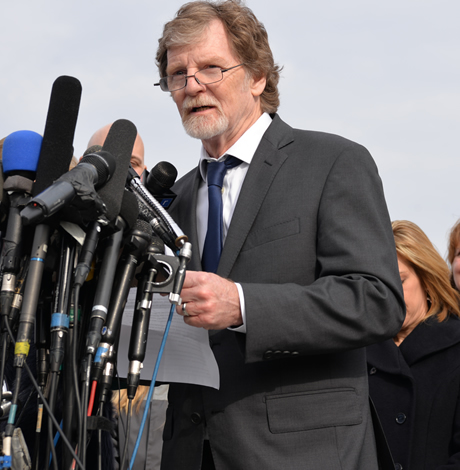
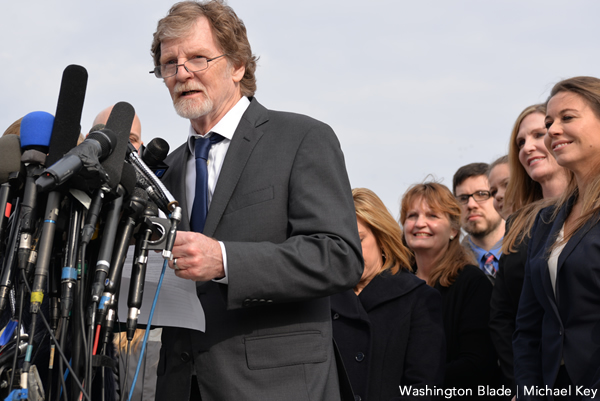
Jack Phillips of Masterpiece Cakeshop speaks to reporters in front of the United States Supreme Court on Dec. 5. (Washington Blade photo by Michael Key)
Even many believers have their doubts about heaven, hell, and the jealous tribal deities that provide pretexts for so much human cruelty.
As Satan says in Paradise Lost, “The mind is its own place, and in itself can make a Heaven of Hell, a Hell of Heaven.” The hell we make for ourselves and one another is exemplified by those who use their faith to justify anti-gay discrimination. Which brings us to the latest gay-related Supreme Court ruling, issued June 4.
James Esseks of ACLU offers a good summary: “In the Masterpiece Cakeshop case, the Supreme Court on Monday ruled for a bakery that had refused to sell a wedding cake to a same-sex couple. It did so on grounds that are specific to this particular case and will have little to no applicability to future cases. The opinion is full of reaffirmations of our country’s longstanding rule that states can bar businesses that are open to the public from turning customers away because of who they are.”
Justice Anthony Kennedy, in his opinion for the majority, writes that “any decision in favor of the baker would have to be sufficiently constrained, lest all purveyors of goods and services who object to gay marriages for moral and religious reasons in effect be allowed to put up signs saying ‘no goods or services will be sold if they will be used for gay marriages,’ something that would impose a serious stigma on gay persons.”
One Colorado civil rights commissioner is quoted saying, “[W]e can list hundreds of situations where freedom of religion has been used to justify discrimination. And to me it is one of the most despicable pieces of rhetoric that people can use to—to use their religion to hurt others.”
This perfectly accurate statement has been characterized as an attack on religion. But decrying those who dress up their homophobia and transphobia in religious garb is no more an attack on faith itself than objecting to racist police methods constitutes a generalized attack on policing. LGBT people ourselves embrace a diversity of beliefs. Calling out faith-based discrimination does not turn the discriminators into victims.
Justice Ruth Bader Ginsburg writes in dissent, “I see no reason why the comments of one or two Commissioners should be taken to overcome Phillips’ refusal to sell a wedding cake to Craig and Mullins. The proceedings involved several layers of independent decisionmaking, of which the Commission was but one.” Ginsburg notes, “Phillips declined to make a cake he found offensive where the offensiveness of the product was determined solely by the identity of the customer requesting it.”
I have defended the free speech rights of my religious foes, from marriage equality opponents advertising on Metrobuses to the homophobic owner of the Museum of the Bible to a Chick-fil-A outlet in the District. Equal rights are not only for those who agree with us. But for a business open to the public to deny service on religious grounds breaks the social contract whereby members of a diverse society put up with one another for the common good.
Imposing one group’s faith dictates in the public square is a threat to social cohesion. One-way respect is not respect at all but subjugation.
Masterpiece Cakeshop yielded fast fruit. The Arizona Court of Appeals on June 7 cited it in upholding a Phoenix ordinance barring anti-LGBT discrimination. Meanwhile, Alliance Defending Freedom, which represented baker Jack Phillips, wants to broaden it to bar the denial of government contracts to religious organizations that discriminate against gay couples in adoption services.
“All animals are equal, but some animals are more equal than others,” proclaim the ruling pigs in George Orwell’s Animal Farm. Under America’s aspiring autocrat, an anti-gay baker’s free speech is championed, while NFL players protesting police brutality are denounced as unAmerican. Those who consider Trump’s posturing patriotic are putting the symbols of our freedoms before the freedoms themselves. In religious terms, that is idolatry.
The Trump regime may ultimately represent the last gasp of white Christian hetero male supremacy. But while it so furiously thrashes, and as the president quietly, steadily packs the federal courts, our struggle continues.
Richard J. Rosendall is a writer and activist. He can be reached at [email protected].
Copyright © 2018 by Richard J. Rosendall. All rights reserved.


Commentary
The cost of speaking one’s mind
Colombian artist José Miel’s recent comments on Pride, LGBTQ community sparked controversy
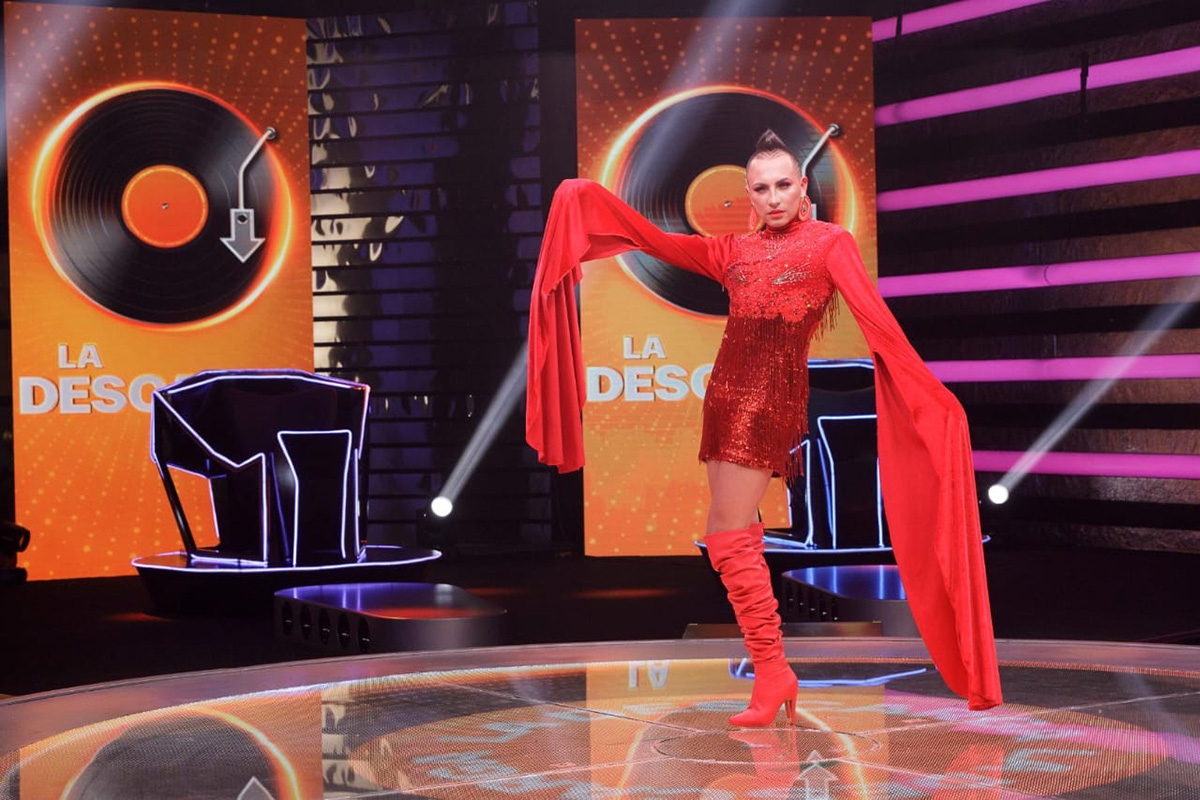
Colombian artist José Medina, known professionally as José Miel, 34, originally from Bogotá, is going through one of the most complex moments of his public career. Following his exit from “La casa de los famosos Colombia,” his name has been placed at the center of a controversy that has gone beyond the realm of entertainment and into a broader terrain: the debate over freedom of expression, diversity, and the limits of dissent within a society that defines itself as inclusive.
Miel is not an improvised figure. His trajectory in music, acting, and television reflects a sustained process of training, work, and exposure across different platforms. He participated in “Yo me llamo” (2019) and “La Descarga” (2022), establishing himself as a versatile artist within the Colombian entertainment industry. His career has been built through effort, in an industry that does not guarantee permanence without discipline.
However, the recent focus is not on his artistic work, but on his statements.
On March 15, the program “La Red” on Caracol Televisión released an interview on its digital platforms in which the singer spoke openly about the difficult moment he is facing, stating that his words — referring to comments he made after leaving “La casa de los famosos” — “cost him dearly.” His opinions on Pride, inclusive language, and the LGBTQ acronym triggered an immediate and polarized reaction.
From that moment on, the debate moved beyond the content of his words and opened another angle that cannot be overlooked.
Miel is known for the precision, firmness, and clarity with which he expresses his ideas. He is not an improvised artist, neither in discourse nor on stage. However, amid this controversy, a question also arises — one that deserves consideration from a journalistic standpoint:
What was the intention of the journalist, commentator, or media outlet that posed the questions leading to these statements?
This is not about shifting responsibility for what was said, but about understanding the context in which it occurred. At a moment in his career marked by multiple opportunities and projects, Miel’s responses placed him at the center of a controversy with real consequences.
In that sense, it is worth asking whether these were genuine questions within an open dialogue, or whether they followed a more provocative line, aimed at generating headlines or exposing the interviewee in a sensitive terrain.
This is not a minor question.
In media environments where every word can be amplified, the role of the one asking the questions is also part of how the story is constructed.
Within this context, this outlet held a phone conversation with the artist this Wednesday in order to gather his position directly. What follows are his responses to three central themes: the consequences of his words, his identity, and his call for respect.
Regarding the personal cost of expressing his opinion, Miel was clear:
You are now paying a high price for speaking your mind.
Do you regret having spoken out, or do you still believe your voice is non-negotiable?
Response:
“I believe that as human beings we all know that giving an opinion on any topic will bring problems. That’s the problem with society: it doesn’t respect other people’s opinions, because many think they are always right, and that’s not the case. Everyone has their reasons, everyone has their opinions, and those must be respected — even if you disagree.
What I expressed was an opinion without discrimination, without harming anyone, without stepping on anyone. And yet the opposite has been done to me: I’ve been trampled on, harmed, threatened, sent very ugly messages, harassed, hate coming from everywhere.
I knew what I was getting into. I knew what could happen. But I am proud of myself. I am proud of my conviction, and I will defend it until the end, because I truly believe in what I said. I do not regret it.”
When addressing his stance on labels, Pride, and how he defines himself, the artist stated:
You say you don’t identify with certain expressions of Pride or with the acronym.
So how do you define who you are, without labels or molds?
Response:
“Well, I don’t identify with Pride marches because they don’t represent me at all. They would represent me if they were respectful and appropriate, because many families attend — children, grandparents, parents … everyone is there.
And it’s quite disrespectful to see many people — not all, I emphasize — exposing their bodies, wearing very little clothing, drinking alcohol, intoxicated, using drugs. I don’t think that’s the way I would seek respect and equality.
I don’t like the term LGBTIQ+ community or all the letters that keep being added, because I feel that these acronyms make people discriminate more. I understand why they exist, because I know that what is not named does not exist, but I feel it is not the right way.
To me, everyone is part of society. We are human beings.
I don’t have labels or molds. I am a man, I am homosexual, and that’s it. The fact that I wear makeup or more feminine clothing is part of my artistic work, part of the stage. My everyday life is completely different.”
Finally, when referring to the reactions he has received, Miel insisted on a point that runs throughout his position:
You speak about respect, yet you’ve received attacks even from within the same community. What do you say today to those who call for inclusion but do not respect when someone thinks differently?
Response:
“I realized that the same community discriminates against itself. Many gay people have written to support me, telling me how brave I am, that they think the same way but don’t dare to speak.
To those who disagree with my opinion, I say: respect it, even if you don’t like it. You can express your opinion because we live in a free country, but do it with arguments, from your perspective, without stepping on others.
Because that is not the way.
I understand the struggles, I understand what is being sought, but I feel that if other ways of fighting were heard, many things could be achieved through respect and equality.
Everyone is free to think and say what they want — but always with respect. It’s that simple.”
Beyond his statements, what the artist is currently facing was also exposed in the March 15 interview on “La Red.” In that space, Miel described in his own words what he called a “string of problems”: constant harassment on social media, direct threats, hate messages, canceled performances, loss of contracts, and stalled projects due to external pressure and boycott warnings.
This situation not only highlights the media impact of his words, but also the material consequences that expressing an opinion can have in today’s digital environment.
His statements also drew reactions from the political sphere. Colombian Congressman Mauricio Toro wrote on social media:
“Hate and discrimination are learned. Sometimes they are so deeply rooted that they turn against oneself. José Miel, neither you nor I have anything to hide or to be ashamed of. Being free and loving without fear is the greatest thing you can experience as a human being.”
However, this position was also criticized. A significant number of users — even those who do not agree with the artist’s statements — have insisted that his right to express his views must be respected, pointing to a growing tension between inclusive discourse and tolerance for dissent.
The case of José Miel goes beyond a media controversy. It reflects a broader reality: the difficulty of sustaining respect when opinions do not align, even within spaces that promote diversity.
In a context where social media amplifies every stance, reactions to difference become immediate and, in many cases, disproportionate.
Beyond individual positions, what happened raises a deeper question:
Is it possible to speak of inclusion if we are not capable of respecting difference?
The philosopher Voltaire left behind an idea that remains relevant:
“I disagree with what you say, but I will defend to the death your right to say it.”
That is the point.
Because if a society is not capable of upholding the right of others to express themselves — even when it is uncomfortable — then it is not building inclusion; it is merely managing agreement.
And in that scenario, the case of José Miel stops being an isolated episode.
It becomes a test.
A test of how far we are willing to go in respecting others when they do not think like us.
Support does not mean agreement.
In this case, support means something more basic and more necessary: defending the right to exist, to think, and to express oneself without being destroyed for it.
Opinions
The outrage economy is not the LGBTQ community
We can respect every person’s humanity without feeding algorithms

There is a simple truth I want to start with, because it matters and because it is too often lost in the noise.
I believe every human being deserves dignity.
I believe in individual freedom. I believe in treating people with respect. I believe adults should be able to live their lives openly, safely, and without harassment or fear.
That includes LGBTQ people. Always. But there is something else we need to say with the same moral clarity.
The outrage economy is not the LGBTQ community.
In recent months, as debates about schools, speech, and identity continue to dominate headlines, it has become increasingly clear how easily genuine conversations about dignity and freedom are drowned out by a profitable outrage cycle.
Right now, too much of what passes for “LGBTQ news” is not about people’s lives, safety, or equality. It is about engagement. It is about clicks. It is about fundraising. It is about manufacturing the next emotional flashpoint. And people are exhausted.
Most Americans are not waking up in the morning looking for a fight about language or labels. They are worried about rent. They are worried about insurance. They are worried about traffic. They are worried about whether their kids are safe and learning. They are worried about whether their paychecks still stretch to the end of the month.
The culture war is not most people’s daily life. It has become an industry.
And like any industry, it needs fuel. It needs conflict. It needs constant escalation. It needs the next headline that triggers the strongest reaction.
Social media algorithms reward exactly that. The loudest and most extreme reactions are amplified, pushing the most sensational interpretation of any story to the top of everyone’s screen. That is why we keep seeing the same pattern: ordinary human experiences are repackaged as identity controversy.
A celebrity reflects on not feeling traditionally feminine, and within hours it becomes a viral referendum on gender identity. A personal observation becomes a cultural battleground. The internet is told it must choose a side. This is not liberation. It is marketing. And it is not harmless.
Because while adults argue about language and labels online, real kids are struggling offline.
Children today are growing up in a world that is louder, faster, and more psychologically intense than any generation before them. Anxiety is rising. Depression is rising. Social isolation is rising. Bullying has migrated from the hallway to the phone, and it never stops.
Kids are being exposed to adult conversations at younger and younger ages, often without the maturity or support systems to process them. Here is the part that should concern everyone, regardless of politics. Our schools are not resourced for this reality.
We do not have enough counselors. We do not have enough psychologists. We do not have enough early childhood behavioral specialists. We do not have enough social workers. We do not have enough trained staff able to identify distress early and intervene appropriately.
Florida, like the rest of the country, faces a serious shortage of youth mental health professionals. When children struggle, too often there is simply no one available to help early.
In many communities the need is obvious and urgent. Yet the conversation we keep getting is not about expanding mental health support, strengthening early intervention, or helping families navigate difficult moments.
Instead we get a never-ending cycle of political conflict that makes everyone more anxious and less able to hear one another. Let me be clear about something. Individuality is not the problem. People are complex. People do not fit neatly into stereotypes. Many never have.
A woman who does not feel like a “girly girl” is not a threat. A man who does not relate to traditional masculinity is not a threat. People exploring their identity is not a threat.
The real problem is the commercialization of identity.
When media outlets treat every celebrity quote as a cultural emergency, they are not helping LGBTQ people. They are feeding a machine that thrives on division. And that machine does not care who gets hurt.
It hurts trans people, because it turns their lives into content and controversy instead of treating them as human beings navigating deeply personal realities.
It hurts gay people, because it reduces an entire community to a political symbol rather than recognizing the diversity of real lives and experiences.
It hurts women, because it suggests that not fitting stereotypes requires a new label, when the entire history of women’s equality has been about expanding freedom beyond those stereotypes.
It hurts families, because it creates confusion without support and noise without guidance. And it hurts the arts as well.
Drag, theater, and performance have long been places where society explores humor, character, and freedom. But when everything becomes political warfare, the public begins to associate even artistic expression with endless conflict.
People withdraw. Not because they hate anyone, but because they are exhausted by the noise. This is the great irony of our moment. A culture that claims to be expanding freedom is, in practice, shrinking it. Not through laws alone, but through fear.
Fear of saying the wrong thing. Fear of being attacked online. Fear of asking a sincere question. Fear of being dragged into a fight that never ends. We cannot build a healthy society that way. And we cannot build a healthy LGBTQ movement that way either.
The LGBTQ community did not fight for decades to replace one set of rigid boxes with another. The goal was always freedom. The goal was dignity. The goal was the right to live honestly without harassment and without the state policing private life.
If we want to protect that legacy, we need to be honest about what is happening now.
There are advocacy organizations doing important work. There are journalists covering real issues responsibly. There are educators and mental health professionals trying to help kids navigate a complicated world.
But there is also a profitable ecosystem of consultants, influencers, and outrage merchants who benefit from keeping the temperature high. They do not want resolution. They want engagement. And engagement requires conflict.
So what do we do? We return to what actually helps. We invest in mental health resources in schools. We expand early childhood support. We make sure kids who are struggling can access qualified professionals. We strengthen families and communities instead of turning them into ideological battlegrounds.
We treat adults like adults. We respect personal freedom. We stop demanding that every workplace become a permanent cultural battlefield. Professionalism is not oppression. Respect is not hate. Equal treatment is not cruelty. We also stop confusing stereotypes with identity.
Not feeling “massively feminine” is not a crisis. It is a normal human experience. It does not need to become a viral controversy. We can respect every person’s humanity without feeding the outrage economy. We can support individuality without turning every personality trait into a cultural emergency. We can defend LGBTQ dignity without empowering a machine that profits from division.
Most of all, we can choose leadership that lowers the temperature instead of exploiting the fire. Because the truth is this: the public is not as hateful as the internet suggests.
The public is tired. The public is overwhelmed. The public is struggling.
And what most people want now is a culture that feels calmer, fairer, and grounded in reality again.
That is not a threat to LGBTQ equality. It may be the only way it survives.
Fabián Basabe is a Florida State Representative.
Botswana
Lorato ke Lorato: marriage equality, democracy, and the unfinished work of justice in Botswana
High Court considering marriage equality case

As Botswana prepares for the resumption of a landmark marriage equality case before the High Court on July 14–15, the country finds itself at a critical constitutional crossroads.
At first glance, the matter may appear to be about whether two women, Bonolo Selelelo and Tsholofelo Kumile, can have their love legally recognized. At its core however, this case is about something far more profound: the dismantling of patriarchy, the decolonization of law, and the integrity of Botswana’s constitutional democracy.
Beyond marriage: a question of power
Marriage, as a legal institution, has never been neutral. It has historically functioned as a mechanism for regulating women’s bodies, sexuality, and social roles within a patriarchal order. To deny LBQ (lesbian, bisexual, and queer) women access to marriage is not merely to exclude them from a legal benefit, it is to reinforce a hierarchy of relationships, where heterosexual unions are deemed legitimate and all others invisible. This case therefore challenges the very foundations of who gets to love, who gets to belong, and who gets to be protected under the law.
As feminist scholars have long argued, patriarchy is sustained through institutions that appear ordinary but are deeply political. The law is one such institution. And it is precisely here that this case intervenes: by asking whether Botswana’s legal system will continue to uphold exclusion, or evolve to reflect the constitutional promise of equality.
A constitutional journey: Botswana’s courts and human dignity
This is not the first time Botswana’s courts have been called upon to affirm the dignity of LGBTQI+ persons. Over the past decade, the judiciary has built a progressive body of jurisprudence grounded in equality, nondiscrimination, and human dignity.
In Attorney General v. Rammoge and Others (Court of Appeal Civil Appeal No. CACGB 128-14, 2016), the Court of Appeal upheld the right of LEGABIBO to register as an organization. The court affirmed that:
“The refusal to register the appellant society was not only unlawful, but a violation of the respondents’ fundamental rights to freedom of association.”
This was followed by the ND v. Attorney General of Botswana (MAHGB-000449-15, 2017) case, where the High Court recognized the right of a transgender man to change his gender marker. The court held:
“Gender identity is an integral part of a person’s identity … and any interference with that identity is a violation of dignity.”
In Letsweletse Motshidiemang v. Attorney General (MAHGB-000591-16, 2019), the High Court decriminalized same-sex activity, declaring sections of the Penal Code unconstitutional. Justice Leburu powerfully stated:
“Human dignity is harmed when minority groups are marginalized.”
This decision was affirmed by the Court of Appeal in Attorney General v. Motshidiemang (CACGB-157-19, 2021), where the court emphasized:
“The Constitution is a dynamic instrument … it must be interpreted in a manner that gives effect to the values of dignity, liberty, and equality.”
These cases collectively establish a clear principle: the Constitution of Botswana protects all persons, not just the majority.
The marriage equality case now asks a logical next question: If LGBTQI+ persons are entitled to dignity, identity, and freedom from criminalization, why are their relationships still denied recognition?
Decolonizing the law: What is truly ‘UnAfrican’?
Opponents of marriage equality often argue that homosexuality is “unAfrican.” This claim, while politically powerful, is historically inaccurate. Same-sex relationships and diverse gender identities have existed across African societies long before colonial rule. What is foreign, however, are the laws that criminalize these identities.
Botswana’s anti-sodomy laws were inherited from British colonial legal systems, not from indigenous Tswana culture. As scholars of African history have demonstrated, colonial administrations imposed rigid Victorian moral codes that erased and suppressed existing sexual diversity. To claim that homosexuality is unAfrican, while defending colonial-era laws, is therefore a contradiction.
A truly decolonial approach to the law requires us to ask: Whose morality are we upholding? And whose history are we erasing?
Marriage equality, in this sense, is not a Western imposition: it is part of a broader project of reclaiming African dignity, plurality, and humanity.
Democracy on trial: the question of separation of powers
This case also raises important questions about the health of Botswana’s democracy.
Following the 2021 Court of Appeal decision affirming the decriminalization of same-sex relations, Botswana witnessed public demonstrations, including marches led by groups such as the Evangelical Fellowship of Botswana (EFB), opposing the judgment and calling for the retention of discriminatory laws.
While public participation is a cornerstone of democracy, these events raise deeper concerns about the separation of powers. Courts are constitutionally mandated to interpret the law and protect fundamental rights, even when such decisions are unpopular. When judicial decisions grounded in constitutional principles are publicly resisted on moral or religious grounds, it risks undermining the authority of the courts and the rule of law itself.
Democracy is not simply about majority opinion: it is about the protection of minority rights within a constitutional framework.
Botswana is not a theocracy
It is also important to clarify a recurring misconception: Botswana is not a Christian nation.
Botswana is a secular constitutional democracy and more accurately, a pluralistic society that recognizes and respects diversity of belief, culture, and identity. The Constitution does not elevate one religion above others, nor does it permit religious doctrine to dictate legal rights. The law must serve all citizens equally, regardless of faith.
To frame marriage equality as a threat to Christianity is therefore misplaced. The question before the courts is not theological, but constitutional: Does the exclusion of same-sex couples from marriage violate the rights to equality and nondiscrimination?
Love, equality, and the future of justice
At its heart, this case is about love, but it is also about power, history, and justice. It asks whether Botswana is prepared to move beyond colonial legal frameworks and patriarchal norms, and to embrace a future grounded in equality, dignity, and inclusion.
It asks whether the Constitution will continue to be interpreted as a living document, one that evolves with society, or remain constrained by outdated moral assumptions. Ultimately, it asks whether Botswana’s democracy can hold true to its founding promise: that all persons are equal before the law.
As the High Court prepares to hear this case in July 2026, the nation has an opportunity to affirm not only the rights of two individuals, but the broader principle that love, in all its diversity, deserves recognition, and protection.
Lorato ke lorato.
Love is love.
Justice, if it is to mean anything at all, must make space for it.
Nozizwe is the CEO of LEGABIBO (Lesbians, Gays and Bisexuals of Botswana)

The cost of speaking one’s mind

Senegalese president signs bill that further criminalizes homosexuality

Md. lawmakers reaffirm legislative priorities

Supreme Court rules against Colo. law banning conversion therapy for minors

Thousands attend ‘No Kings’ protests in D.C.

Celebrate cherry blossoms the drag way

Lorato ke Lorato: marriage equality, democracy, and the unfinished work of justice in Botswana

Japanese Supreme Court to consider marriage equality

The outrage economy is not the LGBTQ community

Anti-trans visa ruling echoes Nazi regime destroying trans documents
-

 Out & About4 days ago
Celebrate cherry blossoms the drag way
-
Botswana4 days ago
Lorato ke Lorato: marriage equality, democracy, and the unfinished work of justice in Botswana
-
Japan4 days ago
Japanese Supreme Court to consider marriage equality
-
Opinions4 days ago
The outrage economy is not the LGBTQ community