News
40 Senate Dems call for rejection of anti-LGBT adoption measure
Republicans approved anti-LGBT amendment in House bill
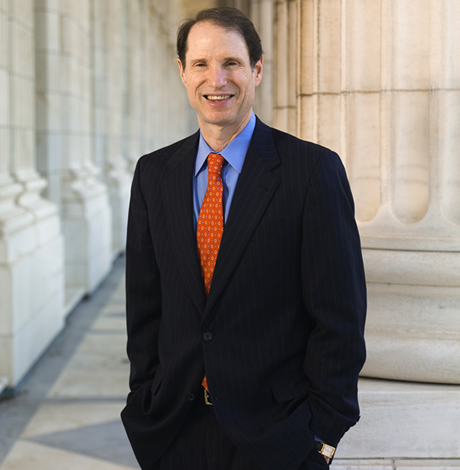
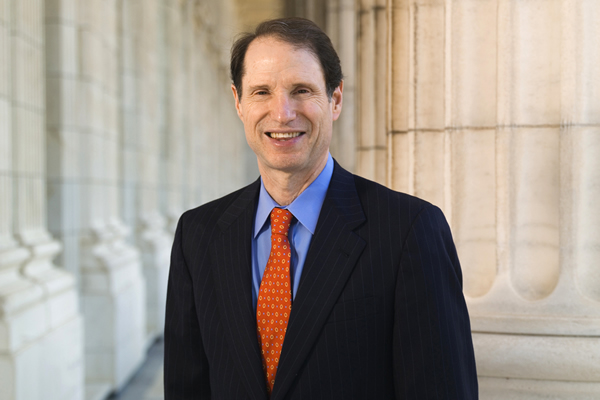
Sen. Ron Wyden leads 40 Senate Democrats in opposition to an anti-LGBT adoption amendment.
A group of 40 Senate Democrats led by Sen Ron Wyden (D-Ore.) are calling for rejection of an amendment that would penalize states and localities for policies barring taxpayer-funded adoption agencies from discriminating against LGBT families over religious objections.
In a letter dated July 24 to the Senate Appropriations Committee, the lawmakers call for rejection of an amendment inserted into the House version of major funding legislation by Robert Aderholt (R-Ala.) enabling anti-LGBT discrimination in adoption services.
“The inclusion of such legislation would sanction taxpayer-funded discrimination and prevent a significant share of Americans from opening their homes to foster children,” the letter says.
The letter draws on the ongoing opioid crisis and the increasing number of children without homes as a result of the problem as a reason for lawmakers to reject the amendment.
“It is never acceptable to use federal funds to discriminate based on religion, sexual orientation, gender identity, family structure or marital status, but the timing of the House language is particularly egregious given the spike in foster care caseloads across the country brought on the opioid epidemic,” the letter says.
Aderholt introduced the amendment into the fiscal year 2019 labor, health and human services and education appropriations bill during the House Appropriations Committee markup of the legislation. The committee adopted the amendment by a party-line 29-23 vote. Rep. Scott Taylor (R-Va.) was the only Republican to vote against it.
It’s unlikely the legislation or the amendment will reached President Trump’s desk for him to sign it into law. The Senate committee has already its approved its version of the funding and a similar measure wasn’t included in the bill. If the bills were conferenced, that would likely mean the anti-LGBT provision would be dropped.
Moreover, in years past, the funding bill for the Departments of Labor, Health & Human Services and Education hasn’t even reached the House floor and those programs continued to receive federal funds through omnibus spending legislation, according to the ACLU.
The Washington Blade has placed a request seeking comment on the letter with the offices of Sen. Richard Shelby (R-Ala.), who chairs the Senate Appropriations Committee, and Sen. Patrick Leahy (D-Vt.), the top Democrat on the panel. [UPDATE: A Leahy spokesperson said the senator “agrees that the Aderholt provision is discriminatory and would insist that it be dropped in conference.”]
Ian Thompson, legislative director for the American Civil Liberties Union, commended Wyden and other senators for speaking out against the anti-LGBT adoption amendment.
“There are over 118,000 children awaiting adoption in the United States,” Thompson said. “The best way to provide loving and stable homes for these children is to have as many qualified prospective foster and adoptive parents as possible. Today, 40 members of the Senate – led by Sen. Wyden – joined leading child welfare organizations and civil rights advocates in saying that discrimination has no place in our child welfare system because every child deserves the opportunity to grow up with the support of a loving family.”



District of Columbia
D.C. Pride flag raising ceremony set for June 1
Mayor, council members to participate
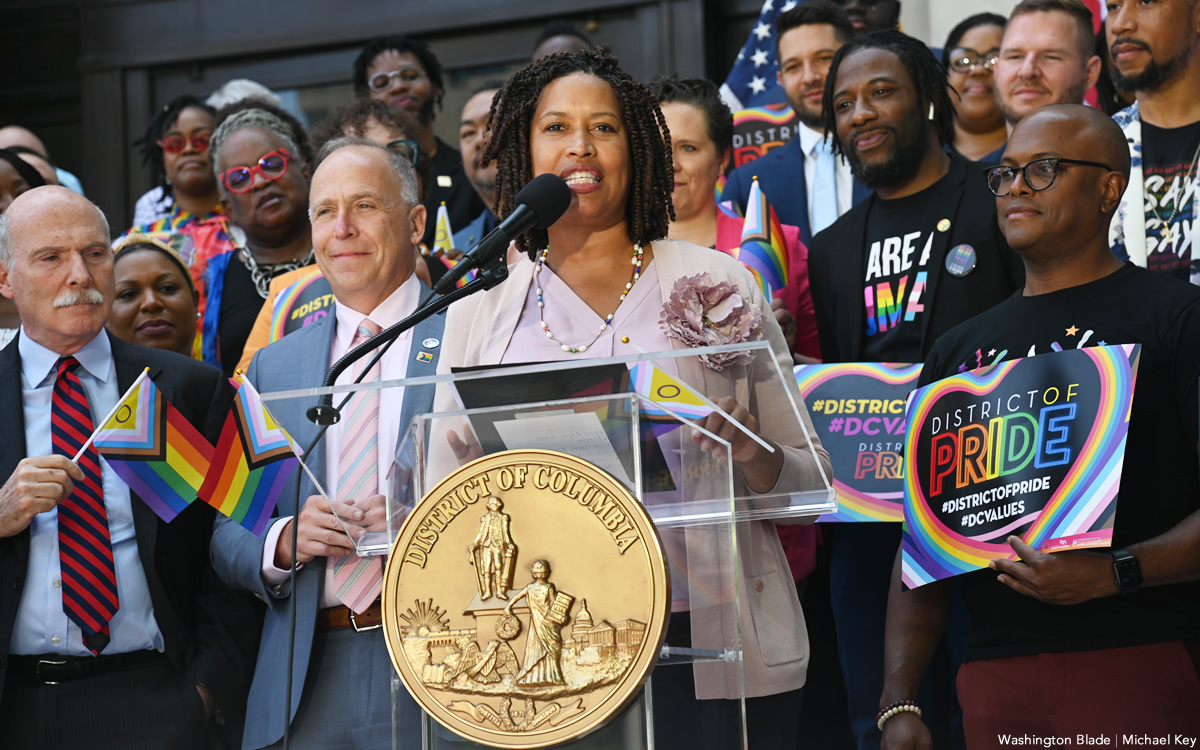
D.C. Mayor Muriel Bowser’s Office of LGBTQ Affairs is inviting the LGBTQ community and friends to attend the city’s annual Pride flag raising ceremony scheduled for 4 p.m. Monday, June 1, outside the John Wilson Building that serves as the D.C. City Hall.
Like in prior years, members of the D.C. Council and officials with the Office of LGBTQ Affairs were expected to join Bowser in delivering remarks on the front entrance steps at the Wilson Building before raising the Pride flag atop one of the tall flagpoles next to the building’s entrance.
Gaby Vincent, a spokesperson for the LGBTQ Affairs Office, said attendees of the flag raising ceremony will be invited to attend a reception immediately following the ceremony in the main lobby of the Wilson Building, which is located on Pennsylvania Avenue at 14th Street, N.W.
She said the reception will feature a DJ, dancing, and refreshments provided by the D.C. LGBTQ bar and café Spark Social House.
Vincent said the flag raising event will also mark the 20th anniversary of the opening of the D.C. Mayor’s Office of LGBTQ Affairs.
In its official announcement of the flag raising event the LGBTQ Affairs Office also announced it is hosting the 7th annual District of Pride Showcase event to be held Friday, June 17, at 7 p.m. at the Lincoln Theater.
The announcement says LGBTQ community members, families, and allies are also invited to walk with Bowser in the Capital Pride Parade scheduled for Saturday, June 20. It says the mayor’s parade contingent will assemble at 2 p.m. at the parade’s starting location at 14th and U Streets, N.W.
“As we also celebrate the 20th anniversary of the Mayor’s Office of LGBTQ Affairs, we invite residents, community members, families and allies to join us throughout June for moments of pride, connection, visibility, and joy,” the announcement says.
National
Still marching: Rev. Troy Perry and the ongoing fight for liberation
MCC founder reflects on Pride’s beginning, ongoing power of radical representation

Long before tone-deaf Target swag and rainbow-scented hashtags lit up the very queer month of June, Rev. Troy Perry was helping the LGBTQ community create space where it did not yet exist, and he did so with little more than faith and perseverance. This Pride season, as communities around the world fight once again with rising attacks on LGBTQ rights and democratic freedoms, Perry returns to the movement he helped build for a conversation rooted not only in history but in survival. The unveiling of Steps to Liberation at Founders Metropolitan Community Church serves as an uplifting reminder that Pride is not just a parade but also serves as a commitment to continue to advocate for our community.
Joined by original rainbow flag co-creator Lynn Segerblom, Perry looks back on the legacy of the first Pride marches, the spiritual and political power of real representation, and why the rainbow flag still matters nearly fifty years after its creation. As Founders MCC transforms its front steps into a vibrant rainbow pathway, the symbolism feels especially timely — freedom is not a destination, it’s something communities continuously build together, step by step. In our interview, Perry speaks candidly on activism, faith, and his continued belief that even in difficult times, hope remains an unwavering act of resistance.
You’ve been at the forefront of LGBTQ history for decades. What does this moment, unveiling Steps to Liberation, mean for you? You’ve often spoken about visibility as an act of courage. Why is that still not only true but also essential today?
I will be 86 years old in another month. Not in the best of health and in a wheelchair, but still a LGBTQ activist at heart. I tell my husband, Phillip De Blieck, that I never thought I would live this long. He and I will be celebrating our 41st anniversary this year.
In the early days of our struggle for our liberation, I used to cut up and tell people there’s just nothing like a good demonstration to get my heart pumping. This is what I feel as we dedicate the Steps of Liberation! Another symbol of our freedom. We’re here, we’re queer, and we’re gonna fight to our last breath, to win all the rights that the colors on the steps represent.
When you think back to organizing the first Pride march in Los Angeles, what emotions or memories visit you?
Having the guts to follow through on our vow to hold a pride parade, no matter what! We did follow through and sued the city of Los Angeles for the right to hold that parade. We won! Thank God for the ACLU. The next thing I thought was, my God, look at all the people who have come out to be in the parade, and to watch it. I was also thankful that no one was hurt that day, and the pride I had of being a part of that demonstration.
How does this new installation reflect the spirit of those early days of activism?
The steps of liberation tell all who see it that we are still here and not afraid after 56 years have passed since our first Pride parade.
The theme of IDAHOBIT 2026 is “The Heart of Democracy.” In your view, how has the LGBTQ movement played its part in influencing our country’s democracy?
I think that most of us have played by the rules and use the cards dealt to us to make a difference in our democracy here in the USA. The LGBTQ community has changed so much in 56 years. Today, members of our community are serving in every political office in our country. We have gay and bisexual city council members, lesbian governors, and trans state legislators. We have a gay man who has run for president of the United States. The heart of democracy is a right given to all of us to work to change our country so that all of us are treated the same. Nothing more, nothing less!
You’ve often spoken about visibility as an act of courage. Why is that still not only true but also essential today?
I tell groups of young LGBTQ people to be yourself. Flaunt it! Coming out of the closet is the best thing you can do. Whether you come out fast or slow, just come out. If you are going to do it, now is the time. I am so proud of young people who are using the Internet, TikTok, and YouTube to make a difference for us. Your siblings are looking for you!
What do you hope someone feels the first time they walk up the Rainbow Steps?
God, does this feel good! Why didn’t I do this a long time ago?
How has faith intersected with activism in your life?
This is my testimony. Most of my relatives would tell you that I have been deeply spiritual all my life. I have had the opportunity to live a very interesting life. I started preaching when I was 13 years old. I was licensed to preach in the Southern Baptist church at age 15. I married heterosexually at age 18. I started pastoring my first church at age 19. I am the father of two children. I am a Vietnam-era veteran. I was divorced at age 26 and founded Metropolitan Community Church at age 28. I have been slapped in the face, spat on, had some people try to murder me, and cursed by some throughout my life, all because I dare call myself a clergyman as a gay man. Has it been worth it? Absolutely. I would not change my life for anything. I try to always keep my faith intact.
In moments when progress feels uncertain or under threat, what keeps your hopes up?
I have my husband, Phillip, and friends that I can talk to. I also have a favorite scripture that keeps me going: though God slay me, I will trust in God. Job 13:15
How do you see younger folks carrying forward the legacy you helped build?
Don’t give up the fight. Organize, organize, organize!
The launch of Flag50 looks ahead to the 50th anniversary of the rainbow flag. What do you think folks should be reflecting on as that milestone approaches?
I love the Pride flag! It gives us hope that there can be a tomorrow. I love the colors and what they represent. Hopefully, we will be able to teach this in our schools one day, along with the American flag and how each of those colors is meant to give us dignity, as well as hope.
How do art and public installations like this one shape cultural change in ways that perhaps policy can’t?
Laws are important because they protect us, but art touches the heart first. A public installation like the Steps of Liberation tells our story without anyone having to say a word. A young person can walk up those steps and realize they are not alone. Families can see our colors and remember that LGBTQ people are part of every community in America. Art creates visibility, and visibility changes hearts and minds. Sometimes culture changes before politics catches up. I believe symbols matter. The rainbow flag matters. These steps matter. They remind us that liberation is not just something you read about in history books. It is something we continue to live every day.
What threats facing our LGBTQ community today concern you more than others?
I worry when people try to erase us, especially our transgender brothers and sisters and LGBTQ young people. I have lived long enough to know that fear and hatred can grow when people stop seeing each other as human beings. We cannot go backward. I also worry when people become discouraged and think their voice no longer matters. That is exactly when we must organize, vote, speak out, and stand together. We have survived attacks before, and we will survive them again, but only if we refuse to be silent. Silence has never protected our community. Courage and love have.
What does it mean to you to take that next step, and how would you advise our readers to take it?
Every generation has its own next step to take. For some, it means coming out. For others, it means speaking up when someone is being mistreated. It may mean marching, voting, creating art, serving your community, or simply learning to love yourself exactly as God made you. The important thing is not to stand still. Keep moving forward. Keep believing that change is possible. I have spent my whole life taking one step after another with people who dreamed of a better world. My advice is simple: do not wait for someone else to do the work. Take the next step yourself, and bring somebody with you.
District of Columbia
‘Queer Love’ campaign launched to address domestic violence
D.C. event set for LGBTQ+ Domestic Violence Awareness Day on May 28
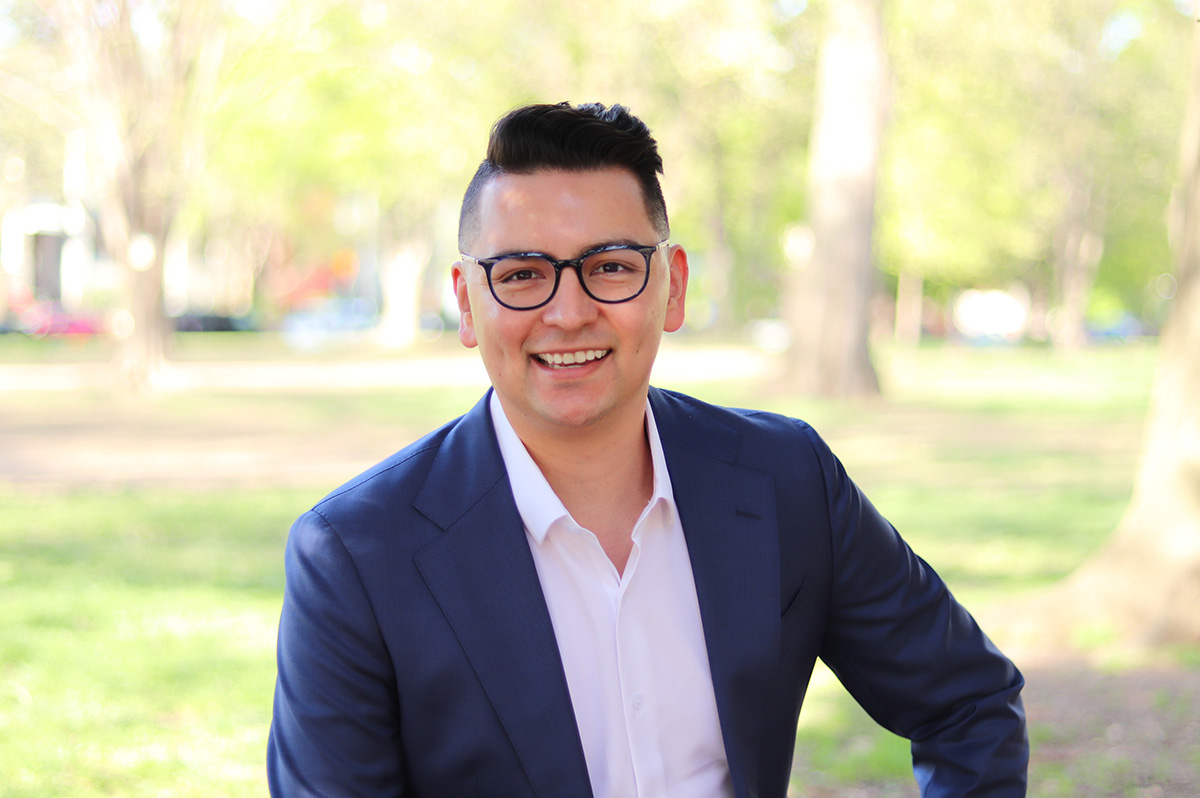
The D.C.-based Wanda Alston Foundation, which provides housing and support services for homeless LGBTQ youth, announced earlier this month that it has joined partner organizations to launch a Queer Love Shouldn’t Hurt campaign aimed at addressing domestic violence within the LGBTQ community.
In a May 18 statement, the Alston Foundation said the campaign involves a public awareness initiative leading up to LGBTQ+ Domestic Violence Awareness Day scheduled for May 28.
“Domestic and family violence in LGBTQ+ communities is real and too often invisible,” Cesar Toledo, the Alston Foundation’s executive director, said in the statement. “As a community, we do not talk about it enough, and that silence can leave survivors feeling isolated and alone,” he said. “We must break that silence.”
He added that culturally competent care for those impacted by domestic violence is available through a newly launched website, queerlove.org, “where people can safely access vital resources, educational toolkits, and support networks they need on their healing journey.”
The website announces one of the project’s first events, a Queer Love Community Social, was scheduled for Thursday, May 28, from 6-8 p.m. at the D.C. LGBTQ+ Community Center at 1827 Wiltberger St., N.W.
“Join us this LGBT+ Domestic Violence Awareness Day for a community social dedicated to visibility and survivor resilience,” the website statement says. “Let’s gather to strengthen our bonds, honor the path to healing, and share free resources,” it says of the May 28 event.
The website also announces a June 1 workshop called Empowering Survivors of LGBTQ+ Intimate Partner Violence, which it says will be presented by Jesse Wedell, an official with the D.C. LGBT+ Counseling Collaborative. The website provides an online form to register for the workshop upon which its location would be disclosed.
It identifies the partner organizations working with the Alston Foundation on the Queer Love Public Awareness Campaign as the LGBT+ Counseling Collaborative, Whitman-Walker Health, the D.C. LGBTQ+ Community Center, and Equality Chamber.
The resources and information provided by the project can be accessed at www.queerlove.org.

D.C. Pride flag raising ceremony set for June 1

Still marching: Rev. Troy Perry and the ongoing fight for liberation

Introducing Next-Generation Assisted Living & Memory Support.

Cedric Neal on his juicy narrator role in ‘Pippin’

Dual endorsement for Independent Council-at-large: Patterson or Crawford

PHOTOS: Black Pride Opening Reception

Bree Fram’s congressional campaign ends but her fight continues

From Media Matters to massive queer ragers: the rise of Tara Dikhof

Peppermint made her mark on ‘Drag Race.’ Now, her advocacy is front and center

Why this Black Pride, I ranked Janeese Lewis George #1 for D.C. mayor
-

 Photos4 days ago
PHOTOS: Black Pride Opening Reception
-
2026 Midterm Elections2 days ago
Bree Fram’s congressional campaign ends but her fight continues
-
a&e features2 days ago
From Media Matters to massive queer ragers: the rise of Tara Dikhof
-
Celebrity News2 days ago
Peppermint made her mark on ‘Drag Race.’ Now, her advocacy is front and center