a&e features
TV critics take on the fall line up
Even the cable reruns are gay now
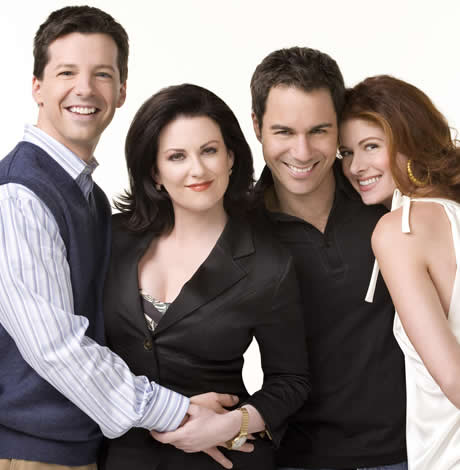
The ‘Will & Grace’ reboot returns for its second season (10th total; an 11th has been announced as well) on Thursday, Oct. 4. It’s one show LGBT critics are most looking forward to. (Photo courtesy NBC)
With more broadcast, cable and streaming network programs than ever before, gay television critics have their hands full, in a constant state of binge-watching all the new and returning series.
At the Television Critics Press Tour, which took place in Beverly Hills, the Los Angeles Blade’s Susan Hornik talked to gay television critics about their favorite shows.
Malcolm Venable, senior writer, TVGuide.com
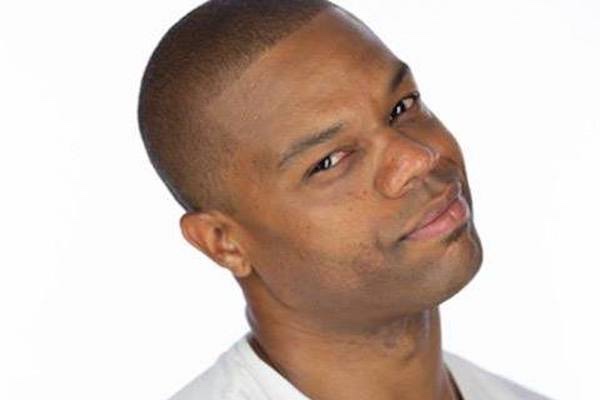
Malcolm Venable (Photo courtesy of Venable)
This fall, I’m excited about the return of “The Deuce,” where the divine Maggie Gyllenhaal this season will be giving less blowjobs in dirty theaters and producing porn in 1970’s New York City. Last season, the series flirted with depictions of gay sex, and here’s to hoping that this season will take those flirtations even further, by showing more same-sex porn and what happens when authorities try to clamp down on it.
Like everyone else with a pulse, I’m also keen to see what ways the Pearsons of “This Is Us” will be making us cry again — I suspect it’s only a matter of time before they push a grandma down a flight of steps or punt a puppy across a football field. Though Denis O’Hare is highly unlikely to return as William’s partner unless the show is going to depict some kind of dead person-alive person romance, we can probably count on some type of LGBTQ representation…or at least more Beth. I need more Beth. I’m also giddy with anticipation for another season of “The Good Place.” It’s a show that never fails to make you happy.
Of course “Will & Grace” comes back again this fall too, and, like a fabulous queen who has faithfully applied moisturizer with SPF every day, this show is aging really well. “Crazy Ex-Girlfriend,” in its final season, promises to be bonkers, and though they’re both animated, “She-Ra” and “Chilling Adventures of Sabrina,” both on Netflix, promise to bring more kick-ass women to the small screen and give lots of queer fangirls new crushes to obsess over.
Jim Colucci, freelance television critic, author of “Golden Girls Forever” and “Will & Grace: Fabulously Uncensored”
Jim Colucci (Photo courtesy of Colucci)
Of all the new and returning fall shows, the thing I’m most excited about, from both an overall and LGBT perspective, is a classic: “Will & Grace.” The show returned last fall, just when the world needed it again, as the current administration regularly threatens LGBT rights.
After all, this was a show that in 1998 — eons ago, as far as LGBT rights go — captured the world’s hearts and minds, and showed the humanity of gay and lesbian characters. That, plus the show has always been one of the wittiest, campiest, and yet most touching sitcoms ever on TV. Now that it’s back for a second “rebooted” season, things are changing — Will’s mom is engaged to Grace’s dad, Jack has a new, steady boyfriend — and the show and its cast is becoming more diverse.
One of the things that stood out most to me when I wrote my book, “Will & Grace: Fabulously Uncensored” is when the show’s creators, Max Mutchnick and David Kohan, told me that they enjoyed deliberately “writing themselves into a corner” with the cliffhanger of every season. It challenged them as writers in determining how to proceed with the next season’s storylines, and therefore ultimately made the show deeper and better. Last season’s cliffhanger sure did force some changes, and I can’t wait to see how those play out.
Brendan Haley, contributing writer for PRIDE.com
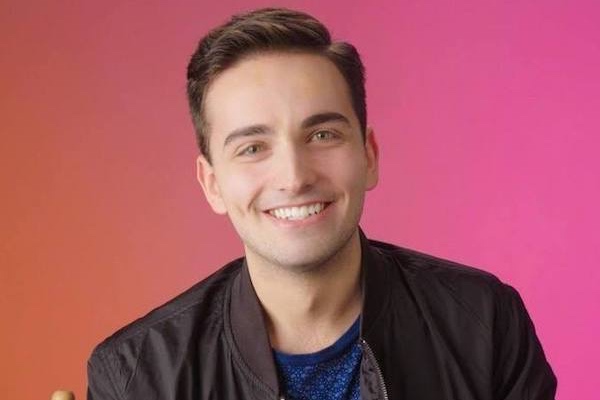
Brendan Haley (Photo courtesy of Haley)
As we can expect the forthcoming season three of “The Crown” to debut a brand new cast, it’ll be exciting to see the developments in one relationship in particular, both performance and story-wise, Princess Margaret (Helena Bonham Carter) and her bisexual ex-husband Antony-Armstrong Jones (Ben Daniels).
Antony’s sexuality played a key role in last season’s drama, depicting the harsh judgments that LGBT people faced in the 1960s.
Also, obviously I anticipate the return of “Will & Grace” this coming fall season, knowing several new comedic additions are in store, including the legendary Chelsea Handler, and the talents of Brian Jordan Alvarez (Estefan).
Where the landscape of TV show reboots can sometimes plateau, “Will & Grace” has not only come back harder than where it left off in 2006, it has thrived in a new era of entertainment, receiving nominations for both Primetime Emmy Awards for Outstanding Supporting Actress (Megan Mullally), and Guest Actress (Molly Shannon) in a Comedy Series.
Frank DeCaro, writer/comedian
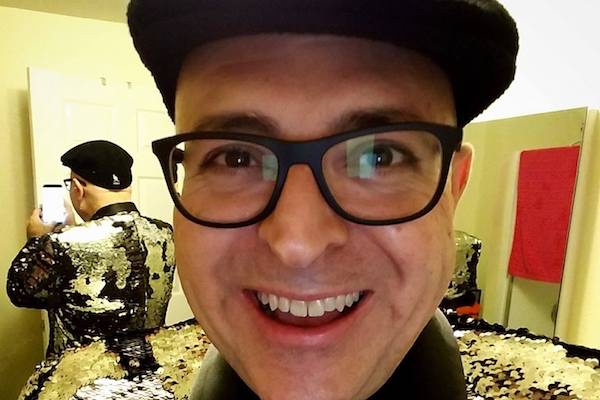
Frank DeCaro (Photo courtesy of DeCaro)
I’m most excited for the fifth and final season of “Gotham.” I’ve been obsessed with this lush, twisted, delicious, funny, gorgeously costumed, and perversely sexy “Batman” origin story since its debut. What’s not to love? Pansexual girl gangs! Erotic tension between the Penguin and the Riddler! A hunky Mr. Freeze with an enormous freeze gun! Watching it makes me happier than a queer in Arkham, and, hold on to your Batpole, this is one series that is sure to go out with a bang!
Hunter Ingram
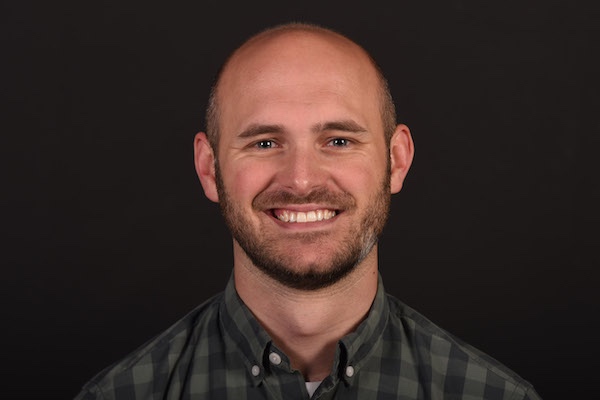
Hunter Ingram (Photo courtesy of Ingram)
It’s only been a few months since Pop’s “Schitt’s Creek” wrapped its fourth season, but the Canadian import has left a maple leaf-sized hole in my heart waiting until season five to arrive in 2019. Lucky for us Schittheads, the Catherine O’Hara-Eugene Levy-fronted comedy series saved the final episode of its 13-episode order for a Christmas special, set to arrive in December.
The series has matured from its fish-out-of-water roots into a genuinely uproarious laugh riot with undercurrent of heart and family, and I, for one, can’t wait to see what they do with “Schitt’s Creek” holiday special. Family dinner at Cafe Tropical? Some caroling from Jazzagirls? If nothing else, David and Patrick, TV’s most underrated gay romance, better find themselves under some mistletoe.
Eight seasons in, FX’s “American Horror Story” has hit some scary-good highs and frustrating lows. Many of the former came in its first and third seasons — “Murder House” and “Coven,” respectively — meaning September’s crossover season between the two installments comes with ultra-high expectations.
The tease of a return to LA’s deadliest house and a visit from a few of Miss Robichaux’s Academy’s finest already has my spine tingling. But the addition of the Drama Queen herself, Joan Collins, and the lingering hope for more surprise faces (Jessica Lange, perhaps?) make this the most highly anticipated “AHS” in years. Don’t let us down, Ryan Murphy!
Netflix’s churns out so much original content it’s hard to lose things amongst the deluge. But one thing I’ve kept my eye on is Cary Fukunaga’s “Maniac,” a trippy limited series about a questionable drug trial, starring Emma Stone and Jonah Hill. It was first announced two years ago and since then, the drip-drip of pictures and promises it’s happening have kept me thirsting for more.
With the recent announcement it will arrive Sept. 21 and a psychedelic teaser to boot, this one has already grab my attention. And that’s even without our first glimpses of co-stars Justin Theroux and Sally Field!
Movie stars on the small screen rarely have the same shock value as it had at the dawn of Peak TV. But Julia Roberts is an exception. The Oscar winner is taking on her first series regular (let’s not forget that stellar guest spot on “Friends” in 1996) with Amazon’s “Homecoming,” an adaptation of the popular podcast (Nov. 2). No one doubts Roberts’ talents, but how do they translate to episodic television, let alone a character-driven half-hour thriller that’s already a go for two seasons. I’m ecstatic about the potential, and not just because she finally lands “My Best Friend’s Wedding” co-star Dermot Mulroney as her boyfriend.
Dennis Pastorizo, TV Host, Host of LATV Network’s The Zoo
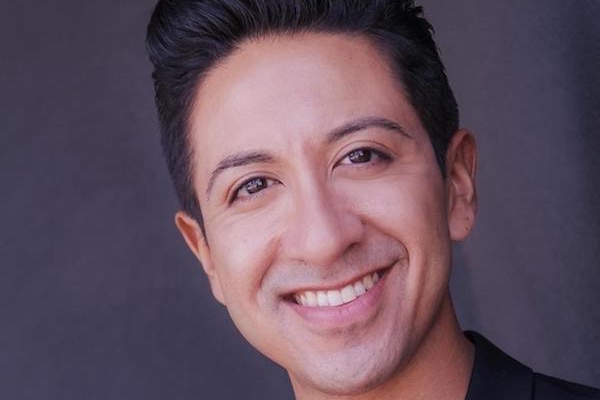
Dennis Pastorizo (Photo courtesy of Pastorizo)
Shows like “The Big Bang Theory,” “The Voice” and “Dancing with the Stars” seem like they’ve been on forever and are here to stay, so I don’t feel as much anticipation for their premieres. I am, however, thrilled to see the new “Magnum P.I.” with Jay Hernandez. I’m usually weary about remakes but he‘s a hunk and the locations look amazing.
Speaking of remakes and reboots: I am excited to see what the new season of “Murphy Brown” will look like. The show’s been off for 20 years and I’m wondering if its core audience will return and how much more can be done with the characters. And although I never cared for “Last Man Standing” on ABC, I want to see how long it will last on FOX.
Original episodes are currently running on Antenna TV, but if it isn’t available on a streaming service beforehand, I don’t know how much hype can be built around the premiere or if viewers will remember important plot points, given Antenna TV is nowhere near accessible or popular as a Netflix or Hulu.
“The Conners” is definitely going to be must-see-TV, at least for its first episode, because we all want to know what will happen to Roseanne’s character. Only time will tell if she is indeed the glue that kept everything together in that show, or if her supporting cast is strong enough to continue the series’ legacy.
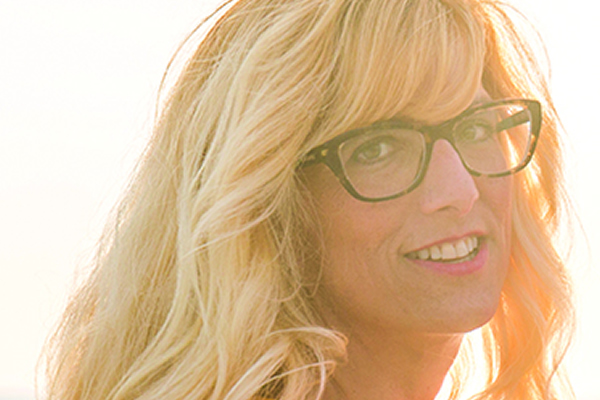
Diane Anderson-Minshall




a&e features
D.C. prepares to party as Pride celebrations kick off Saturday
Bars, clubs have busy lineups; Pride on the Pier returns

Capital Pride’s date change isn’t slowing down the festivities. Back in December, the Capital Pride Alliance shifted the calendar for Pride celebrations in the nation’s capital from the second weekend of June to two weeks later to the weekend of June 20-21 to not conflict with President Trump’s birthday and 250th anniversary of America celebrations, with the aim that “our community can gather safely and without unnecessary barriers… We are protecting our space and preserving Pride as a powerful act of visibility, solidarity, and resistance.”
On the heels of WorldPride last year, the city shows no sign of slowing down. Instead, restaurants, bars, clubs, and neighborhoods are taking the opportunity to be even more visible. The Blade has put together a (non-comprehensive) list of parties, activations, and activities across town:
Pride on the Pier returns on Saturday, June 13 to the Wharf on the Southwest waterfront. The event, sponsored and hosted by the Washington Blade, is free and runs from 4-9 p.m. There will be vendors, DJs, and drag performances all day. VIP tickets are $25 and come with air conditioned party room, private bathrooms, and free cocktail. More details at prideonthepierdc.com.
Capital Pride Official Opening Party: RIOT! is the official opening dance party of Capital Pride, taking place Friday June 19, 9 PM-3AM. The 2026 edition headlining performer is Myki Meeks, a finalist of “RuPaul’s Drag Race” season 18; Bob The Drag Queen will perform a special set. DMV-area DJs and performers include: Bambi, Baphomette, Bumper, Cake Pop!, Connor, DJ Ed Bailey, DJ Diyanna Monet, Evry Pleasure, Jakknife Complex, Mari Con Carne, Pussy Noir, WessTheDJ. Trade owner Ed Bailey is producing the event.
Kinetic Presents brings the heat across the entirety of Pride weekend as well. It again is partnering with Capital Pride Alliance to produce four events over four days this Pride, including the Official Main Event on Saturday (the Friday official event is at Echostage). Kinetic’s parties are splayed across various D.C. venues, with special performances, massive productions, shirtless dancers, play zones, dance-forward audio and visuals, and international DJ talent. Thursday, June 18 at 10 PM at District Eagle is Lust, with music by Dan Slater and TOMI. Friday, June 19 at 10 PM is UNCUT XXL Heavy Load, at A.i. Warehouse in Union Market District, with music by Alex Acosta, Felipe Lira & Mitch Ferrino; the party is a “high-octane night of muscular house and tribal rhythms.” Saturday, June 20 at 10 PM brings that official main event, Kinetic Toy Land, at Echostage, with music by GSP & Matt Suave. Alaska Thunderfuck headlines. Sunday evening June 21 at 10 PM closes with discoVERS at SAX. A portion of tickets supports the DC LGBTQ+ community through Capital Pride Alliance.
9:30 Club always comes in clutch for the LGBTQ community. Already in June, it produced Kitty Kat Ball on June 7, and Kiesza performed on June 8. On June 20 at 10 PM, the famed Mixtape party hits the stage, care of gay DJs Shea van Horn and Matt Bailer, who have spun together for coming up on two decades. Mixtape has been held at several venues across the city over those years, and now settled on 9:30 Club for Pride. On June 25 at 7 PM, Big Freedia – the bounce artist from New Orleans – hits the 9:30 Club scene for the eighth time, as part of the Big Freedom Tour.
Crush: New this year from the 14th Street bar is the Pride Pop-Up, sitting pretty in the parking lot at 1820 14th St., N.W., at the corner of Swann Street by the start of the Pride Parade route. Hours are Friday from 2-10 PM and Saturday from 12-10 PM. Friday evening features Grizzly Bear Happy Hour, a DJ will set up shop on Saturday, and for those needing another layer, there’s a Crush merch store. Co-owner Mark Rutstein “has always wanted to throw a party in that parking lot, so he did,” said co-owner Stephen Rutgers. Note that Crush (the bar) will have a cover on Friday and Saturday.
Kiki: Over at Kiki, there’s a full slate of Pride-themed programming all week. Tuesday, June 16 at 9 PM brings karaoke; Wednesday, June 17 at 7:30 PM is trivia; Thursday June 18 at 9PM is “Night of 1000 Tatianna’s Drag Show”, and Friday June 19 at 9 PM brings the Juneteenth Serve Drag Show. Saturday, June 20 at 10 PM, post-parade, is a Pride Dance Party with DJ Lemz. Sunday daytime at 5 PM is the Father Figures Daddy Issues Special Drag Show; and after the festival at 8 PM, DJ Tezrah hits the tapes.
Jane Jane: Right along the parade route, gay-owned Jane Jane has transformed its space into a “No Kings, Yas Queens” activation in a direct response to the America 250th commemorations happening downtown, from the colorful window installation, to merch (including a custom bandana and tank) to disco wig installations. Events include industry night on Mondays, donations to LGBTQ charities, and to-go cocktails during the Pride Parade.
Shaw’s Tavern: Gay-owned Shaw’s Tavern on Florida Avenue celebrates Pride week with a full lineup of themed events, entertainment, and specials, including Pride trivia on Monday, June 15 at 7:30 PM, bingo on Tuesday, June 16 at 8 PM, a cabaret on Thursday, June 18 at 9 PM, Juneteenth Drag Brunch on Friday, June 19 at 12:30 PM, and both a pre-parade brunch (10 AM-4 PM) and post-parade party (5-9 PM) on Saturday, June 20. Sunday, June 21 at 7 PM brings Mama’s Sunday Supper & Drag Pride Show in the evening for anyone who is still awake.
Trade: This classic has a weekend of events, starting on Thursday, with Tiburon Pride Edition, a Latin Dance party in the Shark Tank. On Friday, the bar opens early (at 2 PM), with all-day happy hour and the Jx&Evry Show. On Saturday, the bar opens at noon, offering a prime parade viewing spot from its windows. There will be the CLASH drag show hosted by Tatianna and Crimsyn, and Sweet Spot party that night. On Sunday, the bar opens for normal hours at 2 PM, with DJs Adam K, Alex Love, and WESSTHEDJ.
Pitchers: The multi-level bar in Adams Morgan is hosting a Pride-themed show on Thursday, June 18 at 10 PM, with drawstring bag giveaways – the only kind of bag that will be allowed into the bar during Pride weekend. The show features drag queen Kyle Sonique Love.
Barrel House Cafe and Bar: Also by the parade route on 14th Street, Barrel House Cafe takes advantage of its large patio to have a slate of events during Pride week, including Schism, a drag and burlesque show on June 18 at 10 PM, as well as an all-day Pride party coinciding on parade day.
Bunker: Bunker again plays host to a series of afters. Friday night (Saturday 3:30 AM) is Unhinged, and Saturday night (Sunday 3:30AM) is Unholy. The regular Saturday night party (10 PM) brings in Venetian and Tiara Missou. All parties have cover charges.
District Eagle: Beyond the Kinetic party on Friday, June 19 brings Gear Night at 10 PM; Saturday, June 20 at 10 PM is LOBO presents PRISM, and Sunday, June 21 is Sundaze wit Papi at 6 PM.
African Art Museum: On Thursday, June 18 at 5 PM, this Smithsonian museum is hosting a free event with artists and curators celebrating its exhibit, “Here: Pride and Belonging in African Art,” “based on years of close collaboration and dialogue with African visual art practitioners who claim belonging in the LGBTQ+ community, however they define those terms,” according to the museum.
KNEAD Hospitality & Design: The gay-owned KNEAD restaurant group (including spots like Gatsby, Mi Vida, Succotash The Grill) is featuring the GLITTERATI cocktail, made with Tito’s, St-Germain Elderflower, Butterfly Flower, ginger, and yes, glitter. A portion of proceeds from every Glitterati cocktail sold will benefit The Trevor Project. The cocktail will be sold throughout June.
The Fountain Inn is partnering with Rhodium spirits (Rhode Island’s first LGBTQ+ owned distillery) all month, making cocktails like gimlets and espresso martinis featuring Rhodium’s liquors. Proceeds benefit SMYAL, an organization dedicated to empowering LGBTQ+ youth.
Hard Rock Cafe: Hard Rock DC is taking part in the chain’s annual “LOVE OUT LOUD” campaign, with Pride merch, specials on June 20, and a donation to The Trevor Project.
a&e features
Fighting ‘Rainbow Panic’ in museums
Here’s how we can resist the escalation of anti-LGBTQ censorship
Back in February of 2025, I wrote a piece for New York City-based arts publication Hyperallergic about the importance of museums stepping up for their LGBTQ staff. I was right to be concerned. Over the last three years, censorship of LGBTQ histories and art has exploded in the museum field. Discourse surrounding censorship of art and artifacts reflects galleries, libraries, archives, and museums (GLAM) institutions’ push to erase LGBTQ stories, language, and people from not just exhibitions but also the wider museum field.
Many now recognize this rush of censorship in the early 2020s as the “rainbow panic,” first coined by historian Wendy Rouse in her piece published in July 2025.
While LGBTQ censorship in GLAM institutions is not new, the recent push to censor queer and trans histories under the Trump administration began in May 2024 when members of the City Council of Lubbock, Texas cut funding for the First Friday Art Trial due to the inclusion of a drag performance.
Additional cancellations followed, including in February 2025, when the Art Museum of the Americas canceled “Nature’s Wild With Andil Gosine” scheduled to open in March. While the museum did not say why, some of Gosine’s work that was set to be part of the exhibition reflected on LGBTQ identity and activism in the Caribbean.
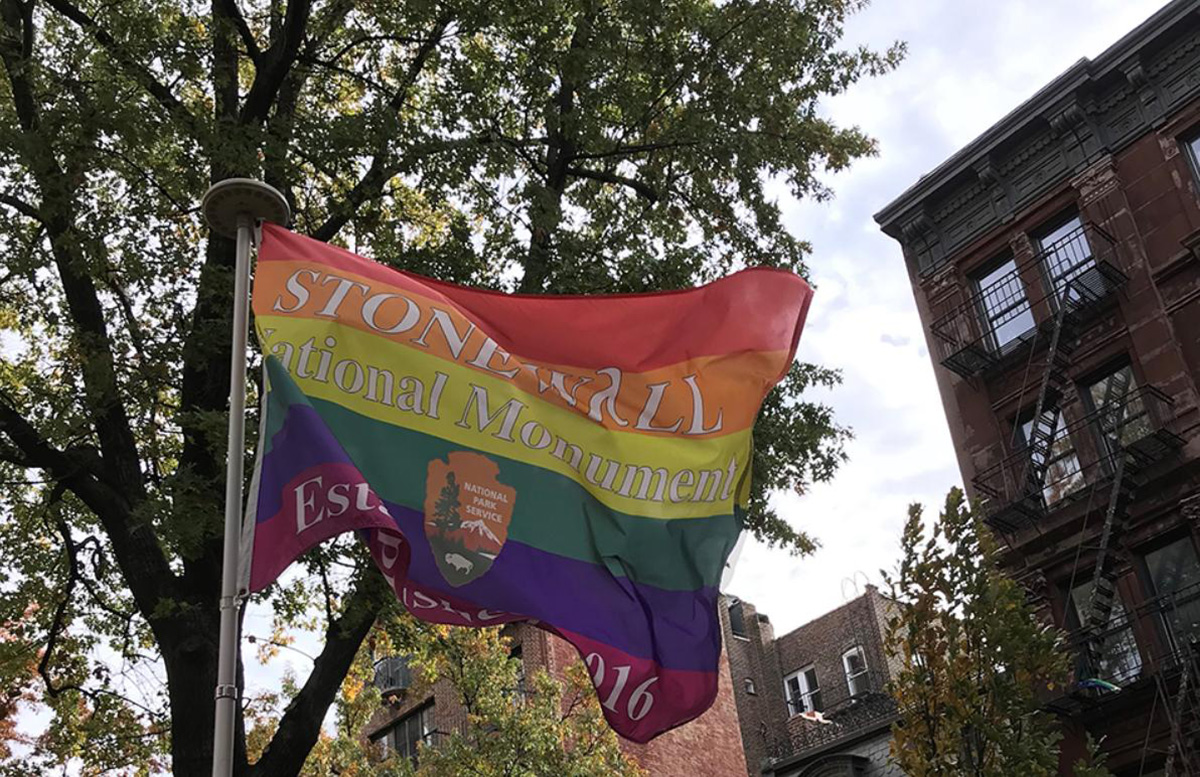
That same month, the National Park Service removed mentions of transgender people from the Stonewall National Memorial website, now seen as a watershed moment in queer erasure. In response, the LGBTQ+ History Association issued a statement warning about the recent moves to censor and erase LGBTQ history and art.
The Association was right to be concerned because the following month, Trump released his Executive Order titled “Restoring Truth and Sanity to American History” where he targeted the National Museum of American History, National Museum of African American History and Culture, and the American Women’s History Museum.
But it wasn’t just erasure, it was also intentional renaming. Also in February 2025, the Scottsdale Museum of Contemporary Art changed its traveling exhibition of work by women, queer and trans artists, changing the title that was originally “transfeminisms.” By June, the Art Institute of Chicago changed the title of an exhibition of Gustave Caillebotte’s work and removed discussions of gender and sexuality from the wall text that were included when the show was displayed in Paris and Los Angeles.
In the last year, censorship has especially escalated with Amy Sherald cancelling her show “American Sublime” at the National Portrait Gallery (and moving it to the Baltimore Museum of Art) and art scholar Ignacio Darnaude writing in an Out op-ed that the National Portrait Gallery (NPG) exhibition “Felix Gonzalez-Torres: Always to Return” did not include information about the artist’s queer identity or the work’s connections to AIDS. The National Portrait Gallery has denied claims of erasure.
This leads us to the most recent happening when in February 2026, a Pride flag was removed from the Stonewall National Monument after a directive from the Trump administration. Thankfully, later that month, protesters re-raised the flag. In April 2026, the National Park Service agreed to restore the Pride flag at the Stonewall National Memorial and keep it up permanently. But even with this victory — the result of queer and trans organizing — attacks on LGBTQ histories remain.
As the histories we fought to collect and interpret are censored and erased, through museums’ compliance-in-advance as well as government discrimination and decree, we (I write as a queer GLAM worker) see a willingness to sacrifice those histories and our communities for institutional safety, funding, and government support.
Please know the LGBTQ community will remember the hard truths we learned this past year — that we and our histories were expendable. If we can be cast aside, hidden, or disowned, whose histories are safe? How can (and can we) rebuild trust in the institutions that failed us this past year? It’s not just the LGBTQ community. In fact, just this January, the National Park Service removed signage from the Independence National Historical Park in Philadelphia that referenced slavery at the President’s House Site.
Please help us to fight the erasure of queer and trans histories and communities. Please stand with the LGBTQ community (and LGBTQ+ GLAM workers) against the violence we are facing — not just outside museums, but inside them too.
For ways that you can help to fight historical erasure, including against the LGBTQ community, please consider the following:
Consume queer history content. Whether it be by visiting exhibitions, listening to a podcast, going on a walking tour or lecture, or buying queer history books, your presence and money speak volumes. And learn your local queer histories. Often, we focus on the large-scale histories that surround the Stonewall Uprising, Compton Cafeteria Riots, and other pivotal moments, but there’s queer history all around us. It’s time to learn and celebrate these histories.
On that topic, volunteer and contribute your time to local LGBTQ history initiatives. Everyone is based in different parts of the country, so another great option for access are online projects like The Pink Triangle Legacies Project, Queer Zine Archive Project, Queer Digital History Project, and Invisible Histories. Everyone has skills, especially GLAM workers, to support the work of these independent history groups.
Financially support and visit grassroots LGBTQ+ archives and museums. Despite mass censorship and violence over the past year, queer and trans history workers have created and facilitated groundbreaking exhibitions and community action at the Museum of Transology (specifically the TRANSCESTRY exhibition), the Museum of Transgender Hirstory & Art, and other grassroots archives, libraries, and museums created by and for our communities.
Queer and trans museum workers refuse to be silenced and shut out of institutions that have long ignored our histories. The work that we do to seek representation is too important, too urgent, to abandon. We look to these grassroots efforts as models for how our institutions can preserve and tell queer and trans histories because many of them were founded themselves during times of censorship and violence.
Find and support your local LGBTQ (and other) employee resource groups and other organizations pushing for transparency and accountability at your workplaces. Right now, many of these groups have gone underground. Where you can, provide mutual aid and financial and organizational support to these groups, and you can be an advocate (especially if you have privilege and protection) for these organizations and their efforts.
Support the unionization of GLAM workers — show up for pickets and use your attendance and money to support institutions that support and invest in their LGBTQ cultural workers. This past year has been incredibly difficult for LGBTQ museum workers — from censorship and erasure of our histories to the firing of and discrimination against LGBTQ federal workers, federal agencies have denied our existence, cut off lifesaving care for LGBTQ people, and ordered the termination of employee community resource groups.
Mobilize and fight against anti-LGBTQ legislation affecting your queer and trans GLAM colleagues (and your neighbors). As goes LGBTQ histories and representation, so goes rights for queer and trans museum staff. The best examples of this are the experiences of queer and trans federal and trust workers. Call your representatives, participate in resistance efforts, and contribute to mutual aid supporting people most hurt by the legislation.
Hope is not lost! LGBTQ history, as I can attest, is not going anywhere, but amid the rising tide of censorship and erasure, there has never been a more important time to show up in support of LGBTQ preservation, curation, and education efforts. As the victory surrounding the Pride flag at the Stonewall National Monument represents, these are hard-fought battles but ones that we can win with your support.
a&e features
From Media Matters to massive queer ragers: the rise of Tara Dikhof
The Washington Blade sits down with the DJ and drag star on her summer tour, rise to prominence, and how Musk helped shape her path.
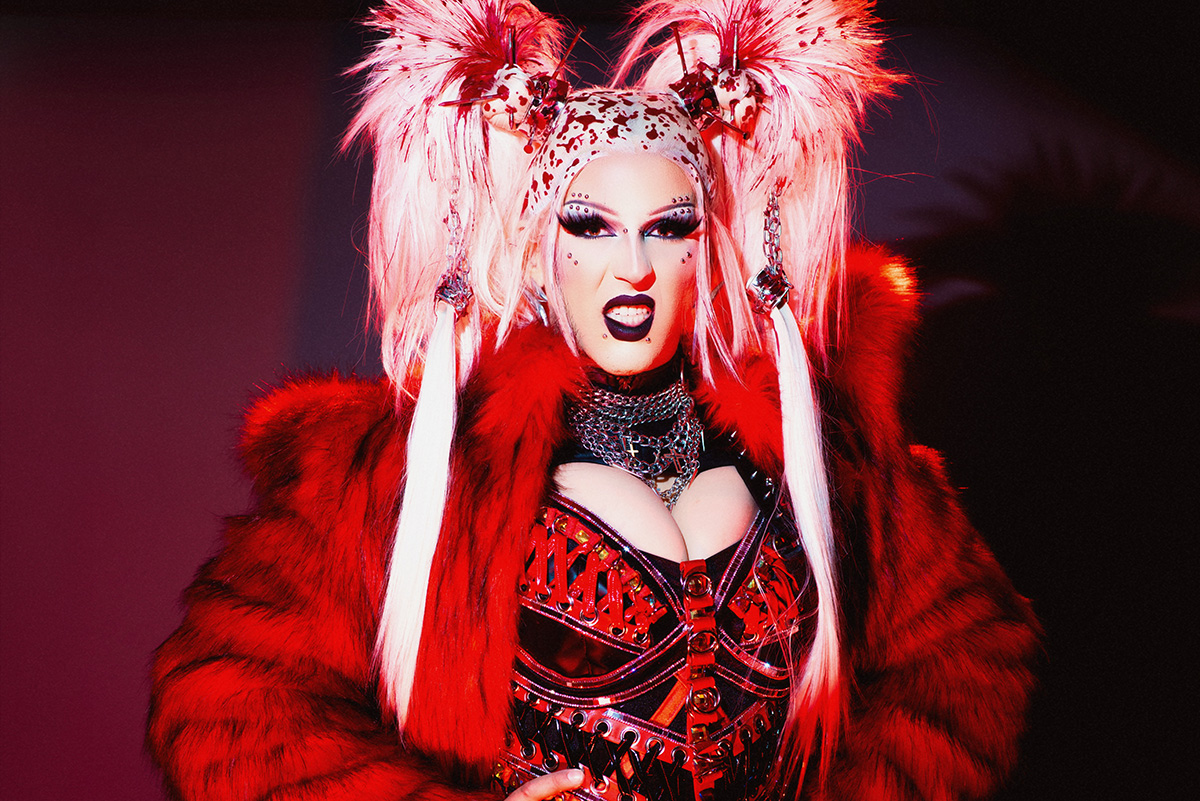
Before becoming the “full-time party girl” with the power to turn any room with Instagram Reels into a dingy dance floor packed with queer people — at least for a minute or two — Tara Dikhof was much like a lot of queer Washingtonians: upset at how the first Trump administration quickly began attacking marginalized communities’ rights, and in need of a creative, constructive outlet.
“I used to be a journalist at Media Matters, where I worked on our online extremism and LGBTQ program,” Tara Dikhof told the Blade when asked how she became the actualized drag performer she is today. “I did extensive work documenting how the right wing media ecosystem poisons the debate on queer issues — and spreads virulent lies about LGBTQ people online.”
Media Matters is a nonprofit that describes itself as a “progressive research and information center” with the goal of “monitoring, analyzing, and correcting conservative misinformation in the U.S. media.”
Tara, who, while working at Media Matters lived up to that goal. She wrote — or assisted the media watchdog with — more than 150 articles for the web-based organization. While she covered a wide variety of topics, she became a leading voice covering Joe Rogan during her tenure as a senior researcher for the LGBTQ Program at Media Matters.
“I think some of my most impactful work from my time at Media Matters was when I was the leading journalist reporting on Joe Rogan’s extremism and right wing misinformation. I broke the story that he was encouraging young people not to get the COVID vaccine,” Dikhof said. “I reported that the presidential debates hadn’t asked a question about LGBTQ issues since the 2000s. I also led a study looking at TV news reporting on anti-trans violence, showing that TV news stations, cable and broadcast combined, collectively reported on anti-trans violence for less than an hour almost every year.”
In addition to media coverage, Dikhof also worked on the inside as a Truman-Albright Fellow and policy analyst at the U.S. Department of Health and Human Services, working to improve the health and safety of Americans.
That effort was recognized from both sides of the political aisle. She and her detailed research appeared in a slew of outlets, includingDemocracy Now!, The Atlantic, and even the Blade’s West Coast sister publication, the LA Blade, among others. While her work began making headlines informing people about the dangers of under coverage of LGBTQ issues, it also garnered attention from staunch anti-LGBTQ voices.
One of those voices — and the one Dikhof ultimately credits as the reason she bowed out of the media watchdog world — was Elon Musk. Musk, the CEO of Tesla, founder and chief engineer of SpaceX, and owner of X, was not pleased with coverage of the platform’s questionable practices under his leadership. The app relaxed censorship policies, dissolved its Trust and Safety Council, and reinstated thousands of previously banned accounts — many of them far-right accounts found to be pushing harmful misinformation and disinformation.
“He was trying to silence fact-based journalism that revealed that his platform X was running advertisements next to Nazi content,” Dikhof said. “When you’re facing lawsuits against the richest man in the world, unfortunately, the facts don’t matter as much.”
She said it led to her being let go from the media watchdog organization — something she had worked so long to help grow awareness about the dangers of growing authoritarianism on platforms and across the airwaves.
“That was incredibly devastating. I dedicated my entire adult life to the progressive movement, to trying to stop right wing misinformation, and to have that drop out from under me was defeating, to say the least. But you can’t keep a powerful girl down.”
She didn’t stay down for long. She tapped into the drag and DJ world after leaving the nation’s capital. Since then, she has expanded on her drag journey and opened for some of the world’s biggest performers — from Aliyah’s Interlude, to Violet Chachki, to massive pop superstar Chappell Roan. It seems the Dikhof rocket has taken off and doesn’t look like it’s slowing down.
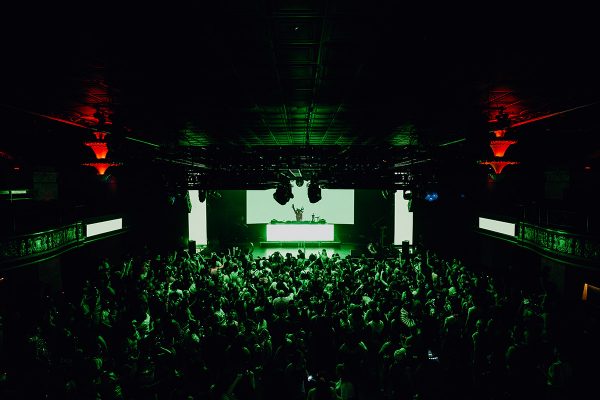
That switch, she explained, has her feeling like she is doing more for the LGBTQ community than she could at Media Matters.
“I started throwing parties and community events for queer people in Boston, and I now throw parties for over 1,200 people a month,” she said. “I honestly don’t feel like I’ve ever had more of an impact on queer and trans people than I am now. I believe, from the bottom of my heart, that getting a group of LGBTQ people in a room together and letting them radically express themselves through dance and movement and to build new friendships and to find the love of their life — is a radical act.”
Her goal is simple — provide a place for LGBTQ people, specifically trans people, to let down their hair — or in her case, giant wigs and fantastical headpieces — and just dance.
“I’m just trying to give people a space to exist, which for a lot of queer and trans people right now is not something they can do. They don’t feel safe at work, they don’t feel safe at home, they don’t feel safe in public, and the one oasis that they can access is the gay club. It’s a place where they can dress however they want, they can love whoever they want.”
That radical act, she explained, should be as inclusive as America is diverse. She sees the waves of conservatism that have hit the federal government — and state offices around the country swinging to the right — reflected in the nightlife scene she encounters. LGBTQ clubs have long been a proxy for the social standards in mainstream America, which often focus heavily on young, white, cisgender men.
“It is one of the most connecting things we can do while we’re on this planet. My guiding light is, I am trying to build dance floors that are multigenerational and multiracial. I’m trying to start a new chapter in queer nightlife, where dance floors aren’t just dominated by white, buff gay men.”
While in-person nightlife has led to a diverse dance floor thumping with bops from Slayyyter’s new release “Wor$t Girl In America” to gay club classics like Ariana Grande’s “Into You” — with wild-haired Dikhof at the helm in looks that could make even Cher do a double take — her rise has also been immensely assisted by some of the very platforms she once called out while living in Washington.
She has amassed quite the following — 142,000 followers on Instagram, 2.6 million likes on TikTok, and thousands of streams on SoundCloud.
Despite this growing and visibly powerful media presence, she has hard limits on when and where she deems it appropriate. The dance floor is not always one of those places — not just due to the growing data on the harm social media causes to users’ health, but also to stay true to her goal of helping the LGBTQ community become a stronger, more accepting place.
“Social media promises connection and relationships, but it’s not true. What we actually need is a way for people to put their phones down and connect with others in real life,” she said. “I’m trying to build a coalition that represents the true power of the LGBTQ community, where we can all exist in harmony together. At a lot of my parties, I have a no-phones policy, because what I want people to do is disconnect from social media, disconnect from our system of mass surveillance, and just be present for a few hours.”
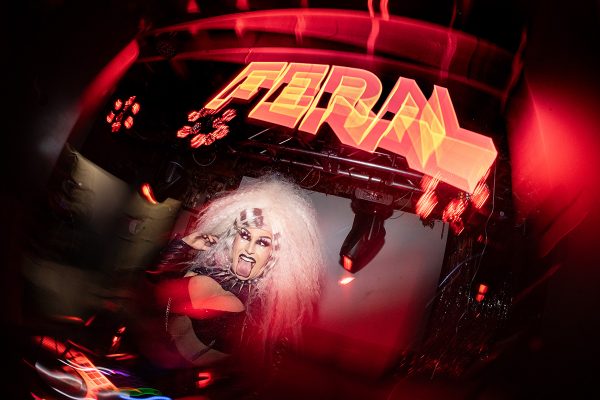
“For my party, Feral, which is [a] no-phones LGBTQ rager, at the door before anyone enters the party, we tell them our party’s policies, and we make sure they have a verbal yes agreeing to them,” she said. “Those policies are no phones, no photos, no videos on the dance floor, treat yourself and others with respect.”
She sees this intentional inclusivity as a major way to combat the hate trickling down from the Trump-Vance administration and regurgitated by mainstream media organizations that feed into that bias.
“I believe that we can create, and we can continue to build radical change in this country on the dance floor. So much mainstream media has consistently allowed conservative media to set the terms of debate for LGBTQ rights. Mainstream media outlets like the Washington Post, outlets like New York Times, put trans rights up for debate when we can all agree that human rights are not something that we can debate.”
She continued, explaining that the bias mainstream media imposes — like with The New York Times’ consistently criticized coverage of transgender people, which often has little or no actual transgender voices in its reporting — frames these issues as cultural debates rather than basic human rights.
“These mainstream outlets don’t debunk those claims. They don’t push back on them. We need to say that lesbians belong at the gay club. We need to say that we don’t tolerate anti-Black discrimination at the gay club. We need to say that trans people deserve to be loud and messy in the gay club, just like everyone else gets to.”
She explained that what she is trying to do is simple in theory — make the space truly a dance haven for everyone in the community.
“What I’m really trying to do is I’m trying to open a portal of transcendence. I’m trying to create magical moments where all of the problems in the world drop out of your mind.”
Dikhof attempts to do this, she explained, by tapping into that deeply human — and animalistic — need for connection.
“Humans are primates and primates are animals that need physical touch. We need community spaces, and increasingly, with social media, late stage capitalism, and a horrible economic outlook, people don’t have a public forum to connect with others. There have been nights where I have taken a $3,000 loss, but it’s part of it.”
To her, the value queer nightlife gives to the community can’t be measured by ticket sales or ad clicks — it’s measured by acts of queer joy and defiance that echo the community’s need for broader survival in an era of book bans and hostility for the sake of cruelty.
“All we need is a room for four hours, a DJ, a working sound system, and a community that cares about protecting each other. If you have that, you can create total bliss. I think the beauty and transcendence of queer nightlife is something that Republican lawmakers will probably never understand.”
She sees the dance floor as just as important for queer people as the Senate floor. Not separate from politics — it is politics.
“I do believe that having queer community spaces is an integral part of political organizing. We cannot let the bastards steal our joy. Getting out of the house and being loudly queer is a form of resistance.”
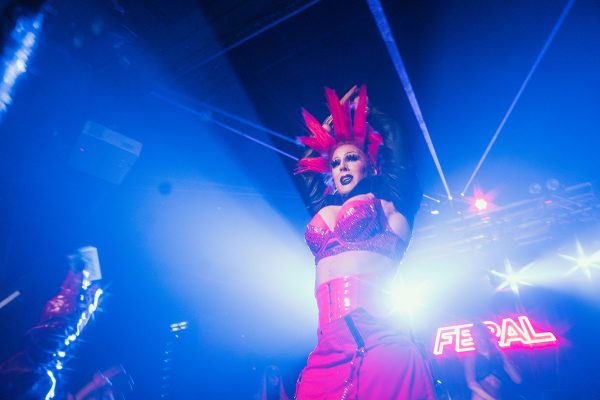
“Right now, I’m really living my wildest dreams and I’m hungry. This is just the beginning for Tara Dikhof. We’re living in a society where we have Paleolithic emotions, medieval institutions, and God like technology, and I am going to use that God like technology to the best of my ability.”
Tara Dikhof is currently on her summer tour, starting at Project GLOW for Queer Chaos in Washington. She will return — after crisscrossing the country — to perform at Bunker on June 20 during Capital Pride weekend.

‘Stop! That! Train!’ is made for fans, but fun for all

Delaware guv signs bill to protect children born using assisted reproduction

Calendar: June 19-25

My trans daughter thrived in Chicago public schools

Minor league team in York, Pa., forfeits Pride Night game after some players refuse to wear special jersey

Gay San Diego mayor elected US Conference of Mayors president

UFC fighter says ‘Michelle Obama is a man’ at White House event

There is no Pride in detention

This John Waters interview has been edited for readability — but perhaps not human decency

Calif. governor’s race spotlights Becerra’s LGBTQ advocacy
-

 California4 days ago
Gay San Diego mayor elected US Conference of Mayors president
-
National4 days ago
UFC fighter says ‘Michelle Obama is a man’ at White House event
-
Opinions5 days ago
There is no Pride in detention
-
Baltimore4 days ago
This John Waters interview has been edited for readability — but perhaps not human decency