Arts & Entertainment
‘Queer Eye’s Jonathan Van Ness slammed for saying ‘not all Republicans are racist’
The reality star’s political tweets cause Twitter meltdown
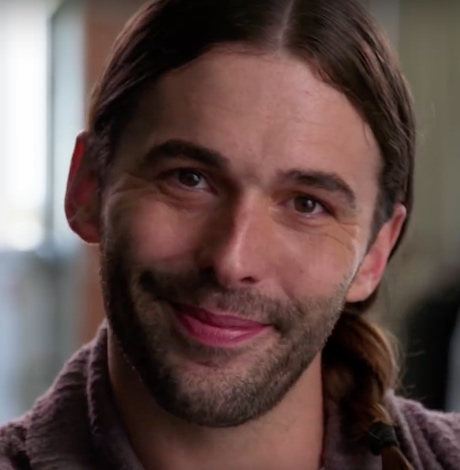
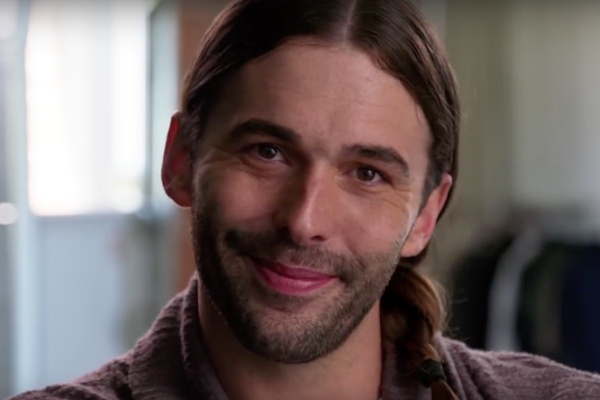
Jonathan Van Ness (Screenshot via YouTube)
“Queer Eye” star Jonathan Van Ness is under fire with some fans for saying that not all Republicans are racist and urging both political parties to compromise.
After the primary elections on Tuesday, Van Ness spoke out on Twitter about the results.
“Luckily a lot to extreme right people won yesterday, meaning that if we can come up w center left candidates we can take back the house & senate, not to mention many state legislatures. It is so important for the left to not go too left or we are done for,” Van Ness tweeted.
Luckily a lot to extreme right people won yesterday, meaning that if we can come up w center left candidates we can take back the house & senate, not to mention many state legislatures. It is so important for the left to not go too left or we are done for.
— Jonathan Van Ness (@jvn) August 15, 2018
“Not all republicans are racist. Just like not all democrars are evil, we have to stop demonizing eachother. Unless you’re actually racist then you suck, Trump is Racist – not all his voters are necessarily we gotta remember we are all in this together,” he added.
Not all republicans are racist. Just like not all democrars are evil, we have to stop demonizing eachother. Unless you’re actually racist then you suck, Trump is Racist – not all his voters are necessarily we gotta remember we are all in this together.
— Jonathan Van Ness (@jvn) August 15, 2018
His tweets sparked criticism from some people on Twitter who didn’t agree.
jvn, i really admire you, but we’re not all in this together. if we were, trump would never be in office. republicans don’t want to compromise. they don’t care about us. they never have.
— abolish ICE (ง’̀-‘́)ง (@dariaosaurus) August 16, 2018
I’m not saying Clinton, but I’m saying conservative America will NEVER EVER vote for this, Obamacare is a great start and our best shot, yet demanding all or nothing is what got us Trump, Not Hillary.
— Jonathan Van Ness (@jvn) August 15, 2018
Im not left punching – I’m just born and raised in Trump country and I know what it takes to calm that type of person and it’s not this.
— Jonathan Van Ness (@jvn) August 15, 2018
take it from a fellow white gay person; we still have a LOT of privilege here, and there are a lot of people we need to be listening to. and telling your fans, who are largely minorities, that they need to recognize the very fine people on both sides is not the way.
— hannah moskowitz? (@hannahmosk) August 15, 2018
Van Ness defended himself against the critics saying that “compromise is what’s missing” from Democrats and Republicans.
“Also if you’re upset at a tweet I made leave gurl bai! Being able to compromise is what’s missing from both sides of the American political situation & the sooner we all get to a place of mutual understanding the sooner we will get out of this mess,” he tweeted.
Also if you’re upset at a tweet I made leave gurl bai! Being able to compromise is what’s missing from both sides of the American political situation & the sooner we all get to a place of mutual understanding the sooner we will get out of this mess.
— Jonathan Van Ness (@jvn) August 15, 2018
Van Ness later posted a video clarifying his earlier tweets.
“I decided to tweet political things today and you know that can go one of two ways. Left people are not necessarily inherently evil and right people are not necessarily inherently evil and our ability to notice gray area and to notice what compromise means and how much compromise has led us to where we are is important,” Van Ness says.”We have to be able to not demonize the right.”
— Jonathan Van Ness (@jvn) August 15, 2018




Theater
Iconic Eddie Izzard takes on 23 characters in ‘Hamlet’
Energized take on role offers accessible way to enjoy Shakespeare
‘The Tragedy of Hamlet’
Through April 11
Shakespeare Theatre Company’s Klein Theatre
450 7th St., N.W.
Tickets start at $90
Shakespearetheatre.org
Eddie Izzard is an icon.
Best known for her innovative standup and film roles, the famed British performer is also a queer activist who over the years has good-naturedly shared details from her decades long trans journey. What’s more, Izzard has remarkably run 43 marathons in 51 days for charity.
And now, Izzard finds a towering new challenge with the worldwide tour of “The Tragedy of Hamlet” (at Shakespeare Theatre Company’s Klein Theatre through April 11), in which she plays 23 characters (Hamlet, King Claudius, Queen Gertrude, the ghost, etc.) in a solo performance running just over two hours.
At a recent performance, Izzard, before slipping into character, appeared on the unadorned stage to say that though infused with comedy, “Hamlet” is definitely a tragedy, a story of a family and country both tearing themselves apart. She also warns that there’ll be a lot of breaking the fourth wall. After all, it didn’t exist in 1600 around the time when “Hamlet” was written.
The play unfolds in flurry of movement and scandal as the Danish prince begins to plot revenge after learning that his father, the old king was conspired against and murdered.
While some of Izzard’s character shifts are shown only by a subtle change in stance or modulation of voice, others are more obviously displayed like court sycophant Polonius walking with a stiff leg and mimed cane, or his ill-fated daughter Ophelia trotting girlishly across the upstage platform.
Delivered downstage at the intimate Klein venue, Izzard’s Hamlet soliloquies are performed with striking clarity. The one actor play is adapted and edited by Mark Izzard (the star’s older brother) and directed by Selina Cadell who successfully fosters the visceral connection between the actor and the house. Directly addressing an audience is something Izzard does exceedingly well. You feel as if she’s looking at/speaking to only you.
Cuts and choices are made that might not please traditionalists. The stabbing of eavesdropping Polonius might prove disappointingly underplayed to some. Whereas, the subsequent satisfying dual/death scene is long and precisely choreographed. Fear not, Izzard doesn’t flag a bit, not even when battling a cough (as was the case on the night of No Kings Day).
Not surprisingly, Izzard leans into the comedy. Her deliciously placed pauses, lines read ironically, and double takes, all gifts of comedy sharpened to perfection over a long career that kicked off as a street performer in the early eighties in London’s Covent Garden.
The play within a play scene finds Hamlet slyly rattling the conscience of King Claudius. As played by Izzard, it’s wickedly delightful and especially good. And the back and forth between the grave diggers done as a clever Cockney and his green assistant is a master class in how to play a Shakespearean clown.
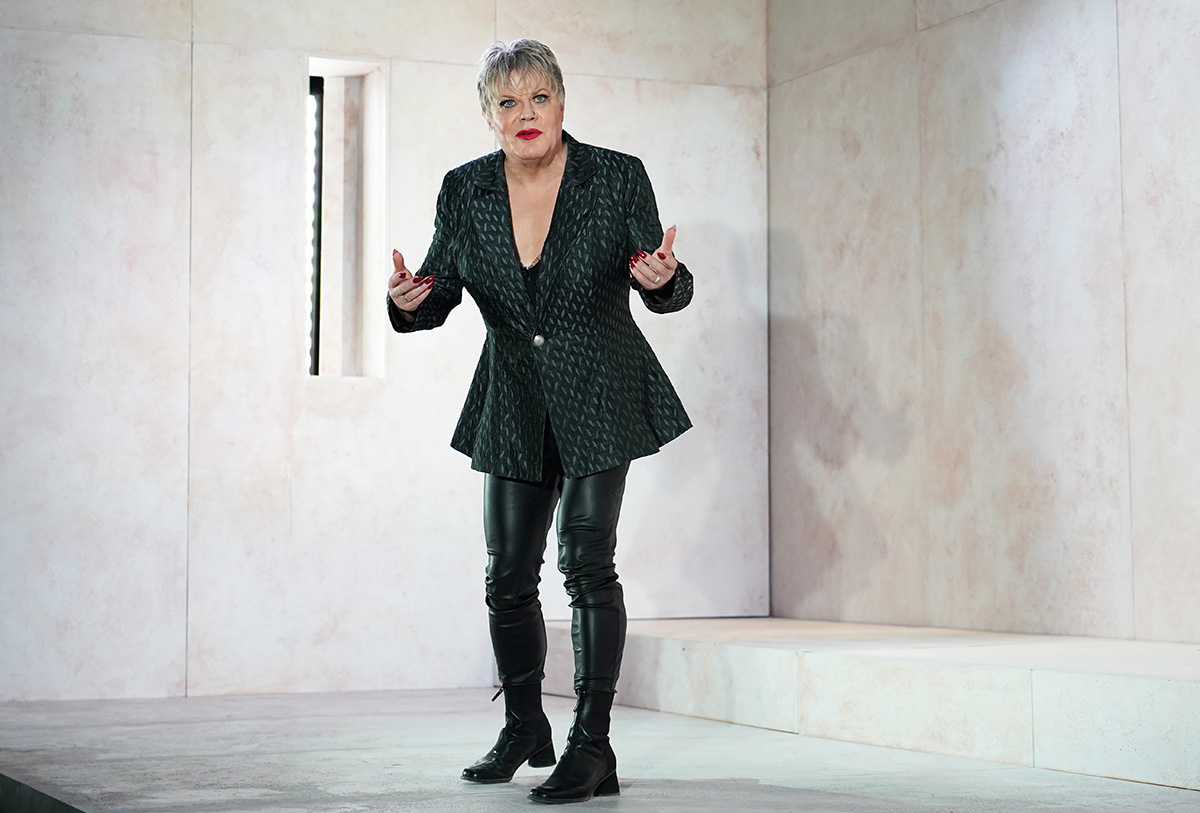
Kitted out in a black peplum jacket over leather leggings and boots, Izzard gives gender fluid shades of contemporary diehard scenester and a Renaissance courtier. (Design and styling by Tom Piper and Libby DaCosta)
Attention has been paid to the blonde high ponytail, crimson lips and matching lacquered nails. The hands are important. Whether balled into fists or fingers fluttering, they’re in use, especially when playing Hamlet’s ex-friends Rosencrantz and Guildenstern (a clever surprise that can’t be spoiled).
Tom Piper’s set is wonderfully minimal. It’s an empty white walled space with three narrow windows that appear cut deeply into stone like those of a castle. These white flats serve as the ideal canvas for lighting designer Tyler Elich’s looming shadows, ghostly green light, and other unexpected flourishes of drama.
Izzard fills the stage. Her presence is huge, and her acting first-rate. At times, you forget it’s a one-person show.
I’d like to say, prior knowledge of the Bard’s best tragedy isn’t necessary to enjoy this fast-paced production. Despite a halved runtime and obscure words replaced with modern equivalents (“tedious old git” Hamlet says of Polonius), familiarity with the play is helpful.
With “The Tragedy of Hamlet,” Izzard secures a place among fellow queer Brits like Miriam Margolyes (“Dickens’ Women”), Sir Ian Mckellan (“Ian McKellen on Stage”), and more recently Andrew Scott (“Vanya”) in the solo players’ pantheon.
Izzard’s energized take on Hamlet is terrific. The way her powerful public persona bleeds into the work without taking over is exciting, and a uniquely accessible way to enjoy Shakespeare.

Friday, April 3
Center Aging Monthly Luncheon With Yoga will be at 12 p.m. at the DC Center for the LGBT Community. Email Mac at [email protected] if you require ASL interpreter assistance, have any dietary restrictions, or questions about this event.
Go Gay DC will host “First Friday LGBTQ+ Community Social” at 7 p.m. at Silver Diner Ballston. This is a chance to relax, make new friends, and enjoy happy hour specials at this classic retro venue. Attendance is free and more details are available on Eventbrite.
Saturday, April 4
Go Gay DC will host “LGBTQ+ Community Brunch” at 11 a.m. at Freddie’s Beach Bar & Restaurant. This fun weekly event brings the DMV area LGBTQ+ community, including allies, together for delicious food and conversation. Attendance is free and more details are available on Eventbrite.
Nellies Sports Bar will host “Nellies DC Drag Brunch” at 12 p.m. Come get served like a queen, by a queen at the top rated Drag Brunch in DC! Join Sapphire Blue, Deja Diamond and their team of amazing drag performers, for the most fun you’ll have all weekend. Tickets start at $58.51 and are available on Eventbrite.
Monday, April 6
Center Aging: Monday Coffee Klatch will be at 10 a.m. on Zoom. This is a social hour for older LGBTQ+ adults. Guests are encouraged to bring a beverage of choice. For more information, contact Adam ([email protected]).
Go Gay DC will host “LGBTQ+ Community Happy Hour Meetup” at 5:30 p.m. at Freddie’s Beach Bar and restaurant. This event is ideal for making new friends. It’s free to attend. The group will gather inside at the purple booth to the left. Attendance is free and more details are available on Eventbrite.
Tuesday, April 7
Universal Pride Meeting will be at 7 p.m. on Zoom. This group seeks to support, educate, empower, and create change for people with disabilities. For more details, email [email protected].
Wednesday, April 8
Job Club will be at 6 p.m. on Zoom upon request. This is a weekly job support program to help job entrants and seekers, including the long-term unemployed, improve self-confidence, motivation, resilience and productivity for effective job searches and networking — allowing participants to move away from being merely “applicants” toward being “candidates.” For more information, email [email protected] or visit www.thedccenter.org/careers.
Thursday, April 9
The DC Center’s Fresh Produce Program will be held all day at the DC Center for the LGBT Community. To be more fair with who is receiving boxes, the program is moving to a lottery system. People will be informed on Wednesday at 5:00 pm if they are picked to receive a produce box. No proof of residency or income is required. For more information, email [email protected] or call 202-682-2245.
Virtual Yoga Class will be at 7 p.m. on Zoom. This free weekly class is a combination of yoga, breathwork and meditation that allows LGBTQ+ community members to continue their healing journey with somatic and mindfulness practices. For more details, visit the DC Center’s website.
a&e features
Award-winning D.C. chef reaching new culinary heights
Anthony Jones of Marcus DC competing on ‘Top Chef’
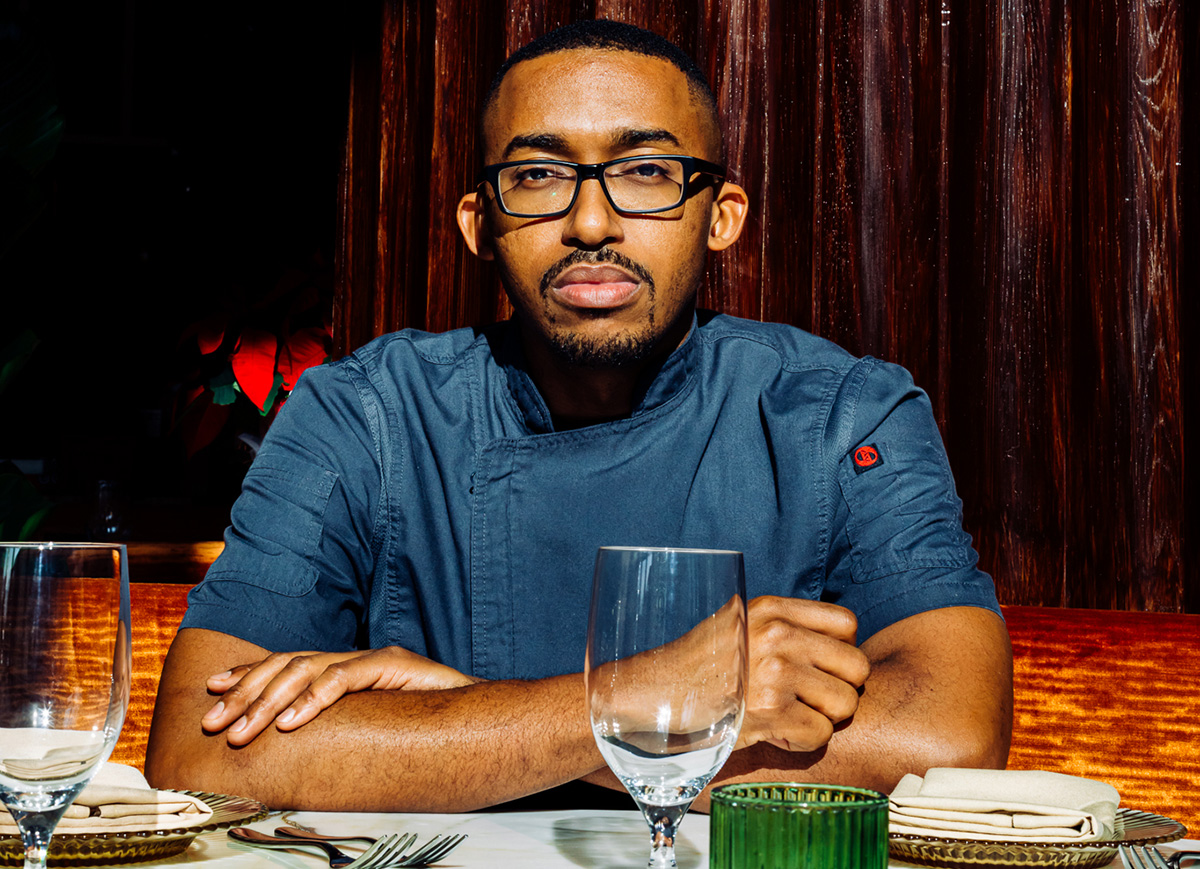
In Anthony Jones’s kitchen, all sorts of flags fly, including his own. Executive chef at award-winning restaurant Marcus DC, Jones has reached culinary heights (James Beard Award semifinalist for Emerging Chef, anyone?), yet he’s just getting started.
Briefly stepping away from his award-winning station, Jones took a moment under a different set of lights. Recently, he temporarily gave up his post at the restaurant for a starring small-screen slot on the latest season of “Top Chef,” which debuted in March. (The show airs weekly on Bravo and Peacock).
Before his strategic slice-and-dice competition, however, Jones, who identifies as gay, draws from his deep DMV roots. In the years before “Top Chef” and the top chef spot at Marcus, he was born and raised in Sunderland, Md., in southern Maryland, near the Chesapeake.
Early memories were steeped in afternoons on boats with his dad bonding over fishing, and wandering the garden of his great-grandparents spread with fresh vegetables and a few hogs. “It was Southern, old-school ethics and upbringing,” he said. “Family and food went hand in hand.” Weekends meant grabbing bushels of crabs, dad and grandma would cook and crack them. Family members would host fish fries for extra cash. In this seafood-heavy youth, Jones managed time to sneak in episodes of the “OG” Japanese “Iron Chef” show, which helped inspire him to pursue a career in the kitchen.
Jones moved to D.C. after graduating from college, ending up at lauded Restaurant Eve, and met famed chef Marcus Samuelson, who brought him to Miami to be part of the opening team for Red Rooster Overtown. After three years, Jones moved back to D.C., where he ran Dirty Habit, reinventing and reimagining the menu, integrating West African flavors and ingredients.
Samuelson, however, wouldn’t let a talent like Jones stay away for too long. Pulling Jones back into his orbit, Samuelson elevated Jones to help him open his namesake restaurant Marcus DC, which has been named a top-five restaurant by the Washington Post. Since then, Jones has been nominated as a semifinalist for the RAMMYs Rising Culinary Star in 2026 and won the Eater DC’s Rising Chef award in 2025.
Samuelson’s Marcus is a tour de force interpreting the Black Diaspora on the plate, from the American South to West Africa, along with his signature “Swedopian” touches. Yet it’s Jones who has deeply informed the plate, elevating his own story to date. Marcus DC is primarily a seafood restaurant, which serves Jones well.
“Where I’m from is seafood heavy, and as I’ve progressed in my career, I’ve moved away from meat.” Veggies and fish are hero dishes. His own dish, Mel’s Crab Rice, was not only lauded by the Washington Post, but is framed by his youth carrying home the crustaceans from Mel’s crab truck. It’s a bowl of Carolina rice, layered with pickled okra, uni béarnaise, and crab. Jones also points to a dish on the opening menu, rockfish and brassica, paying respect to a landmark D.C. institution, Ben’s Chili Bowl. Jones reverse engineered a favorite bowl of chili that’s seafood instead of meat forward, leveraging octopus and rockfish along with different riffs of cauliflower: showing his intellectual, creative, and cultural sides.
While “Top Chef” is showing Jones’s spotlight side, he also lets his identity show at work. “In the kitchen, I make sure we’re inclusive. We don’t tolerate discrimination. Everyone that’s here should feel confident to express themselves. There are so many different flags in the kitchen.”
Jones says that he didn’t fully express his gay identity until fairly recently. He felt reluctant coming out to certain family members, “you’re scared to tell them about being different,” he says, and while that anxiety ate at him, “I’m lucky and fortunate to have unconditional love and that weight off my shoulders.”
Today, “I’m me all the time, Monday to Sunday. I’m honest with people, and my staff is honest with me.”
“Being a chef is hard,” he says, “and being a chef of color is even more difficult.”
Yet his LGBTQ identity is a juggling act, he says. “I need to keep that balance, because once someone finds out something about you, their opinion can change, whether you want it or not.”
Being on a whole season of TV cooking competition, however, might mean millions more might have an opinion of him (Jones has appeared on TV already, on an episode of “Chopped”). To prepare, he says, “I’ve just kept a level head. It’s just an honor to be on top chef with amazing people happy to be there.”
Plus, this season is set in the Carolinas, and Jones attended Johnson & Wales University in Charlotte, N.C. “It’s a full story of my life, now a monumental moment for me.”
Jones also recently was nominated for a James Beard Foundation Award. “JBF has been a north star, a dream for so long. I always had this goal on my wall.”
Being at the top spot at Marcus DC, making waves through his accolades, and cooking on Bravo means that Jones is highly visible. “I think that if someone has a similar background to me, and can see our story, trajectory, and success, they can have more ability to be themselves. This is my goal.”
Back at Marcus, Jones has plenty up his chef’s white’s sleeves. A new spring menu is in the works. He’ll be launching a new tasting menu “dining experience,” he says, and has plans to work on more events and collaborations with chefs and friends to bring in new talent and share the culinary wealth.

Surviving spring cleaning

Iconic Eddie Izzard takes on 23 characters in ‘Hamlet’

How Pepper the courthouse dog helps victims of abuse

Women’s FEST returns to Rehoboth Beach next week

Belarusian lawmakers approve bill to crackdown on LGBTQ rights

Thousands attend ‘No Kings’ protests in D.C.

Supreme Court rules against Colo. law banning conversion therapy for minors

Senegalese president signs bill that further criminalizes homosexuality

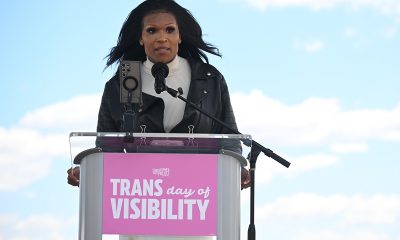
Trans activists gather on National Mall for Transgender Day of Visibility

Md. lawmakers reaffirm legislative priorities
-

 The White House5 days ago
Thousands attend ‘No Kings’ protests in D.C.
-
U.S. Supreme Court4 days ago
Supreme Court rules against Colo. law banning conversion therapy for minors
-
Senegal4 days ago
Senegalese president signs bill that further criminalizes homosexuality
-
District of Columbia4 days ago
Trans activists gather on National Mall for Transgender Day of Visibility