Opinions
Be optimistic but work your ass off
Harris pick, new polls give Biden a boost
We are hearing about all the impediments Republicans are trying to put in the way of people voting. At times it appears they are trying to turn the United States into a banana republic or the next Belarus. They are doing everything from closing voting locations, scrubbing the voting roles, and now the president has publicly said he is against giving the Post Office the money it needs to keep functioning at full capacity in order to stop them from delivering ballots on time. President Obama called it when he said the president is “kneecapping” the Post Office. Clearly they are doing all this because they can read the tea leaves like the rest of us, they are losing and scared.
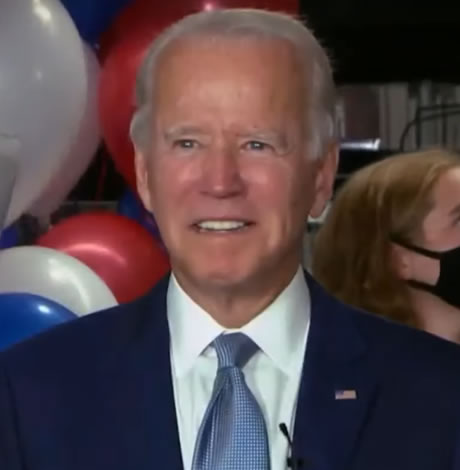
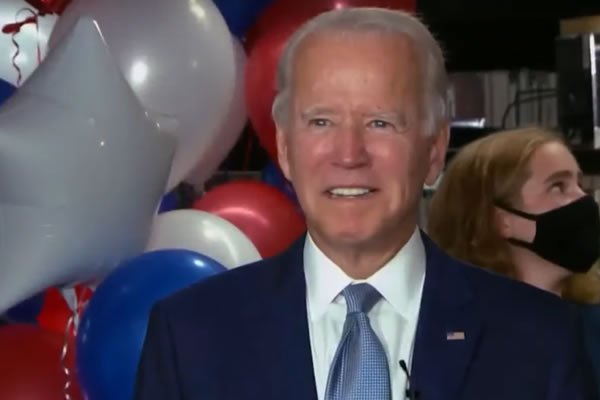
Convention week is here. Joe Biden and Kamala Harris make a historic team and the public is responding. Biden raised $48 million in 48 hours after naming Harris as his running mate, including 150,000 new donors. This show of support is mirrored in the polls. Biden/Harris are leading according to Five Thirty Eight both nationally and in many targeted states including Wisconsin, Michigan, Arizona, Minnesota, Florida, and Pennsylvania. They are within half a percentage point in Georgia and Texas. With all this I am optimistic but not overly so. There are about 75 days to the election and much less in many states where early voting is available.
So everyone who wants to see Trump defeated has to be working their ass off from now until Nov. 3. Biden’s campaign is being well run by Jennifer O’Malley Dillon, who has a long history of working on campaigns. She understands this campaign is like no other anyone has ever run because of the coronavirus pandemic. As reported in the Washington Post, “the campaign manager is trying to create a new way of organizing. As she described it: “We really tried to strip it back and say two things: One, it’s engagement. And it’s connection.” She went on to say: “We spent several months in the early part of the pandemic where we were doing heavy voter contact all across the country, but it was not political in nature,” she said. “It was about reaching people and checking in on them: How are you doing? What’s going on? What’s happening? How can we help?”
For four days, Aug. 17- 20, we are seeing something never seen before, a virtual convention. No thousands of people in a large convention hall cheering every word. No funny hats and balloon drops. Biden and Harris will make their acceptance speeches from Wilmington, Del., without crowds in the audience. Votes on the rules and platform are by email. The roll call of the states will be from more than 50 different locations. No parties or spontaneous demonstrations. If it goes smoothly it could be the end of in-person conventions. This virtual thing has its benefits. Two hours of speeches each night for the networks and cable news to carry. For some it might be harder to give a speech without audience reaction. Yet Joe Biden and Kamala Harris showed how effective speeches without an audience can be when he introduced her as his running mate. I never heard Harris give a better speech. She is a brilliant, compassionate, empathetic candidate and that came across in her speech. Her presentation made you listen and she never had to raise her voice. Biden also gave a great speech that day. He was clear, concise and right on target. I am very optimistic they will do that again when accepting their nominations.
Then it will be up to every Democrat, independent and decent Republican to work their hearts out and asses off until Nov. 3 to ensure the disgusting sexist, homophobic, racist pig currently occupying the Oval Office is thrown out. It will be up to us to give Biden and Harris the mandate she asked for when she accepted Biden’s offer to be on the ticket. My optimism includes believing Americans will overcome every obstacle the Republicans are putting in our way to keep us from voting. We will show them and the world the overwhelming majority of Americans will do what we must to save our democracy.
Peter Rosenstein is a longtime LGBTQ rights and Democratic Party activist. He writes regularly for the Blade.


Opinions
SAVE Act could silence millions of trans voters
New administrative barriers pose threat to voting rights
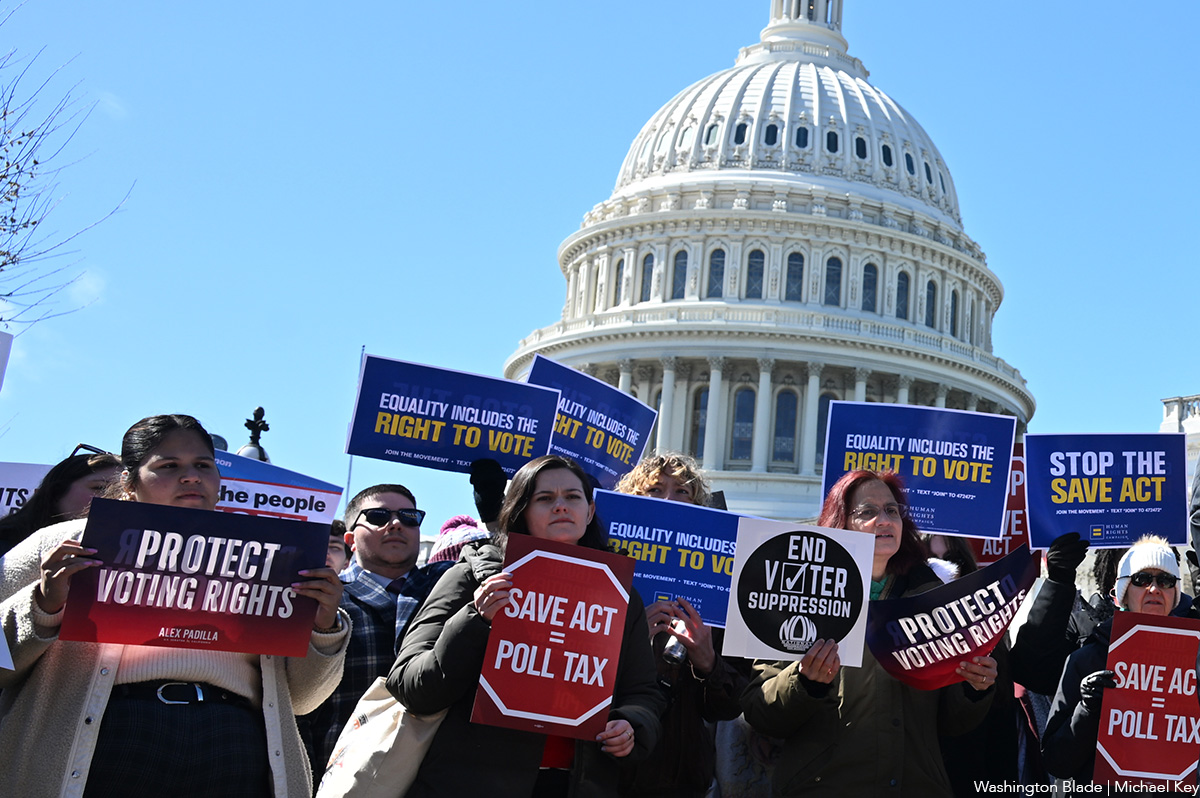
In Washington, debates over voting rights usually arrive loudly — through court rulings, protests, or sweeping legislation that captures national attention.
The Safeguard American Voter Eligibility (SAVE) Act, now under debate in Congress, may reshape voting access in a quieter way — through paperwork. The bill would require Americans registering to vote in federal elections to present documentary proof of citizenship, such as a passport or birth certificate. Supporters argue the measure would strengthen election integrity and restore public confidence in the voting process. But for millions of eligible voters, particularly transgender Americans, the practical consequences could be far more complicated.
According to Gallup, about 1.3% of U.S. adults identify as transgender, representing roughly 3.3 million Americans. Far from disengaged politically, transgender voters participate in elections at high rates. Data released by Advocates for Trans Equality shows 75% of transgender respondents reported voting in the 2020 election, compared with 67% of the general population. Registration rates are also higher.
This is a community that shows up for democracy. Yet the SAVE Act could place new administrative barriers directly in its path. Birth certificates, the document many supporters believe should verify citizenship are among the most difficult identity records for transgender Americans to update. According to data released by The Williams Institute at UCLA Law School and the U.S. Transgender Survey, 44% of transgender adults had updated their name on government identification, but only 18% had successfully updated their birth certificates.
That gap matters.
If birth certificates become a central requirement for voter registration, millions of eligible transgender Americans could face bureaucratic obstacles that other voters rarely encounter.
History offers a warning. According to the Bipartisan Policy Center, Kansas implemented a similar proof-of-citizenship law that blocked more than 30,000 eligible voters from registering before the Kansas Supreme Court struck it down as unconstitutional.
At the same time, evidence suggests voter fraud remains extraordinarily rare. Research cited by the American Immigration Council estimates fraud at roughly 0.0001% of votes cast.
The question before lawmakers is not whether election security matters. It clearly does. The question is whether policies designed to solve a rare problem could intentionally disenfranchise legitimate voters.
The broader cultural debate surrounding gender identity often becomes emotionally charged, particularly when conversations turn to pronouns or language. Yet polling suggests the issue remains unfamiliar to many Americans. A 2022 YouGov poll found only 22% of Americans personally know someone who uses gender-neutral pronouns.
Meanwhile, the problems weighing on everyday Americans are far larger: rising grocery prices, health care costs, housing shortages, and economic struggles in both rural towns and urban neighborhoods. Yet, many conservatives choose to focus unnecessary time, energy, and resources litigating the use of pronouns.
A healthy democracy should be able to debate cultural questions without allowing them to become barriers to the ballot box.
So, what should transgender Americans, and allies, do in this moment? First, stay engaged politically. Contact legislators and explain how identification requirements affect real voters. Personal stories often reach policymakers in ways statistics alone cannot.
Second, document the impact. Write letters to local newspapers, share experiences publicly, and ensure the real-world effects of voting policies are visible.
Third, consider running for office. Local school boards, city councils, and state legislatures shape many of the rules governing elections. Finally, protest with discipline and purpose. The most transformative movements in history — from Mahatma Gandhi to Dr. Martin Luther King Jr. — were rooted in peaceful persistence and moral clarity.
The SAVE Act may ultimately pass, fail, or change significantly as Congress debates it. But the larger principle at stake should guide the conversation. America’s democracy has always grown stronger when more citizens can participate, not when the path to the ballot becomes harder to navigate. For transgender voters, and for the country as a whole, that principle remains the quiet foundation of the republic.
James Bridgeforth, Ph.D., is a national columnist on the intersection of politics, morality, and civil rights. His work regularly appears in The Chicago Defender and The Black Wall Street Times.
Opinions
The frightening rise of antisemitism, Islamophobia
Trump, Netanyahu to blame for inflaming tensions
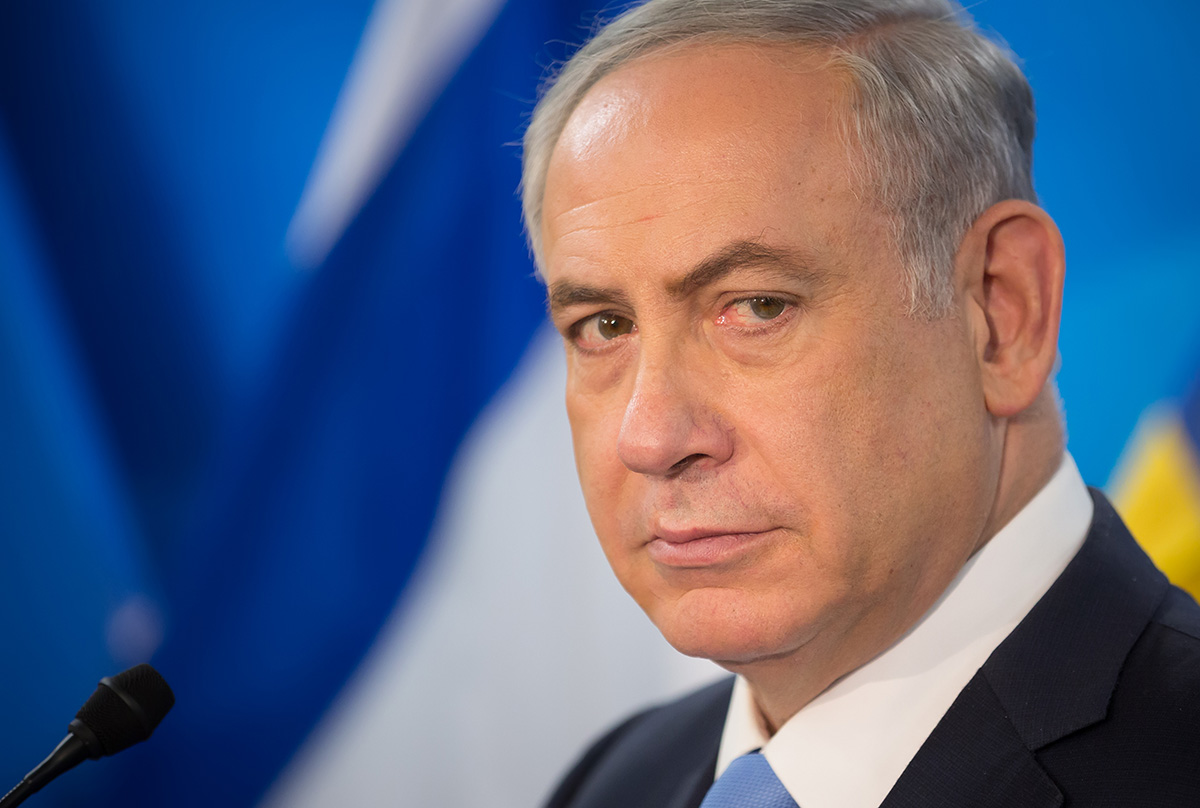
We can lay the rise in antisemitism and Islamophobia directly at the feet of the felon in the White House, and the criminal at the head of the Israeli government. Both Trump and Netanyahu belong in jail, not leading their governments.
I am a proud Jewish, gay man, and the homophobia and antisemitism the felon in the White House is generating are truly frightening. I am assuming my Muslim friends are feeling the same way about the Islamophobia he is causing to rise. While people have always been racist, homophobic, Islamophobic, and antisemitic, Trump has given tacit permission, with his statements, actions, and now his war on Iran, for those feelings to be shouted in the public square, and in the worst-case scenarios, acted on with violent attacks.
We can clearly attribute the rise in antisemitism around the world, to the actions of the right-wing, war criminal, leader of the Israeli government, Benjamin Netanyahu, and what he is doing to destroy Gaza, murdering innocent Palestinians, and now again bombing innocents in Lebanon.
This is all seeping into the politics of our nation. One organization promoting antisemitism and expecting it of the candidates they endorse, is the Democratic Socialists of America (DSA). They went so far as to take away an endorsement at one point, from one of their most ardent supporters, Rep. Alexandria Ocasio-Cortez (D-N.Y.), because she refused to fully support their anti-Zionist platform and their support of BDS. The DSA took issue with “[Ocasio-Cortez’s] votes, including a vote in favor of H.Res.888, conflating opposition to Israel’s ‘right to exist’ with antisemitism,” and a press release in April she co-signed that “support[s] strengthening the Iron Dome and other defense systems.” In their 2025 platform DSA called for a single state from the ‘river to the sea’ as the Palestinian right to resist, thereby eliminating the State of Israel. It goes with their support of BDS and anti-Zionist positions. It is fair to see that as antisemitism.
I am a Zionist, in the sense of the term as coined by Theodor Herzl. I am a believer in, and supporter of, the State of Israel. I am also for a Palestinian state. I am opposed to what Israel’s current government, led by a war criminal, is doing. I had hoped he would have abided by what former President Biden said to him immediately after Oct. 7. “Don’t make the same mistake we did after 9/11. Temper your response.” But instead, Netanyahu has murdered Palestinians by the thousands, destroying Gaza. He was rightfully declared a war criminal and should be brought to justice. He has made things worse both for the people of Israel, and Jews around the world. He has been responsible for antisemitism around the world once again rearing its ugly head. Now, two and a half years after Hamas’s attack on Israel, he is still murdering Palestinians, and now again more people in Lebanon and Iran. He still denies the Palestinian people need a home, a state of their own. He promotes settlements on the West Bank that should be part of a Palestinian state and refuses to prosecute settlers who commit crimes against the Palestinian people there.
My parents and relatives had to flee Hitler. Some came to the United States, and some immigrated to Israel. My father’s parents were killed in Auschwitz. I believed it could never happen again. But the felon in the White House, and criminal in Israel, are abusing me of that notion. Their policies of greed and corruption are leading to danger for all the people of the world. They are leading us into a third world war. The felon is attempting to steal, yes steal, billions through his phony ‘Board of Peace’ where he is screwing the Palestinian people out of their homes in Gaza. It is insanity, and we are all suffering for it; Jews, Muslims, and the rest of the world, as we are thrown into war none of us wants.
Now as I wrote, the DSA, tells people all Zionists are the enemy, without a definition of what a Zionist is. They expect their supporters not to recognize the State of Israel. They create antisemitism, and now in D.C. we have a candidate running for mayor, Janeese Lewis George, asking for, and getting their support. They also have in their platform to defund the police. Those things should frighten all the people of D.C. Any candidate who can run on the DSA platform must be deemed unacceptable to anyone who opposes prejudice and discrimination of any kind. One prejudice leads to others and gives rise to people feeling they can be open about not only their antisemitism, but their Islamophobia, racism, and sexism, as well.
We need all the good voters in the District of Columbia to find these DSA positions unacceptable, and reject any candidate who solicits, and takes their endorsement.
Peter Rosenstein is a longtime LGBTQ rights and Democratic Party activist.
Botswana
The rule of law, not the rule of religion
Bonolo Selelo and Tsholofelo Kumile are challenging the Botswana Marriage Act

Botswana was in a whole frenzy as religious and traditional fundamentalists kept mixing religion and constitutional law as if it were harmless. It is not. One is a private matter of belief between you and God, while the other is the framework that protects and governs us all. When these two systems get fused, the result is rarely justice. It results in discrimination.
The ongoing case brought by Bonolo Selelo and Tsholofelo Kumile challenging provisions of the Botswana Marriage Act has reignited a familiar debate in Botswana. Some commentators insist that marriage equality violates religious values and therefore should not be recognized by law. It is a predictable argument. It is also fundamentally incompatible with constitutional governance.
Botswana is not a Christian state. It is a constitutional democracy governed by the Constitution of Botswana. That distinction matters. In a constitutional democracy, laws are interpreted in accordance with constitutional principles such as equality, dignity, protection, inclusion and the rule of law, rather than the doctrinal beliefs of any particular religion.
Religion has no place in constitutional law and democracy
The central problem with religious arguments in constitutional disputes is simple in that they divide, they other, they contest equality and they are personal. Constitutional law by contrast, must apply equally to everyone.
Botswana’s Constitution guarantees fundamental rights and freedoms under Sections 3 and 15, including protection from discrimination and the right to equal protection of the law. These provisions are not conditional on religious approval. They exist precisely to protect minorities from the preferences or prejudices of the majority.
Legal experts, such as Anneke Meerkotter, in her policy brief in Defense of Constitutional Morality, point out that constitutional rights function as a safeguard against majoritarian morality. If rights depended on whether the majority approved of a minority’s identity or relationships, they would not be rights at all. They would merely be privileges.
This principle has already been affirmed in Botswana’s jurisprudence. In the landmark decision of Letsweletse Motshidiemang v Attorney General, the High Court held that criminalizing consensual same-sex relations violated constitutional protections of liberty, dignity, privacy, and equality. This judgment noted that constitutional interpretation must evolve with society and must be guided by human dignity and equality. The court emphasized that the Constitution protects all citizens, including those whose identities, expressions or relationships may be unpopular. That ruling was later upheld by the Court of Appeal of Botswana in 2021, reinforcing the principle that constitutional rights cannot be restricted on grounds of moral disapproval alone. These decisions were not theological pronouncements. They were legal determinations grounded in constitutional principles.
The danger of religious majoritarianism
When religion is used to justify legal restrictions, the result is what constitutional scholars call “majoritarian moralism.” It allows the dominant religious interpretation in society to dictate the rights of everyone else. That approach is fundamentally incompatible with constitutional democracy. Botswana is religiously diverse. While Christianity is the majority faith, there are also Muslims, Hindus, traditional spiritual communities, Sikh and people who practice no religion at all. If the law were to follow the doctrines of one religious group, which interpretation would it adopt? Christianity alone contains dozens of denominations with different views on love, equality, marriage, sexuality, and gender. The moment the state begins to legislate on the basis of religious doctrine, it implicitly privileges one belief system over others. That undermines both religious freedom and constitutional equality. Ironically, keeping religion separate from constitutional law is what protects religious freedom in the first place.
Judicial independence is the cornerstone of Botswana’s governance system
The current case involving Bonolo Selelo and Tsholofelo Kumile is before the judiciary, where it belongs. Courts exist to interpret the Constitution and determine whether legislation complies with constitutional rights. Political and religious lobbying, as well as public outrage, must not influence that process.
Judicial independence is the cornerstone of Botswana’s governance system. According to the International Commission of Jurists, judicial independence ensures that courts can make decisions based on law and evidence rather than political or social pressure.
When governments, political, religious, or traditional actors attempt to interfere in constitutional litigation, they weaken the rule of law. Botswana has historically prided itself on having one of the most stable constitutional systems in Africa. The judiciary has played a critical role in safeguarding rights and maintaining legal certainty. The decriminalization case demonstrated this. Despite strong public debate and political sensitivity, the courts assessed the law according to constitutional principles rather than moral panic. The same standard must apply in the current marriage equality case.
This article was first published in the Botswana Gazette, Midweek Sun, and Botswana Guardian newspapers and has been edited for the Washington Blade.
Bradley Fortuin is a consultant at the Southern Africa Litigation Center and a social justice activist.

DeSantis signs emergency bill that restores Fla. ADAP funding

Menaka Guruswamy celebrated as India’s first openly LGBTQ MP

Trans-led HIV clinic in Portsmouth struggles amid funding cuts

D.C. goes gaga for Gaga

Gay priest credited with boosting church support for LGBTQ Catholics

‘How We Survived’ panel set for March 25

Calendar: March 21-26

PHOTOS: Capital Stonewall Democrats 50th anniversary

‘Inherit the Wind’ isn’t about science vs. religion, but the right to think