Arts & Entertainment
Annual Black Pride Ball to take place on May 27
Event will bring ballroom energy and beauty to people’s homes
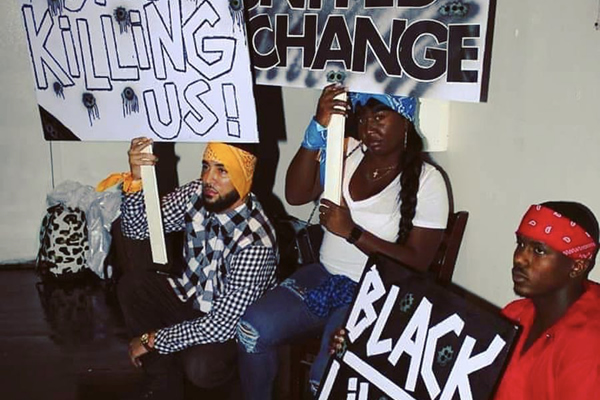
To kick start Pride festivities for this year, the DC BLK Pride and the Ballroom Council will be hosting the 2021 Annual Black Pride Ball on Thursday, May 27, at 7 p.m.
The event — which will be livestreamed on Facebook and YouTube — is sponsored by Damien, Xfinity, and the Center for Black Equity, and the hosts will include Icon Jack Mizrahi Gucci of FX’s “Pose” with DJ Tony Play, among a list of other respected figures in the ballroom community.
This year’s Black Pride Ball will be a celebration that brings together the Black LGBTQ community to reflect on its tenacity, resilience, and all-around dynamic nature.
“With all of our trans sisters being killed and the Black community as a whole, I think it’s really important for us to take time and celebrate ourselves, each other. It’s important that we remind each other that we’re still here and are going to get through this,” says Duante Brown-Balenciaga, one of the event’s co-chairs. “We’ve always been resilient and it’s important to make sure that we take this time to celebrate ourselves.”
Contestants will be able to compete in nine different categories including Vogue Fem, Female Figure Face and High Fashion Streetwear, and earn cash prizes of up to $1,000. The event will focus on awareness for the LGBTQIA+ and Black and Brown communities, and there will be mental health and HIV testing resources available for participants.
As preparations for Pride month during a time that has been challenging for the queer community begin, Brown-Balenciaga wants the event’s attendees to take away one main thing from the event: Authenticity.
“We want people to take away from it that you can be creative, be your complete self, own yourself, and don’t have to conform or try to be anything you’re not,” he says.
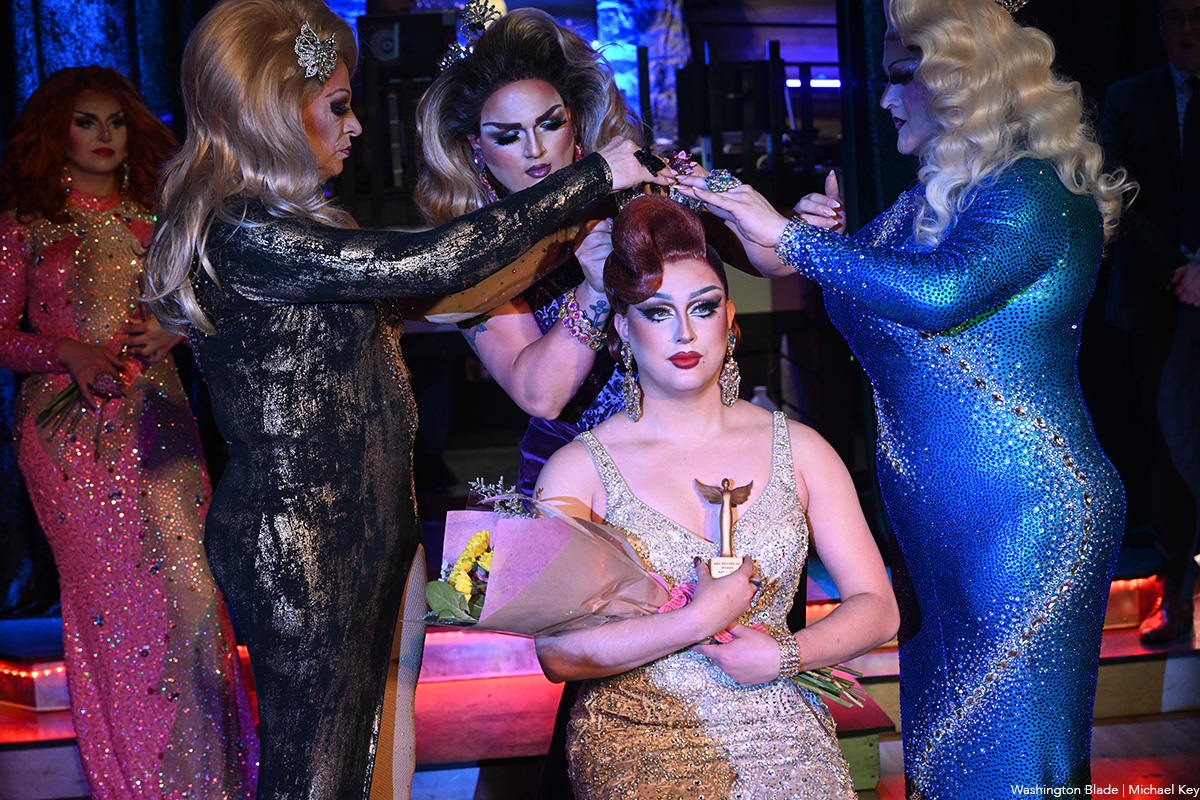
The Miss Gay Western Maryland pageant was held at The Lodge in Boonsboro, Md. on Friday, May 1. Maria R. Posa was crowned the winner with Aura Fixation named first alternate. Both winners are qualified to compete in the 2026 Miss Gay Maryland America pageant.
(Washington Blade photos by Michael Key)


Arts & Entertainment
A reign defined by commitment and human impact
Nicole Murray Ramirez defined era in International Imperial Court System
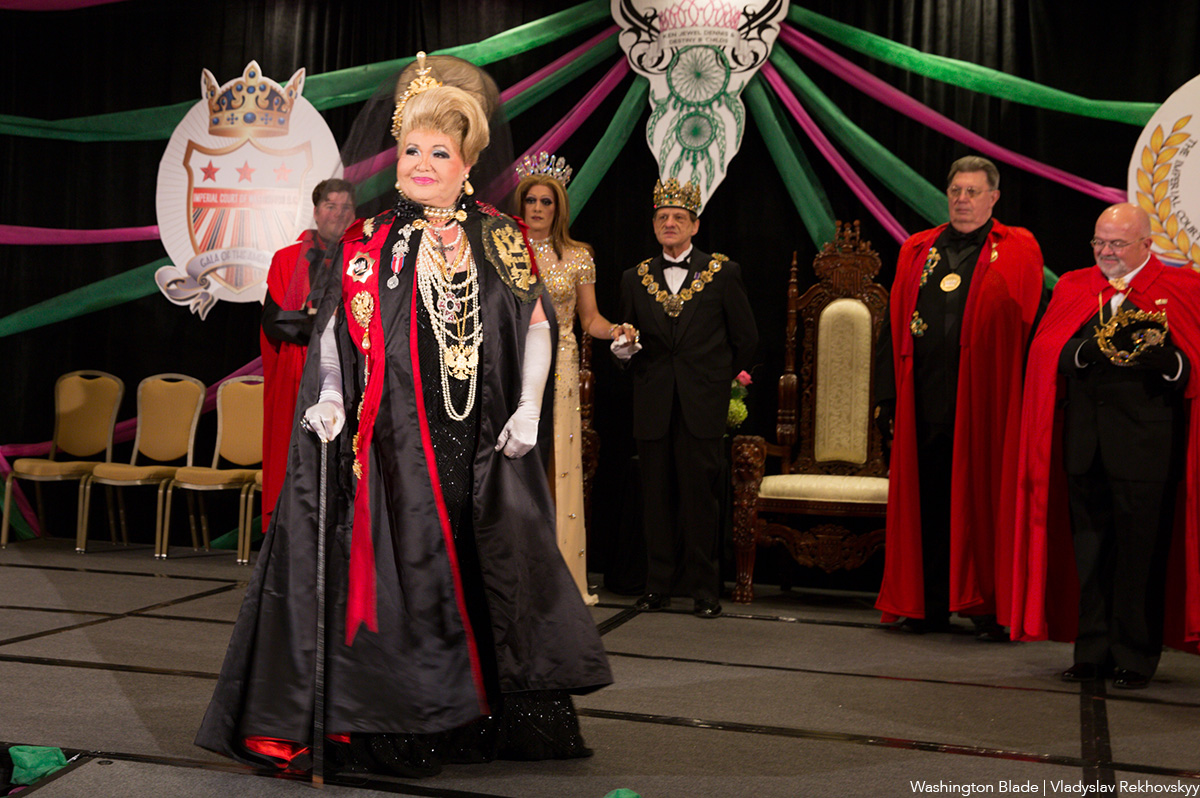
Writing about the reign of Nicole Murray Ramirez and the close leadership of King Father Terry Sidie requires far more than listing achievements, because what has been built over these years cannot be reduced to titles, ceremonies, or public recognition. It must be understood as the result of a sustained vision rooted in service, memory, solidarity, and the real ability to build bridges within and beyond the LGBTQ community.
At this point, looking back and assessing this period means acknowledging that this was not just another chapter in the history of the International Imperial Court System. It was a time shaped by far-reaching initiatives, a clear commitment to concrete causes, and a style of leadership that moved confidently between symbolic representation and public action. In that context, Nicole Murray Ramirez’s announcement that her reign will conclude in February 2027, along with the coronation of the person who will assume the throne as the new Queen Mother of the Americas, should not be read simply as the end of an era, but as a moment to fully recognize what has been built while also understanding that a new chapter is about to begin.
One of the most defining aspects of this reign has been its understanding that visibility alone is not enough. Visibility matters, but it only becomes meaningful when it leads to action, support, and measurable change. That has been a consistent strength of the work led by Nicole Murray Ramirez alongside key figures such as Terry Sidie.
The Jose Nicole Terry Scholarship and Educational Fund reflects that commitment. Reaching $400,000 is significant, but what matters most is what that represents in terms of opportunity and access.
This leadership also prioritized historical memory through initiatives like the National LGBTQ Wall of Honor at the Stonewall Inn and the recognition of Jose Julio Sarria.
Efforts such as the Harvey Milk postage stamp, the USNS Harvey Milk, and multiple recognitions for Sarria reflect a sustained commitment to public recognition and justice.
International outreach, financial support to global causes, advocacy for transgender communities, and engagement with organizations beyond national borders further define this period.
The expansion into Canada and the opening of a new chapter that includes Puerto Rico highlight the evolving nature of this leadership. The upcoming June coronation marks an important step in that direction.
Acknowledging that the reign was not perfect does not weaken its legacy. It reinforces its authenticity.
This was not an individual effort. It was collective work supported by a broad network.
As the transition toward Feb. 5, 2027, continues, what remains is a legacy built on action, commitment, and responsibility.
Theater
Diverse cast tackles ‘Aguardiente’ at GALA Hispanic Theatre
Best friends rediscover their Caribbean heritage in new musical

‘Aguardiente: Where Magic Transcends Borders’
Through May 24
GALA Hispanic Theatre
3333 14th St., N.W.
$25–$65
Galatheatre.org
(surtitles in English and Spanish)
With its latest musical offering “Aguardiente: Where Magic Transcends Borders,” GALA Hispanic Theatre has cast its net wide in gathering a blend of talent including the production’s diverse 18-person cast.
Commissioned by GALA, the spanking new musical is about best friends Alberto and Alejandro (two New York writers from Puerto Rico and Colombia respectively). Together, within a short timeline under unrelenting pressure, they struggle to write the project musical of their dreams.
Along the way, the friends rediscover their Caribbean heritage through cumbia, bomba, currulao, and the magical realism of García Márquez.
Offstage, the work has been created by Luis Salgado (book), and Daniel Alejandro Gutiérrez (music), also respectively from Puerto Rico and Colombia. Multiple Helen Hayes Award-winning Salgado is directing and choreographing the GALA production.
In the role of Alejandro, out actor Sebastián Treviño is making his GALA debut opposite Samuel Garnica who plays librettist Alberto. Alejandro is the music composer who doesn’t come from a musical background. He’s simply a lover of Latin music.
Is Alejandro recognizably similar to Gutiérrez?
“Oh yeah,” says Treviño, 36. “Like Gutiérrez, Alejandro doesn’t necessarily follow musical theater rules and etiquette, and it’s his uniqueness that brings a spark to their partnership.
“I got to know him and Luis [Salgado] while touring with ‘On Your Feet!’ in 2022. You really get to know people by spending endless hours together on a bus.”
Language and voice are intertwined for Treviño, and fortunately for the amiable New York-based actor, he enjoys the challenge of a new way of speaking. To play Alejandro, it helps to sound Colombian.
As a native of Monterrey, Mexico, Spanish and Mexican dialects are Treviño’s first languages. He attended American school starting in kindergarten, consequently acquiring flawless English; and because his mother is Colombian, he is familiar with that accent too.
GALA Spanish speaking patrons can be a tough crowd. For instance, when a Mexican actor is playing a Cuban character, they know at once. And while they may embrace the performance and the production, there sometimes remains a niggling dislike for what feels a vocal inaccuracy.
“Since I’ve arrived in D.C., I’ve been practicing my Colombian accent at restaurants and other places. When a Spanish speaking server asks if I’m from Colombia, I know I’m doing something right.”
“Aguardiente” (translates as “Firewater”) is composed of several layers of reality. He explains: “First it’s us creating the show, the work, and all of those pressures and limitations that the industry places on Latino centered projects; and then there’s the fantasy layer.”
A talented tenor, his lengthy bio includes Mexico City (“Wicked,” “Rent”), Off Broadway (“Kowalski”) and North American national tours (“On Your Feet!”).
He says his “Aguardiente” solo specifically feels like ‘80s Latin rock. Also, he enjoys a fun medley number where they’re playing around with “Tropipop” (Colombian pop), classic Broadway sounds, and there’s even a Beatles moment.
In this show, we meet two determined friends, one is holding an American passport because he’s Puerto Rican, while the other, a Colombian, struggles to secure a visa.
“It’s not a stretch for me to relate to that. I’m here on a working visa, so I know all about the stress and costs that comes with that,” says Treviño.
“So much reflects their own story. That includes the setbacks and obstacles faced when trying to build something from very little, and writing about themes that aren’t considered mainstream to white American audiences.”
At just eight years old, Treviño saw “A Chorus Line” at Mont Tecnológico de Monterrey, the same college that he’d later attend. He remembers, “Seated in the second row, the young actors were rock stars to me. When I asked my father who loved the arts if one day I could perform onstage, he said yes, instantly his son’s new dream.”
Looking forward, is there a role he yearns to play? Treviño ponders the trite query with some seriousness before answering “I think it’s yet to be written.”

PHOTOS: Miss Gay Western Maryland

Barney Frank on trans rights, 2028, and the need to ‘reform the left’

Key West Pride’s state funding pulled

DOE investigates Smith College’s trans-inclusive policy

A reign defined by commitment and human impact

Republicans attach five anti-LGBTQ riders to State Department funding bill

Tennessee’s trans data bill a frightening omen

Lesbifriends Travel to host queer night out

The queer appeal of ‘The Devil Wears Prada’