World
Inter-American court rules Honduras responsible for transgender woman’s murder
Vicky Hernández killed after 2009 coup

TEGUCIGALPA, Honduras — In an unprecedented decision in the history of Honduras, the Honduran state was found guilty today of the extrajudicial execution of transgender activist Vicky Hernández, which occurred on the night of June 28-29, 2009.
The crime occurred during a curfew after the coup that overthrew former President Manuel Zelaya to install Roberto Micheletti’s de facto government.
The Inter-American Court of Human Rights’ ruling against the Honduran state is a milestone in the history of justice in the country and for LGBTIQ+ populations in Latin America.
This ruling, unprecedented in Honduran history, came after 12 years of struggle by Hernández’s family and a team of professionals led by Red Lésbica Cattrachas, Robert F. Kennedy Human Rights and other Honduran organizations.
The ruling against the Honduran state, and in favor of Vicky’s family, is an extraordinary event that will result in more protection for all trans, lesbian, gay and bisexual people in Honduras. It is also a precedent for any LGBTIQ+ person violated in Latin America due to discrimination.
Twelve years of fighting for Vicky
The court’s decision against the state of Honduras is the culmination of 12 years of work by a team of lawyers and Hernández’s family. The trans activist was 26-years-old when she was murdered by state security forces, according to her lawyers’ arguments.
The defense work culminated in two virtual hearings before the court in November 2020 in which experts and witnesses from Honduras and the rest of the Americas participated.
Hernández’s lawyers throughout the hearings argued that the Honduran state security forces were responsible for her death, since they were the only ones who could move freely through the streets of San Pedro Sula during the post-coup curfew.
The defense also argued that the State did not perform an autopsy on the corpse or hid it with the excuse that Hernández suffered from HIV/AIDS.
For Cattrachas Coordinator Indyra Mendoza, the important thing is to get “the court to rule on the extrajudicial execution and to investigate the chain of command. Why? Because this makes us equal in the Honduran collective imaginary.”
Justice for all
With today’s guilty verdict against the state of Honduras, justice has been achieved not only for Vicky’s death, because 14 trans women, 16 gay men and many more people were murdered during the coup, according to Mendoza.
This unprecedented sentence means more than justice in Vicky’s case.
“This is the opening for them to see that no struggle is exclusive to one group of people,” Mendoza adds. “If the amnesty given in the coup d’état is eliminated, it would be a great LGTBI contribution to this country where the human rights of journalists, lawyers, defenders of indigenous territories, Garifunas and villagers are violated.”
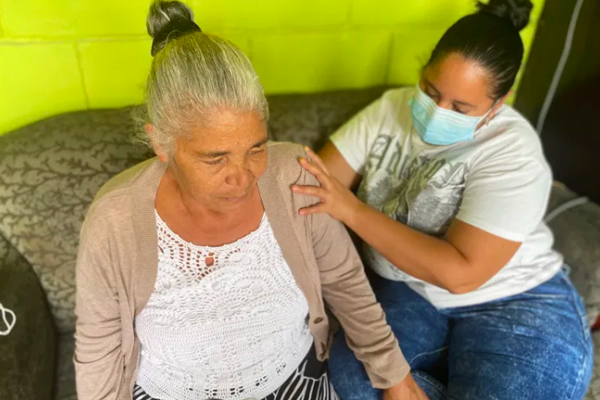
It is a huge win for Vicky’s mother, Rosa Hernández, who has been demanding “justice for all” for 11 years.
“They have to respect the rights of them for being trans and of them for being lesbians, because they are human. Why discriminate against them? There can’t be discrimination,” adds Rosa, who is 66-years-old.
This brave woman has been at the forefront of the struggle to vindicate the memory of trans women from San Pedro Sula, in northern Honduras, for the past 11 years. With this ruling, her dream of justice is fulfilled.






Germany
1 dead, 15 injured when van drives into crowd at Berlin Pride
Incident took place in city’s Tiergarten park

At least one person died on Saturday when a van drove into a crowd at Berlin’s annual Pride march.
German media reports indicate the incident took place shortly before 10 p.m. local time (4 p.m. ET) in Tiergarten park.
Berlin police say “the driver of a white vehicle … struck several people.”
At least 15 people were injured, with some of them having “life-threatening injuries.” The driver remains at-large, and the police have launched a manhunt to find them.
Hundreds of thousands of people participate in the annual Christopher Street Day parade — which is one of Europe’s largest Pride events — that winds its way through Berlin. Tiergarten is near June 17 Street and the Brandenberg Gate where post-parade parties and concerts take place.
Authorities cancelled the remaining Pride events after the incident.
The Washington Blade will update this story.
Brazil
2026 International AIDS Conference to take place in Rio
US funding cuts have significantly impacted global HIV/AIDS fight

The 2026 International AIDS Conference will take place next week in Rio de Janeiro.
Francisco Ruiz, the former director of the White House Office of National AIDS Policy, and UNAIDS Executive Director Winnie Byanyima are among those scheduled to speak at the conference that will take place in the Brazilian city from July 26-31. Other scheduled speakers include Spanish Health Secretary Javier Padilla, World Health Organization Director-General Tedros Adhanom Ghebreyesus, South African Deputy Health Minister Mathume Joseph “Joe” Phaahla, and Alexus D’Marco of the United Caribbean Trans Network.
The International AIDS Society-organized AIDS 2026’s theme is “Rethink. Rebuild. Rise.”
AIDS 2026 will take place against the backdrop of U.S. funding cuts that have significantly impacted the global HIV/AIDS fight.
Secretary of State Marco Rubio shortly after the Trump-Vance administration took office issued a waiver that allowed PEPFAR and other “life-saving humanitarian assistance” programs to continue to operate during a freeze on nearly all U.S. foreign aid spending. HIV/AIDS service providers around the world with whom the Washington Blade has spoken say PEPFAR cuts and the loss of funding from the U.S. Agency for International Development, which officially closed on July 1, 2025, has severely impacted their work.
The International AIDS Society in a press release it issued on Tuesday noted PEPFAR “has saved more than 26 million lives” since President George W. Bush implemented it in 2003, “and changed the trajectory of the HIV pandemic.”
“PEPFAR was a success under the first Trump administration, with major progress toward the 95-95-95 goals,” it said.
The UNAIDS’s 95-95-95 goals are 95 percent of people with HIV knowing their status, 95 percent of people with HIV having access to antiretroviral therapy, and 95 percent of those receiving ART having suppressed viral loads by 2030.
“Since the start of the second Trump administration, however, it has undergone major disruptions,” added the International AIDS Society.
Eswatini is among the African countries that have received doses of lenacapavir, a groundbreaking HIV prevention drug that users inject twice a year, through PEPFAR since the Trump-Vance administration took office.
The White House last month announced it will end PEPFAR funding for South Africa.
President Ronald Reagan in 1985 implemented the global gag rule, also known as the “Mexico City” policy, that banned U.S. foreign aid for groups that support abortion and/or offer abortion-related services. The Trump-Vance administration earlier this year expanded the prohibition to include groups that promote “gender ideology” and support gender-affirming care and diversity, equity, and inclusion programs.
The International AIDS Society in its press release notes 52 percent of “all implementing partners had at least once terminated award,” while 77 percent of them “had been asked to restrict their work to comply with an additional U.S. policy.” The International AIDS Society notes 1,010 public health facilities, 325 “access points” and 126 “drop-in centers” around the world have closed because of U.S. funding cuts.
“Science is moving fast, giving us more powerful HIV prevention and treatment tools. But these advances cannot save lives if they never reach the people who need them,” said International AIDS Society President Beatriz Grinsztejn, who co-chairs AIDS 2026 and is the director of Rio de Janeiro’s Evandro Chagas National Institute of Infection Diseases’ HIV/AIDS Clinical Research Unit. “That requires robust, stable financing and steadfast political commitment.”
Poland
Polish president vetoes same-sex relationship recognition bills
Karol Nawrocki: measures would ‘lead to the loss of the special status of marriage’
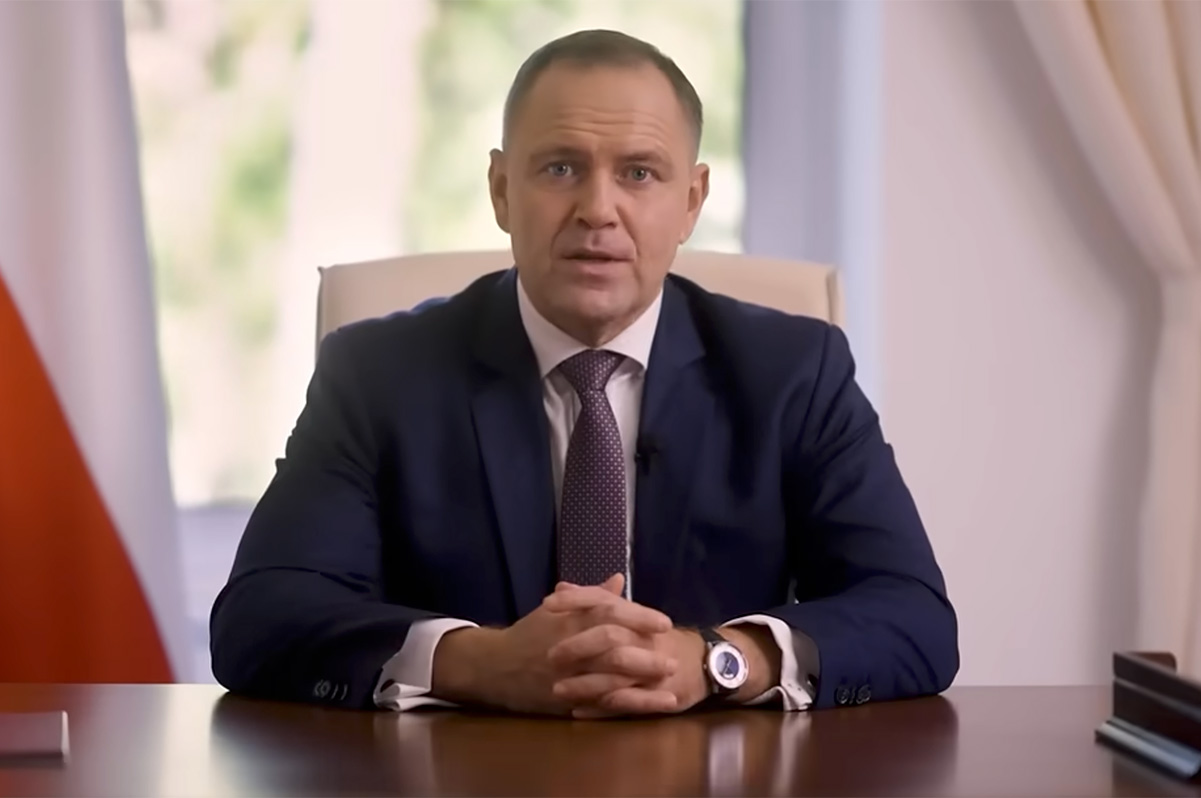
Polish President Karol Nawrocki on July 17 vetoed bills that would have extended rights to same-sex couples.
Reuters reported Nawrocki rejected two measures that would have allowed same-sex couples who live together to enter into “cohabitation contracts.” Reuters noted the bills would have allowed same-sex couples to make decisions on issues that include access to medical information, property rights, and burial.
The country’s coalition government backed the bills that MPs approved. Nawrocki, a socially conservative Catholic, in a statement said they “create a new, formalized institution of family law, equipped with a broad catalogue of rights similar to those of marriage.”
“As the guardian of the Constitution, I cannot accept a solution that would lead to the loss of the special status of marriage, defined in Article 18 of the Constitution as a union of a man and a woman under the protection and care of the Republic of Poland,” said Nawrocki, as Reuters noted.
Prime Minister Donald Tusk sharply criticized Nawrocki.
Miko Czerwiński of the Campaign Against Homophobia, a Polish LGBTQ advocacy group, in a statement noted nearly 80 percent of Poles “believe that the status of same-sex couples should be protected.”
“Once again, the voice of society has proven irrelevant to those in power,” said Czerwiński. “We are not willing to accept this. We will continue working towards full marriage equality.”
The EU Court of Justice in Luxembourg last November ruled in favor of a same-sex couple who challenged Poland’s refusal to recognize their German marriage. Poland’s Supreme Administrative Court in March reaffirmed the decision.
The couple, who lives in Poland, brought their case to Polish courts in 2019. The Supreme Administrative Court referred it to the EU Court of Justice.
The Polish government in May announced it will recognize same-sex marriages legally performed in other EU countries. Tusk, for his part, apologized to same-sex couples for the “years of rejection and humiliation” they suffered because Poland did not recognize their relationships.
“We will continue working towards full marriage equality,” said Czerwiński in response to Nawrocki’s vetoes. “We will not allow years of work by non-governmental organizations, activists, and our entire community to be wasted.”

1 dead, 15 injured when van drives into crowd at Berlin Pride

‘Into the Grey’ unites Cavill, Gyllenhaal for thrills and gay love

Winsome Earle-Sears launches campaign against Va. marriage equality amendment

Calendar: July 24-30

Pentagon says hormones make trans troops unfit but gives them to men

Tickets on sale for chef Patrick O’Connell’s book launch event

Remembering Victoria Cruz, Stonewall veteran and beloved trans activist

In the middle of the Bible Belt, a summer camp lets trans kids exhale

Polish president vetoes same-sex relationship recognition bills

LGBTQ ‘human rights crisis is unfolding in Puerto Rico’
-

 a&e features5 days ago
Tickets on sale for chef Patrick O’Connell’s book launch event
-
National5 days ago
Remembering Victoria Cruz, Stonewall veteran and beloved trans activist
-
North Carolina4 days ago
In the middle of the Bible Belt, a summer camp lets trans kids exhale
-
Poland4 days ago
Polish president vetoes same-sex relationship recognition bills