National
Andrew Sullivan doesn’t care what you think
Gay commentator talks new book, state of LGBTQ movement
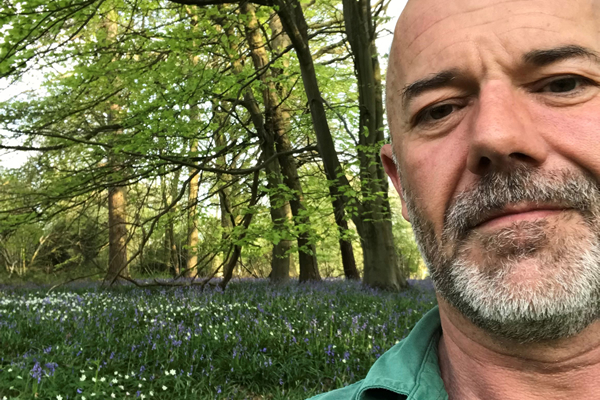
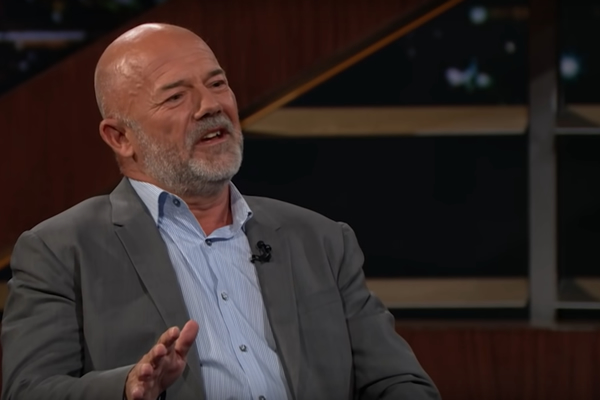
Andrew Sullivan, the gay conservative commentator known for his early advocacy of same-sex marriage and, more recently, for being a Trump critic, talked to the Washington Blade upon publication of his new book, “Out on a Limb.”
Among the wide-ranging topics he addressed: the AIDS movement’s place in the larger LGBTQ movement; the role of the LGBTQ community in cancel culture; the future for gay men in Afghanistan; and gay men’s attention to fitness and the new role for gyms.
The full interview, which took place by phone on Sept. 13, follows:
Washington Blade: “Out on a Limb” is a collection of your writings, from the past 30 years. Can you tell me a little bit about what the process was for selecting which of those writings should go in this book, and in looking back at them if anything jumped out at you?
Andrew Sullivan: Oh, it was a nightmare process because I’ve written ridiculous amounts of words over the 32 years. And I couldn’t have done it without help from interns and friends, and especially my colleague Chris Bodenner, who trolled through a lot. And I don’t like reading my own pieces after they’ve been published. I don’t know I have a writer’s allergy to it. So I have to say it was kind of agonizing to go through everything all over again. And then last summer I just went through with a couple of other people just try to get some objective take on it because you’re far too close to make it your own, so it took a long time to sort out which was which, and we had to throw out a lot. But in the end I tried to make it so that there are pieces from almost every single year, so it spans, evenly the period that has a multiplicity of topics. And the ones that I think I’m sort of proudest of or that help portray exactly where I’m coming from.
And one of the frustrations of living in the Twitter world is that you can get defined by one sentence you wrote, 25 years ago, and they just hammer that on you and it’s hard for you to show that your work is actually different than that. You’re not the caricature. And so, One way to do that is just simply publish your work and have people look at it and make up their own minds.
Blade: Right. Well, looking at the book and looking at some of the early essays — I mean I’m an avid reader of your column in recent years, but some of the stuff is written before that when I was much younger. One that really jumped out at me was the prevalence of the AIDS epidemic, and its impact on the gay community in the the height of the epidemic in the in the 80s in the in the early 90s. I’d like to ask you to kind of bring that to the present, like, how do you think our approach to the coronavirus compares to our approach to HIV/AIDS back then?
Sullivan: I think one of the things you notice is that there are many similar themes in all sorts of different plagues through history. There’s denial that it’s happening, there are crackpot theories about what’s going on. It tends to divide people who have the virus from people who don’t have the virus. It creates a sense of anxiety, obviously. In all those things, it’s quite similar and often the government bureaucracy is also lumbering. It’s also true that in this case, as with HIV in the end, it was the pharmaceutical companies that gave us the real breakthroughs to actually manage it.
So, more similar in many ways than you might think, but obviously, the differences are huge too and as much as HIV was concentrated so much in a small and separate — in some ways — community and its fatality rate was for a long time, not point-one percent, but 100 percent. It killed everyone, and also it was so selective in its killing that other people could avoid it, or not even notice it or have it be going on around them without even seeing it. And so obviously, it was — for my generation — it was a defining event, quite obviously and I think it’s immeshment with the rebirth of the gay rights movement in the 1990s is absolutely part of the story. I really don’t believe that you could tell the story of gay civil rights in the 90s and 2000s without telling the story of AIDS. I don’t think it would have happened the same way or even at all without that epidemic.
And you know, those early pieces written about in New York and Washington in the 1990s or thereafter are pretty brutal. I mean, I tried to convey what it really was like. I mean, one thing I try and tell kids today is that, imagine the current Blade, which is not as thick or as big as the old Blade, but the Blade you had would be just about enough to contain the weekly obits that used to run each week. And I don’t think those who didn’t live through that will ever understand that. But I hope maybe, with some of the essays in this book, they’ll see a little bit more about what we went through and how we managed to construct arguments for equality in the middle of really staggering loss and pain and fear.
Blade: And yeah, I’ve looked through some of our archival material and definitely the obituaries were a key component if not almost the center of the Washington Blade throughout the AIDS epidemic.
Sullivan: They were. And you know because we were much a closer community then, because this was before apps, this was before social acceptance. We tended to know everyone, because we met and socialized in the bars and clubs and in the gyms and the parks, and so it was terrifying how many of the faces that you saw in those obits you knew, even if you didn’t know them as friends, as many of us did, you knew them as faces in the bar, and to watch them all be struck down in such numbers was obviously a formative event for all of us, those of us who were, where I am, which is I’m late 50s now, we really experienced something unique. Many of the people we experienced it with are gone. And I think there’s often a sense of incomprehension that the younger generation really doesn’t understand what happened, and worse, really doesn’t care.
Blade: Really doesn’t care? I mean, that’s a very strong statement. What are you basing that on?
Sullivan: The lack of any discussion of it, any memory of it, anyone under the age of 30 ever asking me, or anyone who lived through it, what it was like. I mean, you tell me where the memory of it is held. Am I missing something?
Blade: The memory, if you’re speaking of just public discussion, even within the gay community, I think it is very faded.
Sullivan: It’s almost as if it didn’t happen. This is quite common, you know, with plagues, too. Like the 1918 plague was disappeared in the memory hole, very quickly.
But this was such a traumatizing event for so many of us. Now, the truth is, most other communities have children, and they tell their children and that’s how the memories — for example the Holocaust or even the Vietnam War and other things — are perpetuated. We have no — by and large we don’t have kids and we don’t tell them those stories. And so each generation is afresh and they do see it as something that happened. I don’t think they’re not aware of it, but it’s certainly not something that’s a particular interest, I think, to most young gay men.
Blade: It’s certainly very sobering to read those essays in the book that depict what’s going on at the height of the AIDS epidemic at that time.
Sullivan: I obviously tried to air some internal laundry, as it were. I tried to talk about things that other people didn’t want to talk about, and of course that got me into trouble. But I think the essays stand up.
Blade: I feel almost awkward asking you this next question because it has very much to do with talking about the present of what’s happening in the in the gay rights movement, but you did bring up civil rights — how that animated the gay movement in the 90s in the early days, and now the situation with the Human Rights Campaign president being terminated after being ensnared in the report on the Cuomo affair, and a public dispute with the board. I want to ask you how representative do you think that situation is of the LGBTQ movement?
Sullivan: Well I would say this: I do think it’s simply a fact that the core civil rights ambitions of all of us have been realized. It’s almost entirely done. These groups are desperately searching for things to do. But since gay people and transgender people are now protected under the 1964 Civil Rights Act, which is as a strong a protection as you can get, and since we can marry one another anywhere in the country and since we can serve our country in the military, they’ve really not got much left. So of course, they start entering into different areas like the issue of race, or the issue of gender or sexual harassment. And this is just a desperate attempt to stay relevant in some way. There’s no reason for them, I don’t think, to really function the way they functioned before. The movement is done, and I think a lot of people understand that, which is why maybe one of the underlying reasons why Mr. David disappeared is because membership income has plummeted, as I understand it.
And also, I think this is a sense in which the current mainstream — what I would call the alphabet movement people, the LGBTQRSTVWXYZ people — they don’t represent most gay men and women, and lesbians or even, I don’t think, a lot of trans people. And I think it’s certainly not a gay rights movement at this point. I think gay men are a complete afterthought. So, I just think it’s a function of — it’s the price of success is catastrophic success. Let’s put it that way. And you know, once you’ve achieved your things, you should shut down and move on. And they have to keep inventing and creating new senses of crisis of massive discrimination or huge waves of alleged trans genocide resources. This is all completely fanciful, and not related to actual reality, and those of us who actually went through some serious shit can see what is unserious about this.
Blade: I think a lot of our readers are probably going to point out these transgender women are being forced into these dangerous situations to make a living and because of that they are suffering violence.
Sullivan: Yes. That is true and awful, obviously. But is it an epidemic? No. Is the murder rate higher for that group and other groups in society? So far as we can analyze that, no.
I don’t know what the solution is to the other thing, and how do we help trans people not be forced into those horribly dangerous situations. That’s what we should definitely consider — how we as a community could help avoid that. But I don’t see what an organization is going to do about it except raise money off it.
Blade: What if we’ve experienced catastrophic success as you say in the moment, I was going ask you what qualities we should be looking for in the next Human Rights Campaign president, but maybe —
Sullivan: I don’t think there should be one. I think somebody will wind it down is what I would hope for. I know that’s going to get people nuts, going to send people nuts, but no, what are their goals now, what are they really fighting for? What measures do they want us to pass? That’s what I want to know, except for this Equality Act, which most of which has already been done. I mean, we were told in the 80s that they wanted to have this ENDA. I mean, it’s been going on forever. And we were told in the 90s we should put off marriage equality. Remember, HRC was against it for the first 10 years on the grounds it would upset the Democrats and the Clintons. We should wait, because only the employment discrimination issue really matters, and here we are 30 years later and they’re still pushing the same bill except it doesn’t have anything else in it because most of it’s already been done by the Supreme Court. So, it has to turn itself into an organization that’s supporting, for example, a group like Black trans people, and again, the question is, what does that mean, supporting them? What does it mean? I don’t know what it means, except their ability to raise money.
Blade: That kind of brings me to the next question: I know you’ve said many times that the gay rights movement is over, but what about the —
Sullivan: It’s not over as such, I mean obviously we have to be vigilant about the gains we’ve made and we have to be clear that we rebut lies. There’s still work to be done within our own community to each other. So I don’t mean that’s over, but the idea that we are trying to advance core civil rights, we have got them. You’ve got to learn to take “yes” for an answer.
Blade: The question I want to pose, if that is the case that we have our core civil rights, what about the gay press? Do you think there’s still a role for the gay press or are you just simply humoring me by doing this interview?
Sullivan: No, obviously. There’s press for almost every community in the world, and so absolutely, yes. There are issues that come up, all sorts of questions that we have to discuss from our businesses, to our clubs, to our bars to our culture. I mean, for example, we need coverage of the meth epidemic that is, in my view by far, the biggest crisis facing gay men right now, and which you almost never hear discussed in the gay press or in the gay rights organizations. And yet, that is, I fear, a huge crisis for us, killing God knows how many men. And the gay press has a role in bringing that to light, and opening a discussion of that and helping us find solutions to that. So, there always will be a need for a gay press.
Blade: And in some ways, for the gay press I would say that that makes things, there’s advantages and disadvantages to that. Advantages in that it’s a well-defined niche and disadvantages in the fact that it has to compete more with mainstream publications.
Sullivan: Yes. You didn’t use to. I mean, you used to be the only place to get any bloody news about the gay community, now you can’t get through the pages of the New York Times without being told something new about some part of our world, excessively so I might think. Come on, it gets kind of crazy at times.
Blade: Is there an example of something you think was crazy that you saw recently?
Sullivan: Well I think you know the way the New York Times covered Pride for weeks on end. I mean, at some point, you’re just like enough already.
Blade: I want to talk about Afghanistan, I was reading one of your recent columns before you went on vacation, about the rightness of that war finally coming to an end because it was — I think you call it the most pointless war that America has ever fought. That’s not the exact quote, but something along those lines. And in that column, you do acknowledge there are situations that this withdrawal has had an impact on. You go through a list, and one of them is gay men who would be executed in Afghanistan under Taliban rule. So, if you welcome this withdrawal, what about the consequences for a gay man in Afghanistan?
Sullivan: It’s horrifying. And in my view, we should be doing better at focusing on the gay people who are truly oppressed in the world, and they’re in brutal regimes, often with no political rights, not just in Eastern Europe, Poland, the Middle East and Africa. These are people gay people who are really, really up against the wall in many places. And I think we need to be very aggressive in helping many of them who are really beleaguered get asylum. I was on the board of Immigration Equality for quite a long time. And I’m very proud of the work Immigration Equality does on the asylum question, but I think we’ve learned we can’t occupy half the world to try and defend gay rights. It’s a wildly impractical move. We can highlight their plight, we can help some escape, but we can’t occupy the world and make it better for gay people, I’m afraid.
We have made enormous progress, but you only have to think about what’s happening in Poland or Hungary, or the Muslim world, or Afghanistan or Iran or even places obviously in Africa to to see we have a huge amount of work to do, and I wish you would focus on them now and be a beacon for them and to help them but I don’t think you do that by force of arms. … There are limits to what we can do and there were terrible consequences for overreaching those limits.
Blade: You said there is work to be done to help these people and you mentioned asylum as being one option, but is that all there is? What will this work look like?
Sullivan: Well I think we can help fund groups and organizations. I think people in this country will be happy to help, I certainly think it would be worth helping more than it would be sending money to the Human Rights Campaign. So, yes, I think I mean different ways you can — you can support Immigration Equality, for example, which does the legal work for asylum cases. Incredibly important. Wins almost every single one. Reach out to people who are in those places and communicate with them and support them. There are groups that help with money and help with just morale.
Blade: Speaking more generally about the concept of American intervention overseas to advance democracy, you’ve gone through a transformation on your view. You’ve talked quite a bit about your regret for supporting for the Iraq war. Was there a pivotal moment for you when you changed your view on this, or was it something that was more of a gradual evolution?
Sullivan: It wasn’t that gradual because the evidence of the failure of the war was almost immediate. So it did happen quite quickly, but for me, obviously the emergence that we were torturing prisoners was a complete deal breaker for me that many of us supported foolishly but with good intentions, we wanted to prevent and stop this murderous monster, Saddam, from torturing and killing people. And when we tried to remove him, ended up torturing people, you have a classic irony, and one that we have to repudiate …
One of the things that I do, when I think about the gay stuff is that — I don’t want to toot my own horn — but in the 90s, there was a handful of us supporting marriage equality. And these pieces in the book are the key building blocks of the argument in the 90s, and I think there is something of value in the history of seeing how we crafted those arguments, how we made a liberal argument, how we brought in conservatives, how we talked openly and debated openly with our opponents.
I mean, I did an anthology that included all the views against marriage equality. I did my own pieces but I also published Maggie Gallagher and Bill Bennett, for example. And I think that’s, that’s a part of the history that has been missed.
The 90s were the time when we formulated, honed, finessed the arguments, despite opposition from the gay rights establishment. I think we crafted successful arguments that went on to win. And that’s a really crucial thing, and there was only a handful of us that was doing that at the time. And so, I’m really proud of that legacy in this book. These are the arguments that help give us marriage equality, and it required reframing the gay rights movement around the question of our humanity, our common ground with straight people with formal legal equality, and has absolutely nothing to do with wokeness, or with attacking people for being bigots, or all the anger energy that is today aimed at demonizing your opponents. We attempted to persuade our opponents, not demonize them.
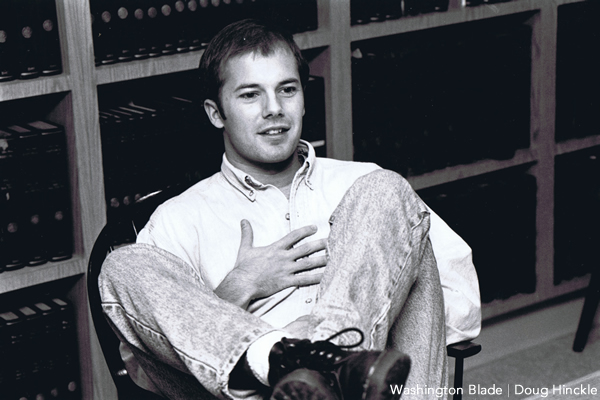
Blade: That wonderfully brings me to my next question because I was going to ask you, with the marriage victory six years ago now — in essence was that a restructuring of marriage, an institution that has been around for as long as almost probably humanity has been around. I’m just wondering if the restructuring of that institution played a role in contributing to the emergence of woke ideology that we’re seeing now.
Sullivan: I don’t think so. Most of the people that are now in the throes of woke ideology really were not interested in marriage equality and were completely absent in the campaign. They were also absent in the campaign for military service, because the people running the gay rights movement today, didn’t like marriage as an institution. They wanted to end it, and they opposed the military as a militaristic and an enemy institution, just as today’s extremists also oppose gay cops. So I don’t think that. I do think, however, that having won core ramparts for our civil rights, they had to find something else to do and screaming at straight people, and at cis people seems to be the new mode. I don’t think it helps anyone the way this campaign is currently being conducted nothing some of the extremist elements in trans ideology, are setting back the image and rights and dignity of gay people and trans people for that matter.
Blade: ‘Woke ideology’ is also very closely associated with the emergence of cancel culture. If you think, not too long ago, being gay would get you cancelled though it was not, the concept wasn’t exactly those words. For example, I think Billie Jean King, when she was either outed and came out as lesbian, and as a tennis player, she lost all of her sponsorships. This is years ago. It was so shocking at the time. Is there a special role for the gay community in addressing cancel culture and to what degree do you think we’re fulfilling it or not, or even contributing to it?
Sullivan: I’ve lived it. I’ve been canceled by virtually every faction. I, my first book of marriage equality was picketed by the Lesbian Avengers, when I went to bookstores. Gay left activists tried to cancel me by publishing my personal ad, trying to accuse me of spreading AIDS, which was an unbelievable lie. I’ve had glasses thrown at me by gay rights activists, but I was also cancelled by the right when I stood up for us, and also oppose aspects of the war and of the Republican Party, and I’ve been one of the strongest critics of the Republican Party in this millennium that you can find. So I think if the alphabet people have their druthers, they would get me canceled today. They just can’t, because I’m now independent, and they can’t pressure advertisers or editors to fire people for the wrong views. But that some elements look to cancel people who help pioneer a lot of gay rights in the modern era strikes me as not exactly productive.
If you’re cancelled by the left or the right somewhat continuously, you only have to go back to your core supporters your core readers, and the general public, and that’s what Substack has enabled me to do, though it’s what also the original Daily Dish did. I’m not sure without those I would have been able to really keep up the fight in the 2000s for marriage equality, for example.
Blade: This animosity that you’ve experienced both on the right and the left, having glasses thrown at you, having your personal ad doxxed as it were — given your contributions to the gay rights movement, has that reaction surprised you?
Sullivan: No. Not really. I think that, look, divisions in arguments within the community are are healthy, not unhealthy. And I think, for reasons I didn’t choose, I became a very prominent gay person in the 90s, just by virtue of the fact that I was out from the get-go, first generation to be out from the get go, and when I became editor of the New Republic, I was the only openly gay journalist in the mainstream media in Washington or New York. I know that sounds insane, but it’s true. I was it. Who else were they going to talk to? And so, inevitably, I came, in ways that I never intended, to represent gay people but I never said that. I said that I only represent myself. I have no claim to represent anybody else, but that’s not the way the media works and I think people were enraged by that, and enraged when I said things that were not totally party-line. …
This is very common in minority communities where, you know, there’s a tall poppy syndrome where someone emerges and seeks to represent people, they have to be cut down pretty quickly. So part of that’s inevitable and certainly during the 90s and early 2000s, especially in the 90s dealing with AIDS, you can see why people were desperate and angry, and didn’t want any, any of the slightest internal debate. So I understand that. However, the cruelty of some of it. The viciousness of some of it. The real core homophobia, involved in it. I mean, how homophobic is it to find someone’s personal ad is blasted out to smear that person. That’s been done to gay men forever but it was done by gay activists against a gay man. There’s some deep ugliness out there, and it comes from frustration. It comes obviously from a sense of people’s own histories of being beleaguered and having their dignity removed. It comes from a sense of helplessness, comes from a sense of not having your own voice. So all that’s understandable. I just think people could have been a little less, and could still be, a little less personal and vicious about it toward other people.
Blade: I want to go back to marriage equality and win six years ago. Are there any consequences of that decision that you did not foresee?
Sullivan: I don’t think I foresaw that, once all these main achievements were won, that the gay rights movement would radicalize so quickly into something extremely left wing. That I didn’t fully anticipate. I thought the successes would probably help calm things down. We could move on to other issues we needed to resolve or need to be tackled. But essentially, I didn’t see the emergence of this hugely intolerant and ideologically extreme version of — it isn’t even gay rights anymore because this stuff is hostile, even for categories like homosexuality once you destroy categories all of sex, gender and sexual orientation, which means that gayness is on the chopping block for these people as well. They’re essentially in favor of dismantling our society. And I don’t think most gay men and lesbians actually want to dismantle our society. I think they want to make it better. I think they want to make it more humane. I think they want to make it more just. But I don’t think they want to dismantle the concept for example of biological sex. I don’t think they want to dismantle the concept of homosexuality, which is attraction to people of the same sex. And I think eventually gay people are going to wake up and realize this movement really is about the dismantling of homosexuality.
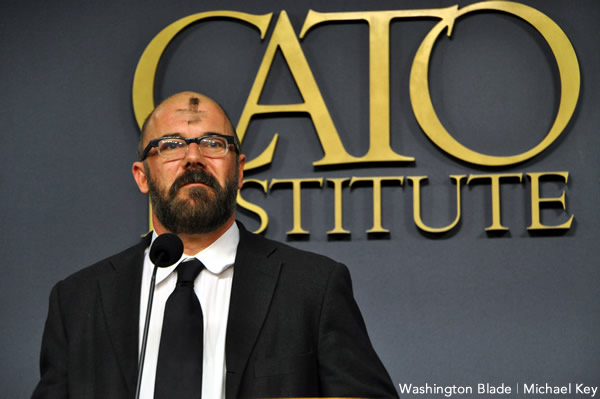
Blade: Building off of what you said about the tall poppy syndrome in the gay community, which you experienced, let’s look at that for a different community and that is Caitlyn Jenner within the transgender community in her run for governor. She’s arguably the most prominent transgender figure in recent months, even though many people in the transgender movement abhor that. Given what Caitlyn Jenner has done, do you think the transgender community owes a sort of thanks for bringing visibility to a different audience?
Sullivan: I think, you know, in the old days, our view was this: We always seek converts; we’re not seeking heretics. If you want more people to join you, you’re prepared to accept support from anywhere on your core issues. And if you do that, if you have open arms and a big tent and say, ‘Yeah. You agree with us on this, then we’re delighted to have you on our side.” That’s what did with marriage. Now, the people who want to be with you have to be subjected to these incredible ideological litmus tests. They have to be parsed and they have to be shredded, often, in their reputations.
Now, I’m not a supporter of Caitlyn Jenner. To be honest with you, I’m more of the “South Park” view of Caitlyn Jenner, but what the fuck? She is out there, she did help raise visibility for trans people. In the end, if you want to win and if you want to persuade people, you want as many different views representing you as possible, and so it’s a good thing if there are gay Republicans, a good thing that there are trans Republicans, a good thing that we can appeal to more people. We now have the majority of Republicans supporting marriage equality. When I started out that was unbelievable. So it’s — what I feel is that we’re stuck in a movement that’s really about finding enemies, destroying leaders and consumed with resentment and anger, and those kinds of movements are not only not very pretty, but they don’t often succeed.
Blade: And you see that being applied with Caitlyn Jenner in the transgender community?
Sullivan: Well, yeah. I think the minute you say something even slightly off accepted orthodox, they want you destroyed.
There are lots and lots of Americans who support trans rights if you are not convinced the biological sex doesn’t exist. There are compromises here.
Blade: I want to ask a couple of general questions. With what we’re seeing now, has Biden been living up to your expectations as president?
Sullivan: Pretty much, to be honest I wasn’t hugely — I was the “anyone but Trump” person. And I thought of the candidates, I thought Biden was the most plausible. I actually argued that he would be the best candidate a couple years ago. It’s in the book.
I think that’s all I’d say, except he’s turned out to be much more left in domestic policy than a lot of people — a lot of people realize, although I certainly expected it.
Blade: OK give me an example of that.
Sullivan: In enacting government-wide race and sex discrimination policies, making hiring and firing in the federal government, dependent upon your race and sex, sexual orientation or gender roles, as opposed to can you do that job or not?
Blade: I guess I don’t know the specific initiative. You’re talking about the executive order implementing Bostock?
Sullivan: The equity initiative across the — run by Susan Rice. With every government department, they have to make sure that they’re discriminating against certain race and sex in order to get the balance right.
Blade: What about Trump? Have you reevaluated anything about him since he left office?
Sullivan: I think my basic initial feeling about him remains, that he’s just out of his mind. There’s no way this person is a rational or credible person who belongs in human society. He’s a completely crazy person. And that’s fundamentally the problem, but he’s also a brilliant demagogue. I’m still worried about him.
Blade: What does that worry entail?
Sullivan: That he can come back and be president. That’s what I’m worried about. Obviously, it’s too soon to say, but the way in which he and increasingly his party treats the Constitution as if it is a game to be rigged as opposed to a set of rules we all agree to — really, really, unnerving deeply undemocratic, authoritarian impulse.
Blade: I also want to ask you — It might be uncomfortable, crossing boundaries here, but I’m just going to have at it because I’ve seen you at VIDA gym, quite a few times and it looks like you try to keep yourself in good physical shape. Is that something that you’ve always been attentive to, exercise? I’m just kind of curious because I think a lot of our readers are attentive to it too, so I’m just kind of wondering what if you could talk describe your experience with it.
Sullivan: Look, being gay — yeah, I think it’s part of — I’ve done weight training forever and ever and ever. And, you know, it’s good for you, especially as you get older. For me, it’s a way of taking my mind off everything else that’s in my head, and working out for an hour — I try to with a trainer — can be just mentally reviving, because it gets my mind off its usual patterns. I’ve been a bit of a bodybuilder in a way. It’s gone up and down, or whatever. It depends on — COVID was obviously a huge blow to it. Yeah, you know, it’s just how I live. It’s been like that forever, and the gym is also, I think become an important — with the collapse of gay bars, it’s become an important social institution more than it used to be, actually.
Blade: Do you mean in the way that it fosters a sense of networking and community?
Sullivan: Well, you know, it’s where you saw me, where you can, you know — the way that we used to more often in clubs and bars. … It is an important social institution as well as a fitness place. Sometimes VIDA U Street is incredibly intimidating, because there’s unbelievably huge and beautiful men there, and you always start finding yourself feeling puny in comparison.
Blade: Yeah, tell me about it.
Sullivan: That’s the arms race, you know, that’s men’s function of being a man more than being gay, I think. It’s just men are triggered by more superficial bodily attraction than women, and we are better able to — for good or ill — to dissociate the person from the body as it were. And so, where we’re competing with each other, you know, it’s a death race, really.
Blade: That was going to bring me to my next question because I was going ask you if you think gay men are paying too much attention to their physical bodies, to physical fitness.
Sullivan: I can’t judge anybody. I think it all depends on how you want to live your life and I don’t think it’s a problem as long as it’s healthy. I mean, it’s better than other things you could do with your life. But yes I think insofar as we have unbelievably exacting standards of physical beauty, and we punish people we don’t — or really isolate or marginalize people that don’t live up to them, you see groups of friends in the gay community — you see it here in Provincetown a lot — where it’s surprising how they all have the same level of handsomeness or beauty. There’s not a mix. I mean in the classic sense of beauty: big arms, big chest, you know, blah blah blah. And, that is, I think there’s a slight cruelty to some of that sometimes.
I think the bear world has helped a lot, as it were, soften that, literally, figuratively. You have a piece about bears in the book. But look, a beautiful man is a beautiful man. I mean there’s a reason you go to VIDA also because they’re fucking beautiful and extremely attractive, and no gay man should oppose that. It’s just that when we cross one another, sometimes we’re terribly cruel to each other.
Blade: Is that a function of being a man or a function of being gay?
Sullivan: It’s a function of being a man in a world where there are no women to check it because all the incentives are there. You’re just catering to your own — the thing about that is that we do it ourselves all the time. But yes, it does matter, in the gay world, if you’ve got a nice body, right?
And it’s not fair, yes. But it’s sometimes you just got to hack it. But then there’s always people out there who don’t like that, and we’re not used to that and plenty of life outside the gym, people have different ways of coming together, whether it be book clubs or just hanging out in the same bar or cafe, or the sports teams and so on and so forth. The range of gay life is so much larger than it used to be, which is so wonderful.
And that’s also in the book, too, the end of gay culture. I would say this: This book is really the story of someone in my generation, going from the 80s to today, the 2020s, the 80s to the 20s basically. We experienced something that no gay generation has ever experienced before or will ever experience again. We lived through the most exhilarating period of advances in gay dignity, rights and visibility. At the same time as we went through a viral catastrophe, and that combination of thrill and terror, you can hear it in the dance music at the time. This incredible high energy disco music with lyrics that would make you slit your wrists, with lyrics of great darkness and sadness. You hear it in Pet Shop Boys, particularly, Eurasia, all those synthpop energizing bands of the 80s and 90s.




National
Man charged in Mall of America shooting plot inspired by Pulse massacre: report
Suspect exchanged hundreds of messages, pledged loyalty to ISIS
The U.S. Department of Justice charged Sheikhdoon Abdullahi Mohamud, 18, of Richfield, Minn., on Oct. 7 with one count of knowingly receiving a firearm and ammunition in order to commit a federal crime of terrorism. Mohamud allegedly planned to carry out a mass-casualty attack in support of ISIS, inspired in part by the Pulse nightclub massacre that took place on June 12, 2016 when then-29-year-old Omar Mateen murdered 49 people and wounded 58 – one of the deadliest mass shootings in U.S. history, and the deadliest targeting the LGBTQ+ community.
According to a DOJ statement release, Mohamud was arrested on Oct. 6 by the FBI, which had arranged to sell him an AK-47 assault rifle, magazines, and ammunition through an undercover FBI employee. Mohamud was arrested shortly after paying $600 in cash and taking possession of those items; he reaffirmed his intention to shoot people at the Mall of America during the transaction.
“Mohamud allegedly sought to carry out a mass-casualty shooting at the Mall of America, expressing a desire to emulate some of the most horrific ISIS-inspired attacks in the United States, including the atrocities at Pulse Nightclub and 2025 New Year’s Day attack in New Orleans,” said Assistant Attorney General for National Security John A. Eisenberg in the statement by the DOJ. “The National Security Division will continue to work closely with the FBI and Joint Terrorism Task Force to track down and prosecute ISIS-inspired terrorists in the United States.”
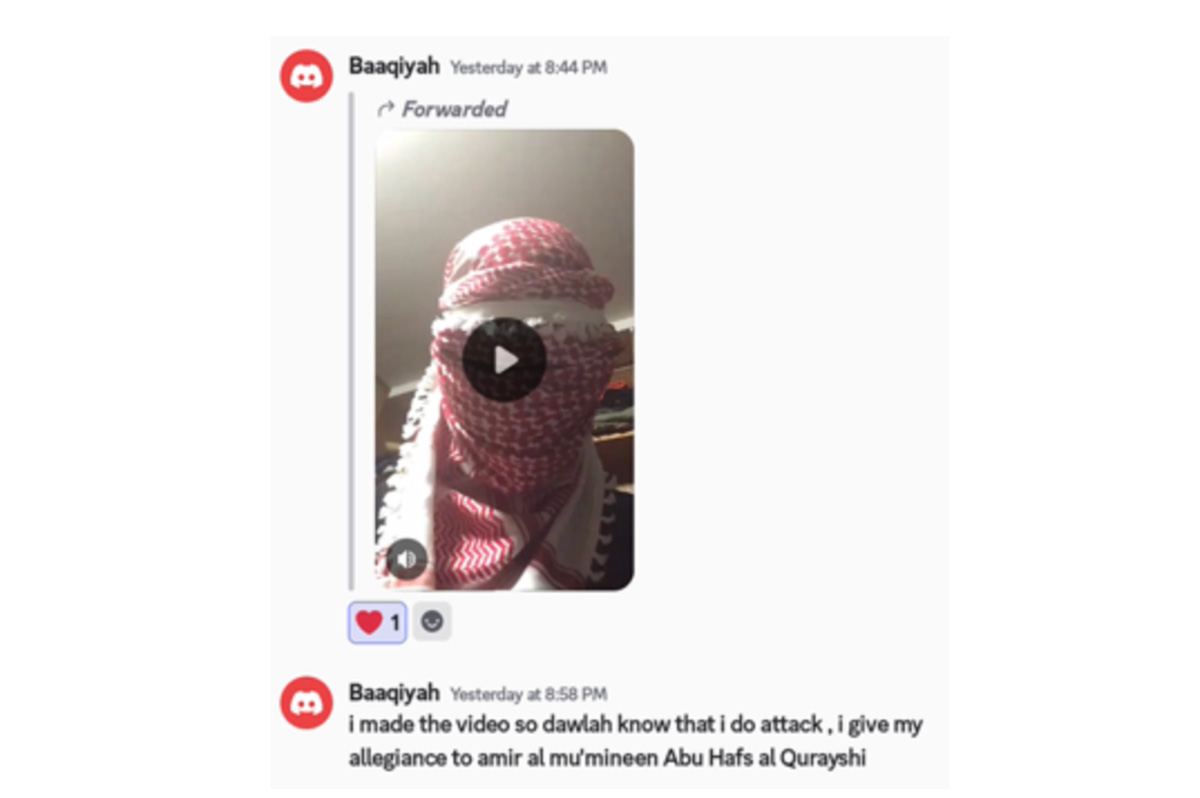
According to the complaint, beginning on or about December 2024, Mohamud had exchanged hundreds of messages through multiple social media and messaging apps with a confidential source, and expressed a desire to travel to Somalia to join a designated foreign terrorist organization to fight on their behalf.
The defendant stated many times that if he was unable to travel overseas because of a lack of funds, he planned to carry out a mass-casualty event in Minnesota in support of ISIS.
According to the DOJ, “In July 2026, Mohamud sent messages discussing his intent to carry out a mass-casualty shooting attack at the Mall of America because he claimed it was owned by Jews. He wrote that [he] wanted to kill 30 to 60 people so no one would go there.”
“During the course of his communications, Mohamud stated that he wanted to commit an attack similar to those of the Pulse Nightclub mass-shooting in Orlando, the Bondi Beach mass-shooting in Australia, and the New Year’s Day vehicle-ramming attack in New Orleans.”
This case is being prosecuted by Trial Attorney Ryan White of the National Security Division’s Counterterrorism Section and Assistant U.S. Attorney Benjamin Bejar for the District of Minnesota.
California
Calif. GOP gubernatorial candidate ad ‘disgusting attempt to exploit lesbian intimacy’
Activists, anti-LGBTQ religious leaders criticized Steve Hilton spot
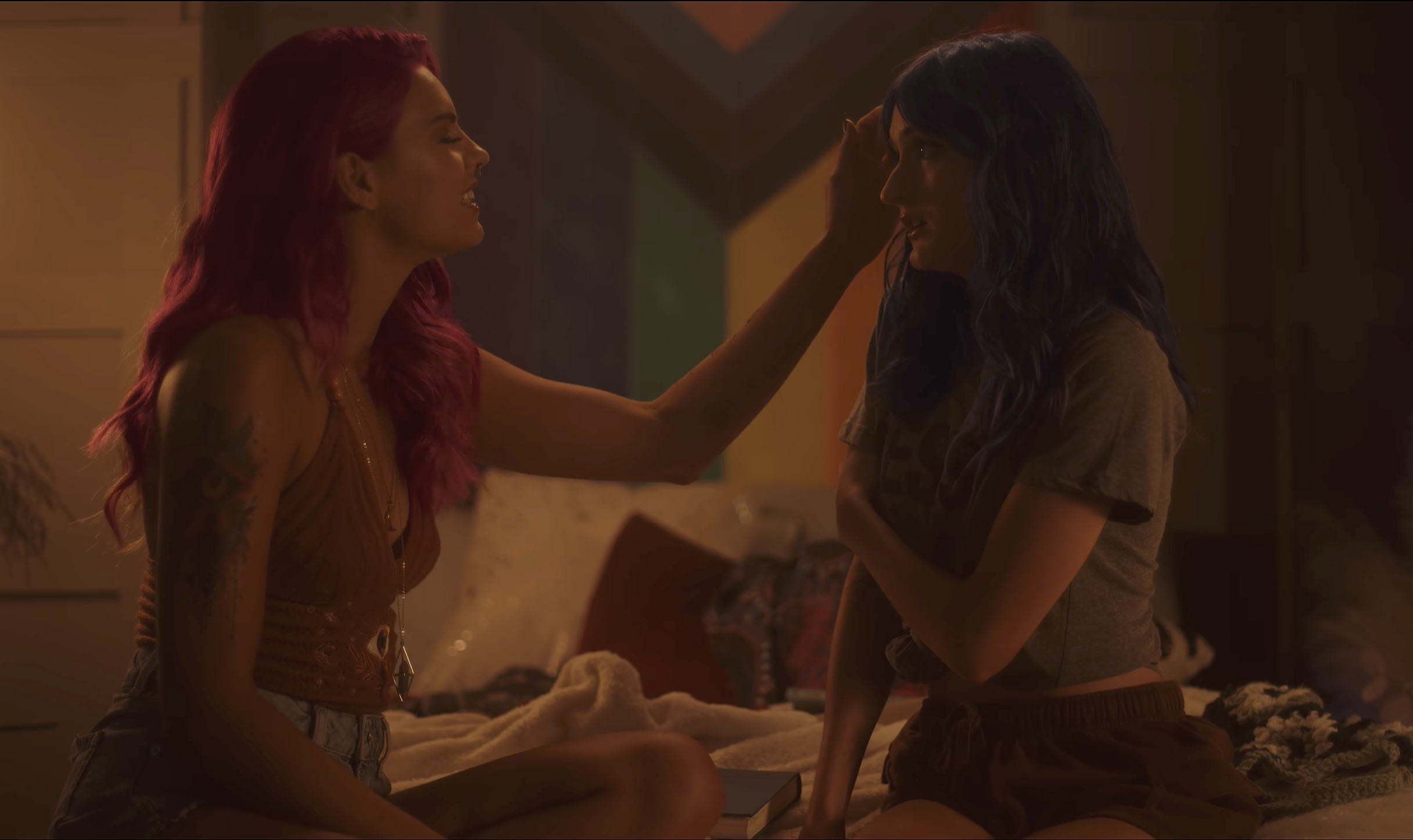
Two women sit on a bed, a Pride flag hanging behind them. One is nervous; the other tells her to be calm and that she’ll do “all the work.” The music swells. The two hold hands and — fill out a ballot voting for Steve Hilton?
This is the new advertisement from the Hilton gubernatorial campaign that is drawing rebuke from both sides of the aisle, but for very different reasons.
Jorge Reyes Salinas, the communications director at Equality California, said the ad was an insult to the queer community.
“This ad is a disgusting attempt to exploit lesbian intimacy for political attention,” he said. The advertisement plays on media tropes that Salinas says “reduce lesbian and bisexual women … to sexual entertainment,” rather than showing them as well-rounded characters. “Any group of the LGBTQ+ community deserves the same dignity and respect as everyone else,” he said.
The ad is truly hyper-sexualized. It ends with one woman telling the other, “Now lick it.” The two pause and stare before she reveals an envelope to send the ballot, and large text pops up saying, “Just try it!”
Salinas characterized the ad as a desperate attempt to get attention from a candidate who is trailing far behind in the polls in heavily Democratic California. The Democratic candidate Xavier Becerra, who is endorsed by Equality California, holds a 25-point lead over Hilton according to recent polling by the UC Berkeley Institute of Governmental Studies.
Conservatives have also criticized the ad.
Influential evangelical Pastor Jack Hibbs thought the ad was distasteful and said, “lesbianism among college girls and some high school girls that right now is an actual pandemic of social ill.” Republican attorney general candidate Michael Gates said it undermines “the sanctity of the relationship between parents and their children.” This criticism is rather confusing because although the ad features two relatively young women, they both appear to be adults, not minors.
“The comments from Pastor Jack Hibbs should be criticized because there is nothing wrong with two women being attracted to each other,” Salinas said. “We’re calling out the ad’s stereotypes, while also rejecting the homophobia in the response to it … by other Republicans.”
The backlash from Hilton’s own party and supporters shows that an advertisement full of queer innuendo was ill-considered, considering the national GOP’s attacks on LGBTQ people in recent years. Hilton himself has been campaigning against transgender girls and women competing in school sports and using locker rooms that correspond with their gender identity. This context might be why Hilton’s political base responded to the ad just as poorly as the liberal voters he was attempting to court.
Hilton says the ad is part of a new series rolling out before Election Day, showing stereotypical California liberal archetypes voting for Hilton. He claims these ads are authentically filmed with real actors, as opposed to being A.I. generated, like many of his previous ads. One other advertisement has been released so far by the campaign showing a man at a spiritual retreat also being swayed to vote for Hilton, although it is notably absent of sexual innuendo.
Caleb Kaufman is a California Local News Fellow placed with the Los Angeles Blade. The California Local News Fellowship is a state-funded initiative to support and strengthen local news reporting. Learn more about it at fellowships.journalism.berkeley.edu/cafellows.
2026 Midterm Elections
Trump uses anti-trans slur against Democratic Senate candidate
President mocked Annie Andrews

President Donald Trump used an anti-trans slur against Democratic South Carolina Senate candidate Annie Andrews on Monday as he sought to rally support for Republicans in the state’s Senate race.
In a post on Truth Social, Trump attacked Andrews three times, referring to her as “trannie” while promoting U.S. Sen. Darline Graham (R-S.C.)’s campaign.
Andrews is running against Graham for a Senate seat in the solidly Republican state.
Earlier this year, Graham was specially appointed to the seat following the death of her brother, Lindsey Graham, who represented South Carolina in the Senate from 2003 to 2026.
Andrews, the Democratic nominee from the state, is a pediatrician that lives in Charleston with her three children. She told NBC News that she will “work with anyone to put South Carolina first.”
“As a mom and a pediatrician, I’m in this race to fight for my patients, my three kids, and South Carolina,” Andrews said, adding that “lowering costs and making life better for families across our state is going to take all of us working together.”
Andrews used the attention from the president’s attack to emphasize what she described as a focus on policy issues rather than the culture wars that have dominated much of the political debate.
“If you care more about your bills than the politics in Washington, this campaign is for you,” she added.
Trump’s remarks have drawn criticism from leaders on both sides of the aisle.
Senate Minority Leader Chuck Schumer (D-N.Y.) condemned Trump’s words Monday night on social media, calling his attacks on Andrews “despicable.”
“Annie Andrews is a mom and pediatrician who’s always put her community first — and she’s exactly who South Carolina needs representing them in the Senate,” Schumer said on X.
Former South Carolina Gov. David Beasley, a Republican, also criticized the president’s attack on Andrews, urging voters to “reject politics based on division and hate.”
“This is abhorrent. Elections don’t have to be about cruelty and lies. South Carolina deserves better,” Beasley wrote Monday night on X.
South Carolina has not elected a Democratic senator in nearly three decades.
Andrews’s campaign website does not mention her positions on LGBTQ issues.
The Washington Blade reached out to Andrews’s campaign for comment on Trump’s attack and her positions on transgender rights but did not hear back by time of publication.

Center Arts Gallery celebration, auction to take place on Oct. 17

Comings & Goings

‘Hidden in Plain Sight:’ The story of Odessa Madre

‘Governments that attack LGBTQ+ rights learn from each other’

Horror genre has evolved into space to explore queer identity

ICC unseals arrest warrants for Taliban officials accused of persecuting LGBTQ people, women

Physician: addiction doesn’t always look the way you think it does

Calendar: October 9-15

Solidarity beyond the parade: the actual cost of Pride

Essential queer horror classics for Halloween
-

 Afghanistan4 days ago
ICC unseals arrest warrants for Taliban officials accused of persecuting LGBTQ people, women
-
District of Columbia4 days ago
Physician: addiction doesn’t always look the way you think it does
-
Calendar4 days ago
Calendar: October 9-15
-
Opinions3 days ago
Solidarity beyond the parade: the actual cost of Pride