Commentary
Sondheim’s art will be with us for the ages
Iconic work explored sadness, rage, irony, and love of humanity
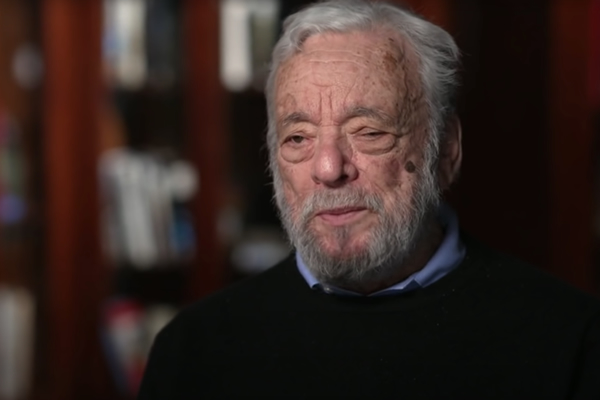
“The only regret I have in life is giving you birth,” his mother wrote in a letter to Stephen Sondheim.
The only regret so many of us feel now is that Sondheim, the iconic composer and lyricist, died on Nov. 26 at his Roxbury, Conn. home at age 91.
He is survived by Jeffrey Romley, whom he married in 2017, and Walter Sondheim, a half-brother.
F. Richard Pappas, his lawyer and friend, told the New York Times that the cause of death was unknown, and that Sondheim had died suddenly. The day before he passed away, Sondheim celebrated Thanksgiving with friends, Pappas told the Times.
“Every day a little death,” Sondheim wrote in “A Little Night Music.”
This isn’t the case with the passing of Sondheim. Whether you’re a Broadway star or a tone-deaf aficionado like me, you’ll sorely miss Sondheim, who the Times aptly called “one of Broadway history’s songwriting titans.”
Like multitudes of his fans, I don’t remember a time in my life when a song from a Sondheim musical hasn’t been in my head.
When I was a child, my parents repeatedly played the cast album of “Gypsy,” the 1959 musical with music by Jule Styne, lyrics by Sondheim and book by Arthur Laurents. My folks loved the story of the show, which was loosely based on the life of the burlesque artist Gypsy Rose Lee. You haven’t lived until you’ve heard Ethel Merman belt out “Everything’s Coming Up Roses!” When I need to jumpstart my creative juices, I remember that “You Gotta Get a Gimmick.”
In college, I felt that “Company,” the 1970 musical with music and lyrics by Sondheim and book by George Furth, spoke to my generation.
As was the case with Sondheim’s musicals, “Company” didn’t have a conventional plot, happy ending, or tidy resolution. It takes place during Bobby’s 35th birthday party. Bobby, who is single, is celebrating with his friends (straight, married couples). Bobby likes having friends but doesn’t want to get married.
Sondheim didn’t come out as gay until he was 40. Yet, even in the 1970s, it was hard not to think that Bobby in “Company” wasn’t gay.
Once you’ve heard Elaine Stritch sing “The Ladies Who Lunch” from “Company,” it becomes indelibly etched in your brain.
Who else but Sondheim could have written, “And here’s to the girls who play/smart-/Aren’t they a gas/Rushing to their classes in optical art,/Wishing it would pass/Another long exhausting day/Another thousand dollars/A matinee, a Pinter play/Perhaps a piece of Mahler’s/I’ll drink to that/And one for Mahler!”
In September, I, along with legions of other theater lovers, were thrilled when Sondheim told Stephen Colbert on “The Late Show,” that he was working with David Ives on a new musical called “Square One.”
In his musicals from “Follies” to “Sweeney Todd” to “Sunday in the Park with George,” Sondheim, through his lyrics and music, revealed the internal depths of his characters and the sadness, tenderness, bitterness, rage, irony, wit, and love of humanity. Sondheim’s wordplay was so brilliant that he did crossword puzzles for New York magazine.
Over his decades-long career, Sondheim won every award imaginable from the Pulitzer Prize for “Sunday in the Park with George” to the Presidential Medal of Freedom (awarded to him by President Barack Obama in 2015). He received more than a dozen Tony Awards for his Broadway musicals and revivals as well as a Tony Award for lifetime achievement in 2008.
Thankfully, Sondheim’s art will be with us for the ages.
A remake of “West Side Story,” directed by Steven Spielberg with a screenplay by Tony Kushner, premieres this month.
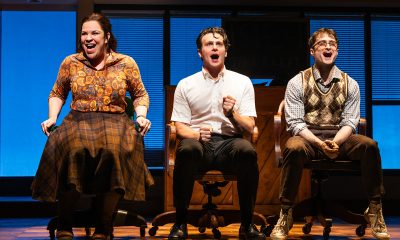
Sondheim is a character in the Netflix film “tick, tick BOOM!,” directed by Lin-Manuel Miranda. The movie is based on an autobiographical posthumous Jonathan Larson (the composer of “Rent”) musical. Sondheim is supportive of Larson’s work.
Thank you Stephen, for your art! R.I.P.
Kathi Wolfe, a writer and poet, is a regular contributor to the Blade.



Commentary
Washington Blade responds to concerns over White House pool duties
Inaccurate media reports create confusion but we stand with our colleagues
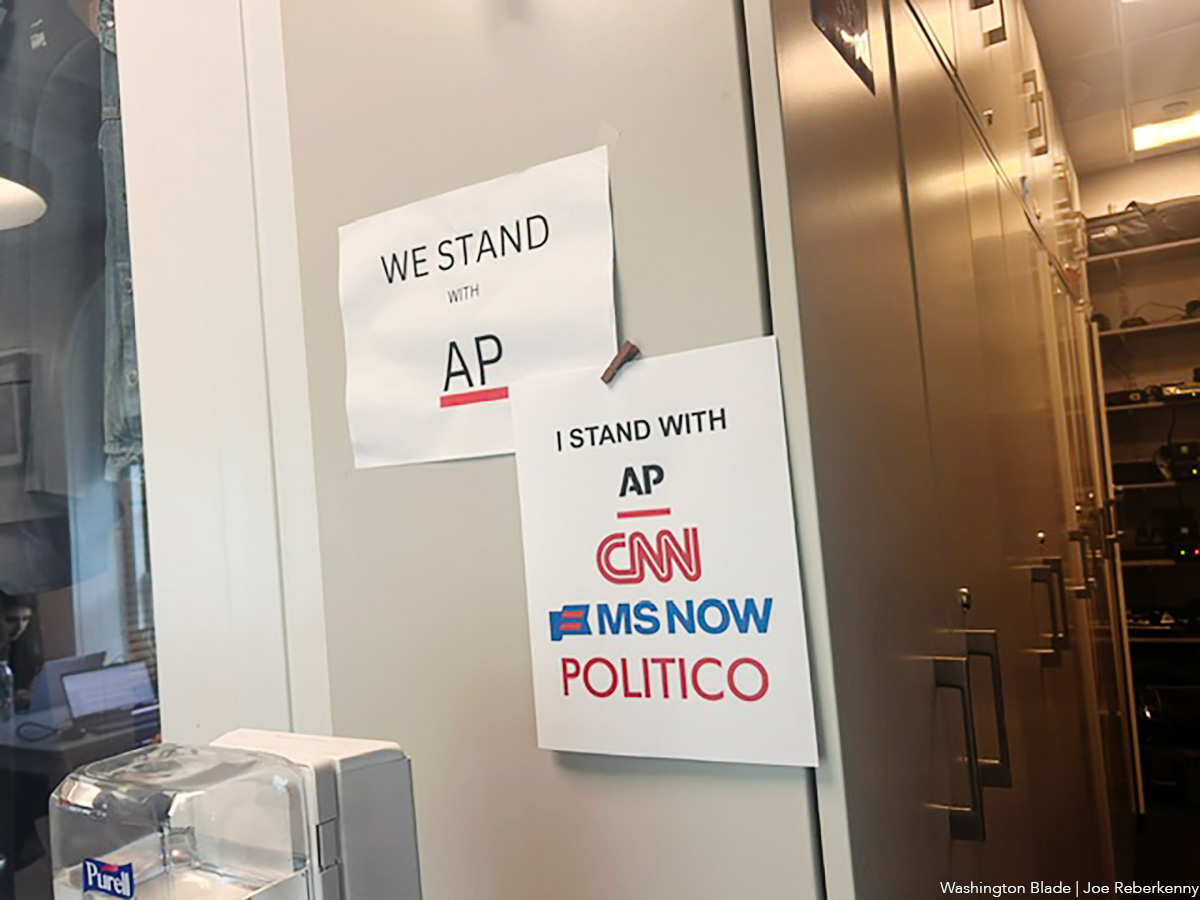
Last week, President Trump announced his unconstitutional ban of CNN, MSNow, and Politico from the White House. Coincidentally, on Monday, it was the Washington Blade’s turn to serve as the print pool reporter on duty covering the president’s actions that day. This important responsibility is shared and rotated among the print members with each serving roughly once per month. The Blade is the only LGBTQ outlet with a seat in the briefing room, a slot in the pool rotation, and membership in the White House Correspondents’ Association, something we fought for decades to secure after enduring years of discrimination, ridicule, and resistance to openly queer journalists working inside the White House. We take our responsibilities there seriously.
There are two pools that cover the president: broadcast and print. The other four members of the broadcast pool — ABC, CBS, NBC, and Fox News — agreed to boycott their pool duties. There has been no boycott among the print pool, which is a separate entity. I called the president of the White House Correspondents’ Association on Monday to confirm that no outlets in the print pool were boycotting.
A boycott by the Blade would set us back and lead to our expulsion from the pool and briefing room and our replacement by a right-wing outlet sympathetic to President Trump’s approach to attacking the media. The LGBTQ community is far better served with the Blade in the room than a far-right blogger taking our seat.
Let’s be clear: the Blade stands for diversity, equity, and inclusion and we stand for the First Amendment and freedom of the press. In solidarity with the broadcast pool, we made two important decisions on Monday — the first day anyone had to think about any of this. First, we refused to take or share any videos or still photos of the president, which would have undermined the broadcast boycott. Second, when Politico’s turn comes up for pool duty in mid-October, the Blade will not fill in and cover for them while they are banned. Politico must be readmitted and allowed to do their job.
After a rough day navigating and reporting on all of this, the Advocate published a reckless and inaccurate story suggesting that the Blade had crossed a picket line. Not true, as there is no print pool boycott. They claimed that I wouldn’t talk to their reporter. Also not true. I called their reporter within 90 minutes of receiving his message and he didn’t take the call or call me back. Their story named me and our White House reporter, immediately exposing us to public criticism and worse. The environment in D.C. is so toxic and even violent these days that subjecting our staff to unfair and false accusations like this invites harassment, doxxing, and worse. To do that without even talking to us is next level irresponsible and the antithesis of journalism.
On Tuesday, I talked to two reporters and an editor at the Advocate but they refused to retract anything in their inaccurate story. If the reporter had returned my call, I could have explained all of this but they are more concerned with clickbait and sensational headlines, a dangerous practice in these troubled times.
Back to the pool. The Blade was in the briefing room in the Reagan era, when Press Secretary Larry Speakes made jokes about AIDS and the reporters in the room laughed out loud. We endured all of that abuse and worse for decades, always standing in the back of the room and never being called on. The Blade’s journalists persevered. When President George W. Bush was re-elected in 2004, the Blade’s White House credentials were revoked amid an earlier press crackdown. Notably, no one boycotted or stood up for us. When Barack Obama won election in 2008, I received an email from his communications director informing me that effective midnight on Jan. 20, 2009, the Blade’s credentials would be restored.
So we have had quite a ride navigating administrations and their changing requirements for gaining access but always playing the long game. As Barney Frank used to say, “If you’re not at the table, then you’re probably on the menu.” The Blade is at the table and we do our best to ensure the LGBTQ community’s issues are addressed by both parties.
Thanks for reading and supporting the Blade’s work. If you have questions about our approach, you can reach me at [email protected].
Kevin Naff is editor of the Washington Blade. Reach him at [email protected].
Commentary
What LGBTQ veterans are building after ‘Don’t Ask, Don’t Tell’
DADT repeal took effect on Sept. 20, 2011. Trans servicemember ban reinstated

Fifteen years ago this month, the repeal of “Don’t Ask, Don’t Tell” took effect. At the time, the importance of the change was obvious: gay, lesbian, and bisexual Americans would no longer have to hide who they were to wear the uniform. What was harder to see was what would follow: a generation of LGBTQ veterans able to carry their service openly into American civic life.
Earlier this month, Alaska state Rep. Andrew Gray, an Army veteran, stood before the Anchorage Assembly and asked the city to recognize Sept. 20 as LGBTQ Veterans Day.
His former command sergeant major, Mike Grunst, followed him to the microphone. A 35-year veteran who had served in combat, Grunst called troops who had served while hiding who they were “the bravest I have ever served with.”
Then Denise Sudbeck stepped forward. A Vietnam-era Navy veteran, she thanked the country for the privilege of serving and asked that the next generation have the same chance.
The Assembly approved the recognition.
Nothing about the scene required a new vocabulary. A veteran made a request of his community. A commander vouched for those who served beside him. Another veteran asked that younger Americans inherit the opportunity she valued. They entered the civic record simply as veterans.
That identity can do more than win recognition.
When federal policy abruptly ended the careers of transgender servicemembers this year, veterans and servicemembers in California began asking a practical question: What happens when those Americans come home?
Republican Assemblyman Jeff Gonzalez, a Marine combat veteran, began one hearing with questions about transgender military service. He listened as veterans explained how the military handles medical care and deployment case by case.
Then the discussion turned to separation.
“I don’t wanna see any veteran homeless,” Gonzalez said. Before the hearing ended, he was asking: “How can I help? How can I understand? How can I be a good advocate?”
The legislation that followed would provide housing, employment and transition assistance to discharged servicemembers. Republican state Sen. Shannon Grove spoke for it. The Senate passed it 32 to 0.
Americans have plainly not settled their disagreements over transgender people. Nor should military service be a prerequisite for rights that belong to every citizen.
But military service creates relationships that are difficult to reduce to the abstractions of the culture war. Before a legislature, “the transgender issue” can become a veteran who deployed, an officer who led troops, or the person who once stood beside you.
The political question changes because the human relationship has already changed.
The pattern is beginning to appear across the country. Kansas is among the states recognizing LGBTQ Veterans Day for the first time this year. New York and Virginia are pursuing broader state-level programs for LGBTQ veterans.
Sept. 20 is deliberate. On that day in 2011, “Don’t Ask, Don’t Tell” ended.
We usually remember repeal for what LGBTQ Americans gained: the ability to serve openly. Fifteen years later, we can also see what the country gained.
A gay veteran can stand before his local government beside the commander who once led him. A transgender servicemember can sit before a legislator who begins with doubts and ends by asking how he can help. A veteran from an older generation can ask her neighbors to give those who follow her the same chance to serve.
This is citizenship in practice.
The enduring legacy of “Don’t Ask, Don’t Tell” repeal is not only that Americans were finally allowed to serve openly. It is also what they can now build after coming home.
Commentary
Anti-science, anti-LGBTQ movements go hand in hand
HHS under RFK Jr. has blocked gender-affirming care for youth

A newborn baby died after contracting measles in Pennsylvania last month, and, as if it wasn’t enough grief for his parents, anti-vax activists are trying to track down and harass his family. Apparently, Gov. Josh Shapiro tangled with Robert F. Kennedy Jr. over his “inaccurate and misleading claims.”
On Aug. 26, RFK Jr., the secretary of the U.S. Department of Health and Human Services, declared that the deaths could be fabricated. We live in peculiar times, when it is government officials, not freaks on the internet, who are spreading conspiracy theories. The new spread of measles in the United States since Donald Trump came to power is one of the most shameful parts of the story of modern American politics, and the tragedy of parents who lost their baby because more and more people refused to vaccinate may seem absolutely unrelated to LGBTQ rights, but actually, there is a pretty solid connection.
Because RFK Jr., the same man who was fighting vaccination, promoted the false idea that vaccines caused autism, and even curated the anti-vaccine organization Children’s Health Defense before going into politics, is also a known opponent of transgender rights. Under his “leadership,” gender-affirming care for trans minors was banned, and there were also created new healthcare guidelines recognizing only two genders.
All around the globe, there is a weird correlation between anti-LGBTQ — particularly anti-trans — ideas and anti-science movements. And it should be clearer to the general public. People who are speaking against LGBTQ rights are not just threatening minorities. They are a danger to everyone.
The Trump-Vance administration is an iconic example of such tendencies.
Trump himself is a known critic of modern scientific studies — for example, believing in the same anti-vax conspiracies that Kennedy promoted, and showing obvious skepticism that global warming exists, despite all the evidence that has been shown by climatologists. And he is also a man who used trans people as boogeymen. Under his command, trans people were kicked out of the military. And even worse, recently he made an extremely chilling statement about the 2026 midterm elections, urging voters to “pretend I’m on the ballot” and vote for Republicans, and while discussing what he says is at stake, he said that if Republicans win, “transgenderism” will “end.” This is an offensive statement at best and genocidal at worst.
And, of course, I think everyone remembers the Department of Government Efficiency (DOGE), which was led by infamous billionaire Elon Musk, who announced to the world that he would destroy the “woke mind virus” that killed his child just because his trans daughter, Vivian Wilson, well, is happy to be a trans person.
DOGE is known not just for cancelling academic research around LGBTQ studies and gender studies. No, this agency abruptly canceled and froze thousands of federal science, research, and health grants, attacking such vital health programs as cancer research, vaccination research, and diabetes research, among others. As you can see, they are not just attacking people who are “affected” by the “mind” virus — they are dangerous to everyone, even if most of the public standing of Musk was around his anti-trans politics and he tried to present himself as a pro-science, pro-progress man by supporting the space industry.
An even more vivid example is the so-called Dark Enlightenment movement.
This extremely reactionary political movement was born in the late 2000s, and originally grew from very democratical classical liberal ideas. Until it became anti-democratic itself. And also often It was created by American software engineer Curtis Yarvin (writing under the pseudonym Mencius Moldbug) and expanded by British philosopher Nick Land. The movement is popular among some Silicon Valley businessmen, and got support from PayPal founder Peter Thiel, and one of their main ideas is that modernity is bad. They are basically obscurantists, who see modern universities as part of “the Cathedral” — a system that, in their opinion, promotes equality and modern science that society doesn’t need. Of course, the movement’s followers are mostly anti-LGBTQ rights, and, as you can see, anti-queerness once again go hand in hand with obscurantism. Unfortunately, the movement got the support of extremely prominent politicians, including U.S. Vice President JD Vance.
In his speech from 2021, Vance proved to be an obscurantist when he claimed that universities are the enemy. He is also a known homophobe and transphobe.
So, why are anti-vaxxers, people who oppose modern scientific studies, and people who hate universities more likely to be queerphobic? Why do the same people who are defending their transphobia by showing that they support common sense actually often show zero such sense when it comes to protecting themselves and their children from measles or decreasing the chances of getting cancer?
We don’t have any statistics or studies that show that all obscurantists are queerphobic, but around the globe, the same dynamic is visible.
In Russian anti-LGBTQ censorship, books about animal biology and zoology have been censored because the censors saw “LGBT propaganda” in them. The famous pro-Putin philosopher Alexander Dugin, who is extremely anti-queer, also speaks up against modernity itself.
In Taliban’s Afghanistan, modern science and LGBTQ rights are attacked at the same time.
Even in the UK, Reform UK is known as the most anti-trans and anti-queer party, and they are facing widespread criticism from scientists and medical experts for promoting climate change denial and anti-vaccine ideas. It doesn’t mean that LGBTQ supporters never believe in conspiracy theories or that progressive politicians always support science.
No, it just means that explicit anti-science and anti-LGBTQ statements often go hand in hand.
I think there are two reasons for this correlation.
First, LGBTQ people are real. You cannot deny that sex is not binary, gender and sex are different, and transition improves the quality of life of actual trans people. Or that same-sex relationships are natural, because even animals have same-sex sexual contacts. To deny it, you need an ideology or a conspiracy theory.
The second reason is that anti-scientific populism and anti-LGBTQ conspiracy theories are popular among the same category of people. It’s a “bundle” of ideas — a trend that conservative voters often adopt together. Studies also show that people who are likely to believe in one conspiracy theory are more likely to believe in another.
But the question is more broad. We don’t speak enough about the harm anti-scientific conspiracy theories and obscurantist politicians around the globe create for mankind in general. Not all people would suffer from a prohibition of hormone therapy, or attacks on same-sex marriage. But anti-global warming ideas, anti-vax advocates, and restrictions on modern research, especially medical research, are potentially dangerous to any human being.
And one of the best things LGBTQ activists could do is just show society that they are being used — that the same people who are stealing LGBTQ rights are also destroying medicine and the environment, and it’s a threat to their own traditional families and future of all kids no less than to queer people.

Bessent says Trump chose him for his qualifications, not his sexuality

Alianza para la Inclusión fortalece la defensa de derechos LGBTQ en Centroamérica

The facts about Victory Fund’s investigation and the path forward

In Ga., 2 trans candidates believe voters are ready for them

Bowser, Office of LGBTQ Affairs announce LGBTQ+ History Month events

House Democrats urge White House to confront Turkish government over anti-LGBTQ crackdown

Annapolis Pride arrives this weekend

Renee Good’s family files two federal lawsuits

Calendar: October 2-8