Local
Howard County activists and allies hit back at censorship, hate
More than 100 people attended ‘We ARE the People’ rally
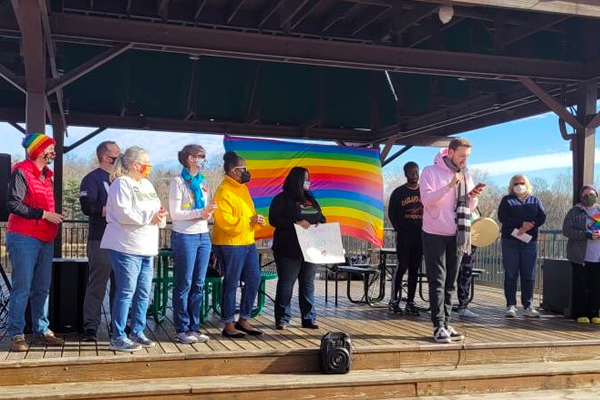
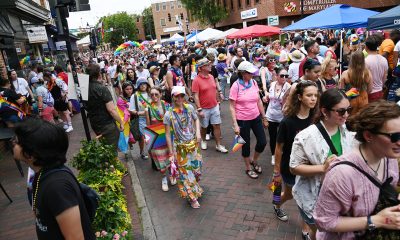
A diverse crowd of 100 to 200 folks gathered at the Columbia Lakefront on Saturday to attend a rally to push back against censorship in the county’s public schools as well as homophobia and transphobia emanating from a group of conservative parents.
The rally called “We ARE the People” was organized in response to the comments and actions by members of a Maryland-based conservative group “We the People 2” that among other things are anti-masks, anti-vaccinations and are opposed to teaching racial history in the schools. They also oppose two books that are in Howard County Public Schools library shelves: “Gender Queer” and “Lawn Boy.”
Speakers at a We the People 2 rally last month at an Elkridge warehouse condemned the books, which contain LGBTQ characters, as sexually explicit. The group later filed police reports against the Board of Education alleging the books constitute pornography with “graphic sexual content and materials being used and disseminated in public schools,” according to the group’s press release. A flier announcing this action used the loaded terminology, “We must not allow our children to be abused and victimized.”
Among the speakers at the Elkridge rally was Republican Gordana Schifanelli who is running for lieutenant governor on the ticket with Daniel Cox. Another speaker, George Johnson, a teacher from Baltimore City, was heard on a video of the event saying, “We’re doing God’s work because Marxism, homosexuality and transgenderism is the devil.”
In response, the pro-LGBTQ rally in Columbia announced the following:
We are taking a stance against hate in the community as we raise our voices in support of equity in our schools. Attacks on teachers and school staff have prompted us to stand united and drown out the noise.
In addition, We ARE the People states:
We stand for LGBTQ+ students and educational professionals
Teaching accurate history to our students
Supporting equitable practices in our schools
Providing students with relevant LGBTQ+ media through their school libraries
The two-hour rally, which was attended by several county council members, featured speakers representing a wide swath of community, educational, religious and political organizations. They included: Community Allies of Rainbow Youth (CARY), Black Lives Activists of Columbia (BLAC), Absolutely Dragulous, Howard County Schools, PFLAG-Columbia/Howard County, IndivisibleHoCoMd, Columbia Democratic Club, Howard Progressive Project, Unitarian Universalist Congregation of Columbia (UUCC), HoCo Pride, Progressive Democrats of Howard County, and the Columbia United Christian Church.
Many of the speakers denounced the censorship of materials that are needed by many LGBTQ students. Genderqueer and non-binary students, they point out, are most vulnerable and need affirming literature to help with their development and self-acceptance. The speakers also decried hate speech, which has surfaced again, as well as the opposition to teaching history as it relates to race.
Others argued that the community must not sit back and take it from extremist groups.
“You are all defenders,” said Cynthia Fikes, president of the Columbia Democratic Club, in a fiery speech. “But to succeed a strong defense also needs a strong offense.”
The two books in question were recently the center of controversy in the Fairfax County (Va.) school system. The books were removed in September from the shelves of the high schools pending a comprehensive review following opposition from a parent at a school board meeting. It should be noted that both books were previous winners of the American Library Association’s Alex Awards, which each year recognize “10 books written for adults that have special appeal to young adults, ages 12 through 18.”
The board established two committees consisting of parents, staff and students to assess the content of the books and make recommendations to the assistant superintendent of instructional services who would make the final determination.
One committee found that “Lawn Boy” includes themes that “are affirming for students” with marginalized identities. “There is no pedophilia in the book,” the committee added. The other committee found that “Gender Queer” depicts “difficulties non-binary and asexual individuals may face.” The committee concluded that “the book neither depicts nor describes pedophilia.” The books were restored to the shelves.
“As this backlash against LGTBQ+ literature demonstrates, we must be ready to stand up and defend the progress we have made,” said Jennifer Mallo, member of the Howard County Board of Education, expressing her own point of view. “We must ensure our elected officials understand and share our values and will fight for our marginalized students.”
The enthusiastic crowd was clearly pleased with the event.
“Today’s rally was meant to inspire our community to take action,” said Chris Hefty, who was the lead organizer of the rally and the emcee. “Action that protects our youth. Action that protects our educators and admins. This action comes in the form of advocacy, communication with elected officials so they know your voice, and through well informed voting to ensure those who represent us are those we know will support us. We shared a message of love, acceptance, and warmth.”
Hefty adds, “The unity we facilitated through this rally was a sight to behold. As the lead organizer I couldn’t have been more pleased! In the future we will be sure to better meet the needs of all our community members. We thank all those in our community for their support and feedback and look forward to accomplishing great things together moving forward.”


District of Columbia
To school to homeschool to school again
‘Pandemic took more than 2 years of school. It took 2 years of my childhood’
It wasn’t until I no longer had those 30 minutes of lunch and recess, when all the boys and girls would come together to trade bracelets, make up games, gossip about who we liked, play tag and sports, that I realized how much of my childhood happened during the parts of school that had nothing to do with schoolwork.
I was in the third grade when the COVID-19 pandemic began. I remember my parents explaining that I couldn’t go back to school and wondering when I would see my friends again — or whether I wanted to go back at all. But after spending two years learning from home, cut off from the friends, teachers and routines I had known, I began to understand what I had lost.
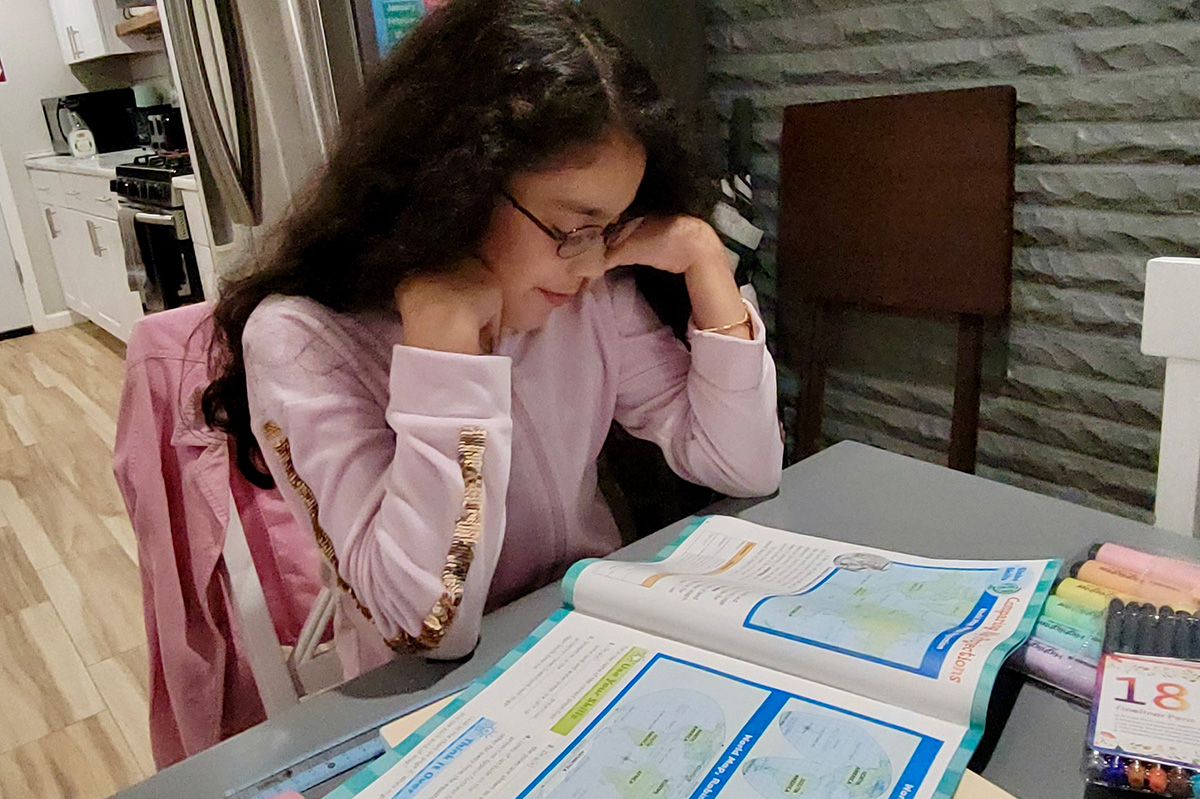
For many of my friends and classmates, going to school changed from a bus ride every morning to clicking a link and seeing their teachers and classmates through a screen. My experience was a little different. Instead of going to virtual school, I was homeschooled. My new routine was sitting at my kitchen table, with my mom teaching me how to write a paragraph or solve a math problem, surrounded by the same walls I saw every day.
My family was not alone. Many families across the country turned to homeschooling after schools shut down. Homeschooling increased sharply during the pandemic, especially among Black families, rising from 3.3 percent in the spring of 2020 to 16.1 percent that fall, according to the U.S. Census Bureau’s Household Pulse Survey.
It would be two years before I entered a classroom again.
At first, I loved homeschooling.
I didn’t have to wake up early or put on a uniform. I liked the comfort of my own room, surrounded by my stuffed animals and toys. I didn’t have to push my way through that horrible lunch line because my food was now waiting for me at the kitchen table.
It felt like a fever dream where school was canceled and all day was fun. That was my view as a 9-year-old.
But as days turned into weeks and weeks into months, that initial excitement wore off.
Every day became the same routine. There was no recess when I could play princess with all the other girls. There were no conversations in the lunch line and none of the small things that had broken up the school day before. I didn’t realize how much those moments mattered until I could no longer experience them.
With less to look forward to, I started spending more time on the internet.
I turned to platforms such as YouTube and TikTok to distract myself. Instead of seeing what the kids around me were doing every day, I could watch people online show off their clothes, makeup, dances, art and lives.
Over time, I started comparing myself with what I saw. I thought the way I dressed was childish and wanted to be like the superstars I saw online. I followed what was trendy and admired the girls and boys who looked so confident on screen.
Before the pandemic, my friends and I didn’t need the internet to tell us what was popular. But during those years at home, I became much more aware of what other people thought was cool and what someone my age was supposedly supposed to like. I felt as though I was growing up without getting to experience all the steps in between.
When I finally returned to school, I thought my classmates would be excited to see each other again after spending so much time apart.
Instead, I realized how much we all changed.
When I walked through those doors, I remembered vague memories of running down those halls and always seeing my peers with smiles on their faces. Now those same faces were tired, with eye bags. The lunchroom, which used to be full of life with happy kids eating to their hearts’ content, turned into a lunch where all the girls controlled what they ate and talked about the latest trend on TikTok.
Maybe some of that change would have happened anyway. Kids grow up. Interests change. Middle school has always been awkward.
But I didn’t get to watch my classmates gradually change or change alongside them. I left one social world and came back to another.
When I returned, I was expected to understand a social world that had changed while I was gone. I felt I missed so much that I would never get back, and without that day-to-day learning to help me adapt to these new norms, I struggled.
Those everyday interactions are an important part of how children learn to get along with others: A 2026 meta-analysis of 157 studies from 33 countries published in the academic journal Child Development found that children’s social and emotional skills declined during the pandemic, along with their overall well-being. The researchers noted that schools are not just places where children learn math and reading. They are also places where children learn how to make friends, work through disagreements, understand other people’s feelings and manage their own emotions.
Years later, many parents say some of those effects are still being felt. In a 2025 Gallup survey, 45 percent of parents with school-age children said the pandemic hurt their child’s social skills, and 22 percent said those problems were still ongoing. Forty-two percent said the pandemic negatively affected their child’s mental health. Parents were more likely to report problems with their children’s social skills and mental health than with their academics or physical health.
I saw some of those changes around me, too. Classmates who once seemed outgoing became quieter or more withdrawn. Starting conversations felt harder. Making new friends felt harder. Sometimes retreating into myself felt easier than trying to figure out where I belonged.
Now, the kids who were in elementary school when the pandemic began are moving through high school. We are older, but some of us are still figuring out what those missing years meant.
Before the pandemic, I thought lunch and recess were simply breaks from learning. Now I understand that we were learning during those 30 minutes, too. We were learning how to make friends, how to disagree and make up, how to be embarrassed and recover from it, what we liked and what we didn’t, and slowly who we wanted to become.
I can’t know exactly who I would be if I had spent those years inside a classroom instead of at home. Maybe middle school still would have been awkward. Maybe I still would have worried about fitting in.
But I know I missed something I didn’t understand was important until it was gone: the ordinary, sometimes boring, sometimes ridiculous parts of growing up alongside other kids.
You can make up schoolwork. You can return to the classroom. But there are some parts of childhood you don’t get to repeat.
Gloria Collazo Huamani is a sophomore at Benjamin Banneker Academic High School in D.C., one of Youthcast Media Group’s journalism class partners. Gloria worked with James Jarvis, a YMG mentor-editor and reporter for Inside Health Policy, on this story.
Virginia
Gay Va. couple hopeful voters will enshrine marriage equality in state constitution
Early voting has already begun in the state
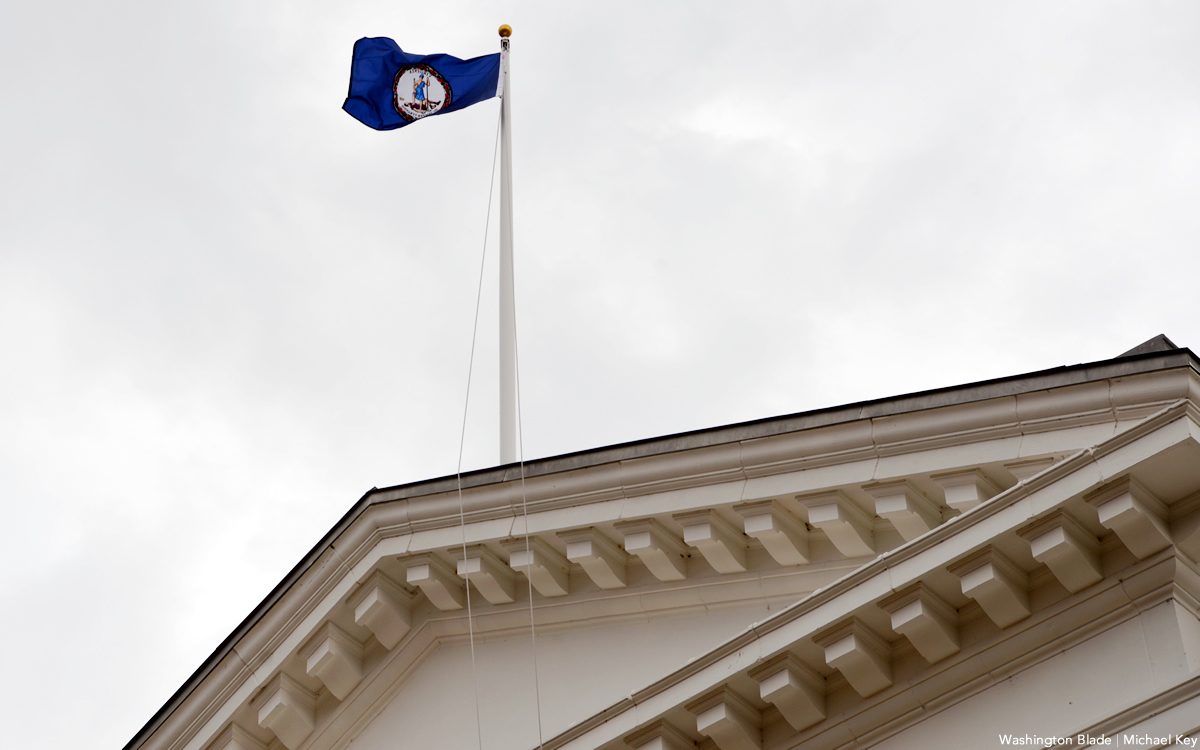
A referendum on whether to enshrine marriage equality in Virginia’s constitutional amendment is on the ballot this year.
If voters approve Question 2, it will codify the U.S. Supreme Court’s Obergefell ruling in 2015 that extended marriage rights to same-sex couples across the country — gays and lesbians have been able to legally marry in Virginia since Oct. 6, 2014.
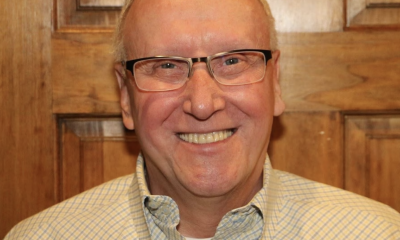
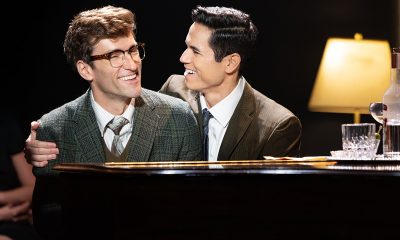
Ron Bookbinder and James Fisher are a married couple who live in Arlington.
They have been together for 38 years — Bookbinder and Fisher married in 2014.
“We think this is a critical vote to remove this discriminatory language from the constitution and to ensure that going forward, no matter what happens, the state of Virginia will ensure marriage equality,” Fisher told the Washington Blade. “It is it is really difficult and upsetting to think that our current state constitution would prohibit same-sex marriage, even though the federal government overrides that now. There’s no saying what may happen in the future.”
Bookbinder said it was important for him and Fisher to get married “to gain social equality.”
“I was surprised how good it felt, how important it was to begin to say, ‘my husband rather than my partner,'” Bookbinder said.
Bookbinder then explained why it feels good to be married.
“Is it a legal partner, a business partner, a tennis partner, you know, or a romantic partner? But when you say my husband James, everyone knows exactly what you mean and confers an equal status with everyone else who’s married, and we were both surprised at how good it felt and how equal it felt to suddenly be married and be able to state that you were married and discuss your husband rather than your partner, and I would hate to lose that,” he said.
Bookbinder and Fisher said they are hopeful that voters will approve the amendment, noting Virginia has become more progressive over the years.
“I think people have, with the Supreme Court decision, people have seen that a same-sex marriage is just a marriage,” stated Fisher. “It’s just two people who love each other, and I think more and more people have attended a same-sex marriage, someone in their family or a friend, and the experience of what this is, firsthand experience, is so important in shaping people’s opinions, and I think the period of time that we’ve had since the Obergefell decision has given a lot of voters that experience, which I think is really important and powerful.”
The couple also said the push to enshrine marriage equality in Virginia’s constitution is in response to the Trump-Vance administration.
“And I think due to President Trump doing all the horrible things he’s done to so many groups, including LGBTQ, especially trans people, that Virginians are kind of pushed to be even more progressive to protect those who need protection, which would include the LGBTQ community in terms of marriage equality, so I’m confident it will pass,” said Bookbinder.
Narissa Rahaman, executive director of Equality Virginia, sent the Blade a statement about early voting on Question 2 that has already begun.
“With early voting now underway, our focus is making sure every Virginian knows Question 2 is on their ballot,” said Rahaman. “The outdated ban on same-sex marriage still in Virginia’s state constitution leaves a gap in protections for the thousands of same-sex couples that call this state home, but after 20 years we have the chance to fix it.”
Log onto www.mobilize.us/vaformarriage to find out more about the campaign in support of Question 2.
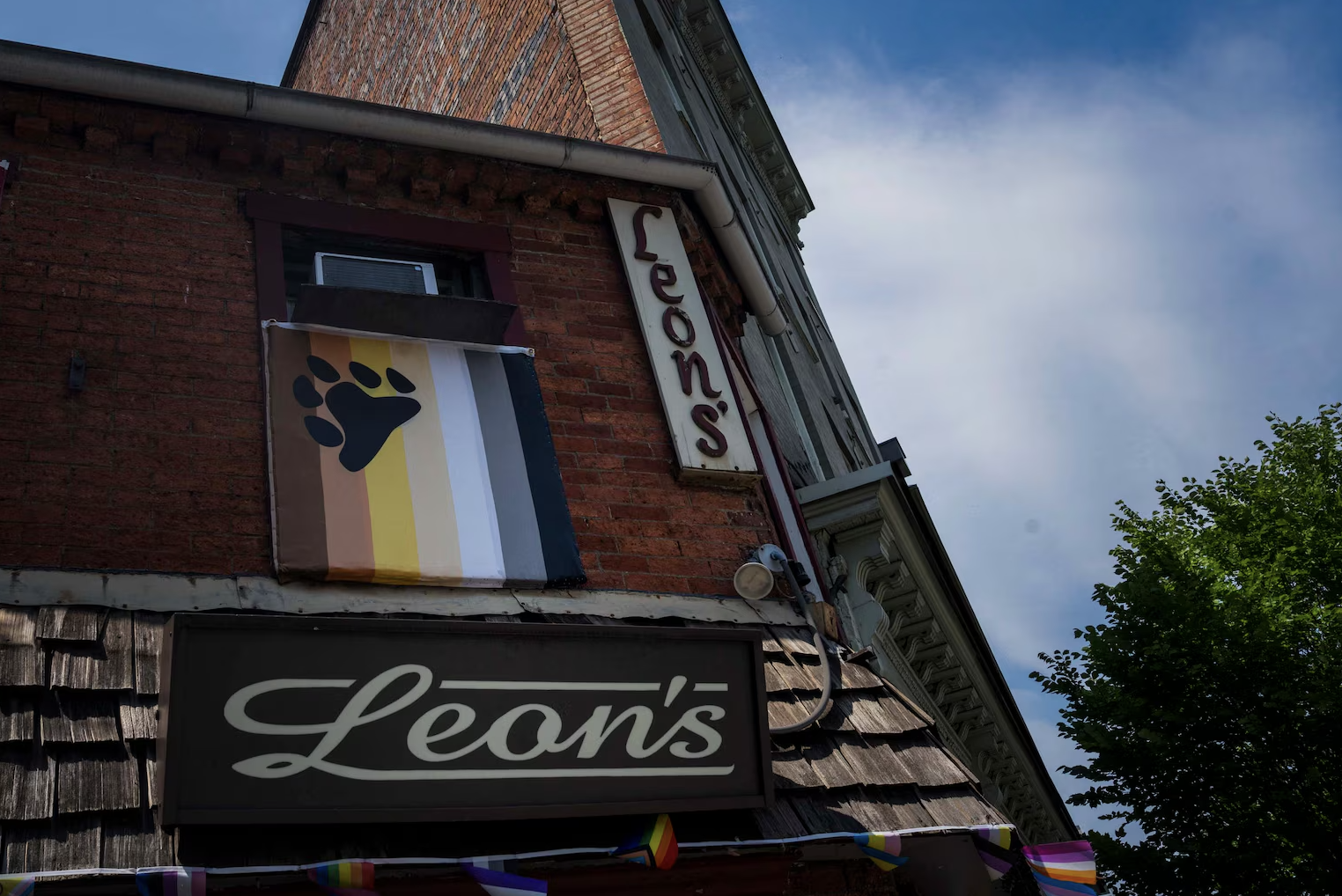
By JOHN-JOHN WILLIAMS IV | Those legendary heavy-handed pours, spirited karaoke and trivia nights, and groan-worthy wall-to-wall patrons on packed nights are back!
Leon’s will live to see another day.
Baltimore’s oldest gay bar, which opened in the 1950s, closed in July following the death of its owner, Ron Singer.
The rest of this article can be read on the Baltimore Banner’s website.

Annapolis Pride arrives this weekend

Calendar: October 2-8

Renee Good’s family files two federal lawsuits

House Democrats urge White House to confront Turkish government over anti-LGBTQ crackdown

988 restores crisis services for LGBTQ youth

Lesbian Bar Project co-founder: purity politics could destroy our remaining spaces

529 openly LGBTQ candidates running in Brazilian election

Meet the LGBTQ candidates running for U.S. House, Senate

Ana Brnabić becomes world’s first openly lesbian head of state

Vote now! Best Of LGBTQ DC readers’ choice awards
-

 Bars & Parties5 days ago
Lesbian Bar Project co-founder: purity politics could destroy our remaining spaces
-
Brazil5 days ago
529 openly LGBTQ candidates running in Brazilian election
-
2026 Midterm Elections4 days ago
Meet the LGBTQ candidates running for U.S. House, Senate
-
Serbia4 days ago
Ana Brnabić becomes world’s first openly lesbian head of state