Florida
Florida ‘Don’t Say Gay’ bill new focal point in battles on racism, politics
Republican Gov. Ron DeSantis widely seen as 2024 presidential candidate
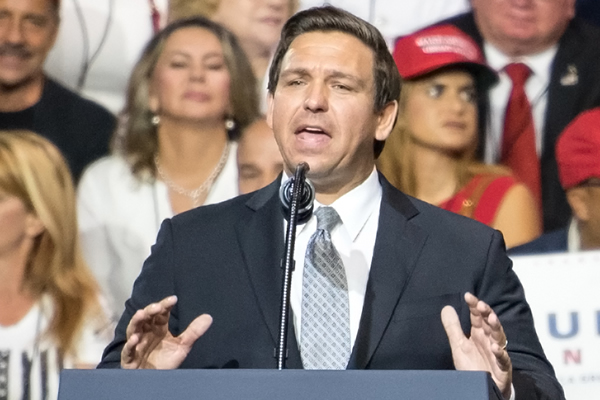
Legislation in Florida known as the “Don’t Say Gay” bill, criticized as an effort to quash any discussion of LGBTQ families and identities in schools, has become a focal point of contention in the context of ongoing national battles over politics, critical race theory, restrictions on LGBTQ books and anti-transgender sports legislation in state legislatures.
The shock of the potential reach of the measure, which opponents say would make schools vulnerable to lawsuits simply over a teacher responding to a student’s question about a gay family member, followed by comments by Gov. Ron DeSantis signaling support for the bill, has opened up targets in other battles waged by the Democratic Party and progressives seeking attention for other issues and a potential upcoming challenger to President Biden in 2024.
Chief among the fiery battles for which the “Don’t Say Gay” bill has provided kindling is the upcoming presidential election. It’s no secret DeSantis is widely seen as a potential Republican challenger to Biden, who may be vulnerable amid consistently low approval ratings and criticism over his handling of inflation and coronavirus.
After DeSantis made comments last week favorable to the “Don’t Say Gay” bill, saying he thinks it’s “entirely inappropriate” for teachers to be having conversations with students about gender identity, his opponents were quick to take him task and tie him to the legislation. Although the legislation had previously faced criticism from Chasten Buttigieg, who tweeted the legislation “will kill kids,” among the new voices against the legislation were no less than the White House and Biden himself.
“I want every member of the LGBTQI+ community — especially the kids who will be impacted by this hateful bill — to know that you are loved and accepted just as you are,” Biden wrote in a tweet last week. “I have your back, and my administration will continue to fight for the protections and safety you deserve.”
Transportation Secretary Pete Buttigieg, the first openly gay person to obtain Senate confirmation for a Cabinet-level role, echoed his husband’s criticism of the bill during an appearance last week on CNN’s “Newsroom.”
When host Jim Sciutto asked whether the bill would inflict any potential harm the measure on LGBTQ kids, Buttigieg replied, “absolutely.”
“And the reason is that it tells youth who are different or whose families are different that there’s something wrong with them out of the gate, and I do think that contributes to the shocking levels of suicidal thoughts and suicide attempts among LGBTQ youth,” Buttigieg said.
The legislation hasn’t gone far in Florida.
As of this week, one House committee and one Senate committee have approved it and neither chamber has scheduled a floor vote. But with Republican in control of both chambers of the legislature and the governor’s mansion, the measure is well-positioned to become law.
A.G. Gancarski, a reporter with the news website FloridaPolitics.com, told the Washington Blade he could see the “Don’t Say Gay” bill coming up for a floor vote in the near future, pointing out “with these big social-message type bills, it seems like they do one a week in the House and the Senate.”
“It’s going to come up this session because it’s in posture where we’ll hit the floors probably toward the end of session — the last two weeks after committees, where things get kind of kind of crazy and things happen quickly,” Gancarski said. “We’re not there yet. We got plenty of time for this to get through the process, and there are no structural impediments to it. I can’t see what stops this is what I’m saying.”
One saving grace for opponents of the “Don’t Say Gay” bill is DeSantis has stopped short of committing himself to signing it. Gancarski drew a distinction between the support DeSantis has offered the bill compared his support for other bills, such a proposed bans on critical race theory.
“It’s something that Gov. DeSantis has not explicitly endorsed,” Gancarski said. “He hasn’t said, ‘I back these bills.’ Whenever he’s asked about these bills, he speaks conceptually supportive of them. This is true with CFO Jimmy Patronis also. So it’s something that Republicans on the executive level back, but it’s not one of those bills that DeSantis is putting the same emphasis on some other bills with his own name behind it, but he certainly backs it. He’s given every indication he would sign it.”
LGBTQ groups and commentators aligned with the conservative movement, sensing the legislation could become a political liability for DeSantis, were quick to defend the “Don’t Say Gay” bill.
Chadwick Moore, editor of Log Cabin Republicans’ media arm Outspoken, told Tucker Carlson last week on Fox News said the measure is “a perfectly reasonable, rational bill” being unfairly maligned by Democrats and “childish wacky gay activists.” Brad Polumbo, a gay conservative commentator, in a column for the Washington Examiner criticizes opposition to the legislation as “wildly overblown and not based in reality,” then undercuts his own argument by saying the “language is admittedly rather broad.”
Key portions of the legislation, numbered House Bill 1557 and Senate Bill 1834, reveal the potential penalty for the slightest hint of talk about LGBTQ kids and families in schools. The legislation is restricted to grade schools, although the bill never defines what constitutes a grade school from other places of education.
Under the legislation schools “may not encourage classroom discussion about sexual orientation or gender identity,” or generally in the education system “in a manner that is not age-appropriate or developmentally appropriate for students.” Further, the legislation empowers a parent of a student who feel the law was violated to “bring an action against a school district” in court to seek and obtain damages.
Another portion of the bill would give parents “access to information about their child’s mental and emotional well-being, as well as information about any changes to their mental or emotional health,” which critics could lead to teachers being forced to out LGBTQ kids still going through the coming out process to their families.
Equality Florida was out of the gate on Monday with a new TV ad against the “Don’t Say Gay” bill, which is the first of two TV against DeSantis’ policies.
The ad features a young girl in a school classroom about to give a presentation on her heroes, which she subsequently says are her two moms. A red light and buzzer goes off in the classroom, after which a teacher informs the students she should be proud of her two parents. The ad closes within a voice from an overhead, saying “please report to the front office.”
Although the “Don’t Say Gay” bill causing a stir at the national level, Gancarski said opposition to the legislation in Florida comes more from “people who don’t like the DeSantis agenda anyway” and the national outcry may not have the desired effect.
“That’s sort of the rub,” Gancarski said. “The more the White House pushes against DeSantis, the Republicans, the more they take that as validation of their approach. So when President Biden tweeted last week, he set himself up as a foil as the thing moves forward as much as anything vis-and-vis DeSantis-supporter Republicans. And that’s the paradox.”
‘Don’t Say Gay’ bill tied to ban on critical race theory
The “Don’t Say Gay” bill, amid an intense political discussion over topics discussed in schools, is not unlike other measures enacted in Florida and elsewhere seeking to curtail ideas the conservative movement has found objectionable, such as critical race theory or gender ideology. In addition to getting behind legislation against critical race theory, which remains pending before the Florida Legislature, DeSantis signed into law a measure prohibits transgender girls from participating in school sports.
As such, progressives see the fervor over the “Don’t Say Gay” bill as a means to highlight these related initiatives, encouraging the public to view them as one issue and part of a greater effort to further oppress marginalized groups, being clear to tie them all to DeSantis ahead of his potential challenge to Biden in the 2024 election.
Nadine Smith, executive director the LGBTQ group Equality Florida, said Monday in a conference call with reporters the “Don’t Say Gay” bill is part of a “roster of bills that chip away at freedom of expression, allow for surveillance in the classrooms, video monitoring, microphones on teachers to eavesdrop on their conversations with students.”
“They hide behind the guise of parental rights, but really when you read what these laws do they allow anybody in the community, regardless of whether or not they have a child, to challenge any resource and have it removed,” Smith said.
A second ad from Equality Florida unveiled on Wednesday called “The Content of Our Curriculum” against the Stop WOKE Act in Florida, which is the vehicle DeSantis to ban the teaching of critical race theory in school. The legislation, House Bill 7 / Senate Bill 148, among other things, would prohibit teaching members of one race are “morally superior” to members of another race, individuals are inherently racist because of their race or an individual’s “moral character or status” is privileged or oppressed because of race.
The “Don’t Say Gay” bill is also playing into the hands of critics who are decrying efforts to restrict pro-LGBTQ literature in schools and libraries across the country, many of them conservative states like Texas. According to a recent report in NBC News, hundreds of LGBTQ-themed titles have been pulled from libraries across the state for review, sometimes over the objections of school librarians. Many of these books are said to have sexually explicit content, although the Blade couldn’t immediately verify that claim.
George Johnson, who says their book on the Black queer youth experience “All Boys Aren’t Blue” is banned in 15 states, was on the conference call with reporters and said efforts like bans on books are the result of demographic shifts in the United States and the “conditioning of students’ minds.”
“The ultimate goal of book banning is to not just silence us,” Johnson said. “It’s not that they’re trying to say we don’t exist, it’s that the don’t want to condition Generation Z with the proper information about our existence, as well as information about the existence and history of this country. Because then, when Gen Z becomes the next CEOs, the next mayors and the next governors, they may actually think about people who are marginalized because they read about them growing up, because they knew them growing up.”
With state legislatures across the country advancing at a rapid pace bills that would prohibit transgender girls from participating in school sports, LGBTQ rights advocates are also drawing connections between the “Don’t Say Gay” bill and the anti-trans sports measures.
Mary Emily O’Hara, rapid response manager for the LGBTQ group GLAAD, said in the conference call in the national context, more than 170 anti-LGBTQ bills have been introduced throughout the country, many of which are focused on schools.
“There is no separating book bans from anti-trans sports bans in schools,” O’Hara said. “They both impact students. They’re both about lowering representation on the visibility and equality for LGBTQ students. There is no separating LGBTQ school policy bills from critical race theory bans.”


Florida
For LGBTQ youth starting with nothing, Pride House in Florida offers help
Many residents aged out of foster care or were kicked out by parents
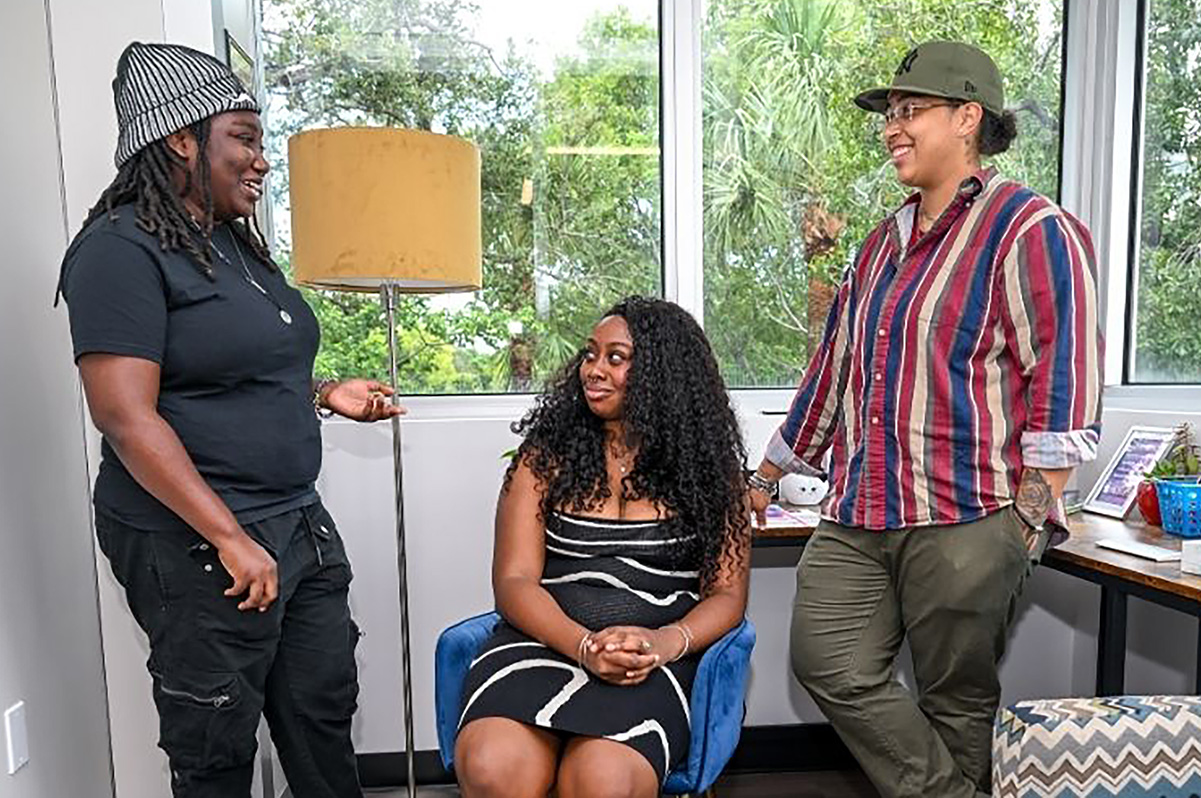
Economic mobility usually assumes a starting line: a bedroom to return to, a parent to call, a place to regroup after things go wrong. For many LGBTQ young adults in South Florida, that starting line never existed.
That’s why Our Fund Foundation, SunServe, and Sunshine Cathedral partnered to build Sunshine Pride House, a 12-bed transitional home helping LGBTQ young adults stabilize, find work, and prepare for independence.
For the residents who live there, that support shows up in small, ordinary ways.
In the evenings, the house settles into a rhythm: dinner prep, shared chores, quiet conversations at the kitchen counter. As house mother, Martha Acevedo anchors the day-to-day life of Sunshine Pride House, creating a sense of consistency many residents have never known. A few nights a week, she cooks home-prepared meals, often inviting residents to join her in the kitchen — chopping, stirring, learning by doing.
For some, the meal itself is the moment that lands hardest.
“Some of them tell me they haven’t had a cooked meal in such a long time,” Acevedo said. “When I serve the food and they say ‘thank you,’ you can see it. They’re kids. They just needed a home.”
Acevedo says the reactions still catch her off guard. What feels routine to her — cooking, setting plates, sitting down together — can feel extraordinary to young people who have spent months or years without a consistent place to eat.
“When I cook, I do it proudly,” she said. “I give a lot of love.”
According to research from The Trevor Project, 28% of LGBTQ youth have experienced homelessness or housing instability at some point in their lives. Data from True Colors United underscores the scale of the disparity — LGBTQ youth are 2.2 times more likely to experience homelessness than non-LGBTQ youth.
“So these kids are coming to the house because they’ve either aged out of foster care or they’ve been kicked out of their homes because they’re LGBTQ,” said Tony Lima, CEO of SunServe. “You kind of have to start from zero. That’s the common theme of all of these youth.”
Those experiences carry lasting consequences: LGBTQ youth who have been unhoused report significantly higher rates of depression, anxiety, and other mental health challenges than their housed peers.
“In order to have proper mental health, that’s conducive to living a full life, you need to have a home,” Lima said. “You need to have a place to be able to rest your head.”
That reality isn’t unique to LGBTQ youth, though queer young people are far more likely to experience it — and far less likely to have family support to fall back on.
Elijah Manley’s experience with homelessness began during the 2008 financial crisis, when he was about 9 years old. After his single mother lost her job, his family was evicted and spent years cycling through instability — living in their car, rotating between friends’ homes, staying in an overcrowded apartment with relatives, and at one point sleeping in a storage unit in Lauderhill. Each morning, Manley and his siblings woke before dawn to shower at beach facilities before heading to school, trying to maintain a sense of normalcy without a permanent home.
Manley, who is now 27, was not yet out as queer during this period, and his homelessness was driven by economic collapse rather than family rejection. Still, he says the experience shows how early housing instability — regardless of cause — can derail childhood, education, and long-term opportunity. His family’s situation improved only gradually, and he credits a mix of early work, community connections, and “a little luck” for eventually finding stability — a path he notes many others never get.
Today, Manley points to LGBTQ nonprofits like SunServe as essential lifelines — especially for young people who face both economic instability and identity-based rejection.
“They’re very vital and lifesaving. Without them, a lot of people would be in a much worse situation,” he said. “They keep our communities housed and fed and connected to the social services and healthcare they need. They’re filling a void the government hasn’t filled.”
Manley, who has run for public office several times and is currently running for Congress to represent Florida’s 20th district in West Broward, argues that relying on private charity to fill that void leaves too many people behind.
“These are services the government should be providing or supporting,” he said. “Charity should not be public policy. It should be provided to everybody, regardless of their income, and not dependent on somebody else’s charity.”
Housing is Just The Starting Point
For now, Sunshine Pride House exists largely because private donors stepped in where public dollars did not. While public agencies can and do fund programs that reach LGBTQ people, government funding is often constrained by nondiscrimination and open-access requirements that make it difficult to support services explicitly limited to a single identity group.
The home is owned by Sunshine Cathedral, while SunServe runs the day-to-day programming and services inside. With no state or federal grants tied to the house itself, its roughly $250,000 annual operating budget is raised through individual donors and philanthropic partners, coordinated in large part through Our Fund Foundation.
“There’s no way to do this work without being clear about the population we’re serving — and that cuts off a lot of funding possibilities,” said David Jobin, CEO of Our Fund.
The funding covers housing, staffing, life coaching, and wraparound support — allowing the program to exist in a policy environment where targeting services to LGBTQ youth often disqualifies programs from public dollars altogether.
The idea for Sunshine Pride House began not as a programmatic expansion, but as a personal intervention. More than five years ago, philanthropist Michael Kalb approached Our Fund Foundation with a simple question: what would it take to create a safe, stable home for LGBTQ young people who had nowhere else to go?
Kalb had been deeply affected after witnessing unhoused youth being mocked in public spaces, and he believed housing could change the entire trajectory of a young person’s life. Working closely with Jobin, that initial conversation grew into a multi-year effort to design a model tailored specifically to South Florida’s LGBTQ youth.
“People hear ‘housing’ and think that’s the solution, but housing is just the starting point,” Jobin said.
Kalb ultimately invested more than $600,000 into the project, joined by fellow donor Terry Merlin, while Our Fund helped assemble the partnerships needed to make it work. Sunshine Cathedral agreed to purchase and own the property, drawing on its decades of experience managing community housing, while SunServe took on day-to-day operations and services inside the home. What opened first as a pilot in a rented house evolved into the current 12-bed facility — now fully owned, privately funded, and operating as one of the only LGBTQ-specific transitional housing programs in the region.
“If we want to continue to bring these services to life, that requires funding — and we’re really going to need help to do that,” said John Marler, Communications Director of SunServe. “Government funding has been harder and harder to come by, and foundation funding and corporate sponsorships are becoming more competitive.”
Kalb, who died unexpectedly in December, often said a safe place allows young people to “finally exhale,” and Sunshine Pride House stands as a direct reflection of that belief.
The structure of Sunshine Pride House reflects that focus on stability first, mobility second. The home is designed as short-term transitional housing rather than a permanent shelter.
They Have Nowhere Elsewhere to Go
For Mario DePedro, who helps oversee the program, the work often means stepping into roles most parents fill by default.
“We have youth who are just leaving home for the first time and their parents don’t support them. They have nowhere else to go. Now it’s up to us to take the place of what the parent should be,” he said.
Inside the house, residents share bedrooms and follow a structured daily routine. They are required to work or attend school, participate in therapy, and meet regularly with life coaches who help them set goals.
“We call it a future plan. We’re helping them with the goals they want to reach, so they can be successful in their life,” he said.
That plan can include finishing high school, enrolling in college, securing steady employment, learning financial literacy, or preparing for independent housing.
Many residents arrive carrying layers of trauma that extend far beyond the moment they lost housing.
“They’re coming from a lot of trauma,” DePedro said. “Being kicked out at 18 usually isn’t the first trauma — there’s often a cycle of abuse that leads up to that moment.”
For residents who began adulthood without savings, family support, or stable housing, that planning process can be the difference between cycling back into crisis and building a path toward long-term economic stability.
“They need jobs. They need mental health care. And they need community — they want to feel like they’re not alone in it,” he said.
The needs are immediate and interconnected. That’s why the house is built around flexibility rather than rigid benchmarks.
“This is absolutely not one-size-fits-all. Everything we do is client-centered and client-led,” DePedro said. “The reality is that we’re saving kids’ lives in this house. These are people who have nowhere else to go.”
Because of safety concerns, the location of Sunshine Pride House is not publicly disclosed, and residents are not identified.
“We’re really putting young people on a path for success that they might not otherwise achieve in their life without this lift,” said Jobin. “You hear the words ‘Pride House’ and you think it’s just a roof. But it’s the wraparound services that put young people on trajectories for successful lives.”
Instead of starting a new nonprofit, Jobin said the foundation focused on partnering with organizations already doing the work — bringing together SunServe, Sunshine Cathedral, and others to build a model that could move quickly and last.
Sunshine Pride House doesn’t promise transformation or guarantee success. What it offers is something far more basic — time, safety, and a place to rest their head. For young people who started adulthood with nothing, that pause can be enough to change what comes next.
(Editor’s note: This article is part of a national initiative exploring how geography, policy, and local conditions influence access to opportunity. Find more stories at economicopportunitylab.com.)
Florida
Gay Fla. Democrat Elijah Manley sees opportunity in Trump’s second term
State’s 20th Congressional District’s includes Broward, Palm Beach Counties
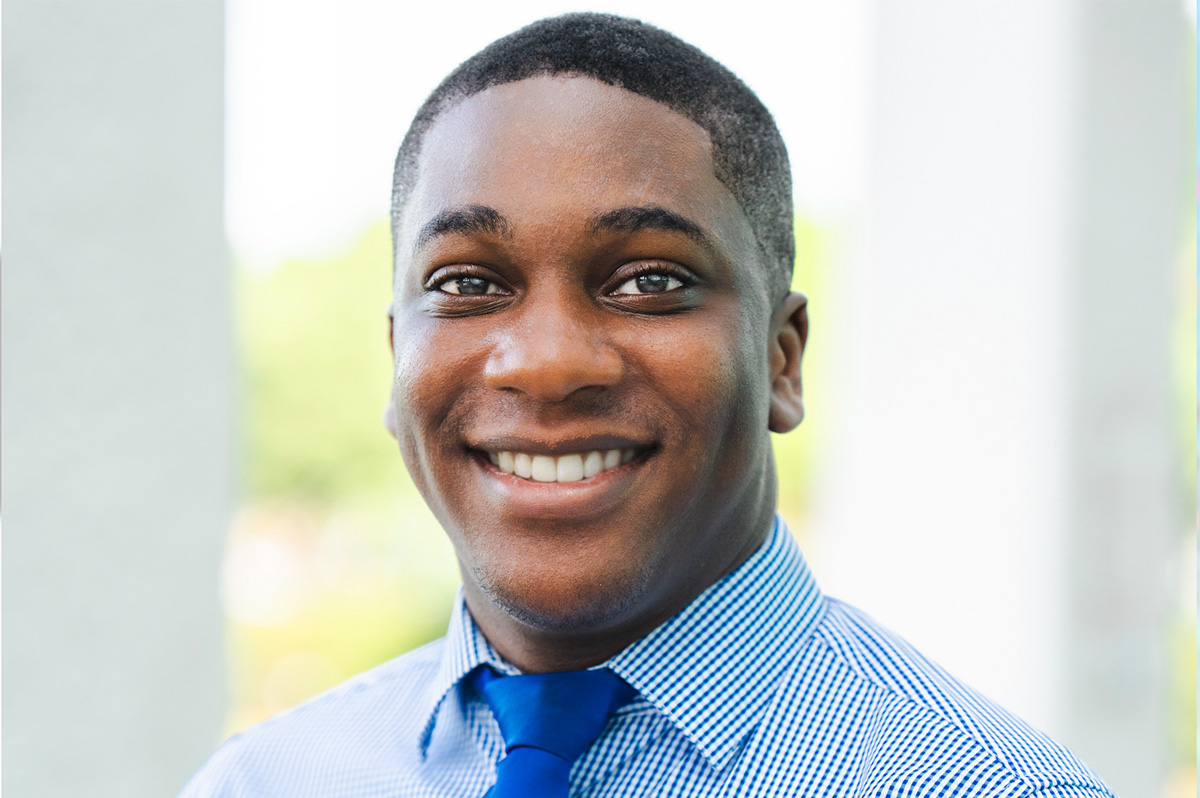
Just over two and a half miles from President Donald Trump’s primary residence lies one of Florida’s most reliably Democratic congressional districts. There, a 27-year-old progressive is mounting a campaign centered on resisting what he calls the Trump-Vance administration’s attacks on civil rights, immigrants, and LGBTQ Americans.
Elijah Manley, an openly gay Democrat, sat down with the Washington Blade to discuss why he is running for Florida’s 20th Congressional District, why he believes this moment calls for a new generation of leadership, and what he hopes to accomplish if elected to Congress.
Born and raised in Fort Lauderdale’s historic Sistrunk neighborhood — the city’s oldest African American community — Manley was raised by a single mother who struggled to make ends meet. His family experienced housing insecurity and, at one point, homelessness, experiences he says continue to shape both his politics and his policy priorities.
For Manley, those experiences are precisely what he believes Congress is missing.
“I think now the country is in need of somebody like me, with my story, my lived experience, the struggles I’ve been through in my life. We’re going through a really dark time in the country with the Trump administration coming for our civil rights and an economy that is not working for everybody. In a time where we have MAGA fascism, we need progressive leadership, and we need people who are really going to do the work of fighting back and resisting and obstructing Donald Trump and MAGA Republicans’ agenda in Congress.”
Manley said his campaign is also about ensuring people from marginalized communities — those without wealth, political connections, or institutional backing — have a voice in Congress.
“I think my story sets me aside from everyone else. I’m the only one in this race who has a story to tell voters that lines up with their lived experiences and their struggles. Growing up in poverty and experiencing homelessness was instrumental in developing my worldview and how I fight for people, and I think that’s something that’s absent on Capitol Hill.”
He argues that lived experience offers a perspective often missing on Capitol Hill.
“There are too many lawyers and people coming from professional and political backgrounds. Then you have somebody like me who is rooted in the story of this district. That’s what sets me apart from everyone else in this race.”
According to his campaign website, Manley’s interest in public service dates back to childhood. He cites the election of President Barack Obama as a defining moment that inspired him to pursue politics.
“He was inspired by Barack Obama’s historic election, igniting his passion for public service. He began writing to elected officials, speaking at school board and city council meetings, and advocating for issues affecting his community,” the website states. It goes on to describe his involvement in criminal justice and law magnet programs, Navy JROTC, and hundreds of hours of volunteer service while in high school.
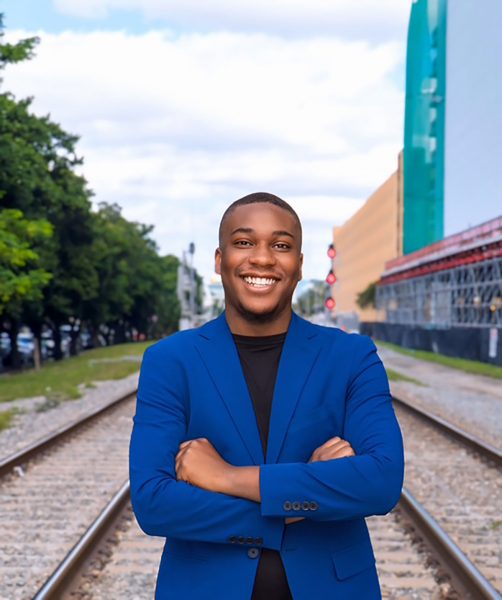
As an openly gay candidate running during Trump’s second administration, Manley said Congress must take a far more aggressive approach to protecting LGBTQ Americans, particularly as Republican-led states continue passing restrictions targeting transgender people.
“I think we need to bring the hammer down on some of these states. I’m not one of these states’ rights people — Congress has the power to preempt laws that states pass through the Supremacy Clause. There’s never been a more important time in our history when we’re seeing fascism, we’re seeing an administration out of control, and we need Congress to act.”
His campaign has also drawn criticism from both Republicans and establishment Democrats for his positions on Gaza, immigration, and his call to abolish U.S. Immigration and Customs Enforcement.
Manley said abolishing ICE does not mean eliminating immigration enforcement altogether.
“I’m not saying there should be no immigration laws. We want laws around immigration, but we want dignity. We don’t need a hypermilitarized, paramilitary group chasing people through the streets, terrorizing communities, churches, schools, and families.”
His personal experiences also inform his healthcare agenda.
“When we talk about healthcare, my experience growing up on Medicaid is seeing the failure of the government to expand Medicaid here in Florida, and now we’re seeing cuts from the Trump administration. I’m not just looking at statistics or numbers on paper — this is based on lived experience. I know how the people in this district are going to be hurt by these policies because I’ve lived it.”
California Democratic Congressman Ro Khanna, who has generated early buzz as a potential 2028 presidential contender for his “progressive capitalist” approach to governing, has endorsed Manley’s campaign, giving the first-time congressional candidate one of his highest-profile endorsements.
Manley faces six other Democrats in the primary, including U.S. Rep. Debbie Wasserman Schultz and former U.S. Rep. Sheila Cherfilus-McCormick, along with four Republican candidates in the general election field. Cherfilus-McCormick resigned from Congress ahead of a potential expulsion and is running again while facing federal criminal charges.
Despite running as the youngest candidate in the field, Manley said he hopes voters leave the race remembering one thing above all else.
“I want people to remember bold and authentic leadership. I want them to know I’m running because I’ve been through what people are going through right now — and it’s not that I’ve been through it, I’m actually still going through it. We need bold people who are going to fight for everybody and stand up for what’s right, and that’s what I hope voters see when they go to the polls.”
Florida
Former Fla. gubernatorial candidate Andrew Gillum arrested on drug charges
Democrat narrowly lost to DeSantis in 2018, later came out as bisexual
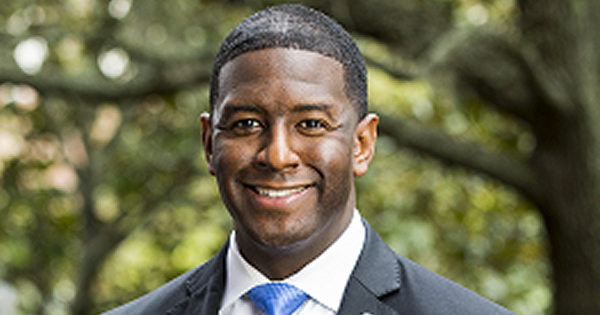
Andrew Gillum, the former Democratic nominee for governor of Florida and former mayor of Tallahassee, was arrested on drug possession charges in Alabama last week.
Police in Daphne, Ala., said they pulled Gillum over for erratic driving and found marijuana and methamphetamine in his vehicle. He was charged with possession of marijuana and unlawful possession of a controlled substance, according to the Daphne Police Department. Jail records show he was arrested on July 2 and released on July 3, the Associated Press reports.
Gillum, the first Black nominee of a major political party for governor in Florida, lost the 2018 election to current Republican Gov. Ron DeSantis in a highly contentious race.
Once considered a rising star in national politics, Gillum served in Tallahassee’s local government, first as a city commissioner and then as mayor of Florida’s capital from 2014- 2018.
The Daphne Police Department said officers stopped Gillum’s vehicle around 10:45 p.m. and initiated a probable cause search after one officer noticed a glass pipe on the center console.
During the search, officers found several rolled marijuana cigarettes and three packages containing a substance that tested positive for methamphetamine, police said.
The day after his arrest he was charged with possession of dangerous drugs, use or possession of drug paraphernalia, and possession of marijuana.
In 2020, Gillum was involved in a similar incident when he was found in a Miami Beach, Fla., hotel room with a man identified as an escort who had apparently overdosed on drugs. Police also found three bags of suspected crystal methamphetamine in the room. The man survived, and no one was ever charged with a crime.
Later that year, Gillum came out as bisexual during an appearance on “The Tamron Hall Show,” where he discussed his struggles with drug and alcohol addiction and his decision to seek treatment following the 2020 incident.
In the same interview he shed light onto this, saying his substance use was a byproduct of the emotional struggles he experienced after losing the 2018 gubernatorial race to DeSantis.
This is not the first time Gillum has faced legal scrutiny.
During his 2014 mayoral campaign, he faced allegations of misconduct after hiring private equity investor Adam Corey as his campaign treasurer, raising questions about a potential conflict of interest. However, the FBI ultimately concluded there was no conflict of interest.

Tyler Clementi Foundation to host fundraiser in Rehoboth

Calendar: September 25-October 1

Former Capital Pride board member reiterates sexual harassment allegation

Grace Meng sharply criticizes DOJ over hospital settlements

‘Star Trek: Strange New Worlds’ star Celia Rose Gooding breaks down that finale time travel twist

PHOTOS: Shenandoah Valley Pride

White House press pool pushes back after Trump bars three outlets

Long-time DignityUSA executive director announces retirement

For lesbian victims of domestic violence, competent care is scare

United States Conference on HIV/AIDS grapples with federal budget cuts
-

 Photos5 days ago
PHOTOS: Shenandoah Valley Pride
-
White House5 days ago
White House press pool pushes back after Trump bars three outlets
-
National5 days ago
Long-time DignityUSA executive director announces retirement
-
National4 days ago
For lesbian victims of domestic violence, competent care is scare