Sports
Transgender swimmer breaks silence
Lia Thomas hopes to ‘swim at Olympic trials’
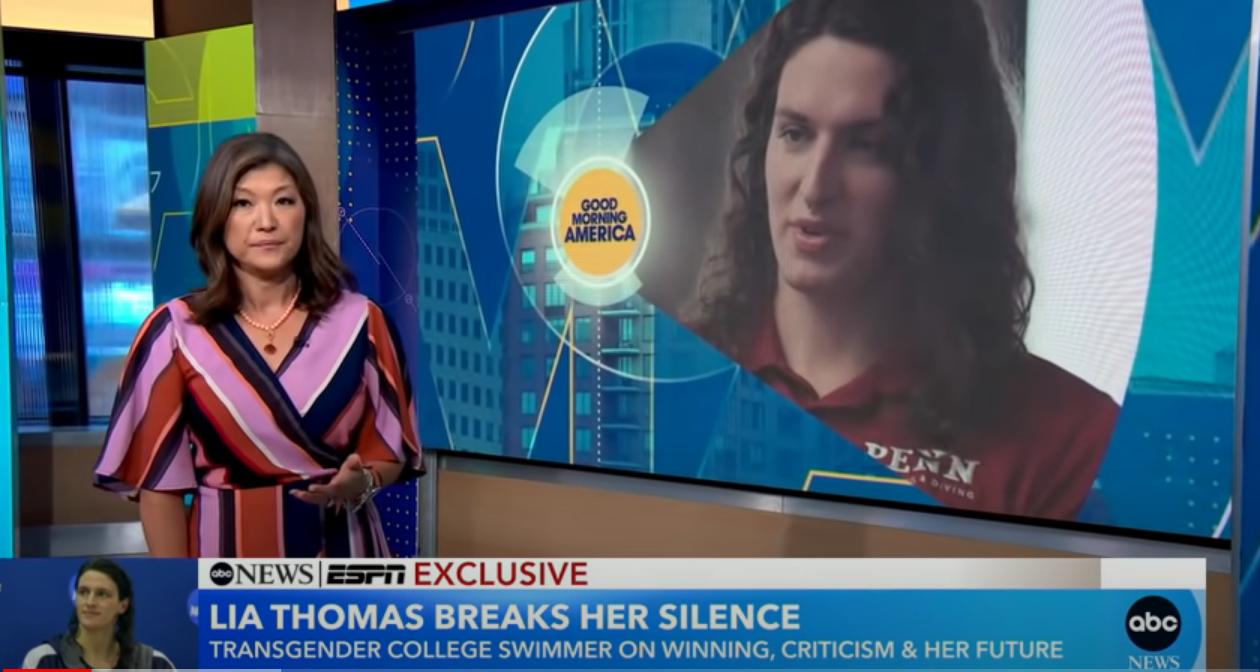
After months of nasty headlines and boos hurled her way at the mere mention of her name, Lia Thomas can finally live her life away from the spotlight, and enjoy her first summer as just another college graduate.
So, what does the out transgender champion do? She’s granted her first media interviews since her historic NCAA victory, telling reporters she’s headed to law school and she also plans to take the laps necessary to win Olympic gold.
“I intend to keep swimming,” Thomas told ABC News correspondent Juju Chang Tuesday on “Good Morning America.” “It’s been a goal of mine to swim at Olympic trials for a very long time, and I would love to see that through.”
In addition to Chang, the native of Austin, Texas, also agreed to answer questions from ESPN sportswriter Katie Barnes, who is the first out LGBTQ journalist to be granted this opportunity.
The Los Angeles Blade repeatedly requested an interview with Thomas, before, during and after she competed at the National Championships in Atlanta. Barnes was there, too, and as they reported, Thomas flat-out refused to appear at the traditional winner’s news conference. She gave only two interviews during her historic run: The first went to a SwimSwam podcaster in December, and the only other one was live on the pool deck with ESPN, immediately after Thomas won the 500-freestyle in March.
Barnes, who is non-binary, asked the UPenn grad for her perspective on the ongoing national debate over trans girls and women competing with cisgender girls and women in school sports.
“The biggest misconception, I think, is the reason I transitioned,” Thomas said. “People will say, ‘Oh, she just transitioned so she would have an advantage, so she could win.’ I transitioned to be happy, to be true to myself.”
Thomas, who swam on the Penn men’s swimming team for three seasons, then took a gap year during the COVID-19 pandemic, which canceled college swimming, said she began her medical transition in May 2019 following her sophomore year. By the time she joined the women’s swim team as a fifth year senior in 2021, she had undergone 30months of hormone replacement therapy.
Republican legislators who have copy-pasted bills banning trans student athletes across the country have invoked Thomas’ name, claiming laws were needed to protect the sanctity of women’s sports, even in states where no out trans students competed.
Thomas told ESPN the threat is entirely imaginary.
“Trans women competing in women’s sports does not threaten women’s sports as a whole,” Thomas told Barnes. “Trans women are a very small minority of all athletes. The NCAA rules regarding trans women competing in women’s sports have been around for 10-plus years. And we haven’t seen any massive wave of trans women dominating.”
The rules are changing, however. USA Swimming updated its trans participation policy in February to require evaluation of eligibility for trans women by a three-person panel, and 36 months of testosterone suppression; More months than Thomas had undergone. However, the NCAA opted to not impose that policy for its 2022 swimming and diving championships, and Thomas merely had to comply with the previous policy: A demonstrated testosterone level below 10 nanomoles per liter.
Critics of the NCAA have proposed trans women should compete separately from cis women. Thomas told Barnes she objects to that so-called solution.
“If you say, like, you can compete, but you can’t score or you’re in an extra lane nine, that’s very othering towards trans people,” said Thomas. “And it is not offering them the same level of respect and opportunity to play and to compete.”
She told them it comes down to this: Trans women are women.
“It’s no different than a cis woman taking a spot on a travel team or a scholarship. It’s a part of athletics, where people are competing against each other. It’s not taking away opportunities from cis women, really. Trans women are women, so it’s still a woman who is getting that scholarship or that opportunity,” she said.
Besides looking to the Olympic trials, Thomas said she will attend grad school in the fall and plans to focus on civil rights and public interest law.
“Having seen such hateful attacks on trans rights through legislation, fighting for trans rights and trans equality is something that I’ve become much more passionate about and want to pursue,” said Thomas.
Watch ESPN’s report on Lia Thomas by clicking here.
Swimmer Lia Thomas breaks silence about backlash, future plans – GMA




Iran and Egypt on Friday faced off during the World Cup’s “Pride Match” in Seattle.
Iran is among the handful of countries in which consensual same-sex sexual relations remain punishable by death. Discrimination and persecution based on sexual orientation and gender identity is commonplace in Egypt.
Friday’s match coincided with Pride weekend in Seattle. The Egyptian Football Association and the Football Federation Islamic Republic of Iran both objected to playing in the “Pride Match.”
Egypt and Iran tied 1-1.
FIFA, for its part, allowed Pride flags inside the stadium during the match.
“The FIFA World Cup 2026 is an inclusive event that welcomes people from all backgrounds,” a FIFA spokesperson told the Washington Blade in a statement. “Fans of all sexual orientations and gender identities are welcome at matches and events. General statements of human rights, including rainbow flags and other flags representing sexual orientation and gender identity, are permitted under the FIFA World Cup 2026™ Stadium Code of Conduct and may be displayed inside stadiums provided they are used in a manner consistent with the code.”
Human Rights Watch welcomed FIFA’s decision to allow Pride flags inside the stadium. Outright International, a global LGBTQ and intersex rights group, distributed Pride flags in Seattle on Friday, which was Pride Match Day.
“Visibility matters,” said Outright International Executive Director Maria Sjödin. “Pride is now being celebrated in more than 100 countries, including this weekend in Seattle. For many LGBTIQ people, seeing a Pride flag in public is a reminder that they are not alone, and that their rights and dignity are recognized.”
FIFA President Gianni Infantino earlier this year told Die Weltwoche, a Swiss magazine, that “there will be no ‘Pride Match’ at the (FIFA) World Cup.”
“There will be a FIFA World Cup match in Seattle, and on the same day, events organized by external organizations will be taking place in the city,” said Infantino. “But that has nothing to do with the match itself.”
Peter Tatchell, a long-time LGBTQ activist from the U.K. who is director of the Peter Tatchell Foundation, was among those who traveled to Seattle for Friday’s match. Tatchell accused FIFA of not vetting World Cup teams — specifically Iran, Egypt, Saudi Arabia, Ghana, Senegal, Qatar, Tunisia, Morocco, Iraq, Uzbekistan, and Algeria — over whether they would allow gay players.
“FIFA is protecting LGBT+ visibility in the stands while failing to protect LGBT+ players on the pitch,” said Tatchell.
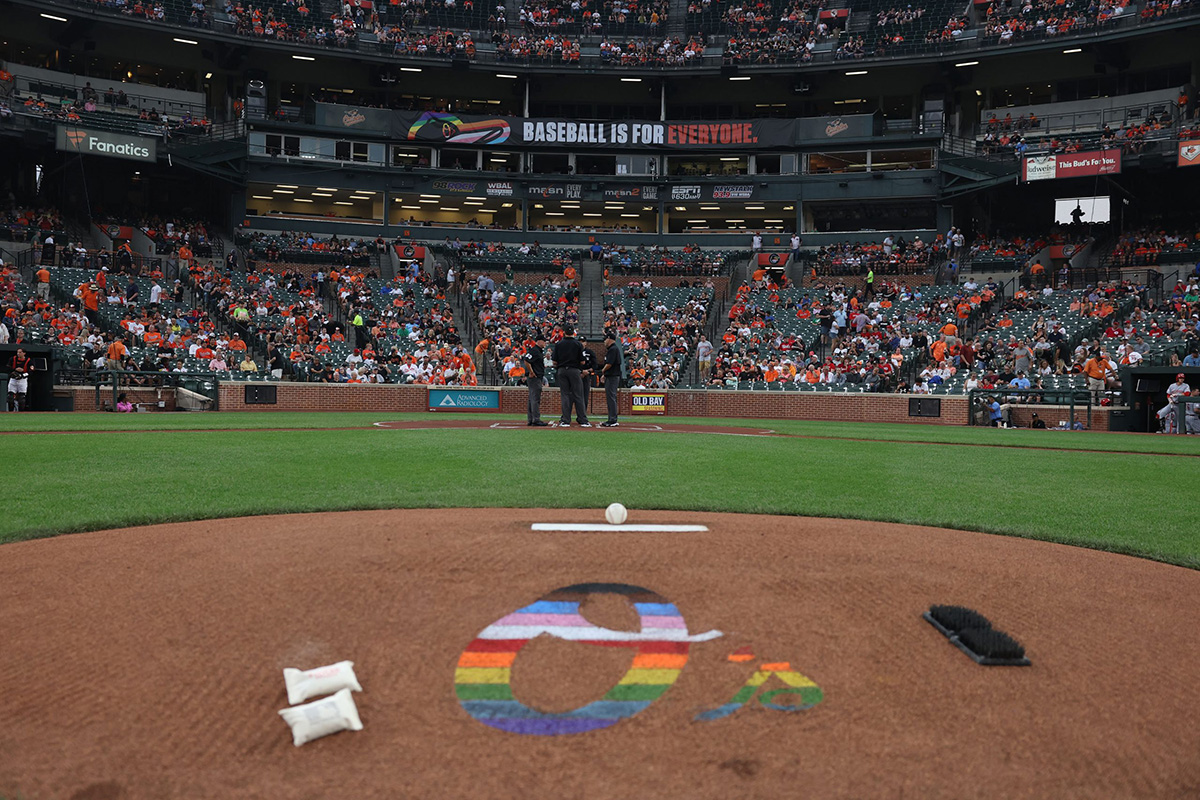
The Baltimore Orioles will take on the Washington Nationals on Friday, June 26 at 7 p.m. for Pride Night at Oriole Park.
The first 15,000 fans will receive an exclusive Pride Night Orioles jersey. The Washington Blade is a media sponsor of this event.
To purchase tickets, visit Orioles.com/Tickets.
Sports
Minor league team in York, Pa., forfeits Pride Night game after some players refuse to wear special jersey
City is roughly 20 miles north of Md. border
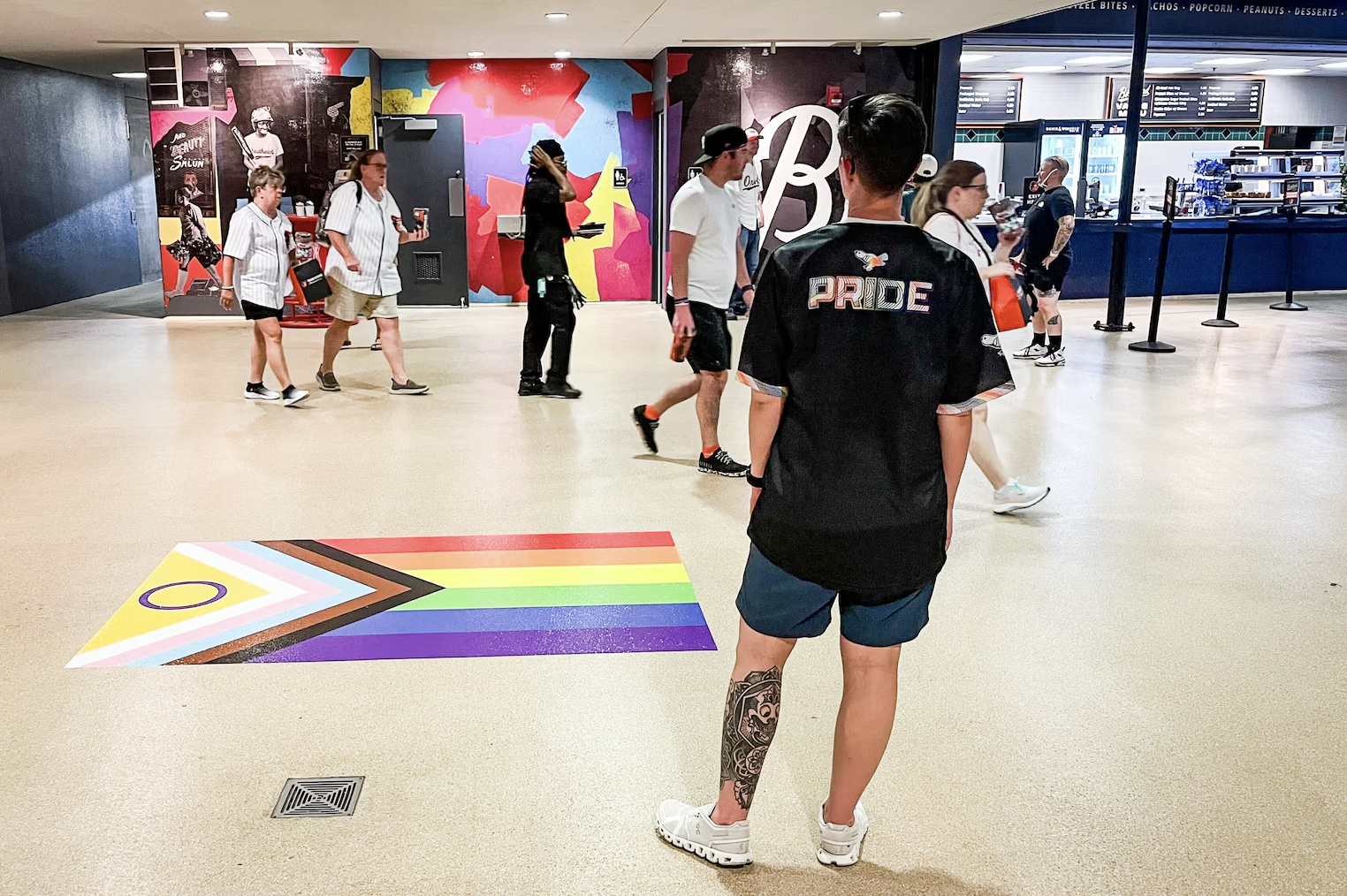
An independent minor league baseball team says it is forfeiting a game because some of its players refused to wear a special Pride Night jersey.
The Atlantic League Pro Baseball’s York Revolution were planning to hold their 11th annual Pride Night event Thursday for a game against the Southern Maryland Blue Crabs.
But the Revolution announced the day of the game that it wouldn’t be played. York is about 20 miles north of the Maryland line. The Blue Crabs play in Waldorf.
The rest of this article can be found on the Baltimore Banner’s website.

PHOTOS: Petal Release Party

Madonna headlines World Pride Music Festival in Amsterdam

Reggie White relishing first season as artistic director of Woolly Mammoth

PHOTOS: Amsterdam Pride Canal Parade

Amsterdam Pride Canal Parade draws hundreds of thousands

Madonna to perform at World Pride in Amsterdam

BLADE ENDORSEMENT: Susan Stewart for mayor of Rehoboth Beach

PHOTOS: Lambda Legal in the Pines

Calendar: July 31-August 6