Sports
Gay MLB umpire talks new book, D.C. Pride Night Out appearance
Dale Scott shares what goes on behind baseball’s curtain
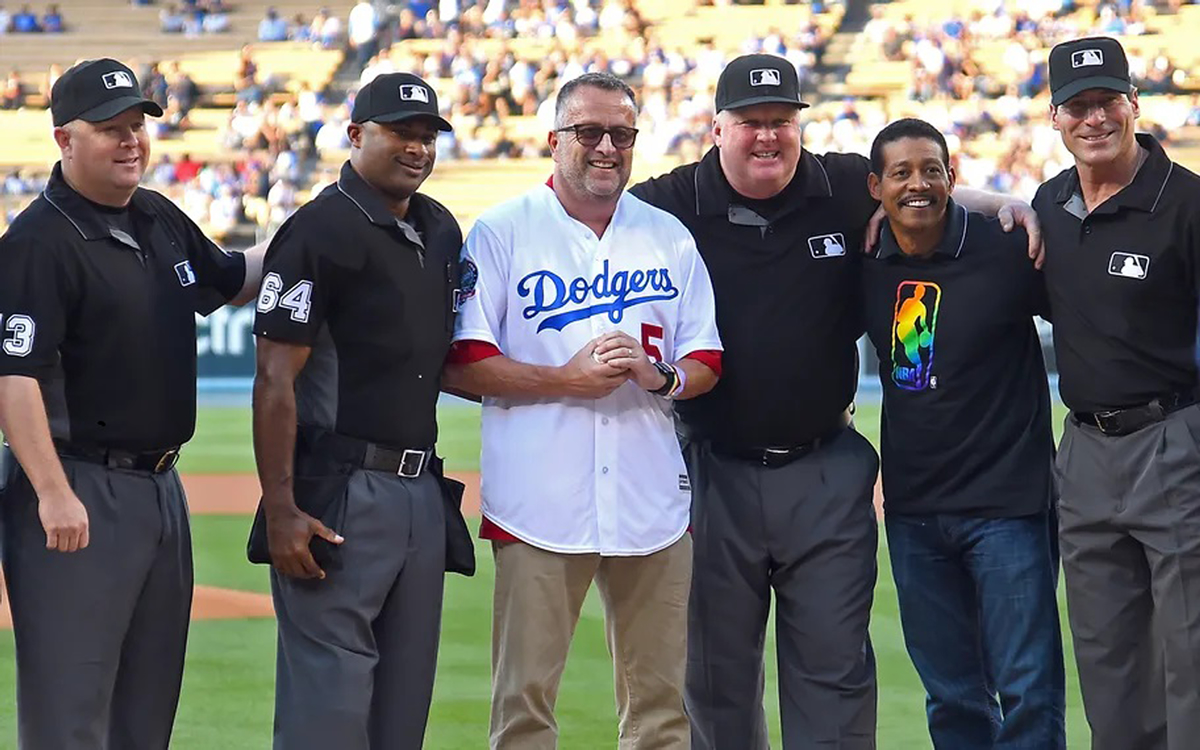
The last time the Blade checked in with Major League Baseball umpire Dale Scott in 2018, he was happily retired and making occasional appearances at MLB Pride nights and Pride parades.
There have been several books published by retired MLB umpires, but Scott didn’t have a desire to follow suit with one of his own. Even though people kept suggesting he write a book, he put the thought out of his mind.
In 2019, he met up with baseball writer Rob Neyer for coffee and to get his copy of Neyer’s recent book autographed. Neyer insisted that Scott had a story and that it was twofold, a baseball story and a gay story.
“Honestly, that was what put me over the hump,” says Scott. “I love sharing baseball stories, details on big games, and what goes on behind the curtain. As for the gay side, I felt that if my story could help one person in a positive way that it would be worth writing it.”
An agreement was struck with Neyer to co-write and 12 months later they found a publisher who gave them a six-month deadline. Scott had saved all of his minor league ejection reports and used MLB stats to refresh his memory of the dates that defined his career.
“The Umpire is Out” was released in April and is a rollicking journey through Scott’s nearly 40 years of umpiring including 33 years in MLB from 1985 to 2017.
In amusing fashion, he spotlights his run-ins with team managers, players, fans, supervisors, and fellow umpires. Along the way, Scott shines a light on how much the sport of baseball actually revolves around the success, or failure, of the umpires to uphold the rules of the sport and ensure that play is fair.
Scott also chronicles the energy that was spent on hiding his sexuality. There were secret trips, a fake girlfriend, and a ‘roommate’ at home that watched his house during his travel months. Scott married his husband Mike in 2013 and came out publicly the following year, receiving a positive response from his peers and the baseball community.
The book tour for “The Umpire is Out” has been a mix of radio podcasts, bookstore signings and appearances at MLB Pride nights. He is currently scheduled for eight MLB Pride nights and will appear at Pride Night OUT at the Nationals on June 14.
When asked about sharing his gay experiences on radio podcasts with straight hosts, Scott says he doesn’t take anything too personally.
“One or two of the podcasts were all about my baseball experiences,” Scott says. “All of the others brought up the personal side. Their questions were all valid and the intent was to get an understanding of what I experienced as a gay man.”
Just last week, Scott appeared on The Jim Rome Show podcast and a tweet came through while he was on-air. A father and his gay son had pulled over while driving to listen to the podcast. The son wants to become an umpire.
For now, Scott is back into the travel routine that he left behind when his career ended. That ending came in his 3,897th MLB game on April 14, 2017, in Toronto when he took a foul ball to the chin area of his mask and suffered a concussion and whiplash.
“I never had a farewell tour or that foreknown knowledge that my career was ending,” says Scott. “It’s been great being on the road again, seeing old friends and visiting old haunts. It has put a little pep in my step.”
Scott is open for whatever comes his way in the future and part of that will include umpire camps and clinics along with following the sports teams of his beloved University of Oregon Ducks. He is also entertaining the notion of an audio book but stands firm on who should be the voice.
“Because of my radio past, I would definitely want to be the voice for the book,” Scott says. “I would just pick anyone else apart.”
You don’t have to be a sports fan, or a member of the LGBTQ community to enjoy “The Umpire is Out.” Scott has presented an enjoyable read that feels like you are sitting at a pub listening to a good friend share a story.
Scott has one last thing he would like to share — his original title for the book.
“I like the title we came up with, but I thought it should be called ‘I Blew the Call, and the Catcher too’,” says Scott laughing. “Now that’s a title.”
The Blade may receive commissions from qualifying purchases made via this post.




Sports
New IOC policy bans trans women from Olympics
New regulation to be in effect at 2028 summer games in Los Angeles
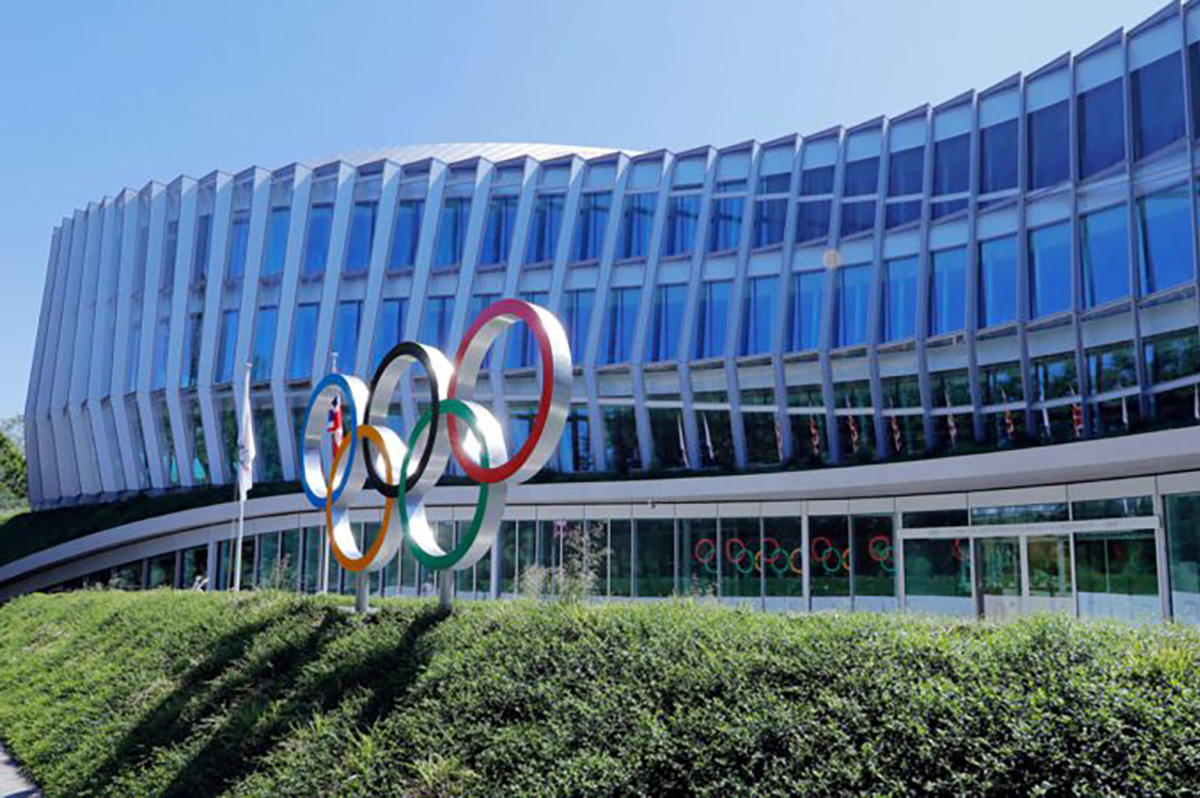
The International Olympic Committee on Thursday announced it will not allow transgender women from competing in female events at the Olympics.
“For all disciplines on the Sports Program of an IOC event, including individual and team sports, eligibility for any Female Category is limited to biological females,” reads the new policy.
The policy states “eligibility for the Female Category is to be determined in the first instance by SRY Gene screening to detect the absence or presence of the SRY Gene.”
“On the basis of the scientific evidence, the IOC considers that the SRY (sex-determining Region Y) Gene is fixed throughout life and represents highly accurate evidence that an athlete has experienced or will experience male sex development,” it reads. “Furthermore, the IOC considers that SRY Gene screening via saliva, cheek swab or blood sample is unintrusive compared to other possible methods. Athletes who screen negative for the SRY gene permanently satisfy this policy’s eligibility criteria for competition in the Female Category.”
The policy states the test “will be a once-in-a-lifetime test” unless “there is reason to believe a negative reading is in error.”
The new regulation will be in place for the 2028 Summer Olympics in Los Angeles.
“I understand that this a very sensitive topic,” said IOC President Kirsty Coventry on Thursday in a video. “As a former athlete, I passionately believe in the rights of all Olympians to take part in fair competition.”
“The policy that we have announced is based on science and it has been led by medical experts with the best interests of athletes at its heart. The scientific evidence is very clear: male chromosomes give performance advances in sport that rely on strength, power, or endurance,” she added. “At the Olympic Games, even the smallest margins can be the difference between victory and defeat. So, it is absolutely clear that it would not be fair for biological males to compete in the female category. In addition, in some sports it would simply not be safe.”
(Video courtesy of the IOC)
Laurel Hubbard, a weightlifter from New Zealand, in 2021 became the first trans woman to compete at the Olympics.
Imane Khelif, an Algerian boxer, won a gold medal at the 2024 Summer Olympics in Paris. Khelif later sued JK Rowling and Elon Musk for cyberstalking after they questioned her gender identity.
Ellis Lundholm, a mogul skier from Sweden, this year became the first openly trans athlete to compete in any Winter Olympics when he participated in Milan Cortina Winter Olympics in Italy.
President Donald Trump in February 2025 issued an executive order that bans trans women and girls from female sports teams in the U.S.
The U.S. Olympic and Paralympic Committee last July banned trans women from competing in female sporting events. Republican lawmakers have demanded the IOC ban trans athletes from women’s athletic competitions.
“I’m grateful the Olympics finally embraced the common sense policy that women’s sports are for women, not for men,” said U.S. Sen. Tom Cotton (R-Ark.) on X.
An IOC spokesperson on Thursday referred the Washington Blade to the press release that announced the new policy.
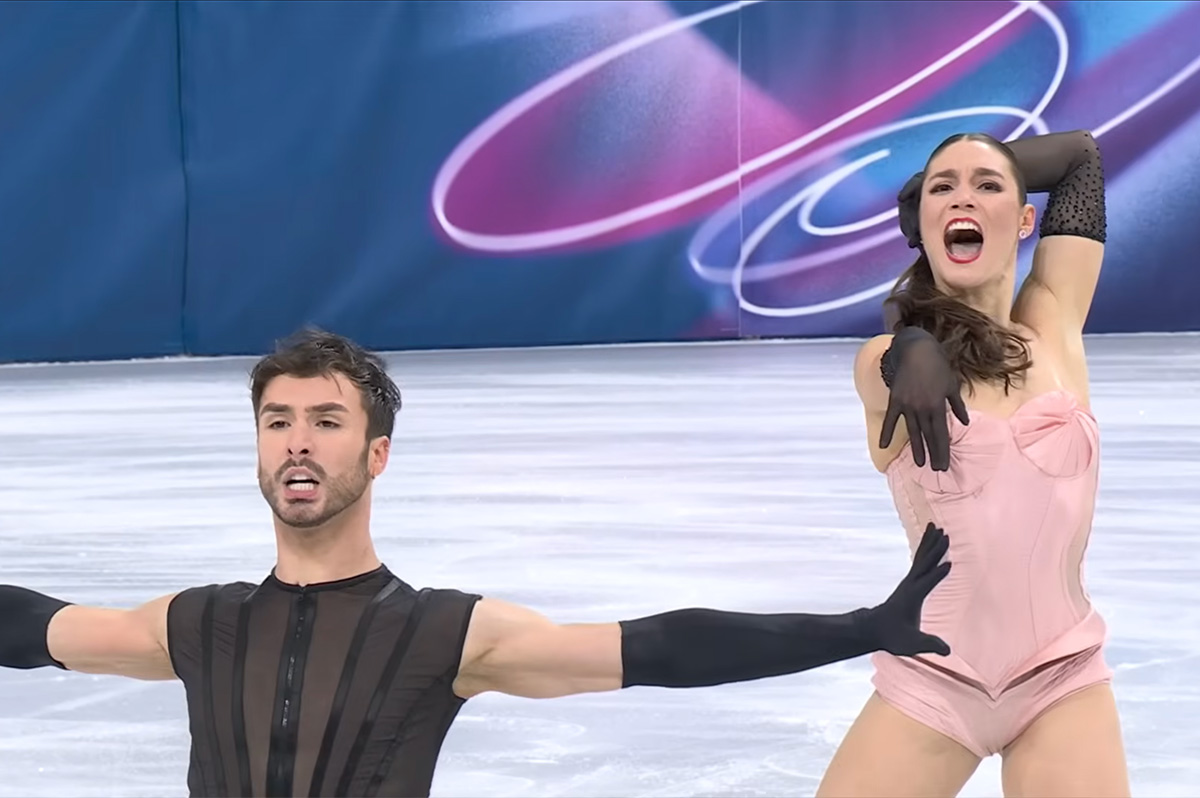
More than a dozen LGBTQ athletes won medals at the Milan Cortina Winter Olympics that ended on Sunday.
Cayla Barnes, Hilary Knight, and Alex Carpenter are LGBTQ members of the U.S. women’s hockey team that won a gold medal after they defeated Canada in overtime. Knight the day before the Feb. 19 match proposed to her girlfriend, Brittany Bowe, an Olympic speed skater.
French ice dancer Guillaume Cizeron, who is gay, and his partner Laurence Fournier Beaudry won gold. American alpine skier Breezy Johnson, who is bisexual, won gold in the women’s downhill. Amber Glenn, who identifies as bisexual and pansexual, was part of the American figure skating team that won gold in the team event.
Swiss freestyle skier Mathilde Gremaud, who is in a relationship with Vali Höll, an Austrian mountain biker, won gold in women’s freeski slopestyle.
Bruce Mouat, who is the captain of the British curling team that won a silver medal, is gay. Six members of the Canadian women’s hockey team — Emily Clark, Erin Ambrose, Emerance Maschmeyer, Brianne Jenner, Laura Stacey, and Marie-Philip Poulin — that won silver are LGBTQ.
Swedish freestyle skier Sandra Naeslund, who is a lesbian, won a bronze medal in ski cross.
Belgian speed skater Tineke den Dulk, who is bisexual, was part of her country’s mixed 2000-meter relay that won bronze. Canadian ice dancer Paul Poirier, who is gay, and his partner, Piper Gilles, won bronze.
Laura Zimmermann, who is queer, is a member of the Swiss women’s hockey team that won bronze when they defeated Sweden.
Outsports.com notes all of the LGBTQ Olympians who competed at the games and who medaled.
Sports
US wins Olympic gold medal in women’s hockey
Team captain Hilary Knight proposed to girlfriend on Wednesday
The U.S. women’s hockey team on Thursday won a gold medal at the Milan Cortina Winter Olympics.
Team USA defeated Canada 2-1 in overtime. The game took place a day after Team USA captain Hilary Knight proposed to her girlfriend, Brittany Bowe, an Olympic speed skater.
Cayla Barnes and Alex Carpenter — Knight’s teammates — are also LGBTQ. They are among the more than 40 openly LGBTQ athletes who are competing in the games.
The Olympics will end on Sunday.

Sri Lankan government withdraws support for LGBTQ tourism initiative

In an act of artistic defiance, Baltimore Center Stage stays focused on DEI

Trump budget targets ‘gender extremism’

Susan Lucci on love, loss, and ‘All My Children’

How to navigate shifting tenant expectations

Trump’s war threats trigger rare 25th Amendment discussion

New book celebrates 1970s dance music icons

ROSENSTEIN: Vote McDuffie for mayor of D.C.

A Sondheim masterpiece ‘Merrily’ rolls onto Netflix