District of Columbia
One of two gay candidates wins primary for D.C. Council
Bowser triumphs in Democratic race for third term as mayor
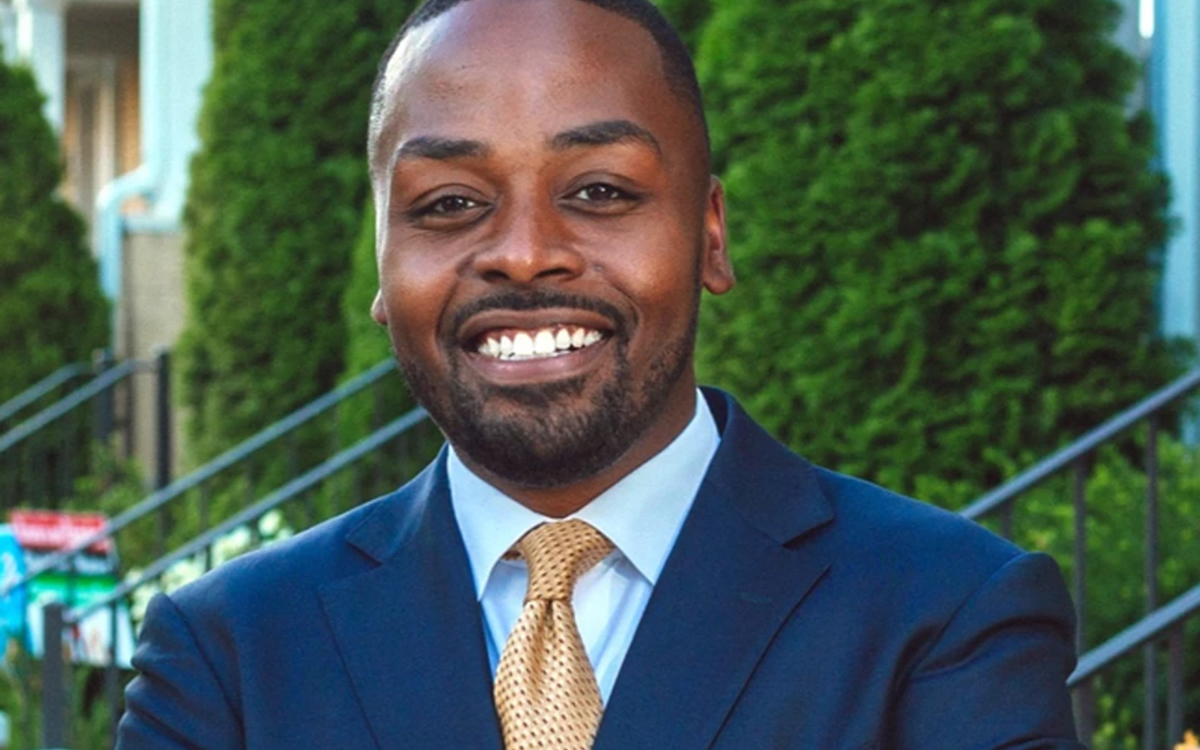
Gay D.C. Board of Education member Zachary Parker emerged as the clear winner in a seven-candidate race for the Ward 5 D.C. Council seat in Tuesday’s Democratic primary, placing him in a strong position to win the November general election and become the first openly gay member of the Council since 2015.
With nearly all of the votes counted shortly before midnight, Parker had 41.65 percent of the vote, with his closest rival, Faith Gibson Hubbard, receiving 23.41 percent. Former at-large and Ward 5 Councilmember Vincent Orange had 16.66 percent of the vote in his unsuccessful bid to return to the Council.
While Parker and his supporters celebrated his primary victory, gay former D.C. police officer Salah Czapary lost his bid for the Ward 1 D.C. Council seat to incumbent Councilmember Brianne Nadeau by a margin of 47.39 percent to 32.09 percent. A third candidate in the Ward 1 race, Sabel Harris, had 20.25 percent of the vote.
Parker had an advantage over Czapary, according to political observers, because he was running for an open seat after incumbent Ward 5 Councilmember Kenyan McDuffie ran unsuccessfully for Attorney General rather than re-election to the Council. Incumbents, such as Nadeau in Ward 1, are considered to have a better chance of winning re-election.
But some political observers, based on reports of a private poll showing Czapary running close if not slightly ahead of Nadeau, thought Czapary had a good shot at unseating Nadeau. That prompted what Czapary’s supporters said was an onslaught of negative campaign attacks against Czapary. The attacks were based in part on a Washington City Paper story disclosing his campaign chairperson was a registered Republican and was associated with a conservative think tank that supports Donald Trump.
Czapary said he immediately secured the resignation of his campaign chair, saying he did not know he was a registered Republican. He also pointed out that as a gay Arab American he was a longtime Democratic Party supporter even though, as Nadeau supporters pointed out, he was an independent and did not become a registered Democrat until earlier this year.
The political attacks against Czapary continued, with large signs accusing him of having “Republican campaign leadership” being posted on light poles in Ward 1 as well as outside the nearby Number 9 gay bar in Ward 2, which Ward 1 residents are known to patronize.
“I’m sure negative campaigning has an effect,” Czapary told the Washington Blade at his election night gathering at the Duplex Diner in Adams Morgan, which drew more than 100 supporters.
“But we made a very essential effort to focus on the issues that voters want to talk about,” he said. “And you know, the election is over, and bygones are bygones. And I look forward to working with Councilmember Nadeau on some of the issues that resonated with voters that voted for me.”
With Nadeau and all the other candidates running in the June 21 Democratic primary – including Mayor Muriel Bowser and her three Democratic rivals — expressing support for LGBTQ issues or having long records of support — LGBTQ voters are believed to have based their vote on other issues such as public safety and affordable housing among other issues.
As of just before midnight on election day, Bowser had 49.86 percent of the vote, with rival mayoral candidates D.C. Councilmember Robert White (D-At-Large) receiving 38.51 percent and Councilmember Trayon White (D-Ward 8) receiving 9.8 percent. The fourth candidate in the mayoral race, James Butler, had 1.47 percent of the vote. The Associated Press earlier in the evening projected Bowser as the winner.
D.C. Council Chair Phil Mendelson (D-At-Large) had 54.82 percent of the vote compared to challenger Erin Palmer, who had 44.72 percent. In the four-candidate At-Large D.C. Council race, incumbent Anita Bonds was ahead with 38.33 percent of the vote, with rival Democrats Lisa Gore with 26.96 percent, Nate Fleming 26.45 percent, and Dexter Williams with 7.54 percent.
In the hotly contested Ward 3 D.C. Council race, in which nine candidates were on the ballot, Matthew Frumin was ahead with 38 percent of the vote. Eric Goulet was in second place with 31.01 percent. The remaining candidates, including three who dropped out and threw their support to Frumin after it was too late to have their names removed from the ballot, received less than 7 percent of the vote.
D.C. Congressional Delegate Eleanor Holmes Norton (D) was the clear winner in her bid for re-election, with 86.55 percent of the vote. Her two opponents in the primary, Wendy Hamilton and Kelly Mikel Williams received 6.15 percent and 6.36 percent, respectively.
In the race for D.C. Attorney General, attorney Brian Schwalb was ahead with 45.21 percent of the vote, with rival attorneys Bruce Spiva and Ryan Jones receiving 35.65 percent and 18.32 percent of the vote, respectively.
In the race for U.S. Representative, which is known as D.C.’s shadow representative to the U.S. House of Representatives, with no voting powers, incumbent Oye Owolewa was trailing challenger Linda Gray by a vote of 49.78 percent to 48.64 percent. Owolewa was the only Democratic incumbent on the primary ballot who was not substantially ahead of their opponent.
In a development that surprised some observers, the Capital Stonewall Democrats, the city’s largest local LGBTQ political group, endorsed Robert White over Bowser and backed challenger Erin Palmer over Council Chair Phil Mendelson. The group also endorsed Nadeau over gay challenger Czapary. In the Ward 5 race, Capital Stonewall Democrats endorsed Parker.
With the overwhelming majority of the city’s voters being registered Democrats, winners in the D.C. Democratic primary almost always win in the November general election. In the D.C. Republican primary on Tuesday, GOP candidates ran unopposed for the office of congressional delegate, mayor, Council chair, at-large Council member, and Council member for Wards 3 and 5.
Most political observers say that with Republicans having little or no chance of winning, Democrats running against each other in the primaries tend to divide along the lines of moderate Democrat versus progressive-left Democrat.
In Tuesday’s primary, Bowser, Mendelson, Bonds, and Czapary were considered representatives of the party’s moderates. Their opponents, including Ward 1 incumbent Nadeau, are considered representatives of the party’s progressive-left faction. Parker is also considered part of the progressive-left faction.
Parker won election in 2018 as the Ward 5 representative on the D.C. Board of Education. His fellow board members last year elected him as president of the board. He drew media attention earlier this year when he came out publicly as gay in a video message he posted on his Twitter page.
“I am very proud and confident in who I am and who I’ve been,” he said in his video message. “Many already know – my family, my friends, many community leaders,” he continued. “But I recognize that many may not know, and this may come as a surprise. So, I thought it was important for me to share my full self,” he said.
Lesbian activists Sheila Alexander-Reid and Courtney Snowden, who each held high-level positions in the Bowser administration in the recent past, were among the large number of LGBTQ activists who turned out for Bowser’s election night party at the Franklin Hall restaurant and nightclub. Alexander-Reid served as director of the Mayor’s Office of LGBTQ Affairs and Snowden served as Deputy Mayor for Greater Economic Opportunity, the highest-level position an LGBTQ person has held in the D.C. mayor’s office.
Both told the Washington Blade they believe Bowser will continue her commitment to addressing the needs and concerns of all factions of the LGBTQ community, including those who did not vote for her on Tuesday.
“I think we need to come together and work with her,” said Alexander-Reid in referring to LGBTQ voters who supported Robert White. “And if they have some issues and concerns, bring them to her attention,” she said. “I can tell you firsthand when you bring issues to her attention, she takes care of it, and she addresses it.”
Snowden said the diversity reflected in the several hundred people attending the mayor’s election night event symbolized her ability to bring people together to solve problems.
“I am so happy to see the mayor get exactly what she deserves, four more years to make good on her promises she made to our city, to the LGBTQ community, for the District’s long-time residents, to African Americans, and to everyone,” Snowden said. “She is doing incredible work and the city has resoundingly said that she gets to do this for four more years to bring prosperity for all in every single ward of our city.”



District of Columbia
HIV Vaccine Awareness Day set for May 18
Whitman-Walker joins nationwide recognition of efforts to develop vaccine
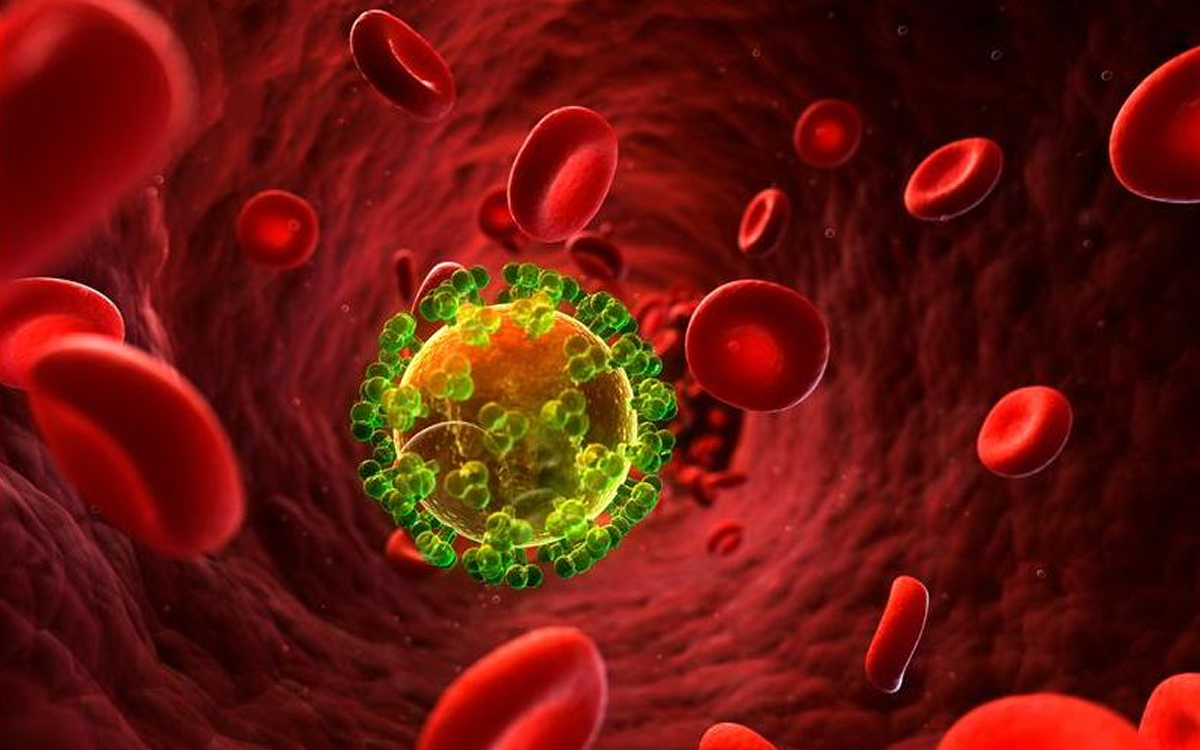
Whitman-Walker Health, the D.C.-based community healthcare center that specializes in HIV/AIDS and LGBTQ-related health services, will join health care advocates from across the country to support efforts to develop an HIV vaccine on HIV Vaccine Awareness Day on May 18.
“HIV Awareness Day, observed annually on May 18, was established to recognize and thank the volunteers, scientists, health professionals, and community members working toward a safe and effective prevention HIV vaccine,” Whitman-Walker said in a statement.
“Led by the National Institutes of Health’s National Institute of Allergy and Infectious Diseases (NIAID), the day is also an opportunity to educate communities about the critical importance of preventive HIV vaccine research,” the statement says.
It adds, “The reality is that any new vaccine discovery must be built community by community, institution by institution, and then it must reach everyone – especially the communities who have carried the heaviest burden of this epidemic.”
On its own website, the National Institutes of Health says HIV Vaccine Awareness Day also highlights its longstanding efforts, coordinated by its Office of AIDS Research, to support researchers’ efforts to develop an HIV vaccine.
“Researchers are making promising headway in efforts to develop a safe, effective HIV vaccine,” it says in a statement on its website.
A Whitman-Walker spokesperson said Whitman-Walker was not holding a specific event to observe HIV Vaccine Awareness Day, but it will recognize the day as a way of encouragement for its ongoing work to address the AIDS epidemic and support for vaccine research.
“Today, no one has to die from HIV,” said Whitman-Walker’s Health System division’s CEO, Dr. Heather Aaron in the Whitman-Walker statement. “We have the treatments, the technology, and the research to change outcomes, and yet people in our community are still dying from HIV//AIDS,” she said in the statement.
“That is unacceptable, and it is exactly why our work continues,” she added. “Here in D.C. with more focus on Southeast D.C., the Whitman-Walker Health System remains committed to making a difference through cutting-edge research, policy advocacy, and philanthropy, because fair access to life-saving treatment is not a privilege. It is a right.”
District of Columbia
Capital Stonewall Democrats endorses Janeese Lewis George for D.C. mayor
Group also backed D.C. Council, Congressional delegate, AG candidates

The Capital Stonewall Democrats, D.C.’s largest local LGBTQ political organization, announced on May 14 that it has endorsed D.C. Councilmember Janeese Lewis George (D-Ward 4) for mayor in the city’s June 16 Democratic primary.
Lewis George along with former D.C. Councilmember Kenyan McDuffie (D-At-Large) are considered by political observers to be the two leading candidates among the seven candidates competing in the Democratic primary election for mayor.
Both have strong, long-standing records of support on LGBTQ issues, indicating Capital Stonewall Democrats members, like LGBTQ voters across the city, are likely choosing a candidate based on non-LGBTQ related issues.
In a May 14 statement, the group announced its endorsements in seven other Democratic primary races, including D.C. Council Chair Phil Mendelson, who is running unopposed in the primary. Also endorsed is D.C. Councilmember Robert White (D-At-Large), who is one of five Democratic candidates competing for the position of D.C. delegate to the U.S. House of Representatives.
D.C. Councilmember Brooke Pinto (D-Ward 2) is among the four candidates competing with White for that post, and who like White has a strong record of support on LGBTQ issues.
In the At-Large D.C. Council race for which incumbent Anita Bonds is not running for re-election, Capital Stonewall Democrats has endorsed community activist and LGBTQ ally Oye Owolewa in a nine candidate race.
For the Ward 1 D.C. Council election, in which five LGBTQ supportive candidates are competing, the group did not make an endorsement because none of the candidate received a required 60 percent of the endorsement vote cast by Capital Stonewall Democrats members, according to the group’s former president, Howard Garrett.
The statement announcing its endorsements shows that it decided to list its “Preferred Ranking” of each of the Ward 1 Democratic candidates as part of the city’s newly implemented ranked choice voting system. It lists gay candidate Miguel Trindade Deramo as first, bisexual candidate Aparna Raj second, Jackie Reyes Yanes third, Rashida Brown fourth, and Terry Lynch fifth.
In the remaining ward Council races, Capital Stonewall Democrats endorsed Councilmember Matt Fruman (D-Ward 3), who is running unopposed for re-election; Councilmember Zachary Parker (D-Ward 5), the Council’s only gay member who is being challenged by two opponents; and Councilmember Charles Allen (D-Ward 6), who is running unopposed for re-election.
The group also chose not to make an endorsement in the special election for another At-Large D.C. Council seat that became vacant when then-Independent Councilmember McDuffie resigned to enable him to run for mayor as a Democrat. Under the city’s Home Rule Charter adopted by Congress, that at large sweat is restricted to a “non-majority party” candidate, meaning a non-Democrat.
The three candidates running for the seat, all Independents, include incumbent Doni Crawford, who was appointed to the seat earlier this year; former D.C. Councilmember Elissa Silverman; and Jacque Patterson. All three have expressed support on LGBTQ related issues.
“The organization’s endorsement process included candidate questionnaires, public forums, and direct voting by active CSD members,” the statement announcing its endorsements says. “Each endorsement reflects the collective voice of 173 LGBTQ+ Democrats who voted in the process and are committed to building lasting political power in the District,” according to the statement. “Candidates that reached 60 percent support received the endorsement.”
Garrett, the group’s former president, acknowledged that with nearly all candidates running in D.C. elections expressing strong support for the LGBTQ community, many if not most of the group’s members most likely chose a candidate based on issues other than LGBTQ related issues.
He said he believes Lewis George, who he is supporting and is viewed as a progressive candidate who self-identifies as a Democratic Socialist, compared to McDuffie, who is viewed as a moderate Democrat, captured the group’s endorsement based on the view that she is the best person to lead the city going forward.
“I believe that Capital Stonewall members voted for Janeese Lewis George because we’re tired of the status quo and we need a new, bold leader to not only move our city forward but also to stand up to Donald Trump and his administration,” Garrett told the Washington Blade.
McDuffie’s LGBTQ supporters, including former Capital Stonewall Democrats presidents David Meadows and Kurt Vorndran, have argued that McDuffie’s positions on a wide range of issues, including LGBTQ issues, show him to be the best candidates to lead the city at this time and In future years.
The group’s endorsement of Lewis George comes one week after GLAA DC, a nonpartisan LGBTQ advocacy group, awarded her its highest candidate rating of +10.
District of Columbia
Pride faith services in Washington, D.C.
Almost half of all LGBTQ adults in the U.S. are religious
Are you an LGBTQ person of faith or someone exploring spirituality? It is more common than people realize. According to a Williams Institute study published in October 2020, almost half of all LGBTQ adults in the United States are religious. This may seem counterintuitive as any LGBTQ people have complicated relationships with faith because of very real histories of abuse, trauma, and violence.
This violence still continues in the United States, especially following the Supreme Court’s March 2026 decision in Chiles v. Salazar, who ruled Colorado’s ban on conversion therapy for minors violates the First Amendment, but not everyone has encountered this violence, nor do people who have faced it, separate themselves completely from religion. Many people may seek out affirming faith traditions which are prevalent in the DMV area.
For individuals seeking out faith services during Pride 2026, please check out the list below, which will be updated as more events are publicized.
Memorial Service for SaVanna Wanzer
May 17th at 1 pm
Westminster Presbyterian Church (400 I St SW, Washington, DC 20024)
Westminster Presbyterian will host a celebration of life for legendary DC trans rights activist and founder of DC Trans Pride and Black Trans Pride SaVanna Wanzer who was a long-time member of the church. Live music will begin at 12:15 pm before the start of the memorial service. The service will be livestreamed on the Westminster DC Facebook page. A meal will follow the Sunday service.
There will also be a celebratory vigil held on Saturday, May 16th from 6:30-8 pm for friends and family at the church led by LGBTQ organizer Rayceen Pendarvis.
May 23th at 11 am
Downtown Westin (999 9th Street NW, Washington, DC 20001)
This intimate conversation is hosted by Janeé Lee, founder of Queer Ministry, between Black trans and queer people who are surviving religious trauma and navigating their relationship with the church. The workshop, hosted as part of Trans Pride DC, is a chance for people to share their stories at the intersection of queerness and spirituality and to walk away with a spiritual healing guide with affirming scriptures and inclusive theology.
DC Black Pride Worship Service
May 24th at 10 am
Remnant Christian Center (120 West Hampton Avenue, Capitol Heights, MD)
Hosted by The Community Church of Washington DC-UCC, this service will feature speakers and sessions on Black queer faith and unity, including host and speaker Robert D. Wise Jr. for a powerful Pentecost Unity Service. Attendees are encouraged to come dressed in and white.
June 5th at 7 pm
Sixth & I (600 I Street, NW, Washington, DC 20001)
Join Rabbi Jenna will be leading an inclusive, musical service celebrating the diversity of Jewish life in Washington, DC. Happy Hour, which is limited to people 21 and older, will start at 6 pm. The service will start at 7 pm, with dinner at 8:15 pm. The service is free but registration is required, and the kosher-style pescatarian meal does cost money. Register online here.
June 14th at 5 pm
Black Cat (1811 14th St NW, Washington, DC 20009)
Muslim Pride is a community-led and funded grassroots performance series centering queer and trans Muslim artists through music, drag and dance. The series was originally founded in 2020 as a way to create affirming spaces where faith, culture, and queerness can coexist. This year’s series features Mercedes Iman Diamond. This year, Muslim Pride expands to Washington, DC, New York City, and Los Angeles. Buy tickets here.
Pride Celebrations and Sunday Worship Service
June 14th all day
Riverside Baptist Church (699 Maine Avenue SW, Washington, DC 20024)
Join Riverside Baptist Church for a day-long Pride celebration beginning with Pride Weekend/Musical Theater Sunday worship service at 10 am. Later that morning and early afternoon, from 11:30 am to 1:30 pm, the church will be hosting a Pride Pageant, a technicolor celebration featuring a runway showcase, line dancing, food, and refreshments.
June 22nd at 7 pm
St. Mark’s Episocpal Church (301 A Street, SE, Washington, DC 20003)
Join this interfaith service celebrating affirming faith traditions and intertradition dialogue hosted by queer and trans faith leaders. The interfaith service has been hosted annually for over 40 years, and first began back in the 1980s with faith leaders and queer people of faith coming together to mourn and pray at the site of the AIDS Memorial Quilt on the National Mall. Learn more about the history of the interfaith service here.
June 23rd at 6 pm
Holy Trinity Catholic Church (3513 N St NW, Washington, DC 20007)
Holy Trinity will be hosting its 6th annual Pride Mass. After its debut this past summer, the Pride Mass choir will be singing at the Pride Mass in June, and following the Mass, there will be an annual reception with ice cream and other goodies. Learn more about attending the reception and Holy Trinity’s LGBTQ+ Ministry.

Honey, have we been priced out of gay paradise?

Comings & Goings

IDAHOBiT a reminder we all must stand up against transphobia

Disillusioned about democracy? Think of it as a community garden

‘The Inheritance’ is most-nominated at this year’s Helen Hayes Awards

Jason Collins dies at 47

European Commission says all EU countries should ban conversion therapy

Pride faith services in Washington, D.C.

Blade Foundation awards 9th journalism fellowship to AU student