Europe
ILGA-Europe launches new program for racialized LGBTQ, intersex communities
Deadline to apply is April 2
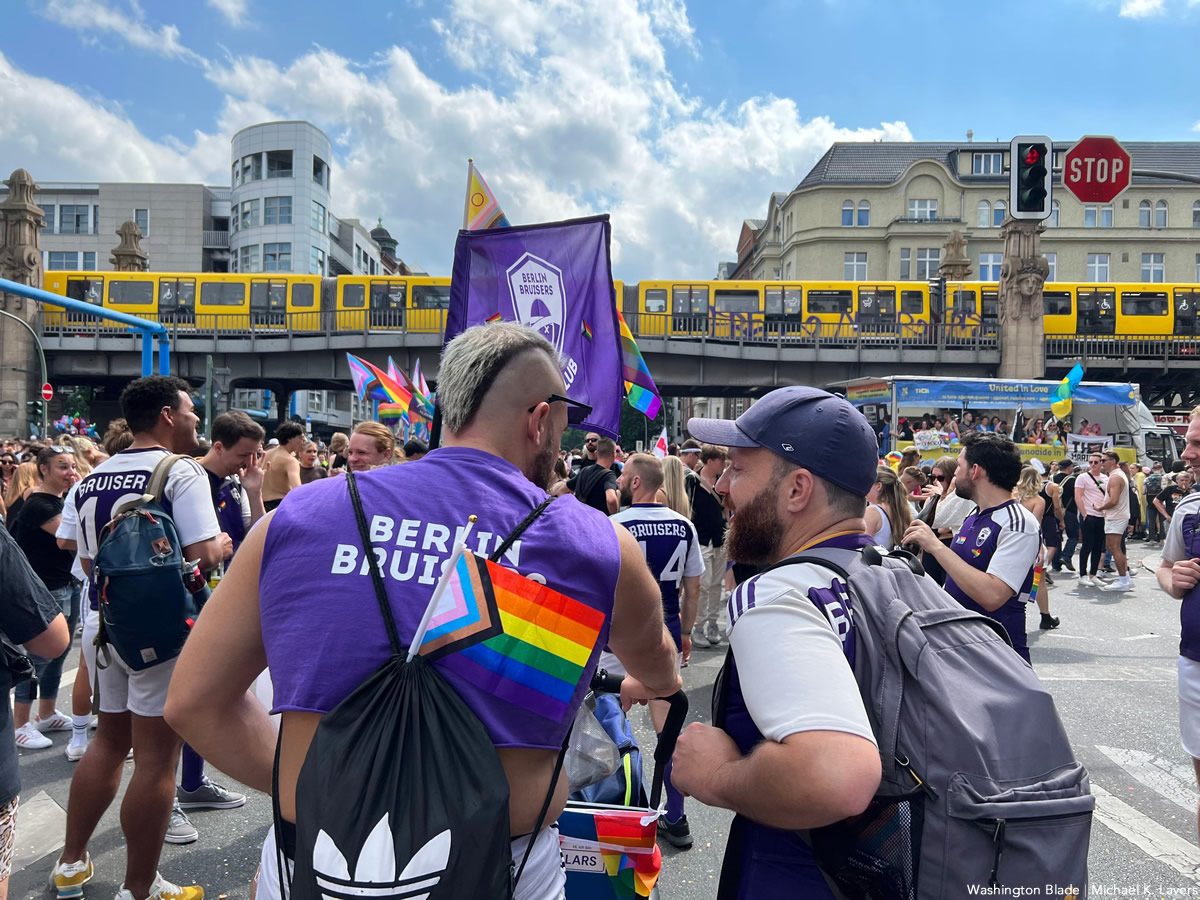
ILGA-Europe this week announced a new two part 12-month program focused on the work being done by and for racialized LGBTQ and intersex communities across Europe.
According to the international LGBTQ and intersex advocacy non-profit, the new initiative will be supporting up to 15 organizations’ work on socio-economic justice for racialized LGBTQ and intersex communities through a combination of grants and other resources.
The program has two interconnected components:
- Financial support for the implementation of a project (up to 20.000 euros per project), AND
- Learning and networking that will bring grantees together (on-line) on a regular basis to exchange learning, share challenges and solutions, build solidarity and find points for collaboration and inspiration.
The aim of this program is to:
- Bring together a group of up to 15 European LGBTI organizations/groups across Europe that work on addressing the intersectional impact of socio-economic injustice, racialization, racism and supremacy and specific harms affecting the lives of racialized LGBTI communities across Europe.
- Support, strengthen and advance their work on socio-economic justice for racialized LGBTI communities through a combination of grants and regular peer-learning/networking meetings.
ILGA-Europe noted that currently, the LGBTQ and intersex movement across Europe operates in an increasingly hostile environment that directly affects the lives of LGBTQ and intersex communities and the work of activists.
This environment is marked by anti-rights opposition, anti-democratic developments, rising unemployment, economic crises, ongoing and brewing geo-political conflicts, deepening structural inequalities, fear-mongering, mounting transphobic and sexist and racist rhetoric and violence.
In a statement, ILGA-Europe said:
“So many organizations and groups have been doing incredible work and contributing to change, while at the same time being historically excluded from funding. By supporting these groups, we also wish to recognize and acknowledge the specialized knowledge and skills involved in addressing intersectionality. This can mean anything from exposing structural oppressions that shape harm; building and sustaining the resilience of racialized communities; developing and applying anti-racist, feminist and alternative approaches; to working through — and in spite of — institutional violence and trauma.
This programme expresses our commitment to continue our engagement with socio-economic justice and to strengthen our work on anti-racism. We see a great value for the wider movement in making the work of the organizations supported, disseminated and visible. We see an opportunity to bring the learning from this program to the wider movement, as we believe that solutions and approaches that include a few will pave the way and point to the solutions for many.”
Key information and details:
In selecting proposals, ILGA-Europe will prioritize projects that:
- Demonstrate clear understanding of how the intersection of LGBTI identities, socio-economic injustice and racialisation works in their local contexts
- Present a clear plan for how the envisaged change is going to come about in these contexts
- Seek to establish practices/tools/solutions that can live beyond the project’s lifetime
- Have the potential to enhance the movement’s thinking on anti-racism and working towards socio-economic justice in general and for socio-economic justice for racialized LGBTI communities in particular.
- Respond to the framework, aim, objectives, and areas of work of this call
- Are implemented by LGBTI-run organisations and initiative groups in Europe that have history and practice of working with and for racialized LGBTI communities
Deadline and timeline:
- Proposals should be submitted using the attached application form and budget template. The last day to submit your application (deadline) is Sunday, April 2, 2023, 23:59 CEST.
- We will review applications, decide on projects to be supported and inform all applicants about the results of the review via the e-mail address provided in the application by May 5, 2023.
- Contracts will be signed with organisations in May 2023. Successful applicants should be available to respond to requests during that period. The project must start June 1 2023.
- To submit an application or if you have any questions in the preparation of your project proposal, please contact: [email protected]
Questions?
If you have any questions in the preparation of your project proposal please submit them via e-mail to [email protected]
We will answer all of your questions via e-mail and then publish answers on a dedicated ilga-europe.org website page on Feb. 27 and on March 23, in order to share the information among all applicants.






European Union
Top EU court strikes down Hungary’s anti-LGBTQ propaganda law
Ruling issued days after voters outed Prime Minister Viktor Orbán

The European Union’s top court on Tuesday struck down Hungary’s anti-LGBTQ propaganda law.
Hungarian MPs in 2021 approved Act LXXIX of 2021.
“It shall be forbidden to make accessible to persons who have not attained the age of 18 years advertisement that depicts sexuality in a gratuitous manner or that propagates or portrays divergence from self-identity corresponding to sex at birth, sex change or homosexuality,” it reads.
The European Commission in 2022 challenged the law. Sixteen EU countries — Austria, Belgium, Denmark, Estonia, Finland, France, Germany, Greece, Ireland, Luxembourg, Malta, the Netherlands, Portugal, Slovenia, Spain, and Sweden — joined the lawsuit. The European Parliament also supported it. Outgoing Hungarian Prime Minister Viktor Orbán, for his part, said his government would defend the law.
The EU Court of Justice heard the case in 2024.
A press release that announced the ruling on Tuesday said Hungary “acted in breach of EU law.”
“The court finds, for the first time, a separate infringement of Article 2 TEU (Treaty on European Union), which lists the values on which the (European) Union is founded and which are common to all the Member States,” it reads. “The aspects of the amending law targeting content which portrays or promotes deviation from the self-identity corresponding to the sex assigned at birth, gender reassignment, or homosexuality constitute a coordinated series of discriminatory measures which are in breach, in a way that is both manifest and particularly serious, of the rights of non-cisgender persons — including transgender persons — or non-heterosexual persons, as well as the values of respect for human dignity, equality and respect for human rights, including the rights of persons belonging to minorities.”
“Consequently, that law is contrary to the very identity of the (European) Union as a common legal order in a society in which pluralism prevails,” notes the press release. “Hungary cannot validly rely on its national identity as justification for adopting a law which is in breach of the values referred to above.”
The Háttér Society, a Hungarian LGBTQ rights group, said the ruling “is a milestone for the protection of human rights in the European Union, and it is also a historic victory for LGBTQI people in Hungary.”
The court issued its ruling nine days after Péter Magyar ousted Orbán in Hungary’s elections.
Orbán took office in 2010.
He and his government faced widespread criticism over its anti-LGBTQ crackdown that included laws that banned Pride events and other public LGBTQ events. (Upwards of 100,000 people last June denied the prohibition and marched in Budapest’s annual Pride parade.)
“Those amendments constitute a particularly serious interference with several fundamental rights protected by the (EU) Charter (of Fundamental Rights), namely the prohibition on discrimination based on sex,” notes the court’s press release.
The EU since Orbán took office has withheld upwards of €35 billion ($41.2 billion) in funds to Hungary in response to concerns over corruption, rule of law, and other issues. Magyar has said he will work with Brussels to unfreeze the money.
ILGA-Europe Deputy Director Katrin Hugendubel urged Maygar’s government to repeal the law.
“With this ruling, the CJEU (The EU Court of Justice) is confirming what we have been saying for six years,” said Hugendubel. “There is now no excuse for the Commission not to require Hungary to quickly withdraw the law. Hungary cannot enter a post-Orbán era without repealing this legislation, including the Pride ban.”
“If Péter Magyar truly aims to be pro-EU, he must place this at the top of his agenda for his first 100 days in office, as an essential part of his EU facing reforms,” added Hugendubel.
National
LGBTQ Catholic groups slam Trump over pope criticism
‘Moral truth and compassion always overcome ignorant hate’
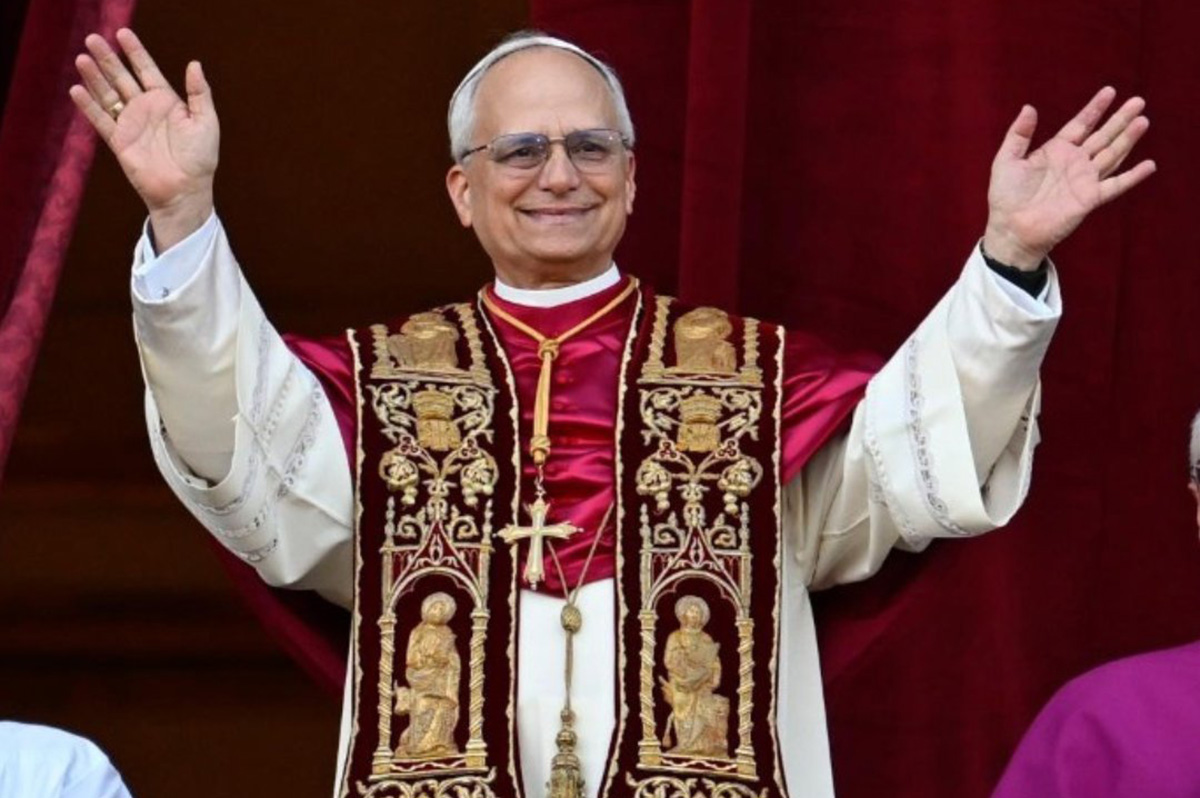
LGBTQ Catholic groups have sharply criticized President Donald Trump over his criticisms of Pope Leo XIV.
Leo on April 13 told reporters while traveling to Algeria that he had “no fear of the Trump administration” after the president described him as “weak on crime” and “terrible for foreign policy” in response to his opposition to the Iran war. (Trump on the same day posted to Truth Social an image that appeared to show him as Jesus Christ. He removed it on April 13 amid backlash from religious leaders.)
Vice President JD Vance, who is Catholic, during a Fox News Channel interview on the same day said “in some cases, it would be best for the Vatican to stick to matters of morality, to stick to matters of what’s going on with the Catholic church, and let the president of the United States stick to dictating American public policy.” Vance on April 14 once again discussed Leo during an appearance at a Turning Point USA event in Athens, Ga., saying he should “be careful when he talks about matters of theology.”
Italian Prime Minister Giorgia Meloni; former U.S. Ambassador to the Vatican Miguel Díaz; and Oklahoma City Archbishop Paul Coakley, president of the U.S. Conference of Catholic Bishops, are among those who have criticized Trump over his comments. The president, for his part, has said he will not apologize to Leo.
“The world is being ravaged by a handful of tyrants,” said Leo on Thursday at a cathedral in Bamenda, Cameroon.
Francis DeBernardo is the executive director of New Ways Ministry, a Maryland-based LGBTQ Catholic organization. He told the Washington Blade on Thursday that Trump’s comments about Leo “are one more example of the ridiculous hubris of this leader (Trump) whose entire record shows that he is nothing more than a middle-school bully.”
“LGBTQ+ adults were often bullied as children, and they have learned the lesson that bullies act when they feel frightened or threatened,” said DeBernardo. “But secular power does not threaten the Vicar of Christ, and Pope Leo’s response illustrates this truth perfectly.”
DeBernardo added Trump “is obviously frightened that Pope Leo, an American, has more power and influence than the president on the world stage.”
“Like most Trumpian bullying, this strategy will backfire,” DeBernardo told the Blade. “Moral truth and compassion always overcome ignorant hate. Trump’s actions are not an example of his power, but of his impotence.”
Marianne Duddy-Burke, executive director of DignityUSA, an LGBTQ Catholic organization, echoed DeBernardo.
“He [Trump] has demonstrated throughout both presidencies that he doesn’t understand the basic concepts of any faith system that is founded on the dignity of human beings, the importance of common good,” Duddy-Burke told the Blade on Thursday during a telephone interview. “It’s just appalling.”
Duddy-Burke praised Leo and the American cardinals who have publicly criticized Trump.
“The pope’s popularity — given how much more respect Pope Leo has than the man sitting in the White House — is a blow to his ego,” Duddy-Burke told the Blade. “That seems to be a sore sport for him.”
“It’s such an imperialistic world view,” she added.
Leo ‘is the real peacemaker’
The College of Cardinals last May elected Leo to succeed Pope Francis after his death.
Leo, who was born in Chicago, is the first American pope. He was the bishop of the Diocese of Chiclayo in Peru from 2015-2023.
Francis made him a cardinal in 2023.
Juan Carlos Cruz — a gay Chilean man and clergy sex abuse survivor who Francis appointed to the Pontifical Commission for the Protection of Minors — has traveled to Ukraine several times with Dominican Sister Lucía Caram since Russia launched its war against the country in 2022. Cruz on Thursday responded to Trump’s criticism of Leo in a text message he sent to the Blade from Kyiv, the Ukrainian capital.
“I am in Ukraine under many attacks,” said Cruz. “Trump is an asshole and has zero right to criticize the Pope who is the real peacemaker.”
Belarus
Belarusian president signs bill to allow LGBTQ rights crackdown
Alexander Lukashenko known as ‘Europe’s last dictator’
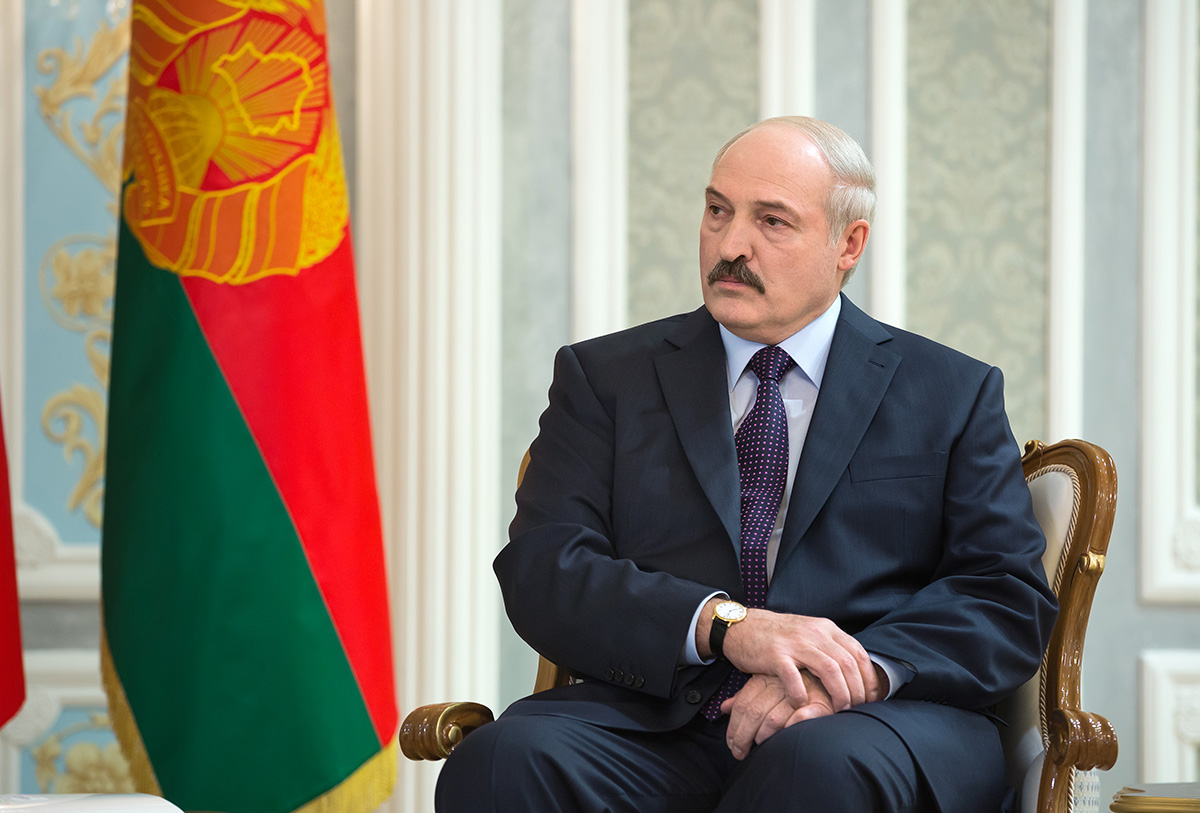
Belarusian President Alexander Lukashenko on Wednesday signed a bill that will allow his government to crack down on LGBTQ advocacy.
The measure that Lukashenko, who is known as “Europe’s last dictator” and is a close ally of Russian President Vladimir Putin, signed would punish anyone found guilty of “propaganda of homosexual relations, gender change, refusal to have children, and pedophilia” with fines, community labor, and 15 days in jail.
The House of Representatives, the lower house of the Belarusian National Assembly, last month approved the bill. The Council of the Republic, which is the parliament’s upper chamber, passed it on April 2.
Belarus borders Poland, Ukraine, Russia, Latvia, and Lithuania.
Kazakhstan is among the countries that have enacted Russian-style anti-LGBTQ propaganda laws in recent years.
The European Commission in 2022 sued Hungary, which is a member of the EU, over its anti-LGBTQ propaganda law. Hungarian voters on April 12 ousted Viktor Orbán, a Putin ally who had been their country’s prime minister since 2010.

Advocacy groups issue US travel advisory ahead of World Cup

Rehoboth’s Blue Moon sold; new owners to preserve LGBTQ legacy

Filipino HIV/AIDS group questions US, Philippines health agreement

PHOTOS: 90’s Flashback Drag Brunch

Rep. Sarah McBride reflects on first year in Congress amid political backlash

BREAKING NEWS: Shots fired at the White House Correspondents’ Dinner

Community mourns passing of D.C. trans rights advocate SaVanna Wanzer

An acting legend meets his match in ‘The Christophers’

World premiere of ‘Everything, Devoured’ oozes queer energy
From red carpet to chaos: A first-person narrative of the WHCD shooting
-

 National4 days ago
BREAKING NEWS: Shots fired at the White House Correspondents’ Dinner
-
District of Columbia5 days ago
Community mourns passing of D.C. trans rights advocate SaVanna Wanzer
-
Movies4 days ago
An acting legend meets his match in ‘The Christophers’
-
Theater3 days ago
World premiere of ‘Everything, Devoured’ oozes queer energy