Commentary
For Israel’s LGBTQ citizens, threats are no longer theoretical
Proposed judicial reforms could have wide-ranging impact
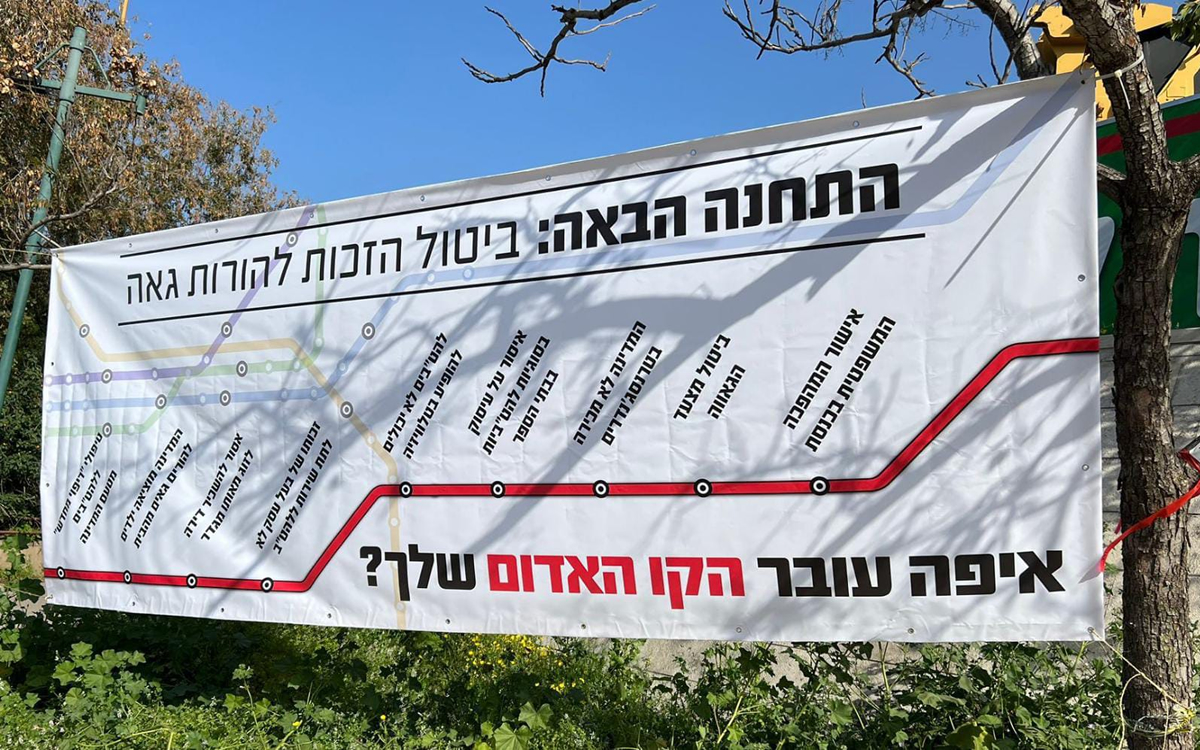
In 2023, millions are engaging in protests all around the world. People are making their voices heard in France, Mexico, Bangladesh, Hungary and Greece – just to name a few.
The specific events triggering civic action vary by location. But whether it’s pension reforms, election concerns, human rights, or rank government incompetence, it’s undeniable that the world is shaking. Among the common threads are an existential threat to democratic institutions.
At A Wider Bridge, we are closely connected to the manifestation of this international phenomenon in Israel.
Israelis from across the political spectrum are taking a stand for their democracy in an unprecedented manner. They have taken to the streets in historic numbers day after day, week after week, in patriotic displays of defiance. LGBTQ Israelis are on the front lines in a battle over legislation that most of them feel would dramatically undermine the independence of Israel’s judiciary. The stakes are high. The Israeli Supreme Court has been a bastion for advancing LGBTQ equality.
With a different court, LGBTQ Israelis could see protections ended for male couples and single men who have children via surrogacy. Same-sex couples married overseas might lose recognition of their unions, and with that, benefits from health insurance to inheritance, not to mention the implications for parents where one partner is non-Israeli. Protections for students and trans Israelis could evaporate. But there is more than the court in play. A new generation of extremist politicians have gained true power — and the bully pulpit. The reverberations are being felt far and wide — and the threat they pose to LGBTQ Israelis is no longer theoretical.
The Aguda, the Association for LGBTQ Equality in Israel, just released its 2022 report on LGBTQphobia in Israel. The findings show that anti-LGBTQ hate has skyrocketed. It rose during an election cycle in which some extremist politicians railed against LGBTQ rights, and it skyrocketed after the early November election. It has affected almost every aspect of LGBTQ life in the country.
In total, there were 3,309 reports of LGBTQ abuse last year — an enormous increase, and double what was reported as recently as five years ago. Delving deeper into the data, the news gets even scarier: an eightfold increase in year-on-year discrimination reports involving services by businesses, a fivefold increase in LGBTQ abuse reports in the public sphere, a 53 percent increase in reports from trans individuals, and a sevenfold increase in LGBTQ abuse reports where the offending parties are public figures and in the media.
On top of that, fully 25 percent of these reports came in November and December — during the election campaign and immediately following the commencement of the new government.
Some have urged patience with Israel’s new government and advocate a wait-and-see approach. They say nothing bad has happened yet. Sadly, they are wrong.
While these extremist politicians, now leading important government ministries, have yet to deliver fully on pledges to remove LGBTQ education from schools, groups working in that sector say it has become increasingly difficult to do programs they routinely offered in the past. They have yet to ban Pride parades, end hormone treatments and gender-affirming care for trans people, or provide financial support for organizations that provide conversion therapy. But all of these anti-LGBTQ policies are on the table. Unfortunately for LGBTQ Israelis, there is no safety in adopting a wait-and-see approach.
Recently, a group of right-wing youth harassed protesters carrying Pride flags in Tel Aviv. They threw rocks at a building at which a Pride flag was displayed. They even climbed a balcony to tear it down. They were caught in the act on video and later identified. But for weeks, no arrests have been made. In response, thousands of pro-LGBTQ Israelis protested in front of the police headquarters in Tel Aviv — a city justifiably celebrated for its LGBTQ-friendly environment and with one of the highest percentages of LGBTQ residents in the world. They were protesting police inaction, fully cognizant that the municipal police are controlled by the Israeli Ministry of National Security under Itamar Ben-Gvir, an open homophobe who ran for office on a far-right slate with a radical anti-LGBTQ platform.
Was the lack of police action a result of top-down pressure? We don’t know. But we do know that the physical security of LGBTQ people is often dependent on the institutions that govern us.
We also know that we can never take our rights and our safety for granted. That’s true whether one is LGBTQ in Tel Aviv, Black in Missouri, or Jewish on the streets of New York City, where antisemitic violence is on the rise.
The legislation Israelis are protesting is but one symptom of a global phenomenon to wrest power from institutions that have advanced the equality of marginalized groups — LGBTQ people, women, racial minorities, immigrants and others. It is not difficult to connect the dots from Jerusalem to Florida to certain eastern European countries, where democratic norms are under attack in general, as are the rights of LGBTQ people in particular.
So what do we do in the face of these challenges? First, we recognize the challenges as real, acute, and demanding immediate action.
Then we organize. We protest. We don’t allow ourselves to be gaslighted by those who say all is well, when clearly it is not. All one has to do to appreciate the threats to LGBTQ people in Israel is to speak with a few LGBTQ Israelis.
Accordingly, A Wider Bridge has dramatically increased our support of LGBTQ groups through additional public advocacy and an emergency campaign to fund their pro-democracy work and meet needs for increased social services. Next month, we will travel to Israel to stand with our LGBTQ family. We will march with them at the Jerusalem March for Pride and Tolerance and host an English livestream to the world.
We continue to be inspired by Israel’s democracy movement, where the LGBTQ flag has become as common a sight in the streets as the Israeli flag itself. We will stand with them today — and every day — to protect Israel’s democratic and pluralistic character in the face of this emergency.
Ethan Felson is the executive director of A Wider Bridge.



Commentary
When a church fears the rainbow
Puerto Rico pastor objected to Pride symbols outside congregation
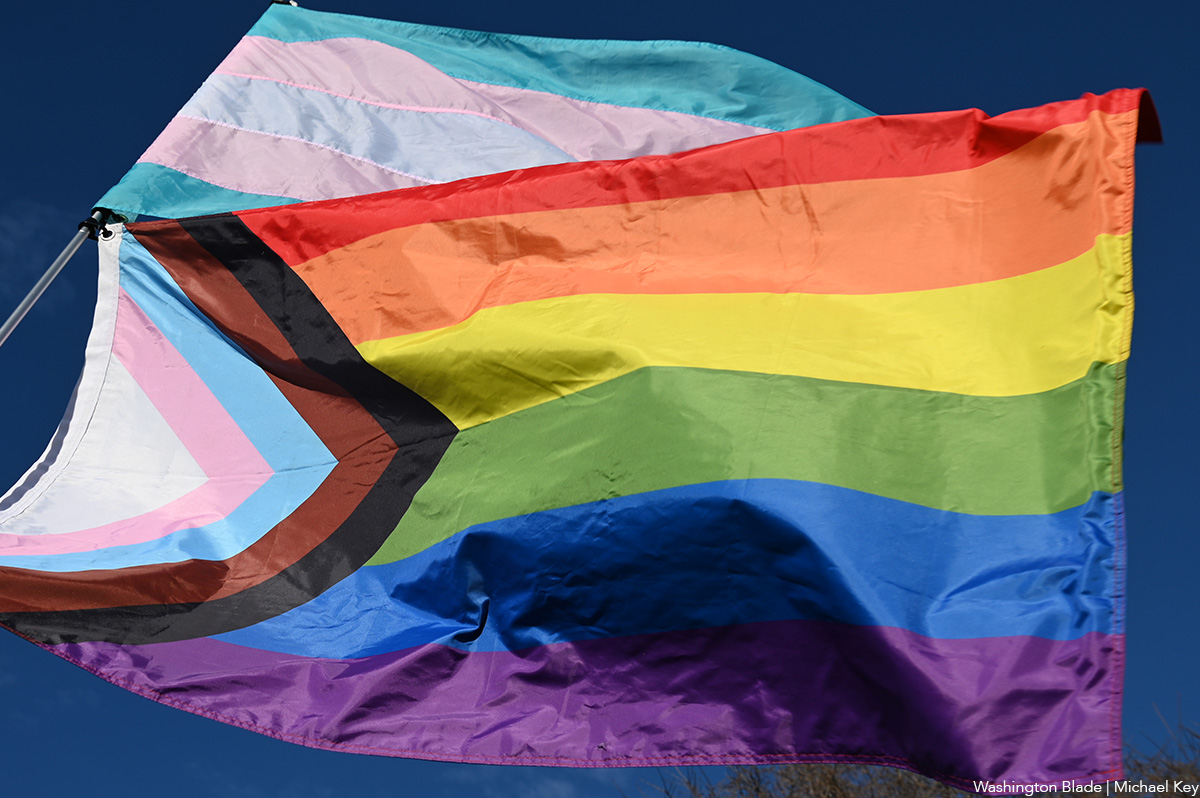
There are moments when an incident stops being merely a local story and begins to reveal something much deeper. What happened on June 28 outside One Church, in Comerío, Puerto Rico, belongs in that category.
I do not know who painted the rainbow colors on the asphalt and on a roadside guardrail. I do not know what motivated them, and it is not my place to justify their actions. If someone believes a law was broken, there are authorities and legal mechanisms to address that. That is not the point of this reflection.
The point is the words that followed.
Hours after those colors appeared, Pastor Jorge J. Santiago Reyes went live on social media. He said he felt threatened. He described what happened as a physical attack against his church. He appeared angry and disappointed. He called those who painted the rainbow “cowards” and “charlatans.” He expressed frustration with the support that, according to him, the municipal government of Comerío has shown toward the LGBTQ community, and with those who support posts related to that community. He repeated several times that the people responsible had “crossed the line.” He ended his message by saying, “These charlatans have to be stopped.”
As I listened to his words, I stopped thinking about the paint.
I began thinking about fear.
There is one phrase the pastor repeated again and again: “They crossed the line.” Yet he never explained what that line was. If he was referring to a possible violation of the law, that is for the authorities to determine. If he meant respect for property, there are also procedures to deal with that. But when that line remains undefined and the message begins to associate a rainbow with a threat, the question changes. It is no longer only about a guardrail or a road. It becomes a question about what boundary, in the pastor’s view, was actually crossed.
Paint can be erased.
A brush can cover the asphalt and return a guardrail to its original color.
What does not disappear so easily is the meaning of those colors.
And perhaps that is where the real conflict begins.
It is significant that this happened precisely on June 28, the day when the LGBTQ community remembers a history marked by exclusion, violence, and the struggle for dignity. What represents memory, hope, and the possibility of living without hiding for millions of people was presented by others as a threat.
I do not know why someone painted that rainbow. I do not need to know in order to ask whether those were the words society should expect from a pastor.
A religious leader may feel hurt, frustrated, or angry. What he cannot forget is the responsibility that comes with every public expression. His words do not end when a livestream ends. They move beyond the space of his church, reach people who may never share his faith, and help shape the way others see those who think differently. When a pastor calls other people “charlatans” and “cowards,” says they “have to be stopped,” and turns a rainbow into evidence of an attack, he is no longer speaking only from frustration. He begins to build a discourse that can feed rejection toward a community far larger than the people responsible for that act.
There was another moment in the livestream that caught my attention. The pastor reminded viewers how much he has served Comerío, how much he has accompanied his community, and how much he has worked for it. I have no reason to question that service. I am sure many people can testify to the good he has done.
That is precisely why it was difficult to hear.
Pastoral vocation is not about reminding a town of everything one has done for it when conflict appears. Service does not lose its value when it goes unrecognized; it loses something when it becomes an argument to claim a moral position from which to speak down to others. A person who serves does so because that is the nature of the calling, not because that service grants authority to discredit those who think differently.
As a pastor, that part of the message left me deeply uneasy. Not because I expect ministers of God to be perfect. We are not. But because our words carry weight, we are called to speak with greater responsibility. Some expressions build bridges. Others raise walls. Some words invite encounter. Others end up justifying rejection.
The paint will disappear. A brush will be enough to cover the asphalt and return the guardrail to its original color.
The words will not disappear as easily.
They will remain recorded in a video, shared again and again on social media, and remembered by those who heard them. They will remain long after the last trace of paint has been erased.
When this episode is remembered, it probably will not be because of the rainbow that appeared outside One Church, in Comerío, Puerto Rico.
It will be because of the words a pastor chose to use when speaking about it.
And that difference changes everything.
Commentary
The boy they refused to forget
Jonathan David Muir Burgos released from Cuban prison after participating in protest
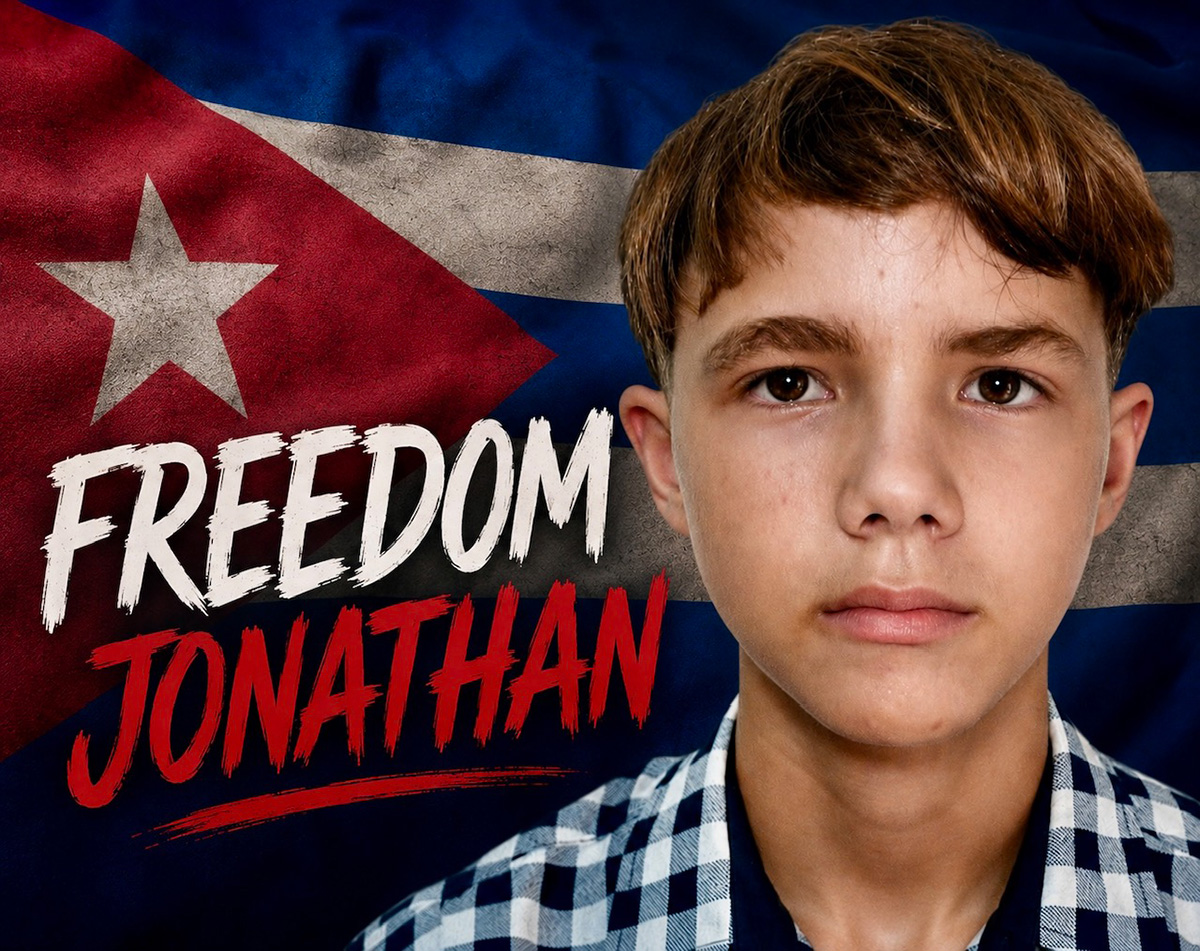
When the Washington Blade first reported the story of Jonathan David Muir Burgos, the news centered on a 16-year-old Cuban teenager who had been sent to prison after taking part in a public protest in Morón, Ciego de Ávila. At the time, the facts were straightforward. A minor had lost his freedom, and his case was beginning to attract attention beyond Cuba’s borders.
Today there is another fact that deserves to be recorded with the same rigor.
Jonathan is no longer in prison.
His release, confirmed by multiple news organizations, closes one chapter of a story that, for months, was followed by journalists, human rights organizations, religious communities, and countless individuals who refused to let his name disappear from public view. Each of them became part of a much larger effort to ensure that the imprisonment of a Cuban teenager would not fade into silence as the news cycle moved on.
That collective attention does not explain every decision that ultimately led to Jonathan’s release, and it would be irresponsible to suggest otherwise. Judicial processes are rarely shaped by a single factor. What can be said with certainty is that Jonathan’s story never disappeared. It continued to be documented, discussed and followed long after the initial headlines were published.
Behind every widely reported case there is a family living a reality that rarely appears in the news. In Jonathan’s case, there was a father who also serves as a Protestant pastor and who spent months speaking publicly about his son while asking others not to forget him. There was a mother enduring the uncertainty familiar to any parent separated from a child. There were classmates, friends, and neighbors waiting for the day when Jonathan would no longer be known as the teenager behind bars, but simply as the young man returning home.
The image of a prison gate opening often marks the end of a news story. In reality, it marks the beginning of something far more difficult. A teenager must resume an interrupted education, reconnect with friends, rebuild ordinary routines, and recover a sense of normalcy after months in confinement. Those experiences seldom become headlines, yet they are part of the true cost of imprisonment.
Jonathan’s release is therefore more than an update to a story previously reported. It is a reminder that public attention has value. Journalism matters because it documents. Human rights organizations matter because they investigate. Communities matter because they refuse indifference. Families matter because they continue to wait, even when the waiting becomes unbearable. None of these efforts should be viewed in isolation. Together they ensure that a person’s story does not disappear simply because time has passed.
Many people leave prison after being forgotten.
Jonathan David Muir Burgos walked out of prison knowing that, throughout those months, thousands of people had continued to speak his name, follow his case and hope for the day when this story could be told differently.
Today, that day has arrived.
Commentary
Religion, spirituality, and humanity: finding meaning in a complex world
LGBTQ refugees find hope in faith, common humanity
Religion and spirituality continue to shape the lives of billions of people around the world. Whether expressed through organized faith traditions, personal beliefs, cultural practices, or philosophical reflection, they remain powerful influences on how people understand themselves, others, and the world around them.
As a displaced person, I have seen firsthand how religion and spirituality affect people’s lives during times of uncertainty, hardship, and hope. In communities facing displacement, poverty, illness, conflict, and long waits for resettlement opportunities, questions about meaning, purpose, resilience, and belonging are not abstract concepts. They are part of everyday survival.
Religion and spirituality are often discussed together, yet they are not identical. Religion generally involves organized systems of belief, sacred texts, rituals, and communities. Spirituality is often more personal and may involve an individual’s search for meaning, connection, and inner peace without necessarily belonging to a specific faith tradition.
Despite their differences, both seek to answer some of humanity’s oldest questions: Why are we here? How should we live? How do we cope with suffering? What gives life meaning?
A search shared across cultures
Human beings have always searched for answers to the mysteries of existence. Across continents and throughout history, people have developed different ways of understanding life, death, nature, and the universe.
Christians may turn to the Bible. Muslims may seek guidance from the Quran. Jews may draw wisdom from the Torah. Hindus, Buddhists, Sikhs, Indigenous peoples, and many others have their own spiritual traditions and teachings.
Recently, an Australian reader, Eveline Goy, shared a thoughtful reflection after reading one of my earlier articles. She noted that while some people may speak of “false prophets” based on their religious beliefs, others may find truth and wisdom in entirely different traditions. She also highlighted the rich spiritual heritage of Australia’s First Nations peoples, whose stories of the Rainbow Serpent continue to shape cultural identity and understanding of creation.
Her reflection reminded me that while beliefs vary widely, the desire to understand our place in the universe appears to be deeply human.
Religion, love, and LGBTQ people
For many LGBTQI+ people, religion can be both a source of comfort and a source of pain.
Throughout history, faith communities have offered people hope, belonging, and moral guidance. Yet many LGBTQI+ individuals have also experienced rejection, exclusion, or condemnation from religious institutions because of their sexual orientation or gender identity.
As a queer refugee, I know how deeply these experiences can affect a person’s sense of self-worth and belonging. Many LGBTQI+ refugees I work with were not only rejected by society but also by families and faith communities they once trusted. Some were told they were sinful, broken, or unworthy of love. Others were forced to hide their identities in order to remain accepted.
Yet this is not the whole story.
Across the world, there are also religious leaders, churches, mosques, synagogues, temples, and faith communities that embrace LGBTQI+ people and affirm their dignity. Many believers interpret their faith through the values of compassion, justice, mercy, and love rather than exclusion.
At its heart, love is one of the most universal values found across spiritual traditions. Whether expressed through faith, friendship, family, or community, love has the power to heal wounds, build bridges, and restore dignity.
For many LGBTQI+ people, the challenge is not choosing between faith and identity but finding spaces where both can coexist.
Religion and spirituality in difficult times
We live in a world facing numerous challenges. Wars continue across several regions. Climate change affects communities through droughts, floods, and extreme weather events. Economic uncertainty impacts millions of families. Refugees and displaced people face uncertain futures.
In such circumstances, many people turn to religion or spirituality for comfort and guidance.
Here in Gorom Refugee Settlement Camp, I see this every day. Some gather for prayer. Others find strength in sacred texts. Some find comfort in collective worship, while others seek peace through personal reflection and meditation.
For many, faith provides hope when circumstances seem hopeless.
Yet I have also observed something equally important. Not everyone draws strength from religion. Some find resilience through friendship, mutual support, activism, creativity, and the determination to keep moving forward despite adversity.
This reminds us that while religion and spirituality can be sources of strength, so too can our shared humanity.
The human values that unite us
One of the most remarkable aspects of religion and spirituality is that despite their differences, many traditions promote similar values: Compassion, kindness, forgiveness, generosity, honesty, and respect for others.
These values are not exclusive to any single religion or philosophy. They appear across cultures, faiths, and secular worldviews.
Living in a refugee community has reinforced this lesson. Some of the most generous people I have met are deeply religious. Others are not religious at all. What matters most is not necessarily what people believe, but how they treat one another.
When someone shares food with a hungry neighbor, that is compassion.
When a person comforts a frightened child, that is humanity.
When communities stand together despite differences, that is solidarity.
These actions often speak louder than doctrine.
Building bridges in a diverse world
Religion and spirituality have inspired extraordinary acts of kindness throughout history. Yet they have also contributed to division when people become convinced that only their own beliefs are valid.
In today’s interconnected world, we encounter a greater diversity of perspectives than ever before. This diversity can enrich societies, but it also requires humility, curiosity, and respect.
No individual, community, or tradition possesses all the answers to life’s mysteries.
The challenge is not to eliminate differences but to learn how to coexist peacefully despite them.
For LGBTQI+ people, refugees, people of faith, and those without religious beliefs, dialogue and mutual respect remain essential. We all benefit when societies create space for people to live authentically while respecting the dignity of others.
Religion and spirituality continue to play important roles in human life. They help many people find meaning, resilience, comfort, and community during difficult times.
At the same time, the values that often matter most compassion, dignity, kindness, justice, and love are not confined to any single religion or belief system.
My experiences as a queer refugee have shown me that hope can emerge from many places. Some find it in prayer. Some find it in philosophy. Some find it in activism. Some find it in human connection.
Perhaps what ultimately matters is not which path we follow, but whether that path encourages us to become more compassionate, understanding, and caring human beings.
In an uncertain world marked by division and conflict, our shared humanity may be the strongest foundation upon which we can build a more peaceful, inclusive, and loving future for LGBTQI+ people, for people of faith, and for all humanity.
Aby lives in the Gorom Refugee Settlement Camp in South Sudan.

PHOTOS: Petal Release Party

Madonna headlines World Pride Music Festival in Amsterdam

Reggie White relishing first season as artistic director of Woolly Mammoth

PHOTOS: Amsterdam Pride Canal Parade

Amsterdam Pride Canal Parade draws hundreds of thousands

Madonna to perform at World Pride in Amsterdam

BLADE ENDORSEMENT: Susan Stewart for mayor of Rehoboth Beach

PHOTOS: Lambda Legal in the Pines

Calendar: July 31-August 6