News
Liberty Counsel’s deep network of far-right faith and influence
Anti-LGBTQ legal group represents Kim Davis.
Uncloseted Media published this article on Nov. 1.
By HOPE PISONI | Liberty Counsel, the legal group representing Kim Davis’s latest push for the Supreme Court to overturn gay marriage, wants to reshape American society in a far-right Christian image — one in which LGBTQ people are excluded. They’ve been fighting LGBTQ rights for years, from Lawrence v. Texas to Proposition 8 to Obergefell. Along the way, they’ve claimed that gay people “know intuitively that what they are doing is immoral, unnatural, and self-destructive” and that they are “not controlled by reason,” but rather by “lust.”
While the brunt of their work focuses on right-wing litigation, their efforts don’t stop there.
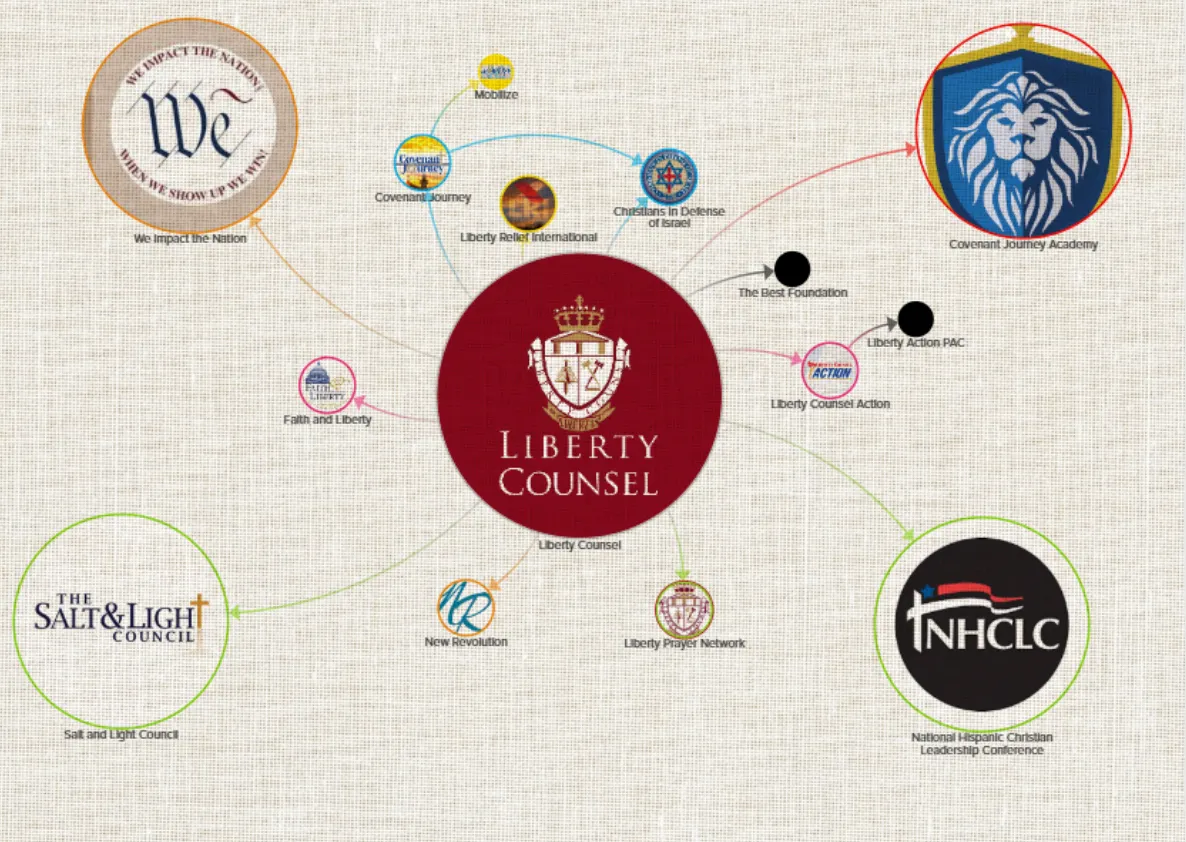
An Uncloseted Media investigation has uncovered that Liberty Counsel operates as an umbrella organization that has either founded or heavily supported a large network of affiliated organizations working to pursue far-right Christian politics by influencing key American institutions.
“What I compare it to are gears in a machine, and each one serves a different purpose,” Anne Nelson, author of “Shadow Network: Media, Money, and the Secret Hub of the Radical Right,” told Uncloseted Media.
These groups use education to spread far-right Christian doctrine, they galvanize churches to become activist hubs and they work behind the scenes to influence Supreme Court justices and other government officials.
All of these groups, many of which are frequently referred to as “ministries,” share the enthusiastic support of Liberty Counsel founder Mat Staver and the common goals of fighting against LGBTQ rights, cracking down on abortion, influencing American law and politics and more.
“This array of ‘ministries’ reflects the varied fronts in the religious right’s war against LGBTQ Americans and our freedom,” says Peter Montgomery, research director at People for the American Way, an advocacy group aimed at challenging the far right. He says that this network strategically works in tandem to drum up support among congregations and conservative women and to influence American media, courts and schools.
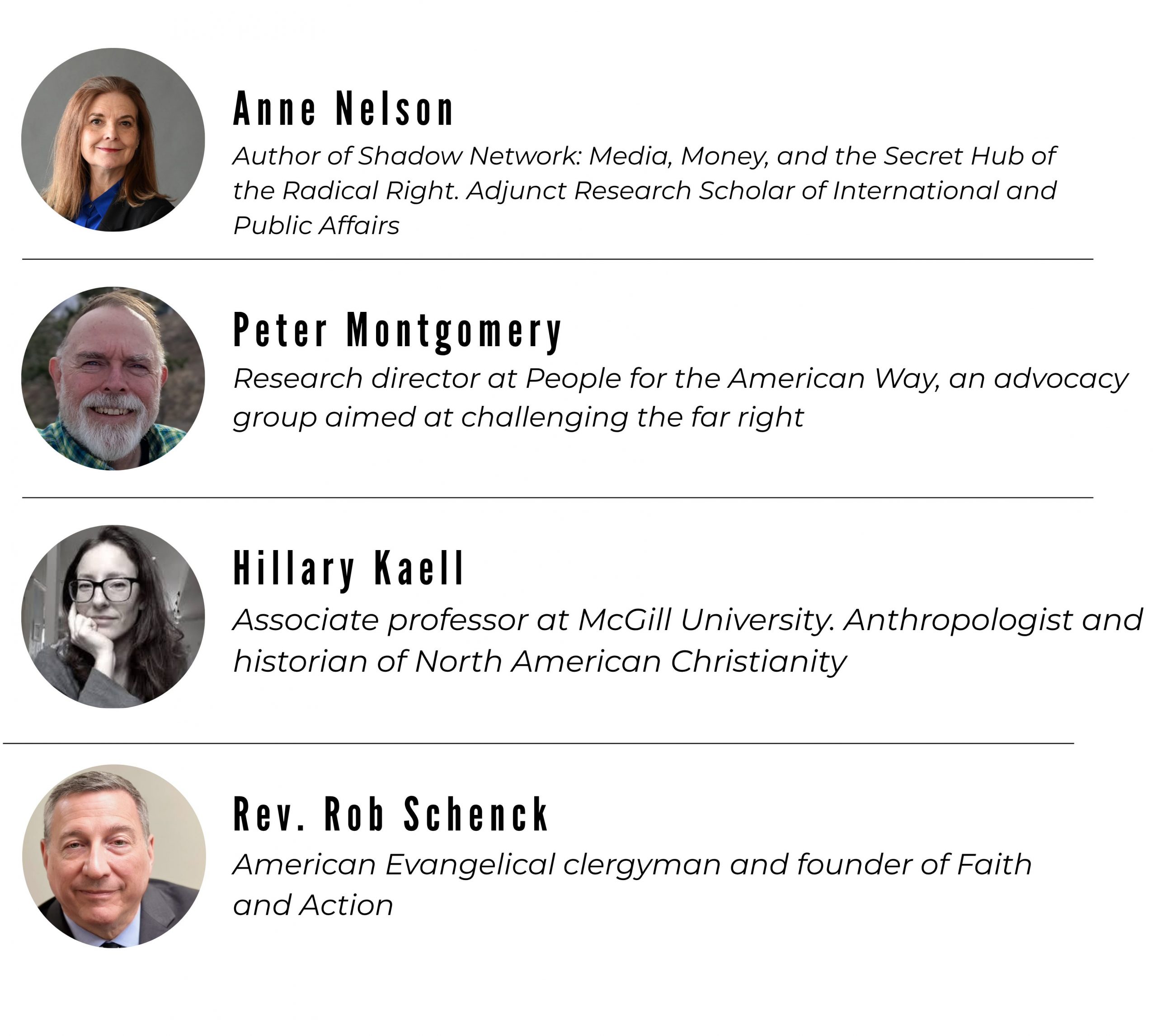
To make sense of these dizzying connections, we spoke with key experts …
… and we dug into the group’s that are part of Liberty Counsel’s expansive network. Here’s what we found about each of them:
1. Liberty Counsel Action
Liberty Counsel Action is a companion to Liberty Counsel. While the two groups are formally distinct and have slightly different leadership, Mat Staver is chairman for both groups, and they have very similar website architecture. The primary distinction is that Liberty Counsel is registered as a 501(c)(3) nonprofit, a designation for religious and charitable organizations, while Liberty Counsel Action is a 501(c)(4), a designation for social welfare groups. While the designations are similar, donations to 501(c)(3) organizations are tax-deductible, but the groups cannot endorse or donate to political campaigns. Meanwhile, donations to 501(c)(4) organizations are not tax-deductible, but they can donate to and endorse candidates.
Montgomery says it’s a fairly common strategy for organizations to maintain different groups like this. While Liberty Counsel is able to bring in more money due to tax incentives for donors, Liberty Counsel Action can freely engage in political advocacy.
Some of the group’s campaigns include fighting the Equality Act and calling for Congress to investigate pro-Palestinian student organizations. One of their initiatives this year has been drafting “Abortion in Our Water,” a report that outlines how abortion pills are polluting U.S. water supplies, a claim that environmental scientists have rejected. They’re also currently pushing for Republicans not to “cave to the Schumer Shakedown,” a nickname they’ve used for the ongoing government shutdown
For more direct political action, Liberty Counsel Action also had a super PAC which spent nearly $70,000 on opposing Barack Obama’s reelection.
Montgomery says having these different branches allows Liberty Counsel to achieve more diverse control in politics and the law.
“Some of [their goals] they can achieve through the courts, some of it is gonna be through political advocacy. So then you start an advocacy affiliate, and then you start a PAC because you want to elect people who can help you get this vision of the country,” he says.
2. Faith and Liberty
Founded in 1995, Faith and Liberty — originally named Faith and Action — is a D.C.-based Christian ministry that has historically courted Supreme Court justices and other government officials behind closed doors. The group’s former president, Rev. Rob Schenck, decided to leave the Christian right in 2016 after the movement’s embrace of then-candidate Donald Trump compounded his growing doubts about the ideology.
“MAGA I don’t even define as Christianity anymore,” Schenck told Uncloseted Media. “It’s an apostasy — it’s a defection from the Christian faith. It is, in fact, the diametric opposite of what Jesus taught and modeled.”
Schenck says that the group would host dinners, prayers and other meetings with conservative politicians and Supreme Court justices including Clarence Thomas, Samuel Alito, and the late Antonin Scalia, where they would encourage the justices to adopt more radical rhetoric and policies.
“We would tell [the justices] over and over again: the people love you when you are bold and uncompromising and unapologetic, so be strong — we are with you, we’re behind you,” Schenck says, adding that his former organization was internally nicknamed the “Ministry of Emboldenment.”
Other activities of the ministry included outreach to young people at colleges and youth programs with an eye toward recruiting future right-wing political and judicial figures. This included hosting events and offering internships for conservative teenagers in the U.S. Capitol.
Schenck says attendees of these events would discuss how the federal government works, “meet the conservative justices, sit in on cases relevant to our Christian conservative agenda, and attend lectures about the judicial branch sponsored by the Supreme Court Historical Society.” Schenck says he later saw many of these individuals in the Capitol, and that the group encouraged their federal judge contacts to prioritize graduates from conservative Christian universities for clerkships and other staff positions.
While Schenck intended to dismantle Faith and Action following his shift in beliefs, he allowed the group to be acquired by Liberty Counsel in 2018 after pressure from the board and donors.
In 2022, Rolling Stone reported that Schenck’s successor — Peggy Nienaber — was caught on a hot mic bragging about praying with Supreme Court justices prior to their decision to overturn Roe v. Wade, which cited a brief filed by Liberty Counsel. Staver told Rolling Stone that these allegations are “entirely untrue.”
Schenck says Nienaber — who was his deputy when he led the company — always had a great ability to get into rooms with America’s key lawmakers.
“Peggy was very good at what she did, and she was particularly skilled at gaining access to people who had all kinds of defensive measures to protect them from the public … or from people that they did not want to entertain,” he says. “It would shock me if Mat [Staver] did not deploy her for those purposes, and I do know she had well-established relationships inside the Supreme Court, certainly inside … the Republican sides of both houses [of Congress].”
In an email to Uncloseted Media, Liberty Counsel says, “Mat Staver has not spoken to Rob Schenck since 2017, and he has no knowledge of what Peggy Nienaber does and what she does now is vastly different than what she did when she worked for him. … It is preposterous to think a Supreme Court Justice can be influenced. We have no such agenda. We do litigate in the courts and have been successful at all levels by advocating for correct legal principles.”
3. The Salt and Light Council
The Salt and Light Council trains U.S. pastors on how to start a “Biblical Citizenship Ministry” at their churches. These ministries are meant to encourage congregations to engage in politics to “defend and promote life, natural marriage, [and] our constitutional and religious liberties.” The group was founded in 2008 by Dran Reese, and it became a ministry of Liberty Counsel in 2013. While the group now appears to operate independently, Staver remains chairman of its board.
Pastors who sign up to start a Biblical Citizenship Ministry pick someone from their congregation to lead it, send them to attend the Salt and Light Council’s trainings and then receive two topics a week to bring to their congregants, with the group also promising legal support from Liberty Counsel for these pastors.
Salt and Light chapters, which now exist at over 120 churches and synagogues in 30 states, are frequently active in anti-LGBTQ activism: Reese has been caught spreading false stories about sexual harassment by trans girls in bathrooms, and the group has fought to protest Drag Queen Story Hours and cancel LGBTQ-friendly book fairs.
Perhaps most influentially, the group is a part of the Remnant Alliance, a Texas-based coalition of far-right Christian groups that have been collaborating to swing school board elections and implement policies such as LGBTQ book bans across the state.
Montgomery says the group’s decentralized model allows them to operate on a surprisingly efficient budget.
“[It] doesn’t have a huge budget, doesn’t have a huge staff, because it’s mostly about encouraging local churches to start their own chapters and do their own thing,” he says. “The council provides them with resources, like brochures on issues or voter guides.”
4. We Impact the Nation
Founded in 2005 as Women Impacting the Nation, this group is a project of Boca Raton-based conservative activist Sue Trombino. Prior to its rebranding to We Impact the Nation in 2024, the group became a project of Liberty Counsel for a few years beginning in 2011.
During this time, Liberty Counsel sponsored WIN’s annual conference called “For Such a Time as This,” featuring scripture readings and baptism and offering renewed commitments to faith and service.
As recently as September, WIN distributed copies of “Take Back America,” a book written by Staver that argues that “God is the foundation of good government and national prosperity” and that “we need God in America again.”
Today, the group hosts talks, conferences and local chapter meetings with the goal of activating women to be conservative activists. They are most active in Southeast Florida, where they host monthly meetings and were a significant player in the campaign which defeated a constitutional amendment that would have protected abortion in the state.
The group has also historically been active in spreading anti-LGBTQ rhetoric, advocating for bathroom bans as early as 2013, arguing against conversion therapy bans, and calling for funding to be cut to groups that disobey Trump’s executive orders against “gender ideology.”
5. Covenant Journey Academy
Covenant Journey Academy is an online K-12 school that incorporates Christianity into its curricula. Founded by Staver and launched by Liberty Counsel in 2023, the group targets parents who want to homeschool their kids and is billed as an alternative to “woke” public schools. The academy is now accredited in its home state of Florida and is even eligible for a state scholarship program.
Each of the academy’s courses features what they call “Biblical Integration.”
One Bible class for middle schoolers called Lightbearers promises that students will “learn how to apply their Christian faith to every area of life and study” and covers topics such as “abortion, apologetics, cults, evolution, feminism, homosexuality, naturalism, moral relativism, pluralism, relationships, and socialism.” Staver has promoted Covenant Journey Academy as a way for parents to avoid “LGBT propaganda” and “LGBTQ grooming.”
6. New Revolution
New Revolution is a publishing service owned by Liberty Counsel that helps produce media for Christian organizations.
The group has published a book depicting foundational sex researcher Alfred Kinsey as a “mad scientist” and “pervert extraordinaire;” and Kim Davis’s memoir, which they say “goes behind the scenes to reveal how God gave this unlikely candidate a platform to defend marriage and religious freedom.”
In February, they advertised their services to other far-right groups at the National Religious Broadcasters Convention.
7. National Hispanic Christian Leadership Conference
NHCLC is an organization that represents Hispanic Christian churches, with 18 chapters across the country. While this group has never been formally controlled by Liberty Counsel, they maintain close ties: Staver sits on the board, the groups frequently collaborate on projects, and in 2014, Liberty Counsel described itself as the NHCLC’s “legislative and policy arm.”
The organization and its founder, Samuel Rodriguez, have been some of the most influential voices in building support for Trump and the Republican Party among Latino voters, as well as in defending the administration’s recent immigration crackdowns. Rodriguez’s connections are particularly deep, having served as a faith advisor in the White House under George W. Bush, Barack Obama, and Donald Trump. Now, as a member of Trump’s White House Faith Office, Rodriguez told the New York Times that he and other faith leaders have “unprecedented access” to political power. Throughout this time, he has opposed marriage equality and protections for LGBTQ immigrants.
8. Covenant Journey
Covenant Journey is a ministry of Liberty Counsel which hosts Christian-focused religious tours of Israel. Some have compared the organization to a Christian version of Birthright, a program that takes non-Israeli Jewish people on tours of the country.
Liberty Counsel initially began hosting these “holy land tours” in 2011 under a different group called Liberty Ambassador Counsel, which was founded following a conversation between Staver and Israeli Prime Minister Benjamin Netanyahu, “with the goal of strengthening [participants’] Christian faith and equipping them to be goodwill ambassadors for Israel.”
By 2014, they rebranded to Covenant Journey, and after winning a fight for control of the project over pro-gay Republican businessman Paul Singer, they have hosted the tours since then.
The group’s website says the tours are “only for Christian college-age students who (1) have leadership potential and (2) have some level of support for or interest in Israel.” They include visits to multiple sites of Biblical significance in East Jerusalem and parts of the Palestinian West Bank, which the International Court of Justice argues is illegally occupied by Israel.
Covenant Journey promises that the tours will include “expert briefings from Israeli leaders in government, national security, and technology.” Some alumni of the trip include Republican political strategist and former Matt Gaetz staffer Luke Ball and Republican Florida politicians Jennifer Sullivan and Gavin Rollins.
Kaell says that holy land tours organized by Christian groups are mutually beneficial: The Israeli government gets more tourism to boost public relations among U.S. Christians, while the Christian groups use the tour sites as living proof of the events described in the Bible, thus reinforcing their religious, political and social beliefs.
9. Christians in Defense of Israel
Christians in Defense of Israel was founded by Ed Hindson, the late televangelist and dean of Liberty University’s School of Divinity, and have said they have 90,000 supporters. The group focuses on pro-Israel advocacy and became a ministry of Liberty Counsel in 2014 when Hindson had a “sincere desire to expand [his group’s] influence.”
The group’s activities center on publishing pro-Israel media and organizing marches and other events. They gained attention in 2017 for producing a 13-part TV series called “Why Israel Matters.” They’ve also made booklets like “Why Islamists Hate Israel” and “Big Lies: Answers to the Top 10 Slanders, Smears and Libels against Israel.” They continue to publish regular opinions about the Middle East to their website, where they frequently advocate against the recognition of Palestinian statehood.
They’re currently pushing for legislation that would prohibit “official United States documents and materials” from using the name “West Bank,” and for Israel to re-conquer Gaza.
They’ve also organized recent major protests against the International Court of Justice’s genocide trial over Israel’s attacks on Gaza since 2023, and they have maintained ties with the Israeli government, with Staver meeting Benjamin Netanyahu as recently as February.
In his writings on Israel, Hindson, who passed away in 2022, has argued that the Bible should be interpreted to understand a Jewish Israel as crucial to the end times. Kaell says that this ideology, which some scholars refer to as Christian Zionism, has been increasingly influential among the evangelical right, and that its theological basis often leads supporters to have more radical views than many Jewish Zionists.
In emails to Uncloseted Media, representatives of Covenant Journey and Liberty Counsel say that Hindson “is not part of the Christians in Defense of Israel ministry.”
“We should always be aware that [their support] is always ambivalent, because it’s only if the state of Israel or if Jews do what those Christians think they should be doing in order to further the Christian need and narrative,” Kaell says. “Their vision will align with some Israelis who also believe God promised this land, as in what is today Palestine on the West Bank. … So [they] don’t just support Israel all the time, they’re supporting certain policies and things happening within Israel.”
10. Liberty Relief International
Liberty Relief International is a charity ministry focused on “helping persecuted Christians throughout the world.” The group was founded in 2014 to support Christian relief efforts in response to ISIS’s invasion of Iraq, and they have persistently spread anti-Islam rhetoric. A 2015 press release positioned their goal as “helping the victims of Islam”; a more recent one was titled “The Worst Persecution Worldwide Takes Place in the Name of Islam”; and a third was titled “A Horrific Peek into the Minds of Islamists.”
Kaell says that spreading rhetoric about the persecution of Christians abroad allows right-wing evangelical groups to promote the belief that Christians are persecuted in the U.S. as well, a belief that Liberty Counsel espouses, which helps fuel their attacks on LGBTQ rights and other far-right targets.
“Over the last 20 years or so, there’s a lot of this idea that white evangelical men are the most persecuted of Americans, and that they are being stifled, and that they are not being given their due, and that something’s being taken away from them,” Kaell says. “What feeds into this narrative is the idea that evangelical Christians elsewhere are also persecuted, so that white evangelicals in the United States are one of a larger global set of persecuted Christians.”
Additional groups
Liberty Prayer Network is a prayer-focused ministry started by Liberty Counsel in 2013. Headed by Maureen Bravo, the network hosts weekly international prayers for the success of Liberty Counsel and the goals of the Christian right.
Uncloseted Media also found documents for the Best Foundation, an organization whose stated purpose is “to support Liberty Counsel, Inc. … by making grants in support of Liberty Counsel, Inc.’s exempt activities.” The group does not list any actual grants it has made, and their only visible activity is that they hold partial ownership of Gulf Medical Holdings, LLC, the company of inventor Vance Shaffer.
Covenant Journey, Liberty Relief International, National Hispanic Christian Leadership Conference, The Salt and Light Council, Covenant Journey Academy, We Impact the Nation, and Faith and Liberty did not respond to requests for comment. Liberty Counsel Action did respond only to confirm that they no longer operate Liberty Action PAC.
Additional reporting by Sam Donndelinger.





District of Columbia
Bowser, Office of LGBTQ Affairs announce LGBTQ+ History Month events
High Heel Race to take place Oct. 27

D.C. Mayor Muriel Bowser and the D.C. Mayor’s Office of LGBTQ Affairs have announced they will join the local LGBTQ community in celebrating LGBTQ+ History Month throughout October.
An Oct. 2 joint statement from Bowser and the Office of LGBTQ Affairs says the celebration will include several events in partnership with D.C. LGBTQ organizations and LGBTQ businesses. It says among the events will be a “Birthday Bash” celebrating the 20th anniversary of the Office of LGBTQ Affairs.
“Throughout October, Washingtonians are invited to honor the people, places, movements, and milestones that have shaped the District’s LGBTQIA+ community and the community’s ongoing contributions to Washington, D.C.,” the statement says.
“LGBTQIA+ History Month is a reminder that our history is not simply something we look back on — it is something we continue to make,” Japer Bowles, director of the Office of LGBTQ Affairs said in the statement.
Bowles added that in celebrating the 20th anniversary of the Office of LGBTQ Affairs “we honor the generations of advocates, artists, organizers, businesses, and residents who built our community and continue to shape its future. This milestone is an opportunity to celebrate how far we have come while continuing to build a more welcoming, inclusive and connected Washington, D.C.”
Equality Forum, the Philadelphia-based group that initiated the nationwide annual LGBTQ+ History Month in October, has said it recognizes the history, achievements, and contributions of LGBTQ people and the organizations they have led to advance the rights of LGBTQ people.
The statement released by Bowser and the D.C. Mayor’s Office of LGBTQ Affairs says these are among the upcoming events planned for October:
The Relationship Lab: A Healthy Relationships Series
Join us for an engaging series exploring what makes relationships healthy and how to recognize the signs when they’re not. Facilitated by DC SAFE in partnership with MOLGBTQA (The Mayor’s Office of LGBTQ Affairs.)
- When: Tuesday, Oct. 6, 13, and 20, 6-7:30 p.m.
- Where: 899 North Capitol St. N.E.
- RSVP: The Relationship Lab
MOLGBTQA Birthday Bash
Join us for the 20th Anniversary Celebration! We will be hosting an upbeat gathering, highlighting community leaders, advocates, artists, and institutions who have advanced LGBTQIA+ progress in Washington, D.C. over the last two decades. This event will highlight key milestones and the contributions of LGBTQIA local community partners with live entertainment and free refreshments.
- When: Thursday, Oct. 15, 6-9 p.m.
- Where: Penn Social (801 E St. N.W.)
- RSVP: s.dc.gov/MOLGBTQABday
Mayor’s LGBTQ+ Advisory Committee
Come get to know the newest members of the Mayor’s LGBTQ+ Advisory Committee. This diverse group of leaders, business owners, and advocates advise the mayor and Director Bowles on issues relating to DC’s LGBTQIA+ community and the Office of LGBTQ Affairs.
- When: Monday, Oct. 19, 6-7 p.m.
- Where: DC LGBTQ+ Community Center (1827 Wiltberger St., N.W.)
- RSVP: s.dc.gov/LGBTQMACoct
39th Annual 17th Street High Heel Race
Join us for the High Heel Race, cheering the queens, kings, and our community members as they sprint down 17th Street in heels, creativity, and pure D.C. spirit. From lively drag performances to thousands of neighbors filling the street, don’t miss this D.C. night!
- When: Tuesday, Oct. 27, 6-10 p.m.
- Where: 17th Street between R and P Streets, N.W.
- RSVP: s.dc.gov/2026HHR
What appeared to be the first LGBTQ+ History Month-related event to take place in D.C., called PRIDEtoberfest, was held Saturday, Oct. 3 from noon to 11:30 p.m. at the city’s Wunder Garten outdoor beer garden and event facility at 1101 First St., N.E. A flyer announcing the event says the Capital Pride Alliance and the Mayor’s Office of LGBTQ Affairs were among the event’s participants.
“We proudly attended, tabled, and I gave remarks at the Pridetoberfest this weekend,” Japer Bowles, director of the LGBTQ Affairs Office told the Blade.”
Brazil
Transgender woman elected to Brazilian Chamber of Deputies
Thabatta Pimenta is first trans person from northeast Brazil elected to Congress

SÃO PAULO — Voters in Brazil’s Rio Grande do Norte state on Sunday elected a transgender woman to the country’s Chamber of Deputies.
Natal Municipal Councilwoman Thabatta Pimenta, who is a member of the Green Party, won with 92,743 votes. She is the first trans woman from northeast Brazil elected to the country’s Congress.
Pimenta became emotional when she was speaking to her supporters after she won. Her brother Ryan, who has cerebral palsy, was by her side.
“This victory belongs to the people of Rio Grande do Norte,” she said. “It is a victory built from the ground up … the people themselves rose up, and you saw the result: today they elected the first female travesti federal deputy from northeast Brazil.”
Pimenta will join Erika Hilton, a travesti member of the leftist Socialism and Liberty (PSOL) party who was a sex worker before her election to the São Paulo Municipal Council, and Duda Salabert, a trans woman and fellow PSOL member from Minas Gerais state, in the Chamber of Deputies.
Hilton on Sunday won re-election with 1,596,472 votes, the most any female member of Congress has received in Brazilian history. Dudabert also won re-election with 215,192 votes.
“Thank you Minas Gerais,” said Dudabert on social media after she won re-election.
❤️ REELEITA!!! Obrigada Minas Gerais! Com muito trabalho, aumentamos nossa votação! Muito orgulho em ser, pela segunda eleição consecutiva, a terceira candidatura mais votada de Minas Gerais para o cargo de deputada federal. E mostramos novamente que é possível fazer uma campanha “lixo zero”- sem imprimir santinhos, bandeiras ou adesivos. Muito feliz! Obrigada Minas ! Obrigada Brasil
— Duda Salabert 5️⃣0️⃣5️⃣0️⃣ (@DudaSalabert) October 5, 2026
Five openly bisexual Chamber of Deputies candidates also won their races on Sunday.
• Guilherme Cortez, a PSOL member in São Paulo state
• Dandara Tonatzin, a member of President Luiz Inácio Lula da Silva’s Workers’ Party in Minas Gerais
• Anielle Franco, a Workers’ Party member in Rio de Janeiro state
• Maria Marighella, a Workers’ Party member in Bahia state
• Giovana Mondardo, a Brazilian Communist Party member in Santa Catalina state
Fabio Félix, a gay PSOL member of the Chamber of Deputies who represents the Federal District in which Brasília, the country’s capital, is located won re-election with 224,224 votes. Rick Azevedo, a gay PSOL member from Rio de Janeiro state, won his Chamber of Deputies race.
Daiana Santos, a lesbian Brazilian Communist Party member who represents Rio Grande do Sul state in the Chamber of Deputies, won re-election with 114,315 votes.
Two lesbian women won their Chamber of Deputies campaigns.
• Rosa Amorin, a Workers’ Party member from Pernambuco state
• Bella Gonçalves, a Workers’ Party member from Minas Gerais who is a member of the Belo Horizonte Municipal Council
Samanda de Lula, a lesbian Workers’ Party member, will represent Rio Grande do Norte in the Brazilian Senate.
Rio de Janeiro Municipal Councilwoman Mônica Benício, who is a PSOL member, came up short in her bid for the Senate. Her then-partner, Rio de Janeiro Municipal Councilwoman Marielle Franco, and her driver, Anderson Gomes, were assassinated on March 14, 2018.
Fabiano Contarato, a gay senator from Espíritu Santo who is a member of the Workers’ Party, also lost his re-election bid.
“I receive the election results with respect and serenity,” he said on social media. “The popular will is sovereign, and democracy must always be respected.”
Jean Wyllys is a gay former member of the Chamber of Deputies who previously represented Rio de Janeiro state. He resigned in 2019 and fled Brazil after he received death threats. Wyllys this year ran to represent São Paulo state in the Chamber of Deputies, but he did not win his race.
VoteLGBT, an organization that seeks to increase LGBTQ representation in Brazilian politics, noted 529 openly LGBTQ candidates ran in the election. The group on Sunday said 35 of them won their races across the country.
Natasha Ferreira, a Workers’ Party member, became the first travesti elected to public office in Rio Grande do Sul when she won a seat in the state’s Legislative Assembly. Voters in other states across the country also elected more than 20 LGBTQ candidates to their respective Legislative Assemblies.
• Keka Bagno, a bisexual PSOL member, was elected to the Federal District Legislative Chamber
• Açucena, a lesbian Workers’ Party member, was elected to the Espíritu Santo Legislative Assembly
• Fabricio Rosa, a gay Workers’ Party member, was elected to the Goiás Legislative Assembly
• Iza Lourença, a bisexual PSOL member, was elected to the Minas Gerais Legislative Assembly
• Tiago Botelho, a gay Workers’ Party member, was elected to the Minas Gerais Legislative Assembly
• Flávio Brasileiro, a gay Workers’ Party member, was elected to the Paraíba Legislative Assembly
• Dani Balbi, a trans Brazilian Communist Party member, was elected to the Rio de Janeiro Legislative Assembly
• Verônica Lima, a lesbian Workers’ Party member, was elected to the Rio de Janeiro Legislative Assembly
• Dani Monteiro, a bisexual PSOL member, was elected to the Rio de Janeiro Legislative Assembly
• Jean Volpato, a gay Workers’ Party member, was elected to the Santa Catarina Legislative Assembly
• Linda Brasil, a trans PSOL member, was elected to the Sergipe Legislative Assembly
• Sofia Favero, a trans PSOL member, was elected to the São Paulo Legislative Assembly
• Paula Nunes dos Santos, a bisexual PSOL member, was elected to the São Paulo Legislative Assembly
• Ediane Maria, a bisexual PSOL member, was elected to the São Paulo Legislative Assembly
• Monica das Pretas, a bisexual PSOL member, was elected to the São Paulo Legislative Assembly
• Duda Hidalgo, a bisexual Workers’ Party member, was elected to the São Paulo Legislative Assembly
• Rodrigo Mar, a bisexual Workers’ Party member, was elected to the São Paulo Legislative Assembly
• Thainara Faria, a bisexual Workers’ Party member, was elected to the São Paulo Legislative Assembly
• Keit Lima, a bisexual PSOL member, was elected to the São Paulo Legislative Assembly
Lula and Sen. Flávio Bolsonaro, whose father is former President Jair Bolsonaro, will face off in the presidential election’s second round on Oct. 25.
Brazil
Lula, Flávio Bolsonaro to face off in second round of Brazilian presidential election
Neither man received at least 50 percent of the vote on Sunday

SÃO PAULO — President Luiz Inácio Lula da Silva will face off against Sen. Flávio Bolsonaro in the second round of Brazil’s presidential election on Oct. 25 after neither man received more than 50 percent of the vote in the first round that took place on Sunday.
Bolsonaro was ahead of Lula by a 47.03-45.16 percent margin with 100 percent of the vote counted.
Lula in 2022 defeated Bolsonaro’s father, then-President Jair Bolsonaro, in that year’s presidential election.
The Brazilian Supreme Court last year sentenced Bolsonaro — who repeatedly targeted LGBTQ Brazilians and other groups while in office — to more than 27 years in prison for his role in an attempted coup that saw thousands of his supporters storm the Congress, presidential palace, and the Supreme Court itself on Jan. 8, 2023. Bolsonaro is currently serving his sentence at his home in Brasília, the country’s capital, because of his poor health. His son has pledged to pardon him if he becomes the country’s next president.
Lula, who leads Brazil’s leftist Workers’ Party, was Brazil’s president from 2003-2010.
Sergio Moro, a judge who Jair Bolsonaro later tapped as his government’s Justice and Public Security Minister, in 2017 sentenced Lula to 9 1/2 years in prison after his conviction on money laundering and corruption charges that stemmed from Operation Car Wash.
The Supreme Court in November 2019 ordered Lula’s release.

VoteLGBT, an organization that seeks to increase LGBTQ representation in Brazilian politics, noted 529 openly LGBTQ candidates ran in this year’s election. More than 100 of them are either transgender or travesti.
The Washington Blade will cover the results of these races when they become available.

Bowser, Office of LGBTQ Affairs announce LGBTQ+ History Month events

PHOTOS: Winchester Pride

Evan Low is not the leader the Victory Fund needs at this moment

Transgender woman elected to Brazilian Chamber of Deputies

Lula, Flávio Bolsonaro to face off in second round of Brazilian presidential election

Gay Va. couple hopeful voters will enshrine marriage equality in state constitution

Victory Fund board investigates former staffers’ allegations against CEO Evan Low

LGBTQ community must vote in big numbers

The right to be an ordinary transgender man

Calif. governor signs 6 pro-LGBTQ bills, vetoes 1
-

 Virginia4 days ago
Gay Va. couple hopeful voters will enshrine marriage equality in state constitution
-
LGBTQ Non-Profit Organizations4 days ago
Victory Fund board investigates former staffers’ allegations against CEO Evan Low
-
Opinions4 days ago
LGBTQ community must vote in big numbers
-
Opinions4 days ago
The right to be an ordinary transgender man