Television
‘Casa Susanna’ reveals 1950s underground safe haven for trans women
PBS doc tells story of LGBTQ history that has long been invisible
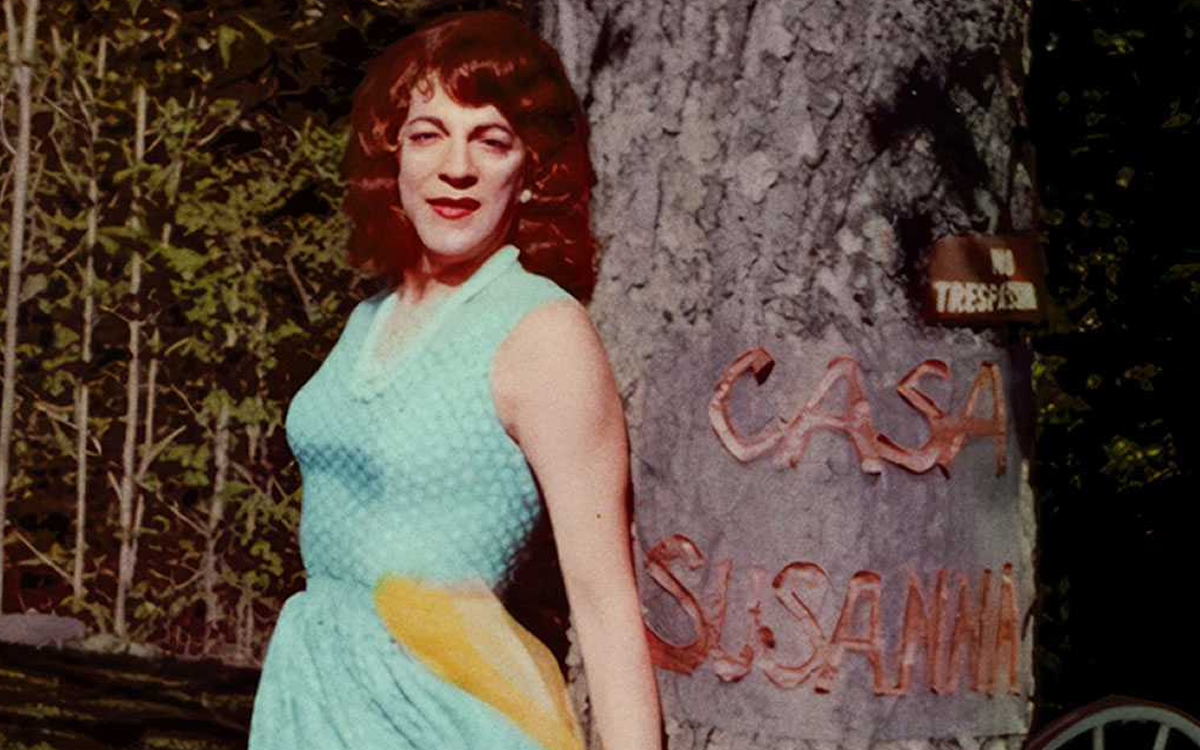
In the 1950s and 1960s, you could lose your job, scorned by your neighbors, arrested and/or institutionalized, if you were openly trans or cross-dressed in public.
Yet, during this draconian – anti-queer time, an underground network of transgender women and cross-dressing men found a safe haven in a modest house in the Catskills in New York. For a few days, they could live in this house, known as Casa Susanna. There, they could fulfill their dreams and discover their true selves. In a rare reprieve from hiding, they could meet other people like themselves; and live and dress as women.
“Casa Susanna,” an engrossing, moving documentary, which aired on June 27 on PBS’s “American Experience,” offers a revealing look into this underground network. The doc, directed by filmmaker Sebastian Lifshitz (“Wild Side,” “Little Girl), and executive produced by Cameo George, tells the story of a chapter of LGBTQ history that has long been invisible. “Casa Susanna” will stream on PBS platforms, including pbs.org and the PBS App, through July 26.
The documentary uses a trove of color photos of the people who sought refuge at Casa Susanna, archival footage and personal remembrances to tell its story.
The photos of life at Casa Susanna were found by collectors Michael Hurst and Robert Swope at a New York flea market. In 2005, Hurst and Swope published the photos in a book titled “Casa Susanna.”
Queer icon Harvey Fierstein wrote a play “Casa Valentina” that was inspired by Casa Susanna. The play was performed on Broadway in 2014.
In the documentary, we learn about what queer life was like at Casa Susanna from four people who were there in mid-century.
This isn’t a fast-paced, action-packed doc. But, it’s far from a “teachable moment. Watching “Casa Susanna” is like seeing photos of long-lost relatives.
The 137-minute doc’s slow pace is captivating. “Casa Susanna,” now, is just a few empty buildings. But in its heyday, it pulsed with queers.
In other places in the Catskills, hetero Borscht belt comedians entertained. At Casa Susanna, trans women and cross-dressing men performed. Not always as showbiz stars. Often, they dressed as who they wanted to be: ordinary women such as housewives.
The most moving story is that of nonagenarian Katherine Cummings. At the film’s beginning, Cummings, a trans woman, visits the old Casa Susanna buildings. Though, all that’s visible are the facades of empty buildings, she recognizes the theater where trans women and cross-dressing men performed decades earlier. Cummings was born in Scotland in 1935, and raised in Australia. Born as a man, she moved to Toronto. From there, she went to Casa Susanna to meet people like herself. While she lived as a man, she was named John. As John, she married and had three children. Cummings died in 2022. The documentary is dedicated to her.
“People used to love to be here,” Cummings says, “They had total freedom. A total chance to be themselves.”
Another elder, Diana Merry-Shapiro, a trans woman born in 1939, tells an engaging story. She was born in an Iowa farm town and later lived in California and New York. During her life as a man, Merry-Shapiro, then named David, married a woman and was a cross-dresser. After the marriage ended in divorce, she had gender affirmation surgery. She then married a man. After that marriage broke up, she was a computer programmer at Xerox. She married Carol, a woman, in the 1990s. The couple live in New York.
Another of the documentary’s storytellers, Betsy Wollheim, born in 1952, cisgender and president of Daw Books, is, at times, refreshingly angry. Donald Wollheim, the science fiction writer, was her father. A cross-dresser, he along with his wife (Betsy’s mother), went to Casa Susanna. This was kept secret until Betsy’s mother was dying. Betsy reveals that her father sometimes was abusive toward her. She believes this may have been because he had to be closeted about his cross-dressing.
The fourth storyteller, Gregory Bagarozy, a cisgender, hetero man, is personally connected to Casa Susanna. The (now-deceased) Marie Tonell, who co-owned Café Susanna with her spouse (the late) Tito Arriagada, was Bagarozy’s grandmother. Arriagada, first a cross-dresser, later lived as a trans woman named Susanna Valenti.
If you’re sensitive to language, be warned. Often, the people who tell their stories in “Casa Susanna” use terms that were said in the 1950s and 1960s. Words like “transvestite” and “transexual,” which aren’t used today, are used.
Though some of the storytellers in the doc, later, were in same-sex relationships, in mid-century, Casa Susanna didn’t welcome gay people. This is part of the extreme homophobia of the time of the Lavender Scare, Bagaroxy says.
“Casa Susanna” is a fascinating window into hidden queer history.




It’s surely a sign of the times that this year’s spring preview of upcoming screen entertainment doesn’t hold nearly as much boldly out-and-proud queer content as we would like – but then again, there are only a small handful of noteworthy titles overall – especially on the big screen, where, just like any year, the top-grade content is being saved for summer.
Even so, we’ve managed to put together a list of the movies and shows on the horizon that offer a much-needed taste of the rainbow; a mix that includes returning favorites, “don’t-miss” events, and a few promising big screen crowd-pleasers, it should keep you occupied until the summer season brings a fresh new crop of (hopeful) blockbusters with it.
Scarpetta (Prime Video, March 11). Proving once again that she’s on a quest to accumulate more screen appearances than any other actor in history, Nicole Kidman returns for another star turn by way of this true-crime-ish mystery series, adapted from the bestselling “Kay Scarpetta” novels by lesbian author Patrica Cornwell, as a “brilliant and beautiful” forensic pathologist who uses her knowledge to solve murders. If that’s not enough to draw you in, her co-stars include fellow Oscar-winners Jamie Lee Curtis (as her feisty older sister) and Ariana DuBose (as her nosy lesbian niece), as well as Bobby Cannavale and Simon Baker.
It’s Dorothy! (Peacock, March 13). Filmmaker Jeffrey McHale first won our attention with his fun and insightful “Showgirls” documentary, and now he’s back with a look at perhaps the ultimate queer icon in popular culture: none other than Dorothy Gale, that Kansas farm girl who taught us all that “there’s no place like home” in L. Frank Baum’s classic novel “The Wonderful Wizard of Oz” and its sequels – and of course, in a certain movie adaptation starring Judy Garland. Charting the journey of the fictional heroine across a century of cultural reiterations – on the page, the stage, the screen, and beyond – with a mix of archival material, artistic interpretations, and commentary from queer and queer-friendly voices such as John Waters, Rufus Wainwright, and Lena Waithe, it’s sure to be required viewing for every “Friend of Dorothy” – and all of their friends, too.
The 37th Annual GLAAD Media Awards (Hulu, March 21). Sure, it’s already happened and you already know (or can find out with a few quick taps of your phone screen) who and what the winners were – but, hey, we already know that the Oscars aren’t going to offer much in the way of queer victories (since there are only a small handful of queer nominees), so why not plan to watch the GLAAD ceremony (recorded live on March 5 for later streaming)?
The Comeback: Season 3 (HBO Max, March 22). Another returning gem is this inventive “mockumentary” style sitcom-about-a-sitcom, starring Lisa Kudrow as a “B-list” television star trying to revive her own faltering career. Slow to catch on in its first season (which originally aired in 2005), it won acclaim (and new fans) when it was rebooted in 2014 by Kudrow and collaborator/co-creator Michael Patrick King (former executive producer of “Sex in the City,” and now returns after a 12-year hiatus for another installment, which tracks “never-was” has-been Valerie Cherish through yet another attempt to make stardom happen. If you like cynical, sharp-edged satire, especially when it’s aimed at the behind-the-scenes world of show-biz, then you’ve probably already discovered this one – but if you haven’t, now’s your chance to jump on board.
Heartbreak High: Season 3 (Netflix, March 25). Fans of this imported Australian teen “dramedy” series – itself the “soft reboot” of another popular Australian series from the ‘90s – will be thrilled for the arrival of its third and final installment, which picks up where it left off in the lives (and sex lives) of the students and teachers of a suburban high school. As always, it can be expected to push the envelope (and some buttons) with its irreverent treatment of issues of class, race, and sexuality – and to deliver another season’s worth of the colorful and striking costume designs that have been acclaimed as a highlight of the show. And yes, it includes a refreshingly significant number of variously queer characters, so if you’re not already on board with his hidden gem of a streamer, we suggest you should give it a shot – you can probably even catch up on the first two seasons before this one drops.
Pretty Lethal (Prime Video, March 25). Fresh from a March 13 debut at the SXSW Film and TV Festival, this girl-power fueled action thriller from director Vicky Jewson and writer Kate Freund centers on a troupe of ballerinas who, while en route to a prestigious ballet competition, are stranded by a bus breakdown and must take shelter at a remote roadside inn run by Uma Thurman as a ruthless crime boss. Needless to say, the girls are forced to adapt their dance prowess into combat skills before the night is over. With a cast that includes Maddie Ziegler, Lana Condor, Avantika, Millicent Simonds, and Michael Culkin, our bet is that it’s sure to be campy fun with a feminist twist.
Forbidden Fruits (Theaters, March 27). Adapted from the play “Of the woman came the beginning of sin, and through her we all die” by Lily Houghton (who co-wrote the screenplay with director Meredith Alloway), this comedy/horror film about a group of young witches who operate a “femme cult” out of the basement of a mall store called “Free Eden” looks like another campy treat, full of witchy wiles and bitchy rivalries, but something about its theatrical pedigree tells us it will also be more than that. Even if we’re wrong, though, we’ll be perfectly happy; why would anyone say no to a delicious piece of camp, especially when it has a cast led by Lili Reinhart, Lola Tung, Victoria Pedretti, and Alexandra Shipp, with creator/influencer Emma Chamberlain in her film debut and heavyweight talent Gabrielle Union thrown in for good measure? We’re ready to join the coven.
Club Cumming (WOW Presents Plus, March 30). Queer icon Alan Cumming (currently riding high as host of “The Traitors”) takes us inside his NYC East Village gay bar, nightclub, and showplace for a behind-the-scenes reality series that spotlights the talent, fashion, and fabulously queer vibe that makes the establishment one of queer New York’s most iconic nightspots. Cabaret singer Daphne Always, go-go dancer and drag performer Michelle Wynters, Drag queen Brini Maxwell, Drag king Cunning Stunt, and Comedian Jake Cornell are among the many reasons why this little slice of the queer New York scene is reason enough alone to become a subscriber to World of Wonder’s streaming platform – though if you’re a “Drag Race” superfan, chances are good you already are.
The Boys: Season 5 (Prime Video, April 8). Amazon’s violent superhero satire, complete with its divisive and deliciously challenging emphasis on queer storylines and its in-your-face caricature of contemporary American “culture war” politics, returns for its fifth and final season, along with all the thorny issues of racism, nationalism, and xenophobia it has showcased all along, and an ensemble cast that includes Karl Urban, Jack Quaid, Antony Starr, Erin Moriarty, and the rest of the usual players. A decidedly queer-informed game-changer in the mainstream fan culture, it’s a show that will be sorely missed – but with several spin-offs already in existence (including the even-queerer “Gen V”) and another (“Vought Rising”) on the way, we can take comfort in knowing that its influence will live on.
Euphoria: Season 3 (HBO Max, April 12). The controversial Sam Levinson-created drama that is HBO’s fourth most-watched series of all time is back after a lengthy hiatus, rejoining the lives of its dysfunctional characters – queer struggling addict Rue (Zendaya), trans teen Jules (Hunter Schafer), abusive sexually insecure football star Nate (Jacob Elordi), and the rest – a full five years later, away from the social traumas of high school and settled into what we can only assume is an equally-dysfunctional life as young adults. Renowned for its cinematic visual styling and its no-holds-barred treatment of “triggering” subject matter, this long-awaited return is likely to be at or near the top of a lot of watchlists – and ours is no exception.
Mother Mary (Theaters, April 17). One of the most promising (and queerest) offerings of the season is this psychological thriller set in the world of pop music, helmed by acclaimed filmmaker David Lowery (“A Ghost Story,” “The Green Knight”) and starring Anne Hathaway (“The Devil Wears Prada,” “Les Misérables”) as a pop singer who becomes entwined in a twisted affair with fashion designer Michaela Cole (“I May Destroy You,” “Black Earth Rising”). Besides its two queer-fan-fave stars, it features trans actress Hunter Schafer (“Euphoria”), FKA Twigs, and Jessica Brown Findlay (“Downton Abbey”) in supporting roles, and to top it all off, it includes a soundtrack full of original songs. With a celebrated director behind it and an award-winning pair of leading ladies, this one has all the potential of a future classic.
The Devil Wears Prada 2 (Theaters, May 1). Meryl Streep is back as Miranda Priestley, need we say more? We know the answer to that is “no,” but we still need to remind you that Anne Hathaway, Emily Blunt, and Stanley Tucci are all part of the deal, too, as this hotly anticipated sequel hits the screen just ahead of the summer rush. Along for the ride are Kenneth Branagh, Justin Theroux, Lucy Liu, B.J. Novak, Conrad Ricamora, Sydney Sweeney, Rachel Bloom, Donatella Versace, and Lady Gaga herself. We trust that will be sufficient to ensure that you will show up on opening day – dressed accordingly, of course.
The Sheep Detectives (Theaters, May 8) Rounding out our roundup with a fun-for-the-family treat that blends live action with animation for an inter-species “whodunnit” with an all-star array of talent, this adaptation of Leonie Swann’s 2005 novel “Three Bags Full” centers on a flock of sheep as they attempt to solve the murder of their beloved shepherd. Boasting onscreen performances from Hugh Jackman, Emma Thompson, Nicholas Braun, Nicholas Galitzine, and Molly Gordon, along with character voices provided by Julia Louis-Dreyfus, Bryan Cranston, Chris O’Dowd, Regina Hall, Patrick Stewart, Bella Ramsey, Brett Goldstein, and Rhys Darby, this one might be just the kind of lightweight entertainment we all need as we move deeper into the confounding year of 2026.
And if not, stay hopeful – the films and shows of summer will be here soon enough.
Television
Netflix’s ‘The Boyfriend’ is more than a dating show
Cast talks about series’ importance to LGBTQ audiences around the world
It’s unfortunate how poorly so many people view reality television.
Of course, the genre doesn’t always do itself any favors; for decades, the most prominent examples of this medium were drunken fights and jaw-dropping bigotry. But viewers forget that reality TV has evolved along with its eternally growing audience. It still contains wild drama, yes, but recent years have seen an increase in shows like “RuPaul’s Drag Race” and “We’re Here,” which offer nuanced insight into the experiences of queer communities today. Series like these have an undeniable impact on the many who watch them, with their episodes among the most reliable sources of authentic representation that queer viewers can count on. That’s why reality television as a whole deserves more respect, and that’s why Netflix’s “The Boyfriend” is one of the most impactful programs airing today. The show has become a hit, with season 2 now streaming.
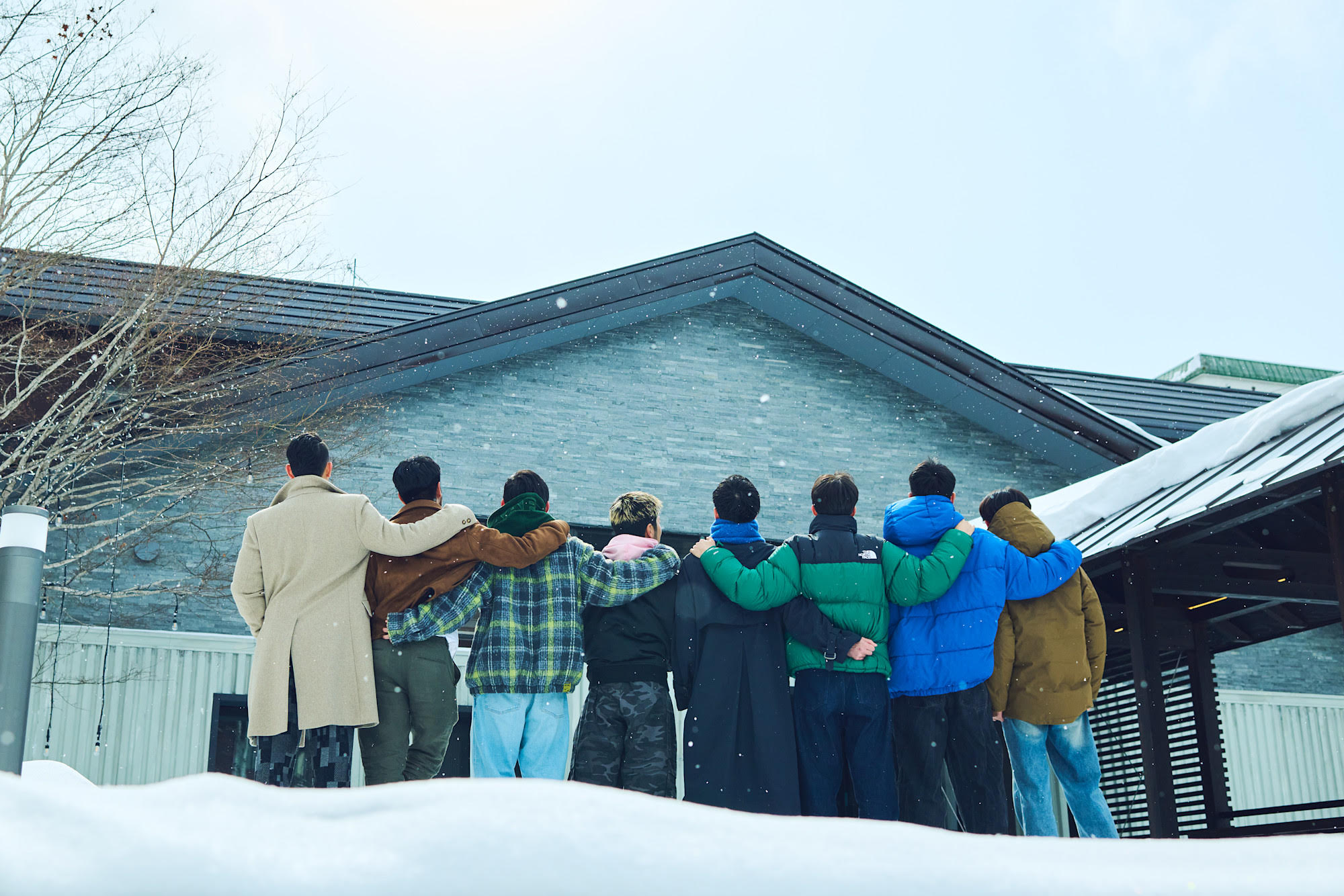
Japan’s first gay dating show, this series brings together a group of eligible men for one summer in ‘The Green Room,’ a house where they’ll live, run a small business, and hopefully find their true love. Overseen by a panel of commentators — a common practice for Japanese reality TV — the series has astounded for two seasons with the genuine emotions on display. Yet along with the romance, what sets “The Boyfriend” apart is just how informative it is. Not only by offering insight into a queer culture outside of America, but by creating a level of representation that Japan as a country has never seen before. So many scenes and stories on the show are important for LGBTQ audiences across the globe, but what truly sets “The Boyfriend” apart is the simple message that grounds this entire series: it’s not wrong to be gay.
“In Japan, LGBTQ+ people … [they] are prohibited,” said Durian, a commentator from “The Boyfriend” and one of Japan’s biggest drag performers. “They are regarded as nonexistent …[and] for some of the young people, when it comes to the fact that they are being ignored in society, it could lead to them not having pride in themselves.”
It was a sentiment echoed by “The Boyfriend” cast, with the group describing how LGBTQ identity is rarely discussed in public and only shown through stereotypes. “When I was in middle school, the word gay didn’t exist,” described Huwei, a contestant and member of Thailand’s national judo team. “People would use other words, [ones that] usually mean just being [like] women.” This is reflected in the portrayal of gay people in Japanese media, with the cast detailing how the few times they saw gay characters, it was always hyper-effeminate, ultra cheerful men — traits that were used as joke fodder for the audience. “They’re trying to be [funny], and they’re trying to make people laugh, but it didn’t necessarily have a positive impression,” said Tomoaki, whose time on the show saw the man grapple with accepting his own sexuality.
These topics come up naturally on the program, as well as other facets of what it means to live as a queer person in Japan, granting American audiences vital insight into an LGBTQ culture outside of their own. Durian explained their customs further, saying, “Japan is a bit reserved and very quiet. People may be a little frustrated because they think [the cast] should be more direct, but [their behavior] is really a part of Japanese culture. And if viewers can [understand] that, they’ll be happy.”
It can be easy to forget that the fight for LGBTQ liberation looks different in areas across the world. The cast of “The Boyfriend” not only portrays what dating looks like in their country, but also the many ways their communities fight for acceptance that international audiences don’t often get to see. It doesn’t do this in a way that discredits or villainizes Japanese culture — in fact, many of the men profess how much they love the country that raised them. But their national pride is paired with a hope that their country can grow and begin granting LGBTQ people the respect they deserve. It’s this desire that drives so much of the series’ emotion, making it all the more heartwarming when viewers realize just how important “The Boyfriend” is to this ongoing hope today.
“For me, I’d never been a part of a gay community … this is really [the first] time I was able to be really true to myself,” said Ryuki, a college student and the youngest member of the group. Bomi, who spent a majority of the season pining after fellow contestant Huwei, agreed, saying, “When I came to the ‘Green Room,’ honestly, in the beginning, I was scared … for the last 20 years, I have not really been honest to myself. But through the life I had [on this show], I’ve been able to be truly myself.”
The franchise’s inherent inclusivity not only allowed the men to find romance but to simply find community amongst one another. This led not only to great television but also to the entire cast raving about their time on the show, while also recognizing how hard it is to find this sense of belonging for so many LGBTQ people in Japan today.
As the conversation wound down, the men reflected on what their inclusion on this series means for their country going forward. As members of Japan’s inaugural gay dating show, they’ll be providing examples of queer identity outside of the grinning caricatures that have always permeated popular culture. They would finally be giving so many young LGBTQ viewers the knowledge that there are real people like them out there living happy lives today. This realization drove many of the cast to tears, with each expressing how they hoped these episodes would help those viewers desperately searching for representation. And while they all expressed their care, Bomi summarized the group’s thoughts on what they hoped people took away from “The Boyfriend” best.
“I want people to feel that they’re not alone. You’re not alone. I want to tell [them] that we all have the same kind of issues, and there are a lot of people who haven’t really expressed themselves yet … but we are here. We are here with you.”
An uplifting message of community, one that was only possible because of the genuine bonds this group forged throughout their experience. This shows just how much of an impact “The Boyfriend” is already making on Japanese culture, and it’s a reminder for viewers across the world that none of us are alone in the fight for queer equity today.
“The Boyfriend” season 2 is now streaming on Netflix.
Television
Charles Galin King brings cultural influences, style to ‘King of Drag’
First-ever drag king television competition series airs on Revry
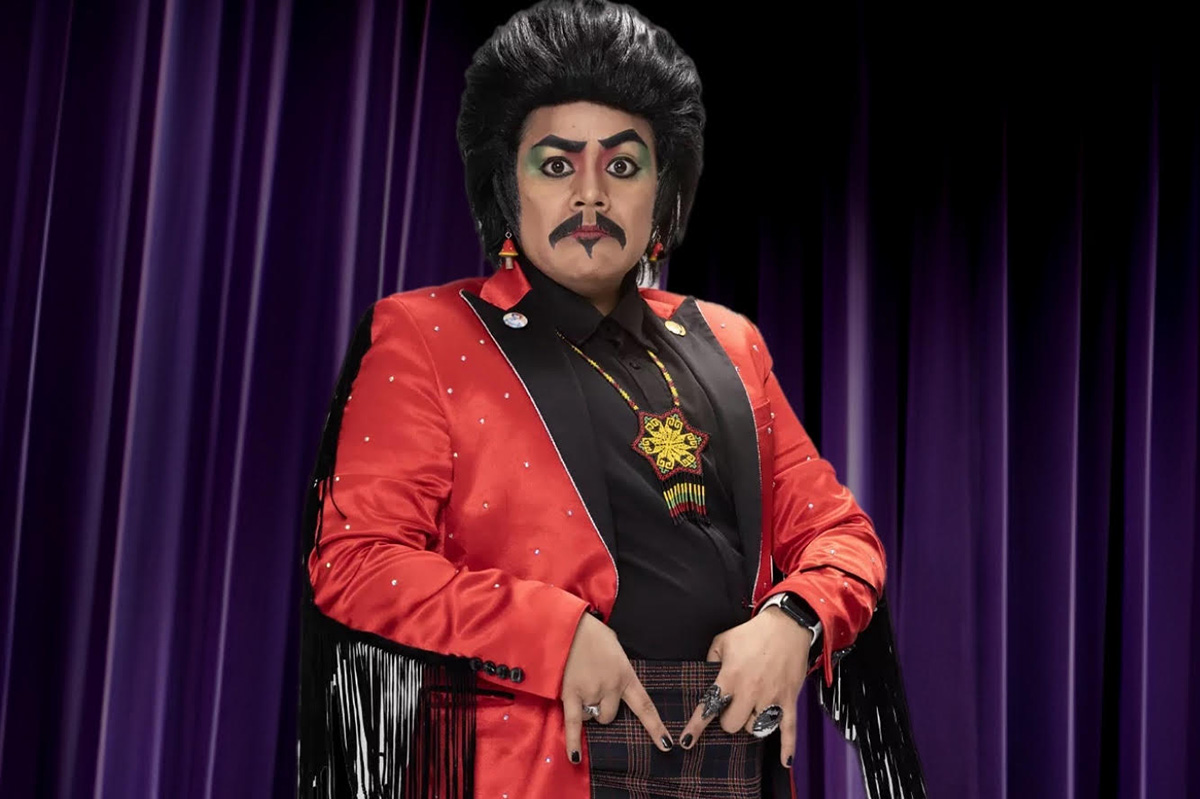
When Charles Galin King made his big debut on the world’s first drag competition show, “King of Drag,” you knew you were taking in a star. He introduced himself as “a Mexican-American Indigenous Wixárika with Ch’ol blood person,” and you couldn’t help but take notice.
His cultural influences are apparent in his drag, serving distinct and memorable looks. He won fans over with his fabulous impression of Nosferatu on “The Dong Show” and connected with them through his honesty about his mental health struggles. After bringing the black plague to the prom, his time on the Revry series came to an end.
We caught up with Charles Galin King to talk about his experience on “King of Drag,” what he hopes to see in future seasons, and advice for new drag kings.
Tell us about your first time in drag.
Back in high school senior year, I decided to wear one of my dad’s black button-up short-sleeved shirts and made a beard and mustache on my face, and wore a fedora hat. I went out with one of my best friends to this day, Ruben, and we went to Hollywood and went to Jack and the Box. I needed the restroom and went to the women’s, and a guy coming out of the men’s said, “Not that one, this one.” And I felt validated in drag cause I was that convincing of a “man,” jajaaaja.
What made you decide to be a part of the inaugural season of ‘King of Drag’?
I wanted to try it cause I was looking at the application out of curiosity, and upon reading started feeling fear and nervousness. And said, “I should apply,” to my mother. Also, l will die one day, might as well go for it and see how it is. I knew I would be a part of the first trial and error cause it’s a first of its kind, so we all learned together what this show is and will be.
What do you hope to see differently in future seasons?
More kings on the King’s Court, and more BIPOC judges, and more lip sync songs.
What surprised you most about your experience on ‘King of Drag’?
I gained nine new siblings and felt a beautiful connection to myself in wanting to be a part of this community even more because of them. And due to being a beautifully diverse experience.
What do you cherish most about your filming experience?
I showed what drag means to me and what my drag is. And being able to say thank you to the cast, crew, tech, and owners of the studio where filming was at.
If you could do one thing over on ‘King of Drag,’ knowing what you know now, what would it be?
Have more money and be able to show my true fear of cutting out a fetus from me and showing myself dying.
Have you had any especially memorable fan interactions since the show began?
Yes, when people and fans would say thank you for sharing your story about accepting death and suicide. And them asking me what surprised me most about being on the show.
Do you hear from other kings about the representation the show offers?
Yes, very much. They feel seen and have been wanting this for such a long time, and it’s a breath of fresh air seeing us all work together. We still feel the hate from those who don’t understand our existence, though I have learned from my kings on the show that with every hate comment, there are ten love comments from the fans.
What do you want aspiring kings to know about the working life of a king?
Be prepared to be looked at by certain audiences with stares of confusion, and being on their phone when performing or being compared to other kings. Also, since we are still climbing to be accepted in this world, the majority of “Drag Race” fans still see us as non-existent and trash. Always focus on our drag king audience, for they understand us the most. Always have fun, for if I have fun, then the audience will have fun alongside me. SO many queens support us, and there are still queens who look down on us. Accept that and focus on your music, routines, lyrics, and feeling the vibes of what character you will put on stage.
If you can ask a co-star or Murray Hill one question at a season 1 reunion, what would it be?
What’s your favorite flavor of ice cream if you eat ice cream? And when can we hang out and look out to the sunset and high-five when it’s time to go home?
Stream the entire season of “King of Drag” now on Revry.com and follow Charles Galin King on social.

Supreme Court ruling against conversion therapy bans could affect Md. law

Glisten report details hostile climate for LGBTQ students

As mayor’s race takes shape, candidates endorse LGBTQ equality

D.C.’s affirming congregations to mark Holy Week, Easter

Trans activists gather on National Mall for Transgender Day of Visibility

Trump tells Fox News he won the ‘gay vote’ — but polls tell a different story

‘Out for McDuffie’ event held at D.C. gay bar

‘Jonah’ an undeniably compelling but unusual memory play

The Oscar-losing performance that’s too good to miss

Ghanaian president welcomed to Philadelphia amid backlash over anti-LGBTQ bill
-

 The White House5 days ago
Trump tells Fox News he won the ‘gay vote’ — but polls tell a different story
-
District of Columbia2 days ago
‘Out for McDuffie’ event held at D.C. gay bar
-
Theater3 days ago
‘Jonah’ an undeniably compelling but unusual memory play
-
Movies3 days ago
The Oscar-losing performance that’s too good to miss