National
Lawsuit against Affordable Care Act targets PrEP
AIDS groups warn court ruling could lead to ‘explosion’ in new HIV cases
More than two dozen HIV/AIDS advocacy organizations and LGBTQ supportive health centers have filed two separate friend-of-the-court or amicus legal briefs supporting the appeal of a Texas court decision earlier this year that the advocacy groups say would greatly reduce health insurance coverage of the HIV prevention medication known as PrEP.
The two amicus briefs filed by the advocacy organizations in June express strong support for the Biden administration’s appeal of a March 30, 2023, ruling by Judge Reed O’Connor for the U.S. District Court for the Northern District of Texas. O’Connor’s ruling struck down a provision of the U.S. Affordable Care Act that requires insurers to provide full coverage of preventive care services without co-pay or cost-sharing fees, including coverage for PrEP.
“As an organization representing thousands of physicians and other health care professionals working on the frontlines of the HIV epidemic in communities across the country, we are deeply concerned about the harmful and far-reaching impacts this decision will have if allowed to stand,” said Dr. Michelle Cespedes, chair of the HIV Medicine Association, one of the groups that filed the second of the two amicus briefs opposing the court ruling.
“Reinstating cost-sharing for PrEP would directly cause tens of thousands of preventable cases of HIV transmission and set back decades of progress toward curbing the epidemic,” she said in a statement.
In response to the appeal of the District court decision filed by the U.S. Department of Justice on behalf of the Department of Health and Human Services, which administers the Affordable Care Act, the U.S. Court of Appeals for the 5th Circuit issued an administrative stay placing the lower court ruling on hold while the appeal process moves forward.
The case is called Braidwood Management Inc. et. al v. Becerra. Court records show that Braidwood, a management services company described as Christian owned, Kelley Orthodontics, also described as Christian owned, and six individuals in Texas jointly filed the lawsuit against the Affordable Care Act in September 2022.
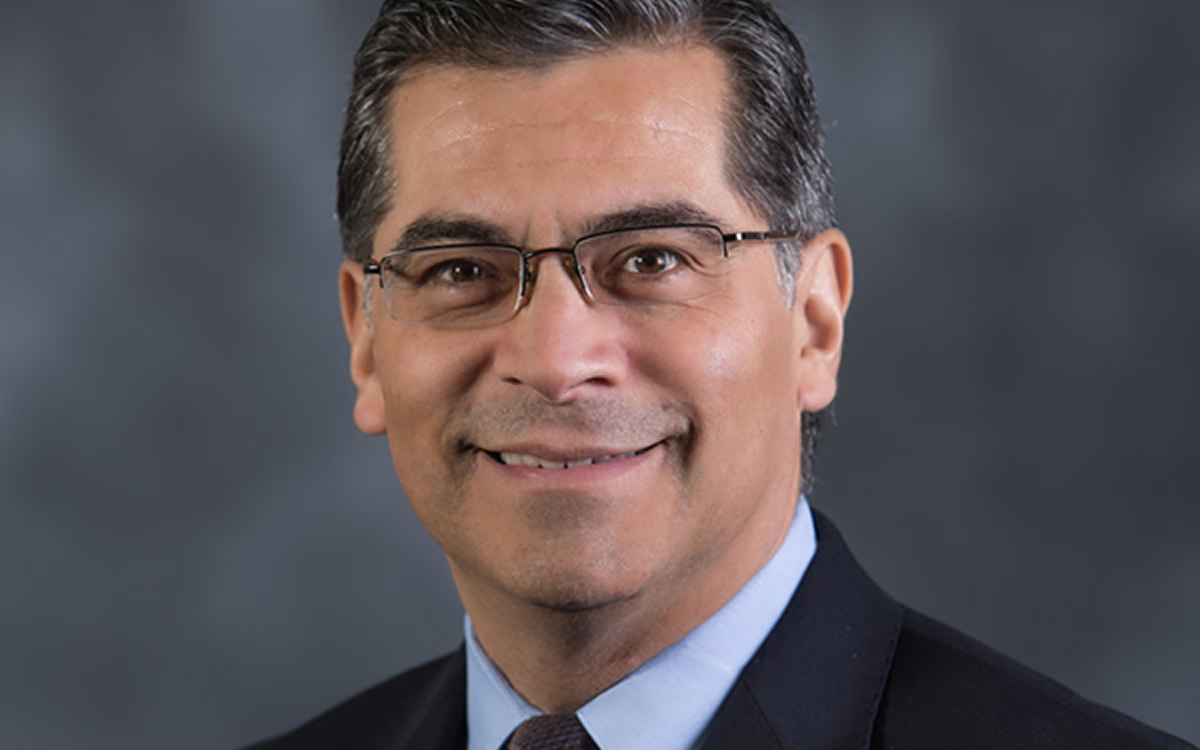
U.S. Secretary of Health and Human Services Xavier Becerra, whose name appears on the case, is among the federal officials in charge of administering the Affordable Care Act. The law is sometimes referred to as “Obama Care” after former President Barack Obama who initiated the expansive healthcare legislation that was passed by Congress.
The Braidwood company and the other plaintiffs that filed the lawsuit seeking to overturn the Affordable Care Act provision related to preventive care argue in court filings that forcing them to provide financial coverage to PrEP, among other things, is unconstitutional and violates their religious rights under the U.S. Religious Freedom Restoration Act.
“Notably, the plaintiffs state the requirement to cover PrEP ‘imposes a substantial burden on the religious freedom of those who oppose homosexual behavior on religious grounds,’ claiming further that PrEP drugs ‘facilitate and encourage homosexual behavior, prostitution, sexual promiscuity, and intravenous drug use,’” according to KFF, on online independent news publication that covers health policy issues.
The publication, which analyzed the court filings in the case, says the plaintiffs also contend that the Affordable Care Act’s preventive services provision violates the Appointments Clause of the U.S. Constitution, which they argue requires government officials making important health care decisions under the Affordable Care Act be nominated to office by the president and confirmed by the U.S. Senate.
In their lawsuit challenging the preventive services provision, the plaintiffs note that under the Affordable Care Act, decisions on how to define preventive services that must be covered under the act are now made by the U.S. Preventive Services Task Force, whose members are not confirmed by the Senate.
The U.S. government appeal of the Texas District court ruling, and the amicus briefs filed by the AIDS advocacy organizations and other groups, including D.C. ‘s Whitman-Walker Health and the Human Rights Campaign Foundation, strongly dispute the plaintiff’s assertions.
“We must not allow a couple of individuals who want to discriminate against people who use PrEP and don’t support insurance coverage of preventive services, such as HIV and hepatitis B and C testing, to destroy the public health of our country,” said Carl Schmid, executive director of the HIV-Hepatitis Policy Institute, one of 25 advocacy group that filed a joint amicus brief on June 23.
“We filed this amicus brief to emphasize the important role testing for HIV and hepatitis plays in linking people to life-saving medications and, in the case of hepatitis C, curative treatment, along with the importance of helping people know if they have an infectious disease,” Schmid said in a statement.
“We sought to emphasize that purchasing insurance that includes coverage of PrEP for HIV in no way burdens the ability of plaintiffs to exercise their religion,” said Richard Hughes IV, the lead attorney for the joint amicus filing by the 25 advocacy groups. “In fact, we suggest to the court that granting exemptions for PrEP coverage would have far-reaching and absurd consequences for our society,” Hughes said.
The other amicus brief filed June 28 by the HIV Medicine Association (HIVMA) and the National Alliance of State and Territorial AIDS Directors (NASTAD), which represent thousands of physicians and other health care providers throughout the U.S., points out that if the Texas lower court ruling is allowed to stand, tens of thousands of people who rely on preventive care coverage from their health insurance policies will likely lose that coverage.
“Copays and deductibles deter people from accessing healthcare,” said Ben Klein, Senior Director of Litigation and HIV Law at the GLBTQ Legal Advocates & Defenders, known as GLAD, which is representing the two groups that filed the second amicus brief. “PrEP is nearly 100 percent effective at preventing transmission of HIV, but it is already underutilized, particularly among Black and Latino communities,” Klein said in a statement.
“As the brief filed today by HIVMA and NASTAD demonstrates, allowing the lower court’s ruling in Braidwood v. Bacerra to stand will exacerbate racial health disparities, increase new HIV diagnoses by the tens of thousands, and have devastating consequences on our efforts to end the epidemic,” Klein said.
Klein told the Washington Blade that the District court ruling, if not overturned on appeal, will adversely impact people at risk for other diseases, not just HIV. He points out that the higher copays and insurance deductible costs will impact cancer prevention screenings, including colonoscopies, by greatly raising the insurance related costs for people who may not be able to afford to pay those costs.
“So, we’re talking about a staggering impact that when you look at the range of harms and costs, it’s unfathomable,” he said. “And so that’s why a lot of the amicus briefs focused on that.”
Klein said a decision on the appeal by the 5th Circuit U.S. Court of Appeal, which covers the states of Texas, Louisiana, and Mississippi, was not expected to take place until sometime next year, with oral arguments by the attorneys likely to take place later this year.



U.S. Supreme Court
Supreme Court rules against Colo. law banning conversion therapy for minors
8-1 decision could have sweeping impact
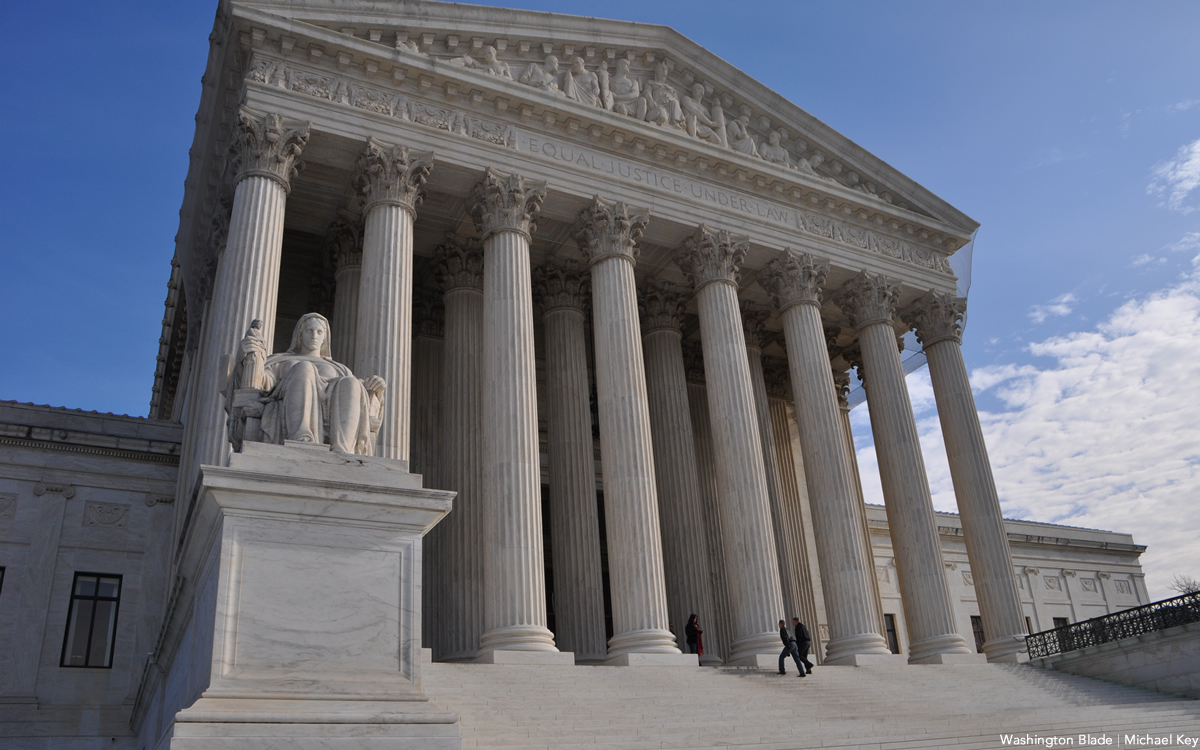
The U.S. Supreme Court on Tuesday ruled against a Colorado law that bans so-called conversion therapy for minors.
The justices last October heard oral arguments in Chiles v. Salazar. Today they ruled 8-1 in favor of Kaley Chiles, a Christian therapist who challenged the 2019 law.
In the case, which was heard by the justices in October 2025, Chiles successfully argued to the court that the law restricting this type of therapy was unconstitutional, leading to it being struck down.
The Supreme Court ultimately found that lower state and federal courts has “erred by failing to apply sufficiently rigorous First Amendment scrutiny,” ultimately reversing the widely discredited “medical” treatment that has support by a very narrow margin of mental health specialists — specifically religious and socially conservative ones. This is despite the fact that Colorado state officials have never enforced the measure in practice, and included a religious exemption for people “engaged in the practice of religious ministry.” The now moot law carried fines of up to $5,000 for each violation and possible suspension or revocation of a counselor’s license.
In the ruling, the court said the law, that specifically applies to talk therapy “impermissibly” interferes with free speech rights of Americans, and despite it being “regard[ed] its policy as essential to public health and safety, but the First Amendment stands as a shield against any effort to enforce orthodoxy in thought or speech in this country,” Justice Neil Gorsuch wrote for himself and seven other justices from across the ideological spectrum who overturned the low court’s ruling. He went on to add that the original ban “trains directly on the content of her speech and permits her to express some viewpoints but not others,” sending it back down to a lower court.
Only Justice Ketanji Brown Jackson dissented, which included an in depth summary of her departure from the other eight justices, explaining her fears about the verdict — and its eventual chilling effect on legislation that could attempts to restrict regulatory speech for religious attitudes— despite that these regulations are often made as a direct creation of years of essentially unanimous research, and are vetted though regulatory boards for specific jobs.
“This decision might make speech-only therapies and other medical treatments involving practitioner speech effectively unregulatable,” Jackson wrote on page 32 of the 35-page opinion issued by court in response to her opposing eight members comments on the bench.
Since the ruling late Tuesday morning, a slew of LGBTQ advocacy groups, as well as groups promoting LGBTQ discrimination, have issued statements on the direct impact this will have across the country for LGBTQ people.
Democratic Senator, running for reelection in Colorado, John Hickenlooper issued a condemnation of the practice on his X (formerly Twitter). “Conversion therapy is cruel and inhumane, plain and simple. This SCOTUS decision is dangerous for LGBTQ+ Americans,” Our LGBTQ+ community deserves safety, acceptance, and love. We won’t ever let up in our fight for a better nation.”
Conversion therapy is cruel and inhumane, plain and simple. This SCOTUS decision is dangerous for LGBTQ+ Americans.,” the former Governor said on the platform. “Our LGBTQ+ community deserves safety, acceptance, and love. We won’t ever let up in our fight for a better nation.”
Polly Crozier, director of family advocacy at GLBTQ Legal Advocates & Defenders (GLAD Law), provided a statement to the Washington Blade on the court’s decision.
“Today’s Supreme Court ruling limited Colorado’s statute that preemptively shielded minors from conversion therapy, but it leaves open avenues for states to protect families from harmful, unscrupulous, and misleading practices that divide parents from their children and put LGBTQ+ youth at risk,” Crozier wrote, pointing to the overwhelming evidence on conversion therapy that argues this type of regulatory legislation is helping those suffering rather than harming. “The evidence is clear that conversion practices lead to increased anxiety, depression, and suicidality. This is a dangerous practice that has been condemned by every major medical association in the country. Today’s decision does not change the science, and it does not change the fact that conversion therapists who harm patients will still face legal consequences, and that family advocates, mental health practitioners, and all of us who care about the wellbeing of youth will continue working to shield LGBTQ+ young people and their families from this dangerous practice.”
Human Rights Campaign President Kelley Robinson, who leads the nation’s largest LGBTQ advocacy group, also provided a statement, calling the courts choice a “reckless decision.” The statement also points out how their own data (from the group’s philanthropic arm of the organization) was cited in Brown Jackson’s dissent in the amicus brief.
“The court has weaponized free-speech in order to prioritize anti-LGBTQ+ bias over the safety, health and wellbeing of children,” her statement reads. “So-called ‘conversion therapy’ is pseudoscience, not real therapy. It has been condemned by every mainstream medical and mental health association and harms families, traumatizes children, and robs people of their faith communities. It is cruel and should never be offered under the guise of legitimate mental healthcare. To undermine protections that keep kids and families safe from these abusive practices is shocking — and our children deserve better.”
Liberty Counsel, a nonprofit, tax-exempt Christian ministry that uses litigation to promote evangelical Christian values and limit LGBTQ protections, which was designated as a hate group by the Southern Poverty Law Center, was also cited in the court’s amicus brief, but in support of overturning the law.
“The U.S. Supreme Court’s resounding decision in Chiles v. Salazar is a major victory for the integrity of the counseling profession,” Mat Staver, Founder and Chairman of Liberty Council said today. “This ruling ensures the government cannot strip the First Amendment away from licensed counselors and dictate a state-mandated ideology between counselor and client. Talk therapy is speech, and the government has no authority to restrict that speech to just one viewpoint. Counseling bans can now be struck down nationwide so that people can get the counseling they need.”
GLAAD, one of the nation’s oldest non-profit organizations focused on LGBTQ advocacy and cultural change issued a statement pon the verdict, emphasizing what multiple advocate groups have said – this decision will impact an already vulnerable youth population at an elevated high risk.
“The Court once again prioritized malice over best practice medicine,” Sarah Kate Ellis, President and CEO of GLAAD said in a statement. “In the face of this harmful decision, we need to amplify the voices of survivors of this dangerous and disproven practice, and continue to hold anyone who peddles in this junk science liable.”
Truth Wins Out, an organization that works towards “advancing liberty and democracy through protecting the rights of LGBTQ people and other minorities” called out the court’s majority opinion for its potential for religious extremism and spread of disinformation.
“This ruling is a profound failure of both logic and moral responsibility that confuses ‘free speech’ with ‘false speech’,” Wayne Besen, the Executive Director of Truth Wins Out said in a comment. ” It opens the door for quackery to flourish and allows practitioners of a thoroughly debunked practice to continue harming LGBTQ youth under a thin veneer of legitimacy
Adrian Shanker, the former Deputy Assistant Secretary for Health Policy at Health and Human Services under President Biden, who also led LGBTQI+ policy at the agency spoke about the detrimental impact this will have on rules and regulations within the healthcare field that are supposed to be inherently secular by nature.
“No matter what the Supreme Court decided today, it is irrefutable that conversion therapy is harmful to the health and wellbeing of LGBTQI+ youth,” Shanker told the Blade, continuing the Trump Administration’s choice to no longer formally support LGBTQ inclusive policy. “That’s why in the Biden administration we advanced policies to safeguard youth from this harmful practice.”
In an consistently updated document started in 2018 that cites the major harms risks conversion therapy poses to LGBTQ people, the Trevor Project, the leading suicide prevention and crisis intervention organization for LGBTQ young people, included that the federal government’s own research proved the practice at best questionable and at worst deadly.
In a 2023 report entitled Moving Beyond Change Efforts: Evidence and Action to Support and Affirm LGBTQI+ Youth, the U.S. Department of Health and Human Services’ Substance Abuse and Mental Health Services Administration stressed that “[sexual orientation and gender identity] change efforts are harmful practices that are never appropriate with LGBTQI+
youth, and efforts are needed to end these practices,” the summary of the fight against conversion therapy in the U.S. reads.
More than 20 states and D.C. banned the widely discredited practice for minors prior to the Supreme Court’s ruling.
The Blade last October spoke to conversion therapy survivors after the justices heard oral arguments in the Chiles case.
The White House
Thousands attend ‘No Kings’ protests in D.C.
Protesters demand accountability, defend democracy, and oppose Trump administration
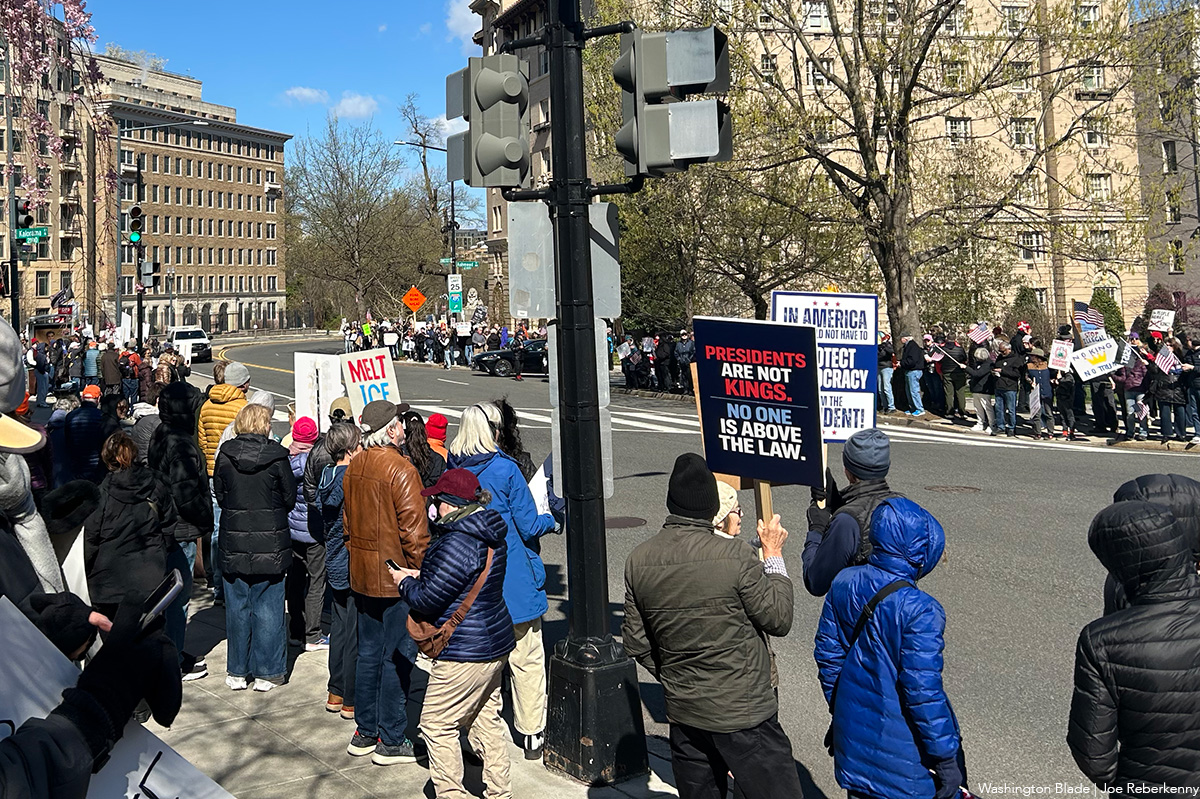
Across all 50 states — and D.C. — more than 8 million people came out nationwide from towns big and small, red and blue, to make their voices heard. That united voice echoed what nearly 20,000 protesters declared in the nation’s capital back in October 2025: the citizens of the U.S. would not sit idly by as President Donald Trump and his administration erode democracy, attempt to restrict human rights, loosens First Amendment protections, and begin wars without congressional approval.
While there were countless differences among the thousands who joined the “No Kings” protests this weekend in the DMV — from creeds and socioeconomic statuses to races, sexualities, and gender identities — there was one thing that united them all during the chilly March 28 weather: a commitment to making their voices heard.
By 10 a.m., the Washington Blade estimated around 200 people had braved bitter winds and temperatures hovering around 40 degrees, with bright sun, to stand along the cherry blossom-adorned streets of Kalorama and Connecticut Avenue. Protesters carried signs large and small from criticizing Trump’s disregard for the “everyman” to handmade signs emphasizing love, calling for the melting of ICE, and addressing issue-specific concerns like ending the wars in Gaza and Iran — both policies propagated by Trump.
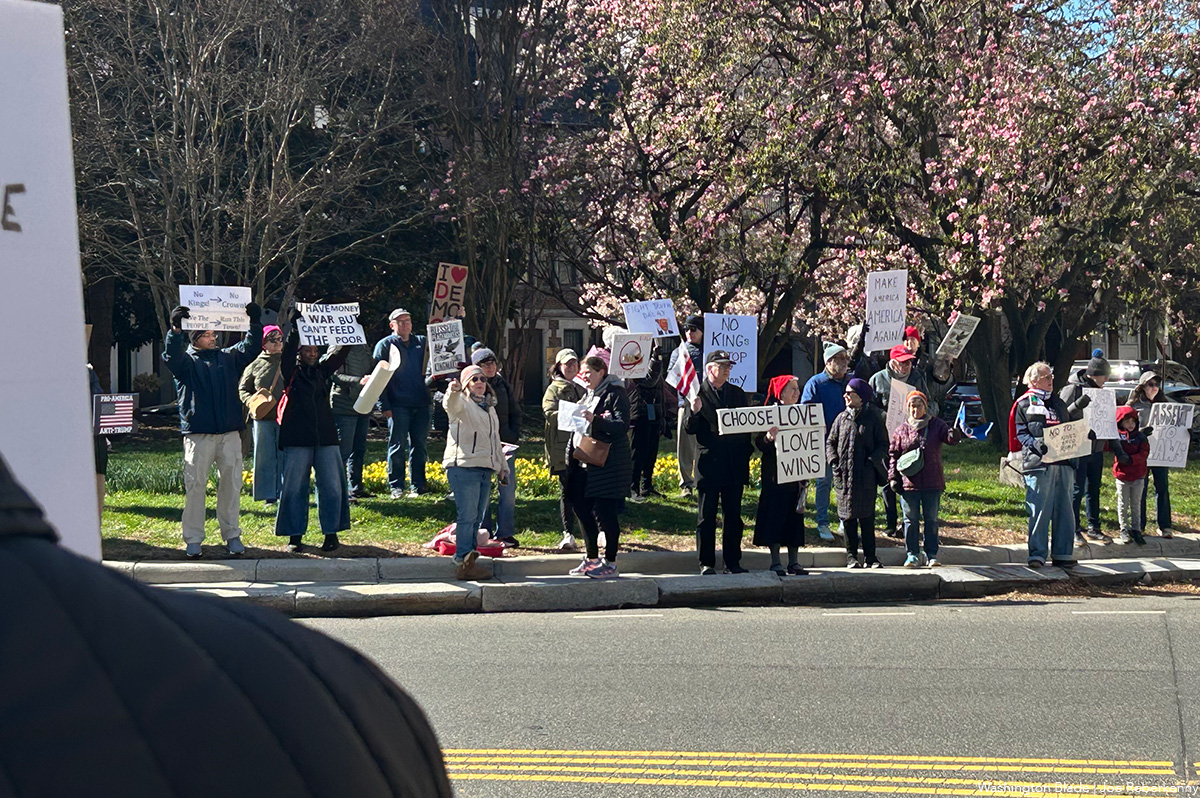
While a solid group of D.C. residents came out with babies in strollers and dogs on leashes, the Kalorama protest skewed older with a majority-white crowd.
On the other side of town, the more heavily attended protest in Anacostia started at 1:30 p.m., crossing the Frederick Douglass Bridge.
MS Now estimates that over 20,000 people marched across the bridge, sending a clear message to the president, his administration, and the Republican-controlled federal government: federal overreach is not what the majority of Americans want to see, hear, or witness as protesters in the thousands came out for, as organizers say “the single largest non-violent day of action” in American history.
The two marches on Saturday differed in both theme and location — the Kalorama protest felt like a small-town demonstration in a big city, covering a wide variety of topics, whereas the Anacostia protest was more focused, directly calling out and pushing back against the actions of Stephen Miller (the White House chief of staff)and other Trump allies.
Many participants shared their reasons for marching with glee — shouting as cars honked in support passing by and discussing the broader issues within the current political climate with those standing next to them: some neighbors, some friends, others complete strangers. Regardless, an important discussion was happening across the city.
A surprise to many participants — and the Blade reporter covering the event — was seeing U.S. Rep. Sara Jacobs (D-Calif.) stand outside in near-freezing temperatures with her staff and some signs.
Jacobs used the exclusive — and more intimate — ability to speak on her experience watching everything unfold from inside the halls of Congress.
“We had votes until midnight last night, so I couldn’t make it back to San Diego for the march, but it’s important to show up and cheer on people standing up and making their voices heard,” Jacobs said. “This is just the start. We need to make our voices heard every day through the end of the year.”
Jacobs also used the opportunity to criticize congressional inaction from those on the other side of the aisle, reminding the Blade that a legislator’s job is to protect and secure the people they represent — not the interests of a wannabe king or corporations that back many congressional campaigns through PACs.
“It makes me angry at my Republican colleagues who won’t stand up to Trump. Actions like this inject courage into my colleagues — they need to see that the American people have their back,” she added, eventually emphasizing the public responsibility lawmakers have to protect the Constitution and everyone in the country (which the Supreme Court had pointed out as far back as 1886 with Yick Wo v. Hopkins). “Congress is not going to save people. This is about everyone showing up and making our voices heard and building the democracy we want.”

Ashley Gould, a tourist visiting from Missouri, told the Blade that despite Washington being seen as one of the most politically active towns in the country, over the past few years, she and many other politically active Missourians have been preparing for this moment and were zealous to have their voices heard together as one.
“I’m actually visiting my sister from Missouri, and we’ve been doing this since the first No Kings protest [there]. I wanted to see how you guys did it here,” she said. “As someone in a red state, we’re not represented in Congress right now, so I don’t personally have a say in any of this. If I can do one small thing, I want kids in our town to see me trying to make a difference, get petitions signed. This is all we have.”
Gould continued, “I don’t know if it’s going to cause an impact for elected officials, but I hope that little kid who sees us with the posters sees that we do have a voice—and maybe one day they can, if they can’t right now.”
Gary Bowman, another early protest-goer, held a sign that pointed out the obscurity — and unconstitutional nature — of the current administration’s actions.
“I hate the direction the country is going in, and Donald Trump is not fit to be in office,” Bowman said, adding that his choice of sign exemplified that. “It’s obvious based on his policies — his attacks on the trans and LGBTQ communities — that he’s trying to suppress people. And the Republican Congress isn’t helping.”
When asked how the phrase “No Kings” resonates with him, especially since this is the third one held in two years, Bowman said it may be catchy for headlines or help inspire creative signs (like Trump on a golden throne or toilet), but the march and protest are about something much more important.
“‘No Kings’ is a catchphrase for me; I’m more concerned about losing our democracy. We, the people, have a voice we should use,” he said, elaborating on how this administration’s course of action disregards rules designed to prevent an authoritarian — or wannabe-authoritarian — from taking power. “I don’t think Trump is overstepping … I think he’s shattering democratic norms. He wants to do what’s right for Donald Trump, not for anyone else.”
He concluded bluntly that unless everyone — including Republicans in power — stand up to the president for these ludicrous choices, change won’t happen, regardless of how loud he or any other Trump critics scream at protests.
“Until we have a Congress that would actually look at protests and take action, it won’t matter. He’ll just get pissed off and act against them,” Bowman said.
When asked what he could say to those in charge, he finished strongly: “If I could say one thing to him? Fuck off, Donald Trump.”
Jameson Woosley and Elena Lacayo were standing on the corner of Kalorama Road, holding their baby tight as pink cherry blossom trees swayed behind them, as if to cheer on the protesters.
“It’s the degradation of democracy. Every day there’s an overreach by the executive branch, and Congress just sits on their hands,” Woosley said, standing side by side with Lacayo.
“It’s terrifying for my baby. This administration has turned people who’ve done nothing wrong into criminals — it’s Orwellian. Up is down, war is peace,” Lacayo noted. “I was raised in another country with authoritarians… I’m a citizen here, and I’m going to use every right I have to advocate for those who can’t.”
Lacayo then spoke about how, for many, direct protests against government action (and inaction) are the only choice — especially under a supermajority federal government with the White House, Supreme Court, and both chambers of Congress.
“We have no choice but to believe change can come. This is what we can do. We must continue fighting; that’s what the human spirit is about,” she said.
Woosley emphasized the growing impact of the protests, saying, “Every protest gets bigger, and opinion polls keep swinging in the right direction … We need to speak up and get all the right people out to bring positive change.”
“These people are nothing without us,” Lacayo added.
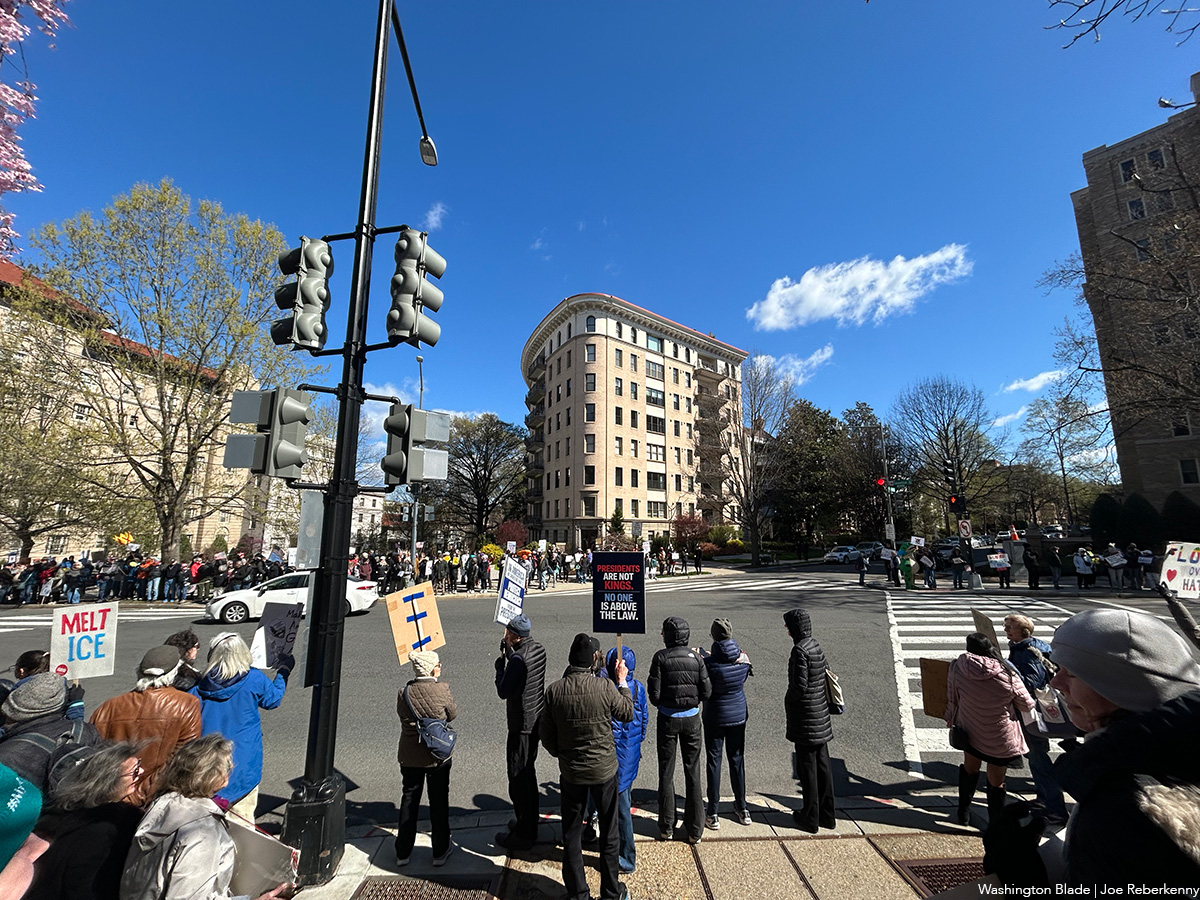
Beth Davis, a former resident of Kalorama, shared with the Blade that this place holds special meaning for her — and her children — which is in part why she chose this one over the larger protest in Anacostia.
“I used to live in the neighborhood, so this is special for me. It’s easy to bring the kids and let them be part of the movement,” Davis said, as her elementary-aged children ran around the manicured grass while bundled up, enjoying the lively atmosphere.
“What’s happening to immigrant communities is horrific, and I want to show solidarity. Also, the Iran war — it’s terrifying what’s happening,” she added before explaining what the “No Kings” name actually means to her. “’No Kings’ makes me think of the extreme grab for power — it’s unprecedented.”
Davis then noted the importance of protesting when it seems like the main goal is often to iisolate : “Coming to protests makes people feel like they’re not alone, and that momentum carries into elections,” she explained, noting why she not only brought her two children to this protest—and many others in the past as well– but uses these as real world teaching moments. “We bring kids to teach them their civic responsibilities. My oldest has been to about ten protests.”
Another remarkable aspect of D.C. protests is the diversity of participants. Teachers, retail workers, students, and even some congresspeople turned out. In Kalorama on Saturday, the No Kings protest brought out Anne Plant, a biochemist and fellow at the National Institute of Standards and Technology, where she was previously chief of the Biosystems and Biomaterials Division.
Plant focused on many issues when speaking to the Blade, but started with what many consider the most important: Trump-era policies making civic engagement more difficult, particularly regarding civil rights.
“A lot of things are going wrong, and the only way to change them is for people to act. D.C. has no statehood, no vote — it’s a civil rights issue,” Plant said. “To deny the vote to any group of U.S. citizens doesn’t make sense. These people work for us; we should be able to hold them accountable.”
She held a small, hand-painted sign with two cohesive messages: “Reject Fascism. Defend democracy.”
“Some of what’s going on now is not healthy for society. No one will benefit; it’s just ruination,” Plant concluded. “Seeing more people out here shows that others feel the same, and momentum is what it takes to move things.”
Religious activists also joined the marches. Sister Diane and Sister Claire, two Catholic nuns, were out protesting Trump and his agenda.
“We’re sisters, Catholics in support of LGBTQ rights. I work with immigrants, and we wanted to stand in solidarity,” Sister Diane said.
Sister Claire reflected on the era the U.S. is in now: “It’s so disturbing. I’m almost glad my folks aren’t alive anymore for all they cared about. It’s heartbreaking, but we need something for the future.”
John Jones, another attendee teeming with energy and anger against the regime, captured the urgency of the moment succinctly.
“We’ve got to do something. I needed to be part of the community and let them know we’re tired of all the madness,” Jones told the Blade before detailing specific atrocities by the Trump-Vance administration.
“Rounding up legal people who follow the rules — throwing them away just because he’s racist, or his friends tell him to be racist. Helping pay for a war, bombing Gaza, killing people for no reason, manipulating the stock market for personal gain. It’s crazy,” he said, still holding out hope that small acts — like the protest gathering — show everyday Americans they have power, advocating for even more people to come out for the next No Kings protest.
“I hope protests can spark change. I won’t hold my breath, but the more people out here, the more they [in power] seem to be listening.”
Patty Bowring, who had moved with her family from the United Kingdom to join her husband in D.C. for his career, is set to return soon due to immigration restrictions. She, her children, and her mother came out to protest because she believes it is just as important for non-citizens to have the right to both protest and exist in a country founded and enriched by immigrant and enslaved labor.
“Even though we’re British, we’re leaving America in two months because of the administration. But this affects everybody — it’s hugely dangerous and worrying,” Bowring said.
Despite the somber mood, she kept a smile and joked: “I hope it’s the death of dinosaurs and that nothing more radical comes next. I want them to be happy,” also pointing out that the mixed messages at the protest could dilute impact. “Protests need a clearer message. ‘Anti-fascist’ should be the focus; too many other messages muddy things.”
Finally, John Norrin highlighted the continuity of civic engagement, informing the Blade that this protest — albeit a smaller version — happens every week on the corner.
“I’m here with friends, looking for more,” Norrin said. “There’s a regular protest every Thursday morning, and I’m going to start joining … The kings today are mostly figureheads, but we also have dictators not called kings who act like one. We have an elected representative trying to be a king.”
He, much like others around him — even with Jacobs standing mere feet away — criticized Congress’ inaction.
“Congress is understepping. They should assert their rights under Article One — declare war, impose tariffs — but they’re too afraid to follow their oath,” Norrin said, eventually shifting to a note of hope. “If at least 3.5 percent of the populace regularly protests, there’s a good possibility for change. I hope that happens here. Some friends will go to Connecticut to join larger groups. I had to figure out which protest in D.C. to join—it took a while.”
Ghana
Ghanaian president welcomed to Philadelphia amid backlash over anti-LGBTQ bill
Lincoln University cancelled event with John Mahama

Ghanaian President John Dramani Mahama, known for making anti-LGBTQ legislative promises, was scheduled to appear at two local colleges this week — but plans have changed. Although Mahama will still attend a community dialogue at Temple University, he will no longer be honored at Lincoln University — a Chester County HBCU. He will, however, be presented with an award by the World Affairs Council of Philadelphia. The cancellation of the Lincoln event came shortly after LGBTQ activists spoke out about his appearances.
“Due to unforeseen circumstances, the university is cancelling the visit from President John Dramani Mahama,” Athena Griffith-Howard, associate vice president of marketing and communications at Lincoln University, told PGN.
According to a press release about the scheduled event, Mahama was set to receive an honorary doctorate from Lincoln University on Thursday, March 26, “in recognition of his outstanding contributions to public service, democratic governance, peaceful international and inter-African relationships, and global advocacy for justice, equality, and education.”
Although Griffith-Howard did not respond to additional questions about the matter, Joy News — an independent news organization that markets itself as the “most credible” journalism in Ghana — reports that the university has rescinded his honorary degree and cancelled the visit due to Mahama’s anti-LGBTQ stance.
“It is both surprising and regrettable that, just hours ago, the Embassy received a communication from the university indicating that concerns had been raised by a group regarding President Mahama’s perceived position on Ghana’s Human Sexual Rights and Family Values Bill,” a statement released by the Ghana Embassy on March 24 reads.
Mahama has repeatedly vowed to sign the Human Sexual Rights and Family Values Bill into law if it passes out of parliament. He has also made statements against queer and transgender people.
“The position of my government [is that] marriage is between a man and a woman. A person’s gender is determined at birth. And then also, that the family is the foundation of our nation. That is our position,” Mahama said in a speech on Nov. 18, 2025.
Intimacy laws — which criminalize LGBTQ sex and the use of sex toys — already hold a three-year prison sentence under Ghana law, stemming from legal frameworks that previously governed the country when it was controlled by the British government. Ghana became the first African country to gain independence from European colonization in 1957 — but rather than repeal the antiquated law, leaders chose to incorporate it into their own penal code in 1960. The country’s supreme court upheld the law in 2024.
The Human Sexual Rights and Family Values Bill — often simply referred to as “the anti-LGBTQ+ bill” — would further criminalize LGBTQ people and expression and add new risks for allyship. If passed, the punishment for intimacy violations would increase to a possible five-year prison sentence. LGBTQ people could also be punished for simply identifying as LGBTQ with a new three-year prison sentence.
The proposal would also ban LGBTQ serving organizations, even those that only partly serve LGBTQ people. Violations would include up to five years in prison. Allies could face 10 years in prison for supporting LGBTQ people or promoting LGBTQ rights online, in newspapers, or through other verbal or written communications. Journalists who report on LGBTQ topics are also at risk.
The bill would force families and community members to report those found in violation of the statute to local law enforcement.
“If the parliament of the people of Ghana endorse the bill and vote on it and pass it and it comes to me as president, I will sign it,” Mahama said during his November speech.
Since the Human Sexual Rights and Family Values Bill was introduced in 2021, LGBTQ Ghanaians and allies have experienced widespread discrimination and physical violence — including harassment and arrests, raids on LGBTQ centers (which have led to at least one closure), as well as a hostile media landscape. When the bill was first passed by parliament in 2024, anti-LGBTQ incidents more than doubled.
The proposal was not signed into law by the former President Nana Akufo-Addo, who characterized the proposal as a backsliding of human rights. At the time, Ghana’s finance ministry also warned that signing the bill would place several billions of dollars in funding in jeopardy as a similar anti-LGBTQ bill in Uganda led the World Bank to suspend new funding to that country.
This threat would be especially difficult for Ghana to bear given recent funding cuts made by the Trump administration, which have been especially problematic for some African countries.
Ghana previously relied on USAID funding for social programs and health services, but Trump’s funding cuts led to a $156 million loss — including approximately $78 million that previously funded malaria prevention, maternal and child health, family planning, reproductive health, nutrition, and the fight against HIV/AIDS.
Despite the funding cuts, anti-LGBTQ leaders — including those in Ghana — have been emboldened and empowered by the Trump administration’s own anti-LGBTQ efforts, citing that they no longer fear economic sanctions if their own anti-LGBTQ bill passes.
According to activists, Mahama urged parliament to reintroduce the bill after he took office in January 2025 — around the same time Trump began issuing executive orders, which have negatively impacted LGBTQ Americans.
Mahama is currently in the U.S. to lead a delegation at the United Nations to advocate for reparatory justice for the Transatlantic Slave Trade. He will present a landmark resolution to the United Nations General Assembly in New York City on March 25 — seeking a formal declaration of the Transatlantic Slave Trade as a crime against humanity. The visit also includes a wreath-laying ceremony to honor the lives of enslaved Africans who perished in the U.S.
LGBTQ rights advocates keenly understand the importance of holding the U.S. accountable as direct drivers of the Transatlantic Slave Trade and for the atrocities that occurred to African people on American soil as the country built its economic and social power off of their oppression.
In a press release about Mahama’s visit to Philadelphia, a growing coalition of Philadelphia’s LGBTQ and allied leaders — including Philly Pride 365, GALAEI and ACT UP Philadelphia — called the invitation to speak at Temple University “even more concerning” given the human rights focus of the delegation.
“You cannot come to a global stage calling for justice, repair and recognition of historical harm while simultaneously supporting or advancing policies that criminalize and endanger another marginalized group,” said Tyrell Brown of Philly Pride 365 in the joint statement. “That contradiction is not just political. It reflects a fundamental failure to understand intersectionality and the interconnected nature of oppression.”
“Justice is not selective. Human rights are not conditional,” Brown continued. “If we are serious about repair, it must extend to all people — especially those currently being targeted by state-sanctioned harm.”
There is a colonialist link between the continued oppression of LGBTQ Africans with harmful rhetoric and money coming from the U.S. At least 20 US-based conservative Christian groups, which have spent over $54 million since 2007 on anti-LGBTQ efforts in Africa, are linked to anti-LGBTQ bills and laws across the continent.
“We support the reparations resolution. The argument it rests on is morally sound,” reads a press release issued by JustRight Ghana — a Ghana-based human rights organization. “The transatlantic slave trade classified human beings as property based on what they were born as. It said that certain categories of people, by virtue of their birth, had no rights, no dignity, and no protection from the power of the state.”
“That is the same logic that runs through every clause of the Human Sexual Rights and Family Values Bill 2025. Section 3 says that being born with a particular sexual orientation makes you a criminal,” the press release goes on to state. “The moral architecture is identical. The only thing that has changed is who the target is.”
The World Affairs Council of Philadelphia still intends to present Mahama with its International Statesperson Award on March 27.
A blurb about the award on the institution’s website reads, “The International Statesperson Award of the World Affairs Council of Philadelphia is the highest honor the Council bestows — a tribute for global leadership. It is presented periodically and awarded to distinguished international figures and world leaders whose work has advanced the twin goals of peace and freedom and resulted in a significant positive impact on world affairs.”
Mahama is also still invited to participate in a community dialogue event that will be held at Temple University on the evening of March 26. The event is advertised as celebrating Ghanaian music and artistic culture, comedy, and heritage — featuring celebratory performances as well as a dialogue with Mahama and other national leaders.
“Attendees will have the opportunity to hear firsthand from the president on Ghana’s vision and emerging opportunities, engage in conversations that help shape diaspora partnerships, and explore business, investment, and cultural collaboration opportunities,” reads an Instagram post about the event. “The evening also marks a historic moment as part of the president’s first official visit to Philadelphia.”
The event was planned before Lincoln University canceled its conferment and according to a press release, Mahama intends to convene with people of the Ghanaian diaspora during the Temple University visit.
“This conversation reflects something bigger than a single event,” reads an Instagram post published by Temple University Black Alumni Alliance about the event. “It represents connection across the diaspora, leadership across borders, and the importance of creating spaces where global perspectives and lived experiences can meet.”
In response to PGN’s request for comments and answers to questions, Steve Orbanek, Temple University’s executive director of communications and media relations, emailed the following statement:
“Temple University unequivocally opposes the exclusion of or discrimination against members of the LGBTQIA+ community. Temple takes pride in providing an inclusive and welcoming environment for all students, faculty, staff, alumni, neighbors and friends regardless of their race, nationality, religion, gender, sexual orientation or identity.
“President Mahama will be in the United States to attend the United Nations General Assembly during the International Day of Remembrance of the Victims of Slavery and the Transatlantic Slave Trade. The US-Ghana Chamber of Commerce invited him to participate in a community event and approached Temple about using a venue on campus.
“As a public university, Temple regularly provides space for speakers as part of our ongoing commitment to academic inquiry, open dialogue and public service. We have made venues available for third-party organizations, including political parties or campaigns, regardless of their political viewpoint or stance. The presence of any speaker on campus is not an endorsement by Temple University of the speaker or their views.
The Human Sexual Rights and Family Values Bill that has been recently reintroduced in Ghana’s Parliament is deeply troubling and runs counter to the mission and values of Temple University. Temple’s strength is its people, and every member of our community adds to the cultural richness of our institution. We are committed to cultivating an educational environment founded on respect, open-mindedness, and the appreciation of others.”
The Philadelphia coalition of LGBTQ leaders rejects the idea that hosting a speaker does not reflect the views of the host institution and underlined that platforming political leaders with ties to problematic policies still produces harm.
“Providing a platform to a leader advancing policies that endanger LGBTQ lives and undermine HIV prevention is deeply irresponsible. Institutions of higher education should not normalize or legitimize harm under the guise of dialogue,” said Sam Sitrin of ACT UP Philadelphia in the joint statement.
“Universities should be spaces that uphold human rights and evidence-based public health,” added Jose Demarco of ACT UP Philadelphia. “Hosting leaders associated with policies that criminalize LGBTQ people and undermine HIV prevention sends the wrong message at a time when lives are at stake.”
Temple’s Center for Anti-Racism — an initiative of Temple’s Office of Institutional Diversity, Equity, Advocacy, and Leadership (IDEAL) — which is promoted on flyers and social media as hosting the event, has not responded to PGN’s questions or requests for comments. The event, which was previously included on the university’s events listings, is no longer visible but has not been canceled as of Wednesday, March 25. It is unclear if the university is taking any steps to protect or uplift LGBTQ students during the event.
The Philadelphia coalition of LGBTQ leaders called the decision to host the event in light of the local community’s response “harmful and careless.” They also raised concerns about Temple University’s process to repair wounds and are pressuring Temple to cancel the event and formally apologize to Philadelphia’s LGBTQ community.
“According to organizers, the university had knowledge of the concerns surrounding President Mahama’s [anti-LGBTQ] record as early as Thursday [March 19] but did not conduct meaningful outreach to community partners, nonprofits, or local leaders most impacted by the issue,” the coalition’s press release reads.
“When institutions fail to proactively engage communities on issues of this magnitude, it reveals a disconnect between stated values and actual practice.”
Coalition members joined additional Philadelphia-based leaders in sending a letter to Temple University’s IDEAL initiative and Center for Anti-Racism — noting their concern for the event but also openness to dialoguing directly with the event’s organizers to seek intentionality and transparency.
“This is not an abstract policy discussion. It is about the safety, dignity, and survival of LGBTQ people globally. For many in our communities, including African and Caribbean diaspora members here in Philadelphia, these policies have direct emotional, familial, and cultural impact,” the letter reads. “Hosting this dialogue without intentional accountability risks legitimizing rhetoric and policies that endanger lives.”
Those who signed the letter described themselves as leaders who are Black and Brown, LGBTQ, representatives of HIV/AIDS organizations, and individuals working in government, civil society and DEI spheres in Philadelphia. They include activists of ACT UP Philadelphia, representatives from SMUG International and Bebashi, Ronda Goldfein of the AIDS Law Project of Pennsylvania, Jacen Bowman of Philadelphia Black Pride, Andre Ford of The COLOURS Organization, Sappho Fulton of Womxn Beyond Borders, Hazel Edwards of GALAEI, Simon Trowell of Mazzoni Center, José Benitez of Philadelphia FIGHT, Tyrell Brown of Philly Pride 365, Darius McLean of William Way LGBT Community Center, state Rep. Andre Carroll, state Rep. Malcolm Kenyatta, Philadelphia Councilmember Kendra Brooks, and Philadelphia Councilmember Rue Landau.
They underline that proceeding without addressing concerns would risk harm to the very students and communities IDEAL purports to support.
“As Black and Brown and African LGBTQ leaders, with the support of our allies, we are requesting that the organizers of this event include questions about this truly dangerous legislation and highlight the real world impact on Ghanaian LGBTQ people, their families and their communities,” the letter insists. “Though we believe in autonomy for all nations, and that Americans should not dictate the policy of other nations, we also believe that these deadly policies should not go unquestioned or unchallenged, especially since this event is sponsored by IDEAL, which has a strong commitment to the BIPOC, LGBTQ, and Ghanaian students at Temple.”
They underlined that questions about the matter should come directly from the event’s organizers rather than become the responsibility of the community during a Q&A. The signed leaders hope to receive a response by Wednesday evening — and PGN will follow up with continued reporting when more information about the university and community’s plans are known.
“Silence, in this moment, is not neutrality: it is complicity,” the letter emphasizes.

Trans activists gather on National Mall for Transgender Day of Visibility

The cost of speaking one’s mind

Senegalese president signs bill that further criminalizes homosexuality

Md. lawmakers reaffirm legislative priorities

Supreme Court rules against Colo. law banning conversion therapy for minors

Lorato ke Lorato: marriage equality, democracy, and the unfinished work of justice in Botswana

Celebrate cherry blossoms the drag way

Japanese Supreme Court to consider marriage equality

The outrage economy is not the LGBTQ community

Anti-trans visa ruling echoes Nazi regime destroying trans documents
-

 Botswana5 days ago
Lorato ke Lorato: marriage equality, democracy, and the unfinished work of justice in Botswana
-
Out & About5 days ago
Celebrate cherry blossoms the drag way
-
Japan5 days ago
Japanese Supreme Court to consider marriage equality
-
Opinions5 days ago
The outrage economy is not the LGBTQ community