New York
Black queer dancer murdered in NYC
NYPD investigating O’Shae Sibley’s death as a hate crime
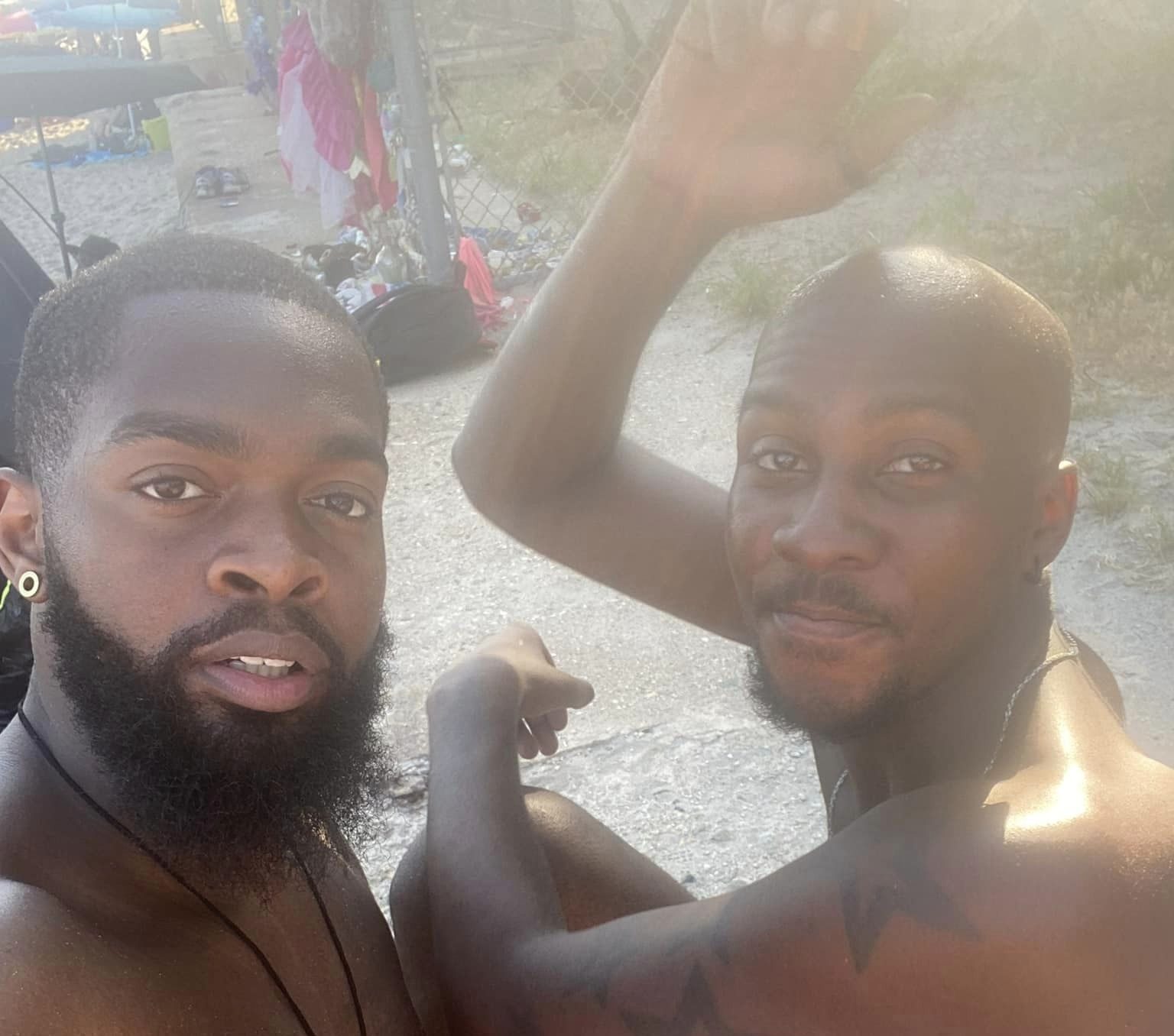
A professional Black queer dancer was murdered just after 11 p.m. Saturday night during a confrontation with a group of young Muslim men in the Midwood neighborhood of Brooklyn at a Mobil convenience store and gas station.
The New York Police Department’s 66th Precinct homicide investigators, along with detectives from the NYPD Hate Crime Task Force, are searching for a teenage suspect seen in surveillance video footage arguing with the victim, O’Shae Sibley, 28.
According to witnesses and the NYPD, Sibley and a group of his friends performed an impromptu voguing dance session while refueling after a day trip to the Jersey Shore. The teenage suspect and several others had emerged from the convenience store and engaged Sibley using profanities and homophobic epithets.
Witnesses told investigators that the group of young Muslims had told Sibley and his group that their voguing dance was offensive to their religion.
On the surveillance video footage the ensuing physical altercation is shown with the rapid departure of the suspect and his group. The NYPD said medics rushed the dancer to Maimonides Medical Center with a stab wound to the chest, but he succumbed to his injuries en route and was dead upon arrival.
Prominent Black director and choreographer Kemar Jewel, who had worked with Sibley since he was a teenager, posted his tribute, expressing grief over the killing on Facebook.
“Over the weekend, my nephew O’Shae (Sage) was murdered due to a hate crime. A group of men killed him for being gay. Once I got the call that he didn’t make it to the hospital, I felt my soul leave my body.
I met O’Shae when he was 16-years-old. He was a bright eyed and goofy young man who had talent beyond anything I’d seen before. He could sing, he could do hip hop, jazz, ballet, tap anddddddd he was an incredible voguer! That’s how we became close.
We both were immersed in the arts and wanted to step into ballroom, so we joined the ballroom scene at the same time and was in our first house together. In addition to Ballroom, O’Shae was a staple in the Philly dance community and was even apart of Philadanco (The Philadelphia Dance Company.)
Since O’Shae was so talented, I always jumped at the chance to put him in shows and productions to show off his talents. If you know me, my career took off because of my ballroom-related music videos. Out of the eight videos I’ve done in my career, O’Shae has starred in six of them! O’Shae also has choreographed and assisted me on several live productions, including choreographing the first ever Black Queer Sondheim show I did.
If you know me, you know that I’m not connected to my biological family, and O’Shae was one of the closest things to family that I ever had. We checked on each other. We loved each other and we were always there when the other needed it. We were invested in each other’s wellbeing and growth and I knew that we were bonded together forever. To add the cherry on top, a few years ago, we found out that we were ACTUALLY RELATED because his biological cousin was married to my uncle. I remember O’Shae’s face when he found out, he was so happy that a bond that was made up was now cemented in real life.
Anyone who ever met O’Shae was very blessed to know him. He was funny, unique, charismatic and always knew how to have a good time. Most importantly, he loved HARD!!! He went above and beyond for his loved ones and made sure no one was ever sad around him. As I write this, tears are running down my face thinking about his beautiful smile and his child-like energy. I can’t believe that I have to live the rest of my life without hearing him calling me ‘Uncle’ in one of his funny voices.
O’Shae, I love you with every bone in my body, I’m so sorry that this world and its hatred has taken you away from us way too soon. I promise you I’ll make sure your memory will live on in the hearts and minds of everyone I come across. I’ll tell your stories! I’ll speak your name and I’ll make sure that every Black queer artist I meet knows that I am who I am because you poured into me and believed in me, even when no one else did.
Rest in Peace.
Rest in Paradise.
Rest in Power.”
Sibley had performed at Lincoln Center as part of an all-queer dance group in Jacolby Satterwhite’s dreamlike digital media exhibit “An Electric Dance to the Movement of Time” in 2022.
The New York Daily News reported that Jewel notably featured Sibley in his 2021 video “Soft: A Love Letter to Black Queer Men,” a nearly seven-minute performance that the Brooklyn dancer co-choreographed, which uses the art of contemporary dance to portray black feminine energy.
“He really, really loved Soft,” said Jewel. “He helped to talk me through it and breath life into it.”
Jewel told the Daily News that Sibley moved to New York from Philadelphia three years ago, shortly after he did, because he enjoyed the city’s 24-hour vibrancy. He said that Sibley had the gift of making people happy.
“He was goofy and funny and full of life and energy. And he always knew how to make people smile. I think that those are his best attributes — that he made everyone smile.”
Sibley also liked to share his enthusiasm and his gift for dance.
“He also volunteered at dance studios to help teach folks. He volunteered at youth centers and he offered free classes and stuff. He definitely loved to give back.”



New York
Lawsuit to restore Stonewall Pride flag filed
Lambda Legal, Washington Litigation Group brought case in federal court
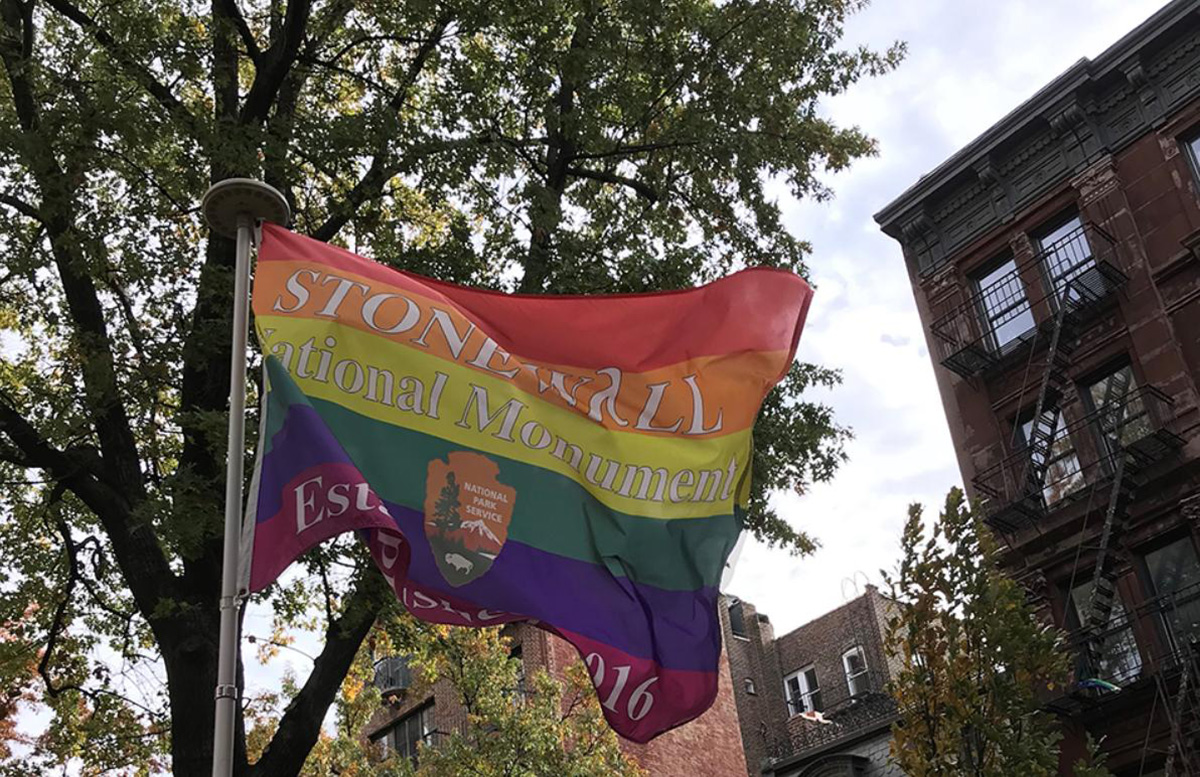
Lambda Legal and Washington Litigation Group filed a lawsuit on Tuesday, challenging the Trump-Vance administration’s removal of the Pride flag from the Stonewall National Monument in New York earlier this month.
The suit, filed in the U.S. District Court for the Southern District of New York, asks the court to rule the removal of the Pride flag at the Stonewall National Monument is unconstitutional under the Administrative Procedures Act — and demands it be restored.
The National Park Service issued a memorandum on Jan. 21 restricting the flags that are allowed to fly at National Parks. The directive was signed by Trump-appointed National Park Service Acting Director Jessica Bowron.
“Current Department of the Interior policy provides that the National Park Service may only fly the U.S. flag, Department of the Interior flags, and the Prisoner of War/Missing in Action flag on flagpoles and public display points,” the letter from the National Park Service reads. “The policy allows limited exceptions, permitting non-agency flags when they serve an official purpose.”
That “official purpose” is the grounds on which Lambda Legal and the Washington Litigation Group are hoping a judge will agree with them — that the Pride flag at the Stonewall National Monument, the birthplace of LGBTQ rights movement in the U.S., is justified to fly there.
The plaintiffs include the Gilbert Baker Foundation, Charles Beal, Village Preservation, and Equality New York.
The defendants include Interior Secretary Doug Burgum; Bowron; and Amy Sebring, the Superintendent of Manhattan Sites for the National Park Service.
“The government’s decision is deeply disturbing and is just the latest example of the Trump administration targeting the LGBTQ+ community. The Park Service’s policies permit flying flags that provide historical context at monuments,” said Alexander Kristofcak, a lawyer with the Washington Litigation Group, which is lead counsel for plaintiffs. “That is precisely what the Pride flag does. It provides important context for a monument that honors a watershed moment in LGBTQ+ history. At best, the government misread its regulations. At worst, the government singled out the LGBTQ+ community. Either way, its actions are unlawful.”
“Stonewall is the birthplace of the modern LGBTQ+ rights movement,” said Beal, the president of the Gilbert Baker Foundation. The foundation’s mission is to protect and extend the legacy of Gilbert Baker, the creator of the Pride flag.
“The Pride flag is recognized globally as a symbol of hope and liberation for the LGBTQ+ community, whose efforts and resistance define this monument. Removing it would, in fact, erase its history and the voices Stonewall honors,” Beal added.
The APA was first enacted in 1946 following President Franklin D. Roosevelt’s creation of multiple new government agencies under the New Deal. As these agencies began to find their footing, Congress grew increasingly worried that the expanding powers these autonomous federal agencies possessed might grow too large without regulation.
The 79th Congress passed legislation to minimize the scope of these new agencies — and to give them guardrails for their work. In the APA, there are four outlined goals: 1) to require agencies to keep the public informed of their organization, procedures, and rules; 2) to provide for public participation in the rule-making process, for instance through public commenting; 3) to establish uniform standards for the conduct of formal rule-making and adjudication; and 4) to define the scope of judicial review.
In layman’s terms, the APA was designed “to avoid dictatorship and central planning,” as George Shepherd wrote in the Northwestern Law Review in 1996, explaining its function.
Lambda Legal and the Washington Litigation Group are arguing that not only is the flag justified to fly at the Stonewall National Monument, making the directive obsolete, but also that the National Park Service violated the APA by bypassing the second element outlined in the law.
“The Pride flag at the Stonewall National Monument honors the history of the fight for LGBTQ+ liberation. It is an integral part of the story this site was created to tell,” said Lambda Legal Chief Legal Advocacy Officer Douglas F. Curtis in a statement. “Its removal continues the Trump administration’s disregard for what the law actually requires in their endless campaign to target our community for erasure and we will not let it stand.”
The Washington Blade reached out to the NPS for comment, and received no response.
New York
Pride flag raised at Stonewall after National Park Service took it down
‘Our flag represents dignity and human rights’
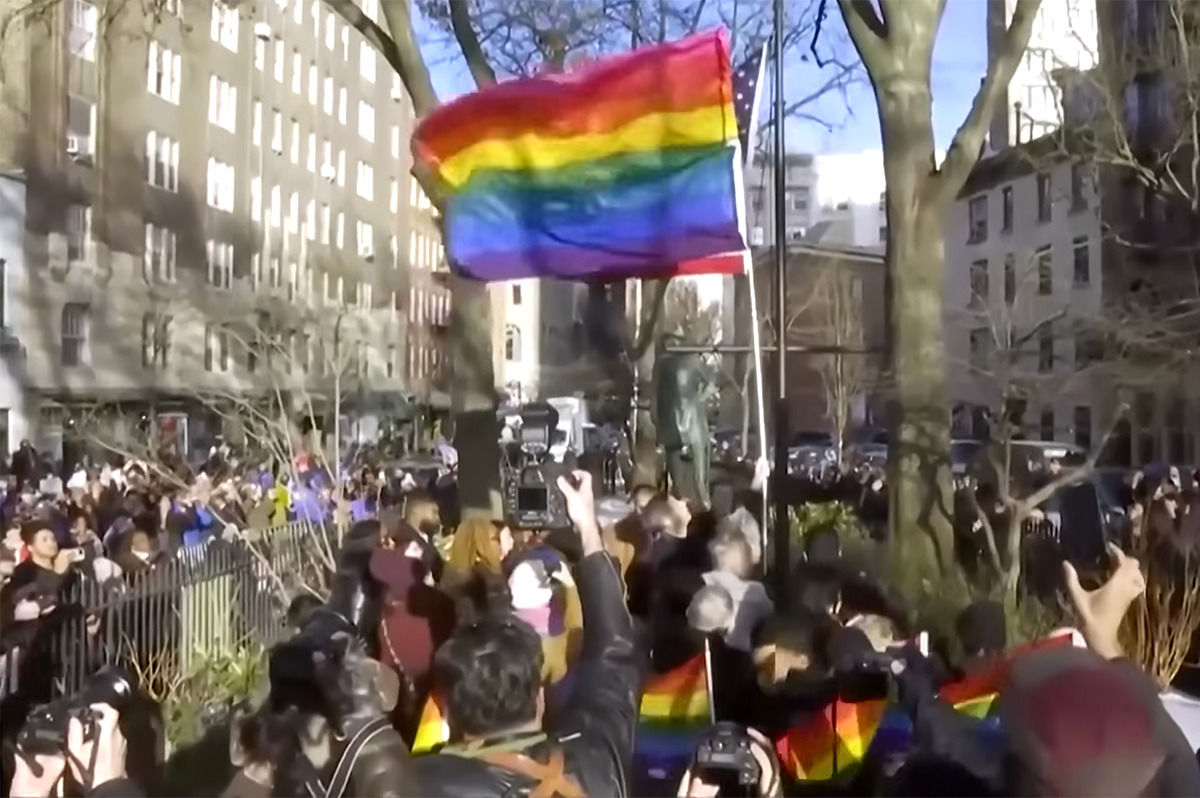
A Pride flag was raised at the site of the Stonewall National Monument days after a National Park Service directive banned flying the flag at the birthplace of the LGBTQ rights movement in the U.S.
The flag-raising was led by Manhattan Borough President Brad Hoylman-Sigal and supported by other elected officials.
“The community should rejoice. We have prevailed,” Hoylman-Sigal said shortly after the flag was hoisted. “Our flag represents dignity and human rights.”
The flag now sits in Christopher Street Park, feet away from the Stonewall Inn, where in 1969 a police raid of the gay bar sparked outrage and led to a rising of LGBTQ people pushing back on NYPD brutality and unjust treatment.
Elected officials brought a new flagpole with them, using plastic zip ties to attach it to the existing pole.
In 2016, President Barack Obama declared the site a national monument.
One day before the planned re-raising of the Pride flag, the National Park Service installed only an American flag on the flagpole, which days prior had flown a rainbow flag bearing the NPS logo.
The directive removing the flag was put forward by Trump-appointed National Park Service Acting Director Jessica Bowron.
This comes one day after more than 20 LGBTQ organizations from across the country co-signed a letter to Interior Secretary Doug Burgum and General Services Administrator Ed Forst, demanding the flag be restored to the monument.
“It is our understanding that the policy provides limited exceptions for non-agency flags that provide historical context or play a role in historic reenactments. Simply put, we urge you to grant this flag an exception and raise it once again, immediately,” the letter read. “It also serves as an important reminder to the 30+ million LGBTQ+ Americans, who continue to face disproportionate threats to our lives and our liberty, that the sites and symbols that tell our stories are worth honoring … However, given recent removals of the site’s references to transgender and bisexual people — people who irrefutably played a pivotal role in this history — it is clear that this is not about the preservation of the historical record.”
The letter finished with a message of resilience the LGBTQ community is known for: “The history and the legacy of Stonewall must live on. Our community cannot simply be erased with the removal of a flag. We will continue to stand up and fight to ensure that LGBTQ+ history should not only be protected — it should be celebrated as a milestone in American resilience and progress.”
When asked about the directive, the NPS responded with this statement:
“Current Department of the Interior policy provides that the National Park Service may only fly the U.S. flag, Department of the Interior flags, and the Prisoner of War/Missing in Action flag on flagpoles and public display points. The policy allows limited exceptions, permitting non-agency flags when they serve an official purpose. These include historical context or reenactments, current military branch flags, flags of federally recognized tribal nations affiliated with a park, flags at sites co-managed with other federal, state, or municipal partners, flags required for international park designations, and flags displayed under agreements with U.S. Citizenship and Immigration Services for Naturalization ceremonies.”
An Interior Department spokesperson on Thursday called the move to return the flag to the monument a “political stunt.”
“Today’s political pageantry shows how utterly incompetent and misaligned the New York City officials are with the problems their city is facing,” a department spokesperson said when reached for comment.
The clash comes amid broader efforts by the Trump-Vance administration to minimize LGBTQ history and political power. The White House has spent much of President Donald Trump’s second presidency restricting transgender rights — stopping gender-affirming care for transgender youth, issuing an executive order stating the federal government will recognize only two sexes, male and female, and blocking Medicaid and Medicare from being used for gender-affirming care.
New York
N.Y. lawmaker vows ‘Pride flag will fly again’ at Stonewall Monument
After a Jan. 21 policy shift, Pride flags were banned at national parks, prompting backlash from Bottcher and LGBTQ advocates.
Hours after news broke that the National Park Service would no longer allow Pride flags to fly at the Stonewall National Monument — the birthplace of the modern LGBTQ rights movement in the United States — the Washington Blade spoke with New York State Sen. Erik Bottcher, who represents the area surrounding the Stonewall Inn and the national monument.
During the interview, Bottcher, who is gay, spoke about the policy change and outlined steps he plans to take in the coming days to push for its reversal.
“This is another act of erasure,” Bottcher told the Blade. “It’s a cowardly attempt to rewrite history and to intimidate our community. This is Stonewall — it’s where we fought back, where we ignited a global movement for equality — and we refuse to go back. We’re not going to accept these acts of erasure.”
The Stonewall Inn became a flashpoint in 1969 after NYPD officers raided the bar, part of a longstanding pattern of police harassment of LGBTQ spaces. The raid sparked days of protest and resistance along Christopher Street, now widely recognized as the catalyst for the modern LGBTQ rights movement.
While the events are often referred to as the “Stonewall Riots,” many activists and historians prefer the term “Stonewall Uprising,” emphasizing that the resistance was a response to systemic oppression rather than senseless violence. LGBTQ patrons and community members fought back — shouting “Gay Power!” and “Liberate Christopher Street!” — as crowds grew and frustration with police abuse boiled over.
Since the uprising, LGBTQ people and allies have gathered annually in June to commemorate Stonewall and to celebrate Pride, honoring the movement that placed LGBTQ voices at the center of the fight for equality.
In June 2016, then President Barack Obama officially designated the space as the Stonewall National Monument, making it the United States’s first national monument designated for an LGBTQ historic site.
Now, nearly 10 years later, President Trump’s appointed NPS acting director Jessica Bowron changed policy on Jan. 21 regarding which flags are allowed to be flown in national parks. Many, including Bottcher, say this is part of a larger targeted and deliberate attempt by the administration to erase LGBTQ history.
“It’s clear they’re making a conscious decision to erase the symbols of our community from a monument to our community’s struggle,” he said. “This is a calculated and premeditated decision, and it could be — and should be — reversed.”
“Let’s be clear,” Bottcher added, “they wish we didn’t exist … But we’re not going anywhere. We refuse to go back into the shadows.”
When asked why it is critical to challenge the policy, Bottcher emphasized the importance of visibility in preserving LGBTQ history.
“This is why it’s so important that we not let this stand,” he said. “Visibility is critical. When people see us, learn about us, and get to know us, that’s how we break down prejudice and stereotypes. We cannot allow them to push us back into the shadows.”
Other LGBTQ leaders and elected officials were quick to condemn the removal of the Pride flag, which had flown since the site’s official designation as a national monument.
New York City Mayor Zohran Mamdani called the decision “outrageous.”
“I am outraged by the removal of the Rainbow Pride Flag from Stonewall National Monument,” Mamdani said in a statement. “New York is the birthplace of the modern LGBTQ+ rights movement, and no act of erasure will ever change or silence that history.”
“Our city has a duty not just to honor this legacy, but to live up to it,” he added. “I will always fight for a New York City that invests in our LGBTQ+ community, defends their dignity, and protects every one of our neighbors — without exception.”
Senate Minority Leader Chuck Schumer also condemned the move.
“The removal of the Pride Rainbow Flag from the Stonewall National Monument is a deeply outrageous action that must be reversed immediately,” Schumer said in a statement to The Advocate. “Stonewall is a landmark because it is the birthplace of the modern LGBTQ rights movement, and symbols of that legacy belong there by both history and principle.”
Cathy Renna, communications director for the National LGBTQ Task Force, said the flag’s removal will not erase the movement it represents.
“They can take down a flag, but they can’t take down our history,” Renna said. “Stonewall is sacred ground rooted in resistance, liberation, and the legacy of trans and queer trailblazers who changed the course of history.”
Human Rights Campaign National Press Secretary Brandon Wolf echoed that sentiment.
“Bad news for the Trump administration: these colors don’t run,” Wolf said. “The Stonewall Inn and Visitors Center are privately owned, their flags are still flying high, and that community is just as queer today as it was yesterday.”
Tyler Hack, executive director of the Christopher Street Project, said the removal was aimed squarely at LGBTQ visibility.
“The Pride flag was removed from Stonewall for one reason: to further erase queer and trans people from public life,” Hack said. “Stonewall marks the moment when queer and trans people fought back and demanded dignity. Our history is not theirs to erase.”
Bottcher closed with a promise to his constituents — and to the broader LGBTQ community — that the Pride flag’s removal would not be permanent.
“We will not be erased. We will not be silenced,” he said. “And the Pride flag will fly again at the birthplace of our movement.”

Trans-led HIV clinic in Portsmouth struggles amid funding cuts

D.C. goes gaga for Gaga

Gay priest credited with boosting church support for LGBTQ Catholics

HRC to host National Rainbow Seder

Markwayne Mullin confirmed as next DHS secretary

‘How We Survived’ panel set for March 25

Calendar: March 21-26

Small is beautiful: subcompact SUVs

‘Inherit the Wind’ isn’t about science vs. religion, but the right to think