Canada
Canada’s conservatives take hard turn against transgender people
Party leader Pierre Poilievre spoke at policy convention
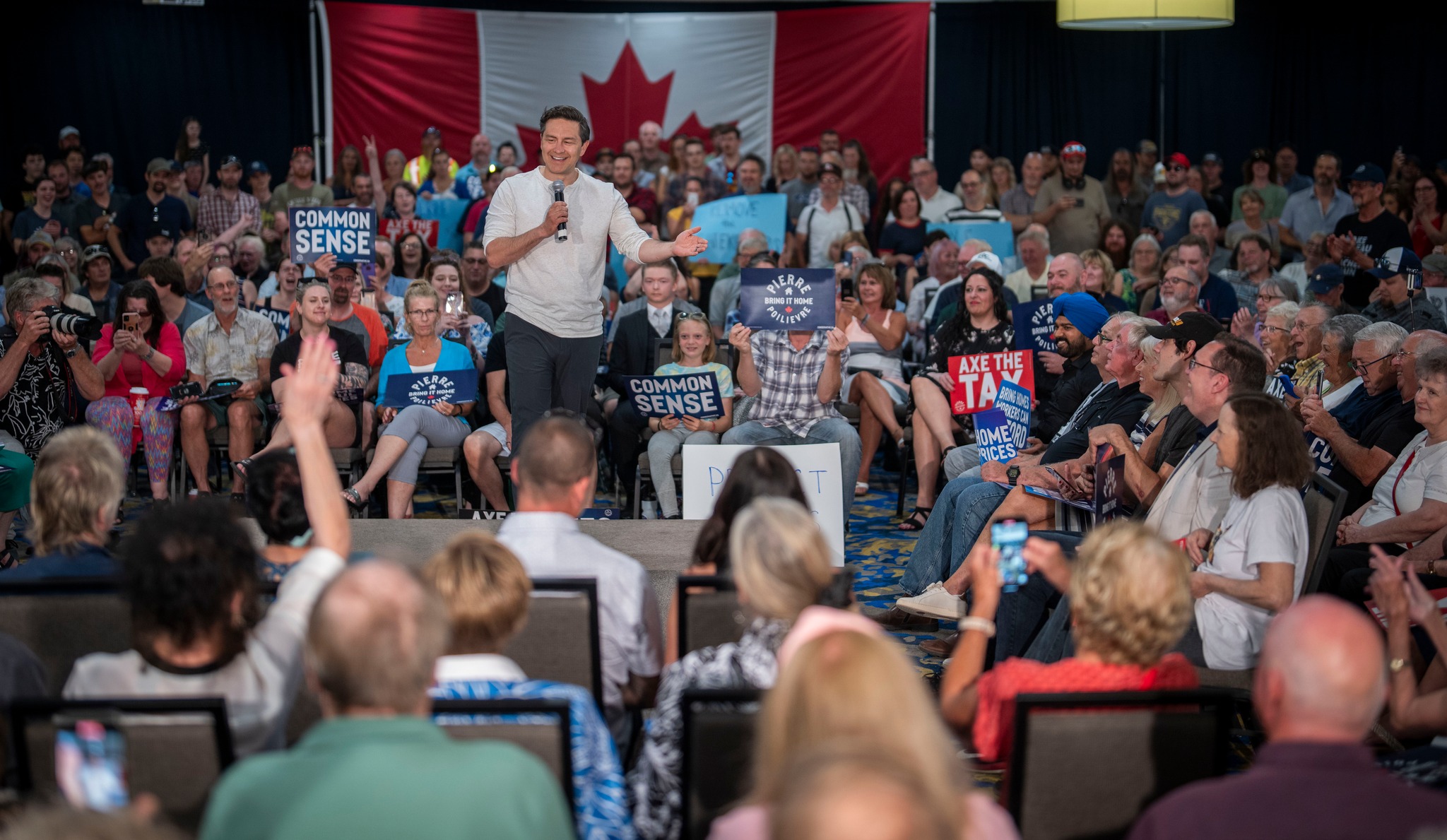
Canada’s federal and provincial Conservative Parties are suddenly joining American-style culture wars centered on transgender issues, announcing new policies to crack down on access to medical care and women-only spaces, and restricting trans children from using chosen names and pronouns in schools.
At the federal Conservative Party’s policy convention in Quebec City this past weekend weekend, 69 percent of delegates voted to bar trans children from receiving gender-affirming care, while 87 percent of delegates voted to define “woman” as a “female person” and to demand that trans women be barred from women-only spaces.
The policy vote, which was initiated by the party’s grassroots, will only become a part of the Conservative Party’s official platform if current leader Pierre Poilievre decides to include it. The party has been riding high in the polls for several months as Canadians deal with a growing cost-of-living crisis, but a federal election isn’t scheduled for two more years.
While the federal Conservatives had recently tried to focus on economic issues rather than culture-war issues, the convention vote is emblematic of how social conservatives have come to dominate the party’s agenda.
The vote also comes as a wave of anti-trans and anti-drag protests has appeared across Canada.
The latest salvo in the culture war battles against trans Canadians was ignited this spring, when the deeply unpopular Conservative premier of New Brunswick announced a new policy that would bar students from changing the name or pronoun they use at school without written consent from their parents. Two cabinet ministers resigned in protest over the new rule, which was immediately criticized by LGBTQ activists and teachers unions, who pointed out that it would be impractical to enforce and would violate trans students’ human rights. Nevertheless, the policy came into effect in September, although it has faced a court challenge by the Canadian Civil Liberties Union.
Shortly after, the conservative-affiliated government of Saskatchewan introduced a similar rule that has also been subject to a court challenge. Saskatchewan Premier Scott Moe has announced he intends to bolster the regulation with a “parental rights” law this fall as it prepares for an election next year. An anti-LGBTQ Christian organization called Action4Canada has claimed credit for lobbying the government to introduce the school reforms.
That was followed by the Conservative government of Ontario led by Premier Doug Ford announcing that it was developing a similar policy. Ford’s government has been mired in a series of scandals recently, including most prominently a land reclassification that saw a handful of party donors receive billions of dollars in land value uplift while degrading environmentally sensitive land around Toronto.
Ford and his ministers have repeatedly described the new policy as protecting parents’ rights in speeches and campaign-style events, although a provincial election isn’t scheduled for another two years.
“Parents rights. They need to be … informed when they [students] make a decision. It’s not up to teachers and school boards to indoctrinate our kids. I can’t even figure out what school boards do anymore,” Ford said at an event in Kitchener, Ontario, last week.
Many activists have pointed out that Ford appears to be attempting to use the new policy to shift attention from the corruption scandal that has already led to the resignation of one cabinet minister.
“Shame on Premier Ford. Schools are not indoctrinating students. This ‘parental rights’ rhetoric is just a good slogan hiding an anti-trans and social conservative agenda. And — right now — it’s a desperate distraction from his scandal-plagued track record,” tweeted Fae Johnstone, a trans activist and president of the advocacy group Queer Momentum.
Five of Canada’s other seven provinces are currently governed by conservative-leaning parties, though none of the others have announced plans to copy the student name and pronoun policy yet.
Although Canada’s Conservative Party and its provincial cousins have a long history of pursuing policies that have harmed LGBTQ communities, the sudden wave of anti-trans policies has come of something of a surprise, after what appeared to be several years of détente on culture wars.
In 2021, the federal Conservative Party allowed Parliament to pass a bill banning so-called conversion therapy by unanimous consent and in 2017, dozens of Conservative MPs joined the government in passing a bill that banned anti-trans discrimination and hate speech. Saskatchewan’s conservative government banned discrimination against trans people in 2014, and Conservative parties also gave unanimous consent to provincial conversion therapy bans in Ontario, Nova Scotia, Prince Edward Island and Yukon in the last decade.
In the last federal election in 2021, the Conservative Party fielded its first ever openly trans candidate, Hannah Hodson, who ran in the district of Victoria, British Columbia, placing third with 13 percent of the vote. Though Hodson served for years as a staffer for conservative politicians, she announced this year that she was leaving the party due its turn to anti-trans policies.
“To all the [Conservative Party of Canada] people who have told me they love me, support me, and would fight for me, and who are now telling me to calm down and just go along with this, or worse, telling me to stay quiet. I see you and I will not forget,” Hodson wrote on X, formerly known as Twitter, in response to the convention vote on anti-trans policies.
While the federal government doesn’t generally control health services, Health Canada could regulate the use of medications and treatments for trans children. The federal government also doesn’t generally have the ability to regulate access to women’s spaces in schools or businesses, but does control prisons, airports and federal government offices.
Nevertheless, trans activists say that if the proposed policies are enacted by a future federal Conservative government, they would greatly harm trans people.
“I would like everyone to recall, quite simply, that trans people are generally poor, more likely to be homeless, and experience a whole lot of hate for being ourselves. This is the community that the Conservative Party of Canada is picking on. Because they can,” says Johnstone.
The new provincial policies around trans kids mirror legislation proposed or passed in several U.S. states that requires schools to out students to their parents if they appear to be LGBTQ.
It’s somewhat whiplash-inducing to see Conservative legislators who just a few years ago supported banning conversion therapy now call for parental consent over gender identity. Under the federal and provincial laws that Conservatives previously supported, it would be illegal for parents to try to change their child’s gender identity or expression by forcing them to undergo conversion therapy. But under the education policies enacted by Conservative provincial governments, parents would essentially hold a veto over their children’s gender expression.
Children and youth advocates, LGBTQ activists, as well as teachers unions have pointed out that the new rules violate the rights of trans students to a safe learning environment. The rules also put educators in an impossible position of policing the gender identities of their students.
“While we believe that the ideal situation would include parents and guardians in the conversations and decision making, we support current school board policy in Ontario that centers the students in the decision making and honors their right to self-identify, even when parental consent is not given, to support an equitable and inclusive learning environment,” wrote the Ontario Principals’ Council in a statement on the proposed rule.
“Students who do not have parental, family and community support that respects and validates them face higher risks of self-harm, emotional distress, isolation, deteriorating mental health and increased bullying. Gender-affirming practices such as honoring preferred names and pronouns help to reduce those risks and contribute to greater inclusion, belonging and success at school,” the statement says.
Related:
Watch Pierre Poilievre’s full speech at the Conservative policy convention in Quebec City:


Canada
Shooter who killed 7 people inside Canada school was transgender
Advocacy groups have condemned efforts to link trans people to mass shootings

Canadian authorities on Wednesday said the person who killed seven people and injured more than two dozen others at a school in Tumbler Ridge, British Columbia, the day before was transgender.
Dwayne McDonald, the deputy commissioner for the Royal Canadian Mounted Police in British Columbia, during a press conference said Jesse Van Rootselaar, 18, “was born as a biological male who approximately … six years ago began to transition as female and identified as female both socially and publicly.” McDonald added it is “too early to say whether” the shooter’s gender identity “has any correlation in this investigation.”
The shooter died by suicide, and authorities found her body inside the school.
“We have a history of police attendance at the family residence,” said McDonald. “Some of those calls were related to mental health issues.”
Egale Canada, the country’s LGBTQ and intersex rights group, on Wednesday said it is “heartbroken by the horrific shooting in Tumbler Ridge.”
“Our deepest condolences are with the victims, their families, and the entire community as they navigate unimaginable grief,” said the group in a statement. “We unequivocally condemn this act of violence. There is no place for violence in our schools or in our communities. At this profoundly difficult time, we hold the people of Tumbler Ridge in our thoughts and stand in solidarity with all those affected.”
Mass shootings are relatively rare in Canada, unlike in the U.S.
GLAAD notes statistics from the Gun Violence Archive that indicate trans people carried out less than 0.1 percent of the 5,748 mass shootings in the U.S. between Jan. 1, 2013, and Sept. 15, 2025. The Human Rights Campaign, the National LGBTQ Task Force, and other advocacy groups last August condemned efforts to scapegoat the community after a trans woman shot and killed two children and injured 17 others inside the Annunciation Catholic School in Minneapolis.
Canada
Montreal Pride parade organizers reverse ban on Jewish groups
Initial decision left Ga’ava, Center for Israel and Jewish Affairs ‘deeply shocked’
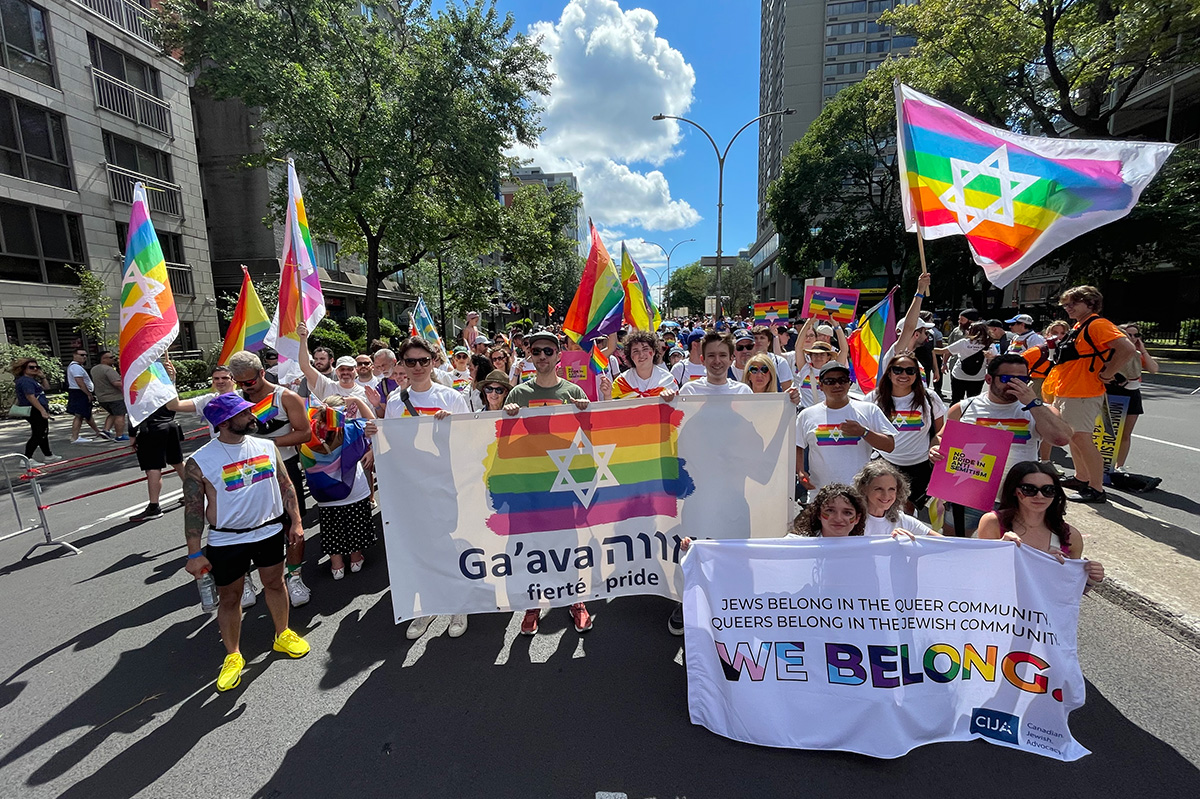
Organizers of Montreal’s Pride parade have reversed their decision to ban Jewish groups from participating in the annual event.
The Montreal Gazette reported Fierté Montréal on July 30 informed Ga’ava, a group that is affiliated with the Toronto-based Center for Israel and Jewish Affairs, it could not march in the Aug. 10 parade.
Ga’ava in a statement said it and the Center for Israel and Jewish Affairs “were deeply shocked to learn today from Montreal Pride that LGBTQ+ Jews and their allies will be excluded from the 2025 Pride Parade.” Fierté Montréal earlier in the day in its own statement condemned “the ongoing genocide in Gaza, expresses solidarity with the Palestinian people, and calls for the lives of 2SLGBTQIA+ individuals in Palestine, and everywhere in the world — to be respected and protected.”
“Fierté Montréal’s position on violence of any kind inflicted upon marginalized populations or communities — especially 2SLGBTQIA+ communities — has always been clear: we denounce all forms of violence, we amplify the voices of queer communities who, on our stages and in our spaces, express their support for oppressed peoples, particularly the Palestinian people, and their opposition to genocide,” said Fierté Montréal. “The work of Fierté Montréal is rooted in a long-standing movement to fight oppression, and we acknowledge the pain expressed by queer communities in Montréal since the beginning of the conflict in Gaza.”
“Accordingly, and in line with our zero-tolerance policy for hate speech and incitement to violence, and to ensure that the Fierté Montréal Festival remains a safe and celebratory space for everyone, the board of directors of Fierté Montréal has made the decision to deny participation in the Pride Parade to organizations spreading hateful discourse,” it added. “This measure is taken in the context of a complex geopolitical situation and stems from our commitment to preserving the emotional and physical safety of our communities.”
Five Canadian MPs are among those who sharply criticized Fierté Montréal’s decision.
Bernard Truong, the group’s former board chair, resigned on Monday. The Montreal Gazette on Tuesday spoke with his successor, Marlot Marleau, about the decision to reinvite Ga’ava and the Center for Israel and Jewish Affairs to participate in the parade.
“We realized the decision was seen as excluding the entire Jewish community. That was never the intent,” Marleau told the Montreal Gazette. “We’re sorry for making them feel unwelcome.”
“LGBTQ+ Jews are happy that Montreal Pride walked back its politically motivated decision to oust the Jewish community from the Pride Parade,” said Ga’ava President Carlos A. Godoy on Tuesday in a statement he sent to the Washington Blade. “Either you’re inclusive or you’re not. LGBTQ+ Jews have to bring their full authentic selves to the parade — we can’t ask Jews to separate their identities and attachments. LGBTQ+ Jews belong in Pride parades.”
Canada
Liberal Party wins Canadian election
Prime Minister Mark Carney railed against US tariffs, sovereignty threats
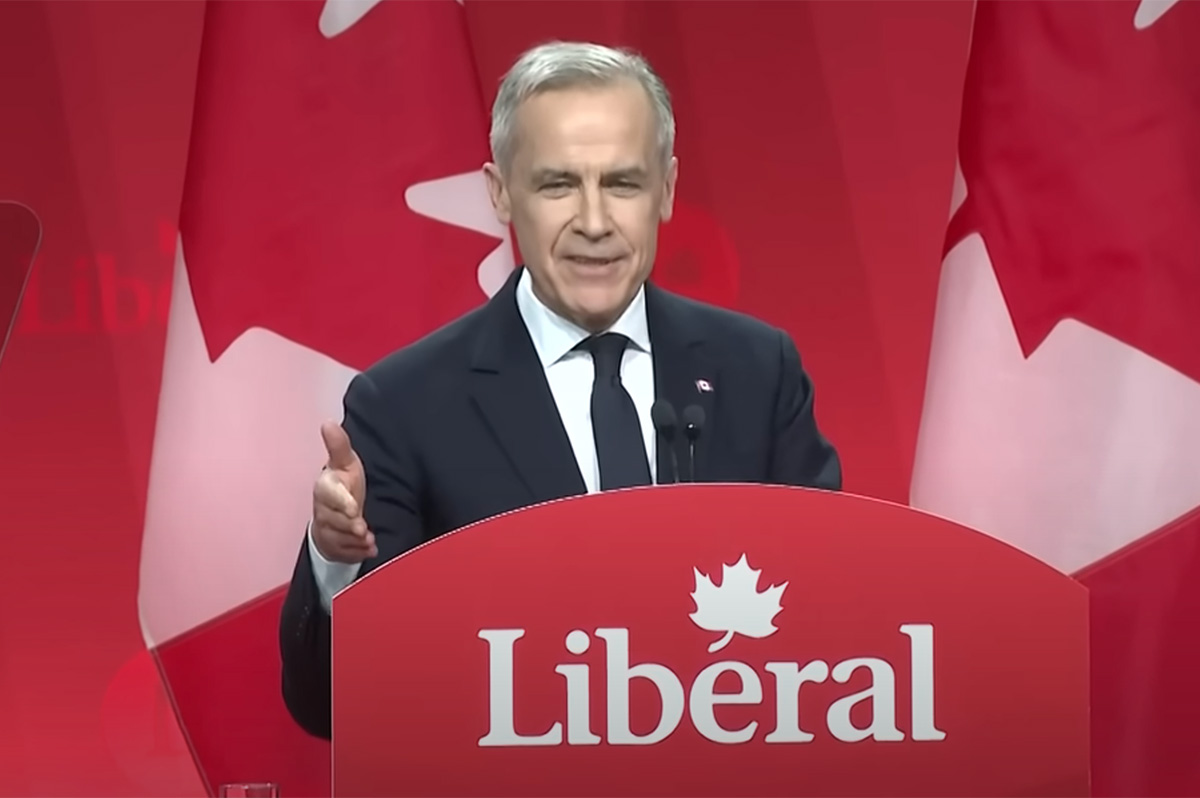
Canadian Prime Minister Mark Carney’s Liberal Party won the country’s federal election that took place on Monday.
The Canadian Broadcasting Corporation notes the Liberals won 169 seats in parliament, compared to the 144 the Conservative Party won. The Liberals need 172 seats for a parliamentary majority.
Liberal Bruce Fanjoy defeated Pierre Poilievre, an anti-LGBTQ MP from Ontario who is the Conservatives’ leader, by a 50.6-46.1 percent margin.
The Liberals last month elected Carney to succeed Justin Trudeau as the country’s prime minister. Monday’s election took place against the backdrop of growing tensions with the U.S. that stem from tariffs the Trump-Vance administration has imposed against Canada, and suggestions the country should become the 51st state.
“Our strength lies in our resolve to work together,” said Carney on Tuesday in a post to his X account. “United, we will build Canada strong.”
Thank you, Canada.
Our strength lies in our resolve to work together. United, we will build Canada strong. pic.twitter.com/uN6h4LUAEP
— Mark Carney (@MarkJCarney) April 29, 2025
Egale Canada, the country’s largest LGBTQ and intersex rights group, earlier this year announced it will not attend WorldPride and other events in the U.S. because of the Trump-Vance administration’s anti-transgender policies and “economic warfare and threats to our national sovereignty.”
“Democracy thrives when people engage, and our voices are used in a way where we can say we voted with pride,” said Egale Canada on Tuesday.
“As the new parliament takes shape, we recognize that the journey toward equity and inclusion — especially for 2SLGBTQI communities — extends far beyond election day,” added the group in its post-election statement. “The work of understanding, addressing, and acting on the issues faced by 2SLGBTQI people must be ongoing, collaborative, and grounded in human rights and lived experience.”
Egale Canada said it looks “forward to working with all members of parliament, both newly elected and returning, to help build a Canada where every person is treated with dignity, where diversity is celebrated, and where all are equal — and none are other.”

Supreme Court rules against Colo. law banning conversion therapy for minors

Thousands attend ‘No Kings’ protests in D.C.

Blade contributor, husband exchange vows in D.C.

Ghanaian president welcomed to Philadelphia amid backlash over anti-LGBTQ bill

PHOTOS: ‘No Kings’ rally and march

Introducing the Torchbearers Awards honoring queer, trans women and nonbinary people

New IOC policy bans trans women from Olympics

‘No Kings’ protests set for D.C.

Border to border: modern slavery and human trafficking in refugee movements across East Africa

Celebrate cherry blossoms the drag way
-

 a&e features5 days ago
Introducing the Torchbearers Awards honoring queer, trans women and nonbinary people
-
Sports5 days ago
New IOC policy bans trans women from Olympics
-
District of Columbia5 days ago
‘No Kings’ protests set for D.C.
-
Opinions5 days ago
Border to border: modern slavery and human trafficking in refugee movements across East Africa