Virginia
Arlington church seeks to offer LGBTQ-affirming senior housing
Project by Clarendon Presbyterian faces opposition from residents
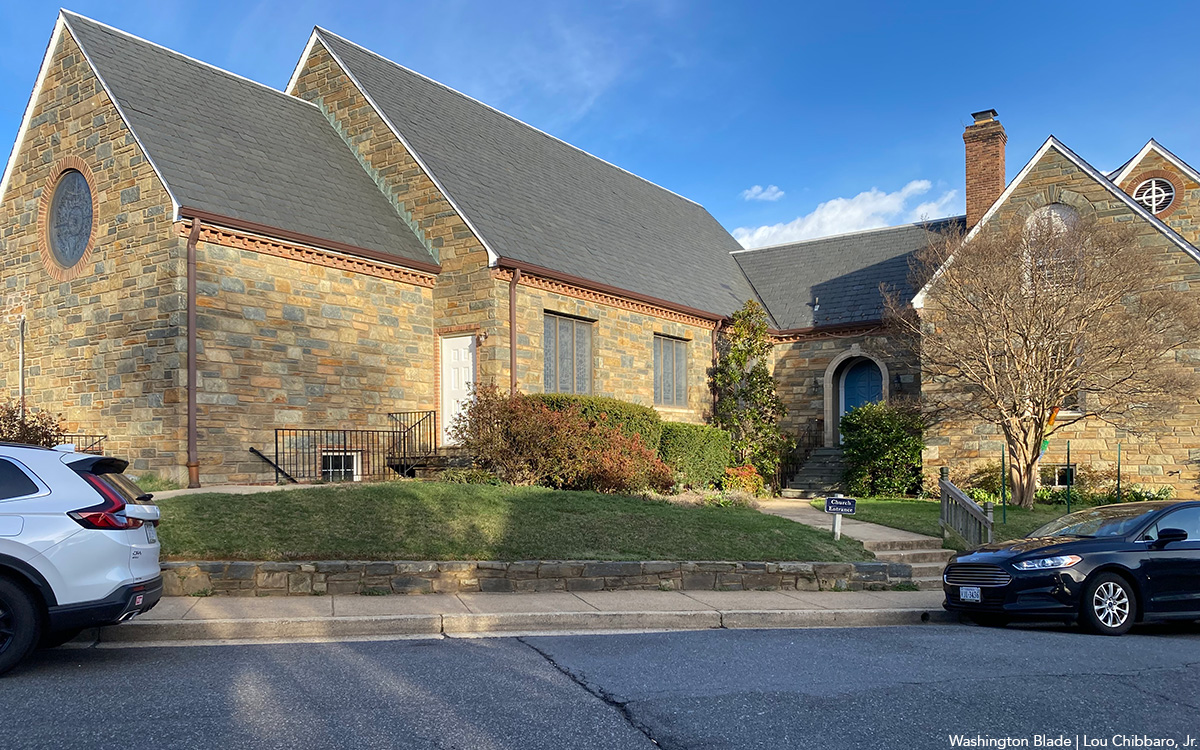
Leaders and members of the Clarendon Presbyterian Church, which will celebrate its 100th anniversary on April 13, have said they decided to continue to fulfill their mission of religious faith by using the land on which their church is located in the Clarendon section of Arlington, Va., to develop a new, larger church building to include LGBTQ affordable housing for seniors along with an independently run childcare center that currently operates in the church.
“In line with the church’s deep history of supporting affordable housing, LGBTQ communities, and seniors, in 2021, the church relaunched a visioning process of how we might invest our most valuable physical resources, our church property, for the good of the community,” church leaders said in a Feb. 9, 2024, statement describing the project.
The statement says that in 2022, the congregation voted to partner with the Arlington Partnership for Affordable Housing (APAH), a real estate development company that specializes in affordable housing projects. Through that partnership, the statement says, the two partners in June of 2023 applied to the Arlington County government for a zoning change that would allow the construction of a building that could accommodate as many as 92 residential apartments for seniors 55 or 62 and older.
Among other things, the project calls for demolishing the current church building and constructing a new, larger building that would include a smaller version of the church space for its religious services as well as space for 40 to 58 children ages two through six at the Clarendon Child Care Center, which has operated at the church for more than 60 years.
Rev. Alice Tewell, the current pastor at Clarendon Presbyterian Church, told the Washington Blade another important factor contributing to the decision to redevelop the church property is the high cost of maintaining a 100-year-old building and its aging infrastructure that was becoming less and less affordable for the church’s budget. And like many churches across the country, the membership of Clarendon Presbyterian Church has declined over the years, making it no longer necessary for a worship service space as large as that in the current church building, Tewell said.
The statement describing the development plan says that without a major redevelopment project, the church could no longer afford to remain in the current building, forcing it to move to another location outside of Clarendon and possibly outside of Arlington.
According to Rev. Tewell, the redevelopment decision came after several years of internal discussion, meetings with longtime church allies, including members of the LGBTQ community and other community groups.
“And after all these conversations, we came to where we could serve Christ, which is part of our faith, and where we could be good neighbors in Arlington – would be to tear down our entire property and rebuild so it would include senior affordable housing as LGBT welcoming, a new church space, which we also plan to turn into a community space, and the new space for our preschool center,” Tewell told the Blade.
She noted that the church’s location at 1305 N. Jackson St. is walking distance to the Clarendon Metro station and many local amenities such as restaurants and retail stores, making it a convenient location for the senior residents in the redeveloped space.
She also points out that church members have consulted with the New York-based LGBTQ seniors advocacy organization SAGE, which informed them of the great need for LGBTQ welcoming senior housing, including in Northern Virginia.
But news of the church’s redevelopment project, especially reports that it would include a proposed 92-unit apartment building, prompted many nearby residents to raise strong objections and to call on the Arlington County Board, which must make a final decision on a zoning change, to deny the zoning change request.
Most of the opposition comes from residents of single-family houses, who point out that the church is located in a largely low-density residential neighborhood with just a few nearby low-rise apartment buildings. In August of 2023, a group of nearby residents created an online petition that gathered at that time more than 1,000 signatures calling for the county to turn down the church development project.
“We, the concerned residents of Arlington, Virginia, stand united in opposition to the proposed destruction of the historic, over 100-year-old, Clarendon Presbyterian Church (CPC) and the subsequent construction of a massive 6-story apartment building having 100 units within our cherished residential neighborhood,” the petition states. “We believe that this development project will have serious detrimental effects on our community’s character, quality of life, and historic heritage,” it says.
The Arlington Partnership for Affordable Housing, or APAH, the development company working in partnership with the church, submitted an official application on June 29, 2023, for a Special General Land Use Plan Study calling for the needed zoning change for the church project with Arlington County Zoning Administrator Arlova Vonhm. APAH officials have said the initial application was the first of a multi-step process seeking final approval of the project.
Garrett Jackson, APAH’s Director of Resource Development and Communications, told the Blade that APAH on behalf of the church asked the Zoning Administrator to put the application on hold while the church and APAH consider revisions for the project.
“We are currently working with our architect, engineer, and construction management team to assess the feasibility of different development options while also considering feedback we have received from the county and the community,” Jackson told the Blade in a March 15 email.
In a phone interview with the Blade on March 21, Jackson and APAH officials Mitchell Crispell and Brian Goggin, said the decision to put the project on hold did not come as a result of an informal message from the Zoning Administrator that the project was about to be turned down.
“So, we were the ones that put it on hold,” said Crispell, APAH’s Director of Real Estate Development. “It wasn’t the county that said no to us at all. We wanted to kind of pause for a minute and consider our options, the feasibility of different options and the development plans,” he said.
Crispell noted that the decision to put the project on hold came last fall, a few months after the application was submitted in June and after strong opposition to the project surfaced by nearby residents. Crispell, Jackson, and Goggin pointed out, however, that opposition to development projects is a common phenomenon in Arlington and other jurisdictions and that ongoing dialogue between developers and concerned residents often leads to a resolution to the objections.
“We understand the back and forth that it takes to get these projects to fruition,” Jackson said. “So, you’ve got to rest assured that this is very much a part of the very thorough process that both APAH and the county go through regularly to make sure that we’re getting the absolute best product in the actual building that will go up for Clarendon Presbyterian Church and for the future residents,” Jackson points out.
Jackson and his two APAH colleagues said they couldn’t immediately predict when they will resubmit the application for the zoning change. Spokespersons for the Zoning Office, the Arlington County Board, and Arlington County Manager Mark Schwartz didn’t immediately respond to a request by the Blade for comment on the church project and the likelihood of the county approving the project.
Among those supporting the church project is James Fisher, a longtime Arlington LGBTQ rights advocate and longtime church member. Fisher and Arlington gay civic activists Jay Fisette, a former elected member of the Arlington Board, and longtime Arlington resident Bob Witeck, who support the project, told the Blade they believe many nearby residents also support the church development project.
Fisette and Witeck said they do not believe anti-LGBTQ bias is a significant factor, if a factor at all, in the opposition to the church project.
“I personally observe this as disquiet about building a larger and taller presence in a space that abuts residential neighbors unsure of the implications or stresses that might come,” Witeck said. “I’m no Pollyanna, but really believe that with time, this change will be smoother than people fear or imagine,” he said.
Fisette said the church project comes a short time after the Arlington County Board adopted an “Expanded Housing Options” policy that allows for larger residential buildings in some areas originally zoned for low-density, single-family homes. This change drew objections among many residents in areas similar to where Clarendon Presbyterian church is located.
“I would say the LGBTQ elements of the proposal are likely more of a plus than a minus,” Fisette told the Blade. “I expect 99 percent of any resistance-anxiety relates to density and the real-feared impacts of that density,” he said.
Tewell told the Blade the church’s support for the LGBTQ community dates back to the 1980s, when church members voted in support of a then-controversial proposal to allow the D.C.-based Whitman-Walker Clinic, which had a Northern Virginia outreach, to use space in the church for a support group for people with HIV/AIDS and for HIV caregivers.
“And that started changing the church to becoming a church that was very welcoming to LGBTQ people,” she said, adding that the church subsequently opened its door for LGBTQ community events, some of which were organized by gay church member James Fisher. Among those using the church now is IMPACTO LGBT, a Spanish-speaking LGBT church that holds its worship services at Clarendon Presbyterian Church.
“This is how we are living out our faith in the world,” Tewell said. “We worked out what does God’s embodied love look like for the world? And how do we embody God’s grace, justice, and love? And we really feel that it is through housing for seniors that is welcoming to LGBTQ+ people,” she added. “And to transform our church space so it’s better equipped to welcome the community.”



Virginia
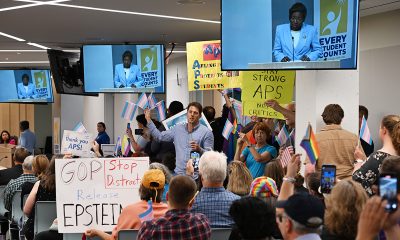
Campaign urges Virginia High School League to reverse stance on trans athletes
Equality Arlington and other advocacy groups behind ‘Right 2 Play’ VA’ initiative

Virginia advocacy groups have launched a campaign that urges the Virginia High School League to once again allow student athletes to compete on sports teams that correspond with their gender identity.
Equality Arlington on Sept. 16 published an article about the “Right 2 Play VA” campaign. Amy, a group representative, spoke about the initiative with the Washington Blade.
“The primary goal is to reverse the Virginia High School League’s discriminatory ban on allowing transgender girls to play on girls’ sports and replace it with a policy that is fair for all students.” they said.
The Virginia High School League in 2025 announced the policy, which reversed a previous position in support of transgender and nonbinary athletes. The 2025 policy coincided with President Donald Trump’s executive order — “Keeping Men Out of Women’s Sports” — that threatened to “rescind all funds from educational programs that deprive women and girls of fair athletic opportunities, which results in the endangerment, humiliation, and silencing of women and girls.”
The Arlington Gender Identity Alliance, Equality Virginia, and the American Civil Liberties Union of Virginia have also joined the “Right 2 Play VA” campaign.
“We had a policy in Virginia for 12 years that allowed transgender girls to play on girls’ sports teams, and we had not one instance — not one instance — that was brought forward demonstrating an unfair advantage or any type of safety concern,” said Amy.
Amy then discussed what they described are the benefits of trans youth playing sports.
“There are physical benefits. There are mental health benefits. There are community and social development benefits, and those are all well documented,” they said. “All kids should have the right to benefit from playing youth sports. We are talking about kids. We are talking about youth. We are not talking about Olympians. We are not talking about Division One college athletes. We are talking about kids in Virginia, and because the benefits of sports are so well documented, we think that every kid should have the ability to play sports.”
Virginia
Gay Va. couple hopeful voters will enshrine marriage equality in state constitution
Early voting has already begun in the state
A referendum on whether to enshrine marriage equality in Virginia’s constitutional amendment is on the ballot this year.
If voters approve Question 2, it will codify the U.S. Supreme Court’s Obergefell ruling in 2015 that extended marriage rights to same-sex couples across the country — gays and lesbians have been able to legally marry in Virginia since Oct. 6, 2014.
Ron Bookbinder and James Fisher are a married couple who live in Arlington.
They have been together for 38 years — Bookbinder and Fisher married in 2014.
“We think this is a critical vote to remove this discriminatory language from the constitution and to ensure that going forward, no matter what happens, the state of Virginia will ensure marriage equality,” Fisher told the Washington Blade. “It is it is really difficult and upsetting to think that our current state constitution would prohibit same-sex marriage, even though the federal government overrides that now. There’s no saying what may happen in the future.”
Bookbinder said it was important for him and Fisher to get married “to gain social equality.”
“I was surprised how good it felt, how important it was to begin to say, ‘my husband rather than my partner,'” Bookbinder said.
Bookbinder then explained why it feels good to be married.
“Is it a legal partner, a business partner, a tennis partner, you know, or a romantic partner? But when you say my husband James, everyone knows exactly what you mean and confers an equal status with everyone else who’s married, and we were both surprised at how good it felt and how equal it felt to suddenly be married and be able to state that you were married and discuss your husband rather than your partner, and I would hate to lose that,” he said.
Bookbinder and Fisher said they are hopeful that voters will approve the amendment, noting Virginia has become more progressive over the years.
“I think people have, with the Supreme Court decision, people have seen that a same-sex marriage is just a marriage,” stated Fisher. “It’s just two people who love each other, and I think more and more people have attended a same-sex marriage, someone in their family or a friend, and the experience of what this is, firsthand experience, is so important in shaping people’s opinions, and I think the period of time that we’ve had since the Obergefell decision has given a lot of voters that experience, which I think is really important and powerful.”
The couple also said the push to enshrine marriage equality in Virginia’s constitution is in response to the Trump-Vance administration.
“And I think due to President Trump doing all the horrible things he’s done to so many groups, including LGBTQ, especially trans people, that Virginians are kind of pushed to be even more progressive to protect those who need protection, which would include the LGBTQ community in terms of marriage equality, so I’m confident it will pass,” said Bookbinder.
Narissa Rahaman, executive director of Equality Virginia, sent the Blade a statement about early voting on Question 2 that has already begun.
“With early voting now underway, our focus is making sure every Virginian knows Question 2 is on their ballot,” said Rahaman. “The outdated ban on same-sex marriage still in Virginia’s state constitution leaves a gap in protections for the thousands of same-sex couples that call this state home, but after 20 years we have the chance to fix it.”
Log onto www.mobilize.us/vaformarriage to find out more about the campaign in support of Question 2.
Virginia
Virginia Anti-Violence Project struggles to fill federal funding gaps
Group has lost 54 percent of funding since 2020
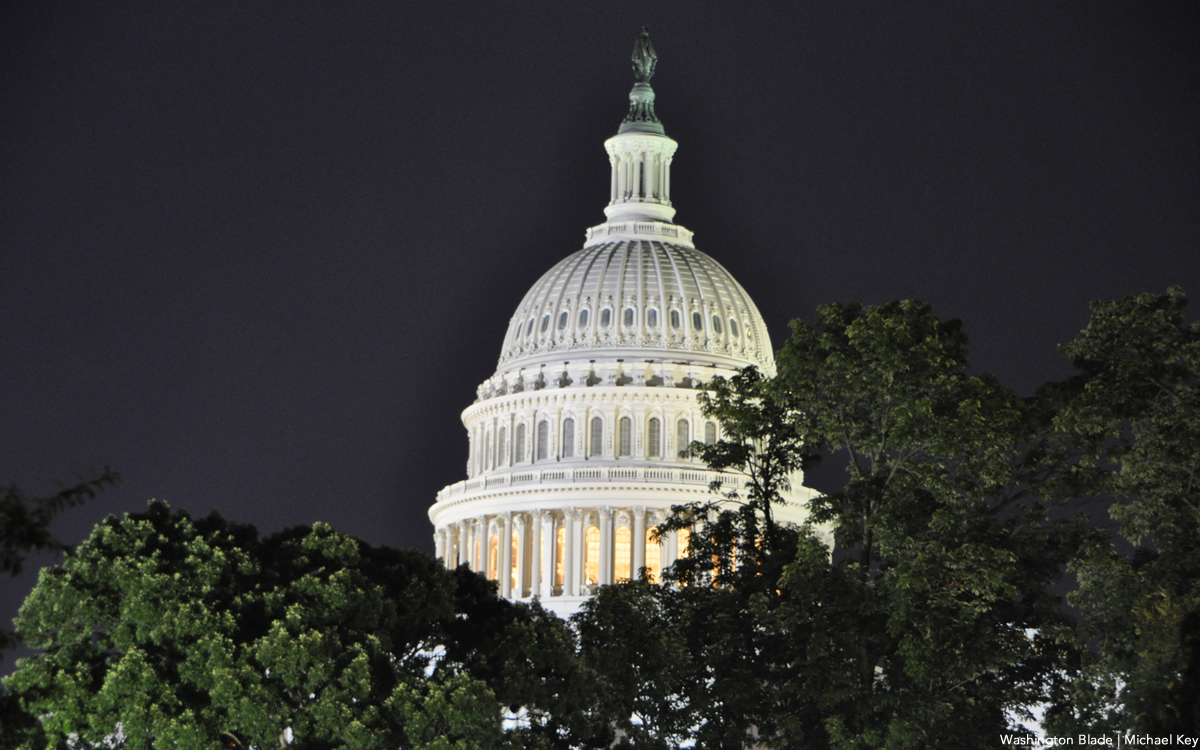
A loss of federal funding has threatened to adversely impact the Virginia Anti-Violence Project’s work in the state.
The group’s mission is to assist LGBTQ and BIPOC (Black, Indigenous and people of color) victims of domestic, sexual, interpersonal, and state violence with direct support, education, and advocacy. The VAVP seeks to build a future where LGBTQ and BIPOC individuals can live freely without a sense for worry about violence.
“Virginia Anti-Violence Project helps to close the distance between services existing and LGBTQIA+ survivors actually being able to reach safety, stable housing, and support that they can trust,” VAVP Executive Director Ebony Clark told the Washington Blade on Tuesday. “Our mission is to provide direct services and advocacy to LGBTQ+ survivors across Virginia.”
Clark said obtaining state and federal funds has become increasingly difficult.
“One of the reasons that we can talk about is politics and how you know queer diverse, queer communities are targets when it comes to politics, and so that may be a reason why the funding is decreasing in in very niche areas, but overall, state funding, federal funding has been lost or significantly reduced when it comes to culturally specific marginalized populations,” Clark said. “The bigger picture is that funding that was purposed for diversity, equity, inclusion, marginalized populations, or you know culturally competent programming, those funds have been strategically reduced or eliminated on state and federal levels overall.”
Even more so with the current Trump-Vance administration.
Data shows federal funding for one “major federal victim-services funding stream in” Virginia has dropped 54 percent over the last six years: from $25.1 million in fiscal year 2020 to $11.6 million in fiscal year 2026.
Clark noted some federal funding has been denied due to VAVP’s DEI policies — it has had to “water down” their language. These cuts have forced VAVP to limit housing and economic support, which has resulted in fewer resources for its clients.
The organization has set up a goal for receiving between $250,000-$300,000 a year that would allow it to operate — and focus on client housing.
“Housing is fundamental to safety,” Clark told the Blade. “If you know leaving violence puts someone on the street or forces them back to the person harming them, that means the crisis isn’t over. So there needs to be other prevention strategies and reactive strategies in place to be able to prevent further violence from folks.”
VAVP has set up a link for anyone who is interested in making a donation. It is here.
The VAVP website is also accepting donations.

Physician: addiction doesn’t always look the way you think it does

Calendar: October 9-15

ICC unseals arrest warrants for Taliban officials accused of persecuting LGBTQ people, women

Bet Mishpachah participates in D.C. Oct. 7 commemoration ceremony

Man charged in Mall of America shooting plot inspired by Pulse massacre: report

PHOTOS: Winchester Pride

Evan Low is not the leader the Victory Fund needs at this moment

Transgender woman elected to Brazilian Chamber of Deputies

Bowser, Office of LGBTQ Affairs announce LGBTQ+ History Month events

Alianza para la Inclusión fortalece la defensa de derechos LGBTQ en Centroamérica
-

 Photos5 days ago
PHOTOS: Winchester Pride
-
Opinions5 days ago
Evan Low is not the leader the Victory Fund needs at this moment
-
Brazil5 days ago
Transgender woman elected to Brazilian Chamber of Deputies
-
District of Columbia5 days ago
Bowser, Office of LGBTQ Affairs announce LGBTQ+ History Month events