Russia
Vladimir Putin takes office for fifth term as Russia’s president
Kremlin’s crackdown on LGBTQ people expected to continue
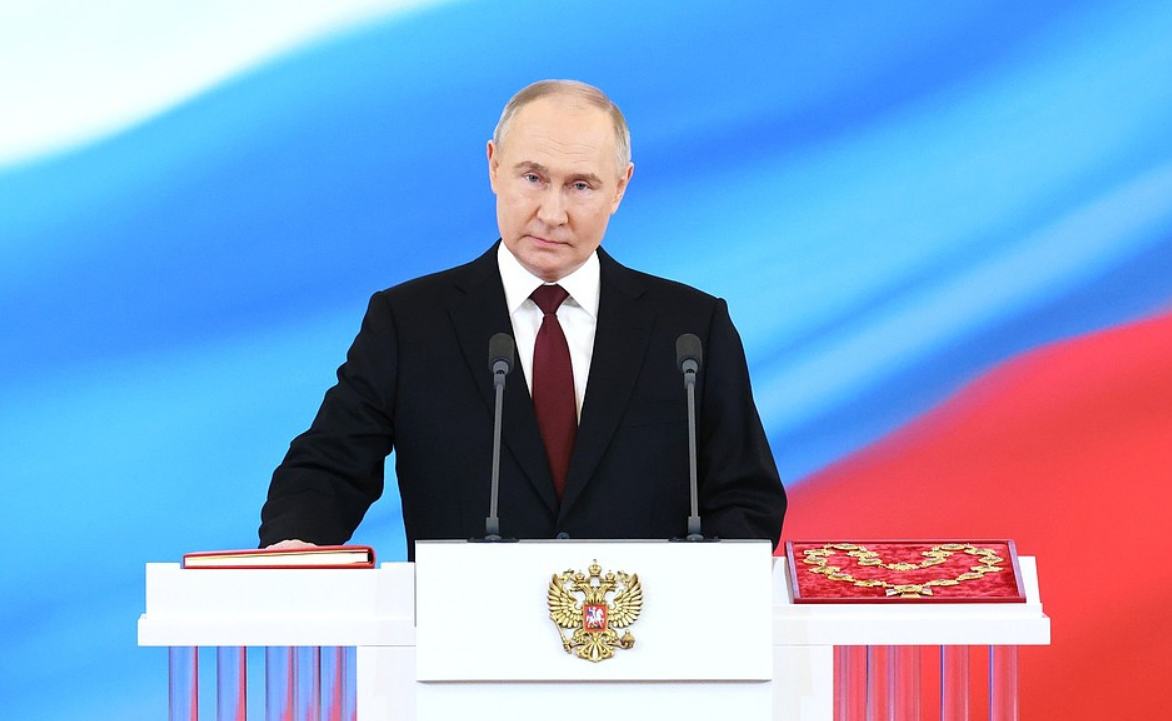
On Tuesday, Vladimir Putin took his oath of office becoming the second ever longest serving leader of the modern Russian state since Soviet dictator Joseph Stalin, who held power from 1922 until his death in 1953.
Putin’s tenure in office has been marked by his acquisition of concentrated political power in part due to his eradication and imprisonment or the deaths of his political opponents, such as his rumored unproven involvement in the assassination of fierce Putin critic Boris Nemtsov on Feb. 27, 2015, just steps away from the gate to the Kremlin, and more recently in the prosecution and imprisonment of another high profile Putin critic, Alexei Navalny, who died on Feb. 16 at a penal colony north of the Arctic Circle.
Putin ordered military operations in August 2008, which led to the Russo-Georgian War and diplomatic relations were broken. To this day, the two countries have maintained no formal diplomatic relations. Then in February and March 2014, Russian troops at his direction invaded the Crimean Peninsula, part of Ukraine, and annexed it. The resulting hostilities also spread to the far-eastern Ukrainian oblasts, [provinces] which culminated with Russia invading Ukraine on Feb. 24, 2022, an escalation of the Russo-Ukrainian War that started in 2014. The invasion became the largest attack on a European country since the end of World War II in 1945.
As the war drags on Putin’s threats of military escalation against NATO countries and use of battlefield nuclear weapons has created a tense relationship with a majority of the European Union as well as with the United States. Russia has been heavily sanctioned by the West and is turning to other totalitarian regimes like China, Iran, and North Korea for support.
In his inaugural speech Putin made oblique reference to his oft stated desire to recreate a hybrid of the former Soviet Union:
“In these solemn and crucial moments of assuming the office of the president, I would like to extend my heartfelt gratitude to the citizens of Russia across all regions of our country, as well as those living in the historical territories of Russia who have won their right to stand united with our Motherland.”
The Russian president then thanked the forces fighting in the invasion of Ukraine saying:
“I humbly honor our heroes, the participants in the special military operation, and all those who are fighting for our Fatherland. I would like to thank you again for the trust you have placed in me and for your unwavering support. These words are directed to every citizen of Russia.”
On the domestic front Putin has stifled media outlets with draconian laws passed designed to keep the Russian population largely ignorant of the cost both human lives and governmental spending as the warfare in Ukraine drags on and losses to the Russian military continue.
The Associated Press reported neither the U.S., U.K. nor German ambassadors attended. The U.S. Embassy said Amb. Lynne Tracy was out of the country on “prescheduled, personal travel.”
A handful of EU envoys attended even though top EU diplomat Josep Borrell said he told them “the right thing to do is not to attend this inauguration,” because Putin is the subject of an arrest warrant by the International Criminal Court for war crimes, accusing him of personal responsibility for the abductions of children from Ukraine.
In his speech Putin issued a veiled threat to critics of his regime that dissention would not be tolerated:
“We can see that the atmosphere in society has changed, and how much we now value reliability, responsibility, sincerity, integrity, generosity, and courage. I will do everything in my power to ensure that those who have displayed these admirable human and professional traits, and who have proved their loyalty to the fatherland through their deeds, achieve leading positions in state governance, the economy and all other spheres.
We must ensure reliable continuity in the development of our country for decades to come and bring up new generations who will strengthen Russia’s might and develop our state based on interethnic accord, the preservation of the traditions of all ethnic groups living in Russia, a civilizational nation united by the Russian language and our multi-ethnic culture.”
The Russian president has also targeted the country’s LGBTQ community with passage of multiple laws that forbid public mention or acknowledgment of queer Russians. In his speech he emphasized his commitment to maintaining “family values.”
“Our top priority is the preservation of the people. I am confident that the support of centuries-old family values and traditions will continue to unite public and religious associations, political parties, and all levels of government.
Our decisions regarding the development of the country and its regions must be effective and fair and must promote the prosperity of Russian families and improve their quality of life,” he said.
The Wilson Center, a nonpartisan think tank in D.C., noted recently:
“Escalating state discrimination against the LGBTQ+ community in Russia is directly informed by the Putin regime’s struggle to maintain legitimacy and public support, especially as Russia’s war in Ukraine drags on. Russian federal elections are scheduled for 2024, and officials are reportedly planning to project record levels of public support for Putin.”
The war in Ukraine and discrimination against the LGBTQ+ community are both popular policies among the socially conservative interest groups that make up Putin’s strongest base of support, and Russian policymakers draw clear connections between the Kremlin’s narrative that Russia is fighting Western ideology by proxy in Ukraine and the Kremlin’s attack on the LGBTQ+ experience in Russia.
Putin’s inaugural speech today signaled his future intentions on conducting the war in Ukraine and his ongoing persecution of LGBTQ+ Russians.”





Russia
Russian neocolonial politics promote anti-LGBTQ imperialistic values
Influence seen in neighboring countries
The idea that Western colonialism spread queerphobia around the globe is not something new for American millennials and Gen Z. It is well known among them that the British Empire brought “anti-sodomy” laws to some African countries, such as Uganda and Nigeria, as well as to South Asia.
But very few modern American and British people know the history of Russian colonialism, and the way Russian neocolonial politics is ruining the lives of queer people right now, in real time. It’s happening all across Eastern Europe, the Northern Caucasus, and Central Asia. Throughout these regions, the Kremlin promotes imperialistic values that include direct discrimination against queer people.
Let’s start with the most obvious example and move toward the less known ones.
In modern-day Ukraine, LGBTQ rights have become more visible and widely discussed than before the Revolution of Dignity. Even during the war, Ukraine has taken some steps forward in recognizing LGBTQ rights. For example, in 2025 the Desnianskyi District Court of Kyiv for the first time recognized a same-sex couple married abroad as legally married, and in 2026 the Supreme Court made a similar decision. LGBTQ people openly serve in the Ukrainian military.
But the situation with LGBTQ rights in Russian-occupied Crimea and Donbas is completely different.
Ukrainian LGBTQ citizens are persecuted by Russian military forces. Materials with positive LGBTQ representation are banned because of Russia’s “anti-propaganda” laws. Transgender people cannot access gender-affirming therapy. According to people currently living in occupied Donbas, LGBTQ teenagers have been subjected to conversion therapy after being taken from supportive families and sent to Russia.
Russia is not shy about this policy. The war against LGBTQ people — and Ukraine’s growing openness toward LGBTQ rights — has been used as one of the official justifications for Russia’s attack on Ukraine. Russian politicians have repeated this narrative, and so has the leader of the largest Russian Christian church closely connected to the government. In 2022 the head of the Russian Orthodox Church openly claimed that the war in Ukraine was happening because people in Donbas did not want gay pride parades. The claim is absurd. First and foremost, people in Donbas do not want to be bombed — and I say this as someone who was born there.
This blatant Russian attempt to destroy LGBTQ rights on foreign land did not start in Ukraine, just as Russian colonialism itself did not start there. The Soviet Union was famous for criminalizing homosexuality.
When the Soviet Union collapsed in 1991, Soviet republics gained independence, including the Chechen Republic of Ichkeria. Chechen people had many grievances against the Kremlin, including the genocide committed against Chechen and Ingush people by Joseph Stalin in 1944. There was also resentment over the Soviet attempt to erase Chechen identity. Despite Chechens having a completely different culture, language group, and traditions from Slavic Russia, Ukraine, and Belarus, the Soviet government tried to assimilate them and make them more “Slavic.”
In the new Russia that emerged after the Soviet collapse, Chechens struggled to rent apartments in Moscow and were frequently ridiculed for being Muslim. Racial slurs like “black-assed” were commonly used against Chechen students in Russia. In 1994, Russia decided to “civilize” independent Chechnya and launched an unprovoked attack, only to lose the war to this small Muslim nation of fewer than one million people in 1997. When Vladimir Putin came to power, he built his popularity partly by launching the Second Chechen War and occupying Chechnya.
Today Chechnya is ruled by Ramzan Kadyrov, an extremely unpopular leader imposed on the region through pressure and blackmail from the Russian military. It was under Kadyrov that the infamous purge of gay people — described in David France’s HBO documentary “Welcome to Chechnya” — began. But the documentary failed to explain the broader context. As many Chechen activists and ordinary people told me — people who refused to give their names to a foreign LGBT outlet because of the risks to themselves and their relatives — Chechen society has never been explicitly queerphobic. Chechens are proud of having traditions of democracy dating back to the Middle Ages and of respecting individual freedom and family rights.
This is exactly where discussions about sexuality traditionally belong in Chechen social norms: inside the family. Family is almost sacred to Chechens. Every Chechen knows seven generations of their paternal ancestors and stays in contact with uncles, aunts, and cousins. Later, Russia weaponized these family structures by blackmailing and torturing even distant relatives of activists.
For generations, matters of sex were considered private family affairs that the state — an independent Chechen state — should never interfere with. This does not mean Chechnya was especially LGBTQ-friendly. Parents and siblings may be queerphobic — or may not — and society would not question it. But police, commenting on private sexual relationships? This is an abomination!
This is exactly what the Russian occupational authorities introduced. They turned the private into the public, kidnapping and torturing queer people as part of a wider colonial campaign of repression. It was never just about gay people. The authorities also targeted people who subscribed to opposition channels online, spoke against the Kremlin, wore the “wrong” clothes or the “wrong” kind of beard, or listened to prohibited music.
It was never just about gay people. In occupied Chechnya, it has always been about colonial control. Moreover, as my Chechen respondents pointed out, “Welcome to Chechnya” tells the story largely from the perspective of Russian LGBTQ activists. Some of them also have colonial ways of viewing the Northern Caucasus. This is why the film “forgets” to mention that many gay people who were rescued by activists left Chechnya with the active help of their own parents and siblings.
Another example of Russian interference in predominantly Muslim nations can be seen in Kazakhstan, one of the largest countries in Central Asia. In the West, it is not widely known that Kazakh people living in Slavic regions of Russia face everyday discrimination. They are often targets of anti-immigrant hatred similar to the way Mexicans are treated in the United States. In everyday life they are frequently called “churkas,” an extremely derogatory racist slur roughly comparable to the English N-word. When I lived in Russia, almost everyone I knew — even progressive people — used this word from time to time against Kazakh immigrants.
Despite all of that, the Kazakh government has aligned itself closely with the Kremlin. Late last year, the Kazakh parliament adopted an anti-LGBTQ law similar to the Russian one. The law followed earlier bans in Kyrgyzstan in 2023 and Georgia in 2024 and prohibits the dissemination of information about “non-traditional sexual orientation,” affecting culture, education, advertising, media, and cinema.
Critics called these laws a “copycat” of Russian policy and part of Moscow’s colonial influence.
“Are we an independent and sovereign republic, or are we a colony of the Russian Federation?” prominent Kazakh LGBTQ activist and feminist Zhanar Sekerbayeva asked during a press conference.
“As an educated and intelligent woman … I cannot understand why lawmakers allow themselves to violate the fundamental law of the constitution,” she said.
It was therefore not surprising that in February 2026 a criminal case was opened against Sekerbayeva for allegedly “promoting LGBT” during a peaceful gathering at the “French Café.” The real reason, however, is more likely not just her LGBTQ activism but her opposition to pro-Russian politicians.
In Georgia, pro-Russian political movements similarly weaponized anti-LGBTQ conspiracies to mobilize opposition against the European Union. These movements falsely claim that Brussels demands “LGBT propaganda” and threatens “traditional family values.”
This conspiracy narrative has even been supported by Belarus’s dictator Alexander Lukashenko, who said he is “scared for Georgia” because Europe allegedly promotes LGBTQ rights there. Of course, Belarus itself has no meaningful legal protections for LGBTQ people — and it is unlikely to develop them while its leadership is protected by the Kremlin.
The list could continue. In Moldova, another post-Soviet country, the last widely promoted study of schooling has shown that LGBTQ teenagers are among the most vulnerable students in schools, facing bullying from peers, parents, and even teachers. Once again, pro-Russian politicians in Moldova actively use anti-LGBTQ rhetoric that contributes to this hostile environment.
Of course, Russia is not the single reason for queerphobia in post-Soviet countries. There are many other factors, from everyday stereotypes to the influence of American fundamentalist groups on local conservative movements. But Russia remains the main force preventing these countries from developing independent LGBTQ policies. Local queerphobia is a target audience for Russia, and anti-LGBTQ narratives have become an inseparable part of Russian neo-colonial politics.
Russia
Russia’s anti-LGBTQ crackdown takes absurd turn
Authorities targeted one of the country’s largest bookstore chains last month
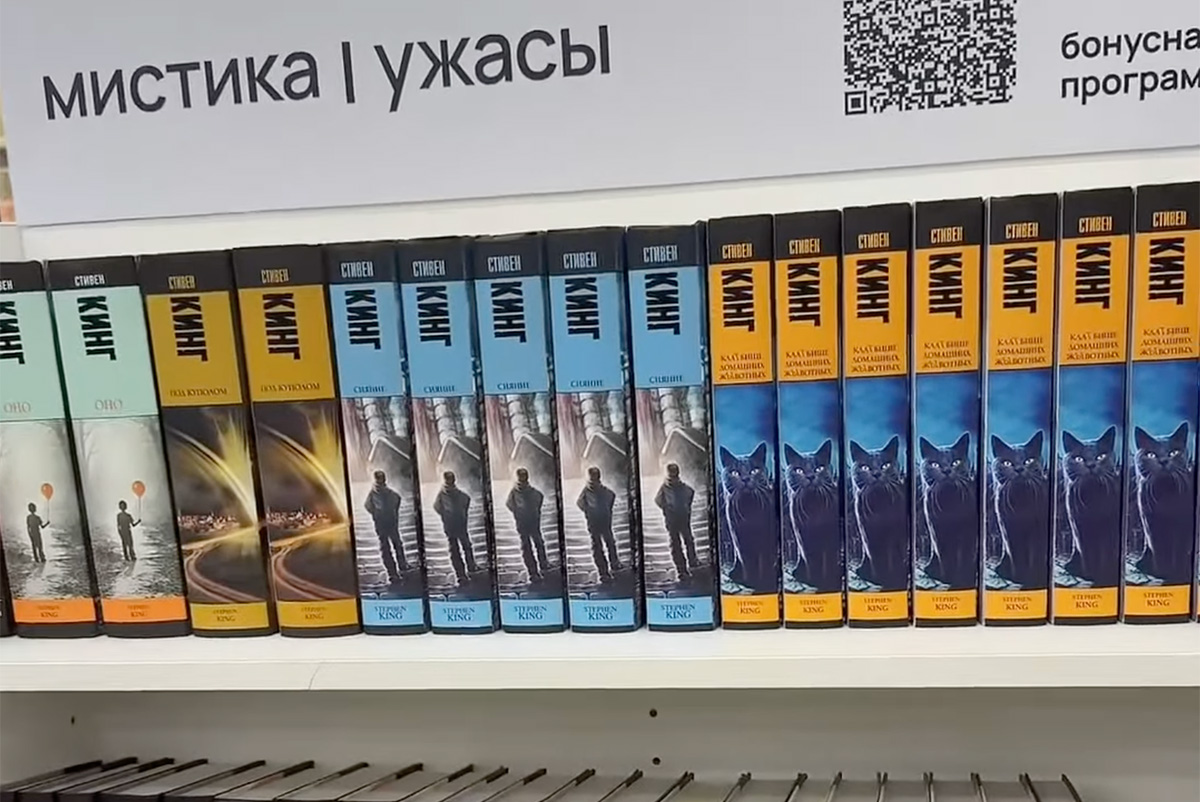
While MAGA continues to attack LGBTQ rights in the U.S. — including erasing queer history and removing children’s books with LGBTQ characters from libraries and pushing an ever‑broader censorship agenda — and as the UK faces MAGA‑inspired campaigns demanding the removal of LGBT literature from public libraries, Russia’s assault on LGBTQ‑related media has taken an extreme and frankly absurd turn. It is a cautionary tale for Western countries of just how far censorship can go once it becomes normalized. From books to anime, TV shows, and even academia, queer existence is being systematically erased.
In January, one of Russia’s largest private bookstore chains, Chitai‑Gorod-Bukvoed, faced the risk of being shut down over alleged “LGBT propaganda” under a law that prohibits any positive mention of LGBTQ content and equates LGBTQ material with pornography and pedophilia.
Among the books targeted were “Beartown,” “Us Against You,”and “The Winners”by Fredrik Backman, “The Left Hand of Darkness” by Ursula K. Le Guin, and “The Heart’s Invisible Furies” by John Boyne.
According to Chitai‑Gorod-Bukvoed CEO Alexander Brychkin, once it became known in mid‑December that law enforcement agencies had launched inspections, the Chitai‑Gorod–Bukvoed network immediately removed these titles from sale nationwide. In a comment to Kommersant, Brychkin stressed that the chain “operates strictly within the legal framework,” noting that the books were not listed in any official register of banned materials at the time the inspections began and had been on sale for several years.
Previously, two of the biggest online film distribution companies were charged as well under the “LGBT Propaganda law.”
Private businesses had no more right to speak up than writers or artists who are persecuted for their work. This is a nightmare scenario for many Americans who believe the free market itself can protect freedom of expression. This is the reality of modern‑day Russia.
A censored version of the anime “Steins;Gate” has also been released on Russia’s most prominent streaming platform, “Kinopoisk,” in which the storyline of one of the main characters was altered due to the ban on so‑called “LGBT propaganda,” as reported by opposition outlets Verstka and Dozhd, as well as fans on Reddit.
In the original series, the character Ruka Urushibara is a young person with an androgynous appearance who struggles to accept themself in a male body — an obvious indication that Ruka is a transgender girl. Ruka wears women’s clothing and dreams of becoming a girl. In episode eight, Ruka is given the chance to intervene in the past by sending a message to their mother in order to be born female.
In the Kinopoisk version, released in late 2025, Ruka is instead portrayed as a girl living with HIV — something entirely absent from the original anime and invented in translation. The storyline and dialogue were rewritten accordingly, completely distorting the original meaning: in this version, Ruka attempts to change the past in order to be born “healthy,” without HIV, rather than to be born a girl. This is not only absurd, but deeply offensive to the LGBTQ community, which has long been stigmatized in relation to HIV.
A similar distortion appears in “Amediateka”’s translation — or, better to say, rewriting — of the new AMC series “Interview with the Vampire.” Translators rewrote dialogue in ways that fundamentally misrepresented the plot, downplaying the openly queer nature of the characters to the point that romantic partners were translated merely as “friends” or “pals,” rendering entire scenes meaningless. At the same time, even brief critical references to Russian or Soviet politics were removed.
As for queer romance, such as the popular Canadian TV show “Heated Rivalry,”it has no official Russian translation at all and circulates only through fan translations. The show remains popular among millennials and Gen Z, and Russian social media platforms like X (Twitter) and Instagram are full of positive reviews. Yet, in theory, promoting such a show could put someone at risk under the law. People still watch it, still love it, still build fan communities, but it all exists quietly, pushed under the carpet.
The prohibition is not total, but it is a grotesque situation when even such a nice and harmless show is stigmatized.
Books suffer even more. Some classics fall under bans, and books are physically destroyed. In other cases, the outcome is worse: texts are rewritten and censored, as with “Steins;Gate.” This affects not only fiction but also nonfiction. For example, in “Deep Color” by Keith Recker, an American researcher of visual arts, all mentions of queer, feminism or BDSM culture were erased in the Russian edition. Even historically necessary references were removed, including mentions of the pink triangle used by the Nazis.
In the Russian edition of Skye Cleary’s “The Thirst for Authenticity: How Simone de Beauvoir’s Ideas Help You Become Yourself,” dozens of paragraphs were blacked out. Passages discussing the fluidity of gender and a person’s right to define themselves outside the rigid male–female binary were removed. Sections on contraception and abortion, critiques of biological reductionism and social pressure on women, details of Simone de Beauvoir’s intimate life and her relationships with women, as well as reflections on non‑monogamous relationships, were all excised. Even footnotes referencing quotes about gender identity were hidden.
Those two books are one of the many examples of the fate of Russian-translated nonfiction. Actually, even books about animal reproduction were demanded to be censored because of the “LGBT propaganda law”. Apparently, the authorities couldn’t accept a neutral scientific description of same-sex behavior and reproductive diversity in animals.
The authorities know what they are doing. Most people are less likely to read dense nonfiction or search actual studies about animal sexual behavior than to watch a popular TV show about queer hockey players, which makes visual media easier to censor quietly and effectively. So they really could show LGBTQ as something negative and absolutely unnatural for most of the Russian population.
And this is the core of the problem. This is not just censorship of content — it is the rewriting of history, even the narrative around biology. It is the deliberate marginalization of queer existence, the systematic erasure of queer people’s ability to see themselves reflected in culture, literature, and art.
The U.S. still retains independence in academia, publishing, and private business when it comes to queer voices. Russia does not. History shows where this path leads: Nazi Germany burned books; the Taliban destroyed cultural and historical materials. This is always one of the first steps toward genocide — not immediate, perhaps, but inevitable once dehumanization becomes official policy. It never stops with just one group. In Russia, immigrants, people from the North Caucasus and Central Asia, Ukrainians, and even disabled citizens face daily dehumanization — it’s all part of the same system.
And now, alarmingly, the U.S. seems to be following in Russia’s footsteps — the same path that enabled war in Ukraine and the thriving of authoritarianism.
Russia
Russia designates ILGA World an ‘undesirable’ group
Justice Ministry announced designation on Jan. 21
Russia has designated a global LGBTQ and intersex rights group as an “undesirable” organization.
ILGA World in a press release notes the country’s Justice Ministry announced the designation on its website on Jan. 21.
The ministry’s website on Tuesday appeared to be down when the Washington Blade tried to access it. ILGA World in its press release said the designation — “which also reportedly includes eight other organizations from the United States and across Europe” — “has been confirmed by independent sources.”
“ILGA World received no direct communication of the designation, whose official reasons are not known,” said ILGA World.
The Kremlin over the last decade has faced global criticism over its crackdown on LGBTQ rights.
ILGA World notes Russians found guilty of engaging with “undesirable” groups could face up to six years in prison. The Russian Supreme Court in 2023 ruled the “international LGBT movement” is an extremist organization and banned it.
“Designating human rights groups ‘undesirable’ is outlandish and cynical, yet here we are,” said ILGA World Executive Director Julia Ehrt. “But no matter how much governments will try to legislate LGBTI people out of existence, movements will stay strong and committed, and solidarity remains alive across borders. And together, we will continue building a more just world for everyone.”

Pam Bondi ousted as attorney general

VIDEO: Gay journalist detained for booing Trumps at ‘Chicago’ opening night

Idaho Gov. signs harshest anti-trans bathroom bill in the country

Award-winning D.C. chef reaching new culinary heights

Trans-driven ‘Serpent’s Skin’ delivers campy sapphic horror

‘Out for McDuffie’ event held at D.C. gay bar

‘Jonah’ an undeniably compelling but unusual memory play

The Oscar-losing performance that’s too good to miss

Thousands attend ‘No Kings’ protests in D.C.