Chile
2024 was ‘year of regression’ for LGBTQ rights in Chile
Advocacy group blamed rise in ultra-right, government inaction
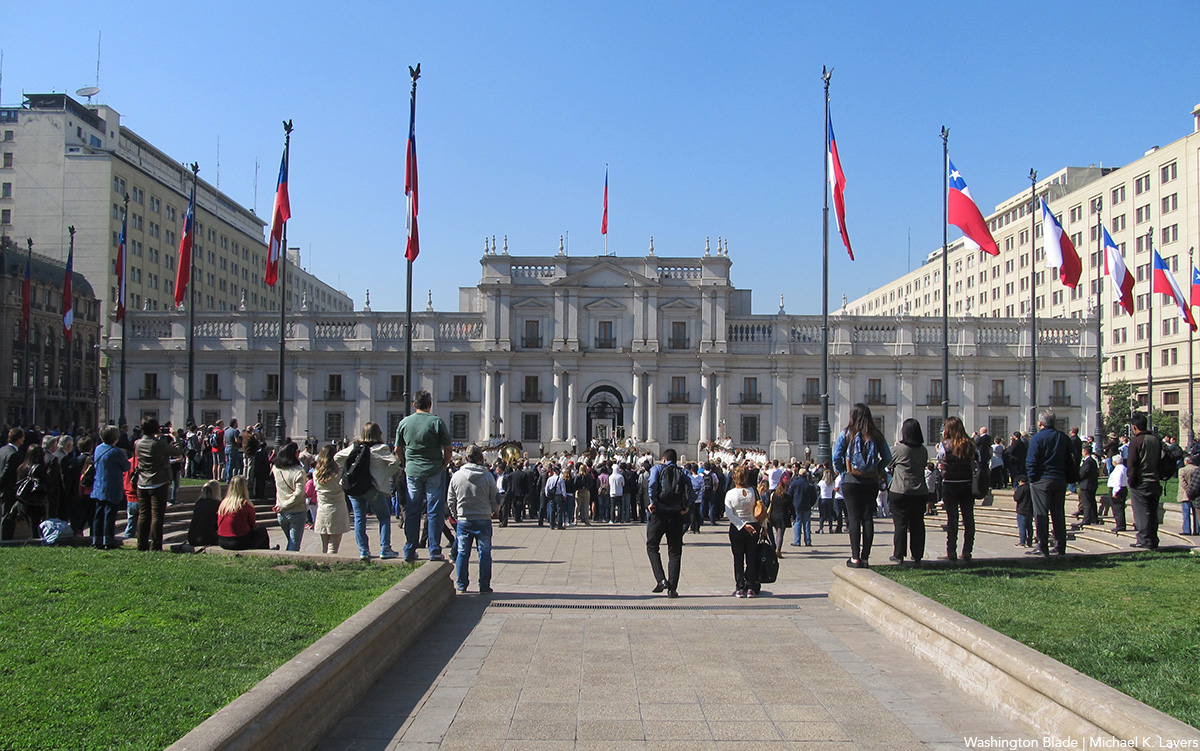
A report that a Chilean advocacy group released on Tuesday says 2024 was a “year of regression” for LGBTQ rights.
The Movement for Homosexual Integration and Liberation (Movilh)’s 23rd Sexual and Gender Diversity Human Rights report notes LGBTQ rights for the first time since democracy returned to Chile in 1990 not only stopped advancing, but saw significant rollbacks in the three branches of government.
The Movilh report describes 2024 as “the year of regression,” noting 23.5 percent of human rights violations against LGBTQ people over the last two decades occurred last year. A total of 2,847 discrimination complaints were reported in 2024, representing a 78.7 percent increase over the previous year.
The report documents two murders, 44 physical or verbal assaults, two incidents of violence in police stations, 89 reports of abuse in the workplace, and 65 incidents in educational institutions in 2024. The transgender community was particularly affected, with a 462.6 percent increase in discrimination cases compared to 2023.
The Movilh report notes the growing influence of the ultra-right, whose narratives have fostered hate speech, is one of the main factors behind the deterioration of LGBTQ rights in Chile. The advocacy group also criticizes authorities who have remained silent in the face of these attacks, even though they say they support the LGBTQ community.
The report specifically singles out the Executive Branch.
Movilh specifically highlights the prohibition of public funds for hormone treatments for trans minors and the postponement of these procedures in public hospitals. The government reversed course after intense pressure and judicial appeals.
The report also criticizes the judiciary.
The Oral Criminal Trial Court of San Antonio refused to classify the murder of a trans woman as a femicide, arguing her identity card still reflected the gender assigned to her at birth. The Court of Appeals of Santiago also ordered the removal of a homophobia complaint on social media, setting what NGOs have described as a dangerous freedom of speech precedent.

annual Pride parade on June 29, 2024. (Photo courtesy of the Movement for Homosexual Integration and Liberation)
The report notes Valparaíso, Metropolitana, and Biobío are the three regions with the highest number of discrimination complaints, with 51.3 percent, 25.1 percent, and 5.8 percent respectively. Reported cases increased in 11 of Chile’s 16 regions, with Ñuble leading the way with a 300 percent increase.
Faced with this bleak panorama, advocacy groups have intensified their efforts to denounce the violence and demand LGBTQ rights are once again guaranteed. Movilh, along with other organizations, have approached the Inter-American Commission on Human Rights and the U.N. about the situation in Chile.
“We are seeing a reversal of rights that cost decades of struggle,” warns the report. “If the State does not act urgently, we run the risk of discrimination and violence becoming institutionalized.”





Chile
Far-right Chilean President José Antonio Kast takes office
Former congressman opposes LGBTQ rights

Chilean President José Antonio Kast took office on Wednesday.
Kast — the far-right leader of the Republican Party who was a member of the country’s House of Deputies from 2002-2018 — defeated Jeannette Jara — a member of the Communist Party of Chile who was the former labor and social welfare minister in former President Gabriel Boric’s government — in last year’s presidential election.
The Chilean constitution prevented Boric from running for a second consecutive term.
The Washington Blade has previously reported Kast has expressed his opposition to gender-specific policies, comprehensive sex education, and reforms to Chile’s anti-discrimination laws. Kast has also publicly opposed the country’s marriage equality law that took effect on March 10, 2022, the day before Boric took office.
The Movement for Homosexual Integration and Liberation, a Chilean LGBTQ and intersex rights group known by the acronym Movilh, declared a “state of alert” after Kast’s election, “given this leader’s (Kast’s) public and political trajectory, characterized for decades by systematic opposition to laws and policies aimed at equality and nondiscrimination of LGBTIQ+ individuals.”
Argentine President Javier Milei, Deputy U.S. Secretary of State Christopher Landau, and Venezuelan opposition leader María Corina Machado are among those who attended Kast’s inauguration that took place in the Chilean Congress in Valparaíso.
Chile
Far-right José Antonio Kast elected Chile’s next president
Advocacy group declares ‘state of alert’ over president-elect’s opposition to LGBTQ rights

José Antonio Kast on Sunday won the second round of Chile’s presidential election.
Kast is the far-right leader of the Republican Party who was a member of the country’s House of Deputies from 2002-2018. He defeated Jeannette Jara, a member of the Communist Party of Chile who was former labor and social welfare minister in outgoing President Gabriel Boric’s government, by a 58.2-41.8 percent margin.
The election’s first round took place on Nov. 16.
Kast and Jara faced each other in the runoff after no candidate received at least 50 percent of the vote in the first round. Kast will take office on March 11.
“Under his leadership, we are confident Chile will advance shared priorities to include strengthening public security, ending illegal immigration, and revitalizing our commercial relationship,” said U.S. Secretary of State Marco Rubio on Sunday in a statement. “The United States looks forward to working closely with his administration to deepen our partnership and promote shared prosperity in our hemisphere.”
The Washington Blade has previously reported Kast has expressed his opposition to gender-specific policies, comprehensive sex education, and reforms to Chile’s anti-discrimination laws. The president-elect has also publicly opposed the country’s marriage equality law that took effect in 2022.
The Movement for Homosexual Integration and Liberation, a Chilean LGBTQ and intersex rights group known by the acronym Movilh, in a statement acknowledged the election result. Movilh also declared a “state of alert, given this leader’s (Kast’s) public and political trajectory, characterized for decades by systematic opposition to laws and policies aimed at equality and nondiscrimination of LGBTIQ+ individuals.”
“We urge the president-elect and far-right sectors that follow him to understand and internalize (the fact) that the rights of LGBTIQ+ people are inscribed in the universality of human rights, and they are not built upon an ideology or a political trend,” said Movilh in its statement. “This is not, and never has been, a left-wing or right-wing issue, although some on both sides have gone to great lengths to suggest otherwise, without any basis other than their own partisan or electoral aspirations.”
Organizado Trans Diversidades, a group that advocates on behalf of trans and nonbinary Chileans, on social media said it will “continue the fight for our community’s human rights.”
Chile
Chilean presidential election outcome to determine future of LGBTQ rights in country
Far-right candidate José Antonio Kast favored to win Dec. 14 runoff.

The results of Chile’s presidential election will likely determine the future of LGBTQ rights in the country.
While Congresswoman Emilia Schneider, the first transgender woman elected to Congress, managed to retain her seat on Sunday, the runoff to determine who will succeed outgoing President Gabriel Boric will take place on Dec. 14 and will pit two diametrically opposed candidates against each other: the far-right José Antonio Kast and Communist Jeannette Jara.
Schneider, an emblematic figure in the LGBTQ rights movement and one of the most visible voices on trans rights in Latin America, won reelection in a polarized environment. Human rights organizations see her continued presence in Congress as a necessary institutional counterweight to the risks that could arise if the far-right comes to power.

Kast v. Jara
The presidential race has become a source of concern for LGBTQ groups in Chile and international observers.
Kast, leader of the Republican Party, has openly expressed his rejection of gender policies, comprehensive sex education, and reforms to anti-discrimination laws.
Throughout his career, he has supported conservative positions aligned with sectors that question LGBTQ rights through rhetoric that activists describe as stigmatizing. Observers say his victory in the second-round of the presidential election that will take place on Dec. 14 could result in regulatory and cultural setbacks.
Jara, who is the presidential candidate for the progressive Unidad por Chile coalition, on the other hand has publicly upheld her commitment to equal rights. She has promised to strengthen mechanisms against discrimination, expand health policies for trans people, and ensure state protection against hate speech.
For Schneider, this new legislative period is shaping up to be a political and symbolic challenge.
Her work has focused on combating gender violence, promoting reform of the Zamudio Law, the country’s LGBTQ-inclusive nondiscrimination and hate crimes law named after Daniel Zamudio, a gay man murdered in Santiago, the Chilean capital, in 2012, and denouncing transphobic rhetoric in Congress and elsewhere.
Schneider’s continued presence in Congress is a sign of continuity in the defense of recently won rights, but also a reminder of the fragility of those advances in a country where ideological tensions have intensified.
LGBTQ organizations point out that Schneider will be key to forging legislative alliances in a potentially divided Congress, especially if Kast consolidates conservative support.

Trump tells Fox News he won the ‘gay vote’ — but polls tell a different story

Anti-trans visa ruling echoes Nazi regime destroying trans documents

Japanese Supreme Court to consider marriage equality

The outrage economy is not the LGBTQ community

Calendar: March 27-April 2

Trans Day of Visibility events planned

Virginia General Assembly’s 2026 legislative session ends

Markwayne Mullin confirmed as next DHS secretary

Gay man murdered in Va.