District of Columbia
D.C. police investigating anti-gay assault in Shaw
Police say suspect punched victim in face after shouting ‘homophobic slurs’

D.C. police are investigating a March 7, 2025, assault case listed as a suspected hate crime in which an unidentified male suspect punched a man in the face on the sidewalk outside an apartment building after calling the victim and his male friend “faggots.”
The victim, Destin Karol, and his friend, Ian Dotson, both residents of Arlington, Va., told the Washington Blade the assault took place about 10 p.m. while they were walking along 7th Street, N.W. on their way to the Shaw-Howard University Metro station.
The two men said while walking in front of the upscale 7th Flats apartment building at 1825 7th St., N.W., they saw the male suspect and a woman he was with get out of a car parked in front of the building. Seconds later, they saw the woman vomiting on the sidewalk as they walked past her, the two men told the Blade.
At that time, the male suspect yelled, “What are you looking at, faggots,” Karol and Dotson told the Blade. The suspect then punched Karol in the face “several times,” according to a D.C. police report.
Karol said he was diagnosed the next day at a hospital in Arlington near his home with a broken jaw that required the jaw to be wired shut.
Dotson said D.C. police arrived on the scene after he called 911 after witnessing the suspect punching Karol, knocking him down and kicking Karol in the face while he was lying on the sidewalk.
Karol said an ambulance arrived on the scene and paramedics treated his facial injury with an ice pack and offered to take him to the hospital. He said he declined the offer, choosing to go home first. But upon experiencing intense pain the next day, he visited a medical clinic whose doctors told him to immediately go to the nearby hospital emergency room.
An initial version of the D.C. police incident report did not list the incident as a suspected hate crime. But a revised version of the report, which was issued after the Blade contacted police to ask about the earlier report, classifies the incident as a “suspected hate crime.”
The revised report states that the suspect, after telling the victim, “What are you looking at,” proceeded to “close fist strike Victim 1 in the left jaw area several times.” It says Subject 2, who was Dotson, told police the suspect “yelled out homophobic slurs.”
The report concludes by saying, Suspect 1 “was last seen heading inside 1825 7th Street, N.W.”
According to Karol, police so far have not changed the report, at Karol’s request, to list the incident as an ‘aggravated assault’ rather than its current listing as a “simple assault.” Karol points out that under police policy, an assault-related injury that causes a broken bone should be classified as an aggravated assault.
Karol and Dotson said the police report also does not mention that they told the two police officers who arrived on the scene that they saw the suspect and the woman he was with get out of a car and they showed the two officers which car it was as it was parked in front of the apartment building.
Karol told the Blade he and Dotson asked at least one of the officers to take down the license plate number of the car, but the officer said it was not necessary for him to do so. Dotson said he recalls that the car was a white, 4-door Volkswagen hatchback with a Virginia license plate.
Dotson said he and Karol were disappointed that the police did not appear to take down the license number and he regrets that he did not write it down himself. But he said he recalls that the Virginia license tag consisted of all letters and no numbers, with the letters “IN” as part of it.
He described the suspect as a white male appearing to be between 35 or 45 years old with brown hair and a goatee or beard.
D.C. police spokesperson Paris Lewbel said a Third District police detective has been assigned to the case and the case remains under active investigation. He said he could not comment on the issues raised by Karol and Dotson under a police policy of not disclosing specific details in an ongoing investigation.
Karol said he has been speaking with Detective Wilson, whose first name he does not recall, and said he most recently spoke with her on Tuesday, April 1. “They’re trying to get the license plate of this individual and they’re trying to get the camera footage from the apartment building and the adjacent buildings,” Karol said the detective told him.
Dotson said at the time the police arrived on the scene on the night of March 7, an employee from the 7th Flat apartment building who identified himself as the concierge came out of the building and told one of the police officers that he saw the male suspect and the woman he was with enter the building.
Police spokesperson Lewbel said he could not disclose whether the concierge was able to help police identify the suspect under the policy of not disclosing details of an ongoing investigation.
Police urge members of the public who may have witnessed an incident like this or who may know something about it, including the identity of a suspect, to call the police information line of 202-727-9099.


District of Columbia
D.C. Black Pride theme, performers announced at ‘Speakeasy’
Durand Bernarr to headline 2026 programming
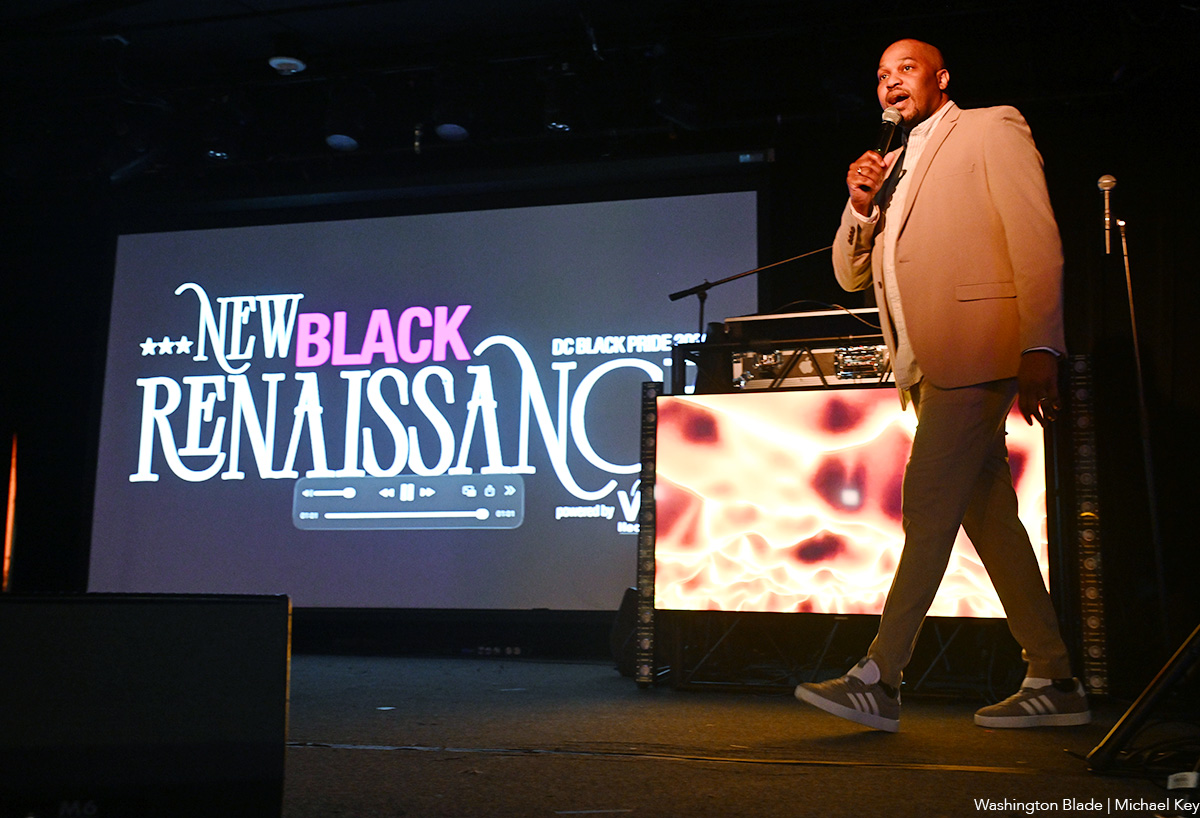
The Center for Black Equity held its 2026 DC Black Pride Theme Reveal event at Union Stage on Monday. The evening, a “Speakeasy Happy Hour,” was hosted by Anthony Oakes and featured performances by Lolita Leopard and Keith Angelo. The Center for Black Equity organizes DC Black Pride.
Kenya Hutton, Center for Black Equity president and CEO, spoke following the performances by Leopard and Angelo. Hutton announced this year’s theme for DC Black Pride: “New Black Renaissance.”
Performers for 2026 DC Black Pride were announced to be Bang Garcon, Be Steadwell, Jay Columbus, Bennu Byrd, Rue Pratt and Akeem Woods.
Singer-songwriter Durand Bernarr was announced as the headliner for the 2026 festivities. Bernerr gave brief remarks through a video played on the screen at the stage.
DC Black Pride is scheduled for May 22-25. For more information on DC Black Pride, visit dcblackpride.org.
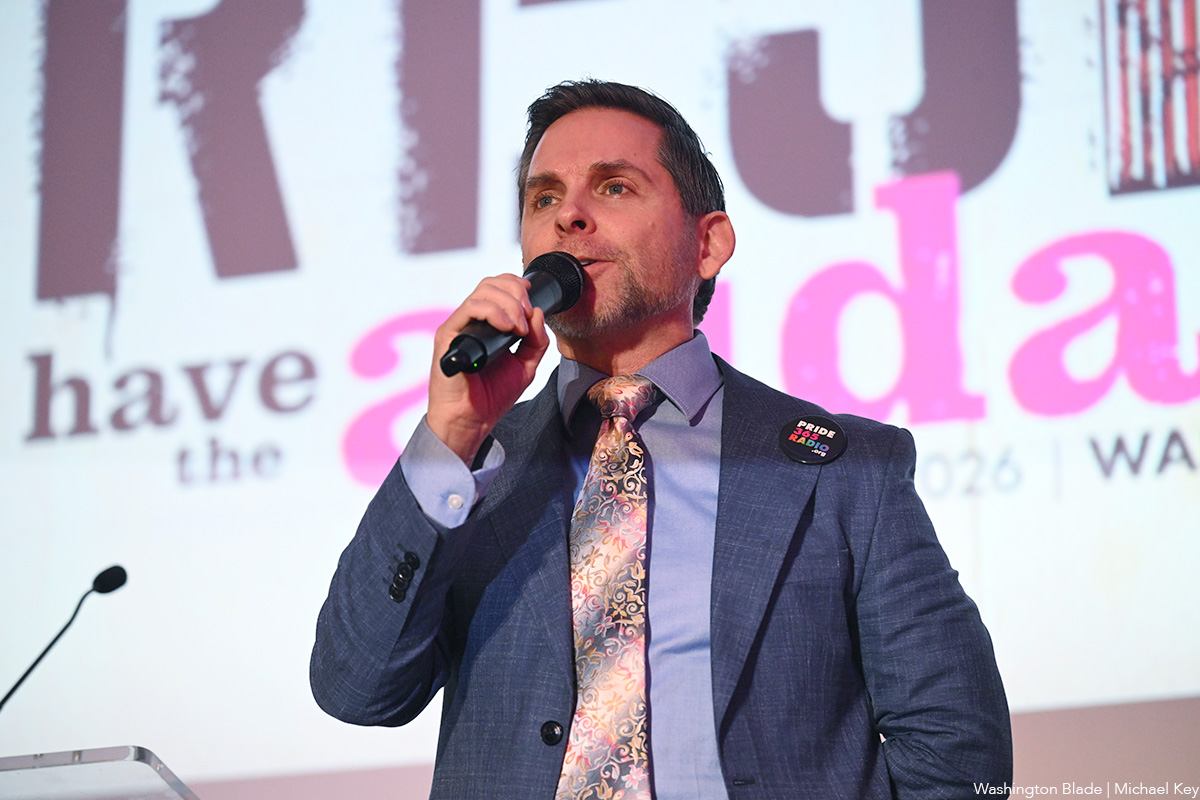
In an official statement released at the reveal event Capital Pride Alliance described its just announced 2026 Pride theme of “Exist, Resist, Have the Audacity” as a “bold declaration affirming the presence, resilience, and courage of LGBTQ+ people around the world.”
The statement adds, “Grounded in the undeniable truth that our existence is not up for debate, this year’s theme calls on the community to live loudly and proudly, stand firm against injustice and erasure, and embody the collective strength that has always defined the LGBTQ+ community.”
In a reference to the impact of the hostile political climate, the statement says, “In a time when LGBTQ+ rights and history continue to face challenges, especially in our Nation’s Capital, where policy and public discourse shape the future of our country, together, we must ensure that our voices are visible, heard, and unapologetically centered.”
The statement also quotes Capital Pride Alliance CEO and President Ryan Bos’s message at the Reveal event: “This year’s theme is both a declaration and a demand,” Bos said. “Exist, Resist, Have Audacity! reflects the resilience of our community and our responsibility to protect the progress we’ve made. As we look toward our nation’s 250th anniversary, we affirm that LGBTQ+ people have always been and always will be part of the United States’s history, and we will continue shaping its future with strength and resolve,” he concluded.
District of Columbia
Capital Pride board member resigns, alleges failure to address ‘sexual misconduct’
In startling letter, Taylor Chandler says board’s inaction protected ‘sexual predator’
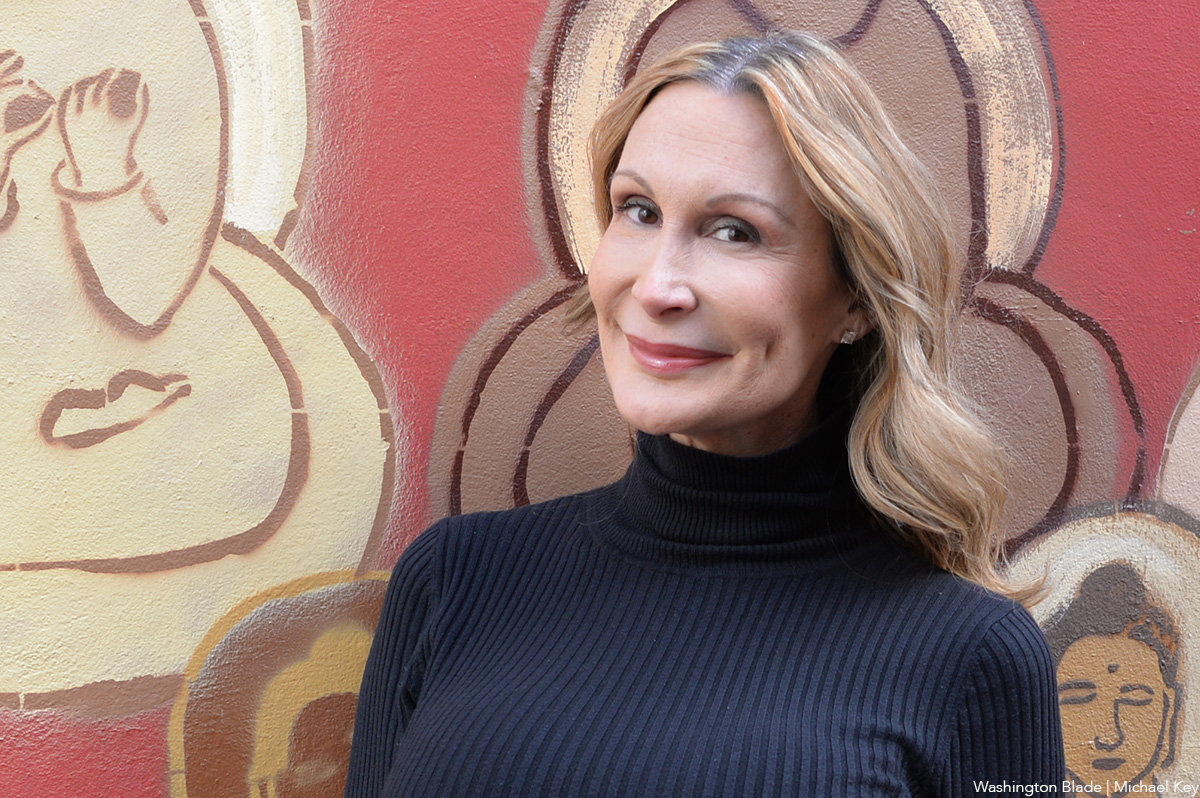
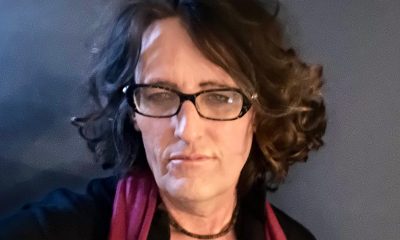
Taylor Lianne Chandler, a member of the Capital Pride Alliance Board of Directors since 2019 who most recently served as the board’s secretary, submitted a letter of resignation on Feb. 24 that alleges the board has failed to address instances of “sexual misconduct” within the Capital Pride organization.
The Washington Blade received a copy of Chandler’s resignation letter one day after she submitted it from an anonymous source. Chandler, who identifies as transgender and intersex, said in an interview that she did not send the letter to the Blade, but she suspected someone associated with Capital Pride, which organizes D.C.’s annual LGBTQ Pride events, “wants it out in the open.”
“It is with a heavy heart, but with absolute clarity, that I submit my resignation from the Capital Pride Alliance Board of Directors effective immediately,” Chandler states in her letter. “I have devoted nearly ten years of my life to this organization,” she wrote, pointing to her initial involvement as a volunteer and later as a producer of events as chair of the organization’s Transgender, Gender Non-Conforming, and Intersex Committee.
“Capital Pride once meant something profound to me – a space of safety, visibility, and community for people who have often been denied all three,” her letter continues. “That is no longer the organization I am part of today.”
“I, along with other board members, brought forward credible concerns regarding sexual misconduct – a pattern of behavior spanning years – to the attention of this board,” Chandler states in the letter. “What followed was not accountability. What followed was retaliation. Rather than addressing the substance of what was reported, officers and fellow board members chose to chastise those of us who came forward.”
The letter adds, “This board has made its priorities clear through its actions: protecting a sexual predator matters more than protecting the people who had the courage to come forward. … I have been targeted, bullied, and made to feel like an outsider for doing what any person of integrity would do – telling the truth.”
In response to a request from the Blade for comment, Anna Jinkerson, who serves as chair of the Capital Pride board, sent the Blade a statement praising Taylor Chandler’s efforts as a Capital Pride volunteer and board member but did not specifically address the issue of alleged sexual misconduct.
“We’re also aware that her resignation letter has been shared with the media and has listed concerns,” Jinkerson said in her statement. “When concerns are brought to CPA, we act quickly and appropriately to address them,” she said.
“As we continue to grow our organization, we’re proactively strengthening the policies and procedures that shape our systems, our infrastructure, and the support we provide to our team and partners,” Jinkerson said in her statement. “We’re doing this because the community’s experience with CPA must always be safe, affirming, empowering, and inclusive,” she added.
In an interview with the Blade, Chandler said she was not the target of the alleged sexual harassment.
She said a Capital Pride investigation identified one individual implicated in a “pattern” of sexual harassment related behavior over a period of time. But she said she was bound by a Non-Disclosure Agreement (NDA) that applies to all board members and she cannot disclose the name of the person implicated in alleged sexual misconduct or those who came forward to complain about it.
“It was one individual, but there was a pattern and a history,” Chandler said, noting that was the extent of what she can disclose.
“And I’ll say this,” she added. “In my opinion, with gay culture sometimes the touchy feely-ness that goes on seems to be like just part of the culture, not necessarily the same as a sexual assault or whatever. But at the same time, if someone does not want those advances and they’re saying no and trying to push you away and trying to avoid you, then it makes it that way regardless of the culture.”
When asked about when the allegations of sexual harassment first surfaced, Chandler said, “In the past year is when the allegation came forward from one individual. But in the course of this all happening, other individuals came forward and talked about instances – several which showed a pattern.”
Chandler’s resignation comes about five months after Capital Pride Alliance announced in a statement released in October 2025 that its then board president, Ashley Smith, resigned from his position on Oct. 18 after Capital Pride became aware of a “claim” regarding Smith. The statement said the group retained an independent firm to investigate the matter, but it released no further details since that time. Smith has declined to comment on the matter.
When asked by the Blade if the Smith resignation could be linked in some way to allegations of sexual misconduct, Chandler said, “I can’t make a comment one way or the other on that.”
Chandler’s resignation and allegations come after Capital Pride Alliance has been credited with playing the lead role in organizing the World Pride celebration hosted by D.C. in which dozens of LGBTQ-related Pride events were held from May through June of 2025.
The letter of resignation also came just days before Capital Pride Alliance’s annual “Reveal” event scheduled for Feb. 26 at the Hamilton Hotel in which the theme for D.C.’s June 2026 LGBTQ Pride events was to be announced along with other Pride plans.

Too afraid to leave home: ICE’s toll on Latino HIV care

Intense doc offers transcendent treatment of queer fetish pioneer

In D.C. comedy, be sure to shop local

Comings & Goings

Liza Minnelli makes surprise appearance at GLAAD Media Awards

13 HIV/AIDS activists arrested on Capitol Hill

Md. Commission on LGBTQIA+ Affairs released updated student recommendations

35 years after ‘Truth or Dare,’ Slam is still dancing

Talarico beats Crockett in Texas primary