District of Columbia
Trans woman attacked, beaten near Lincoln Memorial
D.C. police list June 29 incident as suspected hate crime

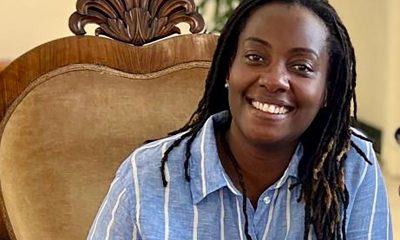
D.C. police are investigating an incident in which a 43-year-old transgender woman says she was attacked and assaulted by three men around 1:30 a.m. Sunday, June 29, as she was riding her battery powered scooter near the Lincoln Memorial.
District resident Cayla Calhoun, a popular bartender and sommelier at the D.C. restaurant Annabelle, told the Washington Blade she is struggling to recall the details and possible multiple locations of the attack due to the severe head injuries she has suffered.
A police report says Calhoun was found lying on a curb at the intersection of 19th Street and Constitution Avenue around 6 a.m. on June 29.
A GoFundMe appeal posted by her friend Ellen Vaughn, which reports Calhoun was found semiconscious at that time and taken to George Washington University Hospital, says her injuries include two concussions, multiple broken ribs, seven cranial fractures, and a fractured elbow.
The police report says Calhoun called for an ambulance at the 19th and Constitution Avenue location and told the emergency medical technicians who arrived at the scene that her injuries were caused by her falling off of her skateboard multiple times.
The police report says three days later, on July 3, while at the hospital, Calhoun told police “that she now remembered being assaulted by three males at 19th and I Street, N.W.,“about three quarters of a mile from where the ambulance technicians found her on Constitution Avenue.
Calhoun told the Blade she believes her memory was faulty at the time she first spoke with the ambulance technicians and police due to her head injuries. She said she is now beginning to recall that the three male attackers, whom she describes as white males, first approached her as she was riding her scooter near the Reflecting Pool close to the Lincoln Memorial.
She said the incident occurred while she was taking her routine after-work scooter ride shortly after she completed her bartending shift at Annabelle at 11:30 p.m. on Saturday, June 28. She said her sometimes daily after-work scooter ride, which she took on the night of the attack, involves traveling along a bike path on the Rock Creek Parkway past the Kennedy Center to the Lincoln Memorial.
From the Lincoln Memorial she rides along the Reflecting Pool toward the Washington Monument, around which she circles before starting her ride home, heading north on 15th Street to her residence at 15th and R Street, N.W.
She said that on the night of the attack she now recalls passing three men who were also on scooters somewhere near the Lincoln Memorial and the reflecting pool.
“As I passed them, they yelled faggot and pedophile at me,” she told the Blade. “I was pulling onto the area there by the reflecting pond. And I figured I would ride right away.”
As best she recalls, the men followed her “and pushed me off my scooter and continued to yell slurs.” She said she recalls trying to ride away from the men and that her interaction with them may have continued in other nearby locations. But due to her head injuries she said she does not recall being assaulted by the attackers, although the multiple injuries to her head and body convinced her they had to have struck her in some way multiple times.
“I have a space where I can see myself in that moment thinking to myself this is not good,” she said. “Somebody is making fun of you. You need to go as fast as you can and you need to find people. And that’s the last thought that I remember happening until the hospital.”
The D.C. police report lists the incident as an Aggravated Assault and identifies the weapon as “hands/feet.” The report lists the suspected motive as “Hate-Bias” based on the victim’s “Gender identity — anti-transgender/transsexual.”
A D.C. police spokesperson said the case remains under active investigation and that anyone with information about the case should contact police at 202-727-9099.
The attack against Johnson took place six days before another D.C. transgender woman, Dream Johnson, 28, was shot to death around 12:30 a.m. on July 5 in front of an apartment building at 2013 Benning Rd., N.E., according to a D.C. police report.
Police have yet to identify a motive in that case. But one of Johnson’s family members, her aunt, has said she learned through someone who spoke to a witness to the shooting that three men had approached Johnson while she was walking along Benning Road and one of them called her a derogatory name before one of them shot her multiple times.
Police are offering a $25,000 reward for information leading to an arrest and conviction of the person or persons responsible for the murder. Anyone with information about this case is being asked to contact Homicide Detective Natasha Kennedy, the lead investigator, at 202-380-6198.
Local transgender rights advocate Earline Budd said close to 100 people turned out for a candlelight vigil held in Johnson’s honor on Saturday, July 12, at D.C.’s River Terrace Park. Among those who spoke at the vigil were Japer Bowles, director of D.C. Mayor Muriel Bowser’s Office of LGBTQ Affairs.
Further details about the Cayla Calhoun case can be accessed through her friend’s GoFundMe appeal.


District of Columbia
D.C. Black Pride theme, performers announced at ‘Speakeasy’
Durand Bernarr to headline 2026 programming
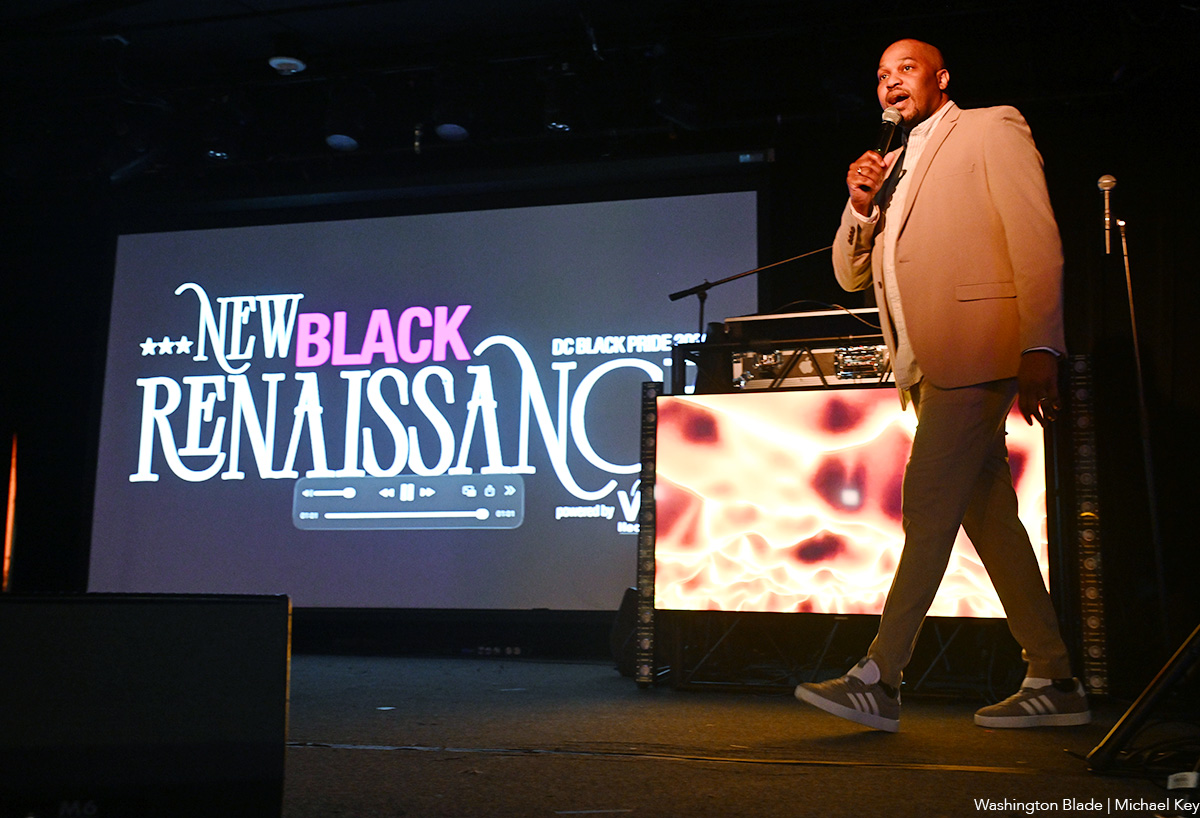
The Center for Black Equity held its 2026 DC Black Pride Theme Reveal event at Union Stage on Monday. The evening, a “Speakeasy Happy Hour,” was hosted by Anthony Oakes and featured performances by Lolita Leopard and Keith Angelo. The Center for Black Equity organizes DC Black Pride.
Kenya Hutton, Center for Black Equity president and CEO, spoke following the performances by Leopard and Angelo. Hutton announced this year’s theme for DC Black Pride: “New Black Renaissance.”
Performers for 2026 DC Black Pride were announced to be Bang Garcon, Be Steadwell, Jay Columbus, Bennu Byrd, Rue Pratt and Akeem Woods.
Singer-songwriter Durand Bernarr was announced as the headliner for the 2026 festivities. Bernerr gave brief remarks through a video played on the screen at the stage.
DC Black Pride is scheduled for May 22-25. For more information on DC Black Pride, visit dcblackpride.org.
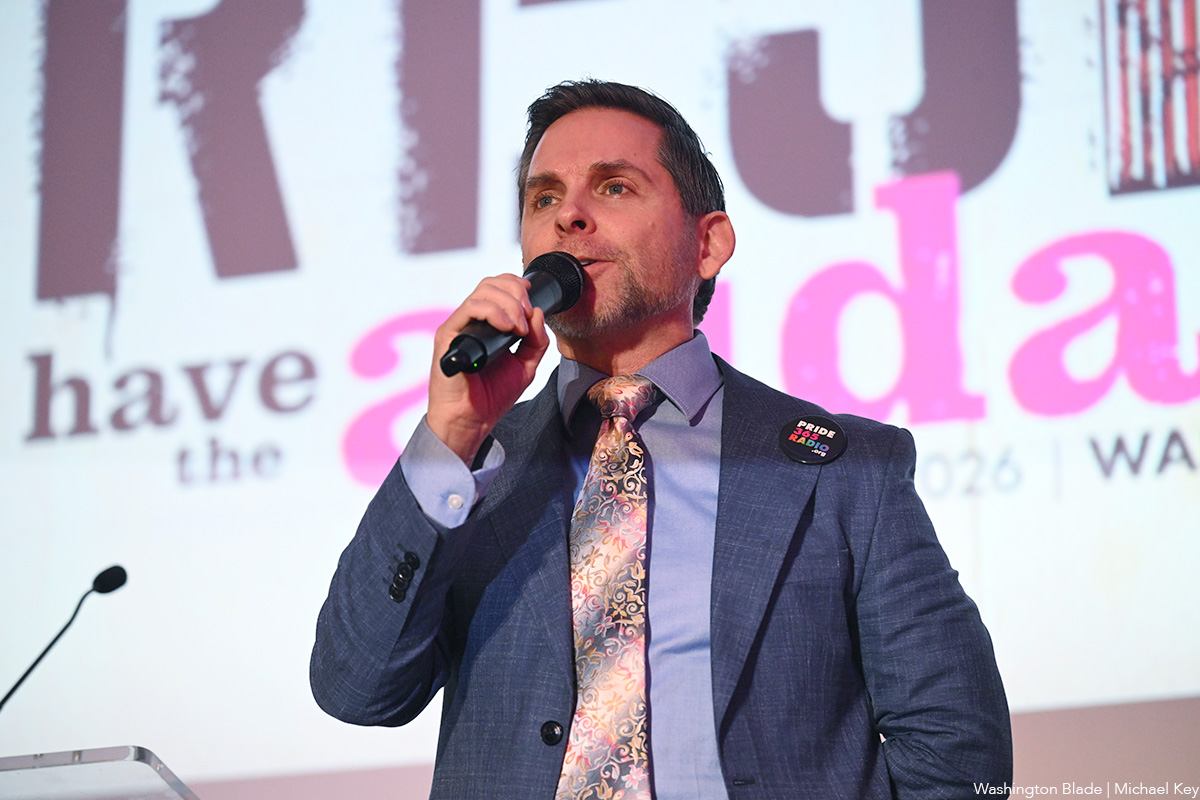
In an official statement released at the reveal event Capital Pride Alliance described its just announced 2026 Pride theme of “Exist, Resist, Have the Audacity” as a “bold declaration affirming the presence, resilience, and courage of LGBTQ+ people around the world.”
The statement adds, “Grounded in the undeniable truth that our existence is not up for debate, this year’s theme calls on the community to live loudly and proudly, stand firm against injustice and erasure, and embody the collective strength that has always defined the LGBTQ+ community.”
In a reference to the impact of the hostile political climate, the statement says, “In a time when LGBTQ+ rights and history continue to face challenges, especially in our Nation’s Capital, where policy and public discourse shape the future of our country, together, we must ensure that our voices are visible, heard, and unapologetically centered.”
The statement also quotes Capital Pride Alliance CEO and President Ryan Bos’s message at the Reveal event: “This year’s theme is both a declaration and a demand,” Bos said. “Exist, Resist, Have Audacity! reflects the resilience of our community and our responsibility to protect the progress we’ve made. As we look toward our nation’s 250th anniversary, we affirm that LGBTQ+ people have always been and always will be part of the United States’s history, and we will continue shaping its future with strength and resolve,” he concluded.
District of Columbia
Capital Pride board member resigns, alleges failure to address ‘sexual misconduct’
In startling letter, Taylor Chandler says board’s inaction protected ‘sexual predator’
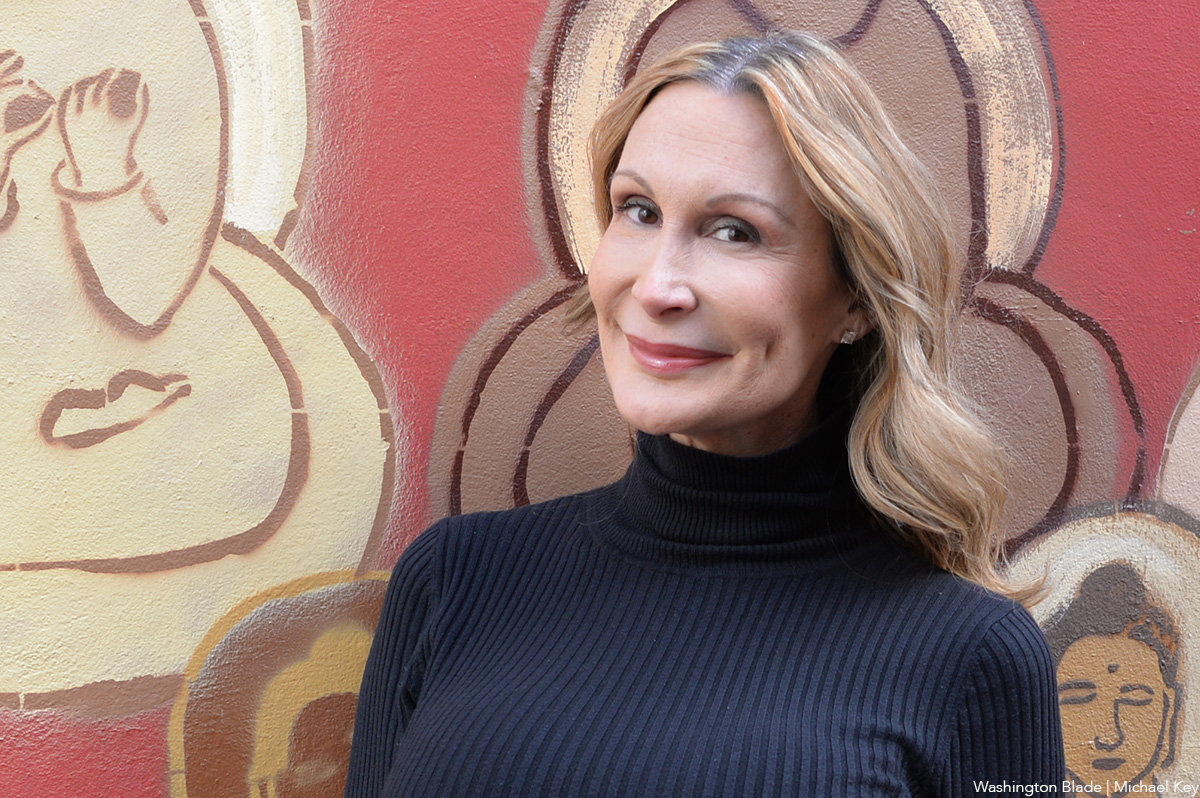
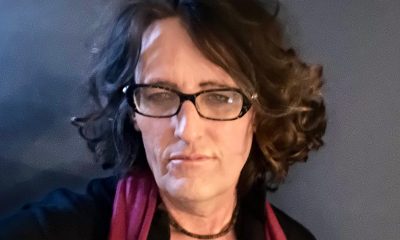
Taylor Lianne Chandler, a member of the Capital Pride Alliance Board of Directors since 2019 who most recently served as the board’s secretary, submitted a letter of resignation on Feb. 24 that alleges the board has failed to address instances of “sexual misconduct” within the Capital Pride organization.
The Washington Blade received a copy of Chandler’s resignation letter one day after she submitted it from an anonymous source. Chandler, who identifies as transgender and intersex, said in an interview that she did not send the letter to the Blade, but she suspected someone associated with Capital Pride, which organizes D.C.’s annual LGBTQ Pride events, “wants it out in the open.”
“It is with a heavy heart, but with absolute clarity, that I submit my resignation from the Capital Pride Alliance Board of Directors effective immediately,” Chandler states in her letter. “I have devoted nearly ten years of my life to this organization,” she wrote, pointing to her initial involvement as a volunteer and later as a producer of events as chair of the organization’s Transgender, Gender Non-Conforming, and Intersex Committee.
“Capital Pride once meant something profound to me – a space of safety, visibility, and community for people who have often been denied all three,” her letter continues. “That is no longer the organization I am part of today.”
“I, along with other board members, brought forward credible concerns regarding sexual misconduct – a pattern of behavior spanning years – to the attention of this board,” Chandler states in the letter. “What followed was not accountability. What followed was retaliation. Rather than addressing the substance of what was reported, officers and fellow board members chose to chastise those of us who came forward.”
The letter adds, “This board has made its priorities clear through its actions: protecting a sexual predator matters more than protecting the people who had the courage to come forward. … I have been targeted, bullied, and made to feel like an outsider for doing what any person of integrity would do – telling the truth.”
In response to a request from the Blade for comment, Anna Jinkerson, who serves as chair of the Capital Pride board, sent the Blade a statement praising Taylor Chandler’s efforts as a Capital Pride volunteer and board member but did not specifically address the issue of alleged sexual misconduct.
“We’re also aware that her resignation letter has been shared with the media and has listed concerns,” Jinkerson said in her statement. “When concerns are brought to CPA, we act quickly and appropriately to address them,” she said.
“As we continue to grow our organization, we’re proactively strengthening the policies and procedures that shape our systems, our infrastructure, and the support we provide to our team and partners,” Jinkerson said in her statement. “We’re doing this because the community’s experience with CPA must always be safe, affirming, empowering, and inclusive,” she added.
In an interview with the Blade, Chandler said she was not the target of the alleged sexual harassment.
She said a Capital Pride investigation identified one individual implicated in a “pattern” of sexual harassment related behavior over a period of time. But she said she was bound by a Non-Disclosure Agreement (NDA) that applies to all board members and she cannot disclose the name of the person implicated in alleged sexual misconduct or those who came forward to complain about it.
“It was one individual, but there was a pattern and a history,” Chandler said, noting that was the extent of what she can disclose.
“And I’ll say this,” she added. “In my opinion, with gay culture sometimes the touchy feely-ness that goes on seems to be like just part of the culture, not necessarily the same as a sexual assault or whatever. But at the same time, if someone does not want those advances and they’re saying no and trying to push you away and trying to avoid you, then it makes it that way regardless of the culture.”
When asked about when the allegations of sexual harassment first surfaced, Chandler said, “In the past year is when the allegation came forward from one individual. But in the course of this all happening, other individuals came forward and talked about instances – several which showed a pattern.”
Chandler’s resignation comes about five months after Capital Pride Alliance announced in a statement released in October 2025 that its then board president, Ashley Smith, resigned from his position on Oct. 18 after Capital Pride became aware of a “claim” regarding Smith. The statement said the group retained an independent firm to investigate the matter, but it released no further details since that time. Smith has declined to comment on the matter.
When asked by the Blade if the Smith resignation could be linked in some way to allegations of sexual misconduct, Chandler said, “I can’t make a comment one way or the other on that.”
Chandler’s resignation and allegations come after Capital Pride Alliance has been credited with playing the lead role in organizing the World Pride celebration hosted by D.C. in which dozens of LGBTQ-related Pride events were held from May through June of 2025.
The letter of resignation also came just days before Capital Pride Alliance’s annual “Reveal” event scheduled for Feb. 26 at the Hamilton Hotel in which the theme for D.C.’s June 2026 LGBTQ Pride events was to be announced along with other Pride plans.

CAMP Rehoboth hires new executive director

Claudia López wins primary in Colombian presidential race

Too afraid to leave home: ICE’s toll on Latino HIV care

Intense doc offers transcendent treatment of queer fetish pioneer

In D.C. comedy, be sure to shop local

13 HIV/AIDS activists arrested on Capitol Hill

An undeclared war of distraction by the felon

PHOTOS: Sydney Gay and Lesbian Mardi Gras Parade

Ugandan activist named Charles F. Kettering Foundation fellow