Movies
‘Sunset Boulevard’ at 75: ‘It was all very queer’
Golden Age classic still holds universal appeal
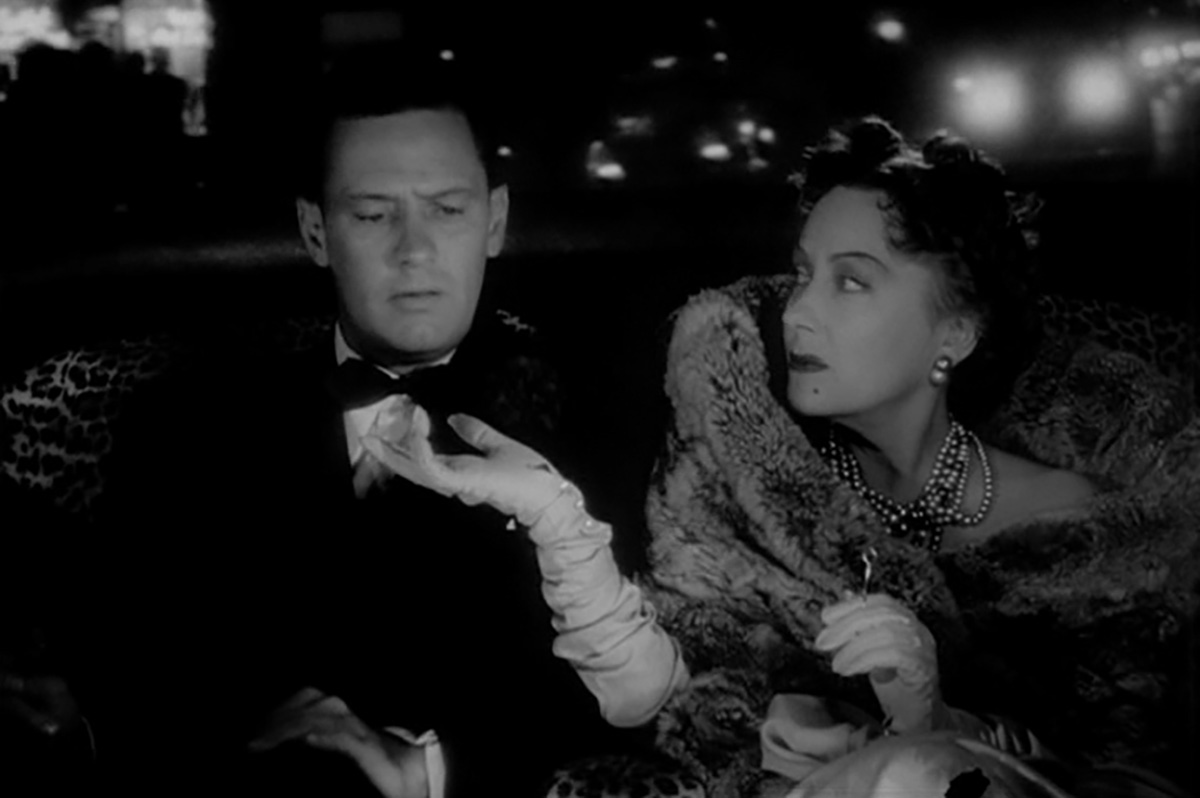
Few classics of the Hollywood Golden Age have stood the test of time with as much stamina as Billy Wilder’s “Sunset Boulevard.”
Released on Aug. 10, 1950, it became a near-instant classic, earning rave reviews for its savage portrayal of the very industry that produced it and the fearlessly intense performance of former silent screen goddess Gloria Swanson — as tragically deranged former silent screen goddess Norma Desmond, whose fictional history mirrored her own more than enough to make the casting provocative. It was one of the year’s biggest “award season favorites,” a creative triumph for the longtime director/screenwriter team of Wilder and Charles Brackett (along with co-credited D.M. Marshman Jr.), and it quickly gained a reputation — one that it largely still holds — as the best film Hollywood has ever made about itself. It would go on to become a frequently cited example of the film noir genre at its finest, a near-legendary insider’s tale of the movie industry, a meditation on the dangers of ego and the fickleness of fame, and a damning indictment of callousness within a system that exploits its best and brightest before casting them aside when they cease to be profitable.
It’s inarguably a great movie, fully worth the reverence with which it is held in the “cinephile” community — but while that’s more than enough reason to observe and celebrate its 75th anniversary, what makes the occasion noteworthy for us here at the Blade is its status as one of the most beloved “gay” film faves of all time.
Not that there’s anything explicitly “gay” about it, at least on the surface. Indeed, if you watch it at face value, it adheres more or less to conventional heterosexual “normalcy” in the specifics of its story. Struggling screenwriter Joe Gillis (William Holden) is the image of mid-century American masculinity: worldly, handsome without being “pretty” and oozing with an almost smug virility; there’s the air of a “hustler” about him, sure, but we all know there’s an appeal to that, too. He’s an attractive enough package to make a movie star — albeit a faded one — want to turn him into her own private rent boy, especially when he has talents that might help her accomplish her delusional dream of a return to stardom. Considering how he looks in those mid-century swim trunks, we can’t say we blame her.
Then there’s Norma. To say she’s larger than life is an understatement; exuding a persona that speaks of a need to be seen and acknowledged, she’s made a place for herself by commanding every room (and every movie screen) with her sheer presence. It’s an identity built on artifice, on the carefully mastered tricks of her trade — the elevated vocal expression, the broad gestures and glamorous presentation that establish her as… well, a queen. Yet she’s been rejected, cast aside in a world that no longer recognizes her glory, which worships youth and beauty and views those who are older as unwanted and irrelevant; how many queer men, especially in the repressive days of “Sunset Boulevard,” have been able to relate with that?
Naturally, there’s a certain amount of camp to be found here, too, which in itself could explain the queer fascination with the movie. The exaggerated acting style of the silent screen, embodied so menacingly in Swanson’s iconic performance, adds a certain air of the ridiculous — and of the terrifying — yet (like all good camp) invites our empathy, too.
That, of course, is why this nugget of classic cinema speaks to us still after three quarters of a century: no matter how flawed, how unlikable, how ridiculous or self-serving the denizens of “Sunset Boulevard” might be, they are so recognizably human that we cannot help but be moved by them. Yes, it’s ultimately a dark comedy, a pitch-black satirical commentary on vanity, amorality, and self-delusion, but it also jolts us throughout with unexpected (and un-ironic) moments of truth.
It’s impossible to watch without feeling a tinge of sympathy for Joe Gillis — dead in a swimming pool before he even gets to tell his own story, and not even a good enough opportunist to avoid feeling sorry for the woman who will eventually put him there. It’s impossible to consider the fate of Norma Desmond — the years of loneliness, of living in memories, of finding connection only through the fawning servitude of her ex-husband-turned-loyal manservant (Erich Von Stroheim), and of finding companionship only through the proxy of a pet monkey — without becoming aware of the profound sadness of her existence. It’s even impossible not to believe in the idealism of naive “good-girl” Betty (Nancy Olson), despite the fact that everything else we see in the film makes a mockery of it.
Wilder and Brackett may have been renowned for their cynicism, but their collaborative film work never failed to touch you with their deep sense of humanity, either — and those moments do not happen by accident, but through careful craftsmanship. “Sunset Boulevard” is a movie full of iconic quotes precisely because they provide those glimpses of profound humanity; they hit us with the recognition of our own pretensions, our own delusional moments of self-importance, our own embrace of ego over candid self-awareness. All of them sting us with a wisdom we cannot ignore, but they also offer a nudge toward our own redemption, perhaps most pointedly with the climactic observation spoken by Joe in an appeal to Norma’s fast-deteriorating sanity: “There’s nothing tragic about being 50, not unless you try to be 25.”
It’s the thesis statement of “Sunset Boulevard,” in a way, a hard-candy truism toward which the movie builds with easily traceable deliberation from the fateful moment its anti-hero turns into the driveway of that decaying mansion on the eponymous street of its deeply metaphoric title. It’s delivered to Norma, not as a slap in the face but as a lifeline, but it’s really aimed at the audience; while it may come too late to save either of these two doomed characters, Wilder and Brackett clearly intended it as a message that it’s not too late for us.
Likewise, though we never see even a hint of queer identity depicted on the screen, the overtones and undercurrents of queerness are so recognizable — and would have been so to queer audiences even in 1950 — that it’s hard to convince us they are there by coincidence. Though neither Wilder nor Brackett identified as queer themselves, they were veteran workers in the Hollywood industry, and knew full well that there was a “secret world” behind the scenes that the censors of the time would never let them portray directly. Yet understanding that their film’s powerful message was equally relevant (if not moreso) to the queer community, they would have known that they could reach them with it, anyway. So when Joe Gillis, watching the grim nocturnal funeral for that aforementioned monkey from his window, voices his opinion that “it was all very queer,” you can be sure they chose that word on purpose, too.
Of course, for many queer audiences, understanding “why” they like it is not really necessary — after all, it’s an entertaining enough movie, with a wickedly transgressive attitude about social norms and constructs (the reversed gender dynamics between its two “romantic” leads add an overall sense of discomfort for anyone who might feel vaguely threatened by such things), and if you’re a fan of old Hollywood, it offers a host of pleasures in its incorporation of real-life personalities — filmmaker Cecil B. DeMille and legendary gossip columnist Hedda Hopper make appearances as themselves, as do several silent stars (including Buster Keaton, Anna Q. Nilsson, and H.B. Warner) as Norma’s “bridge circle.”
Ultimately, though, what matters most of all is that it is a film with universal appeal — a timeless story, despite its aging stylistic and technical contributions — and the fact that it remains so after 75 years is testament of the universal power of cinema to speak to us regardless of when it was made.





Movies
Intense doc offers transcendent treatment of queer fetish pioneer
‘A Body to Live In’ a fascinating trip into a transgressive culture

Once upon a time in the 1940s, a teenager named Roland Loomis, who lived with his devout Lutheran parents in Aberdeen, S.D., received a hand-me-down camera from his uncle. It was a gift that would change his life.
Small and effeminate, he didn’t exactly fit with the “in” crowd of his small rural town; but he had an inner life more thrilling than anything they had to offer, anyway, and that camera became the key with which it could finally be unlocked. Waiting patiently for those precious hours when he was alone in the house, he used it to capture images of himself that expressed an identity he had only begun to explore, through furtive experiments in body manipulation that incorporated exotic costuming, erotic nudity, gender ambiguity, and what many of us might call (though he would not) self-mutilation, including the piercing of his skin and other extreme forms of physical modification.
Young Roland would go on to become famous (or perhaps, notorious) in the decades to come, but it would be under a different name: Fakir Musafar, the focal figure of filmmaker Angelo Madsen’s documentary “A Body to Live In,” which opened in Los Angeles on Feb. 27 and expands to New York this weekend.
Like Musafar himself, who died of lung cancer at 87 in 2018, it’s a documentary that doesn’t quite follow the expected rules. Eschewing “talking head” commentators and traditional narration, Madsen spins his movie from his subject’s extensive archives and allows the information to come through the voices of those who were close to him: collaborator and life partner Cléo Dubois, performance artists Ron Athey and Annie Sprinkle, and underground publisher V. Vale are among the many who contribute their memories and impressions of him, while evocative photos and film footage create a hazy “slide show” effect to provide a guided tour of his life, his art, and his legacy. Less a biography than a chronicle of profoundly unorthodox self-discovery, it details his development from those early days of clandestine self-photography through a continual evolution that would see him become a performance artist, a central figure in the burgeoning BDSM culture, a seeker who espoused eroticism as a spiritual practice, the founder of a “Radical Faeries” offshoot for the kink/fetish community, and ultimately an elder and mentor for a new generation for whom his once-taboo ideas and explorations had essentially become mainstream – thanks in no small part to his own pioneering efforts.
It’s a fascinating, hypnotic trip into a culture which might feel disturbingly transgressive to those who have never been a part of it – yet will almost certainly feel like being “seen” to those who have. It opens a window into a lifestyle where leather, kink, BDSM, gender play, and non-monogamous “situationships” are not just accepted but viewed as natural variations on the spectrum of human sexuality; and in the middle of it all is Musafar, on a deeply personal quest to connect with the deepest part of his essence through the intense and ritualistic pursuit of an inner drive that keeps pushing him further. As one reminiscing cohort remarks during the film, it’s as if he is “trying to find an answer to a question that” he “cannot form.”
Indeed, it might be said that Madsen’s movie is an exercise in forming that question; bringing his own “transness” into the mix as he examines the various aspects of Musafar’s ever-evolving relationship with self, identity, and presentation, he evokes a timely resonance in which the imperative to make physical form match psychic self-perception becomes an irresistible force, and draws a direct line between his subject’s fluid ambiguity and the plight faced by modern trans people over the bigotry of those who think gender is strictly about genitalia. Perhaps the question has to do with whether we are defined by our identities or by our physical form – or if both are malleable, adaptable, and in a constant state of flux.
In any case, with regard to Musafar, “A Body to Live In” is unquestionably a film about transformation, not just of physical manifestation but of consciousness itself. In his journey from being little Roland, the outcast schoolboy with a secret fetish, to Fakir, the spiritual psychonaut for whom sex and gender are only walls that separate us from a true and eternal essence, he is embodied by Madsen’s reverent documentary as a being in the process of breaking free from the restrictions of physical existence, of transcending all such distinctions by letting go of life itself – something underscored not only by the section of the movie dealing with the impact of the AIDS epidemic on Musafar’s deeply-bonded community, but by his own words, spoken in a deathbed interview that serves as a connecting thread throughout the film. We are kept unavoidably aware of the mortality which – for Musafar at least – seems little more than a prison that keeps us from the unfettered joy of our true nature.
But while Madsen honors his subject as a pillar – and an under-sung hero – of contemporary queer culture, he also addresses the aspects that made him a “problematic” figure; in his life, he drew criticism over perceived cultural appropriation from the indigenous American tribes whose sacred rituals inspired the kink-flavored practices which facilitated his own spiritual odyssey, and which he popularized among his own acolytes to give rise to the still-controversial “Modern Primitive” movement that has been criticized by some for turning meaningful cultural traditions into an excuse for trendy fashion accessories. Even Musafar’s survivors, whose love for him exudes palpably from the stories and memories they share of him throughout the film, make observations that point to his flaws; yet at the same time, Madsen’s documentary makes clear that Musafar himself never saw himself as perfect, either – just as someone willing to endure the kind of suffering that most of us might find unbearable in order to get closer to perfection.
Of course, it probably helped that he enjoyed that so-called “suffering,” but that’s perhaps too glib an observation in the face of a film that so clearly makes a case for the deep and sincere commitment he held for his quest for transcendence; but it’s also a helpful reminder that his practices – which might seem macabre and twisted to the uninitiated – were also an experience of joy, an exercise in rising above pain and making it a vehicle toward enlightenment, and in achieving a deeper understanding of one’s own place in this confusing place we call the universe.
Full disclosure: “A Body to Live In” is an intense experience, replete with candid sexual conversation, frequent nudity, and graphic scenes of extreme fetish practices – like suspension by metal hooks through the skin – which might be hard to handle for those who are unprepared to be confronted by them. Even so, as dark and menacing as it might be for the squeamish outsider, the world revealed in Madsen’s eloquent portrait is full of treasures and steeped in dark beauty, and it’s hard to imagine a more fitting way than that to portray a queer pioneer like the former Roland Loomis.
Movies
Moving doc ‘Come See Me’ is more than Oscar worthy
Poet Laureate Andrea Gibson, wife negotiate highs and lows of terminal illness
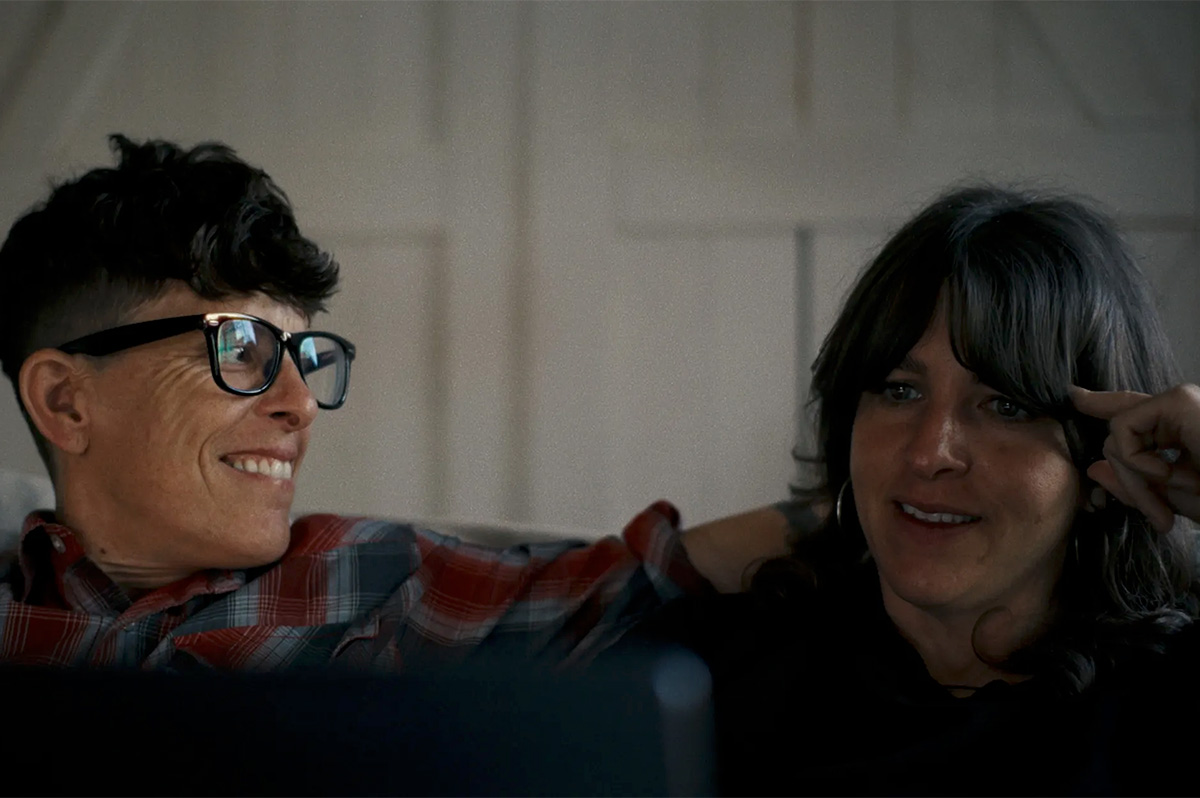
When Colorado Poet Laureate Andrea Gibson died from ovarian cancer in the summer of 2025, the news of their passing may have prompted an outpouring of grief from their thousands of followers on social media, but it was hardly a surprise.
That’s because Gibson – who had risen to both fame and acclaim in the early 2000s with intense live performances of their work that made them a “superstar” at Poetry Slam events – had been documenting their health journey on Instagram ever since receiving the diagnosis in 2021. During the process, they gained even more followers, who were drawn in by the reflections and explorations they shared in their daily posts. It was really a continuation, a natural evolution of their work, through which their personal life had always been laid bare, from the struggles with queer sexuality and gender they experienced in their youth to the messy relationships and painful breakups of their adult life; now, with precarious health prohibiting a return to the stage, they had found a new platform from which to express their inner experience, and their fans – not only the queer ones for whom their poetry and activism had become a touchstone, but the thousands more who came to know them through the deep shared humanity that exuded through their online presence – were there for it, every step of the way.
At the same time, and in that same spirit of sharing, there was another work in progress around Gibson: “Come See Me in the Good Light,” a film conceived by their friends Tig Notaro and Stef Willen and directed by seasoned documentarian Ryan White (“Ask Dr. Ruth”, “Good Night, Oppy”, “Pamela, a Love Story”), it was filmed throughout 2024, mostly at the Colorado home shared by Gibson and their wife, fellow poet Megan Falley, and debuted at the 2025 Sundance Film Festival before a release on Apple TV in November. Now, it’s nominated for an Academy Award.
Part life story, part career retrospective, and part chronicle of Gibson and Falley’s relationship as they negotiate the euphoric highs and heartbreaking lows of Gibson’s terminal illness together, it’s not a film to be approached without emotional courage; there’s a lot of pain to be vicariously endured, both emotional and physical, a lot of hopeful uplifts and a lot of crushing downfalls, a lot of spontaneous joy and a lot of sudden fear. There’s also a lot of love, which radiates not only from Gibson and Falley’s devotion and commitment to being there for each other, no matter what, but through the support and positivity they encounter from the extended community that surrounds them. From their circle of close friends, to the health care professionals that help them navigate the treatment and the difficult choices that go along with it, to the extended family represented by the community of fellow queer artists and poets who show up for Gibson when they make a triumphant return to the stage for a performance that everyone knows may well be their last, nobody treats this situation as a downer. Rather, it’s a cause to celebrate a remarkable life, to relish friendship and feelings, to simply be present and embrace the here and now together, as both witness and participant.
At the same time, White makes sure to use his film as a channel for Gibson’s artistry, expertly weaving a showcase for their poetic voice into the narrative of their survival. It becomes a vibrant testament to the raw power of their work, framing the poet as a seminal figure in a radical, feminist, genderqueer movement which gave voice to a generation seeking to break free from the constraints of a limited past and imagine a future beyond its boundaries. Even in a world where queer existence has become – yet again – increasingly perilous in the face of systemically-stoked bigotry and bullying, it’s a blend that stresses resilience and self-empowerment over tragedy and victimhood, and it’s more than enough to help us find the aforementioned emotional courage necessary to turn what is ultimately a meditation on dying into a validation of life.
That in itself is enough to make “Come See Me in the Good Light” worthy of Oscar gold, and more than enough to call it a significant piece of queer filmmaking – but there’s another level that distinguishes it even further.
In capturing Gibson and Falley as they face what most of us like to think of as an unimaginable future, White’s quietly profound movie puts its audience face-to-face with a situation that transcends all differences not only of sexuality or gender, but of race, age, or economic status as well. It confronts us with the inevitability few of us are willing to consider until we have to, the unhappy ending that is rendered certain by the joyful beginning, the inescapable conclusion that has the power to make the words “happily ever after” feel like a hollow promise. At the center of this loving portrait of a great American artist is a universal story of saying goodbye.
Yes, there is hope, and yes, good fortune often prevails – sometimes triumphantly – in the ongoing war against the cancer that has come to threaten the palpably genuine love this deeply-bonded couple has found together; but they (and we) know that, even in the best-case scenario, the end will surely come. All love stories, no matter how happy, are destined to end with loss and sorrow; it doesn’t matter that they are queer, or that their gender identities are not the same as ours – what this loving couple is going through, together, is a version of the same thing every loving couple lucky enough to hold each other for a lifetime must eventually face.
That they meet it head on, with such grace and mutual care, is the true gift of the movie.
Gibson lived long enough to see the film’s debut at Sundance, which adds a softening layer of comfort to the knowledge we have when watching it that they eventually lost the battle against their cancer; but even if they had not, what “Come See Me in the Good Light” shows us, and the unflinching candor with which it does so, delivers all the comfort we need.
Whether that’s enough to earn it an Oscar hardly matters, though considering the notable scarcity of queer and queer-themed movies in this year’s competition it might be our best shot at recognition.
Either way, it’s a moving and celebratory film statement with the power to connect us to our true humanity, and that speaks to a deeper experience of life than most movies will ever dare to do.
Movies
Radical reframing highlights the ‘Wuthering’ highs and lows of a classic
Emerald Fennell’s cinematic vision elicits strong reactions
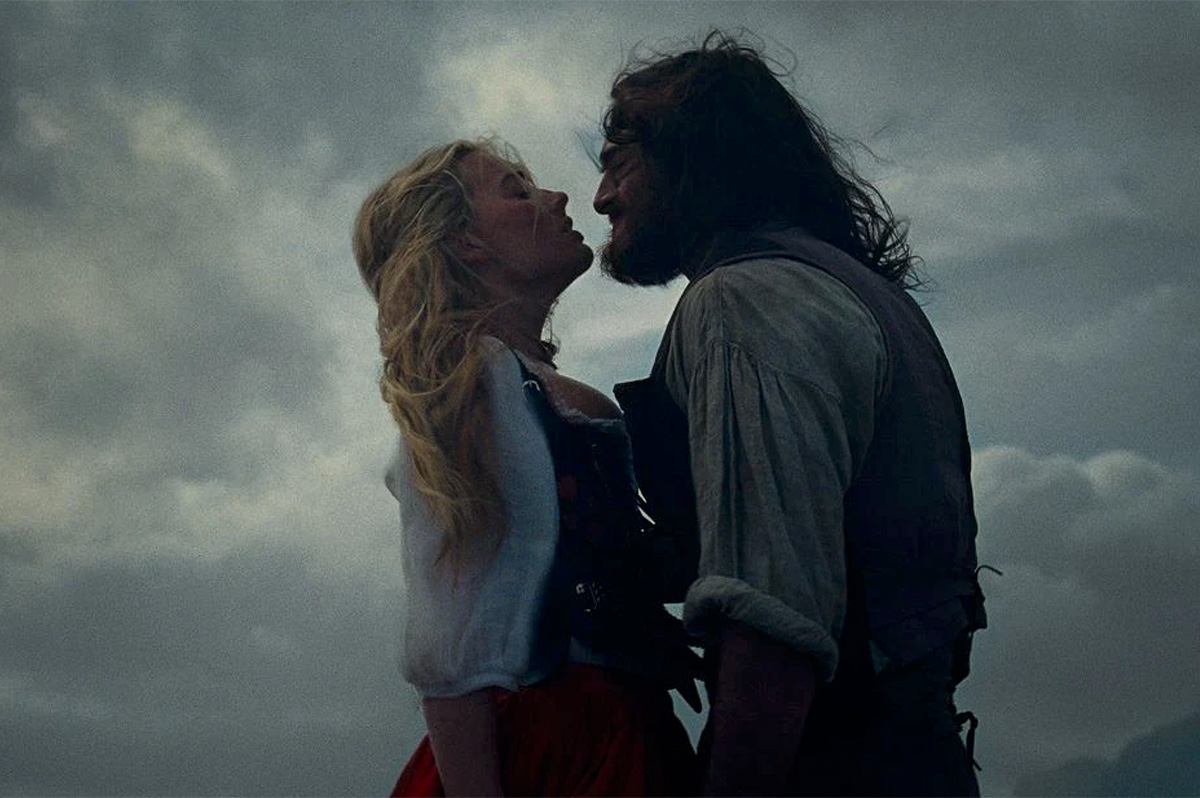
If you’re a fan of “Wuthering Heights” — Emily Brontë’s oft-filmed 1847 novel about a doomed romance on the Yorkshire moors — it’s a given you’re going to have opinions about any new adaptation that comes along, but in the case of filmmaker Emerald Fennell’s new cinematic vision of this venerable classic, they’re probably going to be strong ones.
It’s nothing new, really. Brontë’s book has elicited controversy since its first publication, when it sparked outrage among Victorian readers over its tragic tale of thwarted lovers locked into an obsessive quest for revenge against each other, and has continued to shock generations of readers with its depictions of emotional cruelty and violent abuse, its dysfunctional relationships, and its grim portrait of a deeply-embedded class structure which perpetuates misery at every level of the social hierarchy.
It’s no wonder, then, that Fennell’s adaptation — a true “fangirl” appreciation project distinguished by the radical sensibilities which the third-time director brings to the mix — has become a flash point for social commentators whose main exposure to the tale has been flavored by decades of watered-down, romanticized “reinventions,” almost all of which omit large portions of the novel to selectively shape what’s left into a period tearjerker about star-crossed love, often distancing themselves from the raw emotional core of the story by adhering to generic tropes of “gothic romance” and rarely doing justice to the complexity of its characters — or, for that matter, its author’s deeper intentions.
Fennell’s version doesn’t exactly break that pattern; she, too, elides much of the novel’s sprawling plot to focus on the twisted entanglement between Catherine Earnshaw (Margot Robbie), daughter of the now-impoverished master of the titular estate (Martin Clunes), and Heathcliff (Jacob Elordi), a lowborn child of unknown background origin that has been “adopted” by her father as a servant in the household. Both subjected to the whims of the elder Earnshaw’s violent temper, they form a bond of mutual support in childhood which evolves, as they come of age, into something more; yet regardless of her feelings for him, Cathy — whose future status and security are at risk — chooses to marry Edgar Linton (Shazad Latif), the financially secure new owner of a neighboring estate. Heathcliff, devastated by her betrayal, leaves for parts unknown, only to return a few years later with a mysteriously-obtained fortune. Imposing himself into Cathy’s comfortable-but-joyless matrimony, he rekindles their now-forbidden passion and they become entwined in a torrid affair — even as he openly courts Linton’s naive ward Isabella (Alison Oliver) and plots to destroy the entire household from within. One might almost say that these two are the poster couple for the phrase “it’s complicated.” and it’s probably needless to say things don’t go well for anybody involved.
While there is more than enough material in “Wuthering Heights” that might easily be labeled as “problematic” in our contemporary judgments — like the fact that it’s a love story between two childhood friends, essentially raised as siblings, which becomes codependent and poisons every other relationship in their lives — the controversy over Fennell’s version has coalesced less around the content than her casting choices. When the project was announced, she drew criticism over the decision to cast Robbie (who also produced the film) opposite the younger Elordi. In the end, the casting works — though the age gap might be mildly distracting for some, both actors deliver superb performances, and the chemistry they exude soon renders it irrelevant.
Another controversy, however, is less easily dispelled. Though we never learn his true ethnic background, Brontë’s original text describes Heathcliff as having the appearance of “a dark-skinned gipsy” with “black fire” in his eyes; the character has typically been played by distinctly “Anglo” men, and consequently, many modern observers have expressed disappointment (and in some cases, full-blown outrage) over Fennel’s choice to use Elordi instead of putting an actor of color for the part, especially given the contemporary filter which she clearly chose for her interpretation for the novel.
In fact, it’s that modernized perspective — a view of history informed by social criticism, economic politics, feminist insight, and a sexual candor that would have shocked the prim Victorian readers of Brontë’s novel — that turns Fennell’s visually striking adaptation into more than just a comfortably romanticized period costume drama. From her very opening scene — a public hanging in the village where the death throes of the dangling body elicit lurid glee from the eagerly-gathered crowd — she makes it oppressively clear that the 18th-century was not a pleasant time to live; the brutality of the era is a primal force in her vision of the story, from the harrowing abuse that forges its lovers’ codependent bond, to the rigidly maintained class structure that compels even those in the higher echelons — especially women — into a kind of slavery to the system, to the inequities that fuel disloyalty among the vulnerable simply to preserve their own tenuous place in the hierarchy. It’s a battle for survival, if not of the fittest then of the most ruthless.
At the same time, she applies a distinctly 21st-century attitude of “sex-positivity” to evoke the appeal of carnality, not just for its own sake but as a taste of freedom; she even uses it to reframe Heathcliff’s cruel torment of Isabella by implying a consensual dom/sub relationship between them, offering a fragment of agency to a character typically relegated to the role of victim. Most crucially, of course, it permits Fennell to openly depict the sexuality of Cathy and Heathcliff as an experience of transgressive joy — albeit a tormented one — made perhaps even more irresistible (for them and for us) by the sense of rebellion that comes along with it.
Finally, while this “Wuthering Heights” may not have been the one to finally allow Heathcliff’s ambiguous racial identity to come to the forefront, Fennell does employ some “color-blind” casting — Latif is mixed-race (white and Pakistani) and Hong Chau, understated but profound in the crucial role of Nelly, Cathy’s longtime “paid companion,” is of Vietnamese descent — to illuminate the added pressures of being an “other” in a world weighted in favor of sameness.
Does all this contemporary hindsight into the fabric of Brontë’s epic novel make for a quintessential “Wuthering Heights?” Even allowing that such a thing were possible, probably not. While it presents a stylishly crafted and thrillingly cinematic take on this complex classic, richly enhanced by a superb and adventurous cast, it’s not likely to satisfy anyone looking for a faithful rendition, nor does it reveal a new angle from which the “romance” at its center looks anything other than toxic — indeed, it almost fetishizes the dysfunction. Even without the thorny debate around Heathcliff’s racial identity, there’s plenty here to prompt purists and revisionists alike to find fault with Fennell’s approach.
Yet for those looking for a new window into to this perennial classic, and who are comfortable with the radical flourish for which Fennell is already known, it’s an engrossing and intellectually stimulating exploration of this iconic story in a way that exchanges comfortable familiarity for unpredictable chaos — and for cinema fans, that’s more than enough reason to give “Wuthering Heights” a chance.

Far-right Chilean President José Antonio Kast takes office

Capital Stonewall Democrats set to celebrate 50th anniversary

Housewives head to Capitol Hill to promote PrEP coverage

Fla. House passes ‘Anti-Diversity’ bill

Ukrainian Supreme Court recognizes same-sex couple as a family

In D.C. comedy, be sure to shop local

Comings & Goings

Too afraid to leave home: ICE’s toll on Latino HIV care

Intense doc offers transcendent treatment of queer fetish pioneer