Opinions
Pulse Memorial crosswalk will continue to be colorful
Our visibility and fight for survival is at our nation’s doorstep
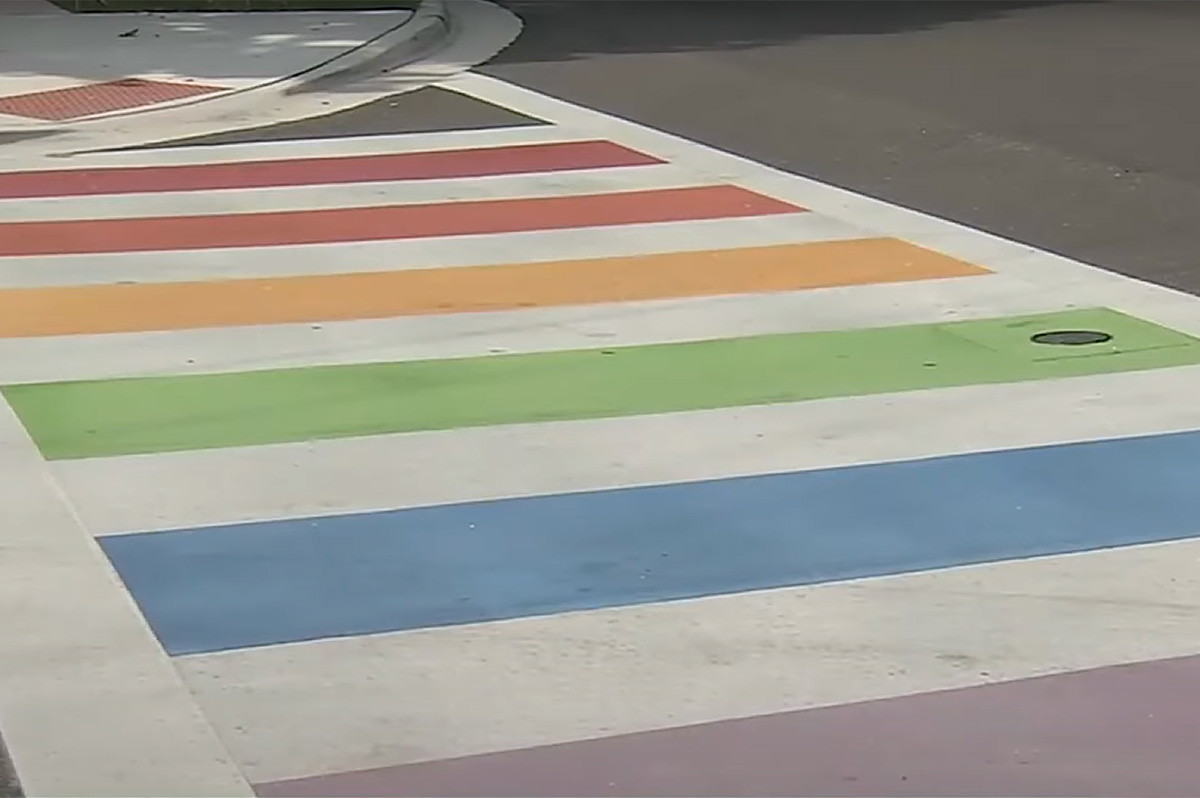
The rainbow crosswalk just outside of the Pulse nightclub in Orlando was painted over by the state of Florida last week. The memorial honored the 49 people who were fatally shot at the Pulse nightclub in 2016. The shooting occurred on the club’s “Latin Night,” targeting a space created by and for the Latinx LGBTQ+ community. As Attorney General Loretta Lynch and President Obama acknowledged at the time the spree shooting was motivated by a number of factors, and was both an act of terrorism and a hate crime against Latinx LGBTQ+ communities.
The shooting shook many LGBTQ+ communities who heightened security at their safe spaces, and like the murder of George Floyd, elicited a strong reaction among LGBTQ+ individuals and allies who came together to remember the lives who were lost. The memorial was originally approved by Republican Governor Rick Scott and installed in 2017 and stood with city and county approval for eight years until on Wednesday night, it was quietly removed under the argument that it violated updated state design guidelines. Orlando Mayor Buddy Dyer criticized DeSantis’s move to erase the memorial in a post on X:
“This callous action of hastily removing part of a memorial to what was at the time our nation’s largest mass shooting, without any supporting safety or discussion, is a cruel political act.”
It’s a devastating new step in removing public LGBTQ+ art, and without any warning, and it mirrors a recent directive by Florida Gov. Ron DeSantis and Trump to paint over any crosswalks and sidewalks with “social, political, or ideological messages.” The Trump administration has called for the removal of “asphalt art,” including rainbow crosswalks, arguing that this step is a safety measure.
DeSantis shared on social media that “we will not allow our state roads to be commandeered for political purposes, following the Florida Department of Transportation issuing a memo this past Pride banning crosswalk or pavement art “associated with social, political, or ideological messages or images.” On July 1st, Trump-appointed US Transportation Secretary Sean Duffy posted on X that “taxpayers expect their dollars to fund safe streets, not rainbow crosswalks.”
When questioned by CNN, the department said that “local governments not in compliance for local roads began receiving notifications to bring their roadways up to state standards to ensure locals govern themselves accordingly,” but community organizers argued that the removal was a surprise. Florida cities have been ordered by the Department to remove rainbow crosswalks by September, with Boynton Beach removing their crosswalk this last month. The Department sent a letter to the City of Miami Beach that all rainbow crosswalks on Ocean Drive and 12th Street also be removed by September 4th.
Rainbow crosswalks have been targeted around the world, called hate crimes in London and Australia last year.
In Orlando, the sidewalk was painted over–to its standard black and white stripe–only two months after the nine-year anniversary of the Pulse nightclub shooting, but in the hours since the memorial was erased, volunteers showed up with colorful chalk and colored it back in. Senator Carlos Guillermo Smith assisted with coloring in the crosswalk. He told Newsweek that “while this attack was meant to demoralize us and push us back in the closet, Orlando refused to be erased. It was inspiring to see so many local residents spring into action in response to the Governor’s cowardly abuse of power.”
As GLAAD shared the restoration on their Instagram account, a representative from the organization told Newsweek that “Orlando community members continue to show up for each other, in grief, outrage, and love. LGBTQ people and our history will never be erased, and the lives taken at Pulse will never be forgotten.” A permanent Pulse Memorial is scheduled for construction in June 2027.
The erasure was revealed just hours before the Trump administration released a list of programming at the Smithsonian under the title “President Trump Is Right About the Smithsonian.” Included in this list was a direct link to exhibitions and blog posts about LGBTQ+ history and collections at the institution, and over the past year, the National Park Service website removed references to transgender people from the Stonewall National Memorial website in February. Queer and trans history — and as this act of erasing rainbows, erasing memorials of violence against our community attest — is under attack, but our communities are showing up and standing in solidarity with each other, across time and space.
As the volunteers who showed up to color in the crosswalk just hours after its removal showed, our memorial will not be destroyed and our people will not be erased. Just like the George Floyd mural at the intersection of 38th Street and Chicago Avenue in Minneapolis was vandalized multiple times, it was not destroyed. No amount of paint or pressure will bleach the rainbows out of our cities, or erase the LGBTQ+ communities that give them life.
In D.C., where LGBTQ+ individuals represent over 14% of the adult population, queer and trans representation is built into the history and fabric of this city. One of the first drag queens hosted private drag balls in Washington, DC. William Dorsey Swann, a formerly enslaved man, began hosting these parties in Washington, DC. wherein he and others “dressed in elegant female attire,” according to the 1887 Washington Critic.
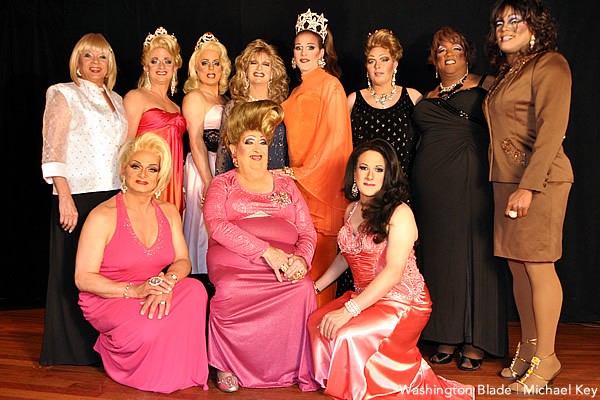
Carl Rizzi, a former U.S. Navy man and Postal Service worker, founded and nurtured a drag family at Beekman Place. Rizzi, also known as Mame Dennis, was a key member of The Academy (a group later known as The Academy Awards of Washington). This group, founded by Alan Kress–better known as Elizabeth Taylor–in 1961 is one of the longest running LGBTQ+ groups in Washington, DC that still hosts competitions based on performance.
Just this past May, June, and July, the Rainbow History Project hosted Pickets, Protests, and Parades: The History of Gay Pride in Washington, an exhibition focused on the history of Pride and protests in the nation’s capital with a special focus on LGBTQ+ communities of color who flourished in the city prior to intense gentrification in the late 20th and early 21st centuries. LGBTQ+ communities remain strong and vital parts of Washington, DC to this day, and I know many people are fiercely protective of Rainbow Road, the longest LGBTQ+ mural that stretches between O and V streets.
Even as our histories are erased, as our memorials painted over and erased, we will not give in. We cannot give in, and we cannot forget that this is just paint. It’s a devastating message and loss to the community, but here in DC and across the country, unhoused, immigrant, and BIPOC individuals are being disappeared by the police. Our visibility and fight for survival is at our nation’s doorstep, as LGBTQ+ immigrants, unhoused individuals, and people of color are deeply continuing to face state-sanctioned violence.
Emma Cieslik is a D.C.-based writer.
Opinions
Protecting D.C.’s promise: why Kenyan McDuffie deserves our support
Former Council member is longtime ally
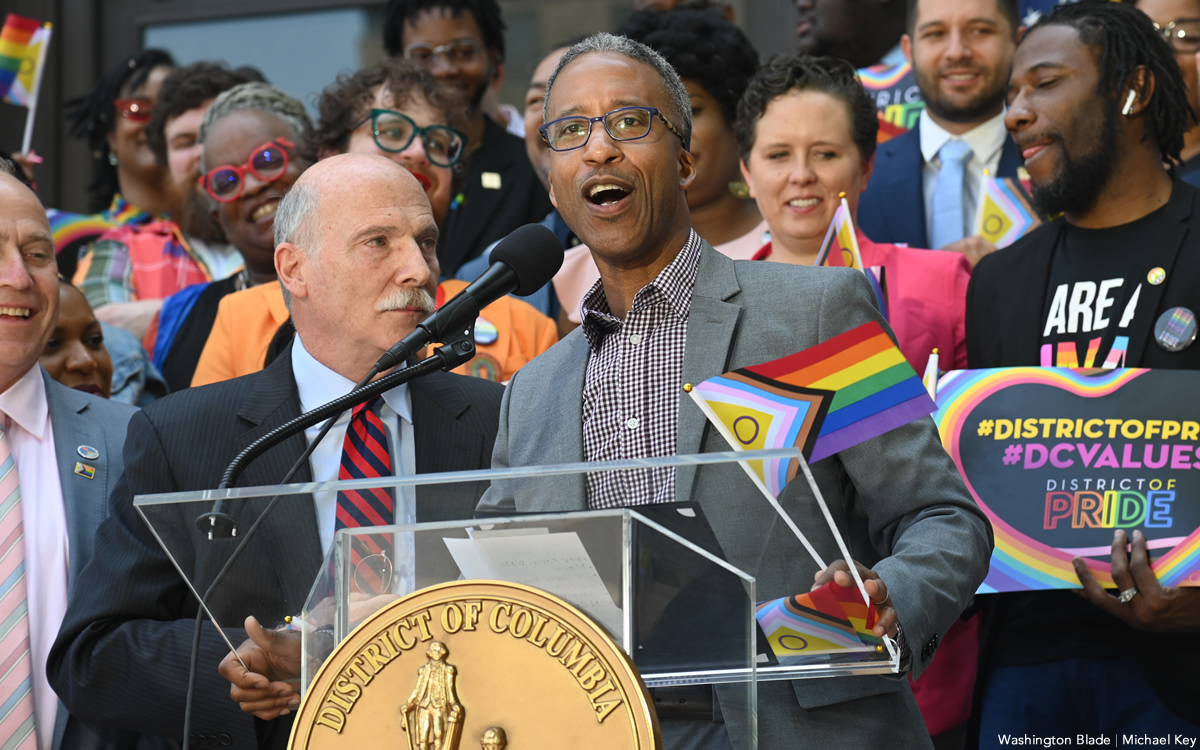
For generations, LGBTQ+ people have come to DC searching for something simple: the freedom to love who they love. I was one of them.
Washington, D.C., is the gayest city in the world. This didn’t happen by accident; It’s the result of generations of organizing, advocacy, and leadership from elected officials who championed the movement for equality, a movement that drew people like me to this city in search of safety and acceptance.
Now, as we approach the June 16 mayoral primary, the LGBTQ+ community will play a decisive role in shaping the city’s future. I believe the candidate our community should rally behind is Kenyan McDuffie, a longtime ally with a proven track record.
Kenyan’s relationship with the LGBTQ+ community began long before it was politically fashionable. In 2012, when he ran for the Ward 5 D.C. Council seat, he sought and earned the support of the Gertrude Stein Democratic Club, the city’s largest LGBTQ+ political organization. At a time before marriage equality was the law of the land, Kenyan stood with us and went on to support the banning of conversion therapy.
But what has always stood out to me about Kenyan’s leadership is his willingness to tackle issues head-on that deeply impact queer families and young people.
As someone who was recently engaged and is currently navigating pathways to parenthood, I was moved by Kenyan’s leadership to modernize D.C.’s outdated surrogacy laws. For more than two decades, the District criminalized surrogacy agreements, threatening families with fines of up to $10,000 and even jail time. Kenyan helped lead the effort to repeal that law, opening a legal pathway for LGBTQ+ couples and others to build families through surrogacy. Thanks to advances in medicine and policy changes like this one, more LGBTQ+ families are now able to pursue parenthood.
Kenyan has also been a champion for some of the most vulnerable members of our community: LGBTQ+ young people experiencing homelessness. In DC, LGBTQ+ youth represent nearly 40 percent of the city’s homeless youth population. Early in his time on the Council, Kenyan worked with fellow members to dedicate housing beds for LGBTQ+ youth and to strengthen the capacity of the Mayor’s Office of LGBTQ+ Affairs to support community programs. Those investments helped ensure that young people facing rejection or instability had a safer place to turn.
Leadership like this matters, especially as our city faces unprecedented challenges. In addition to being a champion for our community, the next mayor will need to navigate threats from the federal government, a massive reduction of the federal workforce of over 20,000 jobs, an unprecedented wave of restaurant closures, and year-after-year billion-dollar budget shortfalls.
Today, our city needs a leader whose values never waver and who has delivered real results for all our neighbors. Kenyan McDuffie has shown that kind of leadership throughout his public service career.
D.C. has always been a safe haven for the queer and trans community seeking opportunity, safety, and belonging. That promise is worth protecting and ensuring the next generation can find the same refuge and opportunity we have.
As voters prepare to make an important choice about the city’s future, I believe Kenyan McDuffie is the leader best prepared to carry that promise forward.
That’s why I’m proud to join him and countless others in launching the Out for Kenyan coalition this Thursday, March 26, at Number Nine.
Cesar Toledo is a first-generation queer Latino and an Out Magazine Out100 honoree who has spent over a decade advancing LGBTQ+ equality, equity, and social justice.
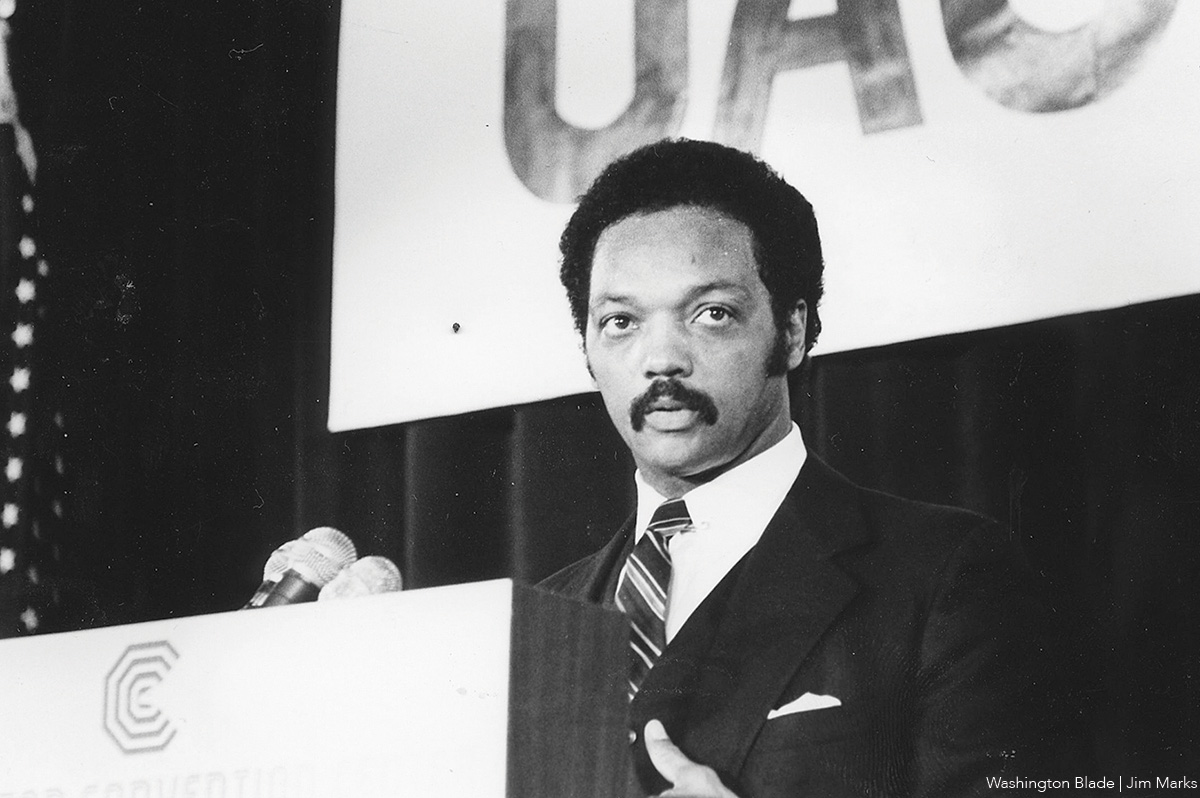
There is no question that Jesse Louis Jackson, Sr. had a significant impact on the civil rights movement, Democratic Party politics and D.C.’s struggle for statehood. After I heard of his death, I took some time to reflect on how our lives had intersected although I met him only once in person.
During the 1970s, sickle cell disease was a celebrated cause in the African-American community. Rev. Jackson was in the vanguard of that advocacy because he had the sickle cell trait. My mother had sickle cell disease and I have the trait. I responded to Rev. Jackson’s exhortation to be involved with fighting the disease and was blessed to have worked for seven years at the Howard University Center for Sickle Disease in its community outreach program.
In 1983, the March on Washington for Jobs, Peace & Freedom was held to celebrate the 20th anniversary of the 1963 March on Washington. Local organizing committees called Coalitions of Conscience were formed to get people involved with the march. I attended the first meeting in D.C. and introduced a resolution that the 20th anniversary program held on the National Mall include a speaker representing the LGBT community. The resolution passed unanimously but the response from the chief organizer of the march, Rev. Walter Fauntroy, was that no such speaker would be permitted. Fauntroy was also the District of Columbia delegate to Congress. Three days before the march, four gay men – all D.C. residents, three of whom were Black – went to meet with Del. Fauntroy to discuss his opposition to having a LGBT speaker on the day of the march. He refused to meet with them and had them arrested. I was one of those arrested.
Our arrests made local and national news. While we were in jail, a conference call was held consisting of representatives of most of the major national civil rights leaders in the nation to discuss having an LGBT speaker at the march. Among those on that call were Coretta Scott King, Ralph Abernathy, Mayor Marion Barry, Dorothy Height; Reverends Joseph Lowery, Walter Fauntroy and Jesse Jackson. The decision was made to give three minutes to a speaker representing the LGBT community. The speaker was Audre Lorde, the African-American lesbian writer, poet, professor and civil rights activist. Jesse Jackson’s presence on that call was critical to her being chosen as a speaker.
In 1984, I was a volunteer in the Jesse Jackson for president campaign in his quest for the Democratic Party nomination. I, along with dozens of volunteers, boarded the bus that left from Union Temple Baptist Church to journey to Alabama to campaign for Rev. Jackson in that state’s primary. My involvement with Jackson’s D.C. campaign led me to visit the Players Lounge for the first time in order to get signatures for Jackson’s D.C. presidential delegate slate and to do voter registration.
Jackson did not win the Democratic presidential nomination in either his 1984 or 1988 campaigns. But his efforts along with Congresswoman Shirley Chisolm’s and Rev. Al Sharpton’s presidential campaigns paved the way for Barack Obama’s historic nomination and victory for president in 2008.
In 1990, Jesse Jackson was elected to be one of D.C.’s United States Senators or what is known as a “shadow senator.” He made it clear that D.C.’s struggle for statehood is not just a political issue but a salient civil and human rights issue. His involvement helped make D.C. statehood a national issue.
I cannot remember the exact year that I finally met Jesse Jackson in person but it was around the turn of the millennium. There was an event taking place in the Panorama Room at Our Lady of Perpetual Help Roman Catholic Church. Rev. Jackson was standing alone on the hill taking in the breathtaking view of D.C. I walked over, introduced myself and thanked him for what he had done for the D.C. statehood, LGBT rights, and the Democratic Party. Even though he was a major celebrity he gave me a hug as if we were longtime friends. It was a brief conversation but we both agreed to keep praying for a cure for sickle cell disease. That hope is still being kept alive.
Philip Pannell is a longtime Ward 8 community activist. Reach him at [email protected].
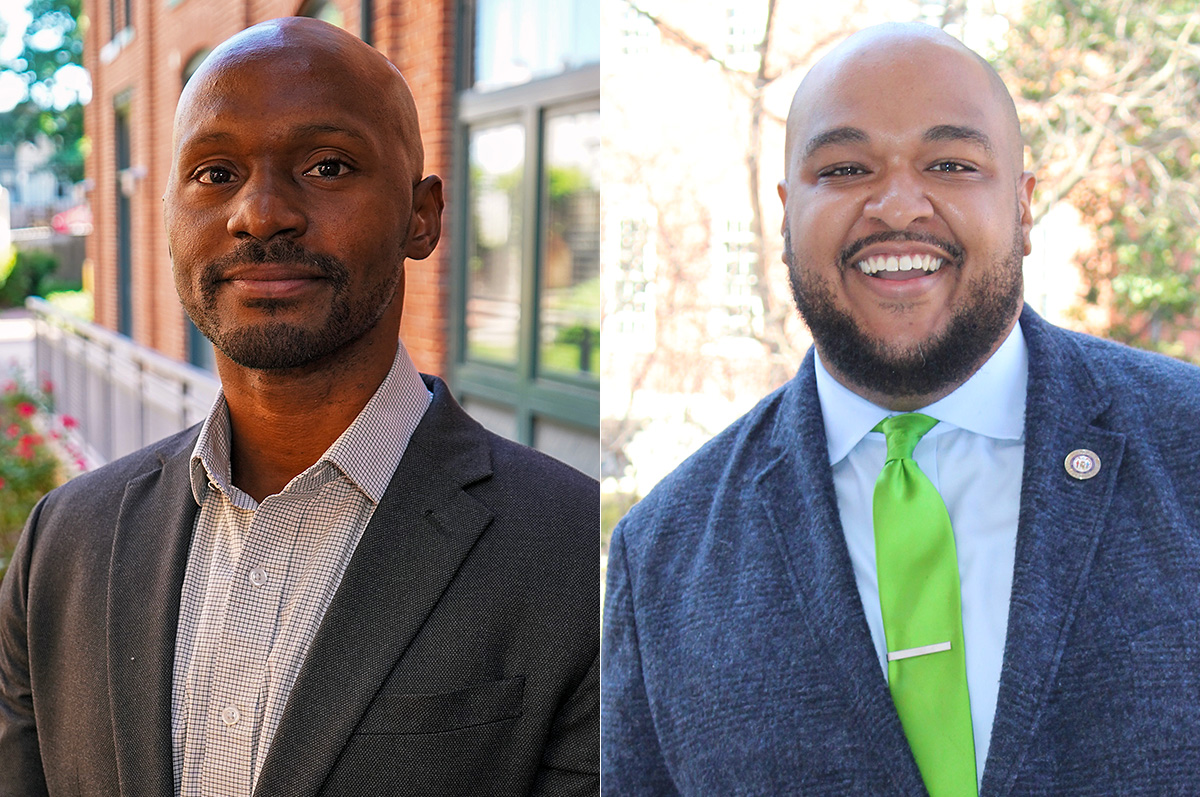
When we’re out with friends, we ask a question that sometimes surprises people: Are you on PrEP?
PrEP is a medication that reduces the risk of getting HIV by about 99 percent when taken as prescribed. We’re both on it. And we both talk about it openly because too many people in our communities still haven’t heard of it, can’t access it, or have been made to feel like asking for it says something about who they are.
It doesn’t. Taking PrEP is about taking control of your health. It’s that simple.
But getting there wasn’t simple for either of us. Our paths to PrEP looked different.
Del. Martinez learned this firsthand. When he asked his primary care doctor about PrEP, the response wasn’t medical — it was judgment. Instead of a prescription, he got a lecture. He had to leave Maryland entirely and go to Whitman-Walker in D.C. just to get basic preventive care. He serves on the Health Committee and sits on the public health subcommittee. Even he couldn’t access HIV prevention in his own state. That reality was soul-crushing, not just for him, but because he immediately thought about every person in his community who doesn’t have the resources to find another way.
Phillip came to PrEP through his work at FreeState Justice, where he was learning about HIV transmission rates and the gap in PrEP access for queer people of color. Black Marylanders account for 65 percent of new HIV diagnoses but only about 35 percent of PrEP users. Latino Marylanders account for nearly 19 percent of new diagnoses but fewer than 8 percent of PrEP users.
Seeing those numbers, he had to ask himself why he wasn’t on it. When he walked into Chase Brexton’s HIV Prevention clinic in Baltimore, the experience was easy and affirming, exactly what it should be for everyone. No judgment, just care. That’s the kind of experience every Marylander deserves.
A proposed bill would make it the standard in Maryland. HB 1114 would let people walk into their neighborhood pharmacy and access PrEP without waiting months for a doctor’s appointment, remove insurance barriers that slow things down, and connect them to ongoing care.
Our stories are not unusual. When we talk to friends about PrEP — and we do, regularly — we hear the same things. People who didn’t know about it. People who tried and gave up. People who assumed it wasn’t for them. People who couldn’t afford it or couldn’t find a provider. There’s still misinformation out there, and there’s still stigma. Among women in Maryland, most new HIV diagnoses come from heterosexual contact, but PrEP is still rarely part of the conversation from their doctors.
When we talk to our friends about PrEP, we lead with honesty. Here’s what it does, here’s what it costs, here’s where to go. We talk about the different options: daily pills or long-acting shots. Generic options are available, and in many cases, free. If you’re sexually active, it might be right for you. It’s not a morality question. It’s a health question.
We try to make it feel approachable, because it should be. We answer every question, because sometimes we’re the first person someone has had this conversation with. It’s a conversation between people who trust each other. And it works, but it can only go so far when the system itself is still in the way.
We have the medical tools to virtually end new HIV transmissions. What we need now are the policies to make sure everyone can reach them. At a time when the future of federal HIV prevention programs is under attack, Maryland has both the opportunity and the responsibility to lead.
We’re asking our friends to take charge of their health. We’re asking Maryland to make it possible.
If PrEP sounds right for you, talk to your provider. If you know someone who could benefit, share what you know. And if you want to see Maryland get this right, tell your legislators to support HB 1114.
State Del. Ashanti Martinez represents District 22 in Prince George’s County in the Maryland House of Delegates, where he serves as Majority Whip and sits on the Health Committee. Phillip Westry is the executive director of FreeState Justice, Maryland’s statewide LGBTQ+ advocacy organization.

The very few queer highlights of the Oscars

Protecting D.C.’s promise: why Kenyan McDuffie deserves our support

Kennedy Center leadership changes as Trump ally Grenell departs

Russian neocolonial politics promote anti-LGBTQ imperialistic values

PHOTOS: Awesome Con

Trump proclamation targets trans rights as State Dept. shifts visa policy

A dream: Democrats focus on candidates who can win

‘Queer Eye’ star Dorriene Diggs on life before and after appearing on hit show

Malaysia blocks access to Grindr, other gay dating websites

D.C. springs back to life with new, returning events
-

 The White House4 days ago
Trump proclamation targets trans rights as State Dept. shifts visa policy
-
Opinions5 days ago
A dream: Democrats focus on candidates who can win
-
a&e features5 days ago
‘Queer Eye’ star Dorriene Diggs on life before and after appearing on hit show
-
Malaysia5 days ago
Malaysia blocks access to Grindr, other gay dating websites