a&e features
‘American Teenager’: A nonbinary journalist’s pursuit of joy amid hate
Inside author Nico Lang’s odyssey to find trans teens who are thriving
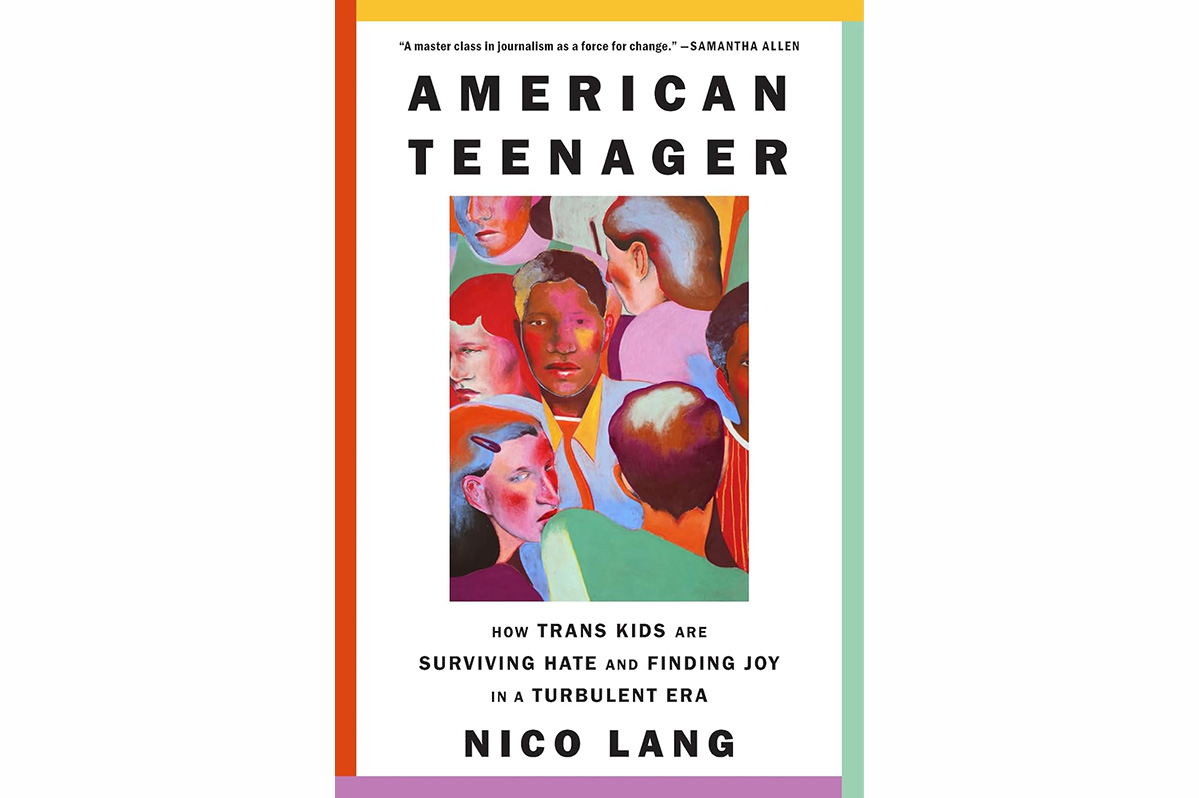
If you’ve ever marveled at how sometimes a rainbow appears after what seems like the darkest day and the wildest storm, then you’ll appreciate what it’s like at a time like this, to discover “American Teenager” — an honest chronicle of diverse, complex, and completely real transgender and nonbinary youth, struggling to live their authentic lives all across America.
“I think the more that we can remind people that these kids are just kids, that they’re just people, the better off the world’s going to be,” author Nico Lang, told the Washington Blade.
Lang is an award-winning journalist, who was recently honored by NLGJA, The Association of LGBTQ Journalists, with the Al Neuharth Award. Lang, who is nonbinary themself, has been touring for nearly a year since the publication of the hard cover first edition, a 2025 Stonewall Book Award honoree.
Lang’s bestselling ethnography has now hit bookstores and online booksellers in paperback. And, they said, they are exhausted.
“In 12 days, it will be 12 whole months of being on the road, with tiny breaks every now and then,” Lang said. “I just got nine days off to be home with my husband. They felt very short. I’ve been to 110 stops so far, in 39 states and the District of Columbia. I plan to make it to all 50, but to be honest, I’m not sure when traveling will be over for me, when it feels like I will have done enough.”
Before the book tour, there was their odyssey across the country, spending days, sometimes weeks, with eight families who opened up to Lang about their challenges, their pain and also their joy. Lang spoke with the Blade in 2024 as well as last month about that journey, during which they also struggled.
“I was just completely living off what little savings I have, being really scrappy,” they said, pausing to reflect on what it took to write the book; not just the financial challenges, but emotional ones as well. “I don’t want to ever overemphasize my own struggle here, but being present with these families all the time, and doing that emotional labor and just, you know, being a human, around humans who are really struggling, was a lot.”
And the people they interviewed told Lang, that weight was plain to see.
“All of the families kept telling me, over and over again, ‘You sacrificed a lot for this. You really gave up your life for this.’ This wasn’t easy for me. This wasn’t easy for any of us.”
So why do it? Especially given that the most recent Gallup opinion poll, published in June, showed a slim majority of Americans believe changing one’s gender is “morally wrong.” The tide is high right now for the transgender community, especially families raising trans kids.
“A friend who is a civil rights attorney told me something recently that stuck with me: namely, that the movement for LGBTQ+ equality lost for years before we won anything,” said Lang. “Every court battle ended in defeat for decades until the tide started to turn slowly, and then quickly. Then, we became so used to winning that we always thought it would be that way. We’re finding out the hard way that that was never true, but it’s a reminder that tides can change. We can still fight to change them. That’s what this book is: the fight.”
And the fight is just beginning.
Lang told the Blade the book — subtitled “How Trans Kids Are Surviving Hate and Finding Joy in A Turbulent Era” — is aimed at countering narratives spread by opponents of gender affirming care and transgender inclusion in schools and sports, with an emphasis on what they call “the universality of the stories here.”
“It’s about their resilience. It’s about how they survive in the world,” they said. “But it’s also about them being kids and about them being humans.”
Each of Lang’s seven chapters introduces readers to a new family in a different city, focusing on eight individuals and their everyday lives. One centers on homeless trans siblings in Pensacola, Fla. — Augie, who is both nonbinary and neurodivergent, and Jack, as well as their mom.
“Homelessness is such a part of the trans experience,” Lang said.
There’s also Wyatt of Sioux Falls, S.D., Rhydian in Birmingham, Ala., Mykah in Charleston, W.Va., Ruby in Houston, Clint in Chicago and Kylie in Torrance, Calif.
“More than anything, it’s just a book that centers the humanity of these kids,” said Lang. “It’s not always about them being trans. Sometimes it is, sometimes it isn’t. Sometimes it’s just us talking about, like, Kierkegaard on the balcony, you know? And there’s a universality there that, even if people have that kind of initial apprehension to the subject matter of a book like this, I hope that universality is able to sneak past that, and remind people, why these kids’ stories are important, and why their lives are important. I think that we can, when we put that humanity first and we remind people that these kids are just people, we can stop forcing our preconceptions onto them. We can just let them live their lives.”
After daily doses of negative mainstream media reports mentioning transgender people, Lang said their goal for the paperback is to provide positivity.
“I hope this book brings people optimism, that it brings people comfort, and that it gives others joy on hard days, of which we have collectively had many recently,” they told the Blade in an email Thursday.
“I struggle with those concepts myself,” wrote Lang. “Right now, I have really lost touch with hope. I sometimes say that ‘I hope to hope.’”
After this break with their husband, Lang vows to return to the road to resume promoting the book, right into the new year, and beyond.
“I’ve thought about traveling all the way through 2028, through the next election,” they said. “I don’t feel I did enough to try to stop the second Trump presidency. In regards to what could be coming next, I don’t want to make the same mistake again. I couldn’t live with myself if I didn’t put everything I had into that project.”
Looking back on the project that produced “American Teenager” — they said the title is borrowed from a song by Ethel Cain — it’s clear they put everything they had into the 304 pages, including the dedication.
“In our journalism,” Lang told the Blade, “we make connections beyond what general cisgender journalists do in terms of covering the stories.”
Lang’s dedication is to what they called, “lost souls,” like Terri Bruce, a trans man and South Dakota advocate, who died by suicide in 2018, and to HRC staffer Henry Berg-Brousseau, both of whom “gave their lives to us,” wrote Lang. And to Nex Benedict of Oklahoma, whose death after bullying made national headlines. And to Acey Morrison, a Native American killed in 2023 after meeting a man from a dating app, all of whom “deserved better,” they wrote.
“For me, the book is a record of the fact that we were here, we are here, and we will be here,” said Lang. “Trans people have always existed; they will always exist. Try as they might — and they will try very, very hard — they cannot will us out of being.”



a&e features
D.C. springs back to life with new, returning events
Cherry blossoms, Rehoboth season kickoff, and more on tap
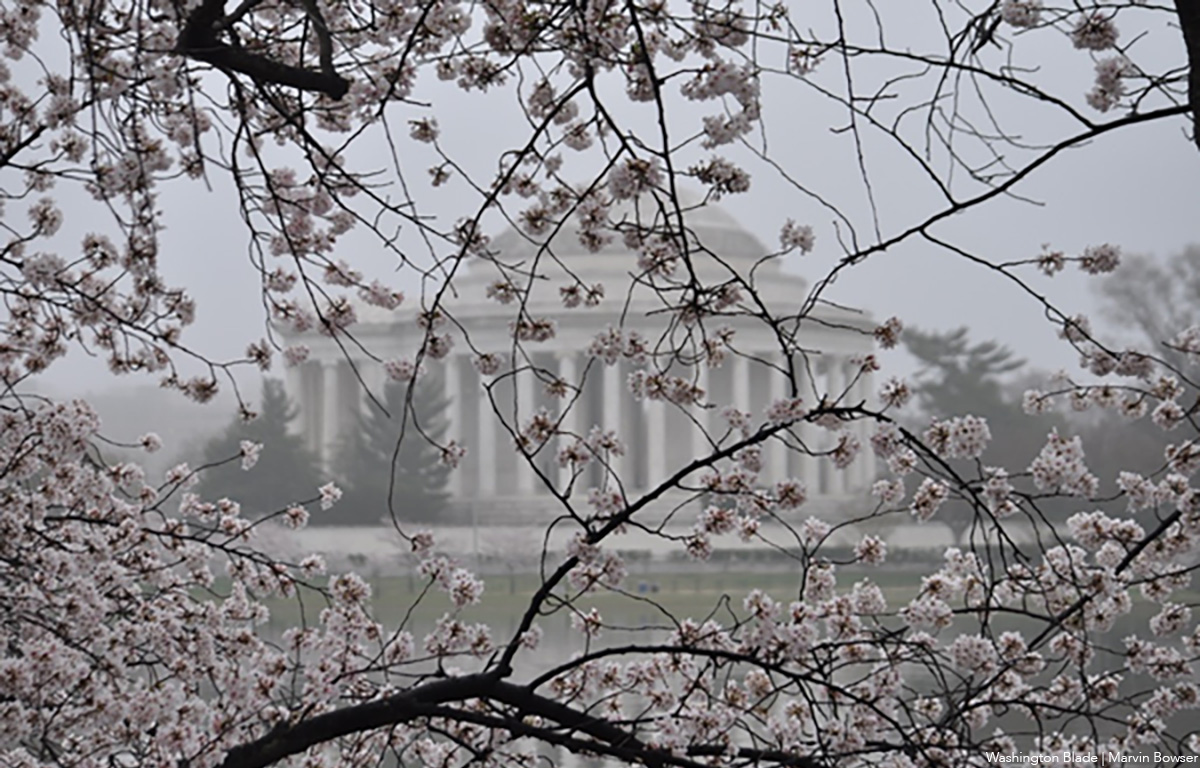
Longer and warmer days are back meaning: It’s time to get out of the house and enjoy Washington D.C.’s many events. Below are a few to check out this spring.
The National Museum of Women in the Arts will host “Making their Mark: Works from the Shah Garg Collection” until Sunday, July 26. This exhibition illustrates women artists’ vital role in abstraction, considers historical contributions, formal and material breakthroughs and intergenerational relationships among women artists over the last eight decades. For more details, visit. NMWA’s website.
Art in the Attic will host a pop-up on Saturday, March 14 at 6 p.m. at 1012 Madison St., Alexandria, Va. There will be a variety of vendors selling products across different modes of art. For more details, visit Eventbrite.
Play Play will host “Indoor Recess – The art of play” on Sunday, March 15 at 2 p.m. This event will embody classic recess energy, including opportunities to build and experience community and connections through games, movement, art stations, and creative freedom. Tickets are $12.51 and can be purchased on Eventbrite.
Spark Social will host “Gay Bar Crawl on U Street” on Friday, March 20 at 7:30 p.m. This will be a fun night out in gay D.C. with other gay people, whether you’re visiting D.C., new to the area, or just looking to expand your social circle. Many crawlers have formed lasting friendships and even romantic relationships after just one night out. Tickets are $35.88 and are available on Eventbrite.
Creative Suitland Arts Center will host “EFFERVESCENT: House of Swann” on Saturday, May 30 at 7 p.m. This will be a gay, good time where we will celebrate love, joy, wellness, and visibility for the LGBTQIA+ community. Tickets start at $17.85 and can be purchased on Eventbrite.
SWAG Works DC will host “Unapologetically Her” on Saturday, March 14 at 2 p.m. at 701 E St., S.E. This event is a powerful celebration of womanhood, resilience, creativity, and self-expression in honor of Women’s History Month. This all-women exhibition highlights the diverse voices, stories, and artistic perspectives of women who create boldly, live authentically, and stand confidently in their truth. This event is free and more details are available on Eventbrite.
9:30 Club will host “Gimme Gimme Disco: A Dance Party Inspired by ABBA” on Saturday, March 14 at 6 p.m. There will also be a “Donna Summer Power Hour – The Queen of Disco” segment during this event. It’ll be one hour of music with no skips. Tickets are available on 9:30 Club’s website.
Harder Better Faster Stronger will host “Heated Rivalry Rave” on Friday, March 20 at 9 p.m. at Howard Theatre. This event is open to all ages. Tickets are available on the theater’s website.
CAMP Rehoboth hosts its 25th annual Women’s+ FEST, April 9-12 in Rehoboth Beach, Del. Entertainers include headliner Mina Hartong, a comedian, storyteller, and founder of Lez Out Loud; and singer Yoli Mayor. There are dances, dinners, pickleball, and much more. Details and tickets at camprehoboth.org.
Also in Rehoboth Beach, the Washington Blade’s 19th annual Summer Kickoff Party is set for Friday, May 15 featuring Ashley Biden, who will accept an award on behalf of her brother Beau. State Rep. Claire Snyder-Hall will also speak. More speakers and the venue to be announced soon.
The annual D.C. Cherry Blossom Festival kicks off March 21 at DAR Constitution Hall and culminates with Petalpalooza on April 4, the day-long, outdoor street party with music and art, stretching across Navy Yard, and ending with fireworks over the Anacostia River.
a&e features
‘Queer Eye’ star Dorriene Diggs on life before and after appearing on hit show
Emotional January episode highlighted 40-year love affair with partner

Dorriene Diggs, 70, whose 40-year relationship with her domestic partner, Diane until Diane’s passing in 2020, the couple’s tense relationship with their respective parents, and Dorriene’s current living arrangement with her straight sister Jo, were the focus of a final season episode of the popular TV series “Queer Eye.”
In a recent interview with the Washington Blade, Diggs told of how her appearance on the show has impacted her life. She elaborated on the many aspects of her life experiences that she told to the five “Queer Eye” co-hosts who interviewed her and her sister in their D.C. home.
Although her parents and her partner’s parents, who have since passed away, were not accepting of their relationship, Diggs has said most of her family members at this time reacted positively to her appearance on the show.
“They loved it,” she told the Blade. “Yes, everybody that saw the show called me and said they loved the show, they really enjoyed themselves watching it.”
Through an arrangement with D.C.’s Rainbow History Project, the “Queer Eye” show featuring Diggs and her sister was presented in a special screening on a large video screen at the D.C. History Center in January.
“Dorriene, a 70-year-old Black lesbian living in Washington, D.C., had spent decades building a life with her partner while navigating silence within her own family,” a “Queer Eye” statement announcing the episode on Diggs states.
“The Fab Five did not arrive to introduce Dorriene to herself, but to help ensure her story was finally heard in full,” the statement says.
Blade: Can you tell us how your appearance on the “Queer Eye” program came about? How did they find out about you?
Diggs: You know, I still don’t have all the details. I think it was my niece, Missy. And she knows somebody there from “Queer Eye.”
Blade: So, did you first learn about it when someone from “Queer Eye” contacted you?
Diggs: No, the “Queer Eye” guy knocked on my bedroom door and started talking. I was in my bedroom watching television and the next thing I know my door opened up and there was Karamo [Karamo Brown, one of the “Queer Eye” co-hosts] with his big black cowboy hat on, opening the door grinning. … They contacted Jo first. And when they came here, they realized there was a gay woman in the house, too. Because my name was not mentioned at first. After they came here, they learned about me, because when Missy reached out to them, she reached out to them about Jo. But that doesn’t bother me. This was all about Jo in the beginning, and not me. … They started talking to me and Jo. And he said, Dorriene, ‘you’ve done so much for so many people, it’s time for someone to do something for you.’ That’s what they said. He said, ‘this is the day we’re doing it for you.’
And so, they put me and my sister up in a hotel for a week. They gave us a personal driver to take us anywhere we wanted to go. And then they took us to a bunch of places. We didn’t know why they were doing all of this. We had no idea that they were renovating the house and renovating our bedrooms. We had no idea.
Blade: What was your reaction when you saw the home renovation?
Diggs: It was amazing. And they bought us all new complete wardrobes – clothes, shoes. But most of the stuff they got me I gave away to a women’s shelter. But it was so nice. Actually, to meet the guys. I’ve been watching the show for 10 years. I have watched it from the beginning. And actually, it brought me and my sister closer – really. We’re closer now than we’ve ever been. She’s my baby sister – not the baby, but next to the baby. She’s the younger one.
Blade: What has been the reaction to your appearance on the show? Do more people now recognize you?
Diggs: Yes, yes. I’m getting phone calls and it’s almost like I’m a celebrity. And I don’t want people to make a fuss over me. All the things I did I did from the heart. I really did. And I don’t want people to think I’m more than I am. I’m just a good Christian woman that believes in giving back.
And I do. God gives me help giving. That’s what I do. And I don’t want anything in return from anyone. You know, because I know what it means to not to have. I know what it means to go to bed hungry, with no food. Going to school with holes in your shoes. I know that. I know that feeling. I’ve been there. And I promised myself as a kid I would never live like this again. And when I got bold enough to leave home, I left home at 14, and I moved in with a drag queen. Damen was his name.
Blade: Did your appearance on the show change your life and your relationship with your sister?
Diggs: Yeah, yeah, it actually did. We are actually closer now than we’ve ever been. Because, like I said, I moved away from home early and I never went back. My parents had a problem with my lifestyle. They really did. My mom looked at me with such hatred. When I was old enough to say goodbye, I never looked back. And to come back around now in the last few years after Diane died, that’s when I came back here.
And at one point I stayed with my nephew Todd and his wife – but he got killed in a car accident. I couldn’t stay at his house anymore. So, then I called Jo and told her I need to get out of here. And without hesitating she came and picked me up and brought me to her home. And I’ve been here ever since.
Blade: Can you tell a little about when it came about and how you met your partner?
Diggs: We lived on 18th Avenue in condos. I just bought one. Hers was above mine. I bought the bottom one. When my brother came over, she was getting out of her car. She was driving a Vega. And I turned to my brother and I said – this is the God’s honest truth – I said Keith, that’s the woman I’m going to spend the rest of my life with. Just like that. And he started laughing. He said, girl you’re crazy. I said I know I’m crazy, Keith, but I’m telling you that woman right there is who I’m going to spend the rest of my life with.
Blade: And when was that?
Diggs: It was 1980 actually. And then I started going to the laundry room to do my laundry. So I started talking to her. She said, ‘I’m not speaking to you.’ Isaid ‘why not?’ She said ‘because you’re nothing but a female gigolo.’ And I said I’m not dating anymore. I’m waiting for you. ‘No, you’re too fast for me.’ I said, ‘well, I’m not giving up.’
And I didn’t give up. So, I was playing an album one day and she knocked on the door and asked what I was playing, I think. I said you liked that. She said yeah. I said OK, I’ll bring it upstairs and we can listen to it together. So, when I went up there to her apartment that day and whenever I went up there, I never left.
Blade: So, your partner’s name was Diane?
Diggs: Yes, Ruth Diane Robinson. But she hated the name Ruth. So, the only people who called her Ruth were at work, the people she worked with. Everybody else called her Diane.
Blade: And how many years were you together?
Diggs: Forty. Forty years together
Blade: And where were you living with her most of the time?
Diggs: We lived in Hagerstown the longest, Hagerstown, Md. And so, if Diane hadn’t died I probably still would have been in our house in Hagerstown.
Blade: Can you tell me a little about what you were doing career wise during those years?
Diggs: I do computers. I used to do computers. And before that I cooked. I love to cook like my mom. And then I wanted to do something else. So, I taught myself computers. I taught myself how to build computers and stuff. So, then I got my own computer business called Ida One Computer Consulting. And so, we helped build computers for people.
Blade: Around when was this, in the 1980a or 1990s?
Diggs: Yes, in the 1980s. I think I stopped I would say around ’96, when I stopped. Because we both said we were going to retire at 55. And we did. We both retired at 55. And then she started diabetes. Every day I had to give her an injection because she was afraid of needles. She couldn’t give it to herself. So, I had to give her an injection every day One time, I don’t remember when, she had a mild stroke. And I had to take care of her. I’ve always taken care of her. And I don’t regret it. I never regretted it. It’s taking care of the one you love.
Blade: When was it that she passed away?
Diggs: In 2020. I found her on the kitchen floor.
Blade: How did your family and your extended family react to your relationship with Diane?
Diggs: Well, her family, oh my God, they hated me – her mother the worst. Because I put a stop to them treating her really bad. I told her mother – I said never in my life – my mother raised me well. Never disrespect someone’s mother. I said but this time I’m going to disrespect you because you are going to start treating Diane like you ought to. This is a wonderful woman and you and your son and you it’s always about your son. You never, ever say anything good about your daughter.
I said it isn’t going to happen again. You’re never going to disrespect her again. I said you take a damn good look at her because you’ll never see her again. I meant that. I grabbed Diane. I said it’s time to go. They don’t care about you.
Blade: Can you tell a little about your family?
Diggs: Yeah, I’m a triplet sister. So, it’s Dorriene, Chorine, and Chrissy — we are the triplets. So, my mom had a set of twins and a set of triplets within nine months. One of the twins died at birth. So, the other twin is Margaret.
Blade: So then how did your family react to you and Jo being on “Queer Eye”?
Diggs: Most of my family really had no problem with it.
Blade: Were you out to them?
Diggs: Oh yeah. I was never in the closet. I didn’t give a damn what people felt about me, sweetheart. I really didn’t. I didn’t care. Because I was going to be me. And for people who didn’t like it, I wasn’t living for them, I was living for me. I’ve always been out. I had a brother who was also gay, Marvin. God rest his soul, too. But he stayed in the closet. He was in the closet until he was about 55 years old.
But everything I said on the show was the truth – my account. The things that I went through with family … You can’t tell me how I felt. If they try to make mom and dad out as perfect, they weren’t perfect. They were the worst parents. That’s my account of it.
So yes, everything I said on that interview was the truth. That’s one thing people who know me know – I do not lie.
Blade: What are some of the things you like to do these days?
Diggs: I’m a sports lover. I love sports. So, my baseball season is getting ready to get started. Baseball is my favorite sport. Yes, I love baseball. I like the statistics of it. And watching the guys. I wish they had a women’s professional baseball team, honestly. … I’m a D.C. sports fan. The Wizards, the Nationals, the Mystics, the Caps. … And see, I’m a diehard Redskins fan and I refuse to call them the Commanders. They’re the Redskins. They will always be the Redskins to me. I love my sports teams.
Blade: Can you tell a little about the history of the house where you and Jo now live and where they did the filming of the “Queer Eye” show?
Diggs: Jo had a house on 17th Street, I think it was Northeast because it was over there by H Street, N.E. And I think somebody wanted to buy her house. I don’t know why she moved. So, she found this house. Because she wanted to buy something where she could buy a house straight out. She didn’t want a mortgage on another house.
Blade: What are your thoughts on being on the last season of “Queer Eye?”
Diggs: Yeah, we were the last ones. We took it out with a bang, me and Jo. That was it.
Blade: Can you say how you and Jo appearing on the show impacted your life?
Diggs: I don’t know. I’m the same person. I’ve been getting calls from people saying I saw you on the show. And friends who I haven’t seen in years have been calling. … So yeah, the show, people I haven’t seen and talked to in years have been calling. I think that’s a good thing.
a&e features
35 years after ‘Truth or Dare,’ Slam is still dancing
Salim Gauwloos on Madonna, HIV, and why he almost didn’t audition for Blond Ambition Tour
Most gay men of a certain age remember “the kiss.”
It was the moment Madonna’s dancers Salim Gauwloos and Gabriel Trupin locked lips in the hit 1991 documentary film “Truth or Dare,” which is celebrating its 35th anniversary this spring.
The kiss was hot, but what made it groundbreaking is that it appeared in a mainstream Hollywood movie that screened in suburban multiplexes across the country. This wasn’t an obscure art house film. The movie, and tour on which it was based, received months of breathless media attention all over the world for bold expressions of female empowerment and queer visibility. Madonna was threatened with arrest in Toronto for simulating masturbation on stage and Pope John Paul II urged Catholics to boycott the show, triggering a media firestorm.
“Truth or Dare” was billed as a behind-the-scenes documentary of the tour, but it quickly became clear that the real star of the show wasn’t Madonna, but rather her colorful troupe of seven backup dancers, six of whom identified as gay: Kevin Stea, Carlton Wilborn, Luis Xtravaganza Camacho, Jose Gutierez Xtravaganza, Gauwloos, and Trupin; Oliver Crumes III identifies as straight.
We saw them party and march in the New York City Pride parade. They were unabashedly queer at a dangerous time — before protease inhibitors began to stem the AIDS plague and before most celebrities and politicians embraced the gay community in any real way. Being out in 1991 carried major risks to career and reputation.
Enter Gauwloos, one of those brave dancers who vogued his way into the hearts of countless gay men entranced by his handsome looks, his stage presence, and dance skills.
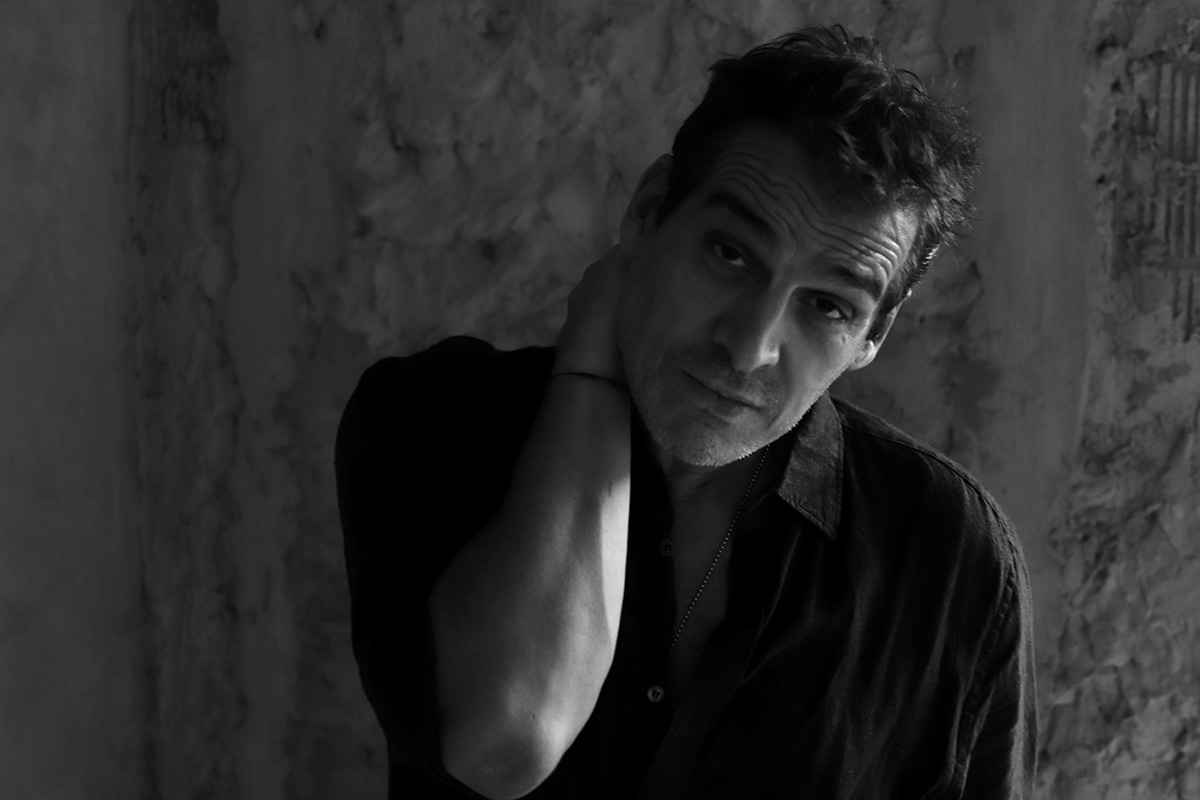
Gauwloos — known then and now as “Slam”— sat down with the Blade to talk Madonna, the lasting impact of “Truth or Dare,” the public disclosure of his HIV status, and plans for a new book on his life.
His story is fascinating — from growing up in Europe to dancing in New York to landing the gig of a lifetime with Madonna. He performed on that tour while secretly HIV positive and went without medical treatment for 10 years because he was living in the United States as an undocumented immigrant. Not even Madonna knew of his HIV status. Two other dancers on the tour were also HIV positive but no one talked about it. Ironically, Madonna was singing “Express Yourself” and advocating for condom use during her concerts yet backstage three of her dancers were secretly positive.
“A lot of people were dying so I wasn’t going to tell Madonna I had HIV,” said Slam, now 57. “And the others didn’t either. It wasn’t the moment to do it. She used to make speeches about Keith Haring and AIDS and I thought it’s going to be me next.”
Gabriel Trupin died of AIDS in 1995. Slam was diagnosed at age 18 in 1987, a frightening time when a positive test result often meant a death sentence. He booked the “Blond Ambition Tour” at age 21 after moving to New York. His friends encouraged him to audition but Slam resisted because he wasn’t a big Madonna fan.
“It was crazy, everyone wanted that job,” he said, “but I wanted to dance with Janet Jackson and Paula Abdul.” He listened to his friends and shortly after the audition, Slam received a call from Madonna herself inviting him to join the tour.
“We all wanted to be stars but not even Madonna knew how big that tour would become. The way it was choreographed and directed, the stars aligned. … It never looks dated even today.”
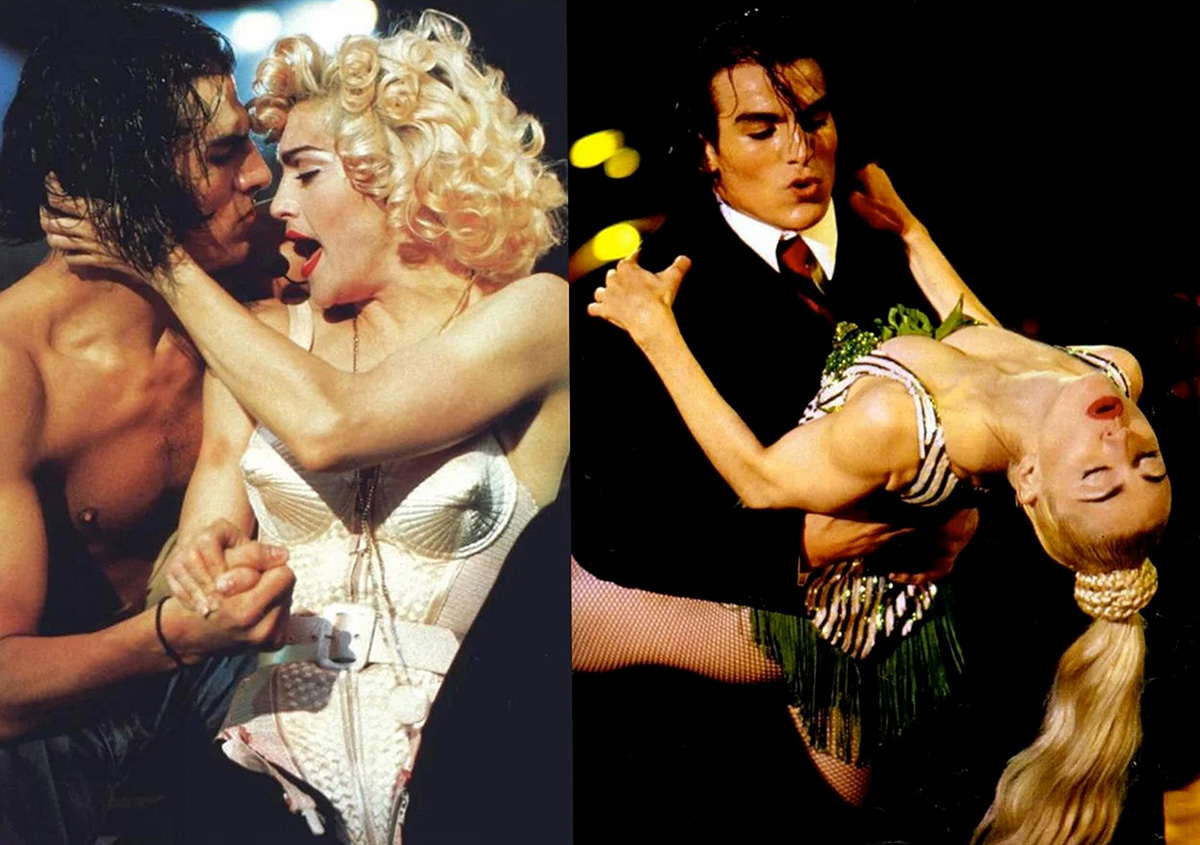
The world tour kicked off in Japan in April 1990 then moved to the United States and Europe, stirring controversy wherever it went. There was the iconic cone bra; the aforementioned simulated masturbation during “Like a Virgin”; and religious imagery that offended many Catholic groups and the Vatican.
And the controversy didn’t end with the tour. Cameras were rolling throughout the tour for what Slam thought would be a “video memory” for Madonna. But as the tour unfolded, director Alek Keshishian reportedly became more interested in what was happening behind the scenes so plans for mere tour footage were expanded into a full documentary.
“We were young and partying and didn’t really know what was going on,” Slam said. “You live in this celebrity bubble and you sign a paper – I don’t even know what I signed.”
In 1992, Kevin, Oliver, and Gabriel sued Madonna for invasion of privacy and fraud claiming she used some footage without their consent. They claim they were told nothing would be included in the film that they didn’t want to be seen. In one specific incident, Gabriel alleged that he told producers he didn’t want the scene of him kissing Slam to be in the film as he wasn’t fully out.
“Gabriel was forcibly outed,” in the movie, Kevin said in a 2016 interview.
Slam did not join his colleagues in the lawsuit.
“I couldn’t sue because I was illegal but I wasn’t ever going to sue,” Slam said. “I’m not a suing kind of person. But good for them, they fought for it and won. A lot of people don’t have the balls to sue Madonna.” The suit was settled two years later for an undisclosed sum.
“We were all conflicted about the kiss,” he said with a laugh. “The kiss, oh my God, my boyfriend is going to kill me! Belgian stress!”
Beyond worrying about his boyfriend’s reaction, Slam had concerns about the impact of being openly gay on his modeling career.
“In 1990, you couldn’t get high fashion campaigns as an openly gay model,” he said. “I was worried about that. I couldn’t get a campaign because I was gay. My agency told me to say I was straight and it was just a game.”
In 2016, pegged to the 25th anniversary of “Truth or Dare,” the surviving six dancers filmed a documentary about their lives post-Madonna titled “Strike A Pose.” In it, Slam publicly revealed his HIV status for the first time in an emotional scene with his former colleagues.
“I found the strength to tell the world I have HIV,” he recalls. “I was scared but I felt brave. The outcome and messages were beautiful. After I saw ‘Strike A Pose,’ I knew we gave people hope. And not just for gay people.”
He was infected in 1987 but didn’t get treated until 1997. After the tour ended, he said he went into a depression and his agency dropped him.
“I was partying too much after the tour,” he recalls. “I made a decision to live as an illegal alien.” In 1997, Slam collapsed and was rushed to the hospital with pneumonia.
“They started treating me and thank God the new HIV drugs were out, the cocktails, it took me a couple months to get better.”
Madonna didn’t participate in “Strike A Pose” and Slam said he hasn’t seen or spoken to her since the end of the tour. He said he had no idea of the impact “Truth or Dare” would have.
“You look at this movie in 1991 and you don’t think it’s going to be such a big thing and 35 years later it’s still helping people,” he said. “It was helpful for people who felt alone at that time. It was such an important documentary.
“I don’t think younger gay people realize how important Madonna was to gay and queer visibility — she was a big part of it. We showed the world it’s OK to be gay and that was the great message of this movie.”
He noted that, decades later, many of his friends have transgender kids and that queer culture is represented in much of mainstream pop culture.
“It’s amazing how far we’ve come,” he said. “I know we’ll always be marginalized but we have come so far. I’m really proud of our community. The current nightmare will be over and I do believe that things will get better.”
Referencing President Trump’s attacks on the LGBTQ community and crackdown on immigration, Slam described the situation in the U.S. today as “sad.”
“Everything is such a mess,” he said. “Some of these people have lived here 30-40 years and they take you out of your home. I can’t even imagine. It breaks my heart. When I was illegal it was a different story.”
Slam met his husband, Facundo Gabba, who’s from Argentina, in 2000, and he helped him get a legal case together to win citizenship. He filed a case in 2001 and was told there was a 99 percent chance he wouldn’t be permitted to stay in the United States because they weren’t allowing HIV-positive immigrants to remain in the country. But he got his green card anyway in 2005 and became a U.S. citizen in 2012.
Today, Slam and Gabba live in Brooklyn, though they travel a lot because “I can’t take the cold.” The couple married in Argentina in 2010 and in the U.S. in 2016.
Slam is still dancing and working as a choreographer. He’s teaching at a contemporary dance festival in Vienna in July and even offers online lessons via Salimdans.com.
As a longtime HIV survivor, Slam is dedicated to a healthful lifestyle.
“You have to keep moving; when you move you stay healthy,” he says. “Dance heals everything. I do yoga, I eat healthy and clean as possible. I don’t watch much TV … I try to stay healthy and positive. If I absorb all of the negativity I would be sick.”
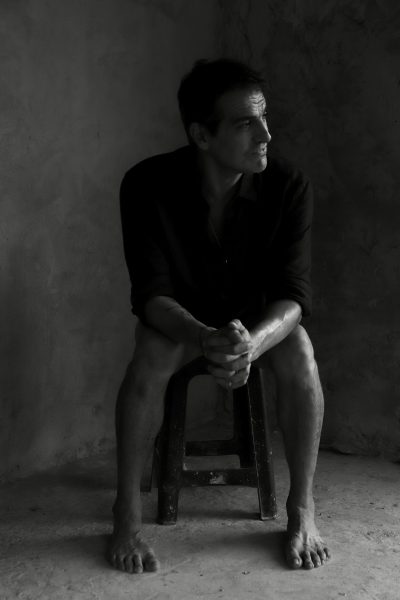
In addition to his ongoing work in dance and choreography, Slam is in the early stages of writing a book about his extraordinary life and pioneering career.
“I always knew I had a book inside of me. I want to talk about my HIV status. I know I can inspire more people. I want to tell even more secrets in the book; secrets are a poison so I want to tell everything.”
Among those secrets, he notes, is a desire to write about his strict Muslim father and the years he spent as an undocumented immigrant in America.
“Those are the things I want to talk about, the struggles. It’s a love story, hope and resilience. I know it will help people.”
As for his friends from the tour, Slam says he remains in contact with Gabriel’s mother and José Xtravaganza is his best friend. Baltimore’s Center Stage theater is currently developing a new musical about Xtravaganza’s life. And Slam said he occasionally talks to Oliver, though “he still can’t pronounce Sandra Bernhard’s name.”
At the end of our interview, Slam indulged a round a rapid fire questions:
• Favorite song to perform in the “Blond Ambition” tour? “Express Yourself.”
• Aside from Madonna, who was your favorite artist you worked with? Toni Braxton in “Aida” on Broadway.
• Favorite Madonna song? “Live to Tell”
• Favorite Madonna video? “Bedtime Stories”
• What’s more stressful: performing in a concert or performing on the VMAs? “Both, because we always had to be perfect.”
• Did you go to Madonna’s recent “Celebration” tour? “I didn’t see the show but I saw clips online.”
• What do you remember most about performing “Vogue” at the VMAs? “It was nerve-racking for them to flip those fans.”
• When was the last time you vogued? “I teach classes so a couple weeks ago.”

Gay Venezuelan man ‘forcibly disappeared’ to El Salvador files claim against White House

Trump proclamation targets trans rights as State Dept. shifts visa policy

Adolescentes trans en Ecuador podrán cambiar datos en su cédula, pero con condicionamientos

Gay Cameroonian immigrant will be freed from ICE detention — for now

Laverne Cox, Liza Minnelli among authors with new books

Too afraid to leave home: ICE’s toll on Latino HIV care

Claudia López wins primary in Colombian presidential race

Trump will refuse to sign voting bill without anti-trans provisions

Man stuck in Lebanon as Iran war escalates

CAMP Rehoboth hires new executive director
-

 Health5 days ago
Too afraid to leave home: ICE’s toll on Latino HIV care
-
Colombia5 days ago
Claudia López wins primary in Colombian presidential race
-
The White House4 days ago
Trump will refuse to sign voting bill without anti-trans provisions
-
Iran4 days ago
Man stuck in Lebanon as Iran war escalates