Movies
A queer Korean adoptee finds healing with original family members
‘I should have been there’
What does longing for your child look like? What happens when they resurface in front of you, when that rift was once an immeasurable open sea — a searing pain that silently hollowed you out for decades? For the child wrenched away by circumstance and thrown into the purgatory of always feeling in-between: in between home, in between being a whole person, in between who you could have been and who you are now — what does it mean to become and belong?
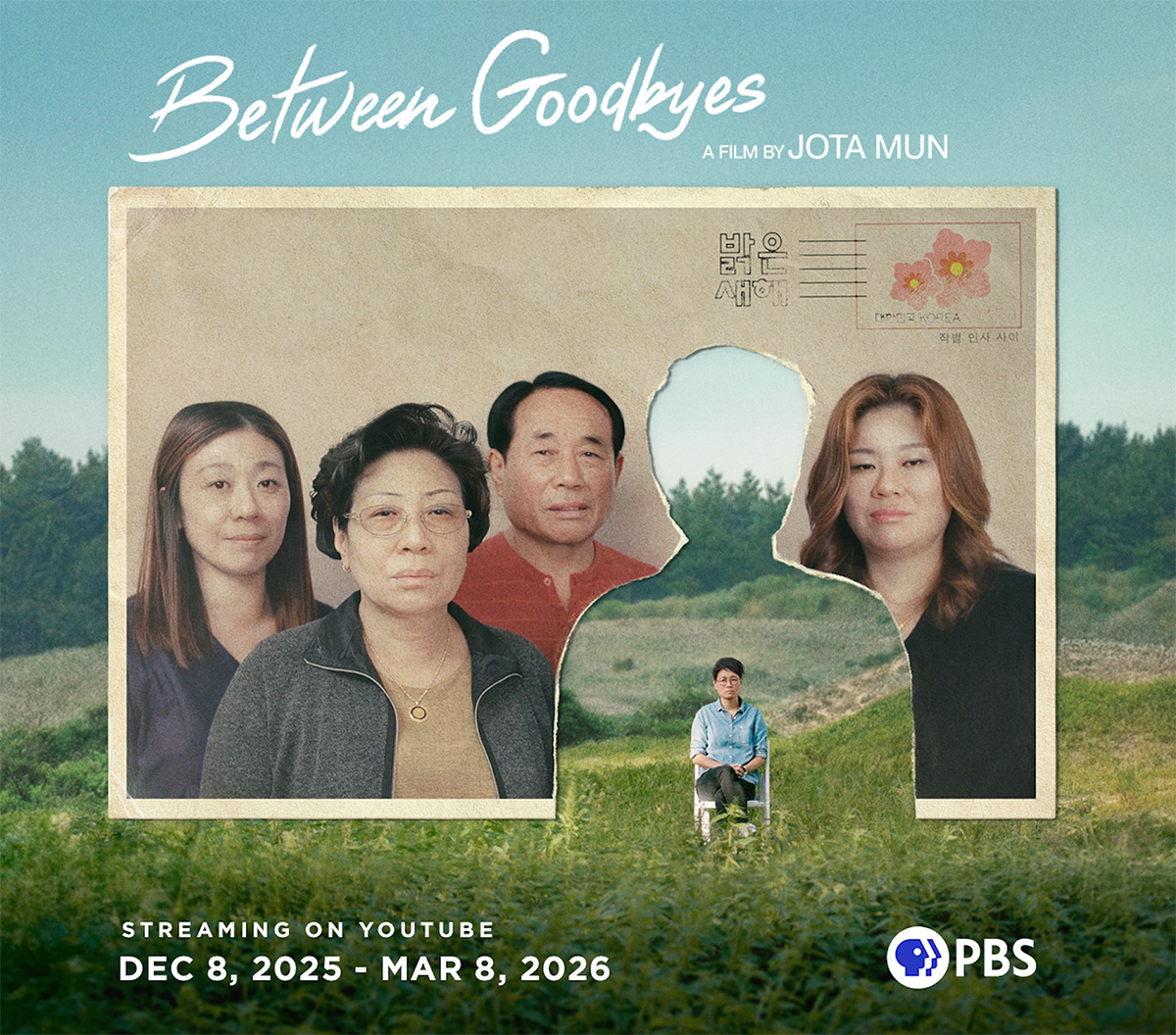
In filmmaker Jota Mun’s documentary “Between Goodbyes”, the fragmented yearning for home, family and identity are woven together into a tremendous and at times dream-like contemplation of the self, focused on various family members set adrift by a deceitful international adoption machine.
The story is focused on Mieke Murkes, a queer Korean adoptee who grew up in the rural village of Vaassen in the Netherlands. Shortly after her birth in 1982, she was raised by Willy, a devout evangelical Christian woman. But the story does not begin with Mieke in Vaassen. It begins with Okgyun, her original mother, walking through an ephemeral meadow as she makes her way to a shoreline. This is our first point of loss.
It is important to understand how the stories of Okgyun and Mieke exist. In “Between Goodbyes”, we see a frustrating glimpse into the cultural and political forces that created this separation. Since 1955, 200,000 children have been adopted from South Korea, and just three years ago, several of these adoptees found that their documents had been falsified. Murkes would sift through her own papers in “Between Goodbyes”, noting their dull and rote descriptions of her physical appearance and health. “The paperwork is as if you’re buying a new car,” Murkes says.
Written nearby: “Both parents are unknown,” a falsehood that leaves the family breathless. It is a gut punch.
This March, a South Korean governmental agency admitted that it had violated the rights of adoptees, but an investigation that began in 2022 at the behest of over 350 Korean adoptees has been halted. Whether or not retribution can ever be paid is up in the air, but the reeling grief and complicated self-reckoning many of these adoptees and their families face are rendered and expressed with deep tenderness in Mun’s documentary. “I did not know how to fit the Korean part of me in there,” Murkes said.
When Okgyun was pregnant with Mieke, she was also raising three other daughters: Mijin, Mikyung and Taekyung. The population was booming, and mothers like herself were being shamed for continuing to have children. Considering abortion, Okgyun recounts a midwife who convinced her not to go through with it — that if the child were a boy, she should keep him. If it turned out to be a girl, she could give her away to live “a good life” in the U.S. “Men are always positioned above women,” Okgyun said. “I always hated that.”
After Mieke was born, Okgyun’s mother-in-law told her to give her away. “She was gone before I saw her face,” Okgyun said. “I let her go.” Her guilt tightens her throat, trembles in her voice. “I dreamed of Mieke a lot. I can’t tell you how many times,” Okgyun said. “Dreaming and forgetting, dreaming, and forgetting. The thought that kept me going is that one day I can find Mieke.”
What ensued was a several years-long search. Kwangho, Mieke’s original father, pleaded with an adoption agency for any leads about Mieke. They denied him several times and his desperation only grew. “I had to find her to be at peace before I die,” he said.
Meanwhile, Mieke’s own grief and confusion were compounding. When she was beginning to discover her queerness, she was deeply ingrained in local religious spaces. What made her feel free, the church treated as an aberration — as behavior that resulted from loss.
When she would eventually meet her original family, they, too, had trouble processing her queer identity and masculine presentation. To them, queerness was “acquired” from being raised in a foreign land. With time, they grew to embrace Mieke and her partner, Marit, even as misunderstandings arose. Of this, Mieke’s conflictedness is explored. Gay rights are more advanced and accepted in the Netherlands than in South Korea, but this does not mean contending with her queerness would have been easy with her adoptive mother, Willy. “It probably would have disappointed her a lot,” Mieke tearfully revealed.
Mieke’s stepping in between knowing and unknowing is reminiscent of Okgyun’s dreaming and forgetting — their grief and confusion move within them, replicating themselves over and over again. “Between Goodbyes” dives deeply into this in order to offer a portrait of healing: of its complications and the necessity of community support to achieve this.
Mun discusses the film with the Los Angeles Blade, diving into how reunification between adoptees and original family members is, in many ways, made nearly impossible by factors like language and cultural barriers enforced and held tightly in place by the international adoption system. This film illustrates a break in this narrative and the mighty efforts behind it all.
A broadcast version of “Between Goodbyes” is now available to stream on PBS. See below for more information.
Can you tell me about the inception of making “Between Goodbyes”? Have you always wanted to tell a story about international Korean adoption from a queer perspective?
As a queer Korean adoptee myself, [there are] so many intersections that I haven’t quite seen on screen before. So I was always really excited about making something about my community. And then I’d say, in 2017, is around when I started getting closer to zeroing in on the idea. I think part of it was through befriending Mieke and hearing her parents’ story. Hearing about their efforts really blew my mind.
So much of the standard narrative is that adoptees initiate the search. So even before meeting [Okgyun and Kwangho], it just felt like it spoke so loudly of not only their character, but a piece of the puzzle that I had never considered — that they could be longing for us. And I think as an adoptee, you always wonder what [your original parents] would think. So it’s very noticeable that we almost don’t ever hear from them directly. Even in narrative stories of adoption, they’re usually deleted, or they’re written in a really flat way that feels like they’re serving the plot. I’ve never seen a depiction of birth mothers in particular who are questioning their own circumstances or feel angry about it.
There’s a lot of nuance given to all of the different people that we see in the story. The pain is layered and deep, and we don’t just view it from one perspective. What was it like having to portray this hurt, when many adoption stories typically focus solely on the adoptee’s emotional and personal journey?
It’s so unique through each lens, even though it’s the same pain. Like her sisters — of course, it’s going to affect them. Even if she never said anything, they must have felt it. It just ripples out to everyone and keeps expanding.
Originally, it was focused on Mieke, because that’s who I had the most access to, and she’s the closest to me in terms of general identity markers. So in my mind, I felt more confident that I could tell her story in a nuanced way. But what about Okgyun? I was hitting a similar barrier of communication that Mieke had hit. That’s part of why our main producer, Zoe Sua Cho, was so essential in conveying more about Okygun and the original family’s side of the story.
When I was in the early stages of developing the film, there was a quote that I felt was really inspirational: “In our hurting, we did not realize that we were stolen from each other” (by SN Désirée Cha from Outsiders Within Writing on Transracial Adoption.) The same quote came back to me in the edit and helped us find a narrative structure that went beyond just one person’s perspective.
What if the main character is the collective trauma, a singular event that causes the family to splinter and suffer across decades? I wanted to explore how tempting it is in these moments of righteous anger at systemic problems to end up fighting with each other. I feel like they both had to mourn something that was so much bigger than any one family. Mieke’s adoption affected so many people that I almost wanted that to be the main character. How do we not get lost in that pain and still try to come back together? It’s too much to carry alone.
So the main character is not necessarily one person, but the issue that you’re trying to tackle throughout the story. It also makes me think about how the documentary itself, or the making of it, also participates in this community healing that I feel like was the focus of “Between Goodbyes”.
I hope it’s an important layer. Suffice to say I think I always deflect to name a singular main character. I wanted to show everyone’s point of view while of course highlighting especially Okgyun and Mieke.
What else can you share about your approach to filmmaking?
You know, I was on this wonderful panel earlier this year, hosted by A-DOC, and I kind of surprised myself in preparing for it. I realized, actually, I have a lot of strong beliefs on filmmaking ethics that I hope come through in the film. For example, I reject the genius artist myth. The fantasy that if an artist is talented enough, they get permission to treat everyone around them terribly. That exploitation and squeezing things out of people is the best way to make great art.
Instead, I want to believe that the sensitivity, the care, and emotional work I poured in is going to come shining through in the film. And I do think that’s part of why we witnessed so many intensely vulnerable moments that I couldn’t have predicted.
This emotional connection to the film is also, visually, represented in artistic and inventive ways. There are sequences interspersed throughout that feel dream-like and cinematic. Creatively, what was it like to structure and craft how you wanted those scenes to be, the weight that they carried, and why you wanted to represent them in that way?
Aw, thanks for saying so! I was clear from the beginning that I wanted certain moments in the film to look as cinematic and epically life-changing as they feel in real life. Because visually, sometimes these moments of heartbreak can look rather dull. The deep heartbreak of a farewell at the airport. What does it look like? It looks like two people hugging in a very normal-looking terminal. But that’s not what it feels like. It feels larger than life. So to me, every single one of the art [scenes] has a very literal symbolism in my mind.
I really enjoy the complexity given to the family, both through the artistic symbolism and through the different angles we get to view them in. When it comes to Mieke’s queer identity, there are varying levels of acceptance and also tension that co-exist. One of her sisters, Mikyung, skirts around terms and labels, instead saying Mieke is “like that,” and “I don’t know anyone like that.” There was this feeling that queerness is learned or acquired elsewhere — that Mieke “wouldn’t have turned out like that” if she had grown up with her original family in Korea.
I can’t be sure what they were implying but you know, I definitely didn’t want to fall into a common trope of seeing Western values as being so liberal and accepting and framing all other cultures as homophobic. I want to be clear that there is a queer community in Seoul. It’s not the same as Amsterdam, of course, but it does exist.
That’s part of why it was important for me to include Mieke mentioned what she thinks her Dutch mom would have thought — just to clarify that homophobes are everywhere. There are plenty of them here in the West as well. Mieke’s Dutch parents were Evangelist Christians. So it’s not like everyone in the West is free to be a lesbian, you know?
Another moment that struck me in the film was a moment where we, as the audience, get to see you clearly. In this scene, we see you and Mieke on a rooftop, and you’re consoling her as she’s trying to prepare for a difficult conversation with her original mother, Okgyun. Did you have to find a balance in terms of being the director of this film and being Mieke’s friend?
It was really important to me to show friendship and how much that can help you along the journey. You think that for her to emotionally process things, it would have to be with her mom. But that rooftop conversation felt so transformative in itself. And then what ended up being the kind of mirror scene to that was Okgyun talking to Ruth [a fellow original mother]. She needed a buddy, too. How many times in life are we like: the opposing party doesn’t need to get it, but if my friend just could — that would give me so much relief and patience to enter the actual conversation with the person I’m upset with.
Being so personally close to Mieke and her family meant that my film was about all people I loved and cared about. I think the documentary field comes from such a long history of an anthropological approach. It’s like, “I’ve helicoptered in, and I just met you, but I’m the expert artist.” I wish the ethos were the opposite; we need to care about everyone, from the participants to the crew. I don’t want the blood, sweat, and tears to come through on the screen. I hope that watching it makes people feel cloaked in tenderness and care.
I was so worried about everyone, probably too much. It’s such a weird thing to ask people to do, to be in a film, so I took that with a lot of responsibility. Be aware of the impact you’re having. I am having an effect on this family’s life. I almost wanted to be like: “Forget my art project.” This is about the rest of their lives as a family, and that’s more important. So it became a light on my path, trying to make decisions as best I could to have a positive impact on their relationship.
It almost made me question my ethics in a different direction. “Am I intervening too much?” And that’s a strange thing: I have to admit I exist. I’m not a fly on the wall. And I think that’s why the conversation on the roof was really the most vulnerable for me, because I was showing myself. I’ve actually been here the whole time, cheering them on or trying to diffuse tension. I set out to make a film about how hard it is to stay in reunion, but now I’ve realized I’ll be heartbroken if their reunion doesn’t last. So in many ways the film was really just a vehicle for my attempt at keeping us all connected across so many distances, and that’s my own emotional journey or connection to their story.
Mun plans to release the full-length film in 2026, along with deleted scenes and additional footage. Up-to-date information can be found on the film’s Instagram page.





Movies
The Oscar-losing performance that’s too good to miss
‘If I Had Legs I’d Kick You’ now streaming
Now that Oscar season is officially over, most movie lovers are ready to move on and start looking ahead to the upcoming crop of films for the standouts that might be contenders for the 2026 awards race.
Even so, 2025 was a year with a particularly excellent slate of releases: Ryan Coogler’s “Sinners” and Paul Thomas Anderson’s “One Battle After Another,” which became rivals for the Best Picture slot as well as for total number of wins for the year, along with acclaimed odds-on favorites like “Hamnet,” with its showcase performance by Best Actress winner Jessie Buckley, and “Weapons,” with its instantly iconic turn by Best Supporting Actress Amy Madigan.
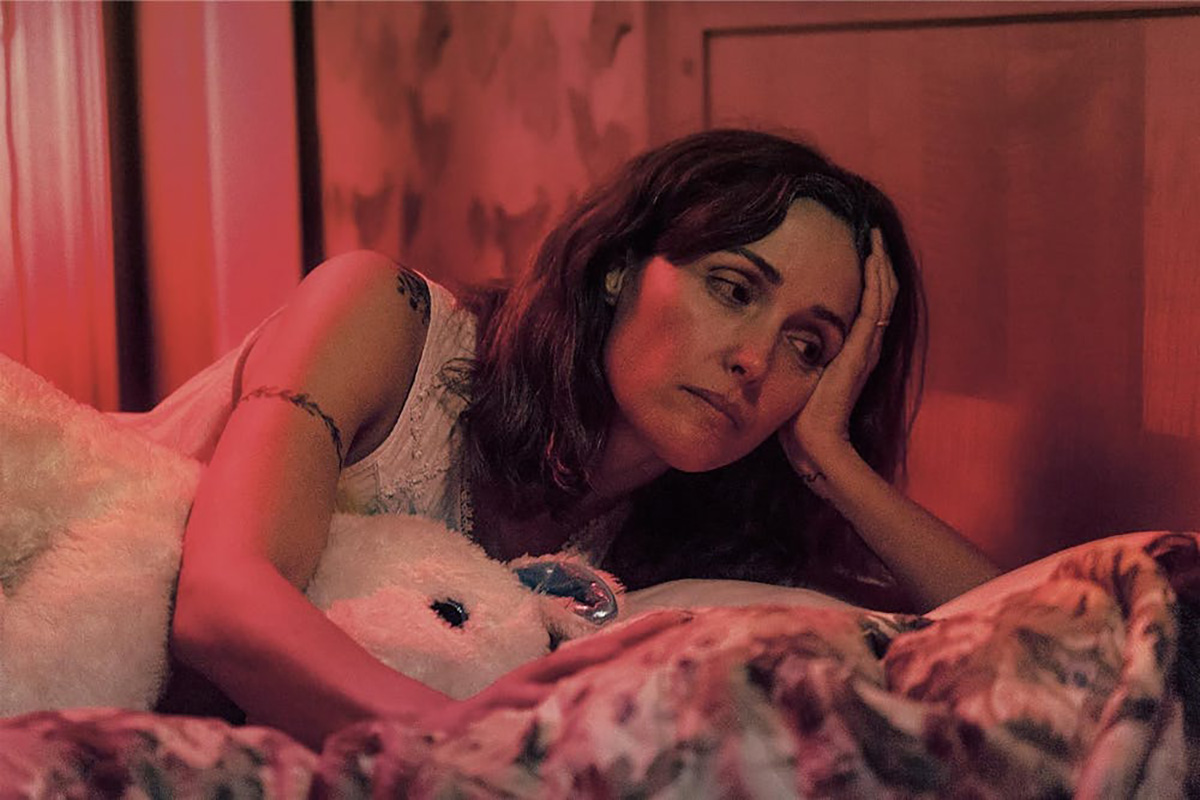
But while these high-profile titles may have garnered the most attention (and viewership), there were plenty of lesser-seen contenders that, for many audiences, might have slipped under the radar. So while we wait for the arrival of this summer’s hopeful blockbusters and the “prestige” cinema that tends to come in the last quarter of the year, it’s worth taking a look back at some of the movies that may have come up short in the quest for Oscar gold, but that nevertheless deserve a place on any film buff’s “must-see” list; one of the most essential among them is “If I Had Legs I’d Kick You,” which earned a Best Actress Oscar nod for Rose Byrne. A festival hit that premiered at Sundance and went on to win international honors – for both Byrne and filmmaker Jane Bronstein – from other film festivals and critics’ organizations (including the Dorian Awards, presented by GALECA, the queer critics association), it only received a brief theatrical release in October of last year, so it’s one of those Academy Award contenders that most people who weren’t voters on the “FYC” screener list for the Oscars had limited opportunity to see. Now, it’s streaming on HBO Max.
Written and directed by Bronstein, it’s not the kind of film that will ever be a “popular” success. Surreal, tense, disorienting, and loaded with trigger-point subject matter that evokes the divisive emotional biases inherent in its premise, it’s an unsettling experience at best, and more likely to be an alienating one for any viewer who comes to it unprepared.
Byrne stars as Linda, a psychotherapist who juggles a busy practice with the demands of being mother to a child with severe health issues; her daughter (Delaney Quinn) suffers from a pediatric feeding disorder and must take her nutrition through a tube, requiring constant supervision and ongoing medical therapy – and she’s not polite about it, either. Seemingly using her condition as an excuse to be coddled, the child is uncooperative with her treatment plan and makes excessive demands on her mother’s attention, and the girl’s father (Christian Slater) – who spends weeks away as captain of a cruise ship – expects Linda to manage the situation on the home front while offering little more than criticism and recriminations over the phone.
Things are made even more stressful when the ceiling collapses in their apartment, requiring mother and child to move to a seedy beachside motel. Understandably overwhelmed, Linda turns increasingly toward escape, mostly through avoidance and alcohol; she finds her own inner conflicts reflected by her clients – particularly a new mother (Danielle Macdonald) struggling with extreme postpartum anxiety – and her therapy sessions with a colleague (Conan O’Brien, in a brilliantly effective piece of against-type casting) threaten to cross ethical and professional boundaries. Growing ever more isolated, she eventually finds a thread of potential connection in the motel’s sympathetic superintendent (A$AP Rocky) – but with her own mental state growing ever more muddled and her daughter’s health challenges on the verge of becoming a lifelong burden, she finds herself drawn toward an unthinkable solution to her dilemma.
With its cryptic title – which sounds like the punchline to a macabre joke and evokes expectations of “body horror” creepiness – and its dreamlike, disjointed approach, “If I Had Legs I’d Kick You” feels like a dark comedic thriller from the outset, but few viewers are likely to get many laughs from it. Too raw to be campy and too cold to invite our compassion, it’s a film that dwells in an uncomfortable zone where we are too mortified to be moved and too appalled to look away. Though it’s technically a drama, Bronstein presents it as a horror story, of sorts, driven by psychological rather than supernatural forces, and builds it on an uneasy structure that teases us with expectations of “body horror” grotesquerie while forcing us to identify with a character whose lack of (presumably) universal parental instinct feels transgressive in a way that is somehow even more disquieting than the gore and mutilation we imagine might be coming at any moment of the film.
And we do imagine it, even expect it to come, which is as much to do with the near-oppressive claustrophobia that results from Bronstein’s use of near-constant close-ups as it does with the hint of impending violence that pervades the psychological tension. It’s not just that our frame of vision is kept tight and limited; her tactic keeps us uncertain of what’s going on outside the edges, creating a near-constant sense of something unseen lurking just beyond our view. Yet it also helps to put us into Linda’s state of mind; for almost the entire film, we never see the face of her daughter – nor do we ever know the child’s name – and her husband is just a strident voice on the other end of a phone call, and the effect places us squarely into her dissociated, depressed, and desperate existence.
Anchoring it all, of course, is Byrne’s remarkable performance. Vivid, vulnerable, and painfully real, it’s the centerpiece of the film, the part that emerges as greater than the whole; and while Oscar may have passed her over, she delivers a star turn for the ages and gives profound voice to a dark side of feminine experience that is rarely allowed to be aired.
That, of course, is the key to Bronstein’s seeming purpose; inspired by her own struggles with postpartum depression, her film feels like both a confession and an exorcism, a parable in which the expectations of unconditional motherly love fall into question, and the burden placed on a woman to subjugate her own existence in service of a child – and a seemingly ungrateful one, at that – becomes a powerful exploration of feminist themes. It’s an exploration that might go too far, for some, but it expresses a truth that those of us who are not mothers (and many of us who are) might be loath to acknowledge.
Uncomfortable though it may be, Bronstein’s movie draws us in and persuades our emotional investment despite its difficult and unlikable characters, thanks to her star player and her layered, puzzle-like screenplay, which captures Linda’s scattered psyche and warped perceptions with an approach that creates structure through fragments, clues and suggestions; and while it may not land quite as squarely, in the end, as we might hope, its bold and transgressive style – coupled with the career-topping performance at its center – are more than enough reason to catch this Oscar “also-ran” before putting this year’s award season behind you once and for all.
Movies
‘It’s Dorothy’ traces lasting influence of a cultural icon
Thoughtful and scholarly with a celebratory tribute to the character
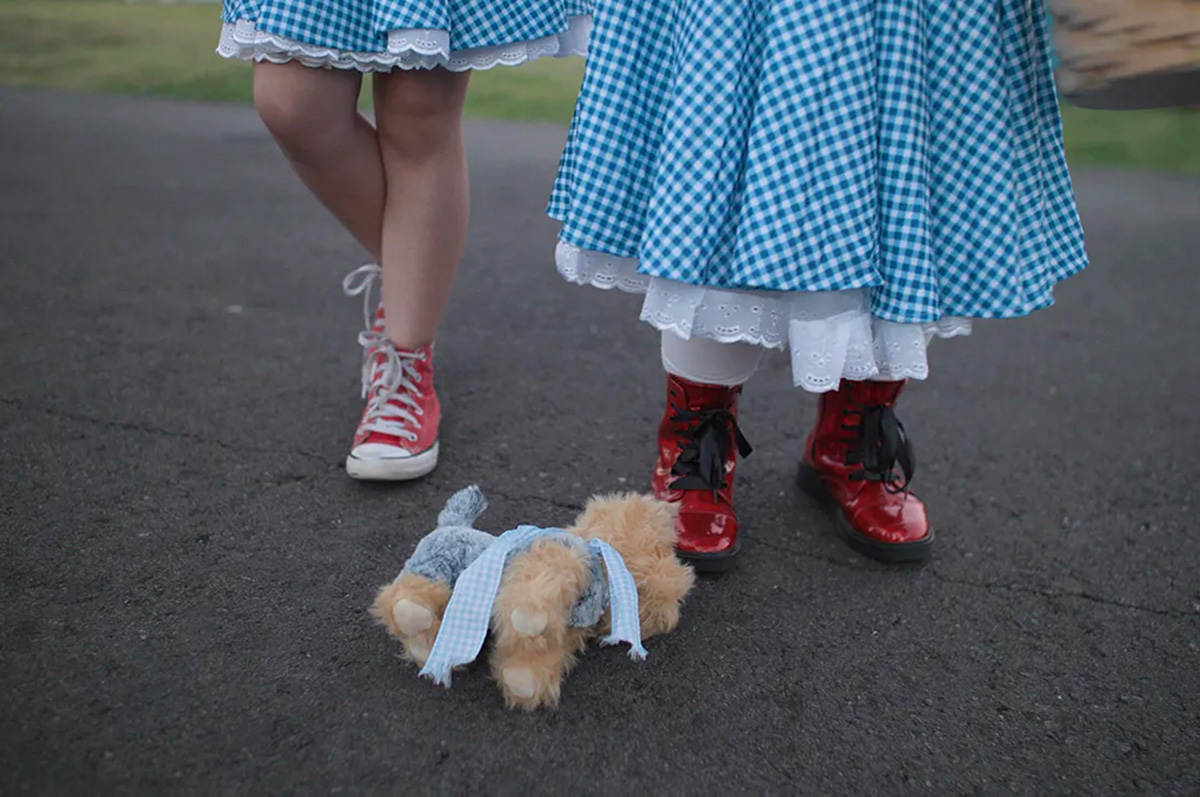
There was a time, according to queer lore, when gay men referred to themselves as a “Friend of Dorothy” as a coded way of communicating their sexual orientation to each other without fear of “the straights” catching on. The reference, of course, is a winking nod to the love and affinity felt by the community toward the main character of L. Frank Baum’s 1900 novel “The Wonderful Wizard of Oz” – especially as personified by Judy Garland in the classic 1939 big screen musical version from MGM.
It may be that the origins of this phrase have been mythologized, exaggerated and/or retro-fitted to convey the underground nature of the queer community – as, indeed, is suggested in “It’s Dorothy!” (the new documentary from filmmaker Jeffrey McHale, now streaming on Peacock), which concerns itself with the enduring cultural legacy of this quintessentially American fictional heroine. But regardless of whether it truly served as a sort of “secret password,” it has come to be embraced as a part of the LGBTQ lexicon. As “campy” as the reference may be, being a “Friend of Dorothy” is now a proudly held communal watchword not just for gay men, but for an entire rainbow community – and McHale’s fizzy-yet-reverential exploration taps into all the reasons how and why this fictional Kansas farm girl has come to be a touchstone for so many by tracking her journey across popular culture over the 125 years since she first sprung to life in the pages of Baum’s timeless literary fantasy.
It gives particular attention to the commentary of cultural figures – writers, performers, and other artists whose paths have become associated with Dorothy’s legacy across pop culture, as well as scholars and historians – to provide insight on the appeal that has made her into a sort of avatar for anyone who feels marginalized in a wild and self-contradictory world; enriched by a plentiful trove of clips from the myriad incarnations through which she has become embedded into the American pop culture imagination, it’s a documentary that leans heavily into the notion that Baum’s timeless heroine remains relevant through her universal relatability. Given a minimum of descriptors by the author who created her, and portrayed in the public imagination through a widely divergent array of perspectives, she represents a kind of “blank page” on which we can imprint ourselves; but at the same time, there is something about her – perhaps her nebulous status as presumed orphan, raised by an aunt and uncle who don’t quite understand her and thrust without warning into a world of contradictory rules, nonsensical beliefs, and unfair expectations – that gives her a particularly personal appeal to anyone who feels like an outsider, and who dreams of freedom, acceptance, and personal agency beyond the proverbial rainbow.
Naturally, McHale imprints on Dorothy’s most iconic incarnation off the pages of Baum’s books; the cultural legacy of Dorothy cannot be separated from that of her most iconic representative (Garland, of course), and his documentary easily makes the case that the beloved actress – who was frequently judged and stigmatized through a career marked by both public success and personal heartbreak, all while living under the scrutiny of Hollywood’s publicity-and-propaganda machine – somehow came to “merge” identites with her most famous character. Judy was Dorothy, but Dorothy was Judy, too. “It’s Dorothy” takes advantage of this almost mystical transfiguration to reflect on the qualities that make this pairing of actress and character so deeply complementary, while also using it to illuminate why the empathy which binds both Garland and Dorothy with LGBTQ people is so tightly connected to the shared qualities they seemed to personify, and which have made both into undisputed icons of the queer community.
As famous as Garland’s Dorothy is, however, it’s not the end-and-be-all of Baum’s beloved heroine, and much of McHale’s movie is devoted to the numerous other performers who have taken on the role throughout the decades, in various incarnations of the “Wizard of Oz” mythos – particularly through “The Wiz,” the 1974 Broadway musical that reframes and remolds the story (and Dorothy) through the lens of Black culture, but also in other iterations that have emerged from pop culture as a testament to her enduring appeal. Indeed, the movie brings illumination to the way that Dorothy – and the “Oz” mythos in general – has become a touchstone within the Black community as well, and how artists (like musician Rufus Wainwright, gay counterculture icon John Waters, comedian/actor Margaret Cho, comedian/writer/director Lena Waithe, and “Wicked” author Gregory Maguire, all of whom participate in the film’s conversation) have found inspiration in the character and her story that has helped to shape their own creative lives.
Thoughtful and scholarly while also delivering a celebratory tribute to the character, “It’s Dorothy” provides a well-rounded examination of Baum’s iconic character (and the world he created around her), and of her impact on the American popular imagination. It’s an entertaining journey through cultural history, connecting the dots to give us insight on why Dorothy and her adventures continue to speak to us with such profound resonance. It’s also entertaining in a way that feels like a “guilty pleasure,” but is validated by the reverence it exudes for its subject; loaded with memorably evocative clips from movies, shows, and performances from across the decades, it gives us glimpses of less-famous appearances of the character and reminds us of just how enmeshed in our imaginations she has come to be; and while it may begin to feel a bit repetitive, at points, as it profiles the various actresses who have played Dorothy over the years (most of whom share the same or similar stories about their personal connections to the role), it nevertheless maintains a sincerity of feeling that keeps us invested.
And just in case you might feel like the times are too somber for a nostalgic stroll down the “yellow brick road” of cultural memories, be aware that McHale also explores the ominous presence of the Wizard himself in these tales, a phony who pretends at power while hiding behind a benevolent mask to maintain it.
As if the “Wicked” movies didn’t make the point clearly enough, we’re in a world that’s a lot more Oz-like than we would like to imagine, and it’s hard not to wish we had the ability to go “home” simply by tapping our heels together in fabulous footwear. “It’s Dorothy!” conveys that longing in a way that feels light-hearted and joyful, and reminds us why being a “friend of Dorothy” has been and continues to be a resonant way of identifying ourselves in a world full of wizards, witches, and “twisters” that can carry us far away from home.
And if you want to follow it up with an impromptu rewatch of the 1939 classic, we wouldn’t blame you. It’s a movie that, for so many of us, conjures the very feeling of “home” itself – and there’s no place like it.
Movies
Intense doc offers transcendent treatment of queer fetish pioneer
‘A Body to Live In’ a fascinating trip into a transgressive culture

Once upon a time in the 1940s, a teenager named Roland Loomis, who lived with his devout Lutheran parents in Aberdeen, S.D., received a hand-me-down camera from his uncle. It was a gift that would change his life.
Small and effeminate, he didn’t exactly fit with the “in” crowd of his small rural town; but he had an inner life more thrilling than anything they had to offer, anyway, and that camera became the key with which it could finally be unlocked. Waiting patiently for those precious hours when he was alone in the house, he used it to capture images of himself that expressed an identity he had only begun to explore, through furtive experiments in body manipulation that incorporated exotic costuming, erotic nudity, gender ambiguity, and what many of us might call (though he would not) self-mutilation, including the piercing of his skin and other extreme forms of physical modification.
Young Roland would go on to become famous (or perhaps, notorious) in the decades to come, but it would be under a different name: Fakir Musafar, the focal figure of filmmaker Angelo Madsen’s documentary “A Body to Live In,” which opened in Los Angeles on Feb. 27 and expands to New York this weekend.
Like Musafar himself, who died of lung cancer at 87 in 2018, it’s a documentary that doesn’t quite follow the expected rules. Eschewing “talking head” commentators and traditional narration, Madsen spins his movie from his subject’s extensive archives and allows the information to come through the voices of those who were close to him: collaborator and life partner Cléo Dubois, performance artists Ron Athey and Annie Sprinkle, and underground publisher V. Vale are among the many who contribute their memories and impressions of him, while evocative photos and film footage create a hazy “slide show” effect to provide a guided tour of his life, his art, and his legacy. Less a biography than a chronicle of profoundly unorthodox self-discovery, it details his development from those early days of clandestine self-photography through a continual evolution that would see him become a performance artist, a central figure in the burgeoning BDSM culture, a seeker who espoused eroticism as a spiritual practice, the founder of a “Radical Faeries” offshoot for the kink/fetish community, and ultimately an elder and mentor for a new generation for whom his once-taboo ideas and explorations had essentially become mainstream – thanks in no small part to his own pioneering efforts.
It’s a fascinating, hypnotic trip into a culture which might feel disturbingly transgressive to those who have never been a part of it – yet will almost certainly feel like being “seen” to those who have. It opens a window into a lifestyle where leather, kink, BDSM, gender play, and non-monogamous “situationships” are not just accepted but viewed as natural variations on the spectrum of human sexuality; and in the middle of it all is Musafar, on a deeply personal quest to connect with the deepest part of his essence through the intense and ritualistic pursuit of an inner drive that keeps pushing him further. As one reminiscing cohort remarks during the film, it’s as if he is “trying to find an answer to a question that” he “cannot form.”
Indeed, it might be said that Madsen’s movie is an exercise in forming that question; bringing his own “transness” into the mix as he examines the various aspects of Musafar’s ever-evolving relationship with self, identity, and presentation, he evokes a timely resonance in which the imperative to make physical form match psychic self-perception becomes an irresistible force, and draws a direct line between his subject’s fluid ambiguity and the plight faced by modern trans people over the bigotry of those who think gender is strictly about genitalia. Perhaps the question has to do with whether we are defined by our identities or by our physical form – or if both are malleable, adaptable, and in a constant state of flux.
In any case, with regard to Musafar, “A Body to Live In” is unquestionably a film about transformation, not just of physical manifestation but of consciousness itself. In his journey from being little Roland, the outcast schoolboy with a secret fetish, to Fakir, the spiritual psychonaut for whom sex and gender are only walls that separate us from a true and eternal essence, he is embodied by Madsen’s reverent documentary as a being in the process of breaking free from the restrictions of physical existence, of transcending all such distinctions by letting go of life itself – something underscored not only by the section of the movie dealing with the impact of the AIDS epidemic on Musafar’s deeply-bonded community, but by his own words, spoken in a deathbed interview that serves as a connecting thread throughout the film. We are kept unavoidably aware of the mortality which – for Musafar at least – seems little more than a prison that keeps us from the unfettered joy of our true nature.
But while Madsen honors his subject as a pillar – and an under-sung hero – of contemporary queer culture, he also addresses the aspects that made him a “problematic” figure; in his life, he drew criticism over perceived cultural appropriation from the indigenous American tribes whose sacred rituals inspired the kink-flavored practices which facilitated his own spiritual odyssey, and which he popularized among his own acolytes to give rise to the still-controversial “Modern Primitive” movement that has been criticized by some for turning meaningful cultural traditions into an excuse for trendy fashion accessories. Even Musafar’s survivors, whose love for him exudes palpably from the stories and memories they share of him throughout the film, make observations that point to his flaws; yet at the same time, Madsen’s documentary makes clear that Musafar himself never saw himself as perfect, either – just as someone willing to endure the kind of suffering that most of us might find unbearable in order to get closer to perfection.
Of course, it probably helped that he enjoyed that so-called “suffering,” but that’s perhaps too glib an observation in the face of a film that so clearly makes a case for the deep and sincere commitment he held for his quest for transcendence; but it’s also a helpful reminder that his practices – which might seem macabre and twisted to the uninitiated – were also an experience of joy, an exercise in rising above pain and making it a vehicle toward enlightenment, and in achieving a deeper understanding of one’s own place in this confusing place we call the universe.
Full disclosure: “A Body to Live In” is an intense experience, replete with candid sexual conversation, frequent nudity, and graphic scenes of extreme fetish practices – like suspension by metal hooks through the skin – which might be hard to handle for those who are unprepared to be confronted by them. Even so, as dark and menacing as it might be for the squeamish outsider, the world revealed in Madsen’s eloquent portrait is full of treasures and steeped in dark beauty, and it’s hard to imagine a more fitting way than that to portray a queer pioneer like the former Roland Loomis.

Md. lawmakers reaffirm legislative priorities

Supreme Court rules against Colo. law banning conversion therapy for minors

Thousands attend ‘No Kings’ protests in D.C.

Blade contributor, husband exchange vows in D.C.

Ghanaian president welcomed to Philadelphia amid backlash over anti-LGBTQ bill

‘No Kings’ protests set for D.C.

Celebrate cherry blossoms the drag way

Lorato ke Lorato: marriage equality, democracy, and the unfinished work of justice in Botswana

Japanese Supreme Court to consider marriage equality

The outrage economy is not the LGBTQ community
-

 District of Columbia5 days ago
‘No Kings’ protests set for D.C.
-
Out & About4 days ago
Celebrate cherry blossoms the drag way
-
Botswana4 days ago
Lorato ke Lorato: marriage equality, democracy, and the unfinished work of justice in Botswana
-
Japan4 days ago
Japanese Supreme Court to consider marriage equality