National
Geithner pledges to work against LGBT abuses overseas
Secretary responds to letter from Bachus, Frank

Treasury Secretary TImothy Geithner (photo courtesy of wikimedia.org)
Treasury Secretary Timothy Geithner has pledged to voice opposition to LGBT human rights violations overseas through U.S. participation in multilateral development institutions — such as the World Bank and the International Monetary Fund — and to work to restrict funds from these banks to foreign governments that allow such abuses.
In a letter dated April 8, Geithner writes to gay Rep. Barney Frank (D-Mass.) that officials in the Treasury Department have been working against LGBT human rights violations as well as abuses against religious minorities. The secretary says he shares the lawmaker’s concern “about the incidents of human rights abuses, including persecutions based on religion and sexual orientation.”
“I want to assure you that we will continue to use our voice and influence in the MDBs, as well as engage with our colleagues at the State Department and other agencies, to seek improvements in the human rights situation in these countries,” Geithner continues. “The Treasury Department will continue to instruct the U.S. Executive Directors at each of the MDBs to seek to channel MDB resources away from those countries whose governments engage in a pattern of gross violations of human rights, and, more generally, to continue to advocate for upholding hunan rights in all countries in which the MDBs operate.”
Geithner adds that the Obama administration has “very consequential funding requests” before Congress for multilateral development institutions and that the level of U.S. funding for these banks “will directly determine our ability to maintain a strong and influential voice in all of these institutions in the years ahead.”
Multilateral development institutions, such as the World Bank, are charged with providing loans to developing countries to reduce poverty by facilitating capital programs. The Treasury Department doesn’t have the authority to mandate policy at these banks, but the United States has an influential role because the institutions rely in part on funds authorized by Congress.
The Geithner letter is in response to an earlier letter that Frank and House Financial Services Committee Chair Spencer Bachus (R-Ala.) sent to the secretary on March 30 urging him to work against abuses toward LGBT people and religious minorities in foreign countries through U.S. involvement in multilateral development institutions. Geithner’s letter back to Frank, ranking Democrat on the committee, indicates that an identical letter was sent to Bachus.
The lawmaker’s letted drew attention to an amendment that the House Financial Services Committee approved on March 15 as part of “Views and Estimates on the Administration’s FY2012 Budget,” which outlines fiscal year 2012 priorities for issues under the panel’s jurisdiction, including recommended funds for the Treasury Department and the World Bank. The amendment urges the Treasury Department to advocate that foreign governments receiving assistance from the multilateral development banks don’t engage in gross violations of human rights, such as the denial of freedom of religion and physical persecution based on sexual orientation or gender identity.
The passage of the amendment and the exchange between the lawmakers and Geithner takes place as LGBT human rights overseas continued to receive international attention, particularly in Uganda, where legislation that would institute the death penalty for homosexual acts had been pending before parliament. Additionally, David Kato, an activist who was working against the pending measure, was brutally murdered after a publication in the country identified him as gay.
In response to Geithner’s letter, Frank said he appreciates Geithner has made “a special point” of recognizing the importance of the issues raised by the amendment that was adopted by the House Financial Services Committee.
“This clearly has application to Uganda because of the severe attacks on LGBT people there that the government continues to condone and encourage,” Frank said. “I am pleased that America will now be engaged in trying to do what we can to block such practices wherever they occur.”
Harry Gural, a Frank spokesperson, said Uganda has received more than $2 billion debt relief from the World Bank and the IMF. Support for the country, Gural said, includes 23 active World Bank projects and 3 proposed projects.
Bachus’ office didn’t respond on short notice to the Washington Blade’s request to comment on the Geithner letter.
Mark Bromley, chair of the Council for Global Equality, said he hopes the letter is “the beginning of a rich dialogue” with the Treasury Department on how the United States can use its influence at multilateral development banks to promote human rights for LGBT people.
“It’s good that the discussion has started, but a lot more needs to be done to leverage the influence of the United States more effectively within these powerful institutions,” Bromley said.
Further, Bromley said the United States should work to ensure LGBT people overseas have access to the opportunities that multilateral development institutions provide.
“In addition to channeling resources away from countries that violate fundamental human rights, as Secretary Geithner appropriately suggests, the United States should also ensure that LGBT communities participate equally in the life-changing social and economic opportunities that the banks provide in developing countries,” Bromley said.




Arizona
Shooting outside gay bar in Ariz. leaves three dead
Tucson police investigating double murder-suicide as a hate crime
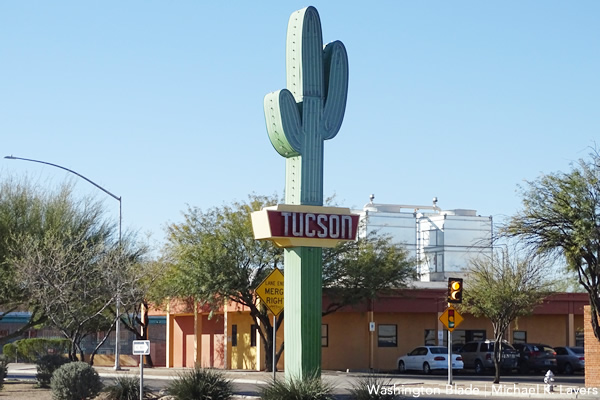
Three people were fatally shot outside a gay bar in Tucson, Ariz., early Monday morning, about a mile from the city’s nightlife district.
Police have said the shooting, which took place in the parking lot of Venture-N bar at 1239 N. 6th Ave., was likely a hate crime and a double murder-suicide following a verbal altercation.
The suspect, Ousman Ceesay, allegedly shot Vincent Anthony Siqueiros and Cameron Davis Capara while they were outside the club around 12:30 a.m. Monday.
Reports show Capara and Siqueiros were pronounced dead at the scene. Ceesay died after being taken to a local hospital with gunshot wounds.
Police have also said that Ceesay was carrying a list of LGBTQ businesses at the time of the shooting.
Arizona Public Media has said police are investigating the case as a hate crime because the suspect was carrying a note containing the names of multiple LGBTQ-associated businesses.
“I am deeply saddened that another senseless loss of life has happened in our community,” Tucson Police Chief Monica Prieto said in a statement. “Bias-based crimes are especially heinous and have no place in our community.”
According to Prieto, there is no imminent threat to the community, and the Tucson Police Department is working to provide extra protection to various LGBTQ businesses across town.
Congresswoman Adelita Grijalva, who represents the area, issued a statement condemning the act of violence, which appears to have been at least in part motivated by homophobia.
“I am disgusted and deeply saddened to learn of a targeted act of hate and the cold-blooded murder of two members of our LGBTQIA+ community, Vincent Siqueiros and Cameron Capara, at the Venture-N bar in Tucson last night. This horrific attack is a painful reminder that even in welcoming communities like Tucson, hate and violence against the LGBTQIA+ community still exist.”
“When that hate is combined with easy access to firearms, the consequences can be deadly. I am sick and tired of Congress refusing to lift a finger to protect our communities while, every day, dozens of people are shot and killed across the country. It does not have to be this way. The House of Representatives is returning to session this week, and our first action should be passing common-sense gun safety reforms that we know can save lives.”
Other federal lawmakers also condemned the shooting.
The Congressional Equality Caucus, which is made up of federal legislators advancing LGBTQ interests, issued a statement after news broke.
“Our hearts are with the friends and loved ones of the victims of this devastating attack outside a Tucson gay bar and with the Tucson LGBTQI+ community,” it said on X. “No one should fear violence because of who they are — and we’re going to continue fighting to build a world where no one does.”
The Human Rights Campaign, the largest LGBTQ organization in the country, released a statement following the shooting.
“We are heartbroken by the loss of Vincent Anthony Siqueiros and Cameron Davis Capara and our hearts are with their families, loved ones, and the entire Tucson LGBTQ+ community. Once again, we are reminded that gun violence robs people of their lives, destroys families, and devastates communities.”
A candlelight vigil honoring the victims is planned for Sept. 2 at 6:30 p.m. at Catalina Park in North Tucson.
Congress
HRC president campaigns for Chris Pappas in NH
Gay congressman running to succeed retiring U.S. Sen. Jeanne Shaheen

Human Rights Campaign President Kelley Robinson on Sunday campaigned for U.S. Rep. Chris Pappas (D-N.H.) in New Hampshire.
Robinson traveled to Manchester, the state’s largest city, nine days before the Sept. 8 primary that will determine who will vie for retiring U.S. Sen. Jeanne Shaheen (D-N.H.)’s seat.
We’re hitting the pavement across New Hampshire to fight for a freer, fairer future for everyone.
Glad to have Human Rights Campaign President @KelleyJRobinson join us for a canvass launch in Manchester today. pic.twitter.com/XWCEaQxy4o
— Chris Pappas (@ChrisPappasNH) August 30, 2026
Former U.S. Sen. John E. Sununu, who represented New Hampshire in the U.S. Senate from 2003-2009, will face off against former U.S. Sen. Scott Brown, who represented Massachusetts in the U.S. Senate from 2010-2013, in the Republican primary.
Karishma Manzur is among the Democrats challenging Pappas.
A poll the University of New Hampshire Survey Center released on Aug. 26 shows Sununu is ahead of Brown. The same survey shows Pappas ahead of Manzur and his other Democratic challengers.
The UNH Survey Center poll shows Sununu ahead of Pappas by a 45-43 percent margin if they were to face off in the general election. The margin of error is +/-2.1 percent.
Pappas would become the first openly gay man elected to the U.S. Senate if he were to win in November.
National
Milo Yiannopoulos deported to UK
ICE arrested far-right provocateur in New Orleans on Thursday

Editor’s note: The Department of Homeland Security on Saturday said Milo Yiannopoulos has been deported to the U.K.
U.S. Immigration and Customs Enforcement on Thursday arrested far-right provocateur Milo Yiannopoulos.
A DHS spokesperson in a statement sent to the Washington Blade said ICE arrested Yiannopoulos, who they described as “an illegal alien from the United Kingdom,” at Louis Armstrong New Orleans International Airport.
The DHS spokesperson said Yiannopoulos “legally entered the country” in New York on May 14, 2019.
“He chose to overstay his welcome in violation of our nation’s laws,” said the spokesperson.
The DHS spokesperson said an immigration judge on July 22 “issued a final order of removal” for Yiannopoulos “after failing to show up for his immigration hearing.” The Times-Picayune newspaper in New Orleans on Friday reported Yiannopoulos is being held at an ICE detention center in Alexandria, La., which is about 200 miles northwest of the Crescent City.
“He will remain in ICE custody pending removal,” said the DHS spokesperson.
Yiannopoulos has, among other things, repeatedly targeted transgender people and Muslims.
The American Conservative Union, which organizes the annual Conversative Political Action Conference, in 2017 disinvited Yiannopoulos from speaking at that year’s CPAC after a video in which he appeared to condone sex between adults and underage boys emerged. Yiannopoulos subsequently resigned from Breitbart News, a far-right news website, where he had been a senior editor.
Yiannopoulos later that year married his boyfriend in Hawaii. The far-right provocateur in 2021 claimed he was an “ex-gay.”
The Australian government in 2019 banned Yiannopoulos from entering the country “on character grounds.” Yiannopoulos was also banned from Facebook, Twitter (now X), and other social media platforms.
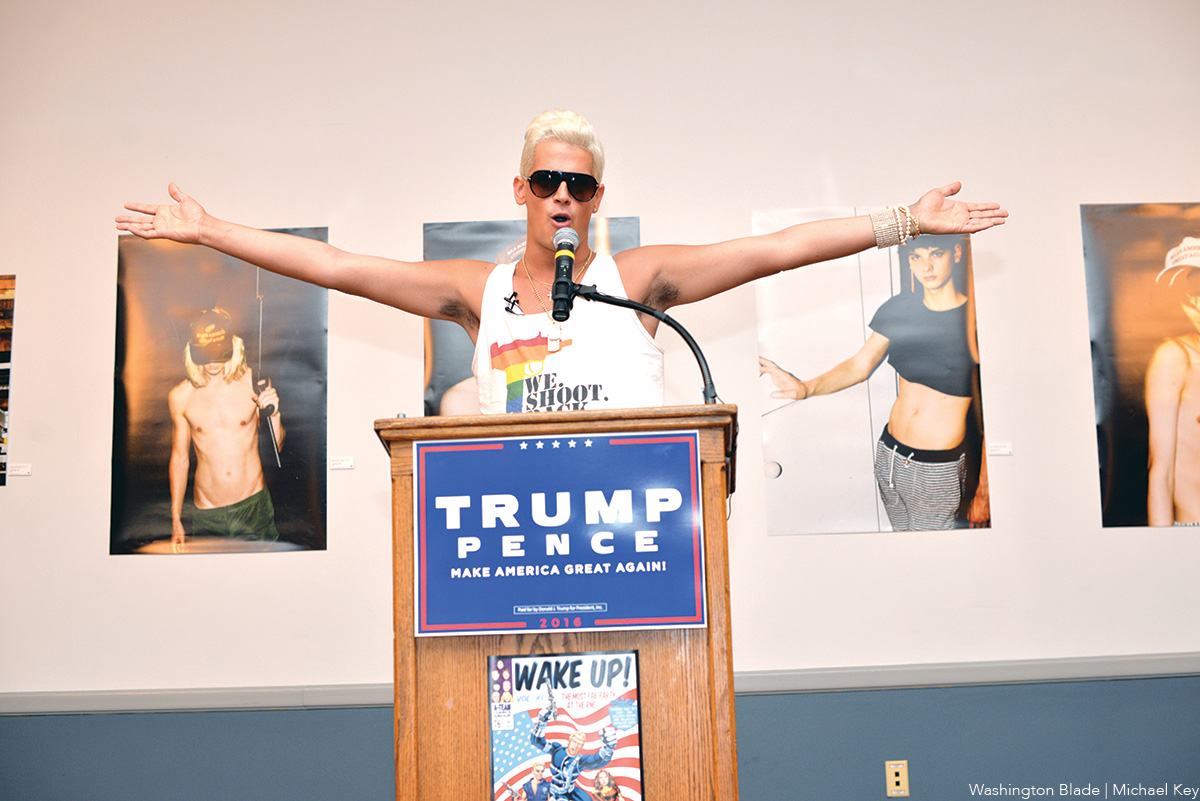
The Times-Picayune reported Yiannopoulos “most recently worked for” Ye, formerly known as Kanye West.
The controversial rapper is scheduled to perform in New Orleans on Friday.
Laura Loomer, a far-right conspiracy theorist who is close to President Donald Trump, has called for Yiannopoulos’s deportation. Loomer on Friday wrote on X that she “reported him to ICE and the FBI” after he “called for me to be assassinated.”

PHOTOS: Miss Gay Old Bay

SUNFESTIVAL takes center stage as Rehoboth Beach closes out summer

Anne Arundel schools now need parent permission to call trans students by preferred names
Shooting outside gay bar in Ariz. leaves three dead

‘People don’t see me. They see a trend’

Trans, nonbinary Americans find refuge in the Netherlands

San Francisco, long a queer safe haven, remains competitive for homebuyers

Calendar: August 28-September 3

‘Teenage Sex and Death’ has never been more entertaining

Actor Tim Curry dies at 80
-

 Netherlands5 days ago
Trans, nonbinary Americans find refuge in the Netherlands
-
California4 days ago
San Francisco, long a queer safe haven, remains competitive for homebuyers
-
Calendar5 days ago
Calendar: August 28-September 3
-
Movies5 days ago
‘Teenage Sex and Death’ has never been more entertaining