Opinions
Gay left’s obsession with race
Black conservatives well represented in Log Cabin leadership
We often use race and gender as a way to shame or silence our adversaries. But we should try to go beyond skin color to explore genuine ideas. We are not, thankfully, in the old days of segregation and Jim Crow, but neither are we within a post-racial world yet. In order to get beyond race, we need to deal honestly with people who try to use race to divide or deride.
Alex Blaze of the Bilerico Project blog wrote recently that the leadership of Log Cabin Republicans is so “white and male.” While the author drew the reader in by first talking solely about the national board of Log Cabin, he swiftly pulled a bait and switch further into his column by expanding his examination to all leadership positions within the organization.
So imagine my surprise when the author asked is it really “that there are almost no queer people of color or women who are Republican?” Or his odd statement of questioning why “women and minorities are less likely to be in leadership positions” within the gay right. At first glance, I thought “so what?” But something kept me coming back to his piece.
As a black man who serves as president of D.C. Log Cabin Republicans, I should be offended. But I’m not. It is nothing more than the status quo from the gay left.
The Log Cabin Republicans are a cross-section of not only the GOP, but also of the LGBT community. In the last presidential election, 27 percent of gays voted Republican. We range from RINOs to right-wingers to proud members of the Tea Party. We are well off and upwardly mobile, as well as lower to middle class just getting by. We are white, black and brown, male and female and even transgender.
But this is an anathema to what many liberals believe. The left believes the Republican Party and the Tea Party movement are comprised of a bunch of rich, white guys who are surely sexist and racist. But tell that to South Carolina Gov. Nikki Haley, or New Mexico Gov. Susana Martinez. Or better yet, the dozen or so minority freshmen Republicans elected to Congress last year who were supported by the Tea Party. But I digress.
You couldn’t help but wonder if Blaze had taken the same strict scrutiny to our counterparts at the National Stonewall Democrats. While a cursory look at their website showed an abundance of lesbians on its board of directors, there is a dearth of minorities. Yet, no questions from Blaze as to where the black and brown gay Democrats are in leadership positions.
Perhaps it doesn’t matter that Log Cabin Republicans have women and minorities leading strong chapters in places like D.C., Chicago and San Diego. That’s merely an inconvenient truth.
Being a gay Republican is sometimes tough because both sides of the political spectrum discount us. Some on the right don’t think we’re true conservatives. To the left, my individualism reeks of selfishness, self-hate and even betrayal by some. How silly to think the rainbow flag we hold so dear as a community represents strength through diversity.
But throwing in the additional identifier of being black or brown can often cause apoplectic shock to those in the other party. So, when they say they don’t mean to bean count, that’s exactly what they mean to do. We create a chasm in the gay left’s demand for political solidarity.
When I was first elected president of the D.C. chapter of Log Cabin Republicans last year, I declined to make an issue of being the first black president of a chapter. I believed, then as now, that my race should not be an issue. My talents and energies as an activist should be the measuring stick of my success.
To quote Martin Luther King, Jr., we should not be judged by the color of our skin, but by the content of our character. The Log Cabin Republicans — especially the D.C. chapter — have moved beyond bean counting. When will the gay left?
Robert Turner is president of the D.C. chapter of Log Cabin Republicans. Reach him at [email protected].





Opinions
American democracy on the brink
When Trump threatens voting rights to undermine midterms, we should believe him

President Trump’s favorability is at record lows, dragged down by a reckless and unpopular war, soaring food and gas prices, economic instability and a general sense that he is flagrantly corrupt, more focused on vengeance than governing, flailing and mentally unwell. Assuming the elections take place without interference, Democrats are expected to regain control of the House in November, with odds increasing of a Senate takeover as well.
In normal times, a rational president facing such headwinds would pursue policies designed to regain public support. But we see no sign of that. Instead, we are seeing a renewed focus on repeating the well-litigated and demonstrably false claims that he won in 2020, and that our elections are rife with voter fraud. He recently devoted most of what was billed as a major speech to the nation on regurgitating these imaginary claims, this time alleging that the Chinese had interfered in the 2020 election, thereby augmenting the pretextual narrative with a national security rationale. Although it is unclear whether Trump believes any of this himself, he has convinced most of his supporters to believe it, and that serves a very important purpose. Those false claims drove thousands to storm the Capitol to prevent the certification of the 2020 election, and he appears again to be setting the stage for what he seems willing to do to avoid defeat at the polls.
Since returning to power last year, Trump has systematically fired and replaced personnel at all levels who might not comply with illegal directives and taken other actions to remove the obstacles that constrained him before. He has thoroughly purged the military and the Department of Justice of career professionals and replaced them with die-hard loyalists who will reliably do his bidding. He has totally neutered the Congress, rendering this once-powerful co-equal and independent branch of government totally subservient. And he has cowed much of the judiciary, including the Supreme Court, into a state of complicit compliance. The Department of Justice has been so thoroughly co-opted by him that he routinely and publicly directs the prosecution of his enemies on tenuous or non-existent grounds and indictments soon follow in virtually every case.
Trump has also militarized America’s streets through the deployment of a federalized National Guard deployed primarily in Democratic cities under the pretext of a crime epidemic that local authorities could not contain. Trump has unleashed a highly aggressive and unaccountable Immigration and Customs Enforcement (ICE) force of masked gunmen ostensibly to round up and deport people who were in the country illegally. In fact, ICE has acted with such wanton brutality that it has disappeared and summarily deported people, and murdered people, including several American citizens, in broad daylight and on video with no consequences. These troops, who function almost as independent and unaccountable militias of the president, have terrorized segments of the population and acclimated Americans to a menacing armed presence roaming the streets in a manner that Americans have never experienced before. It is not hard to imagine how these forces could be put to use during the election: to intimidate and suppress the vote in Democratic precincts, to seize voting machines or otherwise interfere with the election process, and/or to provoke chaos and unrest to provide a pretext for the president to contest or nullify the election results.
This is not theoretical. It is telling that Trump’s two top priorities are premised on the big lie about the 2020 election and on creating a pretext for interfering in the upcoming election. He has prioritized legislation called the SAVE Act, which would interfere with states’ rights to administer elections by mandating enhanced voter ID requirements in a manner that would disenfranchise voters, particularly those that tend to vote for Democrats. His other top priority is a $1.8 billion “anti-weaponization” fund designed to compensate and reward convicted Jan. 6 rioters who, at Trump’s instigation, ransacked the Capitol, brutally assaulting police officers and hunting members of Congress with the intent of killing them. The rationale for this massive slush fund is the fiction that these convicted felons were innocents unfairly subjected to baseless, politically motivated prosecutions. This fund was so controversial that two Republican senators had blocked the nomination of Todd Blanche as attorney general until they received a very dubious written assurance — quickly disavowed by Trump — that the fund would not be deployed.
It is also alarming that Trump repeatedly calls for nationalizing the elections process, despite the Constitution specifically vesting these powers with the individual states, and he has demonstrated that he means business. He has pressured states to turn over confidential voter data and taken punitive measures against the non-compliant, including withholding allocated federal funds. He has harassed and intimidated state election officials with threats of criminal prosecution for a variety of specious reasons and has sought confidential personal information about these officials. Notably, he recently abolished the U.S. Elections Assistance Commission, a watchdog agency established by Congress after January 6 to ensure the integrity of our elections. And perhaps most disturbing of all, his servile FBI took the unprecedented step of raiding election offices in Atlanta, Georgia to seize and confiscate voter rolls. There is no reason to believe that he will hesitate to do so again in November. In fact, he recently stated that he may send ICE and National Guard troops to polling places, and some members of Congress and MAGA influencers are calling for him to do just that. Under the right circumstances, which would include accusations of voter fraud and chaos at the polls that could easily be provoked or manufactured, he would have the legal authority to do so.
At the same time, Trump has openly mused that the public might prefer a dictatorship and repeatedly hinted that he might seek an unconstitutional third term. At the White House Correspondents’ Dinner last month, he wore a red cap emblazoned with “Trump 2028”, and just this week, he indicated that he is willing to declare a national security emergency to cancel elections. “Stranger things have happened,” he said, seeming to prepare the public for what might be in store. Trump has so successfully inured the public and the media to such incendiary and anti-democratic threats that they no longer induce opprobrium or outrage.
This president has repeatedly demonstrated and flexed his authoritarian impulses, admired dictators, and increasingly signaled a determination to seize control of the upcoming election up to and including cancelling it. He tried to stage a coup once and came very close to succeeding. This time his actions are increasingly speaking the quiet part out loud. What should alarm anyone paying attention is that the groundwork for Version 2.0 has been very well laid and that, when Trump signals so clearly that he is determined to win by any means necessary, we should believe him.
Peter Pappas is an attorney who served in senior positions in the Obama and Clinton administrations.
Commentary
Please join me in supporting the Washington Blade Foundation
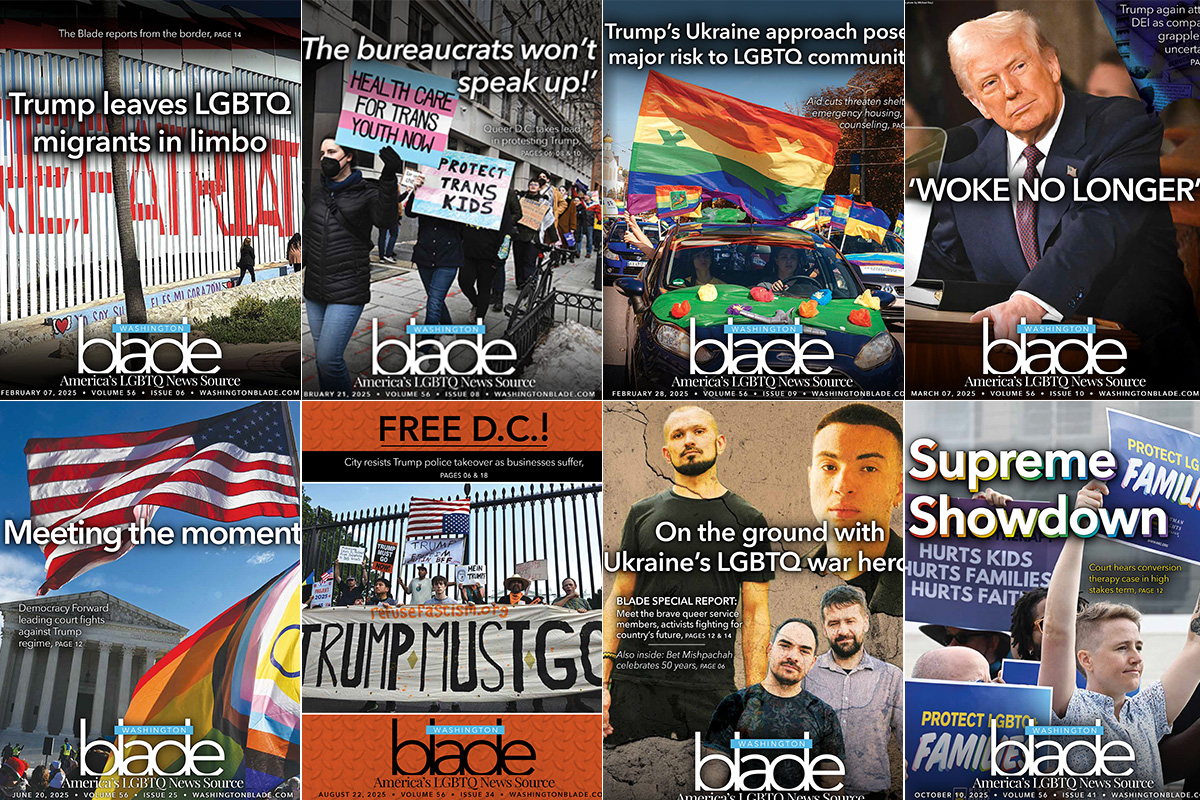
An important event impacting the LGBTQ community will be held on Sept. 12 in Rehoboth Beach, Del.
The event is a fundraiser for the Washington Blade Foundation. Whether you can join us in person, or just be with us from a distance, I ask you to seriously consider becoming a sponsor of this event. You may ask why should you care, why is this important, and how the Blade Foundation supports the LGBTQ community.
The event will feature an open bar, food catered by the Blue Moon, entertainment, and speeches from Blade staff along with remarks from Rehoboth’s Mayor-elect Susan Stewart and another surprise guest or two. You can buy tickets on Eventbrite; if you’re interested in sponsoring the event, contact Publisher Brian Pitts at [email protected].
The Blade Foundation was begun to ensure the history of our community, written in the pages of the Washington Blade, was archived, and never lost. That effort was a success thanks to the support of the DC Public Library. Now the Blade Foundation works to help ensure there will be future LGBTQ journalists working throughout the media, not just for the Blade. By funding interns and fellowships for LGBTQ journalism students, we help make that possible. By helping to fund the international news section of the Blade, the Foundation helps to keep the LGBTQ community around the world connected. In many countries where our community is either still not accepted, or worse, tortured, members of our community living in those places may only get news of their communities by reading the Blade online.
I know many of you reading this already know, the Washington Blade newspaper has been in existence, and reporting on the LGBTQ community, for more than 56 years. The paper’s reporting is done by those who are part of the community, and that makes a real difference. The paper is proud of its journalists, and the numerous awards they have won. One is Lou Chibbaro Jr., who recently was the subject of a documentary aired on PBS. He, and others like him, report the news honestly, without bias, but with fervor, because they actually live the stories.
In those 50-plus years since Stonewall, the Blade has been reporting on the progress our community has made. The steps forward, the stumbles, those allies who have worked with us, and those people who have tried to stop us from living our lives as who we were born to be. Again, the news is being reported by members of our own community. It is not others writing about us, but us, writing about ourselves. The Blade is followed by many mainstream media outlets, and stories that first only the Blade covered, ignored by mainstream media, were then picked up and reported garnering the widespread coverage they deserve. The Blade is the best place to find out about what the members of our own community are doing, and what others are doing to, and for, us.
It is sad that today the Blade has to report we are at a place in history where we are fighting just to keep the strides for equality we have made over the past 50 years. Because of that, it is even more important than ever, that the Washington Blade keeps publishing. Today, the Blade is the only LGBTQ news outlet with a dedicated seat in the White House briefing room. That is important for the Blade, and for all the members of our own community. It is important the Blade be where the action is.
The Blade’s international coverage helps us in the United States to understand where we can help those in our community who may be suffering and less fortunate, but also to celebrate with those who are even more free in many ways. The recent stories about World Pride in Amsterdam inspire us to fight even harder for our rights here, so we never again have a president who will work to keep our community from being all it can be. That we will never again have a President who threatens the lives of our trans sisters and brothers, threatens their healthcare, and throws our community’s heroes out of our military. Those news stories are important to write, and they often only get written about fully, in the Blade.
So again, I ask you to consider being a sponsor, and joining us in Rehoboth on Sept. 12. Or if you can’t be in Rehoboth, that you support our work from a distance, and support this important event. The Washington Blade Foundation is a 501c(3) non-profit. So, whether you are a business supporting the community, an individual ally, or a member of the community, please dig deep, and help to support the future of LGBTQ journalism, and future LGBTQ journalists. By doing so, you are supporting the future of the LGBTQ community. You can donate online at bladefoundation.org/donate.
Peter Rosenstein is a longtime LGBTQ rights and Democratic Party activist.
Africa
When home becomes a journey: migration, memory, and the African diaspora
People carry pieces of previous lives wherever they go
Sometimes I wonder whether home is a place or a feeling.
I have lived in places where I never imagined I would stay. I have crossed borders I never expected to cross and spent years in refugee communities where people wake up each morning wondering what the future will bring. I have known Kakuma Refugee Camp in Kenya, spent time in Zambia and South Africa, and now live in Gorom Refugee Settlement in South Sudan.
So, when I think about migration, I don’t think first about passports, borders, statistics, or immigration offices.
I think about people.
I think about the mother who leaves everything behind because she wants her children to survive. I think about the young person crossing a border with little more than a phone, a few clothes, and memories of a life that may no longer exist. I think about the refugee who has spent years waiting for a durable solution and still doesn’t know where they will eventually call home.
Migration is often described simply as movement from one place to another. But sometimes it is much more than that.
It can mean leaving behind a version of yourself.
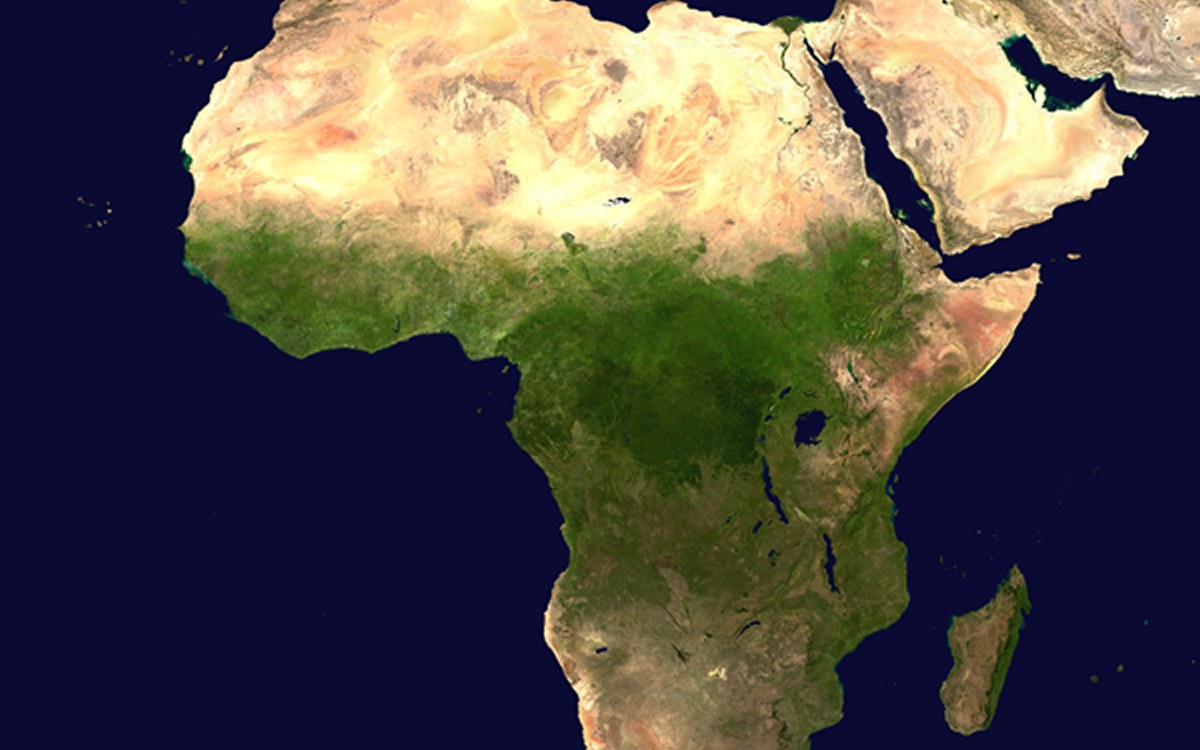
Africa has always been moving
Africa’s migration story did not begin with modern refugee camps or today’s international borders.
People have moved across this continent for generations. They have followed trade routes, searched for pasture and water, moved for marriage, education and employment, escaped conflict, and built new communities elsewhere.
Migration has always been part of African life.
Today, people move for many different reasons. Some flee war and political instability. Others escape persecution or discrimination. Some leave because they cannot find work or see a future for themselves. Others migrate to study, find employment, start businesses, join family members or simply seek new opportunities. There is an important distinction here.
Not every African migrant is a refugee.
A refugee is someone forced to leave because returning home is unsafe. An asylum seeker is someone seeking protection and waiting for a decision on their claim. Exile can mean living away from one’s homeland, sometimes unwillingly. The diaspora is broader still: it includes people of African origin living outside their country or continent, whether they left by choice or were forced to leave.
These words matter because behind each one is a human story.
When leaving is not a choice
I know what it means when leaving is no longer a choice.
Forced displacement takes something from you that is difficult to explain. You may still have your memories, your language and perhaps a few possessions, but the ordinary things that once made life predictable can disappear.
You begin again.
Sometimes you begin again in another country. Sometimes you begin again in a refugee camp.
My experiences in Kakuma taught me that displacement does not necessarily end when you cross a border and reach somewhere safer. The uncertainty can continue for years.
Now, in Gorom Refugee Settlement, I see that uncertainty in the lives of people around me. Mothers worry about food and the health of their children. Young people wonder whether they will return to education. Others wait for resettlement or another safe pathway while trying to build a life with very limited resources. There is a strange feeling in waiting.
You are physically present somewhere, but mentally you may still be traveling towards a future you cannot see.

What happens to identity?
One of the hardest questions migration raises is: Who am I when I am no longer where I came from?
A person can cross a border in a few hours. Identity doesn’t move that quickly.
You carry your accent.
You carry your food.
You carry your mother’s stories.
You carry songs you heard as a child.
You carry the names of people who may never know where you ended up.
You carry memories.
And sometimes you carry pain.
I have met people who have lived in several countries and can no longer give a simple answer when asked where they are from. They may have been born in one country, grown up in another, lived in a refugee settlement somewhere else and now dream of resettling in a fourth.
Does that make them less African?
I don’t think so.
Perhaps it makes their identity larger.
Carrying Africa across borders
The African diaspora is sometimes discussed as though it were simply a population scattered around the world. I see it differently.
People carry pieces of home wherever they go.
An African family living in Australia, Canada, Britain, the United States, or elsewhere may still cook the food they grew up eating. They may speak their mother tongue at home, send money to relatives, listen to African music, support community projects and remain closely connected to events thousands of miles away. Migration doesn’t necessarily erase belonging.
Sometimes it creates several belongings at once.
The diaspora also contributes enormously to communities back home. Remittances help families pay school fees, buy food, build houses, access healthcare and start businesses. Migrants also carry knowledge, professional experience, ideas and connections that can benefit communities across borders.
A person may leave Africa physically and still spend much of their life contributing to Africa.
That matters.
The price of being a migrant
But migration has another side.
Not every new country means a new beginning.
For some migrants, the journey leads to racism, xenophobia, exploitation, or discrimination. People can be judged because of their nationality, accent, skin color, immigration status or refugee identity.
Others discover that qualifications earned at home are not recognized. A professional becomes a cleaner. A teacher struggles to find work. A skilled worker is told to start again.
There is nothing wrong with honest work. The problem begins when someone’s dignity is reduced because they are a migrant.
For refugees, bureaucracy can become another form of suffering. A person can become a case number, waiting months or years for interviews, decisions, relocation opportunities, or family reunification.
But life doesn’t stop while the paperwork continues.
Children grow older, parents become sick, people lose loved ones, birthdays come and go and still the waiting continues.
I sometimes wonder whether the people making decisions about migration fully understand how heavy that waiting can become for someone sitting on the other side of the process.
Women, children, and LGBTQ refugees
Migration does not affect everyone in the same way.
Women often carry enormous responsibilities after displacement. They may become the main providers for their children while dealing with their own trauma and uncertainty.
Children experience displacement differently. They may not fully understand why they had to leave home, but they understand the absence of familiar faces, schools and routines.
Young people face another difficult question: how do you plan a future when you don’t know which country you will be living in?
For LGBTQ refugees, the journey can be even more complicated. Some leave because the place where they were born no longer feels safe for them. They may have experienced rejection, threats, violence or discrimination before they ever reached a refugee settlement.
And yet, even in such circumstances, people create community.
In Gorom, LGBTQ refugees and asylum seekers come from different African countries and backgrounds. We don’t always agree on everything. But we understand something important: when the world has already made you feel unwanted, having people around you who understand your experience can mean everything.
Community can become another form of home.
Should borders decide our worth?
I understand why countries have borders. Countries have laws and responsibilities.
But I sometimes ask myself a simpler question: Should crossing a border change the value of a human life?
A child doesn’t become less deserving of food because they were born on the other side of a political boundary.
A mother doesn’t become less worthy of safety because she crossed without the right document.
A refugee doesn’t stop being a human being while waiting for an immigration decision.
From a Humanist perspective, this seems straightforward to me. Human dignity should not depend on nationality.
We can have immigration systems and still treat migrants with compassion.
We can protect borders without forgetting that the people standing behind those borders are human beings.
We can disagree about migration policy without dehumanizing migrants.
That balance isn’t easy. But perhaps that is exactly why we need more humanity in conversations about migration.
What does home mean now?
I have asked myself this question many times: Where is home?
Is it where I was born?
Where I first felt safe?
Where my memories live?
Or perhaps home isn’t always a geographical location.
Maybe home can be the people who stand beside you.
Maybe it is the language you speak when you are emotional.
Maybe it is the smell of food that takes you back to childhood.
Maybe, after so much has been taken away, home becomes something you slowly rebuild.
My birthday falls on Sept. 12. Birthdays usually invite us to think about another year of life. But for someone who has experienced displacement, another birthday can mean something deeper.
It means I made it through another year.
I am still here.
And I think about the many refugees who don’t know whether they will be safe long enough to celebrate their next birthday. I think about children growing up in camps who deserve to celebrate their birthdays in a home they can call their own.
That thought stays with me.
We are more than where we come from
Migration has taught me that people cannot be reduced to the countries printed on their passports.
We are our memories, our relationships, our struggles, our dreams, and our choices.
Africa’s diaspora is not simply a story of people leaving Africa. It is also a story of people carrying Africa with them.
And the refugee experience is not simply a story of loss. It is also a story of survival.
I don’t know where my own journey will eventually take me. Perhaps that is one of the things migration teaches us: we can make plans, but life sometimes writes a different story.
What I do know is that every person deserves the chance to live without fear, to love without persecution, to work with dignity, to raise children safely and to imagine a future.
Borders may separate countries.
They should never separate us from our humanity.
If migration has taught me anything, it is that home is not always the place we left behind. Sometimes home is the safe place we are still searching for.
And sometimes, while searching, we become one another’s home.

HRC president campaigns for Chris Pappas in NH

We’re getting married but our parents object

Michael Smith could make history as Delaware’s first LGBTQ treasurer

Poland begins to legally recognize same-sex marriages from other countries

Immersive ‘Nation-State’ imagines a society free of authoritarianism

Please join me in supporting the Washington Blade Foundation

American democracy on the brink

Girlfriends charged with Silver Spring murder to go on trial in 2027

Rehoboth mayor calls for commissioner’s resignation after investigation into improper behavior

San Francisco, long a queer safe haven, remains competitive for homebuyers
-

 Commentary5 days ago
Please join me in supporting the Washington Blade Foundation
-
Opinions5 days ago
American democracy on the brink
-
Maryland5 days ago
Girlfriends charged with Silver Spring murder to go on trial in 2027
-
Rehoboth Beach5 days ago
Rehoboth mayor calls for commissioner’s resignation after investigation into improper behavior