Local
Gansler predicts Md. marriage bill will pass in 2012
But AG warns of possible referendum
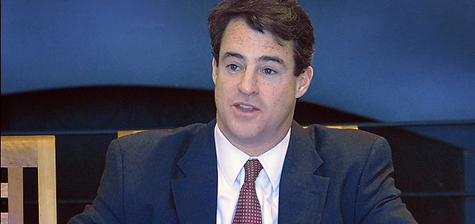
Maryland Attorney General Doug Gansler predicted today that same-sex marriage would be legalized in the state next year.
He made the remarks during a forum at the Center for American Progress about the bill and prospects for a referendum that could overturn it.
“Our governor is now on board and other state leaders are on board, so I do believe it will have the momentum to get passed,” Gansler said.
In February, a measure that would legalize same-sex marriage passed the Maryland State Senate by a vote of 25-21. But the House scuttled the bill after LGBT advocates determined they lacked the votes for passage.
Gansler said the marriage bill came close to passage earlier this year and failed because of “political misjudment.”
“They thought that the Senate side of the Maryland Assembly would be the difficult part, and it turned out to be the House side that was more difficult,” Gansler said.
Gansler said passage didn’t happen because of the “microcosm in the Assembly that exists in the state, the heavy African-American vote, and so forth.”
If the Maryland Legislature passed the marriage legislation, opponents of same-sex marriage could seek to overturn the law through a voter-initiated referendum. Such a measure could appear on the ballot in 2012 at the same time voters would be going to the polls in the presidential race.
Gansler said opponents of marriage equality would “very likely” be able to obtain the necessary signatures to place the referendum on the ballot based on what he’s observed with the state’s DREAM Act, which would authorize in-state tuition benefits at local community colleges to undocumented students in some cases.
“As we just found with the DREAM Act, you can do that over the Internet — get signatures — so it would be very likely that it would actually be put on referendum,” Gansler said.
Gansler added the act of finding enough signatures for the referendum “would stay the enactment” of any marriage law that comes out of the Maryland Legislature.
“In between that time, we’d get a referendum,” Gansler said. “So, it would never actually become law unless and until it went to the voters.”
Gansler said the referendum “could very easily pass” in Maryland and said “the problem is with people most likely to vote” during the election. Still, Gansler said Maryland “would be the place” for a measure rescinding same-sex marriage to fail.
“I believe it’s the most liberal state now in the country, more so than Massachusetts in terms of Democrat-to-Republican registration,” Gansler said.
Gansler added that if the statute banning same-sex marriage remains in place, litigation could benefit gay couples because of the opinion he issued in 2009 saying out-of-state same-sex marriages should be recognized.
“Because of the opinion that I drafted, I believe that it’ll be challenged,” Gansler said. “It’ll go through the courts and be challenged at that point, and I think the Court of Appeals will find the law to be unconstitutional sometime between now and the end of that whole process.”
Gansler said a couple of cases “are already percolating” on whether same-sex couples can be divorced in Maryland who were married in another state. Another case in Western Maryland, Gansler said, challenged the law on the basis of the “spousal privilege.”
“The judge used our opinion in upholding the notion that this couple does have a spousal privilege because they were married in another state,” Gansler said.
Gansler continued, “So, I think if we go to the courts, we will win there. So, I think we win either way; it might take some time.”
The Maryland attorney general made the remarks during a forum highlighting a new report, titled “All Children Matter: How Legal and Social Inequalities Hurt LGBT Families,” which examines how shortcomings in the legal system negatively affect 2 million children living in LGBT families. The report was published by the Movement Advancement Project.





The Comings & Goings column is about sharing the professional successes of our community. We want to recognize those landing new jobs, new clients for their business, joining boards of organizations and other achievements. Please share your successes with us at [email protected].
The Comings & Goings column also invites LGBTQ+ college students to share their successes with us. If you have been elected to a student government position, landed an exciting internship, or are graduating and beginning your career with a new job, let us know so we can share your success.
Congratulations to Jaime Christopher Pierce on their appointment to serve as a member of the Virginia Governor’s LGBTQ+ Advisory Board. Pierce was sworn in on Sept. 3 by Greg Parks, clerk of the Alexandria Circuit Court.
Pierce currently serves as vice chair of the Alexandria City LGBTQIA+ Task Force and as a member of the Alexandria Pride planning committee. They previously served on the board of directors of Equality Virginia.
Upon being sworn in, Pierce said, “Public service has been a central part of my life for more than 30 years, and this appointment gives me an opportunity to serve the Commonwealth in a different and very personal way. My career has allowed me to work with people and communities throughout Virginia, and I hope to bring that experience, along with my own lived experience and my involvement in the LGBTQ+ community, to the work of the Board.” They added, “Having Greg administer the oath makes the occasion even more meaningful because of his own historic role as Virginia’s first openly gay elected circuit court clerk.”
Pierce also serves as Circuit Court Services Manager for the Department of Judicial Services, at the Office of the Executive Secretary of the Supreme Court of Virginia. They began their career in Virginia’s judiciary in 1994 as a deputy clerk with the Virginia Beach Circuit Court and have since held several professional and leadership positions within the court system. Pierce is a member of the National Association for Court Management (NACM) and the Mid-Atlantic Association for Court Management. At the national level, Pierce participated in the workgroup that developed the National Association for Court Management’s Diversity, Equity, and Inclusion Guide, a resource designed to help court professionals advance inclusive practices and strengthen access, fairness and belonging within the justice system.
Pierce earned a degree in Criminal Justice from Liberty University, and a certificate in Paralegal Studies from Norfolk State University.
Maryland
Md. groups receive state grants to fight hate crimes
Pride Center of Maryland among recipients
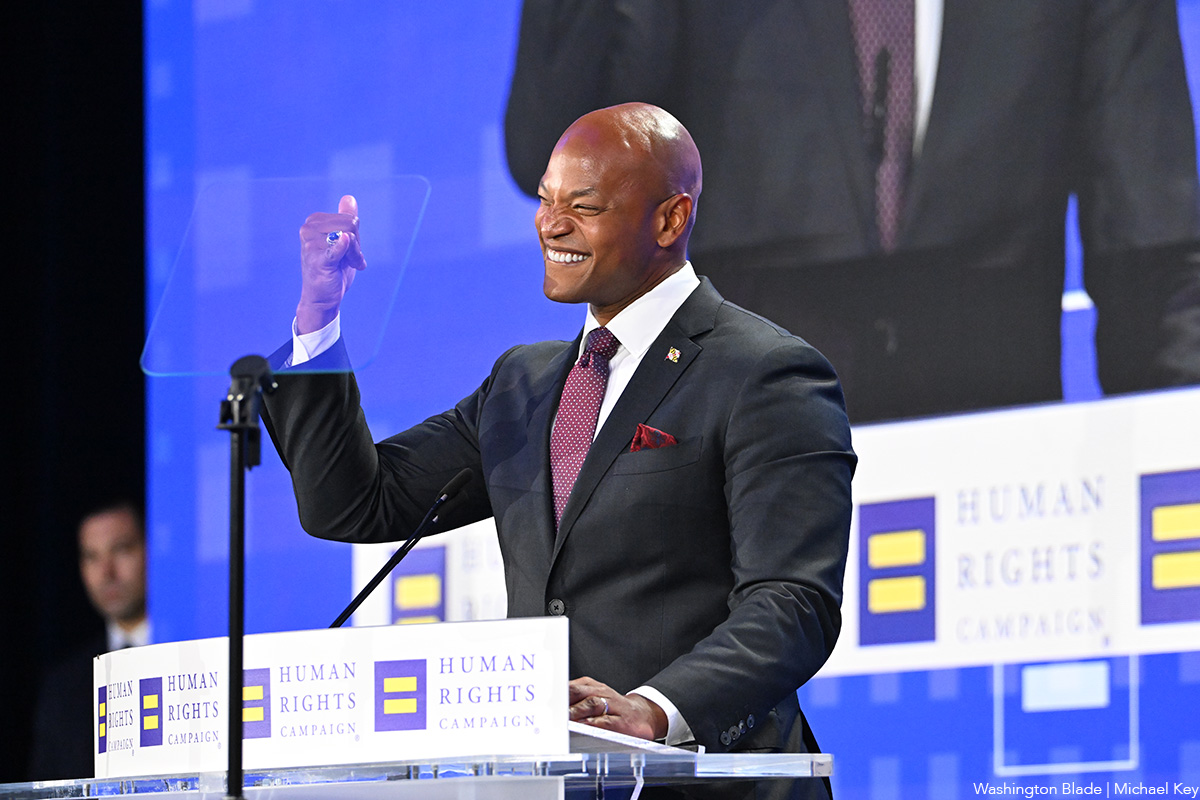
Maryland Gov. Wes Moore and the Governor’s Office of Crime Prevention and Policy are awarding a total of $10 million in grants in the 2027 fiscal year to nonprofit organizations that work to prevent hate crimes in the state.
The funds will be used to support those who feel targeted or discriminated against because of their race, religion, sexual orientation, gender identity, or disability status.
The Pride Center of Maryland is among the recipients. Churches, synagogues, mosques, and LGBTQ organizations are all eligible to receive grants
“The safety and security of all Marylanders is my top priority, so we are drawing a hard line because we have no tolerance for hate,” said Moore, according to media reports. “We are committed to protecting and ensuring safe and sacred spaces stay that way by investing in non-profit organizations, houses of worship, and community centers to protect and honor every community that makes our state so diverse and special.”
“Protection Against Hate Crime funding has strengthened the Pride Center of Maryland’s ability to protect, educate, and support the communities we serve … at a time of heightened concern associated with the Trump administration’s anti-LGBTQ/SGL (same-gender-loving) policies and pressures,” Pride Center of Maryland CEO Cleo Manago said. “PAHC funding helps us do more than improve physical security — it strengthens our community’s knowledge, preparedness, connection to resources, and ability to respond to hate with greater awareness and support.”
Maryland’s hate crimes law includes both sexual orientation and gender identity. The state’s nondiscrimination statute is also LGBTQ-inclusive.
District of Columbia
Blade welcomes fall intern
Alexis McLean is student at University of North Florida
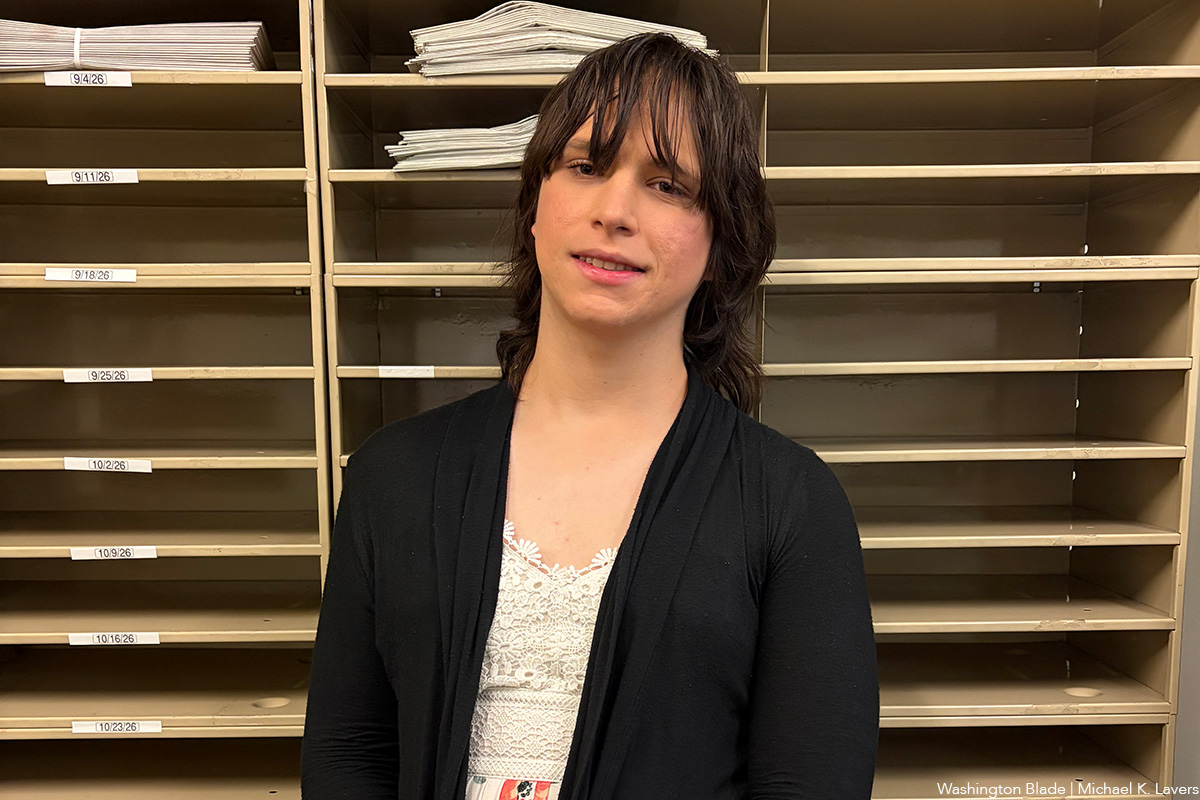
The Washington Blade this week welcomed Alexis McLean as its fall intern.
Alexis is studying political science at the University of North Florida in Jacksonville, Fla. She is interning with the Blade as part of a continued partnership with the Washington Center.
“I am looking forward to spending my time in the fall with the Washington Blade, as this is a new experience for me,” said Alexis. “I have not experienced any journalist jobs in the past so this would be my first time, and I am excited to better my writing and communications skills with this internship.”
Alexis’s internship with the Blade ends in early December.

‘Thelma and Louise’ remains landmark of unspoken queer rebellion

Comings & Goings

LGBTQ Military Happy Hour set for Sept. 15

Calendar: September 11-17

Multi-billion-dollar 9/11 Victim Compensation Fund to continue until 2090

Md. groups receive state grants to fight hate crimes

Nominate your favorites for the Blade’s 25th annual Best Of LGBTQ DC Awards

Gloria Steinem’s life of substance and consequence

PHOTOS: SUNFESTIVAL