Arts & Entertainment
Maps and memories
‘Planet’ production explores fear and isolation among gay men
‘Lonely Planet’
Through June 17
MetroStage
1201 N. Royal St., Alexandria
$45-$50 (military and student discounts available)
703-548-9044
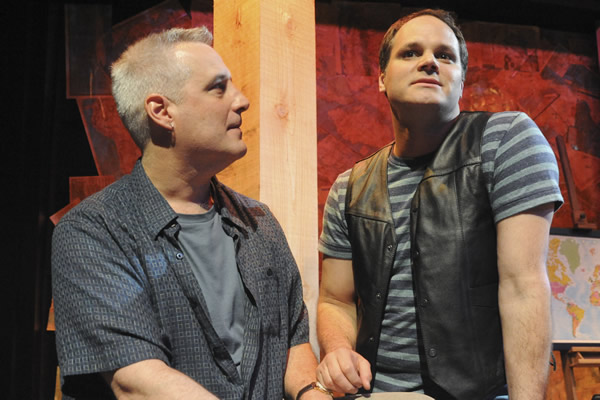
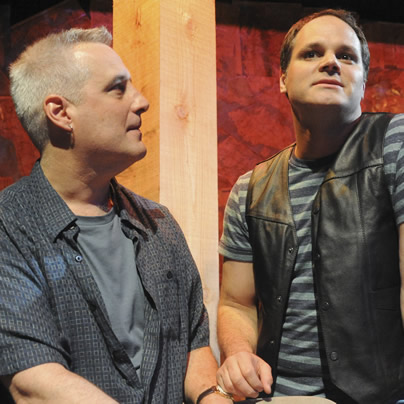
Michael Russotto, left, and Eric Sutton in ‘Lonely Planet’ by playwright Steven Dietz. (Photo by Christopher Banks; courtesy MetroStage)
Tucked away inside his tidy map shop, Jody does his best to keep the uncertainties of the turbulent outside world at bay. But his is an unwinnable strategy. Sooner or later, he must confront what terrifies him most.
In Steven Dietz’s 1994 play “Lonely Planet” — currently playing at MetroStage in Alexandria — the playwright describes a plague that’s affecting men in an American city, and though he doesn’t refer to the disease by name, it’s never for a moment in doubt that the culprit is AIDS. Inspired by maps and Ionesco’s absurdist play “The Chairs,” Dietz explores death and friendship during the most harrowing time of the crisis.
The action is restricted to one space: a small, carefully appointed shop. Here, gay middle-aged Jody (Michael Russotto) has constructed an orderly sanctuary where he deals exclusively with the exactness of latitude and longitude, a place where sales are occasionally referred to, but customers are never seen. We do, however, see Carl (Eric Sutton), a gay younger friend who frequently visits bearing irony and chairs (ladder back, rocker, Windsor) which he persuades Jody to store for him because his apartment is too small. After spinning a tale or two and delivering a pep talk on getting out and about, Carl dashes off to one of his invented jobs (tabloid reporter, art conservator, auto glazier) only to return minutes later with more chairs and chatter.
Soon we learn that Carl’s ever-increasing hoard of chairs once belonged to his and Jody’s friends who have died in the frighteningly lethal epidemic. Carl keeps one chair belonging to each victim as a remembrance. It’s also revealed that Carl’s true employment involves clearing out the homes of these recently deceased friends. And those made-up jobs? They also belonged to the dearly departed.
After intermission, the stage is lit to reveal even more chairs (straw bottomed, barber, Breuer). The image gets a chuckle from the audience, but they’re a terrifying reminder to Jody of death, disease and the uncertainty of his HIV status (Jody has yet to be tested). His fear is palpable. It’s up to Carl to coax Jody to venture beyond the store.
Set designer Jane Fink has imagined a shop filled with globes and scrolled maps. Its heavy dark furniture and transom door feel entirely resistant to time. The stage is backed by a wall of collaged maps. At the top of a simple proscenium is the earth as photographed from outer space. By the show’s end, dozens of chairs are piled on the stage, creating a tall and odd monument. Sounds questionable, but it proves exceedingly poignant.
As Jody and Carl, Russotto and Sutton, respectively (both actors are gay), are believable as longtime, caring friends and each do their best to elevate sometimes plodding monologues. Russotto’s performance is deceptive — it’s quiet but packs an emotional wallop. And Sutton is delightful as the vexing, leather vest-wearing Carl whose sarcasm can belie his good heartedness.
Despite the sad subject matter, much of “Lonely Planet” is playful and fun. And while the allegorical and symbolic aspects of the show can get a little heavy handed, skilled director John Vreeke (also gay) guides the actors in creating some glowing, touching moments. And Vreeke (with the help of lighting designer Jessica Lee Winfield) stages the unexpected and very memorable ending just right.
At a recent performance, the audience was comprised mostly of midshipmen from the Naval Academy’s drama group, the Masqueraders. It struck others present that these young men and women were toddlers when the play was penned almost 20 years ago. Through “Lonely Planet,” they traveled to a time when testing positive was a death sentence, but they were also shown a glimpse of the gay community at its very best and the enduring value of friendship.


Television
‘Lizzie Borden’ might be the best ‘Monster’ yet
Exquisitely realized, shrewdly written with outstanding performances
“When the legend becomes fact, print the legend.”
That famously cynical quote from the 1962 Western movie “The Man Who Shot Liberty Valance” could easily have been the mission statement behind the latest season of Ryan Murphy’s controversial anthology series, “Monster,” which retells the story of America’s most famous axe murderer – Lizzie Borden, who, in 1892, “took an axe” to her father and stepmother at their family home in Fall River, Mass.
Except, officially, she didn’t. Borden was acquitted of the killings in a trial that was a national sensation; the crime remained unsolved, and despite rumors and theories that have proliferated over the last century, nobody really knows what actually happened nor who was responsible for it.
Yet in the popular imagination, Lizzie is still remembered as a killer who got away with one of the most notorious murders in American history. Though she walked free and lived a life of wealth and high social position for another three decades after her trial, she never truly escaped the scandal; she would be forever branded as guilty, her alleged crime even immortalized in a children’s schoolyard rhyme, and all but a few die-hard theorists assume, unequivocally, that she was the killer. In other words, the legend of Lizzie Borden, axe-murderer, has “become fact.”
“Monster: The Lizzie Borden Story,” like most other retellings of this gruesome crime saga, “prints” the legend – and indeed, goes even further to canonize her into something like a radical feminist saint.
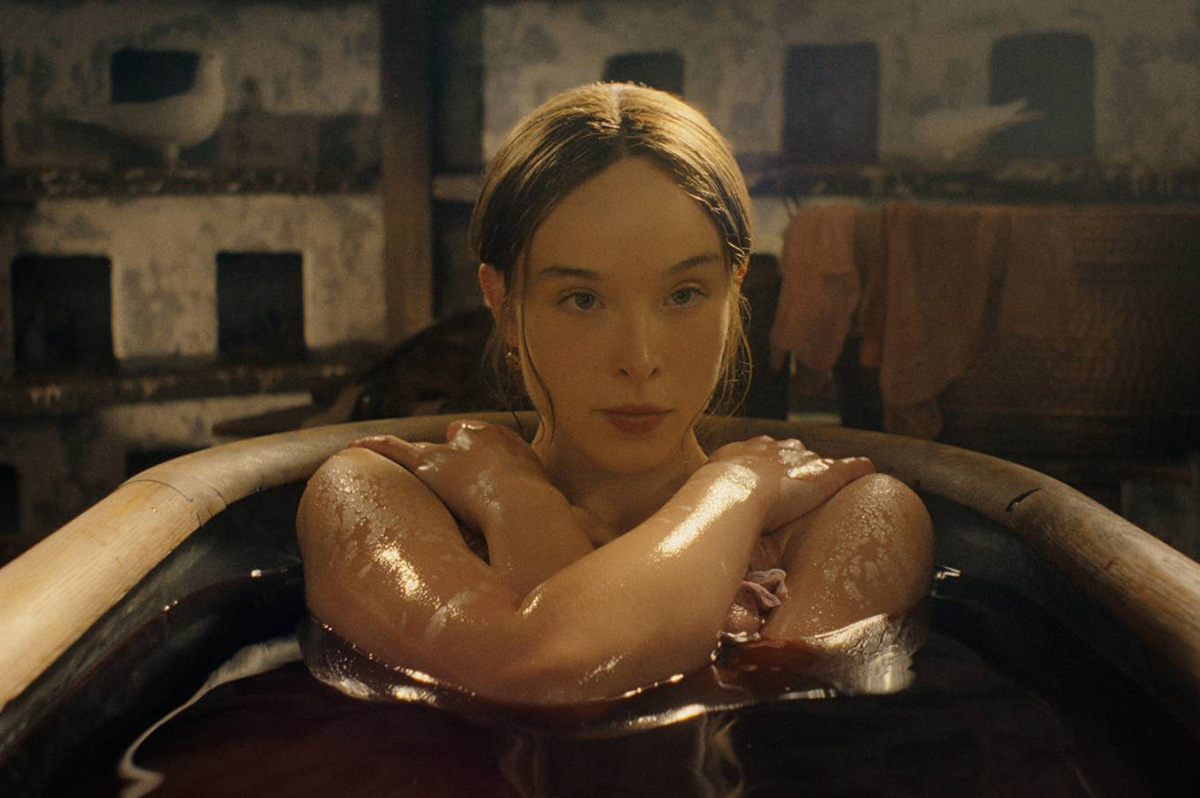
With Ella Beatty (daughter of Hollywood royalty Warren Beatty and Annette Bening) in the title role, the show frames Lizzie as the repressed and disregarded adult child of wealthy businessman Andrew Borden (Charlie Hunnam) and stepmother Abigail (Rebecca Hall), who married her father after her mother’s death; both of them treat her – and indeed, almost everyone around them – with dismissive cruelty. Andrew is an alcoholic who openly disdains both wife and daughter, while Abigail takes out her own frustration with the marriage on Lizzie, whom she has branded as a “simple” child that she never wanted to have – and a difficult one at that.
The arrival of a new household maid — Bridget Sullivan (Vicki Krieps), who goes by the name “Maggie” — changes Lizzie’s outlook and her destiny. Well-traveled, worldly, and deeply independent, Maggie befriends her and becomes both her companion and mentor, introducing her to new ideas and cultivating her sense of self-worth; they become lovers, their bond deepened by a dissatisfaction with the cultural limits imposed upon them by their status as women. As conditions within the household grow increasingly unbearable, they formulate a gruesome plan which, if they can succeed, will liberate them from the patriarchal subjugation that relegates them to the level of chattel while puffing a pipe full of expensive tobacco.
From there, writer/creator Ian Brennan takes us through an effectively grisly re-enactment of the famous murders and onward through the trial in which Lizzie, ironically benefitting from stereotyped male assumptions about what women are or are not capable of doing, is ultimately acquitted of the gruesome crime she absolutely DID commit. It then follows her – and Bridget – into the aftermath of the scandal, where a kind of imprisonment awaits them both, anyway.
Boldly crafted with cinematic flourish (six episodes were directed by Max Winkler, the two others by Sarah Adina Smith) and continuing the series’ tradition of lavishly depicted violence, one can’t deny that it’s a wild ride. It flaunts its contemporary attitude through fiercely eclectic musical choices in the soundtrack, from the lushly romantic classical tones of its late 19th-century period to ferociously feminist ‘90s punk; it includes graphic sex both tender and aggressive, juxtaposed with scenes of pastoral beauty and genteel refinement; and, as always in Ryan Murphy’s “true story” productions, it plays fast-and-loose with the facts, choosing instead to lean into artistic license in order to expand on the “hotbed” themes woven into the narrative.
In this case, Brennan’s version of Lizzie’s tale mines the historical record to incorporate lesser-known factual details while veering into speculation to fill the blanks elsewhere; it creates incidents that didn’t happen, alters incidents that did, and embellishes what’s known of its characters’ private lives with details that no one could know; and, like other seasons of “Monster” have done, it finds a way to introduce extra real-life killers into the mix – blood-bathing 16th-century Countess Elizabeth Báthory (also played by Krieps) and hitchhiking 20th-century serial murderer Aileen Wournos (Sarah Paulson) – for good measure. The result, of course, is a work of complete fiction.
These are the things that have consistently made “Monster” one of Murphy’s most controversial television franchises. The excesses of gore and brutality, though they might seem gratuitous to some and are certainly hard to watch for many, are arguably justified by the show’s branding as a “horror” series; less easy to write off, however, is the criticism of many detractors that the series spreads false information and perpetuates myths, whether to “push” an agenda or in the name of “artistic interpretation.”
“The Lizzie Borden Story,” consequently, has already been met with such objections – though in today’s political climate, it’s hard to know if they are really about the blending of fact and fiction or the feminist social commentary that runs through the show like a vein of molten lava. Brennan’s vision of Lizzie’s presumed crime casts her as woman suffering from a life of psychological torment by her parents, and Bridget – who has experienced more than her own fair share of mistreatment at the hands of aggressively toxic men – as her savior; the crime they concoct and execute together is a radical act of defiant rebellion against an ingrained system of patriarchal domination, and we are set up from the start to be completely on their side.
That radical feminist thread pops up everywhere: through Lizzie’s stepmother (despite her own monstrosity), who is granted a share of empathy for the sake of her own stifled existence; through famous actress Nance O’Neil (Jessica Barden), who steps in to become an ally at a crucial juncture of Lizzie’s trial; even through her estranged sister (Billie Lourd), who sets aside her own doubts to support Lizzie in sisterly solidarity. Brennan even imagines Lizzie as an activist in the fight for women’s suffrage.
Of course, if one is inclined to view “Monster” as a documentary crime series, occupied with discerning facts and providing an objective overview of the case, that’s a perfectly good reason not to watch its latest installment. For those who realize that it is instead a vehicle for artistic expression, a series devoted to finding the kind of truth that transcends facts and challenges viewers to examine the cultural conditions that create these “monsters” in the first place, this might be its best season yet.
Exquisitely realized, shrewdly written, and featuring outstanding performances across the board, it’s not really a crime story, nor really even horror: it’s an exhilarating, satisfying, and thoroughly transgressive fantasia on an American legend that puts the blame for the Borden family murder squarely where it belongs – on the oppressive cruelty that drives otherwise good-hearted women to commit unspeakable acts.
Out & About
Tyler Clementi Foundation to host fundraiser in Rehoboth
Special remarks to be given by Jane Clementi, Rep. McBride
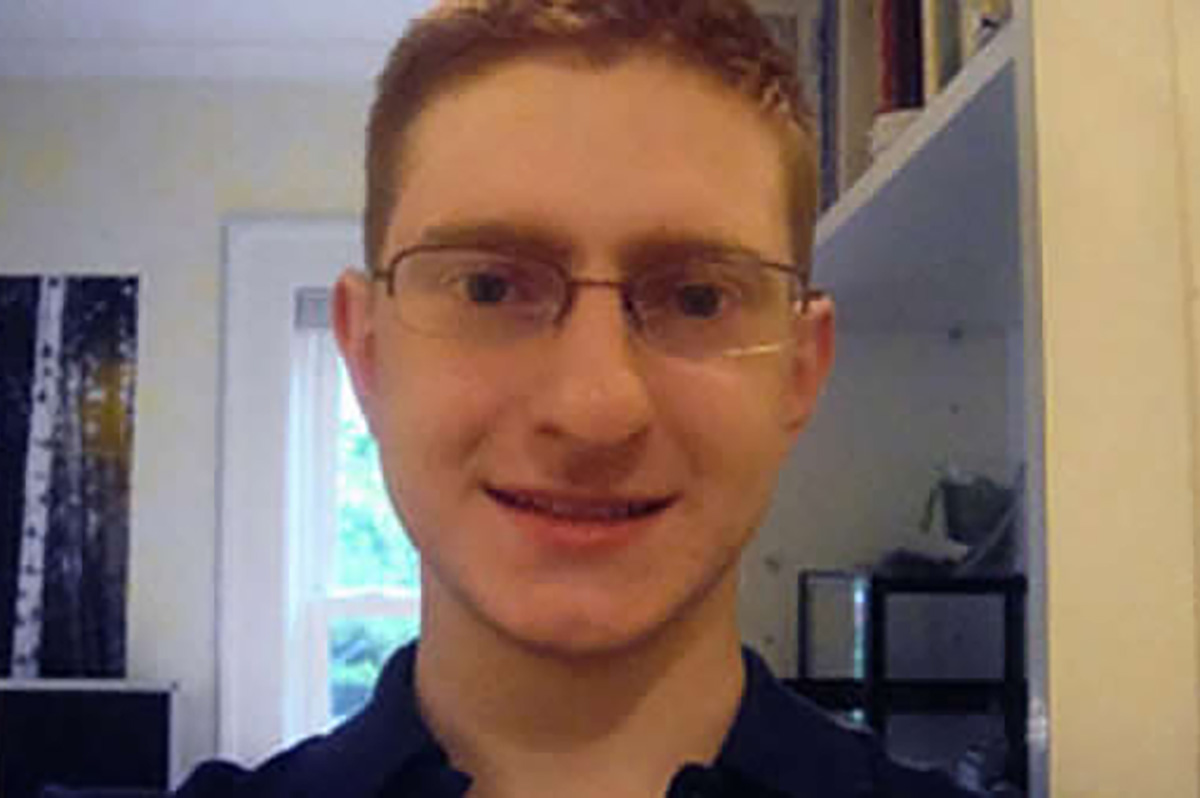
To kick off National Coming Out Month, the Tyler Clementi Foundation will host a fundraiser on Thursday, Oct. 1 at 6 p.m. at CAMP Rehoboth in Delaware.
The event will feature special remarks by Jane Clementi and Rep. Sarah McBride. If you are unable to attend, please consider making a donation to support the work of the Tyler Clementi Foundation to end online and offline bullying and harassment in schools, workplaces, and faith communities.
For more details, visit the Tyler Clementi Foundation’s Facebook page.

Friday, September 25
Go Gay DC will host “LGBTQ+ Community Happy Hour” at 7 p.m. at DIK Bar. This is a chance to relax, make new friends, and enjoy happy hour specials at this classic retro venue. Attendance is free and more details are available on Eventbrite.
Trans Discussion Group will be at 7 p.m. on Zoom. This event is intended to provide an emotionally and physically safe space for trans people and those who may be questioning their gender identity/expression to join together in community and learn from one another. For more details, email [email protected].
Saturday, September 26
Go Gay DC will host “LGBTQ+ Community Brunch” at 11 a.m. at Freddie’s Beach Bar & Restaurant. This fun weekly event brings the DMV area LGBTQ+ community, including allies, together for delicious food and conversation. Attendance is free and more details are available on Eventbrite.
Black Lesbian Support Group will be at 1 p.m. on Zoom. This is a peer-led support group devoted to the joys and challenges of being a Black Lesbian. For more details, email [email protected].
Sunday, September 27
“Nellie’s DC Drag Brunch” will be at 12 p.m. at Nellie’s Sports Bar. Come get served like a queen by a queen. Join Sapphire Blue, Deja Diamond and their team of amazing drag performers for the most fun you’ll have all weekend. Tickets cost $58.51 and are available on Eventbrite.
Monday, September 28
“Center Aging: Monday Coffee Klatch” will be at 10 a.m. on Zoom. This is a social hour for older LGBTQ+ adults. Guests are encouraged to bring a beverage of choice. For more information, contact Adam ([email protected]).
Queer Book Club will be at 7 p.m. on Zoom. The Queer Book Club meets on the fourth Monday of the month to discuss queer books by queer authors. This month’s reading is “Happy Iceland” by Anne Marie Wells. For more details, visit the DC Center for the LGBTQ+ Community’s website.
Tuesday, September 29
The DC Center for the LGBTQ+ Community will host “Center Aging: Painting Class” at 1 p.m. This is a free watercolor painting workshop that will be held in the community room and led by Laya Monarez. All supplies and light snacks will be provided. This workshop involves paint, so please dress accordingly. Email Mac at [email protected] for more details.
Wednesday, September 30
Job Club will be at 6 p.m. on Zoom upon request. This is a weekly job support program to help job entrants and seekers, including the long-term unemployed, improve self-confidence, motivation, resilience and productivity for effective job searches and networking — allowing participants to move away from being merely “applicants” toward being “candidates.” For more information, email [email protected] or visit www.thedccenter.org/careers.
Thursday, October 1
The DC Center for the LGBTQ+ Community’s Fresh Produce Program will be held all day at the Center. People will be informed on Wednesday at 5:00 pm if they are picked to receive a produce box. No proof of residency or income is required. For more information, email [email protected] or call 202-682-2245.
API Queer Support Group will be at 7 p.m. on Zoom. This is a support group for the Asian and Pacific Islander queer community. The support group is co-sponsored by APIQS (Asian Pacific Islander Queer Society DC) and AQUA (Asian Queers United for Action). For more details, email [email protected].

‘Lizzie Borden’ might be the best ‘Monster’ yet

Comings & Goings

Tyler Clementi Foundation to host fundraiser in Rehoboth

Calendar: September 25-October 1

Former Capital Pride board member reiterates sexual harassment allegation

For lesbian victims of domestic violence, competent care is scare

United States Conference on HIV/AIDS grapples with federal budget cuts

UN human rights chief sounds alarm over ‘comprehensive onslaught’ against LGBTQ rights

Gov. Whitmer to serve as keynote speaker for Saturday’s HRC National Dinner

Washington Blade responds to concerns over White House pool duties
-

 National4 days ago
For lesbian victims of domestic violence, competent care is scare
-
Health4 days ago
United States Conference on HIV/AIDS grapples with federal budget cuts
-
United Nations4 days ago
UN human rights chief sounds alarm over ‘comprehensive onslaught’ against LGBTQ rights
-
LGBTQ Non-Profit Organizations3 days ago
Gov. Whitmer to serve as keynote speaker for Saturday’s HRC National Dinner