Arts & Entertainment
Arts news in brief: June 1
Events for the weekend and beyond in D.C., Baltimore and Rehoboth Beach
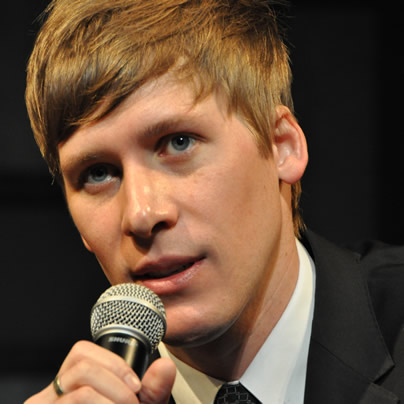
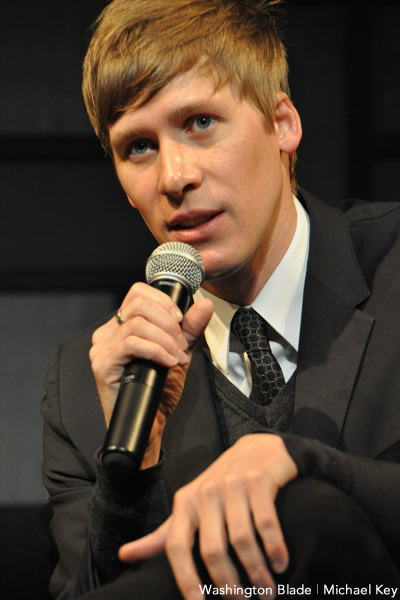
Dustin Lance Black (Blade file photo by Michael Key)
Prop. 8-themed play comes to local theater
Woolly Mammoth Theater (641 D St., N.W.) is hosting a one-night reading of the play 8, written by the award-winning writer Dustin Lance Black, Monday at 7 p.m.
The play is about the federal constitutional challenge against California’s Proposition 8, which did not allow gays or lesbians to marry. Its first premiere in the Eugene O’Neill Theatre in New York City raised $1 million for American Foundation for Equal Rights (AFER). Its West Coast premiere was led by an all-star cast with Brad Pitt, George Clooney, Martin Sheen and Theodore B. Olsen and raised $2 million.
Black is widely known for his screenwriting in “Milk” and “J.Edgar.”
Following the reading is a panel with Executive Director Rea Carey from the National Gay and Lesbian Task Force, Maryland State Senator Richard Madaleno, Jr., Brian Moulton from the Human Rights Campaign and Matt Nosanchuk from the U.S. Department of Justice Civil Rights Division.
Tickets are $5. They can be purchased at the box office, over the phone at 202-393-3939, or by visiting woollymammoth.net.
For more information about “8,” visit 8theplay.com.
Chorus commemorates men and music
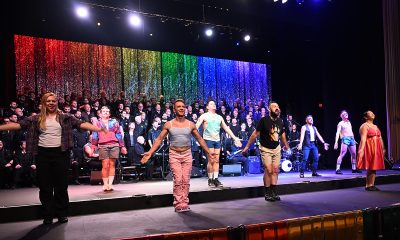
Gay Men’s Chorus is performing “Heart Throbs” Saturday at 8 p.m. and Sunday at 3 p.m. at Lisner Auditorium (730 21st St., N.W.).
The group will be paying tribute to men and music through fun and flirtatious musical selections by artists like Justin Timberlake, Maroon 5, Boys II Men, N Sync, Backstreet Boys and The Beatles. The show presents a montage of fantasy dream dates and boy band crushes that will appeal to all ages and musical preferences.
Tickets range from $15-$50 and can be purchased at gmcw.org.
Rehoboth party celebrates 25 artists
Clear Space Theatre (20 Baltimore Ave., Rehoboth Beach, DE) is hosting the Black & White Beach Ball on Sunday evening from 5-8 p.m.
The event brings together 25 invited artists and their juried artwork that includes photography, charcoals, acrylic, oil, watercolor, sculpture and multimedia. The curators are artist and CAMP Rehoboth President Murray Archibald, Sondra Arkin, Gallery 50 owner Jay Pastore and graphic designer Andres Tremols. Professional auctioneer Lorne Crawford will be selling the artwork in the HeART of the Community Live art auction.
The evening will also include catered food and an open bar. Attendees should dress in black and white casual attire.
Tickets are $75 and can be purchased online at camprehoboth.com or at 302-227-5620.
Macy’s to host Pride panel discussion
Macy’s is hosting a panel discussion at its Metro Center location (1201 G Street, NW) Thursday at 5:30 p.m. in the furniture gallery on the lower level. A discussion of progress of the LGBT community will include Nicholas Benton of Falls Church News Press; Candace Gingrich-Jones of Human Rights Campaign and Kevin Naff of Washington Blade.
For more information, visit macys.com/pride.
‘Prime’ time for sin
The Collective, a dance group with members representing Baltimore City and Baltimore, Anne Arundel, Howard and Hartford counties, presents “Prime,” part of its 13th performance season, on Saturday at the Baltimore Museum of Art (10 Art Museum Drive) at 2 and 8 p.m.
The show will feature seven works laced together with seven short solos built on the seven deadly sins. Themes of these sins will appear throughout the concert work as the dancers portray life with and without sin.
There will also be an encore of Jenny Seye’s “Complex Figures” and guest artist Adrienne Clancy’s “Sisters.”
Tickets are $15 for general admission and $10 for students and seniors.
For more information and to purchase tickets, visit collective-dance.com.
Chenoweth has Baltimore and D.C. shows planned
Kristin Chenoweth, original star of the Broadway musical “Wicked,” plays the Hippodrome Theatre at the France-Merrick Performing Arts Center (12 North Eutaw St.) on June 9 at 8 p.m.
Chenoweth will perform songs from countless performances, including “Wicked” and her new album, “Some Lessons Learned.”
Tickets are $200 and $350. The $350 tickets include a pre-concert buffet beginning at 6:30 p.m., access to the best seats for the concert and a post-show dessert and champagne reception. The $200 ticket includes a post-show dessert and coffee reception.
Chenoweth will also appear at DAR Constitution Hall in D.C. on June 10.
For more information and to purchase tickets, visit france-merrickpac.com or kristin-chenoweth.com.
Gay-themed ‘Bent” at Mobtown
Baltimore’s Mobtown Players present Martin Sherman’s “Bent” at the Mobtown Theater at Meadow Hill (3600 Clipper Mill Road, Suite 114) opening tonight with performances on Fridays and Saturdays at 8 p.m. and matinees on June 10 and 17 at 4 p.m.
“Bent,” set in Hitler’s Germany, tells the story of Max, a man forced to by fear and shame to hide his sexuality and accepting who he is until he no longer can.
Tickets are $15 for general admission and $12 for students.
There will be a special benefit performance on June 10 at 4 p.m. Tickets for that performance are $25 and $15 of every ticket goes directly to Equality Maryland. The price also includes complimentary wine and a talkback session with the cast and crew after the performance.
The show runs through June 23.
For more information and to purchase tickets, visit mobtownplayers.net.
Lesbian Md. delegate having birthday party
Democratic Delegate Mary Washington, a lesbian, is celebrating her 50th birthday with “Shake, Shake, Shake,” a dance party at Metro Gallery (1700 North Charles St.) at 7 p.m.
The party will begin with a vintage photo slide show, birthday wishes and cake. At 8:30 p.m. a live DJ will be providing the soundtrack for the dance party with music ranging from the ‘60s to today with drinks and light fare produced by Neopol of Belvedere Square.
Tickets range from $40 for young Democrats to $2,000 for platinum sponsors. Attendees must be 21 or older.
For more information on Washington and to purchase tickets or make a contribution, visit electmarywashington.com.




a&e features
The mastery of love
The world knows Eric Anderson as Billy Porter’s partner, but in Rehoboth Beach, he has a story entirely his own
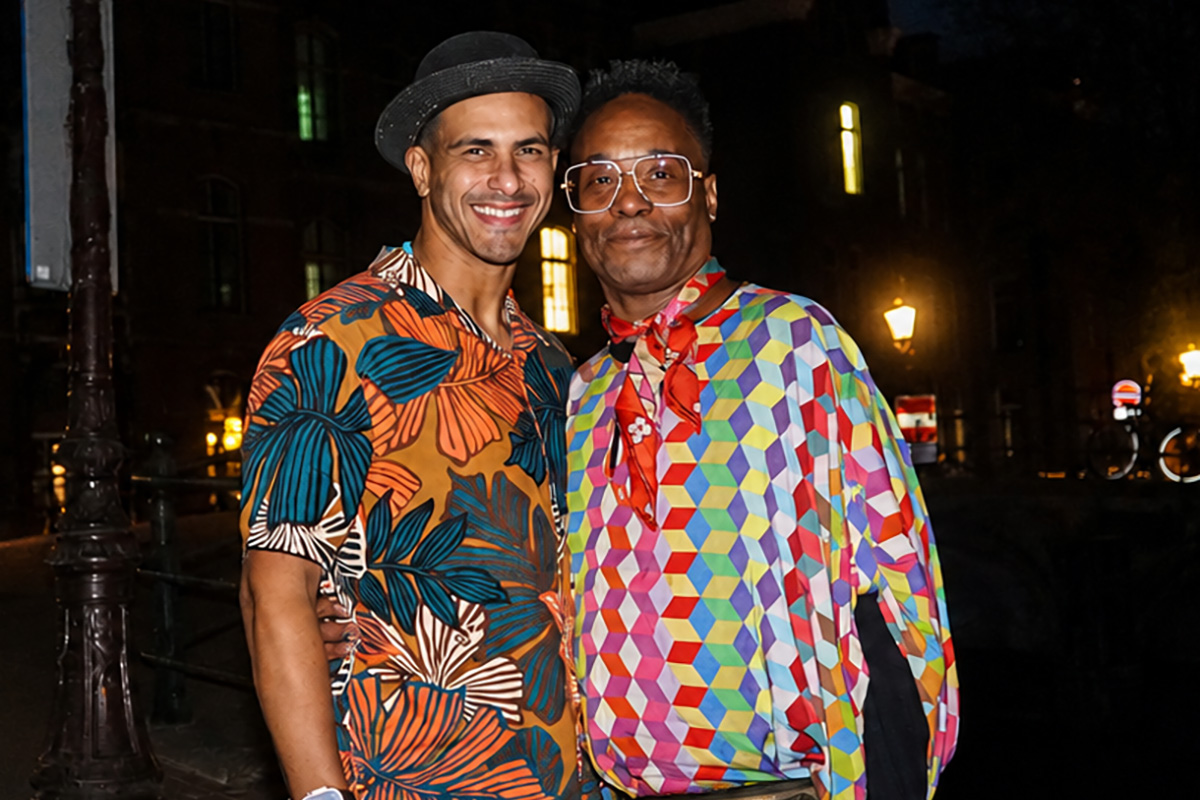
The world knows Eric Anderson as Billy Porter’s partner. In Rehoboth Beach, Del., he has a life — and a story — entirely his own.
My first time with Eric Anderson was hot — very hot. Before he arrived, I sat waiting, overthinking everything. When he finally appeared in a loose-fitting T-shirt and purple shorts, I understood why he attracts attention. Eric is the kind of man who changes the energy of a room simply by entering it.
After a quick hello, we got right to it. Techno pulsed through the room as Eric told me how to move, where to place my hands, when to breathe. My heart pounded. My muscles ached. I bent, twisted, and stretched while sweat ran down my back and burned my eyes. I didn’t bother wiping it away.
To be clear, Eric and I were not alone. Five other people were with us — and the yoga studio at SoulFire Collective in Rehoboth Beach was heated to 87 degrees.
“If you are always racing toward the next moment, what happens to the one you’re in?” Eric asked, opening his power yoga class and inviting us to leave whatever had followed us through the door and surrender to the present. Surrender did not come easily. At 58, I’ve done enough yoga to know the difference between discomfort and imminent death. Halfway through Eric’s relentless flow, the distinction began to blur.
A playlist of techno and remixed pop — including “Live Like You Were Dying” — carried us from one demanding pose to the next. Eric moved among the mats with the energy of a nightclub DJ and the calm of someone who trusted our bodies to go further than our minds believed possible. Nearly an hour later, when the music softened and I collapsed onto my back in savasana, he laid a cool cloth across my forehead. I exhaled — relieved, and maybe a little disappointed, that my first time with Eric was over.
At the end of my mat, a handwritten note congratulated me on my first class and invited me back — a small benediction after the storm. Then Eric closed the class by repeating the question with which he’d opened. For a man whose relationship with actor and singer Billy Porter has drawn him unexpectedly into the public eye, it sounded less like a yoga mantra than a personal creed.
The next time I meet Eric, there is air conditioning and caffeine. We are at Starbucks, where I deliberately order the largest drinks available, as though volume alone might buy me more time. He chooses a matcha, and I order herbal tea. My heart is pounding again, faster than the soft rock drifting from the speakers above us. Although I’ve already spent more than an hour with Eric, I know almost nothing about the man I’m about to interview.
Neither, it seems, does anyone else.
Celebrity outlets offer a handful of biographical details: a Rehoboth Beach teacher and yoga instructor with a master’s degree from Columbia University. Gay publications have been less restrained. One introduced him as Billy Porter’s “total hot stud,” called him “a snacc,” and praised his ability to “rock a Speedo.” Queerty distilled Eric’s identity to five words: “Porter is dating a teacher.”
All of it tells me how the world sees him. None of it tells me who he is.
I know from our text exchanges that Eric is slammed for time. He is scheduled to travel to New York later that day and fly to WorldPride Amsterdam the following afternoon. Billy is among the headliners for the opening-night Unity Concert and is also slated to perform at the Wedding Party XXL alongside KI/KI, Bimini, and the Vengaboys. Eric still has to pack. This, I’m beginning to understand, is part of loving someone famous: there is almost always an itinerary, another city, and a specific time and place Billy needs to be. Even here, with two untouched drinks between us, the clock is ticking.
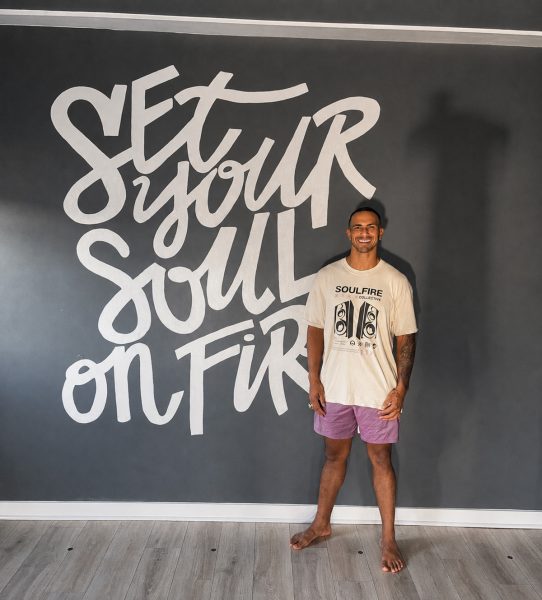
As soon as we sit down, I open my laptop, ready to get to work. My mind is focused on the list of questions I’ve prepared, and I’ve already anticipated the shape of most of his responses. Then I look up and see Eric sitting perfectly still, smiling, and taking in the moment. He hasn’t even taken a sip of his matcha yet.
I quietly close my laptop and breathe.
Within minutes, the interview softens into a conversation.
Eric earned a bachelor’s degree in history from the University of Delaware and a master’s in public school leadership from Teachers College, Columbia University. He began his career teaching mathematics before moving into school administration, eventually serving as vice president of the Charter School of Wilmington and head of school at Sussex Academy. Today, he teaches mathematics and social studies in the Cape Henlopen School District. He also coaches soccer and leads yoga classes at SoulFire Collective in Rehoboth Beach.
His return to the classroom was deliberate. Eric knows some people assumed there must be a story behind his leaving administration—that he had done something wrong or that teaching represented a demotion.
“I want to make it clear that I went back to teaching by choice,” he says.
As a child, Eric played school. Teaching has always felt natural to him, less like an occupation than an expression of who he is. Administration was different.
“It felt like work,” he says. “It wasn’t where my passion was, and it didn’t bring me joy. Going back into the classroom was simply me choosing joy.”
The more Eric talks, the clearer it becomes that teaching is not merely a job but a vocation. His mother is white and his father is Black, and growing up biracial was not always easy. “I saw the best and the worst of both,” he tells me. Those experiences helped shape his desire to become a teacher — to be the kind of person who could make a meaningful difference in a young person’s life.
Just then, Eric glances over his shoulder and locks eyes with someone across the room. He waves and flashes what is quickly becoming his signature smile. My first thought is that someone has recognized him as Billy Porter’s partner.
I’m wrong. It’s one of his former students.
Inevitably, our conversation turns to love — and to Billy. I’ve made it clear that I’m here to write about Eric, not Billy Porter. But separating the two entirely would be as artificial as defining Eric only by their relationship. Billy is now an essential part of his story.
Eric met Billy at a Christmas party hosted by mutual friends who had been trying to introduce them all night. It wasn’t easy — the party was crowded, and the two men never quite crossed paths. Eric stayed for the afterparty, where a friend nudged him and nodded toward the room: Billy was looking his way. Romance never crossed his mind.
Eventually, they started talking. Eric has never had much patience for small talk, and he wasn’t interested in cataloging which celebrities Billy knew. He skipped it entirely and went straight for the deeper questions — what Billy believed, how he saw the world, what mattered to him. They ended up at the kitchen table, trading life philosophies until 5 a.m.
What struck Eric most wasn’t the conversation’s length. It was its depth. Billy wasn’t who he expected. Neither was the conversation. By the time the sun was coming up, Eric was less surprised that they’d talked all night than by how much, it turned out, they had in common.
They had dinner the following evening, and Billy invited Eric to spend the weekend with him in New York. There, Billy took him to see Nicole Scherzinger in “Sunset Boulevard.” Right before the show started, he casually introduced Eric to a friend named Katy. Back in their seats, Eric asked how Billy knew her.
“BITCH,” Billy replied, “that is Miss K-A-T-Y P-E-R-R-Y!”
For all the glamour surrounding their courtship, Eric describes the foundation of their relationship in decidedly spiritual terms. His favorite book is don Miguel Ruiz’s The Mastery of Love, which explores how fear, expectation, and the need for approval can distort relationships. Its philosophy closely resembles Eric’s own.
On the surface, Eric and Billy inhabit different worlds. Eric is a deeply spiritual teacher rooted in a small coastal Delaware town. Billy is a celebrated actor and performer whose larger-than-life persona commands stages around the world. But when I ask Eric how the relationship works, he doesn’t hesitate.
“I know that I can be my authentic self with him, and he can be his with me,” he says. “We love each other unconditionally.”
The words could sound rehearsed. Coming from Eric, they don’t.
The red carpets, famous faces, and international travel are not what matter most.
“It’s all about the people,” he explains. “I love Billy’s family and friends, and he loves mine.”
Authenticity surfaces repeatedly in our conversation — not as an abstract ideal, but as Eric’s determination to trust what feels right for him, even when other people may not understand it. I tell him about growing up in Pittsburgh and spending much of my life trying to fit the person I was into the person the world expected me to be. Eric listens intently, then pauses before responding.
“Fuck the system.”
It is blunt, funny, and entirely consistent with the man sitting across from me. Dating Billy may have dramatically increased the number of strangers who have opinions about Eric, but it hasn’t increased the number whose opinions matter to him. He is remarkably unconcerned with what people he doesn’t know think — or say — about him. The attention is new. His response to it is not.
For Eric, authenticity isn’t about asking the world for permission to be yourself. It’s about deciding that permission was never the world’s to give.
That instinct—to look inward rather than outward for permission — predates Billy.
Eric initially turned to yoga for a practical reason: he wanted to improve his physical performance on the soccer field. It didn’t take long for him to realize that something else was happening. Yoga was strengthening his body, but it was also grounding him.
Over time, the physical practice became inseparable from the mental one. The poses, the heat, even the strength required to hold his body in place became less important than learning how to quiet the noise around him, stay present, and listen to himself. The man who had pushed me through an hour of sweat and discomfort wasn’t simply teaching people how to move their bodies. He was asking them to practice something he had learned to do himself.
That sense of being grounded has become particularly important in a relationship that often requires two people to live very different lives. Eric is quick to point out that he and Billy have separate careers, separate ambitions, and goals entirely their own. Neither expects the other to abandon an individual life simply because they have chosen to build a relationship together.
When Billy left for London to star in “Cabaret,” distance became part of their routine. They FaceTimed every day, a practice they continue whenever they are apart.
“I tell Billy everything,” Eric says.
Being authentic with Billy doesn’t require the two men to become more alike. If anything, the opposite seems true. They are comfortable following their own career paths, living separate lives when circumstances require it, and giving each other the freedom to pursue what matters individually. Then they come back together — not because either has put his own life on hold, but because they have chosen to share those lives with each other.
When we finally look at the time, nearly 90 minutes have passed. Eric still needs to pack. New York is waiting, Amsterdam after that, and somewhere there is undoubtedly an itinerary telling Billy exactly where he needs to be and when.
But for a while, neither of us was racing toward the next moment.
We were fully inside the one we were in.

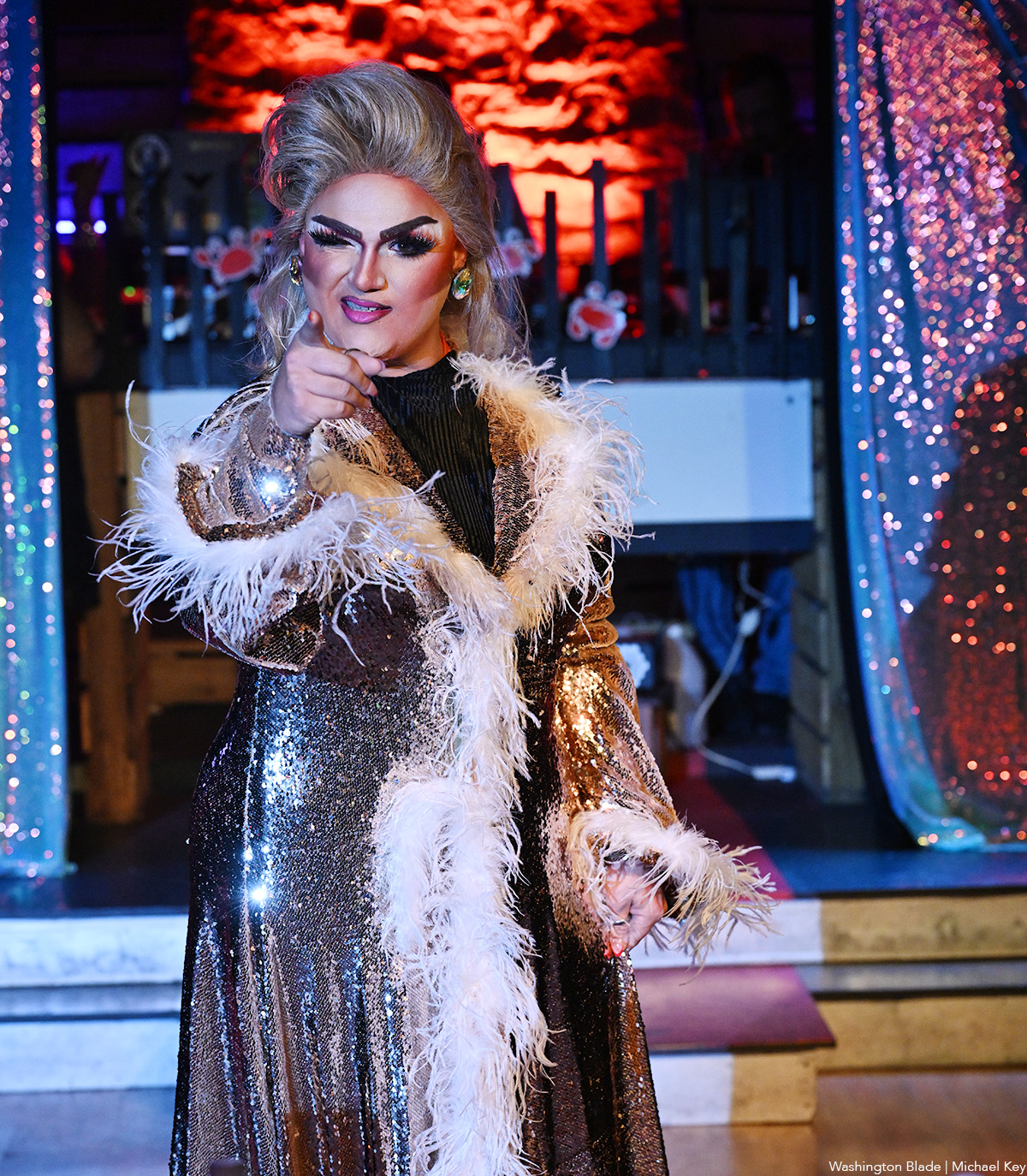
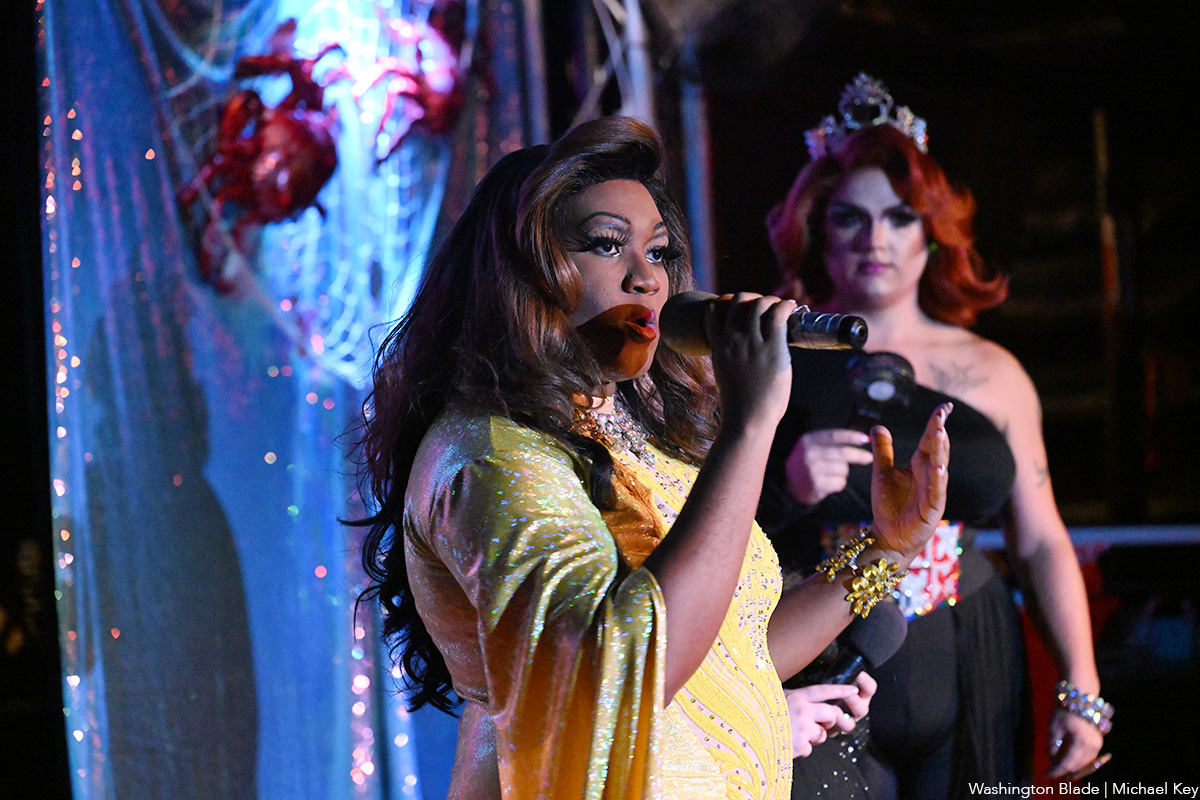
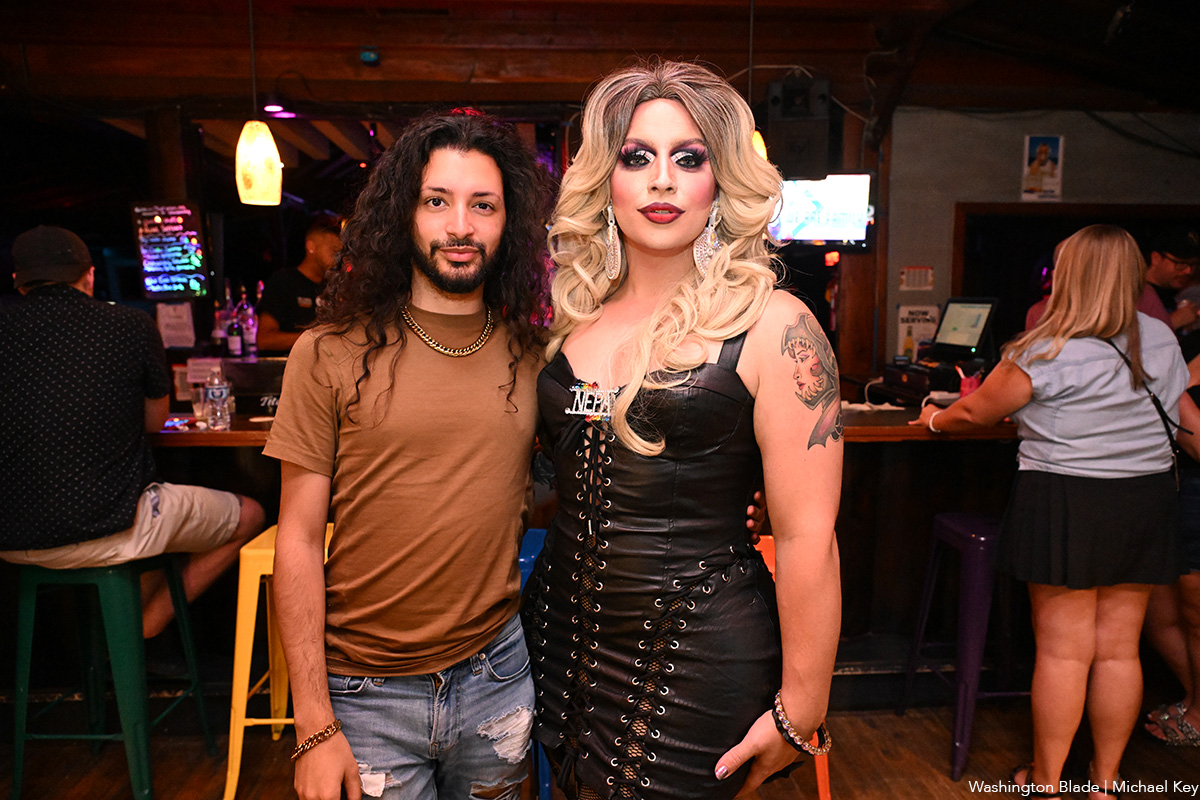
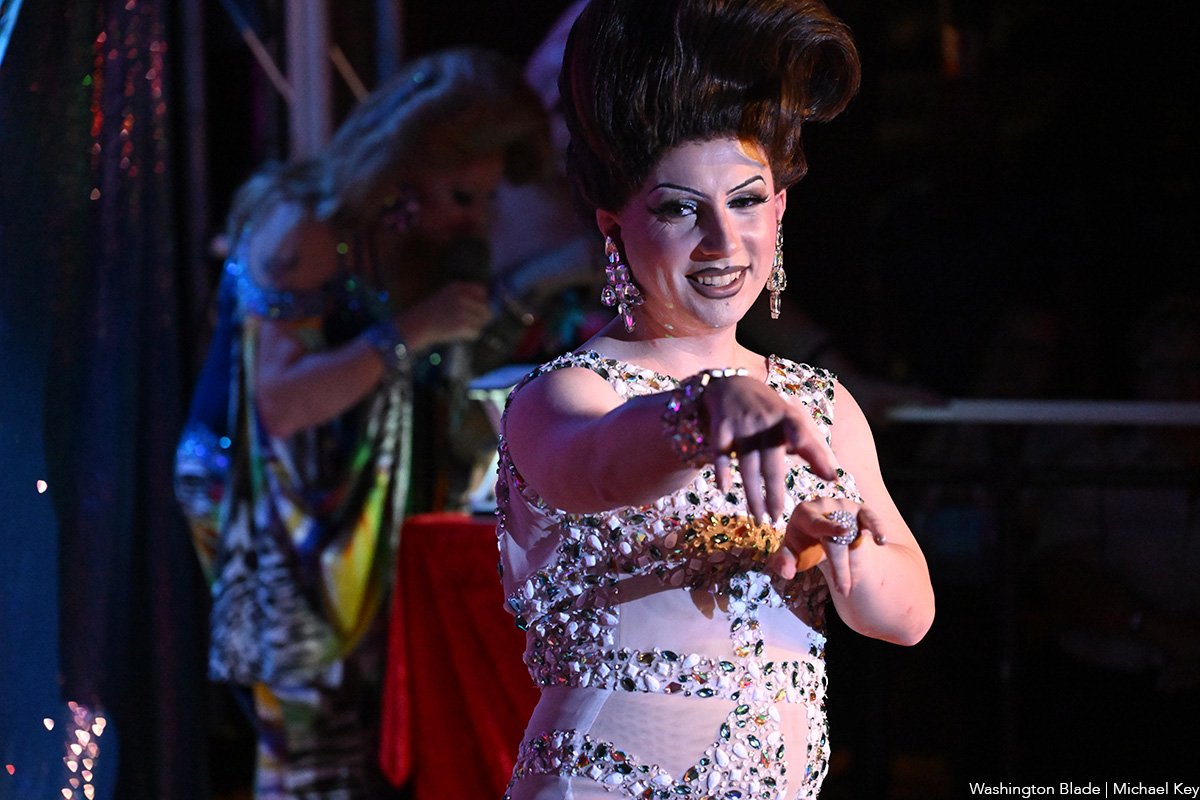
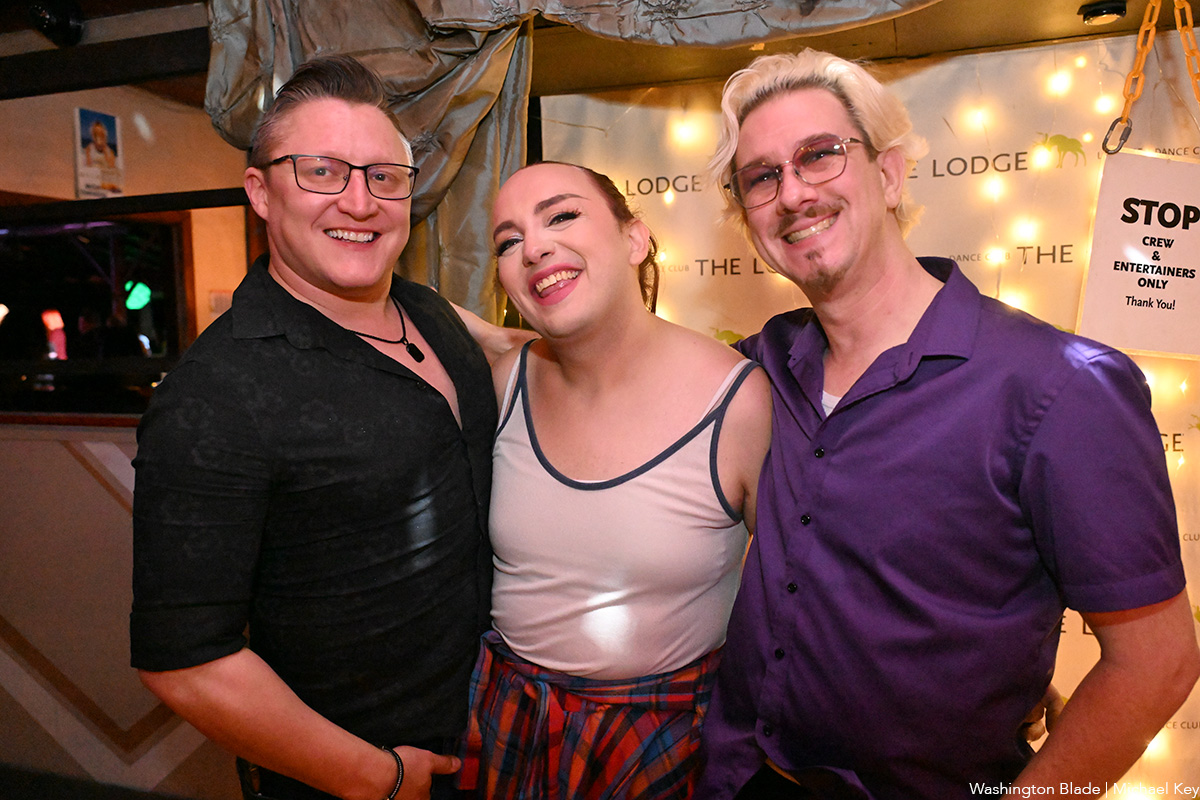
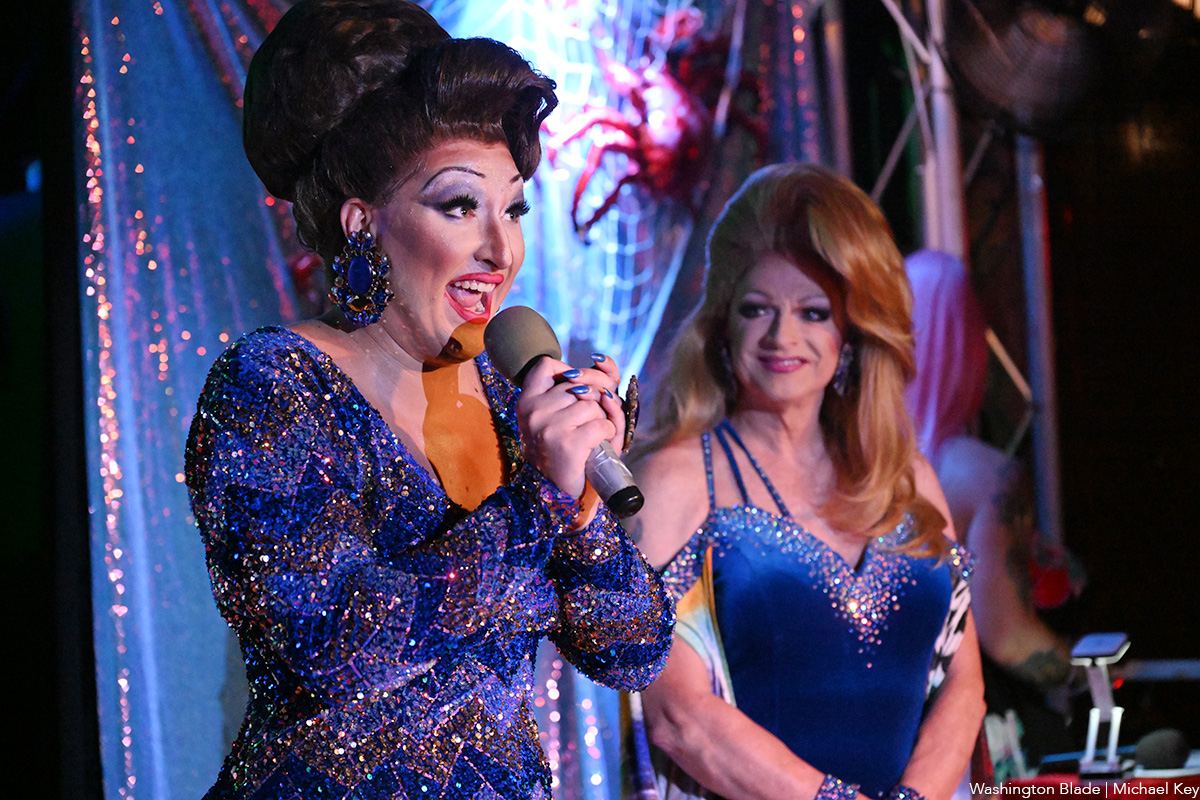
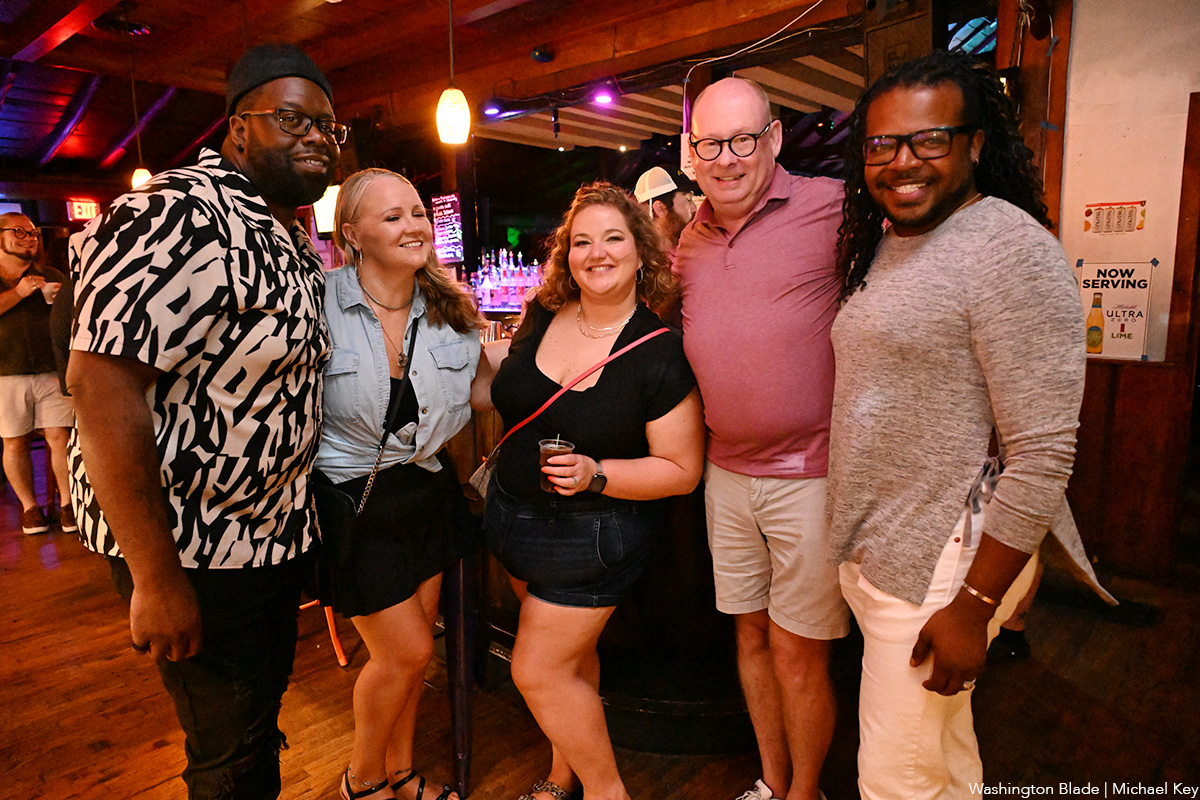
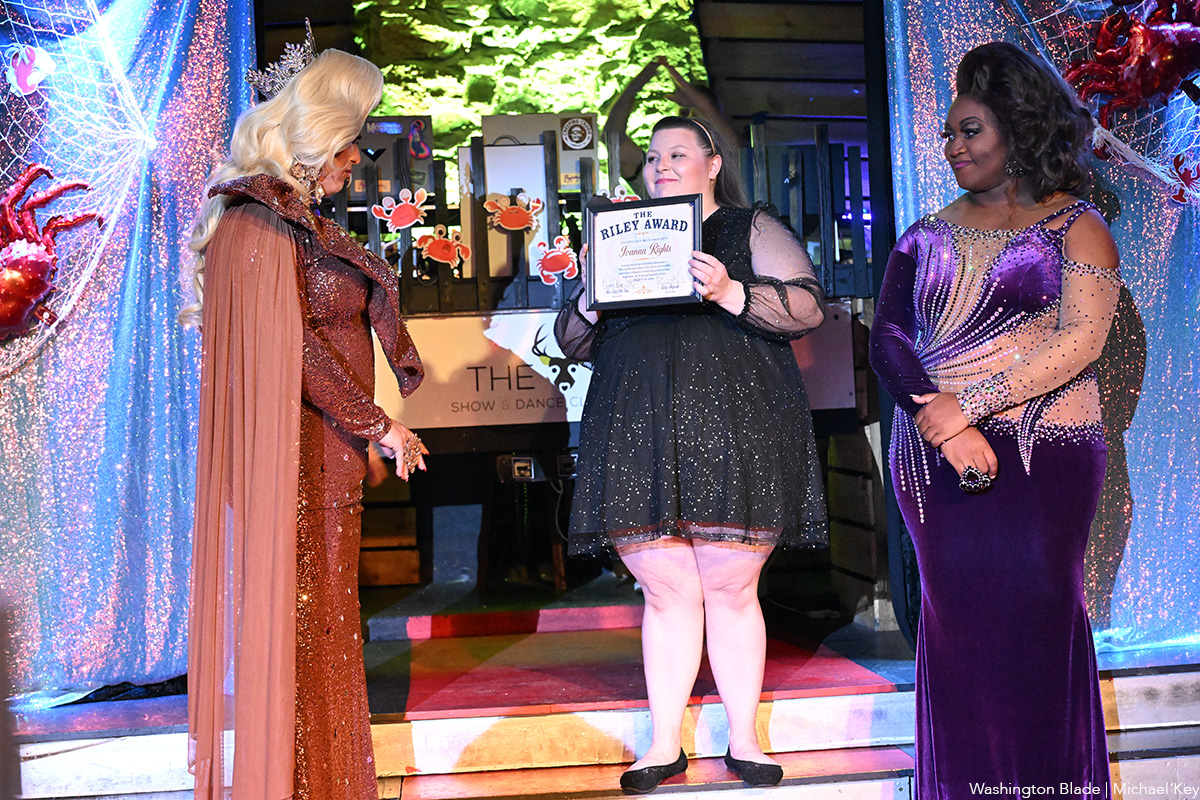
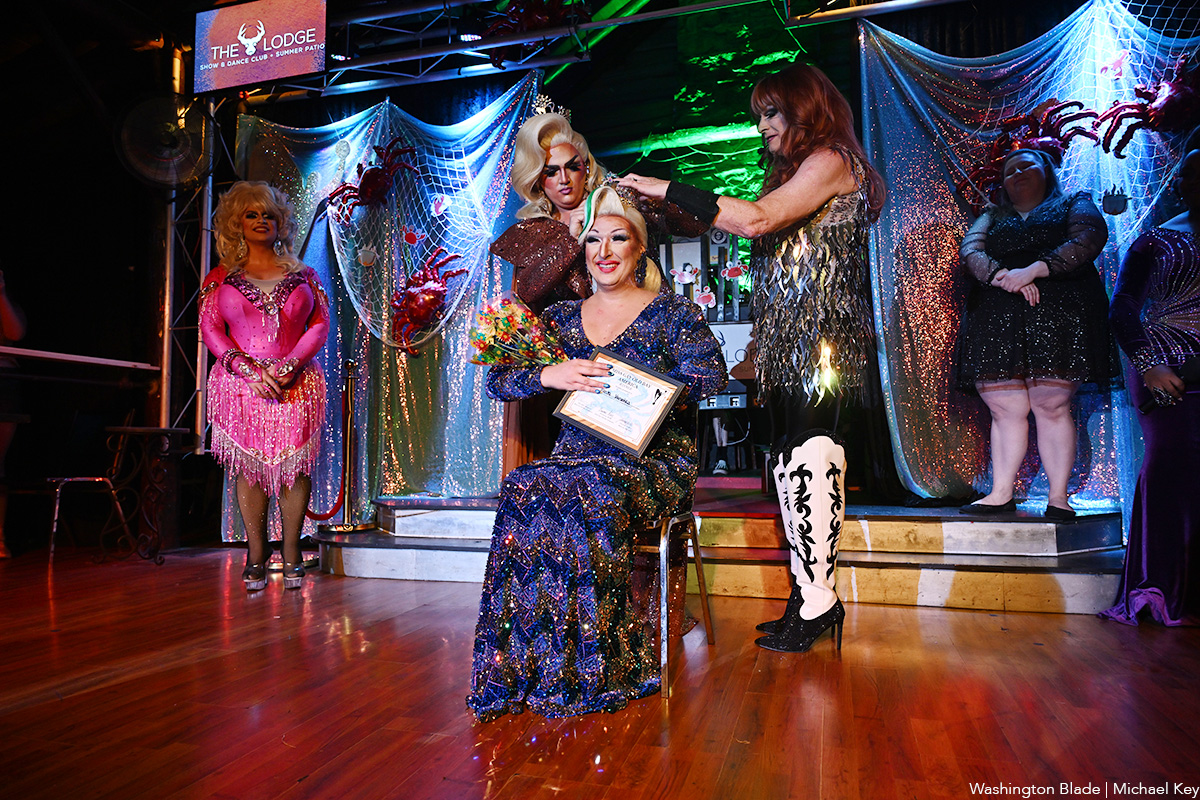
The Miss Gay Old Bay pageant was held at The Lodge in Boonsboro, Md. on Friday, Aug. 29. Vanya Varushka was crowned the winner. Glitter Douglas was named first runner-up. Both Varushka and Douglas qualify to compete in the Miss Gay Maryland pageant in October.
(Washington Blade photos by Michael Key)











Theater
Immersive ‘Nation-State’ imagines a society free of authoritarianism
Queer duo brings unique theater experience to Dupont Underground
‘Nation-State: A Live Experiment’
Sept. 2-13
La Pluma Theatre
Dupont Underground
19 Dupont Circle, N.W.
$25-40
Dupontunderground.org
Industry Night: September 7. Free for all theater makers
A relevant piece replete with borders and passports, La Pluma Theatre’s “Nation-State: A Live Experiment”is immersive, site-specific, and testimonial.
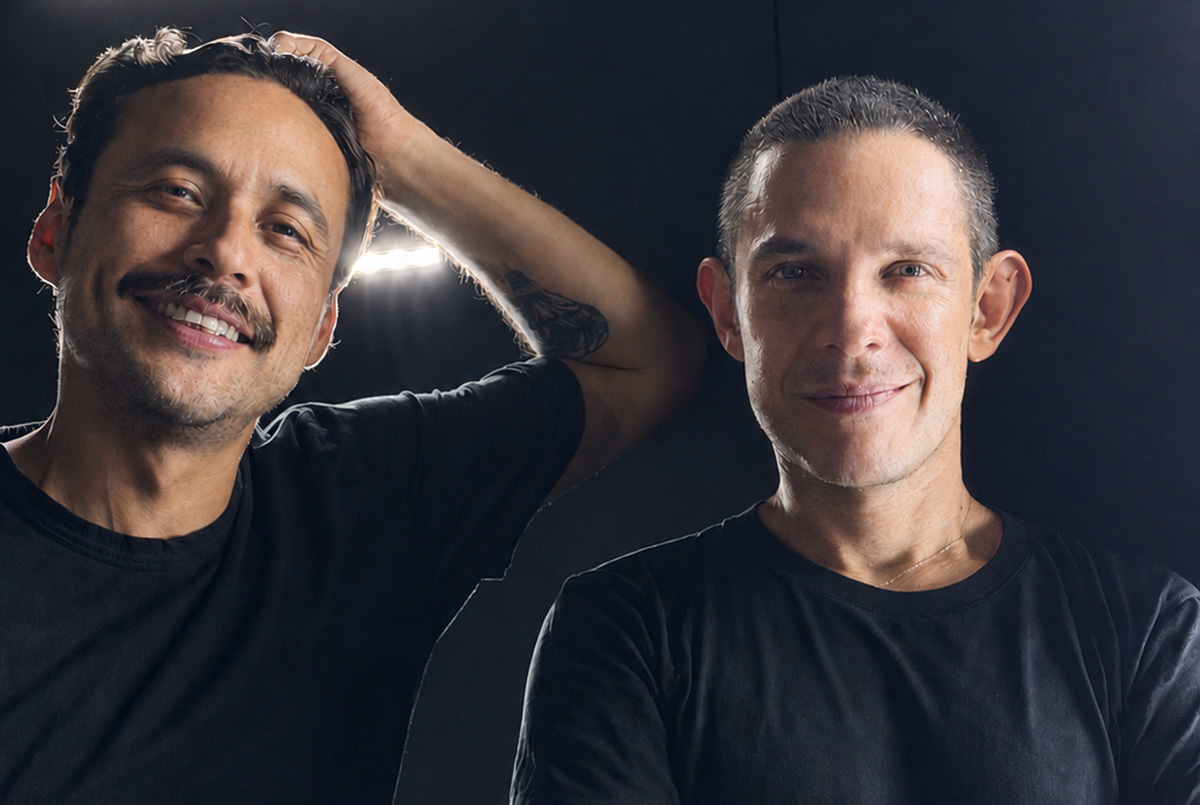
With the production, the company’s queer co-founders Victor Salinas and Gabriel de la Cruz pose unique situations and experiences. In lieu of tickets, audience members get passports. What follows are questions and tests, and whether they gain entrance into a nation built to protect its citizens from authoritarianism, resource theft, and colonization remains to be seen.
Originally from Mexico and Peru, respectively, Salinas and de la Cruz met at a birthday party in D.C. and instantly clicked as theater makers, sharing outlook and ambition. Reluctant to go it alone, both had been searching for artistic and producing collaboration. That all changed.
And while their enterprise is primarily Latino and queer, these professional partners refused to be confined to a box, choosing rather to amplify the voices of all of D.C.’s diverse communities. In line with their plans, “Nation-State” is open to serving many points of view.
As director of “Nation-State,” de la Cruz mostly guides the questioning. He’s the right man for the job. Since arriving in the U.S. six years ago, he has been consistently curious about certain things. Who belongs here? How do you make this your home? And who is creating the rules?
“But the writing process is shared,” de la Cruz corrects. “I come up with questions. I provide Victor the topic and he goes from there. We’re both writing what happens next.”
He adds, “the most exciting moment for people is when they share something unique. As a questioner, you need to find the confidence and the right moment to ask the question. If you provide the space for that, the actor or audience member will give you something singular.”
Since before La Pluma opened in November 2025, its creators have agreed that “the most beautiful thing is when you use theater to fashion something innovative. Theater is the place where you can create new frameworks and rehearse new ways to live.”
At just an hour, “Nation-State” is performed in English at Dupont Underground – the company’s historic residence, a once subterranean street car barn located beneath Dupont Circle. For the production, the tunnels serve as boundaries, and its different curved spaces make up a micro nation and welcome different guest actors who will come to share their stories.
At certain times, Salinas plays Officer Salinas, Director of N.I.C.E. (Non-Discriminatory, Inclusive Customs Enforcement), a humorous social critic of the system and border patrol. Other times, it’s Salinas as himself telling his real-life stories. He says, “it’s a level of vulnerability that I’ve never experienced. The script is my personal life with zero censorship. But I think, if not now in a play that we are pouring our souls into, then when?
“As a kid I dreamed of being TV show host and now I am. I will sing and tell my stories. I feel comfortable and ready to do it.”
In Spanish, “pluma” means both pen and feather. For the company, it’s the latter, and comes with lively associations. Salinas explains. In mysticism, feathers serve as a portal between the real and spiritual worlds, like that between fact and fiction. And in Spanish and Latin American slang “showing feathers” (in other words, showing queerness). La Pluma encourages a good display of authenticity.
And specifically for Salinas, there’s a personal story involving his beloved grandmother with whom he was extremely close. After she died, he has regularly found feathers as if she’s making contact. “A bit romantic, I know. But I think if you’re open you can see these things,” he says.
“Nation-State” is challenging but fun. It’s unmistakably La Pluma. In the end, the company wants to build a world where everyone feels safe to tell their own stories, as individuals and performers.

The mastery of love

Trans people need a politics of ordinary life

Enlarging the Supreme Court keeps making more sense

Markey’s primary win deemed success for LGBTQ activists

Top Bulgarian court rules government must legally recognize trans people

Immersive ‘Nation-State’ imagines a society free of authoritarianism

Poland begins to legally recognize same-sex marriages from other countries

HRC president campaigns for Chris Pappas in NH

We’re getting married but our parents object

Michael Smith could make history as Delaware’s first LGBTQ treasurer
-

 Theater4 days ago
Immersive ‘Nation-State’ imagines a society free of authoritarianism
-
Poland3 days ago
Poland begins to legally recognize same-sex marriages from other countries
-
Congress3 days ago
HRC president campaigns for Chris Pappas in NH
-
Advice3 days ago
We’re getting married but our parents object