Local
Caps player joins ‘You Can Play’ campaign
Washington Capitals forward Matt Hendricks to record public service announcement for project meant to encourage LGBT youth to join athletics

Washington Capitals forward Matt Hendricks to record public service announcement for project meant to encourage LGBT youth to join athletics. (Photo by Michael Miller via Wikimedia)
Last week, the Washington Capitals and forward Matt Hendricks announced their support for the “You Can Play” project, an organization dedicated to ensuring equality, respect and safety for all athletes, without regard to sexual orientation.
Hendricks joins many professional and amateur athletes from around the world to speak in support of You Can Play by recording a public service announcement focusing solely on an athlete’s skills and work ethic rather than sexual orientation.
Launched earlier this year, the project uses video testimonials from a growing group of players in the National Hockey League. You Can Play’s primary goal is make the environment safer for a gay pro athlete to come out—not just in hockey but all sports—pro and amateur. The theme is, “If you can play, you can play.”
“I’m honored to join many other athletes and show my support for You Can Play,” said Hendricks. “I believe in equality for all people, and everyone should be able to be given a fair opportunity to compete and play the game they love.”
From Blaine, Minnesota, the St. Cloud State alumnus made his NHL debut with the Colorado Avalanche before signing with the Washington Capitals. The Avalanche and the Capitals both have nominated Hendricks for the Bill Masterton Memorial Trophy, awarded to the NHL player who best exemplifies perseverance, sportsmanship and dedication to the sport.
The video featuring Hendricks can be seen on YouTube.
“We share a platform with a number of the project’s goals of erasing intolerance and promoting equality, including programs founded by other athletes,” Brian Kitts, a co-founder of the project, told the Blade. “You Can Play is different in that the partnership is between gay and straight allies, and that the focus is solely on changing the culture of sport. We don’t ask our supporters or video messengers to take a stand on marriage or workplace equality, for instance. We’re specifically trying to change the culture of locker rooms and arenas.”
For more information on You Can Play, visit youcanplayproject.org.





Maryland
Anne Arundel schools updates gender identity regulation following Trump administration threats
District facing federal lawsuit, White House threats over guidelines
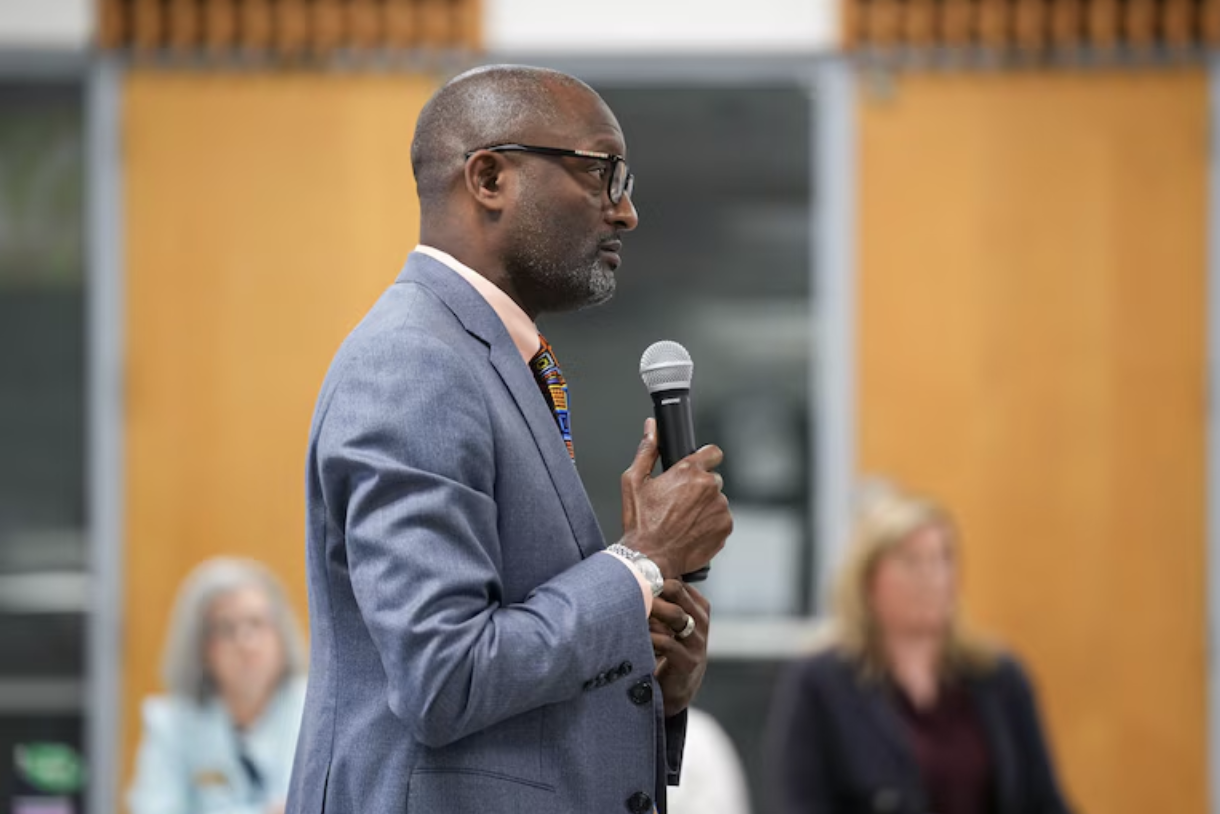
By JESSICA CALEFATI | Under pressure from the Trump-Vance administration, Anne Arundel County Public Schools Supt. Mark Bedell announced Wednesday the district had updated a regulation intended to protect transgender students’ right to be called by their chosen name.
The revised language makes clear that district rules on gender identity do not block parents’ rights under the Family Educational Rights and Privacy Act as the federal government alleged last month, and that a student’s gender identity will not be treated as confidential medical information.
“No policy, guideline, or practice may limit or otherwise interfere with parental rights under FERPA,” Bedell wrote in a Wednesday letter to the community. “This includes any information maintained in education records that relates to gender identity, transgender status, sexual orientation, preferred name, or preferred pronouns.”
The rest of this article can be read on the Baltimore Banner’s website.
District of Columbia
Man charged with anti-gay assault in D.C. accepts plea offer
Community service offered in exchange for dismissing hate crime charge

A Germantown, Md., man arrested by D.C. police on a charge of simple assault with a hate crime designation for allegedly assaulting a gay man while using “homophobic slurs” has agreed to an offer by prosecutors to plead guilty to simple assault without the hate crime designation and with the promise of having the charge dismissed if he completes, among other requirements, 48 hours of community service work.
Dean Edmundson, 26, standing beside his attorney, officially accepted the offer of a Deferred Sentencing Agreement at an Aug. 18 status hearing in D.C. Superior Court after Senior Judge Hiram Puig-Lugo explained the details of the agreement and confirmed Edmundson’s decision to waive his right to a trial.
Among other things, the judge said the agreement offered by prosecutors with the Office of the United States Attorney for D.C. includes the requirement that he successfully completes 48 hours of community service work, stays away from the victim of the assault, writes a letter of apology to the victim, and does not violate any other laws or get into trouble for the next 12 months.
Puig-Lugo then announced he scheduled a sentencing hearing for Edmundson for Aug. 18, 2027, at which time a determination will made on whether he has fulfilled all the requirements under the agreement and whether the simple assault charge will be dismissed. The judge added that if it is determined that Edmundson did not fulfil the terms of the agreement the charge would remain in place and he could be sentenced to a possible maximum penalty of 180 days in jail and a $1,000 fine.
Edmundson, who appeared in court wearing a business suit with a dress shirt and tie, was released on his own recognizance following his arrest by D.C. police on Feb. 7, 2026.
Police and court records show he was initially charged by arresting officers with simple assault with a hate crime designation. In a statement announcing the arrest, D.C. police said, “On Saturday, Feb. 7, 2026, at approximately 7:45 p.m. the victim and suspect were in the 1500 block of 14th Street, Northwest. The suspect requested a ‘high five’ from the victim. The victim declined and kept walking,” the statement says.
A follow-up arrest affidavit filed by police states that Edmundson followed the victim and called him “bald, ugly, and gay,” and then “pushed the victim with both hands, shoving them, causing the victim to feel the force of the push.” The affidavit adds, “The victim stated that they felt offended and that they were also gay.”
According to the court records, the Office of the U.S. Attorney filed its official charge of simple assault against Edmunson on Feb. 9 without the hate crime designation. The office has not responded to a request by the Washington Blade for its reason for dropping the hate crime designation. The office has also not immediately responded to a follow-up inquiry from the Blade this week asking if prosecutors consulted the victim to obtain the victim’s thoughts about the plea offer.
The Blade, which has a policy of not disclosing the identify of crime victims in cases like this without their consent, could not immediately obtain contact information to reach the victim for comment.
Court records show that Edmundson rejected an earlier plea agreement offer by prosecutors and he was scheduled for a non-jury trial on Aug. 18. The records show his attorney filed a motion earlier this month asking the judge to convert the trial into status hearing on that same day after his client accepted the Deferred Sentencing Agreement offer by the U.S. Attorney’s office. The judge approved the motion without objection from prosecutors.
Virginia
Winsome Earle-Sears ‘Life and Marriage Tour’ to include Northern Va. stops
Voters to consider marriage equality, reproductive rights referenda in November
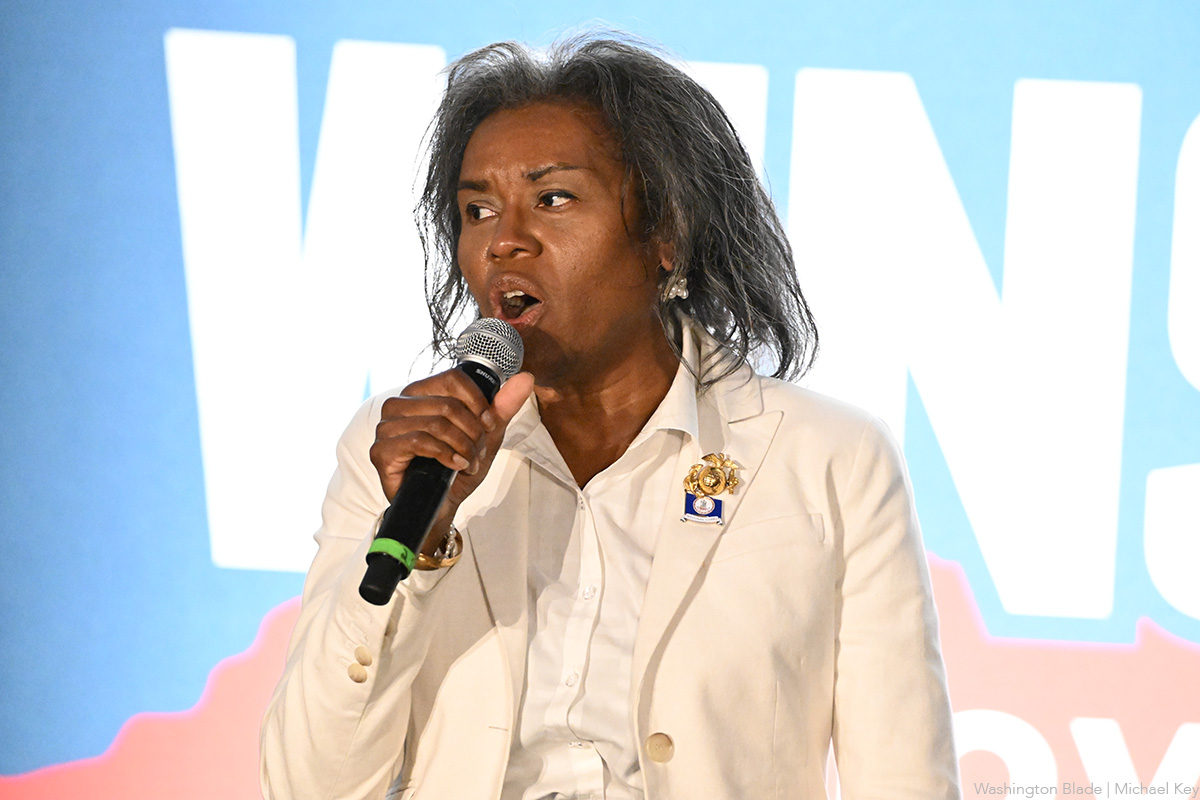
Former Virginia Lt. Gov. Winsome Earle-Sears has announced her campaign against efforts to enshrine marriage equality and reproductive rights in the state constitution will make several stops in Northern Virginia.
Her “Life and Marriage Tour” will include stops in Manassas, Winchester, and Harrisonburg. Earle-Sears said the “Life and Marriage Tour” will also travel to Virginia Beach, Lynchburg, Roanoke, Charlottesville, and other cities across Virginia “throughout September and October.”
The announcement did not include specific dates.
“Virginia, you’ve been asking where the Life and Marriage Tour is headed — here’s a look at our current tour locations,” she said on X on Tuesday. “We’ll be traveling across the commonwealth throughout September and October, and we’re still building the journey.”
Current Gov. Abigail Spanberger, a Democrat, last November defeated Earle-Sears, a Republican, in the race to succeed Republican Glenn Youngkin.
Voters in 2006 approved the Marshall-Newman Amendment, which defined marriage in Virginia as between a man and a woman.
Same-sex couples have been able to legally marry in Virginia since 2014. Youngkin a decade later signed a bill that codified marriage equality in state law.
Two successive legislatures must approve a proposed constitutional amendment before it can go to the ballot.
Spanberger signed bills that finalized the marriage equality and reproductive rights referenda’s language.
The referenda will take place on Nov. 3.

NYC lawmakers seek to repeal bathhouse ban

Black Educated Lesbians: A movement rooted in community

Hegseth uses transphobic slur while campaigning for Iowa congressman

What ‘Queer Eye for the Straight Guy’ can still teach us

I respect AOC, even though I often disagree with her

PHOTOS: Nellie’s Drag Brunch

‘Maddie’s Secret’ defies campy expectations

Remembering Barbara ‘Boo’ Price, a pioneering force in women’s music

White House targets gender-affirming care funding, states fight back