Local
Betts murder draws attention to gay pick-up crimes
Police report three gay chat-line incidents since December

News that gay D.C. middle school principal Brian Betts met at least one of the three 18-year-old men charged with his murder through a sexually oriented chat line has prompted activists and police to caution the public about meeting people through such venues.
Gays & Lesbians Opposing Violence and the D.C. police’s Gay & Lesbian Liaison Unit issued e-mail alerts in the past two weeks urging gays and others to take precautions before inviting home someone they meet through an Internet site or telephone chat line.
“Do not invite the person into your home without meeting in a safe, public space,” GLOV said in its May 7 alert. “Get as much personal information as possible, including a real face photo, phone numbers and a home address and try to verify the information.”
Kelly Pickard, a GLOV co-chair, said the group issued its alert after learning of another report by area police that a gay man was attacked near Manassas, Va., by someone he met through a telephone chat line.
Another gay male victim was killed in D.C. in January following a liaison arranged by phone, but authorities haven’t disclosed if the hookup originated from a sex chat line.
Insiders familiar with Internet and phone services linked to sexual hookups say the reported cases are the tip of the iceberg and far more incidents go unreported to police because victims often fear embarrassment and the public disclosure of their sexual orientation.
Police in Prince William County, Va., released a photo May 5 of an unidentified male suspect believed to have robbed at gunpoint a 28-year-old man in Manassas whom he met through a phone chat line.
According to Prince William police, the suspect and a male accomplice arrived by car at a prearranged meeting place with the victim at 2:30 a.m. April 12 in the Manassas area and invited the victim into their car. Police said the two drove the victim to Colton Lane, a dead end street, and escorted him by foot to a location between several nearby townhouses.
One of the two suspects then brandished a gun and forced the victim to turn over cash. The two suspects returned to their car and drove away, leaving the victim shaken but uninjured.
The incident occurred three days before Betts’ body was found in his house in Silver Spring, Md. Police said there were no signs of a forced entry into the home. Investigators said Betts appears to have met at least one of the three men arrested in connection with the murder through a sexually oriented telephone chat line — most likely on the night of the murder.
The three men arrested for the murder were Alante Saunders, whom police said had no fixed address; Sharif Tau Lancaster of Northwest D.C.; and Deonatra Gray of Oxon Hill, Md.
At least one other phone chat line-related murder took place in D.C. on Dec. 27. Police and prosecutors said 29-year-old Anthony Perkins, who was gay, was shot to death in his car by a suspect he met through a phone chat line on the night of the incident. In court papers, prosecutors said a witness told police that 20-year-old Antwan Holcomb boasted about pretending to be gay for the purpose of luring a “faggy” to a place where he could rob him.
The witness told police he overheard Holcomb say he shot Perkins during a scuffle as Holcomb attempted to rob Perkins inside Perkins’ car. Police have charged Holcomb with first-degree murder while armed.
D.C. police also have linked the murder of a gay Maryland man in January to a phone conversation in which 17-year-old William Wren of Southeast D.C. allegedly called the victim and invited him to meet him near the youth’s home. Police have charged Wren with first-degree murder while armed for allegedly shooting and killing Gordon Rivers, 47, inside his car while it was parked on Naylor Road, S.E. during a botched robbery.
Police have so far declined to say how Wren and Rivers met, raising speculation that the two might have met through a phone or Internet chat line.
“The New York City Anti-Violence Project documented 25 [gay-related] pick-up crime incidents in 2009, most of which involved Internet dating sites, including adam4adam and Craigslist,” GLOV says in its May 7 alert. “The types of reported crimes range from theft and drugging to sexual violence and murder.”
The alert says that these and local events “further confirms a trend — both locally and nationwide — that gay men who use these methods to arrange meetings are being targeted for violent crime.”
“While this trend has largely gone unreported by local media, GLOV believes that increased awareness and knowledge among the community is a vital component of keeping people safe.”




The Comings & Goings column is about sharing the professional successes of our community. We want to recognize those landing new jobs, new clients for their business, joining boards of organizations and other achievements. Please share your successes with us at [email protected].
The Comings & Goings column also invites LGBTQ+ college students to share their successes with us. If you have been elected to a student government position, landed an exciting internship, or are graduating and beginning your career with a new job, let us know so we can share your success.
Congratulations to Jaime Christopher Pierce on their appointment to serve as a member of the Virginia Governor’s LGBTQ+ Advisory Board. Pierce was sworn in on Sept. 3 by Greg Parks, clerk of the Alexandria Circuit Court.
Pierce currently serves as vice chair of the Alexandria City LGBTQIA+ Task Force and as a member of the Alexandria Pride planning committee. They previously served on the board of directors of Equality Virginia.
Upon being sworn in, Pierce said, “Public service has been a central part of my life for more than 30 years, and this appointment gives me an opportunity to serve the Commonwealth in a different and very personal way. My career has allowed me to work with people and communities throughout Virginia, and I hope to bring that experience, along with my own lived experience and my involvement in the LGBTQ+ community, to the work of the Board.” They added, “Having Greg administer the oath makes the occasion even more meaningful because of his own historic role as Virginia’s first openly gay elected circuit court clerk.”
Pierce also serves as Circuit Court Services Manager for the Department of Judicial Services, at the Office of the Executive Secretary of the Supreme Court of Virginia. They began their career in Virginia’s judiciary in 1994 as a deputy clerk with the Virginia Beach Circuit Court and have since held several professional and leadership positions within the court system. Pierce is a member of the National Association for Court Management (NACM) and the Mid-Atlantic Association for Court Management. At the national level, Pierce participated in the workgroup that developed the National Association for Court Management’s Diversity, Equity, and Inclusion Guide, a resource designed to help court professionals advance inclusive practices and strengthen access, fairness and belonging within the justice system.
Pierce earned a degree in Criminal Justice from Liberty University, and a certificate in Paralegal Studies from Norfolk State University.
Maryland
Md. groups receive state grants to fight hate crimes
Pride Center of Maryland among recipients
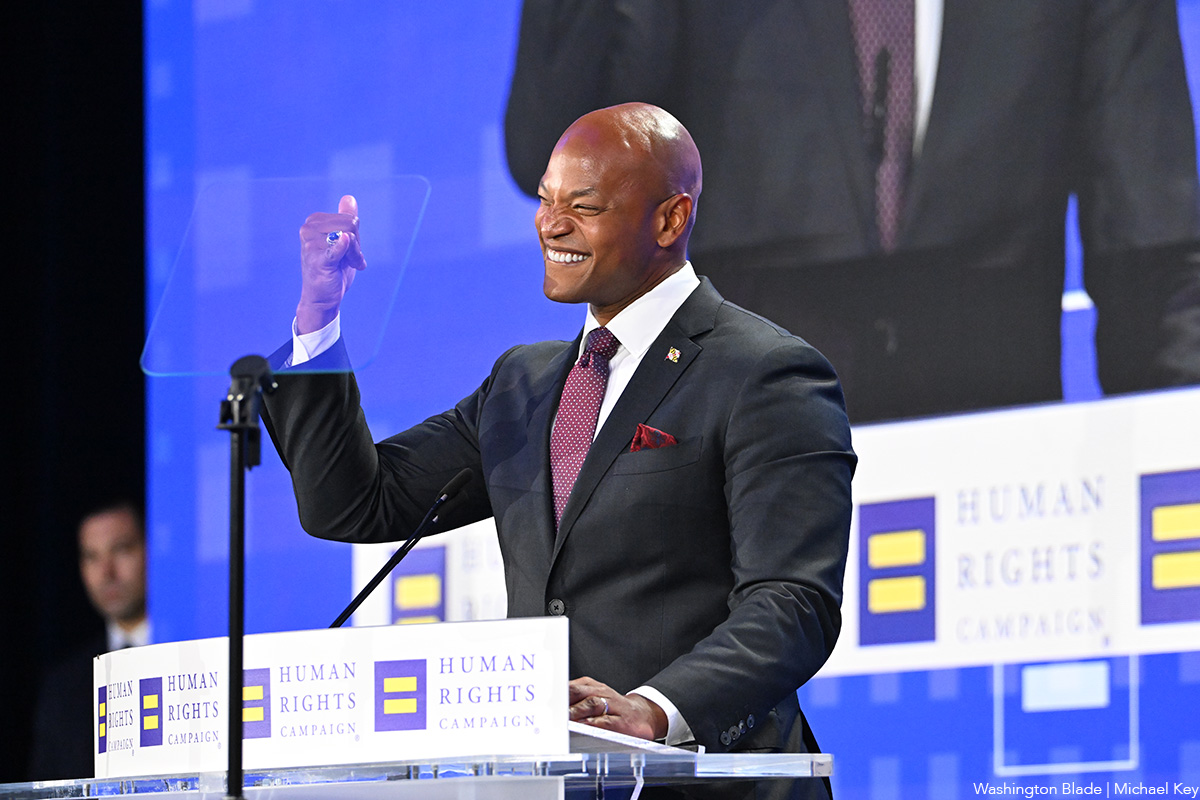
Maryland Gov. Wes Moore and the Governor’s Office of Crime Prevention and Policy are awarding a total of $10 million in grants in the 2027 fiscal year to nonprofit organizations that work to prevent hate crimes in the state.
The funds will be used to support those who feel targeted or discriminated against because of their race, religion, sexual orientation, gender identity, or disability status.
The Pride Center of Maryland is among the recipients. Churches, synagogues, mosques, and LGBTQ organizations are all eligible to receive grants
“The safety and security of all Marylanders is my top priority, so we are drawing a hard line because we have no tolerance for hate,” said Moore, according to media reports. “We are committed to protecting and ensuring safe and sacred spaces stay that way by investing in non-profit organizations, houses of worship, and community centers to protect and honor every community that makes our state so diverse and special.”
“Protection Against Hate Crime funding has strengthened the Pride Center of Maryland’s ability to protect, educate, and support the communities we serve … at a time of heightened concern associated with the Trump administration’s anti-LGBTQ/SGL (same-gender-loving) policies and pressures,” Pride Center of Maryland CEO Cleo Manago said. “PAHC funding helps us do more than improve physical security — it strengthens our community’s knowledge, preparedness, connection to resources, and ability to respond to hate with greater awareness and support.”
Maryland’s hate crimes law includes both sexual orientation and gender identity. The state’s nondiscrimination statute is also LGBTQ-inclusive.
District of Columbia
Blade welcomes fall intern
Alexis McLean is student at University of North Florida
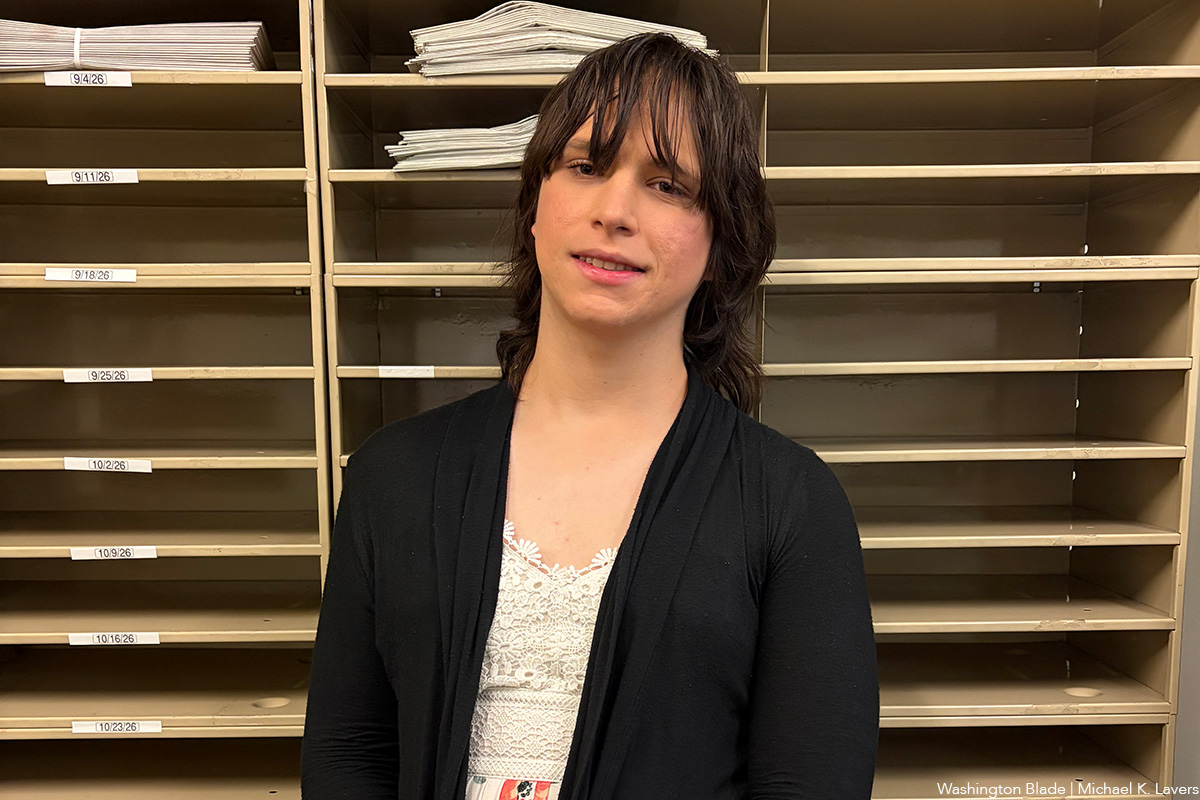
The Washington Blade this week welcomed Alexis McLean as its fall intern.
Alexis is studying political science at the University of North Florida in Jacksonville, Fla. She is interning with the Blade as part of a continued partnership with the Washington Center.
“I am looking forward to spending my time in the fall with the Washington Blade, as this is a new experience for me,” said Alexis. “I have not experienced any journalist jobs in the past so this would be my first time, and I am excited to better my writing and communications skills with this internship.”
Alexis’s internship with the Blade ends in early December.

‘Thelma and Louise’ remains landmark of unspoken queer rebellion

Comings & Goings

LGBTQ Military Happy Hour set for Sept. 15

Calendar: September 11-17

Multi-billion-dollar 9/11 Victim Compensation Fund to continue until 2090

Iceland implements gender-neutral blood donor rules

Anti-science, anti-LGBTQ movements go hand in hand

Everton Blair makes history as first openly gay congressman from Ga.

Chris Pappas wins NH Democratic Senate primary

Mujer trans salvadoreña es encontrada sin vida
-

 Iceland5 days ago
Iceland implements gender-neutral blood donor rules
-
Commentary4 days ago
Anti-science, anti-LGBTQ movements go hand in hand
-
Georgia5 days ago
Everton Blair makes history as first openly gay congressman from Ga.
-
2026 Midterm Elections4 days ago
Chris Pappas wins NH Democratic Senate primary