Books
Maps and memories
Gay man’s Johannesburg memoir bogged down in minutiae
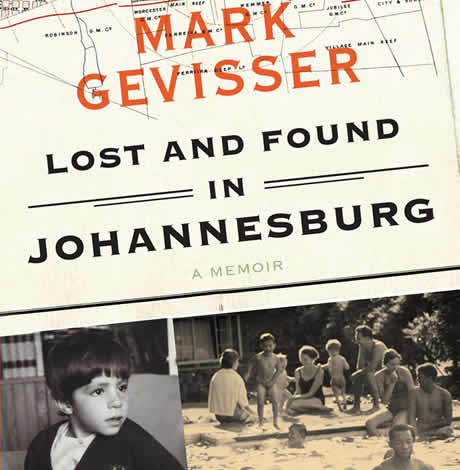
(Image courtesy Farrar, Straus and Giroux)
‘Lost and Found in Johannesburg: A Memoir’
By Mark Gevisser
Farrar, Straus and Giroux
$27
352 pages
Turn left.
You used to need a map to know that info, but these days, a voice from a screen tells you where to go. It’s easy and fairly reliable, so who would want to go back to wrestling with a map or wondering if turning left was right?
No, you haven’t used a paper map in eons but author Mark Gevisser has, and his maps show a city under change. In the new book “Lost and Found in Johannesburg,” you might see how.
Growing up in South Africa, Mark Gevisser was obsessed with maps, especially an archaic book of streets and neighborhoods that helped him play a pretend game with himself. It was many years later that Gevisser realized that segments of his hometown of Johannesburg were missing from the book.
Those were the neighborhoods in which the city’s black population lived.
Though his Jewish ancestors had endured discrimination when they immigrated to South Africa a century ago, Gevisser was born into a life of privilege and was mostly insulated from the Johannesburg filled with poverty and black faces. And yet, his family had black servants that lived, by law, in small houses behind the main home.
Eventually, though, it dawned on Gevisser that the racial system in “Joburg” was flawed. Perhaps he noticed because he had been immersed in a culture of activism, in which whites ignored rules and regularly mingled with blacks. Maybe it was because he was a world traveler and had gone to school in America at Yale, or because apartheid was beginning to unravel back home.
Or, perhaps, Gevisser’s realizations came about because he began to understand that he was gay.
Today, Gevisser lives in Johannesburg, a city that’s surprisingly progressive on issues of sexuality. He’s married to a man he calls “C,” who is of Indian descent. You would think that those factors — an award-winning white, Jewish gay writer married to a man of a different race in a city that relatively recently rejected apartheid — would make for a fascinating book.
But alas, “Lost and Found in Johannesburg” is not.
First, it takes 80-some pages to get past chapters on infinitesimally detailed streets and neighborhoods, and a litany of author Mark Gevisser’s immigrant ancestors — neither of which will mean a thing to anyone who’s not related or in Johannesburg. I lost both interest and patience, but I sallied forth anyhow.
Admittedly, that led to small pockets of interest — life as a gay South African, brief accounts of apartheid and racism, small heartbreaking stories and a breathless but disturbing tale of robbery — but they were buried beneath passages of esoteric literature and dozens of names, all of which become a blur.
If you’ve lived in South Africa for a good length of time or if you’re interested in the detailed genealogy of total strangers, you could certainly give this book a try. Most readers that see “Lost and Found in Johannesburg,” though, will want to turn left and keep going.





Books
Exploring Renée Richards’s life through lens of a trans author
Surprises await in new book about pioneering tennis star
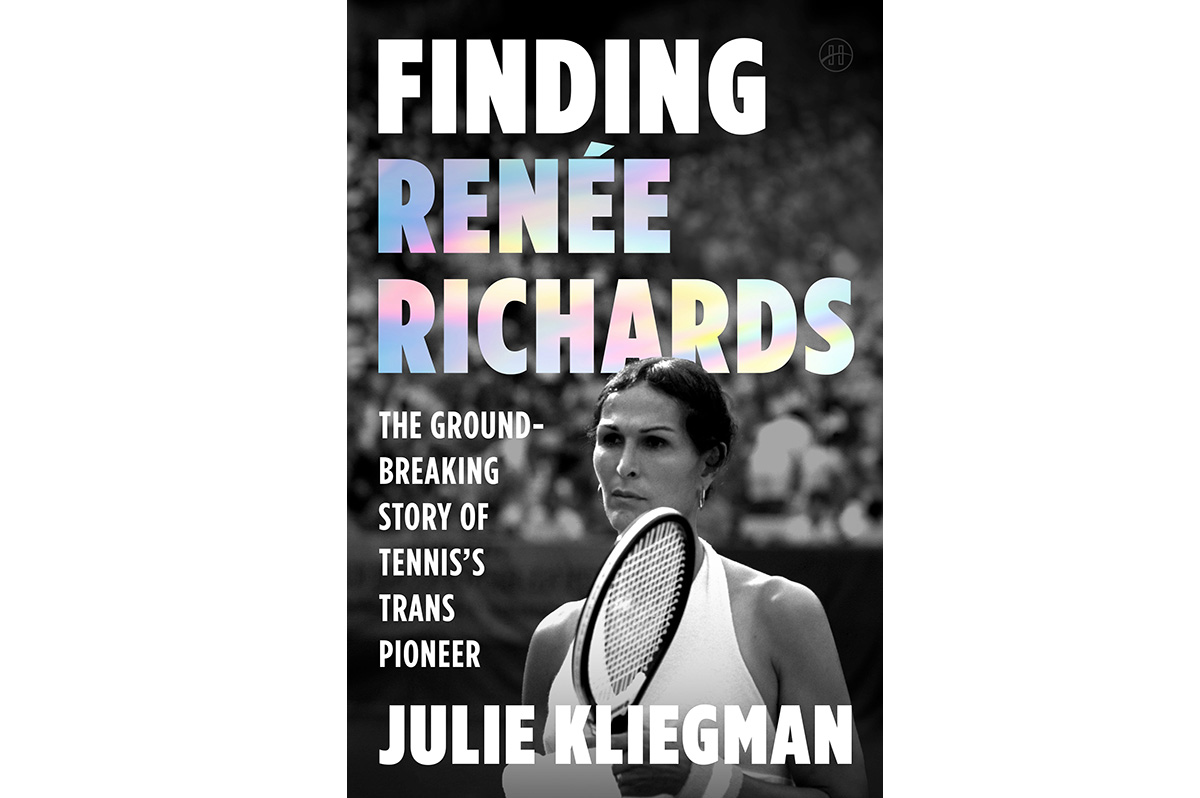
‘Finding Renée Richards’
By Julie Kliegman
c.2026, HarperOne
$28.99/272 pages
Come on in, the water’s fine.
Wade into it up to your ankles, your calves, your waist, you’ll be OK. You’ll adjust to the waves that swirl around you so come on, dive in, it’s all good. As in the new book “Finding Renée Richards” by Julie Kliegman, that goes for swimming, and for controversy.

Assigned to do a story on books written by trans tennis great Renée Richards, Julie Kleigman read the books and became “transfixed by a woman who had fought so hard to simply live as who she had long known she was….”. Their editor had figured that, as a nonbinary and trans individual, Kleigman would have “something incisive to say…” in an article. Instead, once they met and began interviewing Richards, Kliegman was left frustrated.
Born in the late summer of 1934, Richard Henry Raskind seemed to have arrived with a tennis racket in his hand. His mother was a psychiatrist; his father was an orthopedic surgeon who hoped “Dick” would follow his footsteps but Raskind was drawn instead to ophthalmology and tennis. He was also irresistibly drawn to wearing women’s clothing.
His sister knew of this pull and Raskind eventually came out to both parents, but few others on the tennis circuit were aware. When Raskind visited his hometown of New York City, however, he enjoyed furtively going out in women’s clothing but he also tried to squash the desire; in the meantime, he fell in love, married, fathered a son, and eventually learned that it was possible to become the woman he knew he really was.
To continue playing tennis professionally was a bonus.
And right there were the disagreements Kleigman had with Richards.
Richards, “To this day… [makes] a point of describing herself as a woman, period,” says Kleigman, but she firmly acknowledged Richard, almost as a separate individual, insisting that Kleigman use “him/his” pronouns when describing her earlier life.
And as for tennis and trans women’s participation in the sport, Richards had something even more frustrating to say.
Take that as a fair warning: you might be equally surprised at what author Julie Kliegman uncovered in “Finding Renée Richards,” and you may be truly gobsmacked by reading opinions from other women about the topic of trans women in sports.
That’s the main, huge point of interest in this fascinating book; the other is Richards’s life as seen through the lens of a trans individual. Kleigman’s wrestling with the 90-year-old Richards’ firmly dug-in heels is, in itself, worth your time as a study of highly varying viewpoints. That Kleigman and Richards have both lived at least a part of trans history is somewhat of a key to understanding how this book unfolds, as Kleigman offers up Richards’s tale. Readers who are able to read between the lines will be riveted.
If you’re a sports fan and you have opinions, you must read this book – and that goes double if it’s tennis you love. Also check out “Finding Renée Richards” if you just want a raucously good and very fine read.
The Blade may receive commissions from qualifying purchases made via this post.
Books
Bros + romance + fantasy = ‘Bromantasy.’
New book a romp full of humor, dragons, kings, and adventure
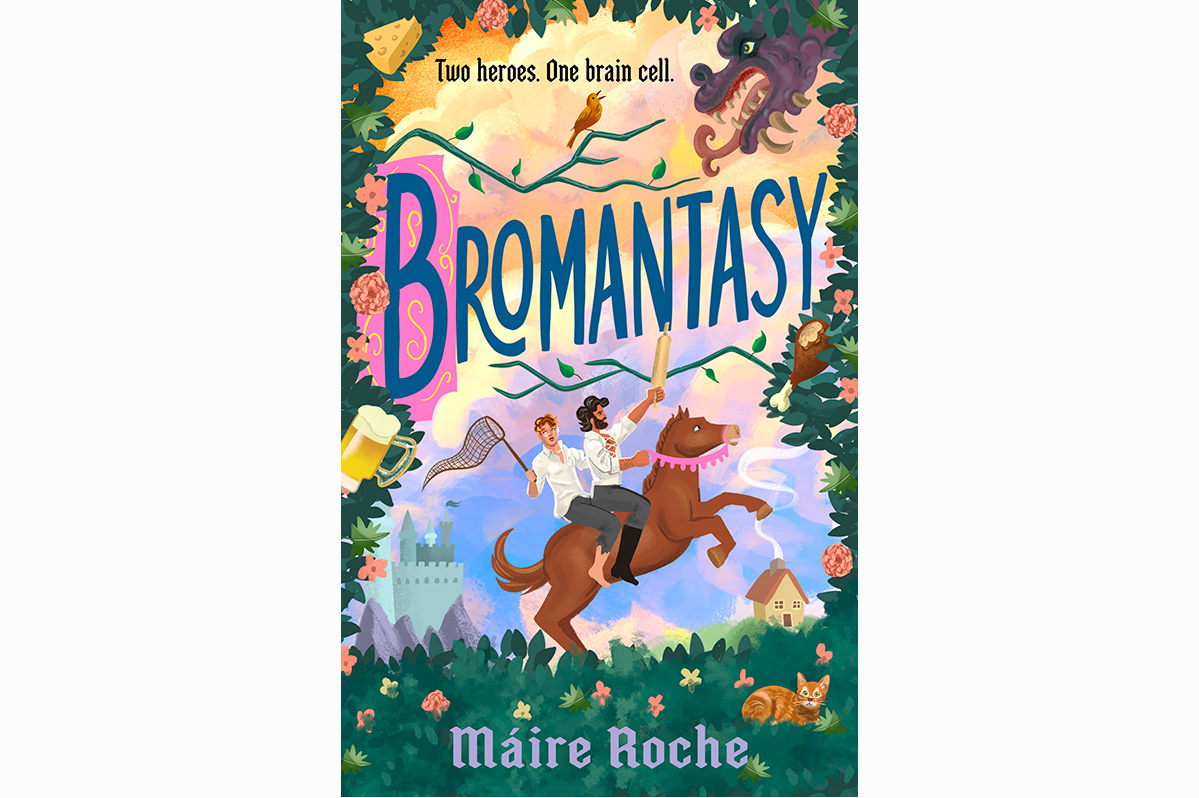
‘Bromantasy’
By Maire Roche
c.2026, G.P. Putnam’s Sons
$20/339 pages
“Danger” just happens to be your middle name.
Any fray, any tussle, anytime anybody needs help, they count on you to step in and save the day. You’re brave, smart and strategic, kind to old people, children, and small animals and, as in the new book “Bromantasy” by Maire Roche, dragons.
Of all the things there were to do – preserving food, keeping house for himself and his best friend Morningthall “Mo” Elmthorn, advanced skincare, and drinking at the local tavern down the road – the one thing Juniper O’Reilly couldn’t resist was a good brawl. It happened so often that Juniper honestly looked forward to it, though Mo wasn’t a fan.
Mo was more grown-up, calm, thoughtful, able, and Juniper loved him for it. He loved Mo, in fact, since they were little boys. He loved Mo in ways that they didn’t talk about, so they kept a wall between their bedrooms in their cottage.
Except for that one time.
They didn’t talk about that, either.
Instead, as they did often, on a warm fall night, Juniper and Mo went to the tavern, where mead was served and they could learn about the king’s weekly quests. There, Juniper could also find a good brawl, which is how he and Mo accidentally got into trouble: Juniper trounced one of the king’s men and was forced into a quest.
He didn’t want to fight dragons and he felt bad that Mo had been dragged along. He felt even worse leaving their farm, sleeping on the ground, wearing the same clothes every day, and not having enough skincare product along. A campfire added to the problem. A roving, lying prince, also in search of dragons, didn’t help. And though a quest was no place for a child, Juniper and Mo found a frightened little girl they had no choice but to protect.
A child with strange eyes, sharp teeth, and fire on her breath.
“And just like that, Juniper and Mo had a dragon.”
Bros + romance + fantasy = “Bromantasy.” It also could equal one of two other things: a romp full of humor, dragons, kings, princes, and adventure.
Or it could equal a whole lot of eye-rolling.
It’s a fact that this book is funny, in the way that a 1980s high school comedy movie is funny – meaning that it’s dippy, giddy, and very caricaturish but you’ll laugh quite often. The story contains everything you want in a fantasy romance (a “romantasy”), including human-like alternate species, a life-changing journey, and plenty of nudge-nudge-wink skirting around the attraction the two main characters have for one another. It’s a decent story, convoluted in just the right way. Purely, it’s an escape.
So why wouldn’t you want to read it? See above, and depending on your favorite reading genre. High-brow literature, this ain’t.
For the right reader, “Bromantasy” is a decent-enough vacation read, something not too taxing or hard on the brain. It’s for novel lovers, dragon hunters, king’s questers, princes, and romantics. For everyone else, this tale is just middling.
The Blade may receive commissions from qualifying purchases made via this post.
Books
Something’s off about Dad. When is it time to step in?
‘When Memory Fades’ can help when families face dementia

‘When Memory Fades’
By Nathaniel Chin, MD
c.2026, St. Martin’s Essentials
$30/422 pages
Mom called you in a panic the other day.
She’d lost her keys and by the time you arrived to help, she’d found them. In the refrigerator.
These kinds of things keep happening, not often but often enough, and you don’t know quite what to worry about. But in the new book “When Memory Fades” by Nathaniel Chin, MD, you’ll learn about the journey ahead, for both of you.
You can’t remember why you walked into a room. You got lost last week, going to the bank. Popular wisdom says that things like that are normal as we age, but Chin says that’s not true – although the answer may not be a worst-case scenario, either. Yes, memory problems could just be signs of stress, dehydration, or lack of sleep – or is it time to see a doctor?
Chin says maybe, yes.
He was working his way through medical residency when his father, a geriatrician in Madison, Wisc., was diagnosed with Alzheimer’s. Chin, now a geriatrician, was blindsided, but that diagnosis also changed his life.
Here, he writes about the brain, and how Alzheimer’s and dementia are diagnosed, explaining that dementia has many faces and, depending on a doctor’s evaluation, memory problems might be slowed or improved. He shares his father’s illness with readers, but he also writes about his mother, a steadfast, steady caretaker.
Her story reminds reader-guardians to care for themselves, too.
Know how to talk the talk, so that you can have “a more productive” conversation with your doctor. Understand that there’s nothing “normal” about dementia or Alzheimer’s. Know the statistics – African Americans are affected with dementia twice as much as whites – and know how to lower your risks. Learn here what questions to ask, how to break the news to everyone, and any legal matters that will be important soon. And know how to tend to you.
Says Chin, “The best action you can take is to educate yourself… The more you understand, the better equipped you are to make sound judgments.”
Something’s off about Dad, just a lot of little things that don’t add up. When is it time to step in? “When Memory Fades” can help you decide.
Wise, wide-spread, comprehensive, and compassionately helpful, this is a book you can read and then take it to the doctor with your loved one. It’s a book that makes sense when nothing else does, and its biggest feature is that it smoothly transitions from easy-to-grasp science and charts, to gentle coaching for caregivers. Author Nathaniel Chin, MD writes with storytelling, humility, grace, and experience from both sides of the Alzheimer’s/dementia issue, and his words are reassuring but also urgent. Learn, but don’t wait, he says. Know how to safeguard yourself. See your doctor, and don’t fear testing. Watch for signs of depression. And never, ever stop asking for help.
Read those last seven words, and find “When Memory Fades” now. It’s a book to have on your shelf, whether you’re 45 or 95 because, as you’ll see, dementia happens and knowledge is key.

Exploring Renée Richards’s life through lens of a trans author

Log Cabin Republicans remove transgender rights from mission

Not all trans people are the same

Queer team brings girl power to fully baked ‘The Wrong Girls’

Democrat Maureen ‘Mo’ Madden takes on longtime GOP stronghold in Delaware’s 38th

Russian LGBTQ rights group to shut down

Winsome Earle-Sears ‘Life and Marriage Tour’ to include Northern Va. stops

White House targets gender-affirming care funding, states fight back

Madonna nominated for 11 MTV VMAs

Man charged with anti-gay assault in D.C. accepts plea offer
-

 Russia5 days ago
Russian LGBTQ rights group to shut down
-
Virginia4 days ago
Winsome Earle-Sears ‘Life and Marriage Tour’ to include Northern Va. stops
-
White House4 days ago
White House targets gender-affirming care funding, states fight back
-
Celebrity News4 days ago
Madonna nominated for 11 MTV VMAs