National
Trans man coaches high school sports
R.I. coach credits transition with saving his life


Stephen Alexander was also a member of Ponaganset High School’s basketball team that won four state championships in the 1990s. (Creative Commons license by [email protected])
GLOCESTER, R.I.—A transgender Rhode Island man is believed to be the only out trans person in the country to coach high school sports.
Outsports.com on Nov. 12 reported Stephen Alexander has coached basketball, tennis, volleyball, soccer and baseball at middle and high schools in his hometown outside Providence. Alexander was also a member of Ponaganset High School’s basketball team that won four state championships in the 1990s.
Alexander played basketball at Stonehill College in Easton, Mass., after he graduated high school in 1996.
He later moved to New York City where he transitioned from a woman to a man. His parents traveled to be with him when he underwent sex reassignment surgery.
“If I didn’t transition, I would not be alive today,” Alexander told Outsports.com.





National
New data shows record-high LGBTQ population amid Trump attacks
12% of adults — 25.6 million people — identify as part of the community
The Human Rights Campaign Foundation (HRC Foundation), the public education, research, and policy arm of the Human Rights Campaign, the largest LGBTQ+ advocacy group in the United States, has released new data showing that there are more LGBTQ+ identifying people than ever before, just as the Trump administration continues efforts to minimize LGBTQ+ rights and visibility.
The data, released late last week, includes a multitude of updated population estimates for LGBTQ+ identifying people in the United States. It shows that a record-high 12% of U.S. adults — roughly 25.6 million people — identify as lesbian, gay, bisexual, transgender, or gender diverse.
The numbers were drawn from more than 2.4 million responses to the U.S. Census Bureau’s Household Pulse Survey collected between 2021 and 2024. The Household Pulse Survey is one of the last major federal data sources to include a gender identity measure before the Trump administration removed sexual orientation and gender identity questions from roughly 360 federal data collections.
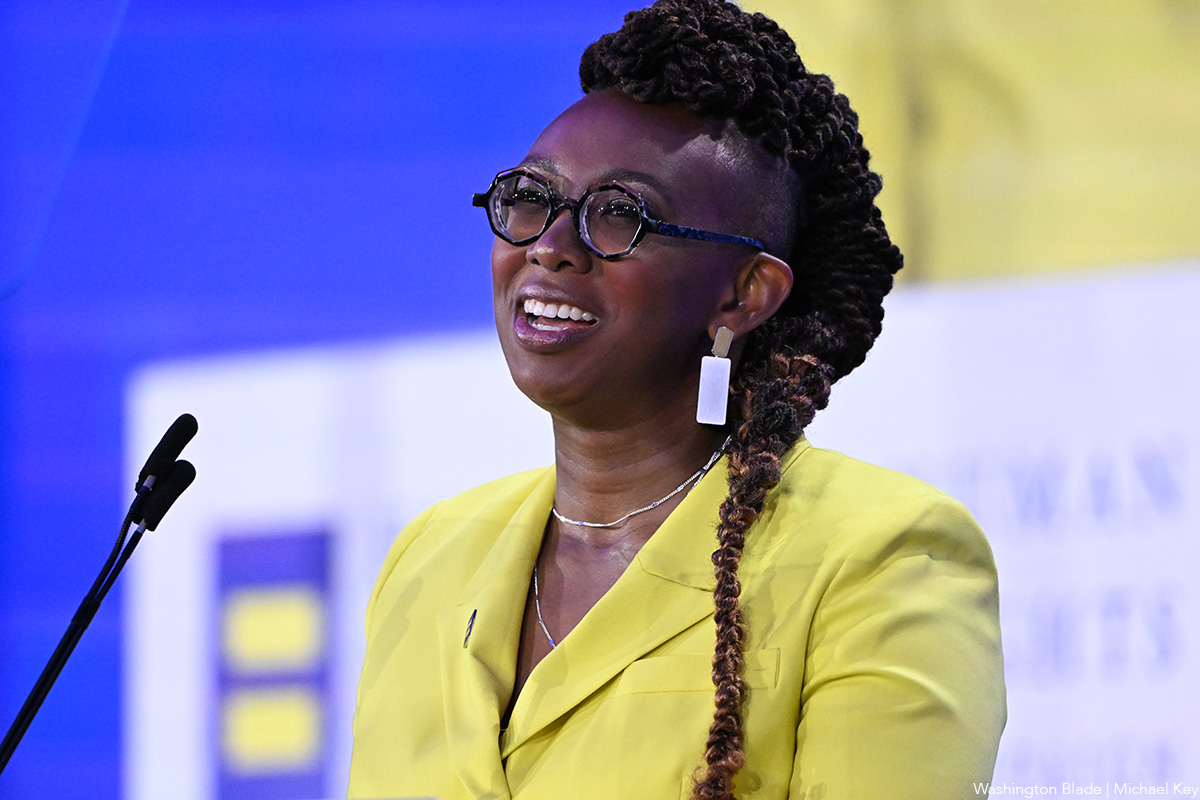
HRC President Kelley Robinson spoke about the data, emphasizing that it shows not only that the LGBTQ+ community is bigger than the Trump administration would have Americans believe, but that LGBTQ+ Americans continue to be targeted for no reason other than being different.
“LGBTQ+ Americans are everywhere. There are 25 million of us across the country, and we now have critical mass in almost every state in the nation,” Robinson said in a statement. “We’re not a niche constituency, and no campaign, brand, or employer can afford to treat us like one.”
The survey also collected other important information about LGBTQ+ Americans.
40: The number of states with an LGBTQ+ population greater than 10%, plus the District of Columbia. This includes electoral battleground states such as Arizona (13.34%), Georgia (11.46%), Michigan (10.95%), New Hampshire (11.88%), North Carolina (10.56%), Ohio (11.29%), Pennsylvania (11.14%), and Texas (12.54%).
25.6 million: Number of U.S. adults who identify as LGBTQ+.
12% : Percentage of the adult population who identify as LGBTQ+.
More than half of all LGBTQ+ adults (53.8%) are between 18 and 34 — a signal of sustained, long-term growth in political and economic power as this generation ages into peak spending and voting years.
Other recent studies show that nearly 30% of the adult Gen Z population identifies as LGBTQ+.
The data also shows growing diversity across the community. Hispanic adults make up a larger share of the LGBTQ+ population (18%) than of non-LGBTQ+ adults (13%). Black adults make up a smaller share, about 9%, compared to 12%, reinforcing that LGBTQ+ identity cuts across every racial and ethnic community.
Bisexual+ people are the largest group, at over 7% of all U.S. adults.
Tari Hanneman, HRC Foundation’s senior director of research and education, spoke about how the White House’s recent decision to remove LGBTQ-specific data questions from federal surveys undermines the purpose of federal data collection: to collect data that accurately reflects the U.S. population, regardless of political ideology.
“Reliable data are essential for understanding who lives in this country and what our communities need to thrive,” Hanneman said. “Removing sexual orientation and gender identity questions from surveys like the one used for this analysis introduces significant gaps in this understanding. These findings show that LGBTQ+ people are a substantial and growing segment of the population, underscoring the need for our continued inclusion in data collection efforts.”
The data also included key demographics about the age of LGBTQ+ people, showing that younger Americans are increasingly more likely to identify as LGBTQ+, while overall, all age groups saw an increase in people self-identifying as LGBTQ+ in the data.
More than half of LGBTQ+ adults (approximately 54%) are younger than 35, compared with about 22% of non-LGBTQ+ adults. Adults ages 25–34 constitute roughly one-third of the LGBTQ+ adult population.
The data also shows a similar generational pattern within age groups. Nearly 32% of adults ages 18–24 and 22% of adults ages 25–34 identify as LGBTQ+, compared with approximately 12% of adults ages 35–44 and less than 8% of each older age group.
The data also included statistics on the education levels of LGBTQ+ Americans, indicating that they are more likely to have some college education or an associate degree than their non-LGBTQ+ peers.
LGBTQ+ adults are more likely (34.57%) to have an associate degree or some college experience and less likely to have only a high school education or less, or a graduate degree.
According to a report from the Williams Institute, a research organization dedicated to collecting and explaining data on LGBTQ+ people and related policy, during the first year of the second Trump administration, approximately 360 federal data collections removed at least one sexual orientation or gender identity measure, including 338 that removed gender identity measures and at least 60 that removed sexual orientation measures.
The Williams Institute, along with HRC, asserts that these changes diminish the federal government’s capacity to measure LGBTQ+ populations and understand their experiences and needs — something that should be detrimental to federal data collection and assessment, regardless of what political ideology one subscribes to.
In 2024, the Census Bureau conducted a large-scale test of questions on sexual orientation and gender identity for possible inclusion in the American Community Survey, the nation’s primary source of detailed demographic data. The test involved nearly half a million households, but the Bureau has not released the promised reports and datasets showing how those questions performed. In September 2025 Democracy Forward filed a Freedom of Information Act lawsuit seeking their release, alleging that the Census Bureau had unlawfully withheld the records.
The HRC Foundation also provided information about the methodology used to produce its estimates. The data uses weighted surveys conducted through its Community Insights research program. Community Insights is an opt-in research panel rather than a probability sample of the U.S. population; demographic benchmarks are used to adjust survey data so that respondents more closely reflect the broader LGBTQ+ adult population.
The HRC Foundation selected the Household Pulse Survey due to its large sample size, national probability-based design, detailed demographic data, separate measures for sexual orientation and gender identity, and availability of public-use survey weights.
The analysis includes 37 rounds of the U.S. Census Bureau’s Household Pulse Survey conducted between 2021 and 2024, yielding 2,452,769 responses before exclusions for missing or imputed data.
HRC’s estimate of 12.03% is based on the Census Bureau’s self-administered Household Pulse Survey, while Gallup’s most recent estimate of 9% is based on telephone interviews and a different approach to measuring LGBTQ+ identity.
HRC has suggested that self-administered surveys may offer greater privacy when people answer sensitive questions, which may contribute to differences in disclosure.
The analysis classifies respondents as lesbian or gay, bisexual+, transgender, or gender-expansive. The bisexual+ category includes respondents who selected bisexual as well as those who selected another sexual identity not represented by the available categories. The transgender or gender-expansive classification is determined using respondents’ reported sex assigned at birth and current gender identity.
The move to remove LGBTQ+ people from federal data collection is just one of many things the Trump-Vance administration has taken to minimize — if not hide — LGBTQ+ people in the country.
From the anti-transgender military executive order, which attempted to bar new recruits and remove transgender military members already serving, signed in January 2025, to attempts to prohibit gender-affirming medical care in federal health care programs and all but destroy gender-affirming care for minors, the administration has pursued a series of policies affecting LGBTQ+ Americans.
The administration has also attempted to make biological sex the only definition of gender on federal paperwork, rolled back DEI programs across the federal government, and taken other steps affecting how LGBTQ+ people are represented and recognized in federal policy and data collection.
New York
NYC lawmakers seek to repeal bathhouse ban
Current policy enacted in 1980s in response to AIDS crisis
New York City lawmakers are pushing to repeal a decades-old prohibition on adult bathhouses, arguing the regulation was created during the height of the AIDS crisis and no longer reflects modern science or public health practices.
Erik Bottcher, the openly gay New York state senator who represents the 47th District that includes the Upper West Side, Chelsea, Hell’s Kitchen and portions of the West Village in Manhattan, is leading the charge to remove the decades-old ban. (Openly gay state Assemblymember Tony Simone has sponsored the repeal bill in the New York State Assembly.) Bottcher sat down with the Washington Blade to discuss why he is advocating for more bathhouses in New York City.
“This is simply about ensuring that our public health policy is in line with today’s science,” he told the Blade. “The prohibition on adult bathhouses was put into place in 1985 at the height of the the AIDS epidemic, when there was very little information, very little treatment options, few treatment options, and great deal of fear. Science has changed. Treatment has changed, and the laws need to change too.”
The proposed legislation would direct the New York State Department of Health to repeal the 1985 regulation and establish a new framework for regulating bathhouses.
“Municipalities around the country and all around the world allow for adult bathhouses. There’s no reason why New York City alone needs to maintain this outdated prohibition. Our bill orders the New York State Department of Health to strike the 1985 regulation and replace it with a regulated public health framework that’s grounded in science.”
Under the proposal, bathhouses would operate as licensed and regulated facilities subject to health and safety standards. Backers of the proposal say that framework could also give public health officials greater access to people who may otherwise be difficult to reach through traditional health care settings.
“What the Department of Health would do is work with public health experts and advocates to develop a regulatory framework that allows licensed regulated facilities to operate under clear health and safety standards — and under this — it would allow public health agencies to have greater opportunities to provide STI and HIV prevention resources, connect people to testing and treatment, conduct instructions, and address legitimate health concerns.”
Supporters of the repeal also argue banning bathhouses does not eliminate the sexual activity that takes place in them or elsewhere. Instead, they say, it pushes those activities into the shadows, where public health officials have fewer opportunities to provide life-saving services that include STI and HIV testing.
“This is also about a safer alternative than pushing activity into unregulated settings where there’s little opportunity for public health engagement because these activities are happening, but they’re happening in the shadows,” Bottcher continued. “We know that the best public health policy is to establish clear public safe public health guidelines that allow for public health intervention.”
Demetre Daskalakis, a physician and longtime HIV prevention advocate who has worked to create sexual healthcare opportunities in bathhouses, also worked with Bottcher on the proposal.
Daskalakis was a high level Centers for Disease Control and Prevention employee until 2025, when he left federal health landscape after the Trump-Vance administration ousted then-CDC Director Susan Monarez. There he worked as director of the National Center for Immunization and Respiratory Diseases and was director of the Division of HIV Prevention at the National Center for HIV/AIDS, Viral Hepatitis, STD, and TB Prevention.
Daskalakis explained his experience has shown him the potential for these spaces to become points of contact for people who do not regularly access traditional health care.
“I’ve seen what happens when you push sex into the underground,” he said. “From my perspective, this is a great opportunity to be able to reach people who really will not come to normal clinical care and won’t go to normal routine places for testing or screening.”
“As a public health person, I look at it as a great opportunity,” added Daskalakis. “If there’s like regulation of those venues, and if there’s like a prevention plan that sort of sprouts in those places with really solid public health and clinical partners, I think it’s a great opportunity for public health good.”
Daskalakis said a regulated bathhouse could offer more than HIV and STI testing, potentially creating spaces where people could access prevention medications and other health services.
“The bottom line is if there is a good relationship between the government and the venues, we can develop spaces in the venues to actually deliver services,” he said. “It’s not just infectious disease services — I mean yes, you can do HIV testing, STI testing. You can provide doxypep and pre-exposure prophylaxis for people who are HIV negative and at risk for HIV.
“As an example, at Callen-Lorde Community Health Center (in New York City), where I’m the chief medical officer, we developed a prevention pack in a very low threshold way. We gave people enough doxypep and prep to get through Pride. You can also have Narcan and other things to reduce the risk of overdose.”
Daskalakis said that approach reflects what public health should be striving for: meeting the community where they are.
“If you have this sort of relationship with the government that’s not antagonistic, and the government, as New York is one to do, provides some regulatory oversight to these venues, I think what you’re going to have is a place that supports LGBTQ culture — which also which does include sexuality, and also creates a platform to be able to do like very solid prevention work.”
The public health landscape surrounding HIV has changed dramatically since the bathhouse regulation was adopted, Daskalakis said, pointing to advances in treatment and prevention.
“The bottom line is that HIV treatment and prevention have really converged. If you are someone living with HIV and you’re on HIV medicines and your viral load is undetectable, you don’t transmit HIV. That’s called undetectable is equal to untransmittable, or U = U. People who are on prep also have very low risk of acquiring HIV, and so you know the world is very different,” he said.
“Back in the 80s, when there was no way to impact transmission of HIV because we didn’t have effective ways to prevent it — or didn’t know very much about it at that point. It’s a very different world where we know a lot about HIV and have a lot of tools to be able to prevent transmission. Same with STIs,” added Daskalakis. “If you create a holistic strategy for prevention that is sex positive and aligned to these venues, you’re going to prevent HIV and STIs. Period.”
For supporters of the legislation, that public health argument is central to the effort to repeal the ban. Bottcher also sees the proposal as a way to restore LGBTQ community spaces at a time when many queer venues have disappeared and social interaction increasingly takes place online.
“In this era of social isolation created by social media and streaming services, people are desperate for third spaces,” Bottcher said. “Places for people to come together in person, to be together in person. That’s what this would help provide.”
Daskalakis echoed Bottcher’s point that bathhouses could transform from underground, tabooed spaces into venues that combine sexual health services with broader LGBTQ culture.
“When you make them illegal, they become seedy and dark. When you make them something that is allowed, they actually then become sites that may have sex on premises but also support other sorts of cultural things, and in a universe where people are trying to make LGBT folks seem invisible, creating a safe space for them is exactly what we need right now.”
That community-space argument is also tied to health disparities, Bottcher said, arguing that greater access to health education and prevention services could help people who are less likely to seek care through traditional medical settings.
“Creating opportunities for in-person public health education, prevention, treatment that will help improve health outcomes when you push people into less safe settings without any opportunities for education, prevention tools, or treatment. That’s when we see these disparities, these health disparities grow. So it’s very important that we be laser focused on opportunities to address these disparities and reduce them.”
He continued, explaining the proposed change is ultimately about updating public health policy as medical science evolves, just as other practices are updated when new information comes out.
“This is a matter of an outdated public health regulation and the government has a responsibility to continually revisit its public health regulation and ensure that they’re in line with modern day science,” Bottcher said. “Science and healthcare are continually evolving, and the HIV/AIDS prevention and treatment landscape has changed tremendously in the last few years. Our public health regulations need to keep pace with science.”
For LGBTQ New Yorkers who lived through the AIDS crisis, however, changing the policy could carry a different meaning.
Bottcher says the experiences of those who lived through the epidemic — one that killed nearly 300,000 gay men since the 1980s — should inform how any new system is implemented, rather than being dismissed.
“These are in order to help prevent the spread of HIV and AIDS and other STIs,” Bottcher said. “We have to bring people engaging in these activities out of the shadows and into safe settings that provide the opportunity for public health entities to engage with education, treatment, prevention — that’s what this would do.”
Daskalakis said those concerns should be approached through what he described as trauma-informed care.
“My response is that of trauma-informed care,” Daskalakis said. “We have totally been through it, but we need to sort of move past the trauma and realize that the science has changed. I’s not it’s not the ’80s anymore, but we definitely need to look at those folks who have gone through the experience (of the HIV/AIDS crisis) to make sure that what we’re building, from a public health perspective, are effective programs.”
“There’s a great opportunity to learn from folks with experience rather than to alienate them,” he added.
Bottcher also pointed out this policy revision and effort to bring regulations in line with modern science is not only happening in New York. Multiple other cities across the U.S. have moved away from bathhouse prohibitions.
“Minneapolis just passed their ordinance in June,” he said. “San Francisco, despite the fact that they repealed their prohibition some years ago, they are still working to change the policy … However, around the country, even in red states, they have bathhouses … and they haven’t presented a detriment to public health in any way.”
The proposed change could also revive a part of New York’s LGBTQ cultural history, Bottcher said.
“Bathhouses were a big part of gay culture for decades. We all know the legendary stories of Bette Midler and Barry Manilow performing at the Continental Baths. I envision a resurgence of bathhouse culture that includes things like live music, arts, and entertainment. So it’s exciting to think about.”
And if that resurgence happens, Bottcher already has a dream performer in mind to be the first to take the stage.
“Oh, that’s such a good question … Cher.”
Daskalakis picked a similarly essential female singer of gay culture that he’d like to see in the bathhouses of today.
“I feel like my list could be so long, but I think that would be a great place for Madonna.”
The debate over New York’s bathhouse regulation ultimately reflects a broader question about how public health policy should respond as science, medicine, and LGBTQ communities change.
For Bottcher, regulation, rather than prohibition, would give health officials more opportunities to provide prevention and treatment while allowing LGBTQ people to gather openly.
For Daskalakis, the central lesson from his extensive healthcare work in bathhouses is that pushing sexual activity underground will make public health outreach more difficult — the opposite of what the government and healthcare providers should be doing.
“The opportunity to create safe spaces means that we’ll have more opportunities to reach people, not just for public health, but for so many other things … The strategy of banning things that are natural really doesn’t tend to help you very much. It ends up creating misalignment between the community and policymakers.”
U.S. Military/Pentagon
Hegseth uses transphobic slur while campaigning for Iowa congressman
Defense Secretary was speaking in support of Republican Zach Nunn

Defense Secretary Pete Hegseth on Monday used an anti-transgender slur while campaigning for U.S. Rep. Zach Nunn (R-Iowa), drawing attention to the Trump-Vance administration’s ongoing efforts to restrict trans people from serving in the military.
“At the Department of War, we do training, not t***nies,” Hegseth said, according to the Iowa Capital Dispatch, which first reported the remarks.
Hegseth made the comment at JR’s SouthPork Ranch at the Iowa State Fair, where he joined Nunn for a rally. The remark came as Hegseth discussed his priorities for the military and argued that the department’s focus should be on military readiness rather than issues of race or gender.
In the same speech, Hegseth claimed that the military operates without regard to race or gender.
“Training, lethality, accountability, discipline, readiness — the bedrock of what it means to be an American warrior — is the only focus of our department,” Hegseth said. “Colorblind, gender-neutral, merit-based. That’s it.”
Hegseth’s remarks come as the Trump-Vance administration continues its efforts to restrict trans people from serving in the military.
Since President Donald Trump returned to the White House, his administration has moved to remove trans service members from the military while also taking steps to prevent trans people from joining.
Trump signed “Prioritizing Military Excellence and Readiness” in January 2025, which attempts to bars trans individuals from serving or enlisting in the U.S. military, citing “military readiness” as the reason, despite there being no factual basis for the ban. The policy has been challenged by LGBTQ advocates and military service members, who argue there is no evidence that trans service members undermine military readiness.
Earlier this year, Hegseth made headlines again over the administration’s contradictory approach to hormone therapy, as the military moved to restrict gender-affirming hormone treatment for trans service members while encouraging cisgender military members to receive hormone therapy for “low T,” or testosterone.
The administration’s policy has faced a series of legal challenges from trans service members and advocacy groups.
In June, a federal appeals court panel ruled the administration could not discharge the trans service members who brought one of the lawsuits challenging the ban while their case continues, providing a moment of relief amid the administration’s ongoing efforts to restrict trans military service. The Trump-Vance administration has asked the U.S. Supreme Court to review that ruling and, in the meantime, keep it from taking effect.
The Washington Blade reached out to the Pentagon for comment on Hegseth’s use of the slur, but the department did not push back on his choice of words.
“We have nothing further to add beyond the secretary’s remarks,” the statement read.

New data shows record-high LGBTQ population amid Trump attacks

Dolly Parton dies at 80

Monument to LGBTQ Canadians officially unveiled

The fight to save one of Baltimore’s last gay bars