News
Obama renews PR push for health care law
Gay couple claims $5,200 in savings under Obamacare
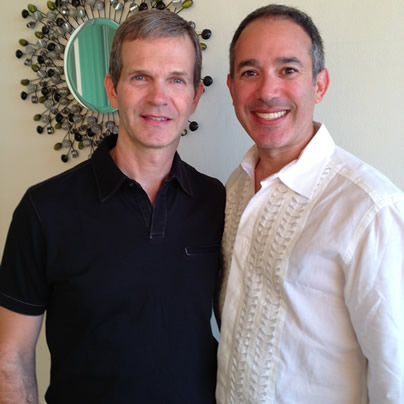
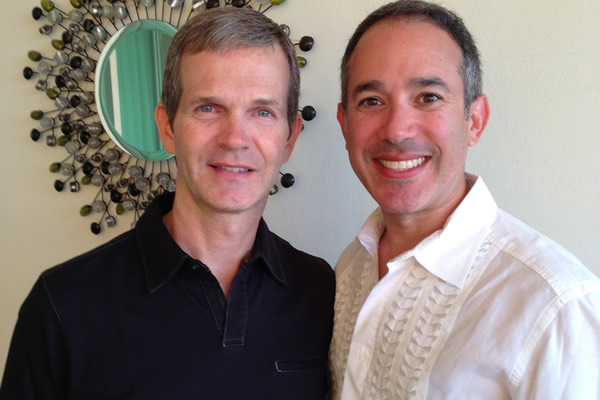
John West (left) and Michael Lappin are set to save $5,200 a year under Obamacare. (Photo courtesy of Michael Lappin
For Michael Lappin and his spouse John West, the Affordable Care Act offered critical savings — more than $5,200 a year —thanks to the individual insurance policies they purchased on the Obamacare website.
Amid widespread media attention to the technical difficulties with the Healthcare.gov site, cancelled policies and loss of registration information for enrollment, the Atlanta couple represents one positive experience in accessing health care reform.
In a phone interview with the Washington Blade, Lappin said the couple, who co-founded their own business, STELLAR Mortgage Corp., was previously covered by plans that offered decent but expensive coverage.
“Under the Affordable Care Act, we’re getting new plans,” Lappin said. “We’re switching providers, keeping our same doctor, though, as our primary care physician, and between the two of us, we’re going to save over $5,200 a year on our health insurance.”
Even with the lower cost of the insurance, Lappin said the couple will enjoy lower co-pays, lower deductibles and lower out-of-pocket costs — all without help of any subsidies offered by the federal government under Obamacare.
Lappin, 44, and West, 49, married in D.C. in 2012, but applied for individual plans because they have yet to file a joint tax return. In the aftermath of the Supreme Court decision on the Defense of Marriage Act in June, Lappin said the couple intends to file jointly next year and may revisit the idea of family coverage.
“I believe the rates are the same if we buy individually or together, so it’s just sending two checks versus one check,” Lappin said. “But I will definitely revisit that once we have joint tax returns and make sure.”
The couple enjoys a positive outcome under health care reform as President Obama makes a renewed push for the law, saying problems with the enrollment website are fixed and healthcare.gov is now working for the vast majority of people.
During an event at the Eisenhower Executive Office Building on Tuesday, Obama touted his signature legislation in front of 19 people who also had positive experiences under health care reform.
“Now that we are getting the technology fixed — we need you to go back, take a look at what’s actually going on, because it can make a difference in your lives and the lives of your families,” Obama said. “And maybe it won’t make a difference right now if you’re feeling healthy, but I promise you, if somebody in your family — heaven forbid — gets sick, you’ll see the difference.”
As a result of the law, Obama projected that half a million people are poised to gain health care coverage through the health insurance exchanges and the Medicaid expansion beginning on Jan. 1 — some for the very first time.
Rea Carey, executive director of the National Gay & Lesbian Task Force, expressed solidarity with Obama in a statement the next day, saying his law is a “giant step” toward delivering health care to all Americans.
“We stand with the president in his unshakable commitment to this fundamental component of a transformed society,” Carey said. “We also encourage everyone to fully educate themselves on how to access the benefits of the Affordable Care Act.”
Upon the initial rollout of healthcare.gov, users reportedly faced numerous problems, including loading difficulties and error messages. Lappin said he and his partner initially had difficulties enrolling via the website, but eventually were able to apply.
“When I would get in, it was glitchy, but over the next probably two weeks or so, I continued to get better and I was able to get in, and get it figured out,” Lappin said.
As he’s gone back to healthcare.gov to make payments and obtain confirmation from HUMANA, his new insurance company, Lappin noticed an increase in the website’s functionality.
“I log back in now and the site seems to work,” Lappin said. “It’s much faster, much quicker, the buttons actually work and do things now. As somebody who’s started Oct. 1 through now, I can tell you, huge improvements to the site.”
Lappin said he and his spouse opted to apply for health insurance through healthcare.gov, the website for the federal exchange, because Georgia doesn’t offer its own state insurance exchange and has no website for enrollment.
LGBT advocates — and the Obama administration — have touted that health care reform provides non-discrimination protections for LGBT people in the health care system. Through regulation, the Obama administration has interpreted the gender protections under the law to apply to sexual orientation and gender identity.
Although he’s claiming significant savings under Obamacare, Lappin said he doesn’t think that’s because of discrimination faced under the previous system.
“We had individual plans, so I don’t think there was any way that anybody could have discriminated against us,” Lappin said. “It didn’t even come up in any kind of underwriting, anything that we know about.”
Mara Keisling, executive director of the National Center for Transgender Equality, praised the non-discrimination protections as essential for trans people seeking health coverage.
“An important message to get out is that trans people and people living with HIV/AIDS can no longer be denied as having pre-existing conditions,” Keisling said.
Keisling said her own organization has benefited under Obamacare, saving about $250 per staff person per month on health insurance costs, or about $15,000 total.
Despite the push to promote Obamacare, most Republicans remain opposed to the law and continue hammering the administration for problems that have emerged since the rollout.
Also in this camp is the Log Cabin Republicans, which previously joined with conservative groups in signing a letter calling health care reform “tyrannical.”
Gregory Angelo, executive director of Log Cabin Republicans, said he’s heard horror stories from members about their efforts at enrolling in healthcare.gov.
“Premiums are going up, some members have had no luck signing up on the website even after making repeated good faith efforts, people have been unable to change their information after it has been entered and connected with their Social Security number,” Angelo said.
Angelo said he couldn’t find a member willing to speak publicly about the problems.
For his part, Obama said during the White House event he’s open to ideas about changing the law, but won’t go back to the way things were before his health care reform was in place.
“I’ve always said I will work with anybody to implement and improve this law effectively,” Obama said. “If you’ve got good ideas, bring them to me. Let’s go. But we’re not repealing it as long as I’m president.”





National
Philadelphia event to launch 2026 LGBT History Month
Dr. Fauci to be honored as 31 LGBT ‘Icons’ are announced

Equality Forum, the Philadelphia-based group that organizes the nation’s annual LGBT History Month in October is scheduled to launch the 2026 LGBT History Month at a VIP Reception on Sept. 27.
The event, to be held at Philadelphia’s Independence Visitor Center, will honor Dr. Anthony Fauci, the former director of the U.S. National Institute of Allergies and Infectious Diseases who is credited with playing a leading role in the fight against HIV/AIDS and COVID-19. Equality Forum was to present Fauci with its International Role Model Award.
The Equality Forum, which operates programs focusing on LGBT history and the people who play a leading role in historic undertakings, will also present its Frank Kameny Award to Erica Deuso, who in 2025 won election as the first openly transgender mayor in the state of Pennsylvania as mayor of the town of Downington, Pa.
A statement released by the Equality Forum points out that LGBT History Month, held each year, celebrates the achievements of 31 lesbian, gay, bisexual, or transgender icons throughout the month of October. “Each day in October, a new LGBT icon is featured with a video, bio, bibliography, downloadable images, and other resources,” the statement says.
Although the statement releases the name and a short background description of each of this year’s 31 LGBT icons, the icons were scheduled to be officially announced and honored at the Sept. 27 event.
“The LGBT community is the only community worldwide that is not taught its history at home, in public schools or in religious institutions,” the statement says. “LGBT History Month provides role models, builds community and makes the civil rights statement about our extraordinary national and international contributions,” it says.
This year’s Icons include designer Calvin Klein, media mogul Barry Diller, U.S. Senate hopeful Chris Pappas, and perhaps most notably President Abe Lincoln.
Additional information about the event and a list of the 2026 LGBT Icons can be accessed at lgbthistorymonth.com.
Colombia
Colombia withdraws from Equal Rights Coalition
International LGBTQ group ‘not a priority’ for country’s new government

Colombia last week withdrew from a coalition of more than 40 countries that pledges to champion LGBTQ and intersex rights.
The Bogotá Post, an English-language news website in the Colombian capital, reported the country officially withdrew from the Equal Rights Coalition on Sept. 17.
The Equal Rights Coalition formed in 2016.
The group’s current members are Albania, Argentina, Australia, Austria, Belgium, Brazil, Canada, Cabo Verde, Chile, Costa Rica, Cyprus, the Czech Republic, Denmark, Ecuador, Estonia, Finland, France, Germany, Greece, Iceland, Ireland, Israel, Italy, Lithuania, Luxembourg, Malta, Mexico, Montenegro, Netherlands, New Zealand, North Macedonia, Norway, Portugal, Serbia, Slovenia, Spain, Sweden, Switzerland, Thailand, Ukraine, the U.K., and Uruguay. Civil society organizations from Colombia and dozens of other countries, including the U.S., work with the Equal Rights Coalition.
Colombia had co-chaired the group alongside Spain.
The decision to withdraw from the Equal Rights Coalition took place less than two months after far-right Colombian President Abelardo de la Espriella took office.
El Páis, a Spanish newspaper, reported Colombian Vice Minister for Consular and Migration Affairs Pedro Agustín Roa said the Equal Rights Coalition “is not a priority” for his government and the country’s participation in it was “something from a previous government.”
Caribe Afirmativo is a Colombian LGBTQ advocacy group that works with the Equal Rights Coalition. Wilson Castañeda, its director, criticized his country’s withdrawal from it.
Ecuador
Caso Karlina: Una sentencia histórica contra las terapias de «conversión»
Karlina Quiroz, una mujer trans de Chone, fue internada contra su voluntad
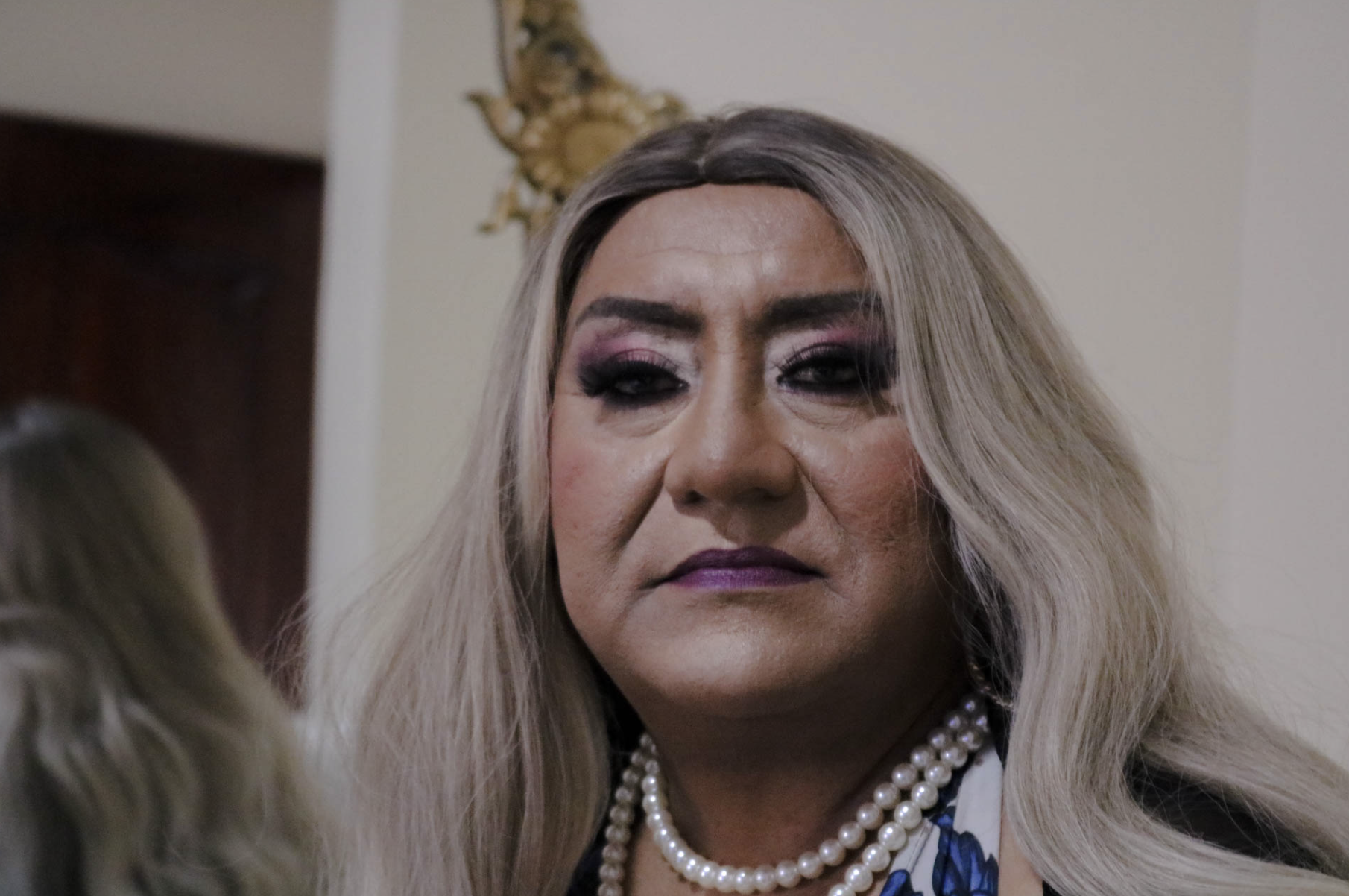
La última vez que Karlina Quiroz, una mujer trans de 57 años, salió sola a la calle en Chone, terminó encerrada contra su voluntad en un centro de rehabilitación donde intentaron “corregir” su identidad de género mediante humillaciones, amenazas y agresiones.
Han pasado cinco años desde ese episodio, ocurrido en 2021; y el 11 de septiembre de 2026 Karlina por fin obtuvo justicia.
La Fiscalía informó, el 14 de septiembre, que el Tribunal de Garantías Penales de Chone sentenció a seis personas por actos de odio contra Karlina, al ser víctima de violencia basada en su identidad de género.
Entre los seis sentenciados están sus dos hermanos, que —según la denuncia de Karlina— ordenaron su encierro a este centro.
El caso de Karlina refleja el odio y la violencia hacia personas trans en Ecuador y vuelve a poner bajo la lupa la existencia de centros conocidos como clínicas de “deshomosexualización” o espacios de “terapias de conversión”.
De acuerdo con la denuncia presentada por Karlina, en julio de 2021 fue interceptada por varios hombres y trasladada contra su voluntad a un centro para el tratamiento de adicciones ubicado en Chone, Manabí, en la vía a Pedernales. Allí permaneció retenida y sometida a tratos degradantes, violencia psicológica y agresiones físicas.
Según su testimonio, durante el encierro recibió insultos relacionados con su identidad de género y amenazas orientadas a “modificarla”.
Karlina denunció, además, que esta no habría sido la primera vez. Según su relato, en 2019 permaneció aproximadamente tres meses internada de manera forzada en otro centro de rehabilitación, también ubicado en la vía a Pedernales, en Chone. Durante ese período habría sido sometida a dinámicas similares de aislamiento, control y presiones dirigidas a modificar su identidad y expresión de género.
Según información de la Fiscalía, en septiembre de 2021, como parte de las diligencias investigativas, se allanó el centro clandestino en Chone. Allí se recabaron indicios relacionados con el internamiento forzoso de Karlina durante tres meses.
Con esos y otros elementos de convicción obtenidos durante la investigación, la Fiscalía inició un proceso penal contra las seis personas, quienes fueron luego llamadas a juicio.
El proceso, explicó Karlina, incluyó los dos casos: el de 2019 y 2021. “El crimen se investigó desde que comenzó la primera gota de sangre”, señaló Karlina, en alusión a la violencia física que sufrió en su primer encierro.
De los seis sentenciados, tres fueron condenados como autores directos a cuatro años de pena privativa de libertad. Se trata de los dos hermanos de Karlina y un sobrino, por ordenar su encierro al centro de adicciones.
Los otros tres recibieron una pena de dos años, como cómplices.
De acuerdo con Karlina, uno de ellos es el director del primer centro al que fue ingresada contra su voluntad en 2019 por tres meses, y los otros dos son quienes la interceptaron la segunda ocasión, en julio de 2021, para llevarla al centro. Ella los señala como “capturadores” de las personas que son recluidas en los centros.
“Cuando recibí la noticia (el viernes 11 de septiembre durante la audiencia de juzgamiento) no podía creerlo. Las piernas me temblaron y las lágrimas se me salieron. Estoy tranquila y satisfecha”, señaló Karlina en una llamada telefónica.
Para Pedro Gutiérrez, abogado especialista en derechos humanos, la sentencia es importante no solo por reconocer un delito de odio, sino también por las características de los hechos: el ingreso (por orden de sus hermanos) a un centro de “deshomosexualización” en el que se cometen actos de tortura y violencia física.
Durante la audiencia, constó el testimonio de Karlina. La Fiscalía también presentó el informe de reconocimiento del lugar de los hechos, la inspección ocular técnica, el levantamiento de evidencias y los testimonios de personas que confirmaron que los actos de violencia por perjuicio hacia su identidad de género fueron ejecutados de manera reiterada por los ahora sentenciados.
El caso volvió a poner la atención sobre las llamadas terapias de conversión en Ecuador, prácticas ampliamente cuestionadas por organismos internacionales de derechos humanos y señaladas como formas de tortura o violencia psicológica. Aunque el Estado ecuatoriano ha realizado operativos y clausuras de algunos centros en los últimos años, organizaciones sociales sostienen que estos espacios continúan funcionando de manera clandestina o bajo otras denominaciones.
La legislación ecuatoriana penaliza los actos de tortura con la intención de modificar la orientación sexual o identidad de género, pero no existe una sanción contra los centros que ofrecen las denominadas terapias de conversión.
En 2020, la Asamblea aprobó el Código Orgánico de Salud y una de sus disposiciones fue prohibir expresamente este tipo de terapias, pero fue vetado totalmente por el expresidente Lenín Moreno en medio de una campaña de sectores antiderechos.
La sentencia también dispuso, como reparación integral a favor de Karlina, tratamiento psicológico e indemnizaciones por daños materiales e inmateriales.
Gutiérrez considera que la reparación para Karlina es limitada, pues -por ejemplo- no hay llamados de atención al Ministerio de Salud o disculpas públicas a la víctima.
“Mi nombre es Ariel Karlina Zambrano, soy una mujer trans de Chone, Manabí. Desde niña supe que quería ser mujer, quería ser bonita, libre. Pero mi familia nunca lo aceptó. Mis hermanos y mi padre, profundamente machistas, me maltrataban constantemente”, contó Karlina en un testimonio en 2025 que recogió el Comité Permanente por la Defensa de los Derechos Humanos (CDH).
Para activistas y defensores de derechos humanos, el caso de Karlina evidencia además un patrón de violencia que suele permanecer oculto dentro de círculos familiares, religiosos y comunitarios. En muchos casos, explican, los internamientos forzados son promovidos bajo la idea de “corregir” orientaciones sexuales o identidades de género consideradas inaceptables.
Karlina intentó vivir en Chone, creyendo que con la denuncia y las medidas cautelares estaba a salvo, pero su hermano le pagaba a personas para que la acosaran, según su relato. Por ello, tuvo que esconderse por meses.
Las personas trans en Ecuador enfrentan altos niveles de discriminación, violencia y exclusión social, especialmente fuera de las grandes ciudades. Según la Encuesta Nacional sobre las Condiciones de Vida de la Población LGBTI+ del INEC, el 53,5 por ciento de las personas LGBTQ mayores de 18 años en el país ha sufrido algún tipo de discriminación o violencia a lo largo de su vida, siendo el entorno familiar uno de los principales espacios de agresión.
En materia de violencia letal, organizaciones como Asociación Silueta X y el Observatorio Runa Sipiy documentaron 30 asesinatos de personas LGBTQ y transfemicidios en Ecuador durante 2025. De esos casos, alrededor del 70 por ciento corresponden a mujeres trans, lo que las posiciona como el grupo más expuesto a crímenes de odio y violencia extrema.
Diversas organizaciones de derechos humanos han advertido además sobre la persistencia de centros de “deshomosexualización” o internamientos forzosos, prácticas denunciadas desde hace más de una década en Ecuador pese a prohibiciones estatales y operativos de control insuficientes.
El caso de Karlina pone a prueba algo más grande que una sentencia individual: si Ecuador está dispuesto o no a reconocer que estas prácticas siguen existiendo y que la violencia contra personas LGBTQ continúa ocurriendo, muchas veces con la complicidad o el silencio de sus propios entornos familiares.
“Con mi caso, debe quedar un precedente. Debemos luchar contra el odio que podemos encontrarlo dentro de nuestras propias familias. Por nuestra libertad y derechos, debemos luchar”, indicó Karlina.

Philadelphia event to launch 2026 LGBT History Month

Colombia withdraws from Equal Rights Coalition

Caso Karlina: Una sentencia histórica contra las terapias de «conversión»

Washington Blade responds to concerns over White House pool duties

Young people should know history of the fight for human rights

Over 2,000 turn out for Hands Around the Kennedy Center protest

PHOTOS: Wanda Alston Foundation Fall Reception

PHOTOS: Walk and 5K to End HIV

What LGBTQ veterans are building after ‘Don’t Ask, Don’t Tell’