Local
LGBT activists rally for Gray at re-election kick-off
Mayor mentions gay, trans residents in first campaign speech
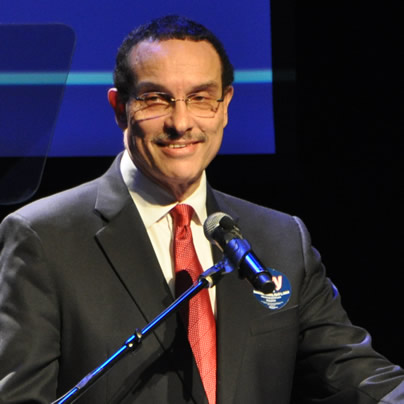
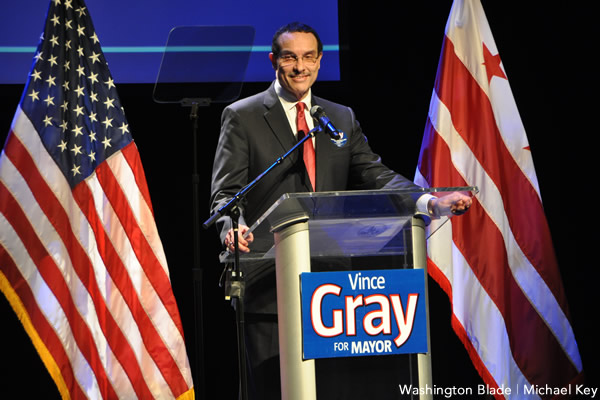
‘Today, I apologize to you for the pain that my campaign caused. I ask for your forgiveness,’ Mayor Vincent Gray said of his 2010 mayoral campaign. (Washington Blade photo by Michael Key)
At least a dozen LGBT activists joined more than 500 city residents on Saturday for Mayor Vincent Gray’s first rally to launch his 2014 re-election campaign.
Several of the activists said Gray’s mention of LGBT people two times in his speech at the rally highlighted his long record of support for the LGBT community.
The event was held in a packed auditorium at an arts and recreation center on Mississippi Avenue in Southeast D.C. known as THEARC.
“I look around this room and I see folks from every part of our city,” Gray told the gathering. “I see enormous talent and tireless dedication. I see white, I see black, I see brown, and every color in between,” he said.
“I see straight, I see gay, and I see transgender. I see rich and I see poor,” he said. “But above all, I see what makes us the greatest city in the greatest country on Earth — I see a community.”
In another part of his speech Gray said the accomplishments of his first term included his longstanding effort to unify the city’s diverse and growing population.
“We are bringing together young and old, black, brown and white, Latino, Asian, immigrants from throughout the world, gay, straight, able and disabled,” he said.
Gray is being challenged by eight candidates in the city’s April 1 Democratic primary, including four City Council members, all of whom have records of support on LGBT issues.
Much of the coverage of Gray’s speech by the media focused on his apology to the city for the campaign finance irregularities associated with his 2010 mayoral campaign, which led to criminal charges and guilty pleas by four of his top campaign staff members. Gray has said the campaign finance law violations by the four staffers happened without his knowledge.
“I know that the 2010 campaign caused many people great pain,” Gray said in his speech. “I know that our city suffered embarrassment. Today, I apologize to you for the pain that my campaign caused. I ask for your forgiveness.”
Gray added, “Although I cannot apologize for the misdeeds of others, the 2010 campaign was my campaign, and I am deeply sorry for the pain and embarrassment it caused.”
The LGBT activists attending the rally joined virtually everyone one else in the packed auditorium in rising to their feet to give Gray a prolonged ovation in response to his apology. Many in the audience chanted, “Four more years, four more years” before sitting down to listen to the remainder of Gray’s speech.
“I thought it went extremely well,” said gay Democratic activist Lane Hudson, a member of Gray’s 2014 campaign finance committee.
“It’s an overflow crowd. There are hundreds and hundreds of people here,” Hudson said. “The mayor gave a great speech. He addressed very well the 2010 election issue and laid out a real clear vision for the next four years.”
Asked how the LGBT vote is likely to break down in the April 1 primary, Hudson said, “I think it will probably split just like it did in the last election. But one thing that’s clear is Vince Gray is the best mayor in the entire country on LGBT issues.”
At least four prominent transgender activists attended the rally, including Earline Budd, Jeri Hughes and Alexandra Beninda. Budd and Beninda were appointed by Gray to the D.C. Human Rights Commission as the first-ever transgender people to serve on the commission.
“He has done what I think is vital to this city in so many ways in terms of economic development,” said Beninda. “Within our transgender community he definitely has a place in our hearts because he has done so much – with Project Empowerment, with the Transgender Awareness Campaign,” she said in referring to a city-sponsored job training program and a trans related non-discrimination campaign initiated by Gray.
“He has done more than anybody else has ever done in the city for the transgender community,” Beninda said.
Hughes and Budd said Gray, while breaking new ground in his support for the transgender community, has an exceptionally strong record in support of the entire LGBT community. The two also said the city as a whole has prospered under Gray’s tenure as mayor.
LGBT activists who are backing other candidates, including Council members Jack Evans (D-Ward 2), Muriel Bowser (D-Ward 4) and Tommy Wells (D-Ward 6), have said those candidates are also strong supporters of LGBT rights and that LGBT people should select a candidate based on non-LGBT issues.
Longtime gay activists Deacon Maccubbin and Bob Summersgill said they are backing Wells over Gray, among thing things, because Wells has a stronger record on ethics in government issues.
Gay rights advocate and D.C. Department of Health official Ivan Torres, who attended the Gray rally on Saturday, said he believes Gray comes out ahead on non-LGBT issues.
“You can have any preferences that you like,” Torres said in referring to LGBT people supporting candidates running against Gray. “But you cannot deny that in the past four years Washington, D.C. has gone forward — forward in so many ways — economic development, the unemployment rate has gone down, and development is there, and the integration of us gay people, the gay and lesbian community, the transgender community into governance.”


Delaware
Democrat Maureen ‘Mo’ Madden takes on longtime GOP stronghold in Delaware’s 38th
Out lesbian candidate for state House focused on infrastructure needs, voting rights
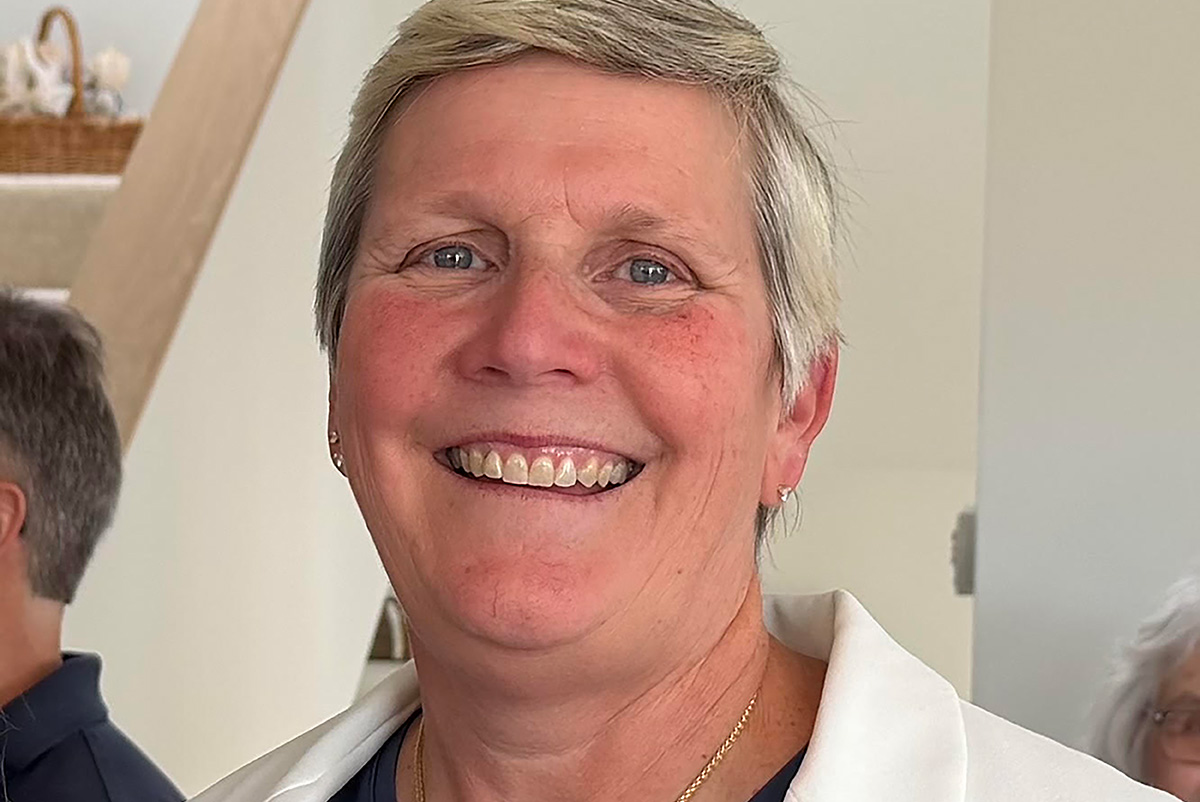
Democrat Maureen “Mo” Madden is running for the Delaware House of Representatives in the 38th District, seeking to win a seat that has been held by Republicans for more than two decades.
The race opened up after Republican state Rep. Ron Gray announced in April that he would not seek reelection after seven terms in the General Assembly.
Gray was first elected in 2012 and represents communities including Bethany Beach, Fenwick Island, Selbyville and Ocean View. Madden, a Dagsboro resident, filed to run for the seat in 2025.
Madden is a retired federal civil servant who spent nearly 23 years at NASA and more than seven years at the National Oceanic and Atmospheric Administration. She holds a master’s degree in physics and previously worked in leadership at NOAA.
She said her professional experience taught her the importance of working collaboratively, something she believes would translate to the legislature.
“Advocating, negotiating, and collaborating are all skills that a legislator needs,” she said. “You learn to collaborate. You learn to negotiate. You learn to advocate for your budget, for your team, and for your projects.”
Madden said her decision to run began after she and her wife moved to the area and she noticed the lack of Democratic candidates on the ballot in her district.
“Somebody’s got to do it, and I’ve got time. I’m retired,” said Madden.
She acknowledged the difficulty of running as a Democrat in the district, which has been represented by Republicans since 2002.
Madden said one of the biggest concerns she hears from residents is the rapid growth of Sussex County.
“We have a massive amount of growth and a massive amount of development,” said Madden.
Madden said the growth has placed additional pressure on roads, schools, emergency services, as well as water and sewer infrastructure.
“We need to find a way to bring more money down here for the school system and for the infrastructure that we need,” she said.
She also raised concerns about the impact of new developments on existing neighborhoods, particularly in regard to flooding and drainage.
“Something needs to be done,” said Madden.
Madden also pointed to climate change as a factor affecting the region.She said the state will need to work on both addressing development and preparing communities for increasingly severe weather.
“We have to work both sides of it,” Madden said.
Madden said improving infrastructure would be a priority if she is elected, particularly roads and other infrastructure that affect residents’ daily lives.
“I want to increase the safety of my neighbors,” she said.
Madden also said she wants to address infrastructure needs related to water and sewer service, as well as the availability of health care in the rapidly growing coastal region.
Madden said protecting voting rights would be another priority in the legislature.
“The right to vote is one of the biggest things that we have here in a democracy,” she said.
She said that she supports early voting, mail-in voting, and same-day registration, as well as restoring voting rights to people who have completed felony sentences.
“You should not lose a constitutional right because you’ve been in jail,” said Madden.
“Protecting the right to vote is how I will defend democracy when I get to the state House,” she said.
Madden said she would also support efforts to enshrine certain rights in the Delaware Constitution, including reproductive rights, voting rights, and the right to marriage.
“Those three protections of our freedoms that are right now under attack need to be more secure in the Delaware State Constitution,” she said.
As an openly lesbian candidate, Madden said LGBTQ+ rights are important to her, particularly the treatment of young transgender people.
She said she is concerned about efforts to restrict transgender students’ participation in sports and other policies affecting transgender people.
“They are picking on the most vulnerable of the most vulnerable,” said Madden.
She said she hopes voters will view LGBTQ+ people as part of their communities rather than as fundamentally different from their neighbors.
“We’re your neighbors. We’re your friends. We’re your family,” she said.
Madden will face Republican Carlie Carey in the general election on Nov. 3.
The Comings & Goings column is about sharing the professional successes of our community. We want to recognize those landing new jobs, new clients for their business, joining boards of organizations and other achievements. Please share your successes with us at [email protected].
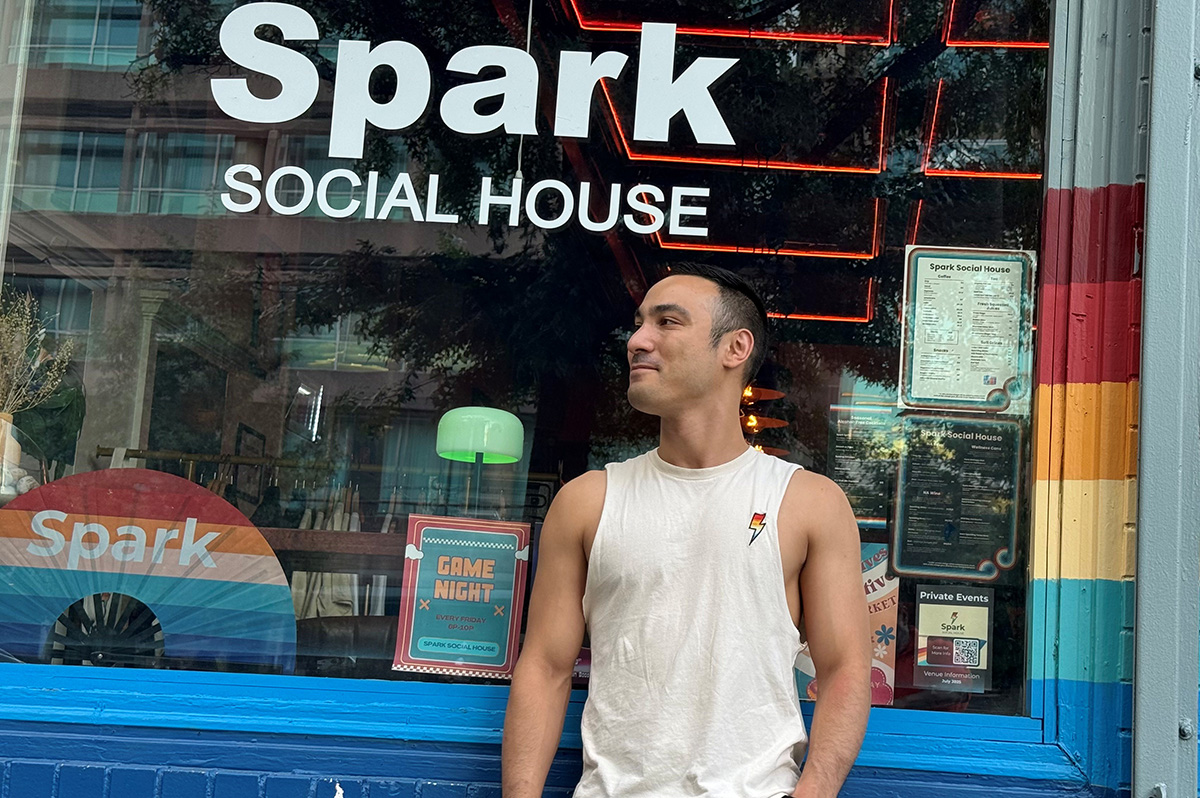
It is exciting to write about Nick Tsusaki, the founder and owner of Spark Social, 2009 14th St., N.W. Tsusaki just announced the official opening, on Sunday, Aug. 23, of a new daytime event, called Spark Coffee Club, a great opportunity to meet up with friends, or meet new ones. It is in partnership with Go Gay DC and runs 12-1 p.m., every Sunday. If you are new to D.C., you can browse more than 180 local LGBTQ+ community groups Tsusaki has listed on the community tab of his website: spark-dc.com/community.
“I’ve been out for most of my life, but it wasn’t until I started working in queer spaces, surrounded by queer people, that I really felt proud, even lucky, to be gay,” he said. “I hope Spark is a place where more people come to that same realization.”
Tsusaki went to Georgetown for his undergraduate studies, and spent four years doing Navy ROTC, then went into the Navy. He told me, “Town was the first gay bar I ever went to. It was always such a liberating and euphoric experience, I knew I wanted to come back to D.C. permanently, after the Navy.”
During his eight years in the Navy, Tsusaki spent time in among other places, Bahrain, and Korea. He was D.C. operations manager, where he managed large, diverse teams, across multiple countries, supervising logistics, scheduling, safety protocols, and daily operational readiness. He also directed emergency response and crisis management operations, including White House support, COVID-19 response planning, and major safety and security protocols protecting tens of thousands of personnel.
Tsusaki recounted, “When I left the Navy in 2023, I applied to every gay bar in the city. Fortunately, Shakers, was just opening at that time, and I started as a barback on the opening team. My appreciation for the D.C. LGBTQ+ community, and LGBTQ+ spaces only grew as I worked with and met some of the most hilarious, talented, proud, diverse, and supportive people in my life. After just a year in the industry, my passion had grown so strong I decided I wanted to open my own venue.”
Tsusaki then built Spark Social, and now supervises a 20-person team across café, bar, retail, and nightlife operations, ensuring strong safety standards, clear procedures, and consistent guest experience. He has developed a deeply trusted neighborhood presence through strong community partnerships, resulting in a 4.9 Google rating with 120+ reviews. He created an innovative 1-for-1 cocktail menu offering alcoholic and non-alcoholic options, with equal quality and presentation, and promotes an inclusive nightlife for non-drinkers. He has established Spark as a unique market leader in LGBTQ+ hospitality, combining daytime café culture, with late-night programming, and community-centered events. So, whether you go for the new community coffee hour on Sundays, or any other time, Spark Social is a place where you will feel comfortable.
Tsusaki earned his bachelor’s of science degree in foreign service, Georgetown University; and master’s in business analytics from the University of Virginia, Darden School of Business.
Maryland
Anne Arundel schools updates gender identity regulation following Trump administration threats
District facing federal lawsuit, White House threats over guidelines
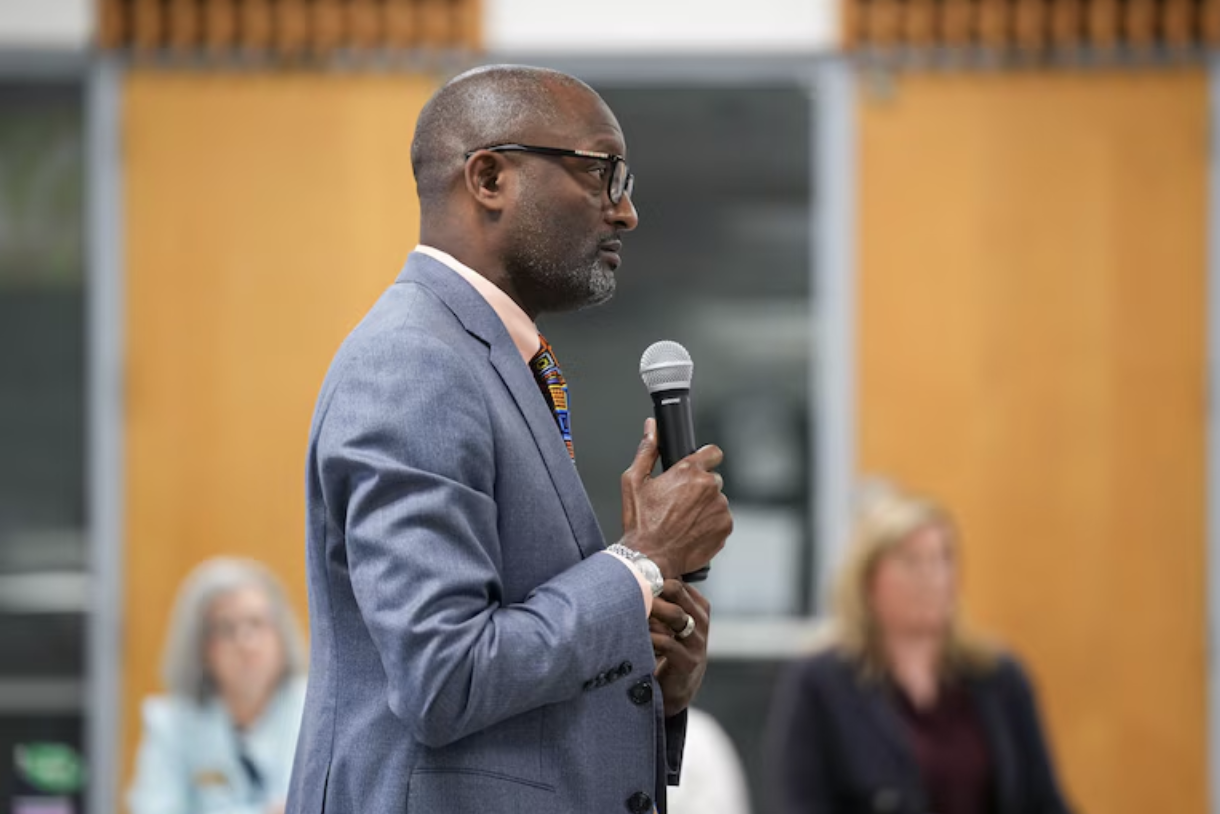
By JESSICA CALEFATI | Under pressure from the Trump-Vance administration, Anne Arundel County Public Schools Supt. Mark Bedell announced Wednesday the district had updated a regulation intended to protect transgender students’ right to be called by their chosen name.
The revised language makes clear that district rules on gender identity do not block parents’ rights under the Family Educational Rights and Privacy Act as the federal government alleged last month, and that a student’s gender identity will not be treated as confidential medical information.
“No policy, guideline, or practice may limit or otherwise interfere with parental rights under FERPA,” Bedell wrote in a Wednesday letter to the community. “This includes any information maintained in education records that relates to gender identity, transgender status, sexual orientation, preferred name, or preferred pronouns.”
The rest of this article can be read on the Baltimore Banner’s website.

Exploring Renée Richards’s life through lens of a trans author

Log Cabin Republicans remove transgender rights from mission

Not all trans people are the same

Queer team brings girl power to fully baked ‘The Wrong Girls’

Democrat Maureen ‘Mo’ Madden takes on longtime GOP stronghold in Delaware’s 38th

Russian LGBTQ rights group to shut down

Winsome Earle-Sears ‘Life and Marriage Tour’ to include Northern Va. stops

White House targets gender-affirming care funding, states fight back

Madonna nominated for 11 MTV VMAs

Man charged with anti-gay assault in D.C. accepts plea offer
-

 Russia5 days ago
Russian LGBTQ rights group to shut down
-
Virginia5 days ago
Winsome Earle-Sears ‘Life and Marriage Tour’ to include Northern Va. stops
-
White House5 days ago
White House targets gender-affirming care funding, states fight back
-
Celebrity News4 days ago
Madonna nominated for 11 MTV VMAs