News
Will new voices call on Obama to sign ENDA exec order?
New letter gives Dem leaders, Republicans chance to seek action
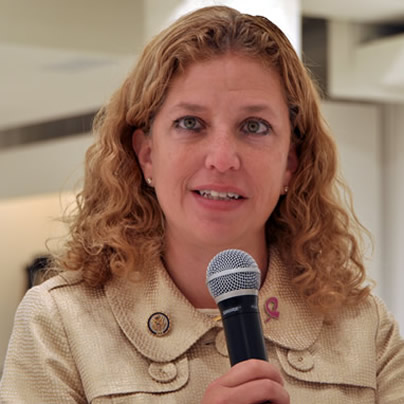
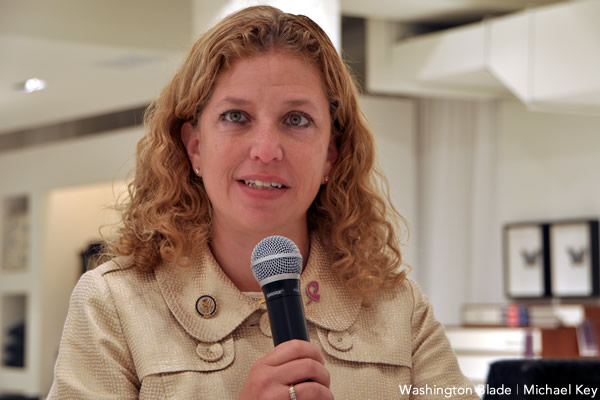
DNC Chair Debbie Wasserman Schultz is among those who haven’t articulated support for an ENDA executive order. (Washington Blade file photo by Michael Key)
A new letter is being circulated among members of Congress urging President Obama to sign an executive order barring discrimination against LGBT workers, raising questions about whether pro-gay lawmakers who have previously made no explicit calls for the directive will take the opportunity to do so.
Key members of the Democratic leadership have yet to call for the executive order as have Republicans who’ve already articulated support for the Employment Non-Discrimination Act, legislation that would bar workplace discrimination against LGBT people.
The letter that’s being circulated among lawmakers calls on Obama to sign the order in the wake of his declaration that 2014 will be a “Year of Action” through administrative means if Congress doesn’t act on his legislative agenda.
“As we continue to work towards final passage of the Employment Non-Discrimination Act (ENDA) with strong bipartisan support, we urge you to take action now to protect millions of workers across the country from the threat of discrimination simply because of who they are or who they love,” the letter states.
A source familiar with the letter said the opportunity to sign it would close at the end of Monday.
Although this is the first letter intended to include signatures from members of both the House and Senate, it’s not the first time lawmakers signed letters calling for the executive order. Last year, 110 House Democrats signed a letter seeking the directive and 37 senators signed a letter to that effect.
But neither of those letters included names of lawmakers in Democratic leadership or Republicans — even though many had previously articulated support for the executive order or ENDA in some capacity. The newly circulated letter presents an opportunity for those lawmakers to augment the call with powerful voices and create a bipartisan effort to push Obama to take administrative action to protect LGBT workers from discrimination.
The top members of the House Democratic Caucus — House Minority Leader Nancy Pelosi (D-Calif.), House Minority Whip Steny Hoyer (D-Md.) and Assistant House Minority Leader Jim Clyburn (D-Calif.) — each refrained from signing the House version of the letter in 2013. None of the offices for those lawmakers responded to the Washington Blade’s request to comment on whether they’d sign the letter this time around.
[UPDATE: Mariel Saez, a Hoyer spokesperson, told the Washington Blade on Monday following the initial publication of this article that the Democratic Whip “is signing onto the letter.”]
Even though she didn’t sign the letter, Pelosi has been on the record in support of the executive order since 2011, when the Blade asked her during her weekly news conference if she’d support that action. She also said Obama “of course” should sign the directive in January when speaking with The Huffington Post.
Clyburn was quoted as saying by The Huffington Post he feels “very strongly” that Obama should sign the executive order just months ago, reportedly adding “I don’t know where I would be today if the executive order had not been used to get rid of slavery.” The Blade is unaware of any public comments from Hoyer on the LGBT executive order.
At the time the 2013 letter was made public, Pelosi’s office cited a policy that she refrains from signing group letters because of her position in Democratic leadership. However, she had earlier signed her name to letters seeking action from the administration to help bi-national same-sex couples in addition to signing amicus briefs calling on federal courts to strike down the Defense of Marriage Act.
[UPDATE #2: Following publication of this article, Drew Hammill, a Pelosi spokesperson, said his boss won’t sign the letter currently being circulated, noting she rarely signs group letters, and said she’ll instead take her own course of action.
“Leader Pelosi has publicly expressed support for this executive order and will be sending her own private letter to the President on this matter,” Hammill said.]
Also conspicuously absent from the 2013 letter is Rep. Debbie Wasserman Schultz, who also serves as chair of the Democratic National Committee and is known for her support of LGBT rights. In the past week, she’s announced the DNC would form a lesbian leadership council and hired a gay operative as the DNC’s national political director.
Neither Wasserman Schultz’s congressional office in D.C. nor the DNC responded to the Blade’s request for comment on whether she’d sign the letter this time around.
In January, Wasserman Schultz told The Huffington Post she broadly supports the idea of Obama using his executive authority, but refused to say whether that principle applies to an executive order for LGBT workers.
Wasserman Schultz’s name was also absent from letters seeking support of bi-national same-sex couples. At the time one letter was signed in 2011, Wasserman Schultz told reporters during an Immigration Equality fundraiser she supported the action, but didn’t feel comfortable making demands on the administration because of her position in the DNC.
“Given that I’m the chair of the DNC, it’s a little odd for me to be asking the administration to do specific things,” Wasserman Schultz said at the time. “So I personally support it, but because I’m also the political voice of the president, asking the president to do things publicly can get a little awkward.”
On the Senate side, Senate Majority Leader Harry Reid (D-Nev.) also didn’t sign his chamber’s version of the letter in 2013. His office didn’t respond to a request for comment on whether he’ll add his name this time around.
Reid has offered a nuanced position on the executive order. In February, he told The Huffington Post, “If the president decides to do it, I’d be in favor of it.”
But on either the letter signed by the House or the Senate in 2013, not a single Republican signed their name. If a single one did so this time around, it would represent the first time that a Republican lawmaker had called on Obama to sign an executive order.
None of the offices of 10 Republican senators who voted for ENDA on the Senate floor responded to a request for comment on the letter. Those are Sens. Kelly Ayotte (R-N.H.), Susan Collins (R-Maine), Jeff Flake (R-Ariz.), Orrin Hatch (R-Utah), Dean Heller (R-Nev.), Mark Kirk (R-Ill.), John McCain (R-Ariz.), Lisa Murkowski (R-Alaska), Rob Portman (R-Ohio) and Pat Toomey (R-Pa.).
Despite being an original co-sponsor of ENDA, Kirk has previously spoken against an executive order prohibiting federal contractors from discriminating against LGBT workers.
“If we load executive order upon executive order, all of which would be wiped out the day after the president of the other party takes power, you really haven’t advanced the ball much,” Kirk said in 2011. “That’s why the legislation is absolutely necessary.”
In the House, six Republicans co-sponsor ENDA: Reps. Ileana Ros-Lehtinen (R-Fla.), Richard Hanna (R-N.Y.), Charlie Dent (R-Pa.), Michael Grimm (R-N.Y.), Chris Gibson (R-N.Y.) and Jon Runyan (R-N.J.).
According to the Huffington Post, Ros-Lehtinen has said she doesn’t support the executive order. Of those six Republicans, only Dent’s office responded to the Blade’s request to comment on the letter, and the response was negative.
“Congressman Dent believes that the regular legislative process is the best way to proceed in making this critical legislation outlawing workplace discrimination the law of the land,” said Dent spokesperson Shawn Millan.
Gregory Angelo, executive director of the Log Cabin Republicans, said he doesn’t know whether Republicans will sign the letter, but hopes to see some GOP names calling for the executive order.
“I’m not going to engage in speculation, but with declared GOP support for ENDA among House members of both the House and Senate, I would hope to see some Republican representation on any letter holding the president accountable to a promise he made to Americans six years ago,” Angelo said.
Neither the LGBT Equality Caucus, which is handling circulation of the letter in the House, nor the office of ENDA’s chief sponsor in the Senate Jeff Merkley (D-Ore.), which is handling it in the Senate, responded to the Blade’s request for comment over the weekend about expected signers of the letter.




Delaware
Democrat Maureen ‘Mo’ Madden takes on longtime GOP stronghold in Delaware’s 38th
Out lesbian candidate for state House focused on infrastructure needs, voting rights
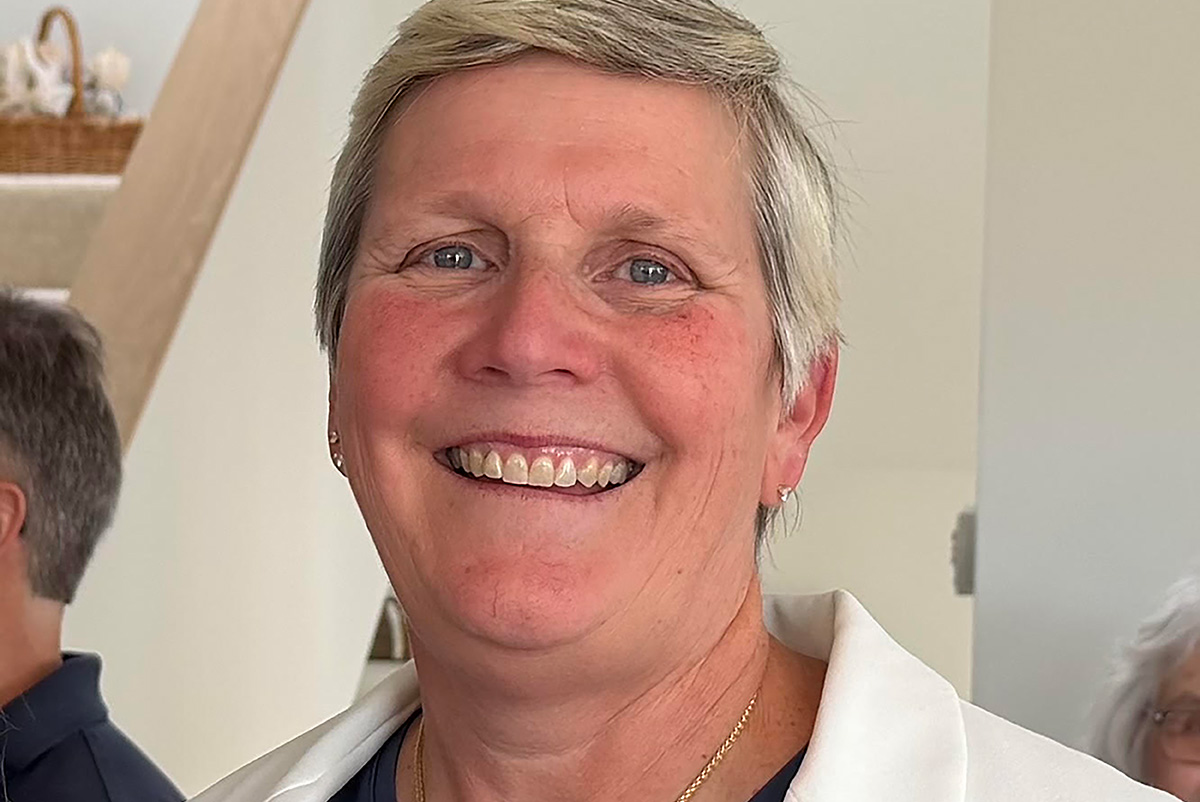
Democrat Maureen “Mo” Madden is running for the Delaware House of Representatives in the 38th District, seeking to win a seat that has been held by Republicans for more than two decades.
The race opened up after Republican state Rep. Ron Gray announced in April that he would not seek reelection after seven terms in the General Assembly.
Gray was first elected in 2012 and represents communities including Bethany Beach, Fenwick Island, Selbyville and Ocean View. Madden, a Dagsboro resident, filed to run for the seat in 2025.
Madden is a retired federal civil servant who spent nearly 23 years at NASA and more than seven years at the National Oceanic and Atmospheric Administration. She holds a master’s degree in physics and previously worked in leadership at NOAA.
She said her professional experience taught her the importance of working collaboratively, something she believes would translate to the legislature.
“Advocating, negotiating, and collaborating are all skills that a legislator needs,” she said. “You learn to collaborate. You learn to negotiate. You learn to advocate for your budget, for your team, and for your projects.”
Madden said her decision to run began after she and her wife moved to the area and she noticed the lack of Democratic candidates on the ballot in her district.
“Somebody’s got to do it, and I’ve got time. I’m retired,” said Madden.
She acknowledged the difficulty of running as a Democrat in the district, which has been represented by Republicans since 2002.
Madden said one of the biggest concerns she hears from residents is the rapid growth of Sussex County.
“We have a massive amount of growth and a massive amount of development,” said Madden.
Madden said the growth has placed additional pressure on roads, schools, emergency services, as well as water and sewer infrastructure.
“We need to find a way to bring more money down here for the school system and for the infrastructure that we need,” she said.
She also raised concerns about the impact of new developments on existing neighborhoods, particularly in regard to flooding and drainage.
“Something needs to be done,” said Madden.
Madden also pointed to climate change as a factor affecting the region.She said the state will need to work on both addressing development and preparing communities for increasingly severe weather.
“We have to work both sides of it,” Madden said.
Madden said improving infrastructure would be a priority if she is elected, particularly roads and other infrastructure that affect residents’ daily lives.
“I want to increase the safety of my neighbors,” she said.
Madden also said she wants to address infrastructure needs related to water and sewer service, as well as the availability of health care in the rapidly growing coastal region.
Madden said protecting voting rights would be another priority in the legislature.
“The right to vote is one of the biggest things that we have here in a democracy,” she said.
She said that she supports early voting, mail-in voting, and same-day registration, as well as restoring voting rights to people who have completed felony sentences.
“You should not lose a constitutional right because you’ve been in jail,” said Madden.
“Protecting the right to vote is how I will defend democracy when I get to the state House,” she said.
Madden said she would also support efforts to enshrine certain rights in the Delaware Constitution, including reproductive rights, voting rights, and the right to marriage.
“Those three protections of our freedoms that are right now under attack need to be more secure in the Delaware State Constitution,” she said.
As an openly lesbian candidate, Madden said LGBTQ+ rights are important to her, particularly the treatment of young transgender people.
She said she is concerned about efforts to restrict transgender students’ participation in sports and other policies affecting transgender people.
“They are picking on the most vulnerable of the most vulnerable,” said Madden.
She said she hopes voters will view LGBTQ+ people as part of their communities rather than as fundamentally different from their neighbors.
“We’re your neighbors. We’re your friends. We’re your family,” she said.
Madden will face Republican Carlie Carey in the general election on Nov. 3.
The Comings & Goings column is about sharing the professional successes of our community. We want to recognize those landing new jobs, new clients for their business, joining boards of organizations and other achievements. Please share your successes with us at [email protected].
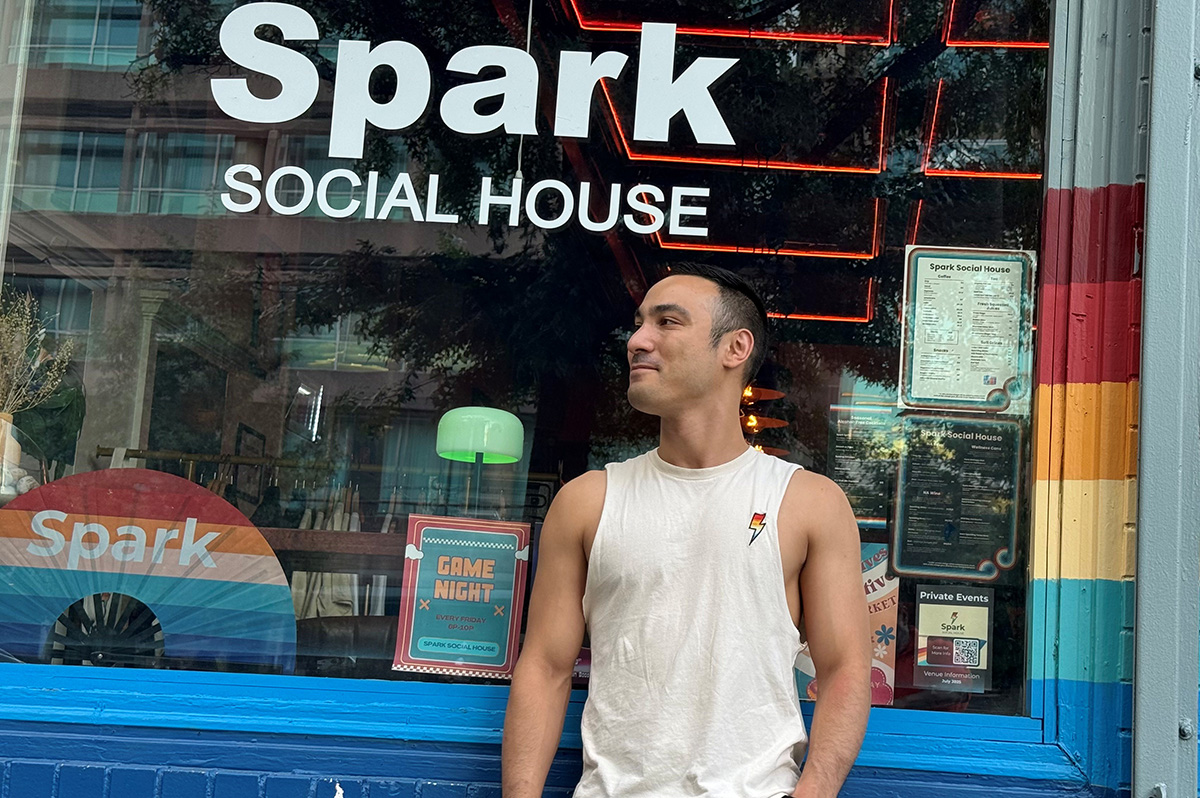
It is exciting to write about Nick Tsusaki, the founder and owner of Spark Social, 2009 14th St., N.W. Tsusaki just announced the official opening, on Sunday, Aug. 23, of a new daytime event, called Spark Coffee Club, a great opportunity to meet up with friends, or meet new ones. It is in partnership with Go Gay DC and runs 12-1 p.m., every Sunday. If you are new to D.C., you can browse more than 180 local LGBTQ+ community groups Tsusaki has listed on the community tab of his website: spark-dc.com/community.
“I’ve been out for most of my life, but it wasn’t until I started working in queer spaces, surrounded by queer people, that I really felt proud, even lucky, to be gay,” he said. “I hope Spark is a place where more people come to that same realization.”
Tsusaki went to Georgetown for his undergraduate studies, and spent four years doing Navy ROTC, then went into the Navy. He told me, “Town was the first gay bar I ever went to. It was always such a liberating and euphoric experience, I knew I wanted to come back to D.C. permanently, after the Navy.”
During his eight years in the Navy, Tsusaki spent time in among other places, Bahrain, and Korea. He was D.C. operations manager, where he managed large, diverse teams, across multiple countries, supervising logistics, scheduling, safety protocols, and daily operational readiness. He also directed emergency response and crisis management operations, including White House support, COVID-19 response planning, and major safety and security protocols protecting tens of thousands of personnel.
Tsusaki recounted, “When I left the Navy in 2023, I applied to every gay bar in the city. Fortunately, Shakers, was just opening at that time, and I started as a barback on the opening team. My appreciation for the D.C. LGBTQ+ community, and LGBTQ+ spaces only grew as I worked with and met some of the most hilarious, talented, proud, diverse, and supportive people in my life. After just a year in the industry, my passion had grown so strong I decided I wanted to open my own venue.”
Tsusaki then built Spark Social, and now supervises a 20-person team across café, bar, retail, and nightlife operations, ensuring strong safety standards, clear procedures, and consistent guest experience. He has developed a deeply trusted neighborhood presence through strong community partnerships, resulting in a 4.9 Google rating with 120+ reviews. He created an innovative 1-for-1 cocktail menu offering alcoholic and non-alcoholic options, with equal quality and presentation, and promotes an inclusive nightlife for non-drinkers. He has established Spark as a unique market leader in LGBTQ+ hospitality, combining daytime café culture, with late-night programming, and community-centered events. So, whether you go for the new community coffee hour on Sundays, or any other time, Spark Social is a place where you will feel comfortable.
Tsusaki earned his bachelor’s of science degree in foreign service, Georgetown University; and master’s in business analytics from the University of Virginia, Darden School of Business.
White House
Trump-Vance administration’s LGBTQ brain drain: what you need to know
Several high profile figures have left government since January 2025
Uncloseted Media published this article on Aug. 21.
By SPENCER MACNAUGHTON and HOPE PISONI | Since President Donald Trump regained office in January 2025, he and his administration have waged an all-out war against the LGBTQ community.
This has led queer Americans to move to other countries at unprecedented rates — Rainbow Railroad, a Canadian nonprofit that supports LGBTQ asylum seekers, reported receiving a huge increase in inquiries from the U.S. last year.
The same pattern is playing out within the government. And it’s leading to a brain drain of competent queer employees and allies who are either resigning or being fired, often because of their LGBTQ identity or their belief that queer people deserve basic human rights.
Here are six examples of federal workers who had a messy exit from Trump 2.0:
Demetre Daskalakis
- WHAT HE DID: Dr. Daskalakis is one of the foremost LGBTQ health professionals in the U.S. Under Trump’s first term, he was appointed director of the Division of HIV/AIDS Prevention at the Centers for Disease Control and Prevention. Under Biden, he also served as the deputy response coordinator for mpox at the White House.
- WHAT HAPPENED: While he continued a lot of this work under Trump 2.0, he didn’t last long. In August 2025, he resigned from the CDC, writing in his resignation letter that he was “unable to serve in an environment that treats CDC as a tool to generate policies and materials that do not reflect scientific reality and are designed to hurt rather than to improve the public’s health.”
- BOTTOM LINE: I recently interviewed Daskalakis, where he told me that leadership from RFK Jr.’s Health and Human Services Department justified HIV cuts by saying the virus is “just too woke.”
Julia Curlee
- WHAT SHE DID: Julia Curlee worked in intelligence for nearly two decades between the CIA and the National Security Council. Earlier this week, she wrote an article in The Atlantic explaining how she had served as Mike Pence’s daily briefer and the NSC’s director for intelligence programs. During Trump 1.0, she briefed the president on Air Force One.
- WHAT HAPPENED: Curlee told CNN this week that in Trump’s second term, her treatment by the federal government transformed. She was no longer allowed to use the women’s bathroom on federal property and had to leave her workplace to relieve herself. Her passport was also reissued to read “male,” which led to complications when traveling abroad. In March 2025, less than 70 days into Trump’s second term, Curlee says she received a call while at a rib joint in Virginia with her family informing her that her White House tour was over and that they couldn’t tell her why. She continued to work for the CIA for some months, but she later resigned.
- BOTTOM LINE: Curlee wrote that moments after she learned she was fired from the White House, she saw a post from right-wing political activist Laura Loomer that read “A transgender, Biden holdover who hates President Trump is still working in the NSC intel office. I’m told there are several NSC staffers who have complained that this trans Biden holdover hasn’t been fired yet, but nothing is being done about it.”
Marc Seawright
- WHAT HE DID: Marc Seawright worked for more than eight years at the U.S. Equal Employment Opportunity Commission. Most recently, he served as the EEOC’s director of information governance and strategy, where he oversaw tech policy to help combat workplace harassment and discrimination.
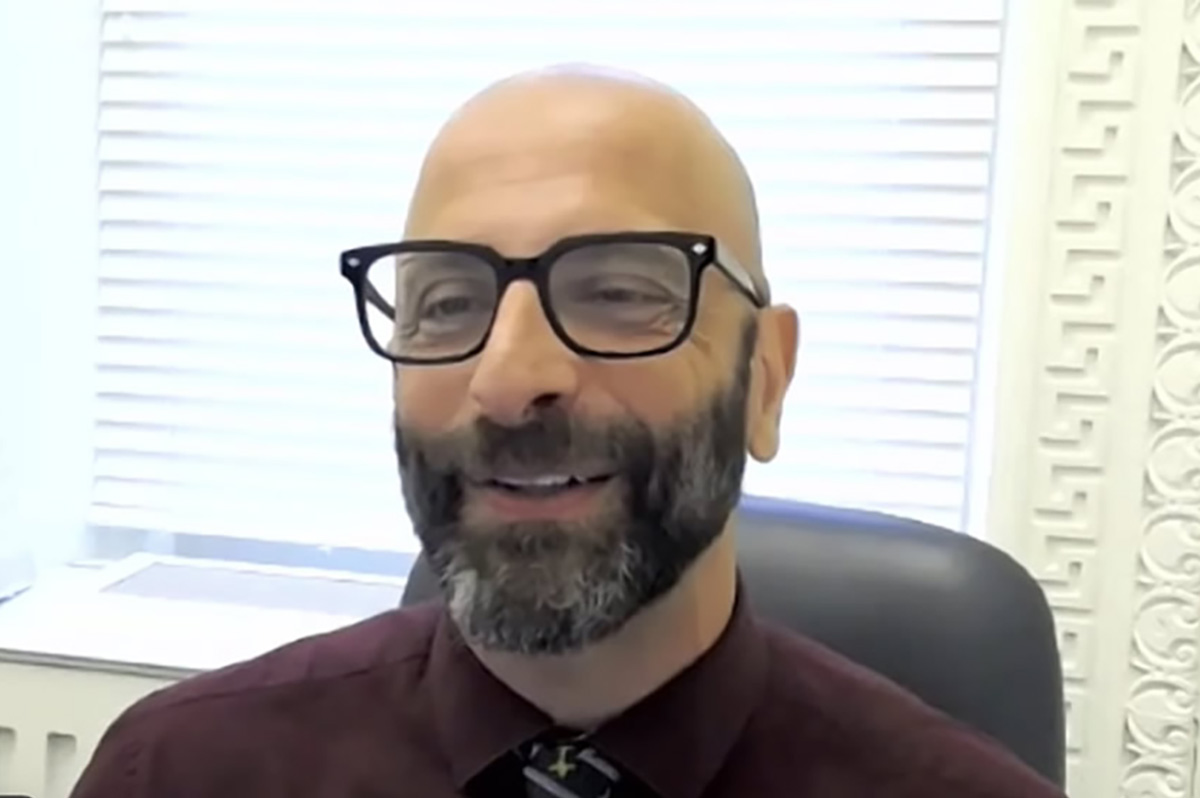
- WHAT HAPPENED: During Trump 2.0, Seawright was ordered to develop technology that would erase any mention of LGBTQ identities from EEOC outreach materials. “[My expertise] was being leveraged to perpetuate discrimination against people like me,” he told the Associated Press. In that article, Seawright and other transgender and gender nonconforming federal employees described their “fear, grief, frustration, and distress working for the federal government at a time when it rejects them — often with no clear path for recourse or support.”
- BOTTOM LINE: Seawright quit in June, citing a hostile work environment. “It became overwhelming. It felt insurmountable,” he told the AP. He has now hired lawyers at Katz Banks Kumin and has filed a discrimination complaint.
David Maltinsky
- WHAT HE DID: Until 2025, Maltinsky worked for more than 16 years at the FBI as an intelligence specialist. In 2025, he was training to become a special agent, but three weeks ahead of graduation, he was fired.
- WHAT HAPPENED: On Oct. 1, he was delivered a letter from FBI Director Kash Patel informing him that he was being fired for an “inappropriate display of political signage.” The signage in question, according to Maltinsky, was a Pride flag displayed in his work station at a previous post in Los Angeles. The flag had been given to him by the FBI’s LA Field Office, and Maltinsky says he had been told by multiple supervisors that displaying it would not be a violation.
- BOTTOM LINE: Maltinsky is currently suing the FBI and the Department of Justice, arguing that his firing constituted unlawful discrimination.
Mary Brinkmeyer
- WHAT SHE DID: Brinkmeyer had been working as a psychologist for the Department of Veterans Affairs since 2008. She held multiple leadership roles, including the LGBTQ veteran care coordinator at the Hampton VA Medical Center. She established the first military support group for trans servicemembers and was awarded Navy Psychology Civilian Psychologist of the Year in 2016.
- WHAT HAPPENED: Following an early Trump executive order directing the federal government to purge any practices promoting “gender ideology,” Brinkmeyer says staff at her workplace were told to remove all LGBTQ-affirming materials from both public and private areas, as well as to identify “anything in medical records, training materials, or patient resources that could be considered ‘gender ideology.’” When she refused to comply and confronted her supervisor, she says her concerns were dismissed.
- BOTTOM LINE: Brinkmeyer resigned in February 2025, stating that she “didn’t want to be complicit in something that I knew was wrong.”
Amy Paris
- WHAT SHE DID: Paris was the second-highest ranking trans woman in the federal government, serving as a deputy digital services lead in the HHS Department, where she oversaw the safety of organ donations. Prior to that, she worked in a number of tech-related roles across the federal government since the Bush administration. She helped create cross-agency spending trackers, streamlined unemployment insurance during the pandemic and implemented trans-inclusive policies like gender-neutral passports.
- WHAT HAPPENED: Paris was fired as part of a string of mass layoffs across the federal government in February 2025. While the HHS did not publicly comment on why she was fired, Paris says she was told it was because of her performance, despite the fact that she got a 4.75 out of five on her last performance review and was praised for her work by multiple Biden administration officials.
- BOTTOM LINE: Paris told the 19th she suspected her firing was politically motivated, saying the Trump administration is “trying to sow discord and disrupt confidence in the workings of the federal government.”

Not all trans people are the same

Queer team brings girl power to fully baked ‘The Wrong Girls’

Democrat Maureen ‘Mo’ Madden takes on longtime GOP stronghold in Delaware’s 38th

Comings & Goings

Impulse to host ‘PrEP Pool Party’ at Vida: Navy Yard

‘Maddie’s Secret’ defies campy expectations

PHOTOS: Nellie’s Drag Brunch

Remembering Barbara ‘Boo’ Price, a pioneering force in women’s music

Russian LGBTQ rights group to shut down