News
Court strikes down Michigan marriage ban
Judge delivers ruling following two-week trial on prohibition of gay nuptials
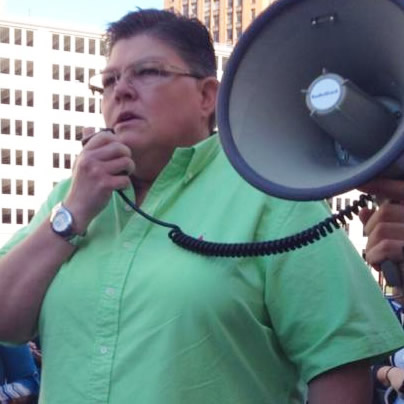
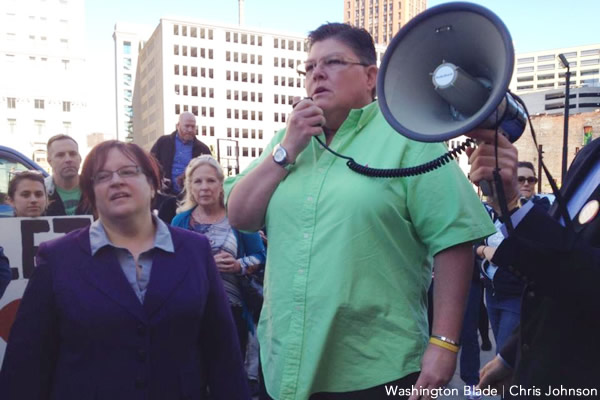
April DeBoer (on left) and Jayne Rowse filed the lawsuit against Michigan’s ban on same-sex marriage (Washington Blade file photo by Chris Johnson).
A federal court in Michigan made the latest in a series of rulings in favor of marriage equality by striking down the Wolverine State’s constitutional ban on same-sex marriage.
In a 31-page ruling, U.S. District Judge Bernard Friedman, a Reagan appointee, ruled on Friday the state’s prohibition on gay nuptials violated the equal protection clause under the Fourteenth Amendment of the U.S. Constitution.
“After reviewing the evidence presented at the trial, including the testimony of various expert witnesses, the exhibits, and stipulations, and after considering all of the legal issues involved, the Court concludes that the MMA is unconstitutional and will enjoin its enforcement,” Friedman writes.
Michigan’s ban on same-sex marriage, known as Michigan Proposal 04-2, was approved as part of the state constitution by 59 percent of Michigan voters in 2004.
Friedman devotes a considerable portion of his decision to the ban’s impact on same-sex couples and the children they raise, drawing on language used by U.S. Associate Justice Anthony Kennedy in his ruling against the Defense of Marriage Act.
“In attempting to define this case as a challenge to ‘the will of the people,’ state defendants lost sight of what this case is truly about: people,” Friedman writes. “No court record of this proceeding could ever fully convey the personal sacrifice of these two plaintiffs who seek to ensure that the state may no longer impair the rights of their children and the thousands of others now being raised by same-sex couples.”
Nowhere does the ruling mention a stay on the decision. Rana Elmire, a spokesperson for the ACLU of Michigan, said her organization believes same-sex couples can marry immediately in the state.
Although Elmire initially said clerks’ offices are reopening to marry couples in the wake of the ruling, the ACLU of Michigan later tweeted that it can’t confirm reports that clerks offices are re-opening
Two of the clerk’s offices for the more populous counties in Michigan — Washtenaw and Oakland — were already closed when the ruling was handed down and had no one answering calls when the Blade contacted them to see if they would reopen. Ingham County Clerk Barb Byrum, was present when the ruling was handed down, but said her office would remain closed until Monday at 8 am.
But according to a tweet from Gongwer News Service, the Washtenaw County clerk’s office will be open at 9 am on Saturday to distribute marriage licenses.
Washtenaw County Clerk to open between 9 a.m. and 1 p.m. Saturday to offer marriage licenses in wake of #gaymarriage ruling.
— Gongwer News Service (@GongwerMichigan) March 22, 2014
Shannon Minter, legal director for the National Center for Lesbian Rights, also said he believes same-sex couples can marry at once in Michigan — as long as clerk’s offices are open.
“I am not sure if any city halls or clerk’s offices are open over the weekend, but if so, then marriages could take place immediately,” Minter said.
Michigan has a three-day waiting period after obtaining a license and being able to wed, but that waiting period can be waived for an additional fee that varies between county to county.
Now that the district has ruled against the state’s ban on same-sex marriage, state officials — Michigan Gov. Rick Snyder and Attorney General Bill Schuette, who have been defending the law in court — have the option to appeal to the decision to the U.S. Sixth Circuit Court of Appeals.
Immediately after the ruling, Schuette filed a notice of appeal with the court, saying he and Snyder “hereby appeal” the case to the appellate court. All four states within the Sixth Circuit — Michigan, Tennessee, Ohio and Kentucky — now have marriage equality cases before the appeals court.
Schuette said in a statement after the ruling that he has filed an emergency request for a stay and an appeal of the decision. Both were filed before the Sixth Circuit late Friday.
“In 2004 the citizens of Michigan recognized that diversity in parenting is best for kids and families because moms and dads are not interchangeable,” Schuette said. “Michigan voters enshrined that decision in our State constitution, and their will should stand and be respected. I will continue to carry out my duty to protect and defend the Constitution.”
The ruling is the latest in a string of decisions from federal courts against bans on same-sex marriage in states such as Utah, Oklahoma, Virginia and Texas following the U.S. Supreme Court’s decision against the Defense of Marriage Act. According to Lambda Legal, the decision is the 14th decision in a row from a court striking down a state ban on same-sex marriage after the DOMA decision.
But the decision in Michigan case is the first of the post-DOMA decisions handed down after a trial.
For two weeks, Friedman heard testimony from trial from various witnesses on the constitutionality of Michigan’s ban on same-sex marriage. Among the witnesses the state presented was Mark Regenrus, the author of a widely discredited study denigrating parenting by same-sex couples.
As Think Progress notes, on the witness stand, Regnerus admitted on the witness that he doesn’t know whether excluding same-sex couples from marriage has any impact on the children they raise.
Friedman criticizes the testimony from Regnerus during the trial, saying the court finds his study “entirely unbelievable and not worthy of serious consideration.”
“Whatever Regnerus may have found in this ‘study,’ he certainly cannot purport to have undertaken a scholarly research effort to compare the outcomes of children raised by same-sex couples with those of children raised by heterosexual couples,” Friedman writes. “It is no wonder that the NFSS has been widely and severely criticized by other scholars, and that Regnerus’s own sociology department at the University of Texas has distanced itself from the NFSS in particular and Dr. Regnerus’s views in general and reaffirmed the aforementioned APA position statement.”
The case, DeBoer v. Snyder, was filed by private attorneys in January 2012 on behalf of April DeBoer and Jayne Rowse, a lesbian couple in Hazel Park, Mich., who were seeking the ability to jointly adopt their three children. The couple amended their case early last year to seek marriage equality in Michigan, while still pursuing their goal of adoption rights.
As recorded by local TV affiliate WXYZ, DeBoer and Rowze embraced each other and their children with joy after one of their attorneys, Dana Nessel, read aloud the ruling to them.
LGBT advocates praised Friedman for striking down the ban on same-sex marriage and said it’s evidence a nationwide ruling in favor of marriage equality is within reach.
Jay Kaplan, a staff attorney for the ACLU of Michigan, said the lawsuit at its core was about “protecting Michigan families.”
“We are thrilled that the court found that there is no reason to deny loving, committed same-sex couples and their families the protections that come with marriage,” Kaplan said. “By doing so, the court has underscored the American value that freedom is for everyone.”
Evan Wolfson, president of Freedom to Marry, said the win for same-sex couples in Michigan comes after opponents couldn’t identify a single reason why they shouldn’t be able to marry.
“Today’s win comes after a full trial — complete with prosecutors and defendants, witness cross-examinations, and testimony from family experts on the well-being of children — which showed that opponents have nothing more than the same bogus claims they have recycled for decades,” Wolfson said. “They were simply unable to provide a single legitimate reason why committed same-sex couples should be excluded from marriage. Michigan, like all of America, is ready for the freedom to marry.”
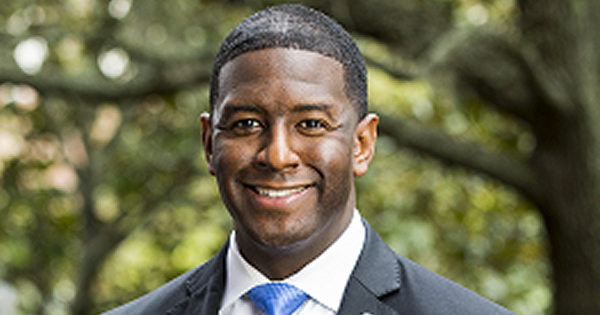

District of Columbia
Campaign launched to elect more LGBTQ candidates to ANC seats
Capital Stonewall Democrats behind Queering ANCs effort

The Capital Stonewall Democrats, D.C.’s largest local LGBTQ political group, announced on July 7 it has launched a campaign to help elect large numbers of LGBTQ candidates to the city’s Advisory Neighborhood Commissions.
The D.C. local government is believed to be unique among U.S. cities in currently having 46 Advisory Neighborhood Commissions consisting of 345 single-member districts in neighborhoods throughout the city in which unpaid Advisory Neighborhood Commissioners are elected for two-year terms.
The commissions are charged with considering a wide range of policies and programs impacting their neighborhoods, including traffic, parking, recreation, street improvements, liquor licenses, zoning, economic development, police protection, sanitation and trash collection, and D.C.’s annual budget, according to the ANC website.
Although the ANCs do not have authority to set or reject policies or proposals, such as applications for liquor licenses, city agencies are required to give “great weight” to ANC recommendations, according to the law creating the ANCs.
Kent Boese, a gay former ANC commissioner, currently serves as executive director of the D.C. Office of ANCs.
“We are launching the most ambitious hyperlocal LGBTQ+ candidate pipeline initiative in the country,” said Stevie McCarty, the Capital Stonewall Democrats president, in a July 7 statement that announced the Queering ANCs campaign.
“As an ANC member, I know firsthand how these seats shape our neighborhoods, from housing and public safety to sanitation,” McCarty says in the statement. “I’m proud to lead this effort to ensure more LGBTQ+ Washingtonians see themselves as leaders in their communities,” he said.
The ANC Rainbow Caucus, which was created by LGBTQ ANC members, shows on its website that there are currently 38 caucus members consisting of elected LGBTQ ANC commissioners serving in the current 2025-2026 two-year term.
The website shows there are LGBTQ commissioners who are caucus members in each of the city’s eight wards, with six in Ward 1, eight in Ward 2, one in Ward 3, six in Ward 4, five in Ward 5, three in Ward 6, eight in Ward 7, and one in Ward 8.
The Washington Blade couldn’t immediately determine how many of them will be running for re-election in D.C.’s general election in November. But McCarty said Capital Stonewall Democrats hopes to recruit many more LGBTQ candidates to run for ANC seats.
The D.C. Board of Elections website shows the deadline for filing 25 required petition signatures to be placed on the ballot is Aug. 5.
A Queering ANCs website launched this week by Capital Stonewall Democrats provides details on how to run for an ANC seat and offers help for those interested in running.
“Think of someone in your building, neighborhood, friend group, community organization, or professional network who cares deeply about D.C. and would make a strong leader,” McCarty says in his statement. “Send them QueeringANCs.org and personally ask them to consider running,” he said.
The website can be accessed at QueeringANCs.org.
Florida
Gay Fla. Democrat Elijah Manley sees opportunity in Trump’s second term
State’s 20th Congressional District’s includes Broward, Palm Beach Counties
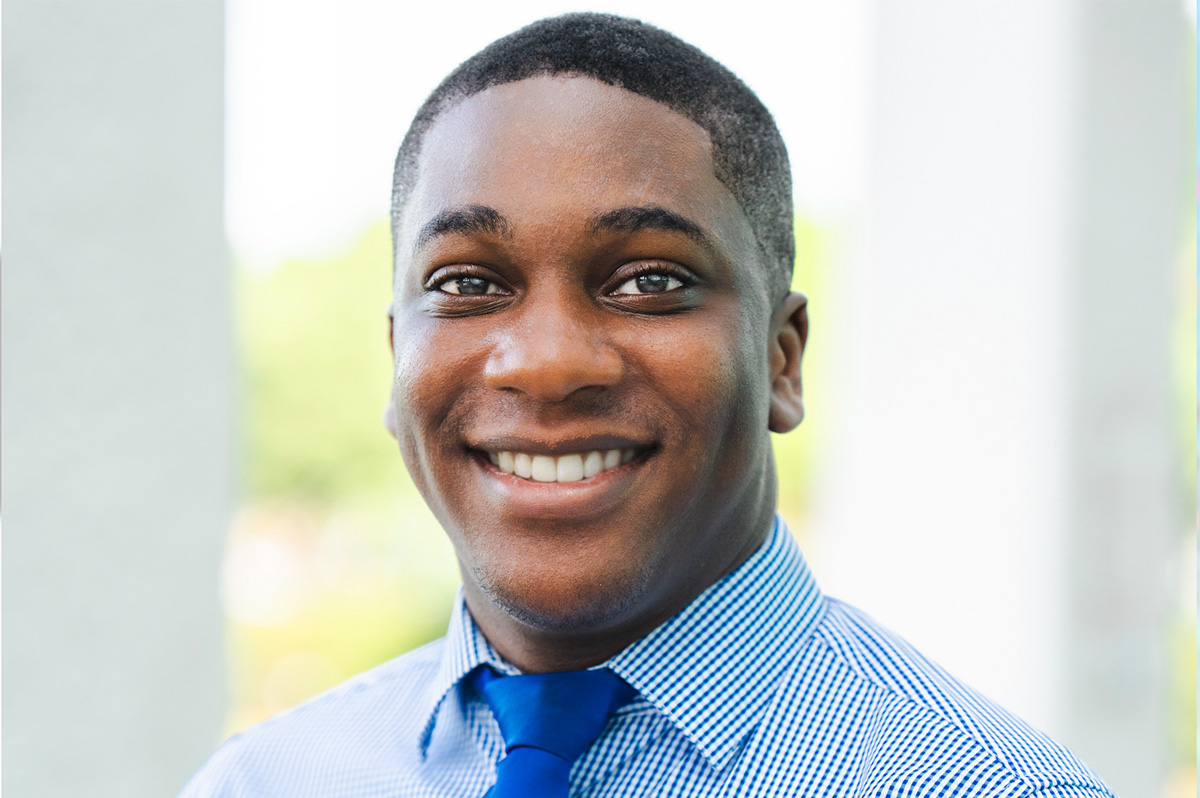
Just over two and a half miles from President Donald Trump’s primary residence lies one of Florida’s most reliably Democratic congressional districts. There, a 27-year-old progressive is mounting a campaign centered on resisting what he calls the Trump-Vance administration’s attacks on civil rights, immigrants, and LGBTQ Americans.
Elijah Manley, an openly gay Democrat, sat down with the Washington Blade to discuss why he is running for Florida’s 20th Congressional District, why he believes this moment calls for a new generation of leadership, and what he hopes to accomplish if elected to Congress.
Born and raised in Fort Lauderdale’s historic Sistrunk neighborhood — the city’s oldest African American community — Manley was raised by a single mother who struggled to make ends meet. His family experienced housing insecurity and, at one point, homelessness, experiences he says continue to shape both his politics and his policy priorities.
For Manley, those experiences are precisely what he believes Congress is missing.
“I think now the country is in need of somebody like me, with my story, my lived experience, the struggles I’ve been through in my life. We’re going through a really dark time in the country with the Trump administration coming for our civil rights and an economy that is not working for everybody. In a time where we have MAGA fascism, we need progressive leadership, and we need people who are really going to do the work of fighting back and resisting and obstructing Donald Trump and MAGA Republicans’ agenda in Congress.”
Manley said his campaign is also about ensuring people from marginalized communities — those without wealth, political connections, or institutional backing — have a voice in Congress.
“I think my story sets me aside from everyone else. I’m the only one in this race who has a story to tell voters that lines up with their lived experiences and their struggles. Growing up in poverty and experiencing homelessness was instrumental in developing my worldview and how I fight for people, and I think that’s something that’s absent on Capitol Hill.”
He argues that lived experience offers a perspective often missing on Capitol Hill.
“There are too many lawyers and people coming from professional and political backgrounds. Then you have somebody like me who is rooted in the story of this district. That’s what sets me apart from everyone else in this race.”
According to his campaign website, Manley’s interest in public service dates back to childhood. He cites the election of President Barack Obama as a defining moment that inspired him to pursue politics.
“He was inspired by Barack Obama’s historic election, igniting his passion for public service. He began writing to elected officials, speaking at school board and city council meetings, and advocating for issues affecting his community,” the website states. It goes on to describe his involvement in criminal justice and law magnet programs, Navy JROTC, and hundreds of hours of volunteer service while in high school.
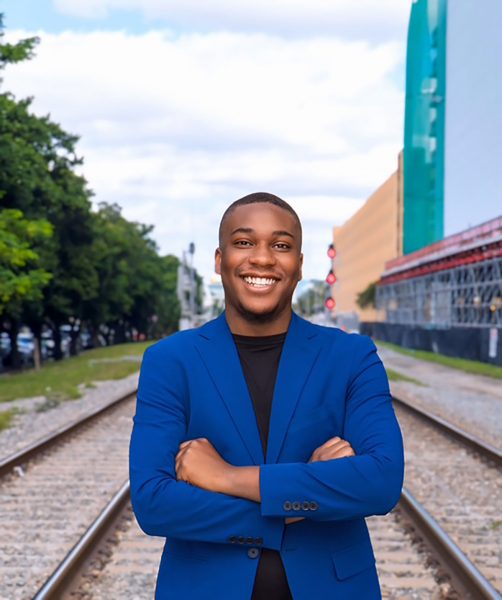
As an openly gay candidate running during Trump’s second administration, Manley said Congress must take a far more aggressive approach to protecting LGBTQ Americans, particularly as Republican-led states continue passing restrictions targeting transgender people.
“I think we need to bring the hammer down on some of these states. I’m not one of these states’ rights people — Congress has the power to preempt laws that states pass through the Supremacy Clause. There’s never been a more important time in our history when we’re seeing fascism, we’re seeing an administration out of control, and we need Congress to act.”
His campaign has also drawn criticism from both Republicans and establishment Democrats for his positions on Gaza, immigration, and his call to abolish U.S. Immigration and Customs Enforcement.
Manley said abolishing ICE does not mean eliminating immigration enforcement altogether.
“I’m not saying there should be no immigration laws. We want laws around immigration, but we want dignity. We don’t need a hypermilitarized, paramilitary group chasing people through the streets, terrorizing communities, churches, schools, and families.”
His personal experiences also inform his healthcare agenda.
“When we talk about healthcare, my experience growing up on Medicaid is seeing the failure of the government to expand Medicaid here in Florida, and now we’re seeing cuts from the Trump administration. I’m not just looking at statistics or numbers on paper — this is based on lived experience. I know how the people in this district are going to be hurt by these policies because I’ve lived it.”
California Democratic Congressman Ro Khanna, who has generated early buzz as a potential 2028 presidential contender for his “progressive capitalist” approach to governing, has endorsed Manley’s campaign, giving the first-time congressional candidate one of his highest-profile endorsements.
Manley faces six other Democrats in the primary, including U.S. Rep. Debbie Wasserman Schultz and former U.S. Rep. Sheila Cherfilus-McCormick, along with four Republican candidates in the general election field. Cherfilus-McCormick resigned from Congress ahead of a potential expulsion and is running again while facing federal criminal charges.
Despite running as the youngest candidate in the field, Manley said he hopes voters leave the race remembering one thing above all else.
“I want people to remember bold and authentic leadership. I want them to know I’m running because I’ve been through what people are going through right now — and it’s not that I’ve been through it, I’m actually still going through it. We need bold people who are going to fight for everybody and stand up for what’s right, and that’s what I hope voters see when they go to the polls.”
Baltimore
Ron Singer, owner of popular Mount Vernon gay bar Leon’s, dies
66-year-old’s funeral to take place Friday
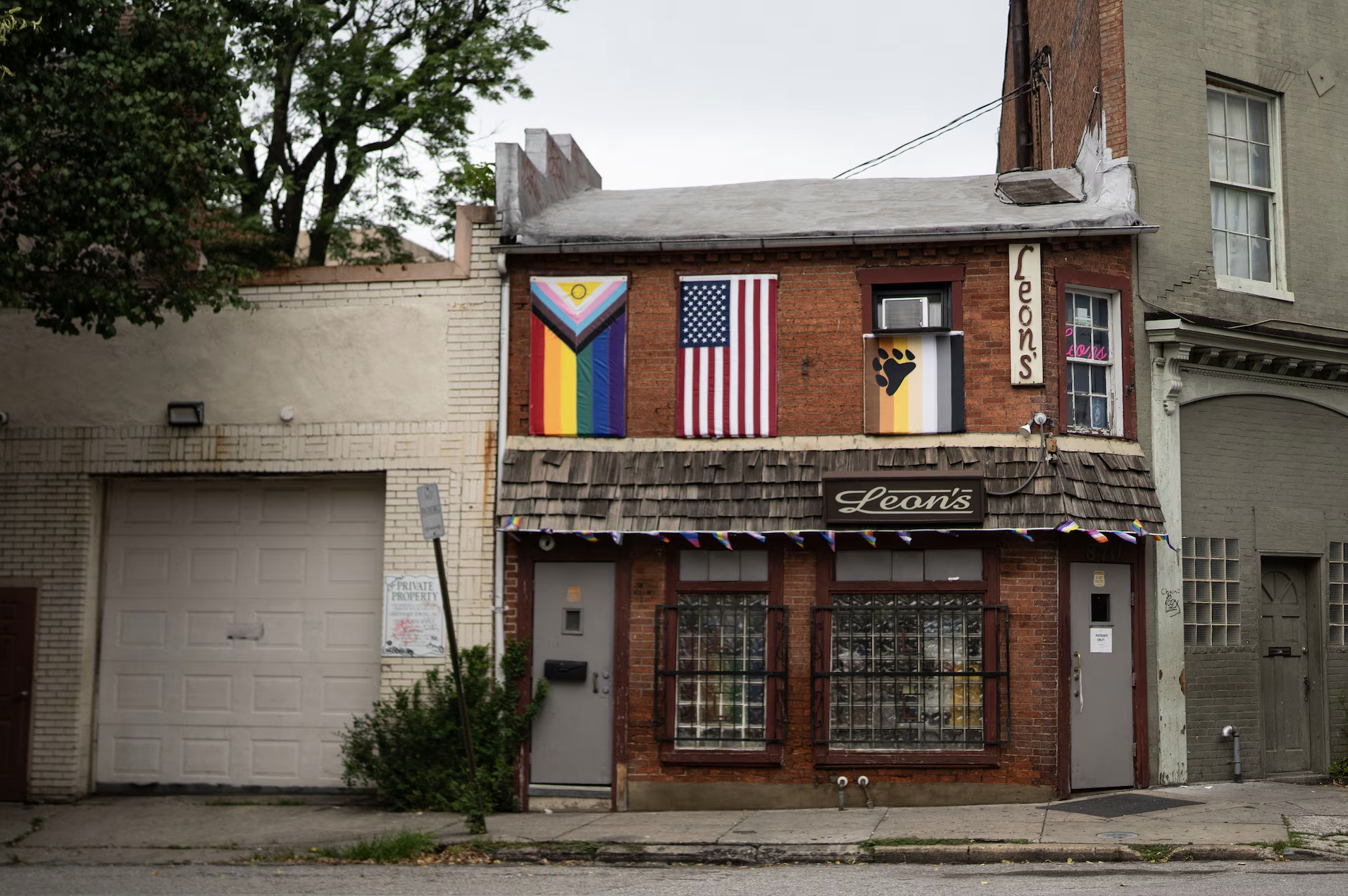
By CAYLA HARRIS | Ron Singer, the owner of Baltimore’s popular gay bar Leon’s Backroom, died Tuesday, the venue announced in a social media post. He was 66.
“For more than 20 years, Ron made Leon’s a place so many people were proud to call home,” the post reads. “He will be deeply missed.”
The Mount Vernon bar, typically open from 4 p.m. to 2 a.m. daily, is still open Thursday, but doors will close at midnight so staff can attend his funeral Friday morning. Services are scheduled to begin at 9:30 a.m. at Sol Levinson’s Chapel.
The rest of this article can be read on the Baltimore Banner’s website.

Campaign launched to elect more LGBTQ candidates to ANC seats

Gay librarian to discuss new novel at Green Lantern

Calendar: July 10-16

Gay Fla. Democrat Elijah Manley sees opportunity in Trump’s second term

Ron Singer, owner of popular Mount Vernon gay bar Leon’s, dies

Turkish authorities refuse to allow gay cruise to dock in country

As Washington shifts right, Democratic Socialists gain ground

Madonna roundup: Reviews, sales, and love for ‘Danceteria’

Susan Stewart could make history as Rehoboth’s first openly gay mayor

Silky Nutmeg Ganache talks sex and dating, gender, politics, weight loss journey
-

 Turkey5 days ago
Turkish authorities refuse to allow gay cruise to dock in country
-
2026 Midterm Elections4 days ago
As Washington shifts right, Democratic Socialists gain ground
-
National4 days ago
Madonna roundup: Reviews, sales, and love for ‘Danceteria’
-
Rehoboth Beach4 days ago
Susan Stewart could make history as Rehoboth’s first openly gay mayor